

Necroticism – Descanting the Insalubrious
The complete ten-chapter, source-based narrative of Carcass’s third album: Liverpool, the musicians, the recordings, the songs, and the historical setting of its late-October 1991 release.
Album information
Tracklist · original album (8 tracks)
- Inpropagation07:07
- Corporal Jigsore Quandary05:48
- Symposium of Sickness06:56
- Pedigree Butchery05:16
- Incarnated Solvent Abuse05:00
- Carneous Cacoffiny06:43
- Lavaging Expectorate of Lysergide Composition04:03
- Forensic Clinicism/The Sanguine Article07:10
Band members · 1991
- Jeff Walker
- bass, vocals
- Bill Steer
- guitars, vocals
- Michael Amott
- guitars, additional vocals
- Ken Owen
- drums, additional vocals
Recording and release
- Recorded
- 1991
- Studio
- Amazon Studios, Simonswood/Kirkby area, Merseyside
- Producer
- Colin Richardson
- Mixing
- Carcass and Colin Richardson
- Original label
- Earache Records
- Original release
- October 1991 · MOSH 42 (LP), MOSH 42CD (CD); sources differ on the exact day
- Cover photography and assembly
- Photography by Ian Tilton; composition directed by Jeff Walker (participants’ recollections)
Official music services
Digital album purchase
The official Bandcamp listing offers the original eight-track edition. Later reissues may differ.
Physical editions · CD and vinyl
The listed CDs and LPs are later reissues, not original 1991 pressings. Price, stock and delivery may change.
Rivers and Records
Calling Carcass a Liverpool band compresses a great deal into a single word. It encompasses both banks of the Mersey, the smaller communities of the Wirral peninsula, the city's clubs and the roads leading to them, as well as the older musical heritage that had made Liverpool famous long before death metal arrived. Yet the members did not all come from one part of the city, nor did they listen to the same records. The environment from which Necroticism emerged was formed less by a single place than by movement between places and scenes: between home and rehearsal room, local club and overseas correspondent, punk and metal.
The river had long served as a link. Liverpool's royal charter of 1207 opened up trading possibilities for what was then still a small settlement. The scale of the later port city was not already contained in that beginning; it developed over centuries through the city's changing relationship with the sea and its hinterland. Systems for loading and storing goods, trading businesses, working-class districts and new transport connections grew around the docks. People, objects and languages arriving and departing are therefore as much a part of the city's history as the buildings left standing along the waterfront.
Commercial prosperity had a grave side bound up with the transatlantic slave trade. According to documents held by National Museums Liverpool, ships sailing from the city carried more than 1.3 million Africans into slavery over the lifetime of that system. This cannot be treated as an incidental footnote to the great history of the port. Britain's prohibition of 1807 targeted the slave trade; it did not simultaneously abolish slavery throughout the empire. The relationship between local wealth, sea routes and collective memory is therefore a longer and more difficult story than a handful of restored dock buildings could tell on their own.
During industrialisation, the railway also became tied to the port. The Liverpool–Manchester connection of 1830 created new possibilities for the movement of people and goods. Working communities from different backgrounds, internal migration and overseas traffic together left behind a distinctive urban diversity. None of this can explain the sound of any particular band that came later, but it helps make sense of the importance that records, shops and concert venues would acquire in an environment long shaped by connections.
The Royal Albert Dock opened in 1846. Its warehouses and cargo-handling system preserved the former power of the port in a physical form that had to be reinterpreted when its industrial role changed. The later UNESCO World Heritage designation belongs to another layer of time: Liverpool received it in 2004 and lost it in 2021. During Carcass's early years, the docks were not yet perceived through that later label. The buildings, the memory of work and urban spaces searching for new uses made up part of the everyday surroundings.
Life developed on a different scale across the Mersey. The Wirral lies between the estuaries of the Mersey and the Dee; its more rural and more industrialised areas were not connected to the port in the same way. Ferries, railways and road crossings linked the peninsula's various communities with the city. According to historical local-authority figures, the population fell from 338,954 in 1981 to 330,795 in 1991. The decline of industrial employment was also part of that transformation. Unemployment figures from 1993, however, capture a later moment and cannot simply be applied unchanged to the period when the album was released.
Heswall and the Wirral
In the first issue of Genital Necrosis, Bill Steer identified Heswall and the Wirral peninsula as his own surroundings. He described the opportunities there as more limited than those offered by Liverpool's hardcore and thrash scenes. That difference had practical consequences for the band's formation. A few acquaintances might be enough to begin learning instruments and rehearsing, but journeys into the city became more important for regular gigs, meeting other musicians and hearing different music at first hand.
Descriptions produced for the protection of Gayton's historic character preserve details of an older Wirral. Near the Dee, the layout of this settlement of medieval origin includes old roads, hedgerows, plots of land and surviving buildings, some dating in part from the seventeenth century, all distinct from the industrial landscape of the port. This is part of the peninsula's historical setting, not a detailed childhood memory recounted by any one member of Carcass. The proximity of these communities does not make their inhabitants' lives identical, and geographical background cannot stand in for what the musicians themselves actually said.
The first issue of Nuclear Gore offers a closer view of the band's living arrangements at the time. Steer lived on the Wirral, Jeff Walker in St Helens, while Ken Owen moved between two places because of his university and family ties. Making music together therefore meant coordinating not only riffs and instruments but also people's time. Studies, the family home and travel were all among the conditions that made rehearsals possible. Later recollections name the attic at Steer's parents' house and Crash Rehearsal Studios as practice spaces. When the volume began to disturb the neighbours, the band needed somewhere else to work.
The industrial heritage of St Helens had a different centre of gravity from Liverpool's. Glassmaking, the Pilkington Tank House built in 1887 and the institutions of working communities add another layer to the history of north-west England. The World of Glass did not open as a museum until 2000, so its retrospective presentation of industrial life is different from the surroundings in which Walker lived during the band's early years. Local newspapers and records of transport, housing and employment preserve the longer history of those changes.
Farther away, Stockton-on-Tees and the Tees area illustrate another path through the industrialisation of northern England. The movement of coal from Durham, the Stockton–Darlington Railway, river trade and later chemical-industry districts shaped a different working landscape. This is a regional perspective, not a personal biography assigned to someone on uncertain evidence. Understanding Carcass's surroundings requires the preservation of precisely such differences: the industrial past of northern England did not produce the same present in every town.
Liverpool’s musical heritage
Recordings arriving from overseas had long played a role in Liverpool's musical life. The story of post-war American records and the seafarers who became known as the Cunard Yanks recalls an earlier route by which new sounds reached the city. Mersey Beat and the beat culture of the 1960s were not a preordained beginning for death metal, but they had already established the local importance of bands, shops and live venues. By the time Steer and his colleagues were looking for a community of their own, the city already had several successive musical eras behind it.
More traditional hard rock and heavy metal had their own routes through the city as well. The Royal Court, performances organised around Radio City and local Battle of the Bands events reached audiences different from those devoted to the most extreme music. Export, formed in 1979, offers an example of the possibility of attracting attention from record labels beyond the region. Yet the Royal Court's place in rock history does not mean that Carcass took part in every event held there. The city's musical life was broader than the path of any single band.
Probe Records and the earlier Eric's club helped organise the independent connections of punk, new wave and indie music. Walker attached memories of his own to Probe; for him, it was not merely a name in the city's history but a place of personal encounters. Older pop traditions and the more recent world of record shops and clubs together formed the setting, but neither automatically explains the origin of a riff on Necroticism. Artistic connections become direct when the musicians speak about particular records, people and experiences.
Planet X became one such direct point of contact. A retrospective account of the local metal scene mentions at least sixteen Carcass performances there between 1987 and 1990; another count gives fourteen. That discrepancy cannot be resolved by presenting one concert total as certain, but both accounts point to a regular presence. Here the band could learn to function before an audience, and here the local network could meet the international underground. The Entombed–Carcass show listed for 1 June 1990 is a particularly telling trace of this exchange: two bands from different countries appearing at the same small venue at the heart of the scene.
The First Name
Life around the Mersey in the 1980s was also shaped by the legacy of an industrial order that had begun to unravel during the 1970s and the early years of the new decade. Containerised freight had reorganised port logistics, while declining manufacturing employment and urban poverty affected many communities. Aaron Andrews's 2018 historical study also draws attention to differences between districts. Liverpool's crisis was not a single unemployment statistic that applied equally to every street, but a set of interconnected processes that nevertheless varied from place to place.
The Toxteth disturbances of 1981 exposed profound tensions in relations between the police and local communities. Racism, housing, employment opportunities and shortcomings in representation became entangled with the assessment of police conduct. Subsequent local histories and community memories recalled that period from several perspectives. Yet the history of Liverpool's Black communities did not begin in 1981: they had a long maritime and urban past that cannot be reduced to one episode of violence.
Different responses collided in debates about the city's future. Alongside projects for regeneration and efforts to ease the social crisis, there also emerged a colder logic of managing an economically contracting city. Government thinking in 1981 and the restructuring of Merseyside's administration in 1986 affected the institutional framework of local life. Transport, access to employment and the use of urban space formed part of a young band's environment even if its members left no personal statements about every change.
During a parliamentary debate in January 1986, the MP Parry referred to male unemployment of 41 per cent in the Riverside constituency. Citing household data from 1981, he also stated that 79.3 per cent of households had no car. These were political and social claims about a particular district and period, not a description of Liverpool as a whole in 1991. Even so, they convey some of the local circumstances in which organising journeys and encounters became important. Small communities arose not because social divisions had vanished, but through the connections people managed to create across them.
Everyday movement within the region also depended on British Rail services, ferries and road tunnels. Alongside the changing world of services and dock labour, these connections made it possible for people living in different towns to reach the same rehearsal spaces, record shops and concert venues. Such usable links shaped the geography of the music community just as much as the names of individual districts.
It was in this period that Bill Steer and Ken Owen were already imagining a band together. Answering sixteen questions in the first issue of Genital Necrosis, Steer dated the first idea for Carcass to September 1985. They had found the name in a dictionary: it seemed short and memorable, while its imagery suited the lyrics they envisaged. This testimony identifies an early beginning; it does not establish the founding of a continuously active band on an exact date.
The early band
Decades later, in interviews with Moshville Times and Collide in 2015, Steer drew a clear distinction between the schoolboy venture and the band that would eventually make records. The first Carcass lasted roughly three months and then came to a halt. Its name and the Steer–Owen relationship nevertheless remained part of the prehistory. The Disattack period and Jeff Walker's subsequent involvement led to the formation whose story became linked to publicly circulating demos and albums on Earache.
That encounter brought together different musical upbringings. Steer and Owen approached music from metal, while punk and the independent thinking associated with Crass were also formative for Walker. Steer's interests reached back to older hard rock and heavy metal. Disattack should therefore not be placed in the story as a simple change of name: it was a transition in which personal circles, tastes and earlier ventures found a new form in common.
The connection between punk and metal is not merely a retrospective theory of genres. In a 2015 interview with Robert Fröwein and Stefan Baumgartner, Steer described specific exchanges. Other musicians introduced him to Discharge, while he and his companions brought Metallica, Venom and Slayer into their shared listening. They were not putting a ready-made theory into practice; they were listening to one another's records. They then tried to bring those different sounds together in their own instrumental experiments.
Steer's membership of Napalm Death widened this world further. Other centres of British hardcore, gigs associated with the Mermaid pub in Birmingham, and connections surrounding Heresy and Concrete Sox did not form a single homogeneous scene. Distinct groups and venues met through concerts and correspondence. Steer personally acted as a link between these circles, but he did not regard Carcass as something derived from Napalm Death. In the 1989 Slayer interview he rejected the idea that Carcass had been merely a side project: by his account, an early Carcass had existed before his involvement with Napalm Death.
Even later he did not experience the human dynamics of the two bands as identical. He had joined Napalm Death as a younger musician entering an organisation that was already established. In Carcass, he and friends of roughly his own age from north-west England could make decisions together. He connected the feeling of having a musical home of his own to that shared situation. There is no need to invent conversations at individual rehearsals to illustrate the distinction: Steer described it himself when looking back across his career decades later.
The thinking behind the name
Walker's background likewise came together from several directions. In his 2026 Chaoszine interview he recalled Kiss, Thin Lizzy, Status Quo and ELO as childhood experiences, before punk and hardcore came to play a larger role through their energy. His first instrument was an acoustic guitar. Before Carcass, he also took part in a post-punk project associated with Mark Griffiths that used synthesiser and drum machine, and later came Electro Hippies. The vocalist and bassist of an extreme metal band thus had other kinds of musical experience behind him.
The later medical vocabulary did not originate exclusively with Walker, either. According to Steer's recollection, Ken Owen had already written bizarre lyrics involving bodies and disease before the band existed. Lyric writing in the early Carcass was still shared among several members, and Walker gradually became its central figure. The songwriting situation on Necroticism in 1991 should therefore not be projected unchanged onto the band's entire prehistory. What later became known as Walker's distinctive language had a collective antecedent.
Questions of ethics within the subculture appeared alongside its extreme imagery. In Slayer, Steer spoke about vegetarianism, animal protection, racism and extremist political symbols. He connected his decision to stop eating meat to perspectives he had encountered through other people. That was a personal choice, not a mandatory position adopted by the whole band. The background matters to later interpretations of Carcass's lyrics, but it does not turn every grotesque scene in a song into a political programme endorsed by all its members.
Meanwhile, the independent working practices of British punk and hardcore offered models of organisation. Around Crass and Discharge, people could learn not only a particular guitar sound or tempo but also the practices of small-run records, duplicated magazines and self-managed distribution. Releasing music and finding an audience took personal effort. The beginnings of the later Earache catalogue belong to that same world of punk and hardcore connections.
The pleasure of playing music returns as a condition in Steer's early interviews. In his answers to Genital Necrosis, he tied the prospect of continuing to precisely that pleasure. Politically committed lyrics could pursue worthwhile aims, but the importance of the cause did not make poor writing good. It was possible to find a song musically interesting without accepting every assertion in it. For the young Steer, seriousness and humour were not mutually exclusive. Steer stressed that, for all the joking exaggeration in the lyrics, Carcass was not simply a novelty act.
Asked about the rhythm of his own everyday life, Steer mentioned correspondence, interview answers, listening to music, practice, rehearsals, gigs and friends. The plain list also reveals how the young group functioned: the work surrounding music was more than just playing songs. When the second record was still only a plan in that interview, the aim was to make a better recording, not to construct a career whose course they already knew. The road towards Necroticism would later be made up of these small, successive decisions.
Through Copies
The young Carcass did not need a major record label to establish its first international contacts. Cassettes arriving through the post, copied demos and letters could carry a band's name into other countries before any contracts were signed. It was a slower, more personal system than the instant sharing that would come later. A recording had to reach someone who would listen to it, make another copy or write down an opinion. Its path through the network was not always under its creators' control.
In 2015, Steer recalled early tapes by Repulsion, Death and Master among the music that reached them. From recordings made before record deals, they encountered new speeds, differently constructed metal riffs and extremes they had seldom heard before. Yet Carcass did not understand its own work as a copy of any one distant group. The new recordings offered possibilities that had to be reconciled with the different tastes of their local companions and their own abilities as musicians.
Flesh Ripping Sonic Torment became an early trace of that network. In his 1991 interview with Trechoma, Steer dated its recording to September 1987. He said that the band had not initially distributed it as a proper commercial release, but copies made by friends had nevertheless carried it farther. Documentation of the demo's history also connects it with Sanjiv's early period as vocalist. After he left, the more enduring partnership between Steer, Walker and Owen took shape, giving rise to the first full-length albums.
The growing recognition surrounding the tape did not make live performance unnecessary. Planet X concert listings include Carcass appearances in 1987; the calendar for 1989 also preserves dates in March, April, May, July, August and October. Their regular return matters more than any pretence that every evening can be reconstructed in full. By encountering local audiences, the band learned which ideas worked outside the rehearsal room. The fanzine, the demo and the stage were not consecutive steps that could each be completed and left behind, but channels that continued to function together for years.
Local record shops supplied another side of this system. The Cartel linked independent regional distributors so that records from small labels could reach shops beyond their immediate areas. Rough Trade, Red Rhino and Probe served different local markets; their common function was not limited to a single genre. The network's subsequent problems also showed how fragile the infrastructure could be when nationwide circulation of independently released material depended on it.
The postal service connected listeners in a different way. The recollections of fanzine editors Alan Moses and Brian Pattison evoke the painstaking work of correspondence, photocopying and mailing tapes. Matt Coe's later retrospective also conveys the scale of incoming demos, replies and voluntarily maintained contact lists. This activity created knowledge within a community: recommendations from others, another letter and another copy could carry each new name farther. Direct personal connections between Carcass and every editor of this kind have not been established, but the network itself belonged precisely to the world in which the band became known.
More distant countries joined the British centres. The fast hardcore of Japan's S.O.B. and their European travels in 1989 in connection with Napalm Death show that musical exchange was not confined to a British–American axis. Smaller labels and personal acquaintances could be enough to bridge continents. Carcass's own verifiable itinerary tells a narrower story, but the underground operating around it was always larger than one band's concert diary.
Cassettes and record sleeves
Earache's offer of a two-album deal arrived amid this emerging recognition. According to Steer's recollection, work on the first full-length began in December 1987, while release was delayed until the following summer. Reek of Putrefaction therefore entered the label's early catalogue in 1988. The record later became one of the defining images of Carcass's raw extremity, though its makers remembered the experience in rather less celebratory terms.
Steer and Walker discussed the problems with the sound separately in the seventh issue of Slayer in 1989. Bill distinguished the work they had put into writing the songs from what could actually be heard of it in the studio result. Jeff felt that important guitar ideas had been lost in the muddy sound. In later accounts, they acknowledged their limited recording experience, the cramped circumstances and the gaps in their technical knowledge. The sonic character that some fans came to cherish as an original quality that had to be preserved at all costs did not correspond in every respect to the artists' intentions.
Walker's role as a vocalist also developed through learning. After Sanjiv he stepped up to record vocals with little practice, and in his 2026 interview he still described the rushed work on the first album as raw and disorganised. The voice that would later become recognisable did not emerge from a fully formed method at the outset. The studio and live performance presented different challenges, and vocals and instrumental playing developed together.
Meanwhile, the cover and lyrics created a reputation of their own. Steer spoke about British shops unwilling to stock the shocking visual material and mentioned distribution difficulties abroad as well. Sound and image reinforced one another, but notoriety brought more than a new audience. In fanzines Walker also described extreme reactions and threatening letters. Some read the fiction of disease, decay and violence as a literal declaration of belief, while he defended the place of grotesque humour and caricature.
At the same time, Liverpool was looking for new lives for its old buildings. Plans to renew the Albert Dock developed from 1981; the location of Tate's northern gallery also became part of that urban-policy process. By 1985 the project had reached a stage of government approval. Tate Liverpool opened on 24 May 1988, and in the same year the docks reappeared as a new cultural gateway and public space for the city. These investments did not eliminate unemployment, but they brought new visitors and economic hopes into the former industrial area.
Carcass's demo and first album were made during those same years of urban change. The major cultural investment and the small cassette network existed side by side, with different institutions and different degrees of visibility. It was not the city's new showpiece space but a far smaller community connected through the post that began to build the band's name overseas. Place and time link the two processes; no riff can be traced to the opening of a gallery merely because it happened nearby.
New songs were already taking shape after the first record. Steer told Trechoma that a few months later a rough recording of six new tracks became the Symphonies of Sickness demo. Work on the second full-length began in July 1989, and he dated its release to November. He regarded the result as better realised than the previous album. His later assessments retained some reservations about the sound, but the sense of progress was already being expressed then.
The two Slayer interviews also preserve contemporary testimony about instrumental change. Steer and Walker spoke of more complex guitar material, more tempo changes and more varied structures. The lyrics continued to develop the medical grotesque. Long songs were not a sudden invention on the 1991 record: around the second album, the approach that would later lead to Necroticism's major compositions was already present.
The cover of Symphonies also left a reminder that not every aspect of the visual identity came from a concept drawn up in advance. Steer attributed part of the blurred image to the photocopier enlargement of a tiny photograph. Intention and the accidents of execution together became part of the finished appearance. The band's new goal of making its music more clearly audible and the more deliberate visual choices that followed were different sides of the same learning process.
In spring 1989, the Hillsborough disaster shook public life in the region. The tragedy occurred in Sheffield on 15 April and was particularly closely connected to Liverpool's football community and the surrounding area. Historical records now recognise 97 deaths. The official findings about police responsibility and the cover-up, reached decades later, were not available to the public in the same form at the time. Local grief and the subsequent pursuit of truth belong to two different historical moments.
The Taylor Report appeared in January 1990, while the initial coroner's verdicts were delivered in March 1991. The public history of the disaster thus continued to develop while Carcass worked from its second album towards its third. None of the songs has to be turned into an unsubstantiated allegory of Hillsborough for the event to have a place in the region's social background. The period is depicted by the band's own studio story alongside events of different weight experienced by the communities living around it.
The questions posed by Nuclear Gore in 1989 also revealed something of their collaborative songwriting. According to Steer, Bill brought in much of the music, Jeff wrote around three-quarters of the lyrics, and Ken contributed riffs and drum ideas too. Final shapes often emerged as they played together. These proportions describe one early moment; they are not an accounting rule that can be applied to every song on a later album. Even so, they make clear that Owen was already more than a drummer who simply supplied rhythms for finished riffs.
The underground finds a voice
The idea of a second guitarist was present too, but still only as a possibility. Steer would have welcomed the right person; they were not looking for a separate singer. Ken's university commitments also limited the number of shows they could play: the group did not want to overcommit itself by abandoning every other obligation. Radio work and touring plans were therefore as much matters of scheduling as of professional ambition.
John Peel's programme gave extreme music an entirely different reach. Early BBC sessions by Napalm Death, Heresy and Intense Degree showed that hardcore far removed from commercial radio conventions could be heard nationally. Carcass's first session was recorded on 13 December 1988 and broadcast on 2 January 1989. The second recording dates to 2 December 1990, with transmission on 16 December. Recording, broadcasting, the releases associated with Strange Fruit and the later 2014 edition all have their own separate dates.
Steer did not remember every encounter with the Peel programme as an entirely successful experience. He also told Trechoma about reservations concerning the working conditions. Yet the invitation remained an important passage between the local community and a wider audience. The BBC did not replace the record shop or the fanzine; it added a new channel alongside them. A small band could appear simultaneously in several public arenas governed by different rules.
Earache was also changing its scale. In Digby Pearson's recollections, the label begins with the independent practices of punk, hardcore and grindcore and then connects with the expanding world of death metal. Financing, building a catalogue and arranging distribution were not provided by some pre-existing major-company apparatus: they had to be organised gradually. Pearson's account preserves the label's own viewpoint; it cannot stand in for an independent economic history of every contract.
For Carcass, the relationship brought opportunity and dissatisfaction at the same time. Records reached foreign markets and the band gained access to new touring routes, while members criticised both the studio results and distribution. The Grindcrusher tour of 1989 already showed the growth of a shared extreme-metal concert market. Later accounts by Walker, Mark 'Barney' Greenway, Vincent and Embury differed in how they portrayed its scale and success. Despite those differences of perspective, one change stands out: names known through correspondence were increasingly appearing on shared stages.
Professional expectations for the next album rose during this movement. Carcass was not simply looking to shift to the other side of some genre label. It sought instrumental details that could be heard more clearly than in the earlier sound, and longer structures alongside the brief assaults. To some early listeners, these qualities could later feel like a loss. For the musicians, however, the same process promised a clearer and bolder realisation of ideas they had already been developing.
A Swedish Guitarist in a Changing Europe
Michael Amott recalled April 1990 as the time he joined Carcass. But he did not arrive in Liverpool without a history of his own. The Swedish band Carnage, the tape-trading underground, and musical interests shaped by punk, hard rock and metal had given him a different set of experiences from those of his British bandmates. The invitation also took shape through contacts around Napalm Death. Following Carnage's breakup around the beginning of 1990, Amott even attended a Napalm Death rehearsal, though he did not become a member.
He later told Voices From The Darkside that Carcass had already spoken to him before Symphonies of Sickness. On the strength of Reek, he had not been attracted by the prospect of joining them. Hearing the second album changed that. This was not, then, a case of an outside guitarist deciding, in a single moment, to give the others a new style. He first had to get to know the band himself, a group that wanted to show more than the impression left by its first recording.
In the third issue of Mortuary, Steer offered a simple personal explanation for the choice: they needed a second guitarist, and Michael seemed the person who would fit them both musically and personally. In Amott's later recollections, he and Bill played guitar all day, breaking off only for short lunches. It was during such time spent together that they had to develop the rapport critics would later hear between the two guitarists on the completed record.
The Swedish part of the story was rooted in a different, much older local history. For centuries Halland had been part of the area contested politically by Denmark and Sweden; the change of 1645 became an important dividing line in the province's history. Halmstad's past as a fortified town bore the marks of the reign of Christian IV, the fire of 1619, Swedish rule in the seventeenth century and the later demolition of its fortifications. This brought a geographical and cultural inheritance quite unlike the port landscape of the Mersey into the band's orbit. That past does not explain Amott's inner feelings. It is an older layer of the Swedish world with which his career is associated.
Nor was the local music scene confined to the death metal that would later become an international legend. The names Halmstad and Halland also evoke the pop-rock history of Gyllene Tider, Per Gessle and Roxette. Roxette's beginnings after 1986 and growing international success from 1988 showed another kind of career beyond national borders. Many kinds of music existed within the same wider region, without any need to turn pop's commercial achievements into a direct creative motive for Carcass's guitarist.
Former members of Sect-or Three retained a different memory of Halmstad's post-punk, goth and noise milieu. Alongside pop's powerful presence, they sought less radio-friendly, more unsettling experiments, with rehearsal rooms and clubs of their own. The diversity of Swedish musical life would vanish from view if it were reduced to the later, best-known metal histories of Stockholm and Gothenburg. Amott's connection to Carnage belonged to a separate underground network, whose foreign tapes and personal journeys eventually brought it into contact with the British musicians.
Sweden's economic position was changing at the same time. Financial liberalisation in 1985 brought an expansion of credit markets, which was accompanied by growing problems at the beginning of the following decade. The Riksbank's timeline records the krona's link to the ECU on 17 May 1991. The banking and currency crisis of 1992 was a later development. By the time Necroticism appeared, Sweden had already applied to join the European Community, on 1 July 1991. Debates over neutrality, integration and economic policy had created a new situation in the country.
On the British side, 1990 brought the start of a recession and the end of the Thatcher era. John Major became prime minister in November. Inflation, lending conditions and faltering growth all played a part in the downturn of 1990–1992, but its effects were not identical in every city or household. Around the Mersey, the industrial restructuring of the previous decade was compounded by new economic difficulties. The band's own budget problems unfolded against that background, though Walker's specific recollections tell us more about their financial choices than national indicators do.
From Sweden to Liverpool
For Amott, travel between the two countries did not initially mean settling abroad once and for all. According to Steer, the guitarist travelled over from Sweden for their work together and was not yet living permanently in Britain. The foundations of the compositions already taking shape, some around seven minutes long, were generally brought in by Bill and Ken. Michael had to find his place within them. Some of his early ideas were rejected because they sounded too much like the Carcass of old. Bringing in a new member therefore did not simply replace the band's previous method of songwriting; it meant joining a vision that was already changing.
The American Death–Pestilence tour of 1990 also offered a professional point of comparison. Steer remembered that they regarded their touring partners as more technically accomplished at the time. From his touring experience, Amott singled out the need to make complex, constantly fast passages tighter and more controlled. The two recollections reveal different sides of the same learning process. There is no need to imagine a single ceremonial day on which the band 'changed direction': the balance between longer songs and more readily grasped passages evolved through rehearsals and performances.
Europe's political order was transformed within a few years more rapidly than anyone in the middle of the 1980s might readily have predicted. The path from Gorbachev's rise to power in 1985, through the INF Treaty of 1987, led towards the later turning points of the Cold War. The opening of the Berlin Wall on 9 November 1989 and German reunification in October 1990 were distinct milestones in that process. As Carcass searched for new compositional possibilities after its early albums, the continent's state borders and political relationships were also acquiring new meanings.
In August 1991, the failed Soviet coup accelerated the process of disintegration. The Soviet Union's formal dissolution in December, however, came after the album's autumn release. For a listener in October, that later conclusion was not yet settled history. In Yugoslavia, Slovenia and Croatia declared independence on 25 June 1991, followed by wars that unfolded in different ways. The war in Bosnia belongs to the following year's history. These simultaneous changes formed part of the wider conditions for travel, commerce and cultural exchange; yet when the Carcass musicians explained their songs directly, it was rehearsals, records and tours that they spoke about.
Another grave development in world politics was the Gulf War. Iraq invaded Kuwait in August 1990. An international air campaign followed in January 1991, and a ground offensive in February; the United Nations' subsequent observation and border-monitoring work opened a further phase. The war occupied a prominent place in the Western European press and economy. That does not, however, justify automatically turning Carcass's medical nightmares into allegories of the Gulf War.
The World Bank's analysis of the global recession of 1991 brings together several crises that operated in different ways. The economic transition of the Soviet bloc, war and oil prices, American financial and lending problems, the difficulties of Scandinavian banking systems and the aftermath of Japan's asset-price bubble did not constitute a single mechanism. Nor does the term 'global downturn' mean that every local family experienced the same thing. The European exchange-rate crisis of 1992 brought another turning point, after the album's release.
Music in a changing Europe
Public discussion of health and the body had its own contemporary history. Alongside the HIV/AIDS crisis and community action against stigma, the Denver Principles of 1983 also addressed the self-determination of people living with the disease. The Chernobyl nuclear disaster of 1986 linked questions of health, danger and political communication across Europe. These were weighty issues of the period, but by themselves they do not identify the specific subject matter of Carcass's lyrics. Walker described his own language more in terms of unusual words, medical terminology, absurd humour and exaggeration.
That did not mean he turned away from public affairs. The fourth issue of Spikehead discussed the Thatcher era, unemployment, welfare, the Falkland Islands and the Gulf War. Walker expressed a personal critique from the political left. The grotesque lyrics were not direct slogans for that position, but an interest in public life and an extraordinary lyrical vocabulary belonged to the same person. In Genital Necrosis, Steer acknowledged the need for police while criticising violence driven by prejudice. Such different personal views did not merge into a single programme proclaimed on everyone's behalf.
Meanwhile, currents were gathering strength in British music that lay far from Carcass's riffs. Liverpool's The State, the Daisy nights and Quadrant Park near Bootle provided communal spaces for acid house and rave. Industrial buildings, new electronic sounds and precarious event venues gave the same urban landscape a different kind of life. Carcass did not imitate the music played in those clubs; different subcultures were finding their places and audiences alongside one another.
The path followed by Justin Broadrick and Godflesh illustrated the movement between extreme punk, industrial music, metal, hip-hop and electronic rhythms. When presenting his own selection of albums, Broadrick also qualified the idea that the records mentioned were necessarily the strongest influences of his life: they were favourites he was listening to at that particular time. A broad range of interests existed around British extreme music, while the direct inspirations of Carcass remained the music identified elsewhere by its own members. Merely sharing an era does not make every parallel a personal influence.
There was more than one ideal of studio sound, too. In Stockholm, a distinctive guitar sound became associated with Tomas Skogsberg and Sunlight Studios, with Entombed, which emerged from Nihilist, and with Dismember. Behind the familiar shorthand of the BOSS HM-2 pedal lay various pieces of equipment, methods and differing memories among those involved. This is part of the history of Swedish productions, not a supposed equipment list for Necroticism. Carcass's next album was recorded in an English studio with Colin Richardson.
Florida's Morrisound and Scott Burns represented another international benchmark. Work specialising in extreme-metal recordings was becoming an increasingly recognisable professional world, while British band Paradise Lost was pursuing a different mood and form through death/doom in 1990–1991. Entombed, Dismember, the Florida bands and the British groups around Earache were not all carrying out the same method. Necroticism would arrive among them with its own answers, neither the sole cause nor the final destination of death metal in 1991.
In the wider rock market that same year, Metallica's Black Album and Nirvana's Nevermind opened up possibilities on another scale. The former demonstrated heavy metal's mass-market power; the latter marked the transformation of alternative rock's public visibility. Neither release directly explains the compositional decisions made by Carcass. Yet both belong to the same 1991 in which the extreme underground, through its much smaller channels, was also seeking new audiences.
The Age of the Long Songs
The material for Carcass's third album began taking shape well before the band entered the studio. In 2021, Walker recalled between a year and eighteen months of work, and believed that most of the foundations had already been laid before the American Death–Pestilence tour of 1990. Looking back from the finished record, it would be easy to attribute every change to Amott's arrival. Yet those involved placed the earlier compositions of Steer and Owen at the centre of the story. The new guitarist joined them in this work and, through the process of shaping the material together, became the line-up's true fourth member.
In the attic at Steer's home, Bill and Ken also played on their own. Walker often joined them, while Amott participated between journeys to and from Sweden. Ideas developed at different times had to be played together before they could take their final form. The riff, the lyrics and the drums were not unchanging layers simply placed one on top of another in sequence. Each song found a shape of its own through the other musicians' responses to the material brought in.
Walker described the early Carcass compositions as chains built by linking one riff to the next. The customary repetition of verse and chorus was not a compulsory starting point. He wanted to fit a great many words into the songs, while the instrumental movement kept demanding further passages. The result was a form that could not always be remembered in terms of a central chorus. For the band, such abundance was an opportunity; for listeners, taking it all in could require considerable attention.
Steer regarded this as one of their boldest periods of composition, even if he did not necessarily identify with the label 'progressive'. Looking back for VICE in 2017, he spoke of instrumental challenges that pushed them to the limits of their abilities. They were also spurred on by the fact that other bands were producing ever more demos resembling the earlier Carcass. Repeating their old techniques might have made their own identity less distinctive. Writing the new material thus became a shared effort of learning and setting themselves apart.
Ken Owen was far more than the drummer who could play the most difficult parts. Both Steer and Walker associated him with the foundations of Symposium of Sickness, and remembered him as a significant source of ideas in developing the longer structures. Steer particularly stressed the persistence required to record the complex drum parts. The musical imagination and the ability to realise it belonged to the same person. Owen's creative place would be obscured if the usual division of labour between guitar and drums were simply imposed upon the finished songs.
According to Walker, the later-developed Corporal Jigsore Quandary and Incarnated Solvent Abuse took shape with less input from Ken than several of the earlier long pieces. He qualified that recollection with some uncertainty and remarked ironically that the later songs were hardly short themselves. Even within the album, the material preserves different stages: the balance of authorship and the desire for more direct forms could change as the work progressed.
One of Amott's important accounts concerns the making of Incarnated Solvent Abuse. A substantial share of the principal guitar ideas came from him; Steer added middle sections, Walker suggested structural changes, and Owen developed the drum parts to fit. Between the initial riff and the finished song, then, lay a collective undertaking. The later twin-guitar Carcass sound cannot simply be projected backwards to identify a single person as the director of the entire album.
Nor did the three musicians place the same emphasis on the change. Walker saw the 1991 material as a natural continuation of Symphonies, attributing part of the difference to better equipment and production. Steer highlighted their expanding range of techniques and the professional experience gained on tour. For Amott, a growing interest in melody mattered too, and allowed him to introduce certain passages of his own. These memories fit together as a story, but they should not be flattened into a single statement supposedly applicable to them all.
Steer's listening habits also revealed interests wider than any genre label. In Trechoma he mentioned Beethoven's symphonies, Thin Lizzy, Queensrÿche and King Diamond; the conversation also brought up Confessor and Scritti Politti. Later he spoke of his attachment to Deep Purple, Black Sabbath, AC/DC and Hendrix. Classical music, traditional rock and metal could all interest the same guitarist who was working on Carcass's intricate material. This is not a verified list of quotations from particular Beethoven movements, but evidence of the breadth of one musician's tastes.
The lyrics
Walker's lyrics demanded a different sort of painstaking attention. He spent long periods looking for uncommon words and medical or anatomical terms that could make even the simplest action resemble an excessively elaborate procedure. The purpose was not to attack a particular social group, but to give their own interests an exaggerated linguistic form. Burial could become soil management; the body could become a jigsaw puzzle, animal feed or glue. The language of everyday usefulness became absurd when applied to human remains.
The lyricist did not need to lead every reader towards the same moral interpretation. In contemporary fanzines, he also defended the right to humour and entertainment, while Steer did not demand that every grotesque image convey a direct message. More precise instrumental execution did not sweep this world away. On Necroticism, formal discipline and exaggerated pathological fantasy grew together.
The title, too, was born by joining two separate ideas. Walker wanted the word Necroticism; Ken Owen suggested the phrase Descanting the Insalubrious. In a 2021 interview with the Greek Rock Hard, Steer likewise remembered it as a compromise, and greatly admired Ken's peculiar combinations of words. Both ideas survived in the final, lengthy name. The musicians' own play with etymology linked notions of necrosis, eroticism and elaborate discourse about illness; the cover did not carry the definition of an established medical term.
The cumbersome title suited the dense lyrics and the individually named guitar solos. Even in the album's name, language that seemed to carry scientific gravity was mixed with impossible exaggeration. The songs would later pursue different subjects within that framework, yet the unity of the album did not necessarily amount to a story plotted out in advance.
The band chose Amazon Studios to realise the compositions. The original Earache booklet identifies Simonswood, not central Liverpool. Walker and Steer remembered a rural working space near the edge of the city, somewhere the members could commute to and return home from in the evening. The choice of studio therefore brought together the prospect of a more professional setting and the practical demands of everyday life.
Amott later associated the 1991 location with the Amazon in Kirkby and distinguished it from the Liverpool Amazon used for Heartwork, the latter subsequently becoming known as Parr Street. Sharing a producer on the two records did not mean that the band worked in the same building. The reference to Simonswood in the original booklet anchors the work of 1991.
Simonswood's administrative status changed in the following years as well. According to the historical register-district chronology, it belonged to the Knowsley registration district between 1974 and 1994, moving to West Lancashire in April 1994. The site of the 1991 sessions belongs to the earlier administrative arrangement. A later district name and a contemporary studio designation do not describe the same moment in time.
Inside Amazon Studios
The band attempted a more financially independent route. In an interview with RVA Mag in 2013, Walker said that they had begun recording with their own money because the previous Earache agreement had expired. At the time, he put the expense at approximately sixteen thousand pounds. Speaking to Decibel in 2021, he recalled a figure of roughly twenty thousand. The two memories cannot establish a single verified total. Their common point, however, is clear: the project began with the band's own resources, and the budget was not sufficient to finish it.
In Walker's recollection, the money ran out around the time of the bass recordings. Their original plan had been to approach several record labels with the material, but he considered Roadrunner's offer unfavourable because of its terms. They ultimately regarded Earache's agreement as the better one and completed the album under it. Seeking independence did not necessarily mean rejecting every old connection. The band's negotiating position and the financing of studio time were two aspects of the same undertaking.
Colin Richardson's role provided continuity with their earlier experience. After the second album, the band did not merely want to return to a familiar studio: they continued working with Richardson, now as producer, in a different location. Steer valued his willingness to treat extreme music as a serious technical challenge. The long sequences of riffs and instrumental details had to be recorded without obscuring the many ideas within them.
Walker mentioned King Diamond's Conspiracy as an example of the clarity of sound they had previously aspired to. That describes an ambition, not a precise equipment recipe for Necroticism. After earlier limitations, the third album offered greater professional scope; yet in later assessments by the musicians, it did not become everyone's ultimate standard of production. Speaking of Heartwork, Steer felt that they had come closer to the result they had long sought. Decades later, Amott too judged the 1991 sound differently from the way he had at the time.
The original credits establish the precise roles. Richardson is listed as producer, with mixing credited jointly to Carcass and Colin Richardson. Keith Hartley was the engineer, with Ian McFarlane and Dave Buchanan as assistants. Later recollections also preserved the personal relationships behind the names. Steer emphasised Ian's presence as both a friend and professional collaborator, and considered Dave enthusiastic and intelligent. He described Keith as someone who did not necessarily like the music but nevertheless helped and offered ideas. Those remembered impressions supplement the roles printed on the record; they do not rewrite them.
Recording and mixing
The division of guitar work in the studio was not identical to the line-up on stage. According to Amott, Steer recorded the rhythm guitar parts, while Amott concentrated primarily on solos. The method chosen for tight foundations did not erase Amott's contribution as a composer. The origin of a riff, the person playing it on the recording and its performance by two guitars live remained separate questions. The original booklet credits Amott with guitar and additional vocals, Owen with drums and additional vocals, Steer with guitar and vocals, and Walker with bass and vocals. It names no additional guest musician.
The recording belongs to 1991, although the exact dates of the studio sessions cannot be established with certainty. The Nimbus marking associated with the CD concerns the history of manufacturing the glass master; it does not identify a separate audio-mastering engineer. This does not make the human and professional roles in creating the album uncertain. It simply keeps different types of credit information in their proper places.
Assembling the spoken passages between songs was part of the final stages of recording. In September 2021, Steer recalled Walker working on them in an adjoining room used for demos. In another retrospective account, Walker also mentioned less formal work done with Dave. The studio was not merely a place to capture precisely the instrumental parts devised in advance: ideas that would connect the entire album's flow took shape there too.
Walker looked to The Who Sell Out, Crass's Christ – The Album and the Crucifucks' first record for possible precedents for the documentary-like interruptions. His later suggestions about what might have influenced him do not amount to evidence that specific samples were taken from those records. What interested him was continuity, an overall effect like a film. The long pieces, medical speech and recurring vocabulary could bind the material together more powerfully than any one element by itself.
Even so, when asked whether this was a concept album, Steer did not confirm the existence of a plot worked out in advance. In his view, the linking passages may have created the impression of a unified narrative. Thematic kinship remains: the appropriation of the body, the voice of expertise, morbid humour and the repurposing of human material recur again and again. Necroticism arranges cases belonging to the same world side by side, without requiring each one to become the next scene of a single story.
The Staged Autopsy
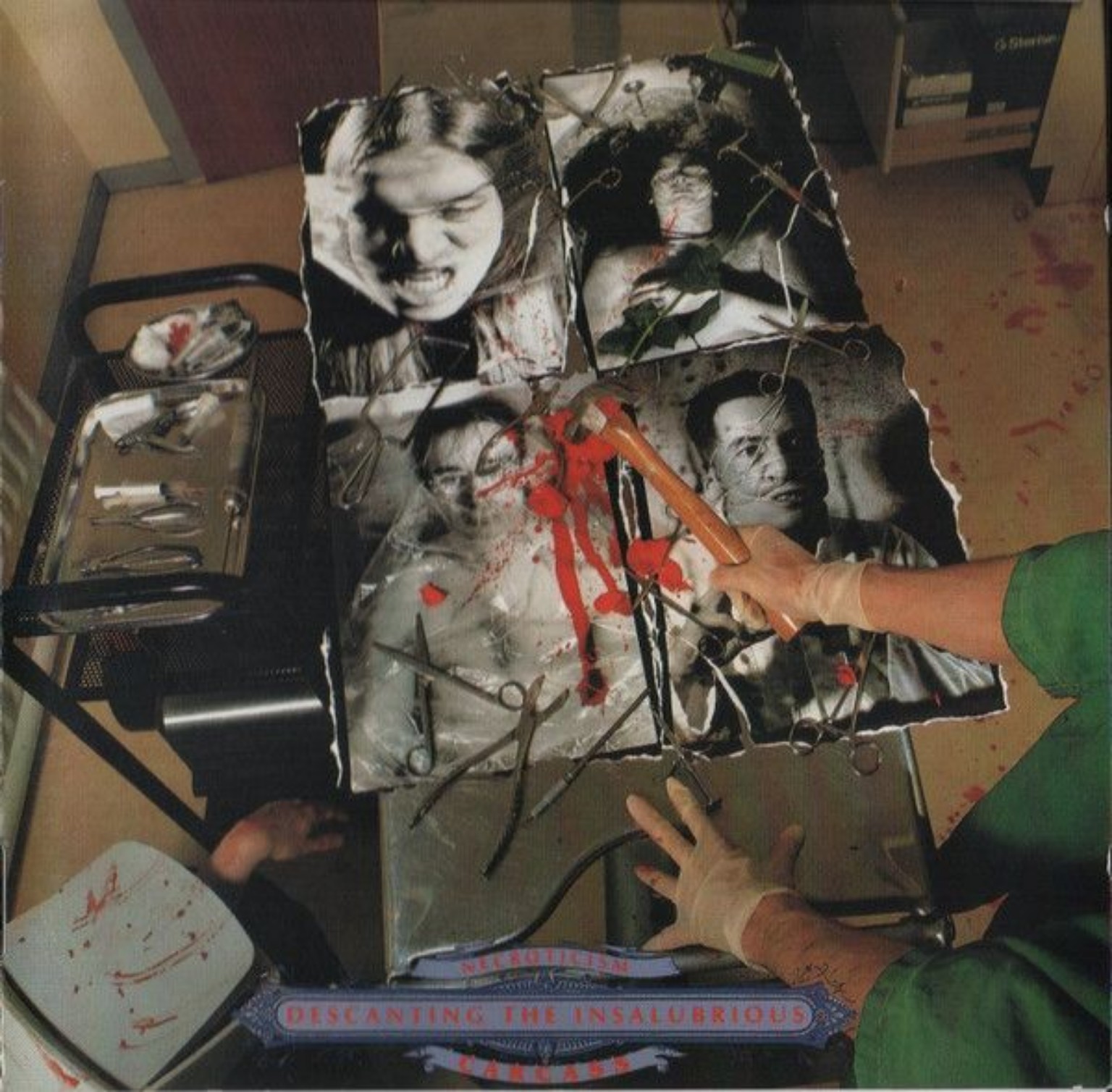
The front cover does not introduce this world through an abstract emblem. Seen from above, it depicts a cramped, ordinary room, with black-and-white portraits arranged next to and on top of one another at its centre. Torn edges, folds and joins in the sheets prevent us from seeing them as an intact body. Faces are arranged like individual components. A metal tray, medical instruments and gloved hands promise an examination, yet an arm in green clothing reaching in from the right holds a hammer. The crude tool disrupts the very expectation of a delicate procedure.
Among the greyish portraits, patches of red both connect and separate. Against the muted brown, green and grey surroundings, the colour evoking blood and the hammer's orange-tinged handle stand out. To the left, the orderly objects on the instrument tray contrast with the dismembered faces assembled in the centre. The floor, furniture and an arm emerging from a rubbish bin set the absurdity in a recognisable space. The palpable textures of paper and surrounding objects together create an atmosphere of menace and deliberate excess.
The album lettering at the bottom, framed in ornament, seems to join the scene as yet another object. Instead of preserving the subjects' portraits intact, the composition reuses faces already turned into images. It therefore offers a visual counterpart to the body puzzle of Corporal and the objectifying fantasies of the other songs. Alongside horror, the hammer and assembled portraits also provoke humour. That is one way to interpret the image; the recollections of those involved bring us closer to the history of its making.
In the third part of The Pathologist's Report, the participants describe physically assembling the pictures and then taking a new photograph of the arrangement. The cover is thus a photographed collage. The close-up view that also appears in the booklet directs attention to the layers of faces and red patches, while the original front cover retains the hands, the objects in the examination room and the entire theatrical situation. Its method combines arrangement by hand and photography.
In a 2021 Decibel interview, Walker identified the location as the veterinary surgery belonging to Ken Owen's father and named Ian Tilton as the photographer. Instead of repeating the earlier death-metal collages, he wanted a less conventional photographic visual identity, something he could even imagine in the orbit of 4AD. The final arrangement came together through many spontaneous decisions on location. Walker and the photographer did not recall the arm emerging from the bin in the same way; Steer thought the hand holding the hammer was probably Ken's, but did not offer a definitive identification.
Amott did not take part in the shoot and at the time found the result less poster-like than he would have preferred. Steer had already told Mortuary that they did not want to repeat the visual approach of the first two albums. The change was therefore tied to a direct creative intention, even though the members did not all share the same taste when judging how it turned out. That difference foreshadowed the later debate over the cover.
The inner booklet gave the songs another visual surface. Dense white lettering lies across the layers of an anatomical drawing of a head; lyrics and songwriting credits are inscribed over the cross-sections. The motifs of instruments arranged around the disc turn medical tools into an emblem. The individually named solos extend the grotesque subject to the instrumental passages too, adding another play on words alongside the identification of the performer. Tilton's photographs, the layout work of Martin Nesbitt and Jeff Walker, the anatomical illustrations and Walker's lyrics thus give the album a physical form that belongs to the same world as its music.
Eight Cases
Inpropagation
The finished album does not offer its most immediate song as a point of entry. The long form of Inpropagation demands from the outset the attention on which the subsequent compositions also depend. In 2016, TrooperEd regarded this as precisely the right choice: neither Corporal Jigsore Quandary nor Incarnated Solvent Abuse would have created the same opening atmosphere. Before the more readily recognisable focal points arrived, Carcass presented its more complicated self.
Walker wrote the lyrics to all eight tracks, but the history of the music's composition differs from song to song. Within their dense forms, the earlier joint work of Owen and Steer, Amott's involvement and the band's rearrangements carry different weights. The timings printed on the back cover add up to 46:31, but that is the sum of the published figures, not a measured total running time for the recording. In the history of these songs, such printed data belong to the physical release, just as the songwriting credits and individually named solos do.
Among the audible elements, several later critics singled out the contrast between the two principal vocalists. In the descriptions by Lars Christiansen and, later, NocturneSP and ColdJustice, Walker's higher, raspier voice answers Steer's deeper one. They considered this vocal contrast as integral to the album's identity as Owen's changing drum rhythms and the guitar solos. Together with the rhythm section, it was this interplay that made the internal movement of the long pieces recognisable to them.
Inpropagation is listed at 6:19. Its lyrics replace respect for the dead with the absurd utilitarian outlook of a gardener: ashes, bones and other remains are used to nourish the soil. In place of the consoling image of nature's cycle comes a process in which even the dead human being becomes material that can be put to work. The tension between the vocabulary of burial and that of economic usefulness produces the grotesque effect. What would be mourned as a personal loss becomes a resource in the speaker's eyes.
The music is credited to Owen and Steer. The long composition carries forward an early stage of their shared songwriting and grows into a form which Steer, in 2021, found difficult to recall in its entirety. Even one's own creation does not necessarily become a simple structure that memory can take in at a glance. The complexity of the piece remained a practical challenge in the musician's own retrospective account.
In a track-by-track review for Sputnikmusic, EonBlueApocalypse singled out the spoken sample, rapid drumming and melodic lead guitar that develops later in the song. For this listener, length did not mean fatigue but sustained interest; Inpropagation received 5/5. In his 2009 piece for Thrashocore, cglaume pointed instead to a heavy rhythmic passage at around 5:55. The two descriptions focus on different moments, but both find the long form's purpose in changes of tempo and character.
Reviewing the 2013 FDR CD in 2016, Deathdoom1992 named this song a personal high point. At the same time, the reviewer considered the mostly long, technical material accessible to a rather narrower audience from the outset. Thus the opening track could be both the album's strongest section and an example of a difficult point of entry. This duality runs through the record's reception: the richness hidden in its details requires the very attention without which its length may become burdensome.
Corporal Jigsore Quandary
With a printed duration of 5:27, Corporal Jigsore Quandary seems a more accessible track after the vast opening. In the lyrics, a dead body becomes a jigsaw puzzle. Limbs, bones and coffin become parts of an assembly task in which the ordering of components replaces the person. Practical questions about solving the puzzle conceal human dignity, and black humour emerges from that absurd shift of attention. Rather than documenting a real criminal case, the song carries through a fantasy of the body turned into an object.
The original booklet names Steer and Owen as composers. A later database credit also lists Amott, who recalled one riff in the melodic middle breakdown as his own idea. Walker counted Corporal among the pieces developed later and remembered less input from Owen than on several earlier compositions. The printed list and later memories therefore preserve different kinds of information. Neither discrepancy supports a confident percentage breakdown of authorship.
Many listeners recognised the opening drum pattern as the song's signature. EonBlueApocalypse highlighted the opening rhythm, main riff and solos, again awarding 5/5. Writing from a drummer's perspective in 2023, CelestialEmissary focused on Owen's shifts of accent and the instrument's leading role. As early as 2004, Matteo Bovio had found one of the strengths of the new Carcass in its memorable central riff. For him, after the earlier density, the arrival of an identifiable motif marked the change, rather than merely an increase in technical difficulty.
The melodic middle section could also provoke the opposite response. cglaume welcomed the shift around 4:03 as a groove-driven, melodic moment, while in 2022 Annable Courts regarded precisely such more rock-oriented relaxation as a disruption of the atmosphere. For one listener the contrast widened the threatening world; for another it broke the spell. The song's later fame through video did not remove that difference. Corporal became an easily named focal point of the record while remaining part of the debate over its form.
Symposium of Sickness
The third track, Symposium of Sickness, is listed at 6:39. Here the lyrics also raise the question of whether grotesque art is legitimate. The image regarded as morbid, the moral accusation and the issue of taste come to the foreground. Rather than simply telling another horrific tale of the body, the speaker exposes the conditions under which such writing might be judged. Exaggeration claims a place as a language in its own right, without every image having to turn into a compulsory moral lesson.
Owen's importance as a composer is clearest in Symposium. The contemporary credit gives his name, and Walker and Steer also associated the crucial foundation of the piece with him in their anniversary conversation of 2021. The long composition, then, is not merely a showcase for the drummer's technical execution. The man whose rhythmic work later critics often praised was also involved in shaping its structure.
EonBlueApocalypse nevertheless did not hear the same degree of success here as in the first two tracks. The link between the opening blastbeat and riff seemed less effective, the piece less memorable, and the score was 3.5/5. In 2023, by contrast, Hames_Jetfield included Symposium among the tracks specifically singled out for praise while awarding the entire album 100%. An adventurous structure and instant memorability did not count in the same proportions for every listener.
Walker's 2021 interview with Revolver also addressed the song's self-referential role. Medical vocabulary is not the same thing as medical practice, and a lyric's speaker is not a witness to the musician's personal actions. In the participants' interpretation, Symposium includes a voice offering an answer to the moral misunderstandings surrounding Carcass. Here the right to provoke and the examination of the album's own language come particularly close together.
Pedigree Butchery
Pedigree Butchery follows with a back-cover timing of 5:50. Its absurd process of turning the human body into animal feed reverses the familiar chain of consumption. Anyone who considers another living being a product, meat or nutrient becomes raw material for that same process. The words associated with care, parenthood and nourishment do not remain innocent either: language promising care is drawn into a grotesque system of production.
The original booklet attributes the music to Steer and the lyrics to Walker. Set against Steer's personal vegetarianism, this moral reversal takes on particular weight, but that still does not make the song a shared ethical declaration by every member. Instead of a direct slogan, it makes the everyday logic of processing bodies uncomfortable. The lyrics' force lies in displacing familiar concepts: the same logic becomes unbearable when its object changes.
In musical assessments, more melodic passages and a sense of pulse stand out. EonBlueApocalypse heard these sections as a welcome chance to breathe and gave the track 4.5/5. cglaume identified the passage developing from 3:06 and a solo at about 3:42. In 2008, Crank_It_Up_To_666 praised the groove as a meeting of heaviness with a more clearly separated instrumental sound. In all these details, the reviewers heard the changing movement of the long song as important.
Bovio, Tatzel in a Dutch review from 2010, and lonerider writing retrospectively in 2013 also placed Pedigree among their favourite stops along the way. The extreme lyrics did not disappear just because the guitar writing offered more points of orientation. The track thus shows how much continuity could coexist with the new form. Early grotesquerie and more detailed arrangement did not cancel one another out, but placed their different demands side by side.
Incarnated Solvent Abuse
The printed duration of Incarnated Solvent Abuse, 4:32, identifies the other comparatively direct piece. The body is turned into glue, while the product is associated with the self-destructive image of inhaling solvents. On one side, industry seeks profit from human material; on the other, someone finds intoxication in the fumes of the finished substance. The distance between precise-sounding chemical names and commonplace glue creates Walker's particular humour in a remarkably concentrated form.
Amott and Steer appear on the songwriting credit. Principal ideas, middle sections, structural suggestions and drum patterns came from different participants before the original riff material became a Carcass song. Amott's solo work in the studio belongs to this story, but is not identical with the writing process itself. The booklet gives the solos names evoking glue inhalation and a thick residue. The instrumental interlude therefore continues a linguistic side-thread of the lyrics' subject.
EonBlueApocalypse described the song as an almost uninterrupted assault and scored it 4/5. cglaume pointed to a groove change around 4:22. For Tatzel it was the album's personal peak, while Jason Birchmeier at AllMusic also singled it out. Across these different accounts, Incarnated concentrates a more identifiable central character within the same concern for detail that shapes the longer pieces.
The song's video gave that character a new public presence. Amott recalled the white set, white body paint and regular screenings on the European Headbanger's Ball. Walker and Steer were much less fond of the result. Public recognition and the participants' satisfaction were therefore not the same thing here either. The video's lasting imagery and the song's musical role on the album remained related but distinct stories.
Carneous Cacoffiny
For Carneous Cacoffiny, the original back cover printed 6:31. The lyrics turn the elevated promise of artistic survival into tangible material use: instruments are made from the dead, as though their lives could continue through their remains in music. The vocabulary of composition, conductor and concert hall meets that of burial and bodily raw material. What elsewhere would promise immortality is achieved here by erasing the person.
To Steer's music, Walker added his own grotesque vision of art. Following Inpropagation's gardener in pursuit of profit, it is the artist who takes possession of human remains. The album's objectifying logic thus does not target a single occupation: it summons the same absurd selfishness from behind art's supposed nobility. The wordplay joining flesh and sound in the title suits this double vision.
EonBlueApocalypse rated the gradual intensification, changes of pace and flow of heavy riffs at 4.5/5. cglaume chose a fast thrash passage around 2:28 as an example. In 2013, lonerider felt that the song's riffs contained almost enough ideas for an entire album, while NausikaDalazBlindaz noted an unusually light sense of swing in 2012. Not every listener experienced the density as an equally heavy, unchanging mass.
There is a tempting interpretive link between music assembled from many sections and an orchestra made from the dead. Yet this is not a documented recipe for composing the song, but a meeting between two layers of the finished work. Carneous makes it especially clear that the linguistic humour is not merely an explanation laid on top of the sound. It builds an independent world which, together with the instrumental abundance, becomes memorable in the critics' accounts.
Lavaging Expectorate of Lysergide Composition
The seventh title, Lavaging Expectorate of Lysergide Composition, carries a printed time of 4:04. Its shorter lyrics turn the body's previous stories towards the loss of control over perception and consciousness. Exaggerated images of various compounds and hallucinogenic effects appear; now the human being is vulnerable even in their sense of self. The language does not describe a pharmacological procedure, but a grotesque state of losing control.
Steer is credited with the music and Walker, as elsewhere, with the lyrics. The shorter running time did not automatically make this the most accessible track. EonBlueApocalypse rated it 3/5, finding it more repetitive and less memorable. NausikaDalazBlindaz considered it partly filler, though also noted its grooves. By contrast, DethFanatic named it among personal favourites as early as 2003, and morbert listed it among particularly catchy examples in 2008.
cglaume drew attention to a break around 0:32, Annable Courts used the opening as an example of the more clearly articulated sound, and JohnHolmes praised the riff work. Between the larger compositions, the track offers another kind of concentration. The conflicting responses do not establish one definitive place for it in any ranking of fan favourites. They do show, however, that brevity and memorability are not the same measure.
The song also left a trace in radio broadcasts after the album appeared. A fan-maintained programme listing for John Peel's broadcast of 16 November 1991 includes this title. Necroticism was therefore not represented only by the tracks later promoted with videos. A new song by a band that had grown out of local and international underground networks reached listeners through the same radio channel that had mattered during the early sessions.
Forensic Clinicism / The Sanguine Article
The printed 7:09 for Forensic Clinicism / The Sanguine Article marks the grand finale. The operating theatre becomes a stage; intervention is presented as artistic achievement, and the grotesque expert searches the body for proof of his own greatness. Words promising healing conceal destructive actions. After the composer of Carneous, another figure who sees himself as practising a higher calling appropriates a human being.
Here Steer's music and Walker's lyrics take on an extended form suited to the double title. Rather than resolving every strand of an earlier plot, the song demonstrates the method of pathological role-play once more. Remains could become soil, a puzzle, nourishment, an industrial product or an instrument; at the end, the act of transformation itself becomes a performance. The human being supplies its raw material, while glory goes to the self-congratulating expert.
The reviewer Primary ABYSS, who gave the album as a whole only 5/10, selected this as its strongest track. EonBlueApocalypse, awarding 4/5, praised a heavy, relentless sequence of guitar parts, and morbert later hailed it as a death-metal epic. JohnHolmes admitted being unable to untangle every detail of its complexity. For that listener, too, the grandeur of the closing track did not mean easy comprehension.
Commander Octopus also regarded Forensic as particularly important in a personal review from 2022 that awarded the album 100%, while sometimes hearing a loss of direction elsewhere on the record. The great finale therefore does not retrospectively prove that every digression was necessary. It shows how far the band could take this form, and why the same undertaking might sound like inexhaustible richness to one listener and an excess of detail to another.
The eight cases do not become the story of a single protagonist. Between the imposing opening and closing structures, Corporal and Incarnated offer the most frequently cited points of recognition. Symposium questions the right to expression; Pedigree and Incarnated turn towards consumption and industry; Carneous towards art; and Lavaging towards perception. Spoken passages inserted between the songs give the different fantasies an institutional atmosphere, while recurring vocabulary binds them together again.
Walker's baroquely dense vocabulary and the instrumental forms' appetite for detail raise a similar question: when does accumulation enrich the experience, and when does it begin to make it harder to follow? Later interpretations of the album diverge at precisely this point. The shared material does not yield a unanimous answer; it creates a form that fresh listeners can grasp through different passages.
The Record Leaves the Studio
Necroticism – Descanting the Insalubrious reached audiences in the autumn of 1991 as Carcass's third full-length album on Earache. The designation MOSH 42 belongs to the vinyl release, and MOSH 42CD to the CD edition. The original year and the period at the end of October are more firmly established than a single day: Decibel's 2021 introduction gives 30 October, while the label's Bandcamp entry says 31 October. The discrepancy between these two dates remains part of the history.
In the third issue of Mortuary, Steer still hoped for a release in early November and spoke about finalising the contract. The issue bears the year 1992, but the interview preserves an earlier, pre-release situation. A plan and an actual release are not the same event. Without the exact day the interview was recorded, the difference cannot be eliminated by inventing a date. Behind the finished material lay the work of arranging the financial agreement, distribution and promotion.
Steer felt that the previous album had been poorly distributed, and he was not entirely satisfied with Earache either. He did not frame this as an exceptional, one-of-a-kind hostility: in his view, other bands had similar complaints about their own labels. A company rooted in the underground could both offer new opportunities and impose constraints. Necroticism ultimately reached the shops through the combination of recording begun with the band's own money and a renewed relationship with the label.
Six days around the release
The final days of October did not cease to follow their ordinary course simply because an extreme-metal record was reaching its audience. Britain was struggling through a recession under John Major's government. The Soviet Union still existed, though the future of its republics, and of Eastern Europe more broadly, was being reshaped; Sweden had already applied to join the European Community. The war in Yugoslavia was not something later generations projected back onto that autumn: it was already affecting people's lives. Necroticism appeared in this world, although its songs had been written and recorded earlier. The news surrounding its release did not cause the music to be made; it belonged to the time into which the record arrived.
British Summer Time ended on 27 October, and in Liverpool the evenings now began earlier by the clock. Observations at the airport recorded temperatures between eight and eleven degrees Celsius on 28 October, with drizzle; on Tuesday they ranged from ten to thirteen degrees, with light rain and misty conditions. These were measurements from a station near the city, not entries in any musician's personal diary. That same Monday, Queen released the compilation Greatest Hits II. Even that single date revealed two very different kinds of visibility in the British record market: a major-label collection of familiar hits and a Carcass album approaching release on Earache, watched by a far smaller underground audience.
On the evening of 29 October, 21,553 spectators at Anfield watched Liverpool draw 2–2 with Port Vale in the League Cup. Ordinary life in the city continued around its familiar events. The following day, Liverpool Airport recorded a minimum of seven degrees and a maximum of twelve, along with light rain. That evening, at Goodison Park, Everton beat Wolverhampton Wanderers 4–1. Meanwhile, 30 October was also one of the release dates preserved in sources for the Carcass record. Neither the football matches nor the weather observations tell us anything about the band members' movements that day. They do, however, place the release more precisely within the city and everyday world to which its timing belonged.
That same Wednesday, the Middle East peace conference opened in Madrid under American and Soviet co-chairmanship. While diplomats sought a way forward there, reports of artillery attacks came from Dubrovnik. A later United Nations document quoting a contemporary European monitoring report records six civilian injuries on 30 October. The two events concerned different regions and different conflicts, yet both belonged to the history of 1991. Two days earlier, in Russia, Boris Yeltsin had set out an extensive programme of economic reform. The changes shaping Europe and the wider world thus formed more than a vague historical backdrop: they were developments that could be placed on particular days of the album's release week.
Carcass's official Bandcamp page gives 31 October as the release date. At Liverpool Airport that day, temperatures ranged from eight to twelve degrees; rain was reported, and the strongest recorded gust reached 88.9 kilometres per hour. That does not mean a storm was raging in every part of Liverpool throughout the day. Another nationally identifiable event on that date was Queen Elizabeth II's speech at the opening of Parliament, which addressed the government's plans as well as Europe's changing security situation. British political business, the weather and the world of an underground record issued in relatively small numbers moved at very different rhythms, yet they shared the same day.
On 1 November, the airport records show temperatures holding between ten and thirteen degrees, with rain and strong winds; a gust of 77.8 kilometres per hour was also recorded. In Madrid, the peace conference's three-day opening session reached its end, while further shelling was reported in the Gruž and Lapad areas of Dubrovnik. On Saturday, Liverpool's weather observations again recorded cool, rainy conditions. At Anfield, Crystal Palace beat Liverpool 2–1; in London, Australia defeated England 12–6 in the Rugby World Cup final. As the week drew to a close, everyday sporting results, international diplomacy and reports of war continued to exist side by side. Necroticism's release belonged to that ongoing flow of time, rather than to a moment when everything else stood still.
The British charts offered an especially clear picture of how different musical audiences lived alongside one another. For the week of 27 October to 2 November, U2's The Fly led the singles chart, followed by the collaboration between Vic Reeves and the Wonder Stuff, then 2 Unlimited. Simply Red's Stars topped the albums chart, with Tina Turner's compilation in second place. Carcass was not seeking its place in that mass-market world. Through the interlocking network of independent labels, specialist record shops, fanzines, correspondence and concerts, the third album's longer, more carefully structured songs reached listeners who knew the band's earlier extremity but did not necessarily expect the same next step. The first reviews would make those different expectations clear.
The early reception did not everywhere greet a classic already recognised as such. Nick Mertaugh wrote with deep disappointment in Disposable Underground. He objected to the loss of the old grind sound, solos he found showy and riffs he considered boring. For him, Reek occupied one extreme, Symphonies was an intermediate stage, and Necroticism had moved too far away from the sound he loved. The review was recalled in a Steer interview published in the fifth issue in 1992; the review itself had appeared in the preceding issue.
The contemporary reviews
In his response, Steer defended the need to move forward. Two years earlier they had been interested in different music and approaches, and he saw no point in reproducing Symphonies. He took higher concert attendance and what he perceived as increased sales as signs that new listeners were coming to the band. He accepted that some of the old audience would be lost, but did not regard speed and heaviness alone as substitutes for musical ideas. Fans' sense of loss and the band's artistic development were two simultaneous readings of the same record.
ABYSS gave the album 5/10 in the first issue of Primary. The cover says January 1991, while the introduction inside says January 1992; a text reviewing Necroticism fits the latter date. The critic acknowledged improvements in playing and sound, yet personally disliked the new Carcass. There were complaints about the spoken samples, lyrics and the intelligibility of the vocals, although Forensic was named the strongest track. The score was therefore not a denial of every advance, but a separation of technical appreciation from the listening experience.
An 8.5 rating and a date of 21 November 1991 are associated with issue 56 of Rock Hard. Alongside the early rejections, the favourable score is an important counterpoint, but it cannot by itself reconstruct the review's full argument. The audience around the album's release cannot therefore be described either as uniformly hostile or as celebrating with one voice. The change was real, and its consequences differed according to what each listener expected of Carcass.
The videos made the band recognisable to new listeners. In Walker's later recollection, the relative directness of Corporal and Incarnated explained why they were chosen. Video production, meanwhile, took place under financial constraints. Amott remembered Incarnated's white set and day of body paint as his first experience of appearing in one of his own videos; at the end of the long day, their car had been towed away. Such an ordinary memory became attached to what would later be an emblematic image.
As early as 1992, however, Steer spoke of the result as something in which the director had ignored their ideas. Because of the money spent, they still had to release it. He considered the version assembled from Astoria concert footage for Corporal somewhat better, though in his view even that edit failed to follow the music properly. Walker later found the Incarnated video embarrassing too. Amott, by contrast, stressed the part played by frequent European airings on Headbanger's Ball in making the band better known. Success and creative taste did not become the same thing with the passing of time.
Tours and new audiences
In 1992, the Gods of Grind tour brought the different worlds of Entombed, Carcass, Cathedral and Confessor together under a shared name. The London Astoria date was 18 March. In an interview with Underground Empire on 30 March, Walker rejected the label itself; Steer later saw the label as record-company marketing. The tour's memorable name made the music seem simpler than the members believed it really was.
Touring did not remain in the participants' memories as a permanent succession of sold-out venues. Walker told Spikehead about the contrast between larger American stops and places that showed scarcely any interest. He mentioned Marseille as a bad experience and stressed the importance of a promoter's work. Meanwhile, the many letters arriving through fanzines told a different story of interest than the audience at any one show. The size of the band's network could not be measured by a single night's attendance.
Later recollections by several participants in the American Campaign for Musical Destruction tour preserved memories of long drives in vans and budget accommodation. In 1996, Owen also reflected that after several years of American concerts he still had not felt that the band's audience overseas was disproportionately larger than in Europe. An expanding international market did not erase the difficulties of touring on a small scale. The long songs had to be played in new rooms night after night, to audiences that did not necessarily know their twists and turns in advance.
The Tools of the Trade EP provided another continuation of the studio work. Steer described an album outtake that had been left off because it seemed out of place, two new recordings of older songs and one track carried over from the album. He did not regard the EP as a predesigned programme for the next full-length record. Later bonus editions therefore do not alter the structure of the original eight-track album. Replaying earlier material instead brought past ideas into contact with new production possibilities.
Carcass Takes New Paths
The idea for the next album was already forming during the tours for Necroticism. In Walker's later recollection, after the long, winding compositions, they were looking for shorter, more orderly songs. In a telephone interview on 4 June 1996, Ken Owen added what they had learnt from playing live: an audience hearing the music for the first time could find a succession of abrupt riff and tempo changes difficult to follow. A concert was therefore not just a presentation of songs already finished, but also one of the forces shaping their next approach to songwriting.
Heartwork, released in 1993, emerged from that process, rather than simply repeating the third album. Amott's melodic approach to guitar took on a larger compositional role. The balance of contributions on Necroticism remains what it was: Steer and Owen's earlier foundations, Amott's identifiable participation and Walker's work on structure and lyrics do not change because their collaboration took a different form on the next record. The same musician could play a different degree of creative influence from one album to another.
In assessments made in 2015 and later, Steer felt that the sound of Heartwork came closer to what he had been seeking for some time. A fan's favourite record and the best realisation of a musician's technical aims need not therefore be the same title. Necroticism could remain a high point of compositional daring even while Steer's studio ideal continued to evolve. Progress was not an identical improvement for every participant measured along a single scale.
The line-up also changed after Heartwork. Michael Amott was succeeded on tour first by Mike Hickey, then by Carlo Regadas. They already knew Regadas from the local band Devoid, and Steer had encountered their work in the studio as well. Older personal ties from the Liverpool scene thus continued through Carcass's international career. In a 1994 interview with Disposable Underground, Walker explained the membership changes in terms of differences in how they worked together, rather than the story of one definitive scandal.
The next era
By this time, complaints demanding the old sound back had followed the band through several albums. Walker recalled that the accusation of 'selling out' had already surfaced during the changes after Reek. Yet the band did not choose to make an unchanged copy of its earlier music. Songs from Necroticism, Symphonies and Heartwork remained side by side in live sets, while new compositional ideas led towards the later Swansong.
Owen's 1996 conversation also illuminated the next change in record-label relationships. After Columbia licensed the American distribution of Heartwork, the band sought a new agreement and signed with Columbia. According to Owen, however, the major label did not find the Swansong recording commercial enough, particularly objecting to Walker's vocals. Communication between the British and American offices slowed matters, the release was delayed, and the members tried to regain control of the recording. Earache eventually became the label behind it once again.
That is a different story from running out of studio money in 1991. Contractual difficulties surrounding different albums can be placed side by side, but should not be fused into a single unchanging conflict. In 2006, Walker also cited exhaustion after years of working together and increasingly divergent ideas among the reasons for the breakup. Steer remembered personal disagreements around the time of Swansong. Those later tensions do not prove that the same crisis was already present when Necroticism was made.
The split opened up several directions. Walker and Owen's Blackstar period, Steer's turn towards other music and Amott's later work with Arch Enemy were not parts of one continuation. Meanwhile, the older Carcass records reached listeners whose first encounter with the band no longer came through a group actively making new albums. The importance of the 1991 material could grow even while its creators were occupied elsewhere.
Ken Owen and the band’s later years
Ken Owen's severe health crisis in 1999 also marked a personal boundary in the album's afterlife. Those involved spoke of a brain haemorrhage, a coma and a partial recovery. His subsequent condition limited how he could take part when the band resumed activity, but did not change his earlier place as a composer. The musical foundations of Symposium, the early riff work and the shaping of the longer forms all belong to the same Ken Owen whose creative importance his bandmates repeatedly emphasised.
The reunion around 2007–2008 was initially conceived as a short series of concerts. Amott and Daniel Erlandsson were part of the first returning line-up, but the band's later activities took another direction. Steer's renewed creative interest and several years of playing together eventually led to new songs in 2013, on Surgical Steel. The comeback did not remain an occasional exercise in replaying older material.
Owen did not return in his former role as drummer. His vocal contributions and his opinions nevertheless remained part of the continuity of friendship and creative work. Steer considered it important how Owen felt about the new music and the playing of the new drummer. The old collaboration did not become merely a museum memory when others took over some of its duties. Personal connections and musical inheritance lived on in another form.
Later CD, cassette, vinyl and digital editions of Necroticism meanwhile offered different ways into the old songs. The Tools of the Trade bonuses and documentary extras provided background of which an original listener would mostly have known only the end result. The participants' retrospective documentary in 2008, followed by the detailed conversation in 2021, offered new perspectives on the division of songwriting, the money and the making of the cover, even though the music itself was already familiar.
'Full Dynamic Range' was a designation used by later editions. It cannot replace an actual comparison of the different audio versions, but historically it shows how the material was offered anew. In their reviews of reissues, Frank Stöver and Tatzel brought together an assessment of the old album and the new documentation surrounding it. The music's independent life was thus further shaped by changing forms of distribution and remembrance.
Nor did Carcass's own later memories settle on a single final verdict. Walker tended to see anniversaries in terms of moving forward; Steer heard both what the old production had achieved and the goal still unrealised; and Amott stressed how their earlier collaboration helped discipline his work later on. When they made it, none of them began with the certainty that decades afterwards it would be regarded as an established classic.
The Record's Long Life
Reviews written as the years went by looked back at the 1991 album with knowledge of Heartwork and the band's later career. Writing for MetalBite in 2002, Allan praised the clearer sound, the work of the two guitarists and Owen's technique, but did not remain engaged throughout longer listening sessions. Heartwork seemed more mature and coherently assembled to him. On the page, a final score of 7.6/10 appeared alongside a different number in the summary field; the two cannot simply be reduced to one invented rating.
In 2003, DethFanatic already regarded the album as Carcass's most complete achievement, awarding it 95%. In the exchanges between Steer and Amott's solos, the reviewer looked for a contrast between more melodic and more dissonant approaches, and liked the balance between the murkiness of the earlier sound and the polish of the later one. In 2004, Matteo Bovio rated it 90/100 and celebrated a turning point, focusing on Corporal's memorable main theme, the character of Pedigree and Carneous, and Richardson's clarity, which still preserved the rough edges.
Several turns of phrase in Frank G's 2005 piece for DeBaser were strikingly close to those in Bovio's earlier article. The two publications should therefore not be treated as two independent confirmations of the same argument. Frank G also repeated the legend of the band's medical degrees, then later withdrew the claim himself. The originality of Carcass's medical language required no such invented professional qualifications. Metaphorical role-play did not become an actual career in surgery.
Writing in 2005, corviderrant awarded 90% and saw the album as the culmination of the path towards the definitive four-piece line-up; that same year Manchester_Devil, awarding 95%, praised it as the last great form of the medical role-play. These emphases differed from those of listeners who wanted the original rawness back or who chiefly favoured the band's later melodic direction.
Djavul's 65% review in 2006 preserved another sort of resistance. The reviewer acknowledged the album's originality and influence, yet found its long mid-tempo sections dull and many of its riffs hard to distinguish from one another. A few motifs in Corporal offered lasting points of reference; personally, Djavul enjoyed later records by Impaled, Aborted and Exhumed more. Historical primacy did not oblige the reviewer to admire the music.
In a 2007 review for The Metal Crypt, rated 5+, Lars Christiansen found a career peak in precisely the long forms. The more articulated mid-tempos, dual vocals, solos and humour combined into a unified experience for him. That same year, alteredstate awarded 95% and praised the fit between atmosphere and brutality. The following year, Crank_It_Up_To_666's 100% stressed a heavy yet distinguishable instrumental sound, while morbert's 98% celebrated the catchy passages and a balance less polished than Heartwork.
Later assessments
In 2008, JohnHolmes interpreted the songs as a thematic whole in DeBaser, though finding the bass less distinctive. For this writer, the idea of a 'quasi-concept album' was a fruitful reading, not evidence of a plot planned beforehand. In 2009, MetalHeadNorm awarded 94% while sometimes finding the spoken samples forced. That same year, cglaume emphasised how slow, heavy grooves could coexist with brutal speed. Increasingly, different reviewers saw an achievement in its own right in what others had called merely a stepping stone between two eras.
In a 2010 piece for Metalfan.nl, Tatzel gave the record 92/100, put Incarnated at the top of a personal list of favourites and also discussed the later EP and DVD extras. In 2012, TheLegacyReviews rated the album 98% while finding Necroticism's visual appearance grey and weak. In the same year, NausikaDalazBlindaz gave it 90% yet personally preferred the uncontrolled energy of Reek. Even strongly favourable scores did not mean identical attitudes towards every period of the band.
A 9.5/10 review on Metal1.info in 2013 placed the guitar duo, Owen's rhythms and Richardson's contribution within the story of the band's development. The article incorrectly identified Amott as British. That does not alter the nature of its musical praise, but the claim cannot be retained as biographical fact. Also in 2013, lonerider awarded 98%, praising the multilayered riffs and vocal contrast while regarding the album as one that demanded patience rather than offering an easy first encounter.
StainedClass95 awarded 99% in 2014, but still raised reservations about the sound: the bass seemed less audible and the drums were perceived as mixed further into the background. The absence of the earlier, rougher visual collages was a separate loss for this reviewer. In the same year, Krzysztof Niweliński gave the songs detailed praise on ArtRock.pl, awarding 10/10. In an Italian review rated 95/100, Nikolas De Giorgis emphasised the heaviness and instrumental motifs, while Jason Birchmeier at AllMusic focused on its longer forms, which also drew on thrash.
In 2016, TrooperEd placed Necroticism behind Morbid Angel's Blessed Are the Sick and awarded it 95%. Meanwhile, despite rating it 90%, Deathdoom1992 questioned Corporal's position on the album and considered the bonuses on the 2013 CD unnecessary. Alongside historical significance, sequencing, proportions and reissue contents had become matters in their own right. In a 2020 review awarding 100%, NocturneSP concentrated on the dual vocal approach, the rhythm section and the ironic idea of putting dead bodies to practical use.
The thirtieth anniversary brought renewed attention. In an essay dated 25 October 2021 for The Quietus, Keith Kahn-Harris brought together the structure of Inpropagation, grotesque irony and the international death-metal context of 1991. The following year, Necroticism took first place in Rich Hobson and Dom Lawson's Metal Hammer ranking of the band's albums. By that point, the canon was judging from a very different distance than the first disappointed fanzines had been.
The album’s legacy
Agreement, however, remained far from complete. Writing in 2022, Commander Octopus rated the record 100%, praising its lengthy, movement-like structures and the twin-guitar tradition, while sometimes hearing a loss of direction and underdeveloped atmospheric possibilities. Annable Courts, awarding 84%, objected instead to the collision between dark passages and more relaxed rock-oriented sections. The two authors sought unity from different starting points and judged the detours differently.
CelestialEmissary's 100% review of 2023 was shaped in part by closely following the drumming and by the personal importance of this being the first Carcass album the reviewer had heard. Hames_Jetfield likewise awarded 100%, praising the transformation in songwriting and instrumental work as a whole, rather than crediting the change to a single new member. In 2024, Mercian Doomster awarded 90% while preferring Symphonies; the forensic horror of Necroticism, which seemed closer to reality, was nevertheless valued in its own right.
In 2025, ColdJustice awarded 100% and celebrated the coexistence of melody with brutal, angular riffs. What this reviewer heard as a clear, almost sterile sound, however, specifically concerned the listening experience of the 2013 Full Dynamic Range CD. That same year, Patrick Olbrich gave the album 10/10 in a retrospective for metal.de. The old record continued to reach listeners through very different new editions, personal first encounters and the perspective of music made since.
The album became a meeting point for several different ways of appreciating Carcass. It was not proof of a single correct ranking, but a shared point of reference that continued to provoke debate.
There is therefore no need to magnify Necroticism's importance until it becomes the sole origin of all death metal. Swedish, British and American bands were finding their own paths in different studios during the same period. Among them, Carcass forged a recognisable balance from Owen and Steer's long forms, Walker's dense language, Amott's ideas and solos, and Richardson's professional work. The risk lay not only in the money, but also in how far they were prepared to let the next album depart from the form their existing audience loved.
The cover, with portraits rearranged into a new image, remained a strange counterpart to that work. Its pieces are visible; the joins do not disappear. The music, too, preserved the abundance of successive ideas, while the lyrics preserved the absurdity created from technical language and ordinary calculations of usefulness. Early objections and later praise judged the same creative gamble in different ways. It was this rearrangement, difficult to sum up yet pursued with such consistency, that gave the third Carcass album its distinct form.
Band channels
Artist channel · Bandcamp (external) ↗Explore related albums
From the same musical world in our archive
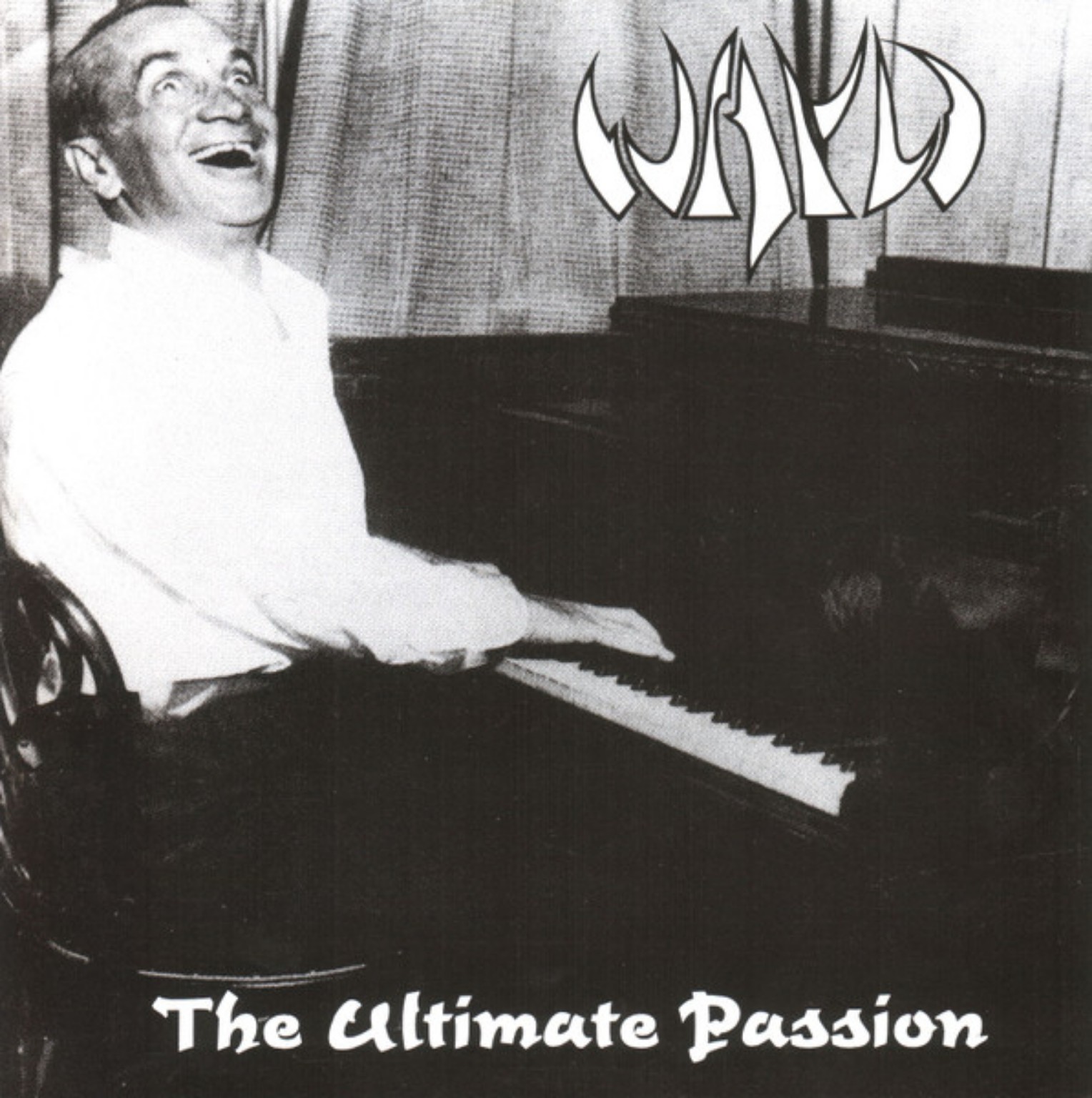
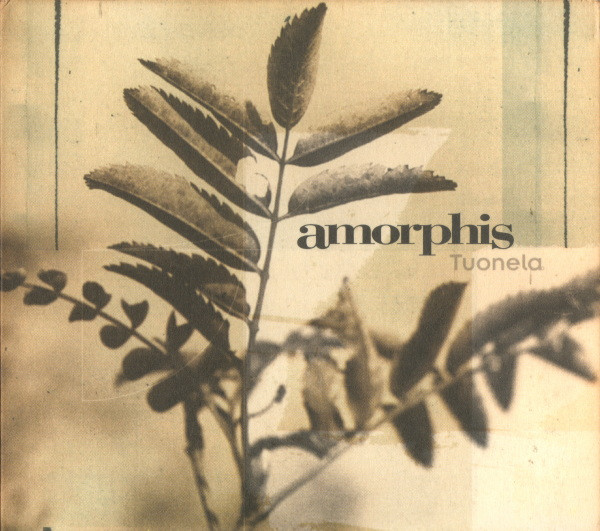
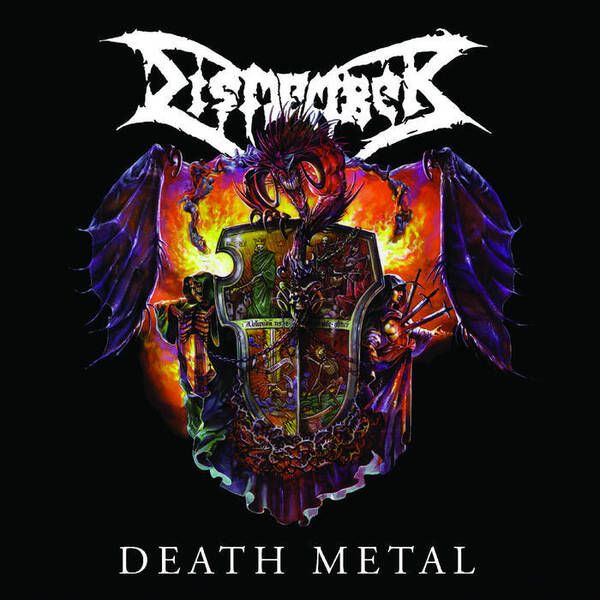
Reader comments
Comments only appear after approval. Messages are displayed in their original language.
Comment submissions are not enabled yet.