Tuonela – Beyond the Gate of the Underworld
Tuonela – Beyond the Gate of the Underworld. Complete English translation of the Hungarian narrative.
Start reading ↓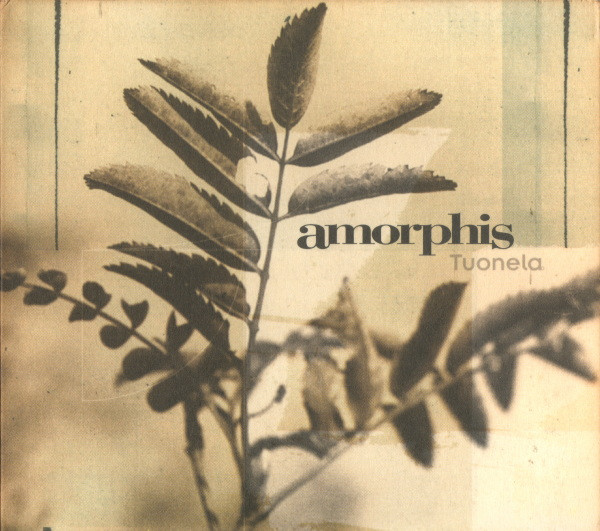
Roots in the Finnish Winter
In Finland, winter does not necessarily begin with anything spectacular. It has no need of a dramatic overture. All it takes is the gradual retreat of the light, the dulling of the earth's colours, the mist settling over the forests, and that peculiar sensation that the landscape has not vanished but merely turned another face towards us. Somewhere in this setting, in the early 1990s, a handful of young Finns began making music, scarcely able to imagine that within a few years their name would signify not simply a death metal band but a state of constant motion. For the story of Amorphis very quickly became a story about refusing to leave anything unchanged.
The young men who would soon become Amorphis did not all arrive at once, or from the same place. Esa Holopainen and Jan Rechberger, known to his companions as Snoopy, encountered metal through Violent Solution; they came from an increasingly fast and tightly wound musical world still dominated by the vocabulary of thrash and speed metal. But as records by Morbid Angel, Death and Carcass exerted a growing influence on them, that earlier form began to feel too restrictive. They were not recruiting musicians to fulfil some grand, fully formed vision: they wanted to create a new group for themselves, one that would speak the language of the death metal they had recently come to love.
Tomi Koivusaari entered this story by a different route. At the time he was one of the central figures in Abhorrence, a band already finding its place in the Finnish underground through its own demo and a 1990 release. He was initially invited into Amorphis for his voice: the growl was the link between the two musical worlds. Before long, however, he also took up rhythm guitar. The choice seemed natural to both parties, but it did not mean that Abhorrence and Amorphis had become a single band. Their histories touched at the beginning, and an old song would later belong to the histories of both, yet each had its own name, members and releases.
Olli-Pekka Laine, Oppu, also brought more musical experience than any single genre could encompass. In a later recollection he mentioned his early band Metal Disease, in which they played songs by Metallica and Iron Maiden among others, as well as the more experimental, psychedelic recordings of Nuxvomica. The bassist came into Holopainen's circle through acquaintances: not through an international audition, but through the young communities of Helsinki's metal scene. Holopainen remembered the musical connections around Lepakko and the meeting places in the city centre, while Laine recalled that his taste for unusual music had already emerged before his death metal years. The roots of the band's later melodic world, then, did not begin to grow only around the time of its third album.
The original group came together in 1990, with Holopainen, Rechberger, Koivusaari and Laine. Its members later recalled that before Koivusaari joined there had been some lighter, early ideas in a thrash/death vein, which they subsequently abandoned; the new singer-guitarist shifted the emphasis towards darker, heavier material. The fact of the band's formation is straightforward, but there is no need to invent an exact date for every rehearsal in those first months. What can be established is that shared musical tastes and a network of local friendships brought the four musicians together.
Nor did the name itself emerge from the kind of philosophical programme it might seem to imply in retrospect. Holopainen came across the English word “amorphous” in a dictionary and, by his own account, either remembered it incorrectly or simply found that they preferred the form Amorphis. This small episode casts a revealing light on how early in the story they still were: the band's later, almost emblematic habit of reinventing itself was not the execution of a pre-existing artistic manifesto. The name came before the long journey that would eventually give it meaning.
From Demo Tape to Record Deal
Around 1991, everything still appeared much simpler. Friends played music together, wrote songs and rehearsed, setting out from that dark, heavy environment which was giving extreme metal a new language across Northern Europe. Years later, Esa Holopainen remembered this period as something that really had begun as nothing more than fun: form a band with your friends, play, find the sound that belongs to you. Doors then opened unusually quickly for Amorphis. They did not have to wait many years for a record contract, and when The Karelian Isthmus arrived in 1992 it already contained the seed of what would become one of the band's most important qualities: the desire for music to possess not merely weight, but a world of its own.
The first real test, however, was not a full-length album but a cassette. The 1991 Disment of Soul demo captured Amorphis as a four-piece: Holopainen on guitar, Koivusaari on vocals and guitar, Laine on bass and Rechberger on drums. Timo Tolkki recorded it at TTT Studios in Helsinki, and even the story of the demo's title recalls the contingencies of that earliest period. Years later, Holopainen explained that they had originally envisaged a longer title referring to the dismemberment of the soul; nevertheless, the strange, shortened Disment of Soul appeared on the finished cassette. The value of Tolkki's recording lay not in the clarity of the later albums, but in the fact that it made the band tangible for the first time.
The tape contained three tracks: the title track, Excursing from Existence and Privilege of Evil. The demo was thus more than another date in a release chronology: it was the band's first coherent introduction of itself that could be distributed to others. According to Holopainen's recollections, even the musicians thought the sound was peculiar, yet it was enough to lead to performances outside Helsinki and, ultimately, a record deal. The cassette fulfilled its purpose in an age when copying tapes, mailing them and recommending them personally were part of everyday life for bands in the Finnish underground.
Relapse Records' interest reached them by a rather circuitous route. Both Koivusaari and Holopainen recounted that the American label was initially more interested in Abhorrence, which had already disbanded. Through the intermediary of the Finnish demo distributor Luxi Lahtinen, however, Amorphis's material also made its way across the Atlantic, and in the end the new band was given the opportunity. At first, a joint Amorphis–Incantation release was discussed; after a long silence from the label, another decision followed: they were to make a full-length album of their own. The story was therefore much less a carefully planned career than a later, neatly ordered discography might suggest.
Among the earliest releases associated with Relapse was the 1991 two-sided seven-inch single Vulgar Necrolatry / Misery Path. Vulgar Necrolatry had originally been an Abhorrence composition, which Amorphis also performed in its own early version. The relationship between the two groups is therefore visible even in the song titles, without their respective songwriting histories and earlier line-ups being conflated.
Stockholm and the Debut Album
The recording of The Karelian Isthmus eventually took them to Sunlight Studios in Stockholm. For the band, that was a turning point in itself: they could work in Tomas Skogsberg's studio, in the very surroundings where so many Swedish metal recordings familiar to them had been made. Holopainen later described the extraordinary feeling of travelling abroad for the first time in order to record their own full-length album. Released in 1992, the record already hinted, beneath its early heaviness, that Amorphis would not remain confined to a single language of riffs. Their musical opening-out was not yet complete, but the curiosity that pointed towards the next great change was already there.
From this point, however, the chronology took a strangely backward-looking turn. In 1993 Relapse released Privilege of Evil, containing recordings prepared earlier for the planned split release. In Holopainen's recollections this was no pleasant surprise: by then the band was already working on different music, and the appearance of the older, rawer material struck him as a badly timed decision made against their wishes. The listener who picked up this EP in 1993 therefore encountered not the band's creative state at that moment but an echo of a much earlier period. That small distinction matters to the story leading towards Tuonela: the date of a release and the date when its recordings were made are not always the same.
Early Amorphis still spoke unmistakably in the dark, massive language of death metal, yet even then one could sense that Finland's history, its landscapes, its ancient stories and its folk poetry were more than mere scenery to them. Two years later, at the time of Tales from the Thousand Lakes, that inclination could no longer be treated as a minor detail. Motifs from the Kalevala, northern melodies and heavy metal began to merge so naturally that they seemed to have belonged together all along. This was when the band truly learned that tradition need not simply be quoted: it could be transformed, made into a voice of one's own.
The Kalevala and a New Sound
Behind 1994's Tales from the Thousand Lakes, it is worth recognising not only a new sound but a new method of working. According to Olli-Pekka Laine's recollections, the earlier songs had contained melody too, but now the group was no longer simply decorating heavy riffs with a few melodic turns: more and more often, they began with the melodies themselves and built the compositions around them. Laine cited his interest in progressive rock, particularly Pink Floyd, Jethro Tull and Kingston Wall, as part of this learning process. They did not pursue change because someone had instructed them to do so; by their own account, they wanted to make music that was exciting and recognisably their own.
The arrival of Kasper Mårtenson produced particularly striking results. According to Holopainen, he was far more than a player of keyboards: he brought independent themes, melodies and even entire songs into the creative process. He played a decisive part in the creation of the emblematic Black Winter Day. An old Moog synthesizer also came into use at the Stockholm studio; the musicians realised that a timbre which had previously seemed unusual would not weaken their music but give it a new dimension. The arrival of the instrument on the record was therefore more than a technical novelty: it became one of the audible signs of Amorphis's transformation.
Clean singing also became more prominent during this period. Ville Tuomi, the singer of Kyyria, appeared as a guest on Tales, making room for another kind of vocal expression alongside Koivusaari's growls. This was not yet the permanent role that Pasi Koskinen would later assume, and the two should not be confused. The 1994 experiment demonstrated that songs led by a melodic, human voice could be written without abandoning the sound of death metal. On a later album, the decision to employ a clean singer would become a more deliberate, permanent change to the band's line-up.
The turning point was not only about instruments. The world of the Kalevala's texts brought the band's own Finnish cultural environment into an extreme metal scene that had previously drawn more heavily on images of horror and death. In later recollections, Holopainen traced the birth of the idea all the way back to the journey home from recording the first album in Stockholm; Koivusaari linked his growing interest in folk music and old stories to the period when he discovered Kingston Wall and other Finnish music. These accounts need not contradict each other: they may recall different stages, one a shared decision, the other a broader musical realisation. A single, precisely dated moment of origin cannot therefore be established, but the gradual process can.
After the release of Tales, touring also changed the life of a Finnish band that had previously moved in relatively narrow circles. European concert tours and American shows with Entombed in 1994 carried them far beyond the rehearsal rooms of a single city. Koivusaari later described in detail the discomforts of travelling in a van, the long distances one after another, and the makeshift accommodation. Under these conditions, Mårtenson's situation also changed: the keyboardist did not want to continue the touring lifestyle and gave priority instead to other plans and his studies. The pressures of touring and his own plans offer a more convincing explanation for his departure; there is no firm evidence of a musical dispute within the band.
Elegy: A New Voice, a New Direction
Then came Elegy, and with it another door. Clean vocals, psychedelic keyboards, Finnish folk inflections and more progressive structures carried Amorphis far from the world in which it had begun. Many bands become frightened by what they have created at such a moment. When something works, it is easy to try to make the same thing again. Yet Amorphis seemed to fear precisely that more than anything else. Holopainen later said that when they begin a new album, they wipe the slate clean. Earlier records are not recipes but signposts. You can look at them to see how far you have come, and perhaps what you could have done differently, but there is no point going back to copy them.
The transformation behind Elegy was just as clearly reflected in the band's line-up as in the music itself. The former drummer Jan Rechberger was replaced by Pekka Kasari, who had gained experience in the Finnish band Stone. Kasper Mårtenson, so important to the sound of Tales, departed and Kim Rantala arrived. He too brought musical ideas of his own, and the instrumental palette no longer functioned as though a synthesizer had simply been added behind the guitars as an afterthought. In interviews from the period, Holopainen specifically emphasised the contribution of the new members. The original members remained central, while new collaborators joined them and musical responsibilities shifted within the six-piece line-up.
The most conspicuous new voice belonged to Pasi Koskinen. After the guest singer on Tales, the band needed a permanent companion who could make the atmosphere of clean vocals an enduring, integral part of its songs. The recommendation came through its newly recruited drummer, Kasari. According to Holopainen, Kasari played the others an earlier recording of Koskinen singing; they liked his voice and Koskinen joined. The new vocalist did not simply take over Koivusaari's previous role: on Elegy, clean singing and growled vocals still existed side by side, linking two eras of the band.
The 1996 album was therefore more than an expansion of the sound of Tales. Laine, Holopainen and their companions brought new melodies, folk inflections and more progressive structures into the songs; for their source texts, they now placed the emphasis on the old poetry of the Kanteletar alongside the epic stories of the Kalevala. The musical and lyrical experiments of earlier years no longer seemed like isolated special moments, but like the natural vocabulary of an entire album. Yet the new members, with their different backgrounds, did not all play or compose alike: precisely the differences between Rantala's and Koskinen's musical worlds could make the shared material more varied.
My Kantele: Toward Freer Melodies
The My Kantele EP, released in 1997 after the third full-length album, is an especially important and frequently overlooked stage on the road towards Tuonela. It was not simply a reissue of Elegy's title melody. Alongside an acoustic version of My Kantele, the five-track release contained two new compositions, The Brother-Slayer and The Lost Son, and two covers: Hawkwind's Levitation and the Finnish band Kingston Wall's And I Hear You Call. These choices also revealed the band's already documented interest in progressive and psychedelic music: they placed songs of their own beside music that had decisively influenced them.
The shorter release is also noteworthy because it stands in the story as more than a supplement to a touring cycle. In it one can hear the increasingly acoustic approach, the openness to longer melodies and less tightly prescribed arrangements that make the road towards Tuonela easier to understand. The songwriting credit for The Brother-Slayer matters as an early trace of Pasi Koskinen's first compositions of his own; nor are the two cover versions merely accidental nostalgia. The members spoke separately about their interest in Kingston Wall and the place of Hawkwind in their musical lives. The EP is thus not a minor item “filling” an empty space between Elegy and Tuonela, but a genuine musical bridge.
Toward Tuonela: Exhaustion and Change
Growing public attention, however, came at a personal cost. Amid concerts, interviews and constant travel, the musicians encountered not only an increasing number of listeners, but also how little control they sometimes had over the rhythm of their own lives. Koivusaari later recalled the financial consequences of their record deal with particular bitterness. According to his account, a profound gap remained between the band's success abroad at the time and what the musicians actually earned. The precise terms of the deal remain unclear; Koivusaari's later recollection offers a firsthand account of its consequences for the musicians.
The success of Elegy, meanwhile, left little time for a new chapter to begin immediately. The band was almost constantly on the road. Concerts, journeys, countries, hotels, buses, evening after evening. Seen from the outside, it is one of the signs of success; lived from within, it slowly drains a person. Touring takes away not only time but also the peculiar inner energy from which songs are born. Esa later said quite plainly that during the long interval between Elegy and the next album, constant travelling simply sucked the creativity out of them. They first had to come off the road. They had to get home. They had to wait for the noise to die away.
And when the noise finally subsided, things began to fall into place with unexpected speed. They did not sit over individual motifs for months. The new musical material took shape in roughly half a year and, as Holopainen recalled, there came a point when they could feel that the record had its own momentum. It was not a second part of Elegy taking form. Something less brightly colourful, less obviously rooted in folk music, yet more spacious and strangely earthy, began to emerge. It was as though Amorphis were no longer searching for another mountain summit, but descending towards a river on whose far bank the old rules no longer applied.
The return, however, did not find exactly the same people in the band who had made Elegy. Kim Rantala left during the preparations for Tuonela. In his place came Santeri Kallio, known from the band Kyyria and called Sande by his companions. On the surface, this seemed like another stop in the now familiar sequence of line-up changes; musically, though, it carried an important distinction. In later recollections, Holopainen specifically pointed out that Kallio did not yet shape all of Tuonela's material as a songwriter. His more substantial role as a composer emerged on subsequent albums.
His arrival was gradual, moreover. According to Holopainen, Kallio initially took part cautiously as a session musician, which may explain his absence from some promotional band photographs of the time. Thus Tuonela's cover and photographic material, and the musicians who actually participated in the recording, do not necessarily document the very same moment. The original album booklet nevertheless clearly credits Santeri Kallio with playing keyboards on the 1998 recordings.
Responsibilities for vocals and lyrics were also reshaped at this point. Pasi Koskinen evolved from the clean singer who had helped define the sound of Elegy into the central figure behind Tuonela's voice and lyrics. The original booklet credits him with the lyrics of the first nine songs, while Summer's End is separately attributed to Antti Litmanen. The period of directly drawing upon ancient Finnish epics was now followed by more personal, newly written lyrics; in a retrospective from 2020, Holopainen specifically emphasised Pasi's darker interests. Even so, Tuonela's themes cannot simply be read as documentary accounts of events in the singer's personal life: an artistic role and a biographical fact are not the same thing.
By 1998 the band carried with it, all at once, the heavy music of its original line-up, the breakthrough with keyboards and mythology in 1994, the clean singing of 1996, the psychedelic and acoustic opening of the 1997 EP, and the exhaustion that followed years of touring. Tuonela was therefore preceded not by one decisive idea that changed everything, but by a sequence of carefully documentable decisions. Seen within this story, the album's unusual, airier sound no longer seems like an abrupt rupture, but rather the outcome of a process that had gradually freed Amorphis, over many years, from having to replay its first album forever.
Helsinki, a City in Transition
Helsinki in the autumn of 1998 was not an imaginary Finnish village trapped in eternal winter, nor was it identical to the dense forests and misty shores that Amorphis's lyrics might evoke. It was a growing capital of more than half a million people, comprising industrial and service districts, residential neighbourhoods, shopping streets, harbours and suburban transport links. Helsinki's municipal statistical yearbook records 532,053 residents at the end of 1996, 546,317 at the end of 1998 and 551,123 at the end of 1999. Growth was continuous in the middle and latter part of the 1990s: the capital of 1998 was noticeably more populous than it had been only a few years earlier.
In these years Helsinki was being reshaped both by economic recovery and by the transformation of old, declining industrial areas. During the 1990s, new residential and office buildings rose in the former industrial districts of Ruoholahti. Yet the area also held an important place on the city's cultural map: Lepakko operated there until the autumn of 1999, remaining a major centre for alternative music, club culture and independently organised communities.
The Helsinki in which Tuonela was recorded was thus at once a modernising European capital and a city transforming its own older institutions. Rock clubs, rehearsal spaces and professional recording studios were available in its central and industrial districts. These worlds, existing only a few kilometres apart, provide a much more accurate setting for the album than any portrayal of Finland solely as “northern darkness.”
Finland 1996–1999: Crisis and Renewal
In the early 1990s Finland experienced an exceptionally severe economic crisis. The collapse of trade with the Soviet Union was an important part of the process, but later research by the Bank of Finland indicates that the crisis cannot be explained by that one external shock alone: domestic developments arising from earlier financial liberalisation and a credit bubble were also essential. The crisis was more complex than accounts that attribute Finland's troubles solely to the collapse of the Soviet Union would suggest.
Between 1996 and 1999, overall unemployment was already falling gradually, but it remained high. The FRED table reporting the OECD's annual harmonised data gives 14.9% for 1996, 12.7% for 1997, 11.4% for 1998 and 10.3% for 1999. These figures are not equivalent to the personal employment experience of a particular city, age group, artistic profession or band member. They do, however, prevent the recovery from being described as carefree: even in 1998, large numbers of people were living with the consequences of prolonged uncertainty.
At the same time, the economy was expanding rapidly. Comparable national accounts data compiled retrospectively by Statistics Finland show real GDP growth of 6.1% in 1997, 5.2% in 1998 and 3.9% in 1999. This is not a contradiction: rapid growth at the national level and persistently high unemployment were simultaneous features of the period. A preliminary quarterly release from April 1999 estimated growth of 4.7% for 1998 as a whole; annual figures may vary between published data sets because of subsequent revisions.
One of the most familiar symbols of the Finnish economy in the second half of the decade was the rise of mobile communications. According to Nokia's official retrospective corporate history, by 1998 the company had become the world's leading manufacturer of mobile phones. The company's market position and the significance of telecommunications were already clearly visible. To an ordinary citizen, the technology of the future was becoming less and less a matter of fantasy: telephones, computers and digital services were entering everyday public discussion.
This period was not yet the permanently connected online world familiar today. According to the OECD's 2000 overview of information technology, a 1998 consumer survey by Statistics Finland found that approximately 38% of Finnish households had a personal computer and approximately 19% had an internet connection. At the same time, Finnish libraries and other public institutions remained important points of access. Digital communications were developing, but record shops, mail orders, printed fanzines, telephone calls and physical music formats continued to play essential roles in music.
By 1999, newer Finnish surveys were already recording increased use of mobile phones and computers. Yet the anachronistic image that blurs two different decades together—as if most people in 1998 had immediately discovered the world's metal bands on digital platforms—does not belong to that time. The band and its listeners were not yet connected by algorithms and streaming services, but chiefly by recordings, specialist magazines, catalogues, concerts and personal communities.
The Finland in which Tuonela was created was not a country standing apart from what would later become the European Union. Finland joined the European Union in 1995 and was among the first countries to introduce the euro on 1 January 1999. The practical distinction is important: in 1999 the euro appeared as a currency for accounting and financial transactions, while Finnish markka cash remained in circulation until 2002. In Helsinki in 1998, people still paid for everyday purchases and concert tickets in Finnish markka.
In July 1997 the Asian financial crisis erupted in Thailand, spreading to several East and Southeast Asian economies during the second half of the year. The vulnerability of the international financial system remained apparent in 1998. A contemporary IMF report from September 1998, together with its historical timeline, documents the spread of the crisis and the serious consequences of the Russian financial collapse.
In August 1998 Russia experienced a currency and debt crisis. According to a 1999 study by BOFIT, an institute associated with the Bank of Finland and writing at the time, Finnish exports to Russia were 11% lower in 1998 as a whole than in the previous year; by 1998, Russia accounted for only about 6% of Finland's exports. The event was therefore a real and geographically close economic shock, but not another catastrophe for the entire Finnish economy comparable to the collapse of trade in 1991. There is no evidence of how directly the crisis affected any individual member of the band.
The album, then, was born neither in a uniformly happy, frictionless “technological wonderland” nor at the immediate height of the deep recession of the early 1990s. What makes the transition of 1996–1999 distinctive is precisely the coexistence of vigorous economic growth, enduring social divisions, European integration and reminders of global crises. That duality helps explain why it would be inadequate to describe the period of the album solely through romantic images of dark forests.
Naming the Underworld, Entering the Studio
The name almost offered itself. Tuonela. In Finnish tradition, the realm of the dead: another world to which a road leads, a place with a boundary, not simply an equivalent of the Christian hell, but an otherworldly landscape governed by its own laws. In a 1999 interview, Esa Holopainen described it as something like a place between Heaven and Hell, where, according to the beliefs of the ancient Finns, a soul might go after death. He was not trying to provide a definition from folklore studies. Rather, he was attempting to explain why the word felt perfect for the new album. Two different worlds were blended into a single whole on it, he said. And indeed, this condition of standing at a boundary runs through Tuonela from beginning to end.
In the autumn of 1998, the band entered Finnvox Studios in Helsinki. Inside those walls it was no longer the Amorphis of old, relying exclusively on sheer heaviness. By then Pasi Koskinen's voice was no longer a guest in the system, but one of its centres. Esa Holopainen's lead and acoustic guitars, Tomi Koivusaari's rhythm guitar and sitar, Olli-Pekka Laine's bass, Pekka Kasari's drums and Santeri Kallio's keyboards carried music in which the metal foundation no longer insisted on occupying all the available space. Working with producer Simon Efemey, they sought to retain the weight while allowing air to surround it.
Helsinki’s Metal Scene and Crossing Genres
In 1998, Helsinki was not merely the home of a few Finnish metal bands on their way to fame. The physical infrastructure for making music existed too: enclosed and open rehearsal spaces, alternative meeting places, professional studios and performance venues. According to the city's historical archive, the Lepakko building on Porkkalankatu had been one of the centres of independent urban culture since 1979: it housed rehearsal rooms, a recording studio, a radio studio, a café and various event spaces. Under one roof, communities devoted to rock, punk, metal, hip-hop and techno could meet. The building ceased operating in the autumn of 1999, and the cultural association moved to Nosturi.
What is especially important about Lepakko's history is that it is not a metal legend constructed in hindsight: the city's historical account specifically lists the building's many uses, the concerts attended by young people in the 1980s and 1990s, metal performances, independent radio and electronic club culture. The coexistence of different styles in one place does not prove that members of Amorphis collaborated with the performers there. It does show, however, that in the Finnish capital at the end of the decade, contact between genres was a genuine social possibility.
Tavastia played a different role: an established and influential rock venue in the city centre. According to Helsinki's municipal history website, live music assumed growing importance at the club during the 1990s, while numerous subdivisions of rock and alternative music appeared on its stage. The city archive places metal's movement closer to the mainstream around the turn of the millennium, not much earlier. The club's wider history extends well beyond the individual Amorphis appearances for which records survive.
Tuska was born in 1998, not yet the enormous outdoor festival it would later become, but a two-day indoor event at Tavastia. According to the archives of Finland's public broadcaster Yle, leading roles in the initiative were played by Tony Taleva and Pasi Kuokkanen, organisers associated with the magazine Suomi Finland Perkele. The 1998 programme included, among others, Impaled Nazarene, Barathrum, Timo Rautiainen and Trio Niskalaukaus, as well as Norway's Gorgoroth.
The event provides a measure of the period: extreme and heavy metal already had a sufficiently large local audience to sustain a dedicated event, even though its scale was far smaller than the festival of the 2000s. Tuska's world in 1998 had different emphases from the more restrained, more psychedelic timbres of Tuonela. That contrast is not a contradiction; it is evidence that even then, “Finnish metal” did not mean a single homogeneous sound.
A picture centred on Helsinki does not describe all of Finland. The Nummirock festival, in the Nummijärvi–Kauhajoki area of western Finland, represented an entirely different geographical scale and way of bringing an audience together. The festival's official year-by-year historical programme lists Deep Purple, Iron Maiden, Sepultura and Amorphis in 1996; Megadeth and, again, Amorphis among the bands representing the Finnish scene in 1997; Pantera, Slayer, Dream Theater, Sentenced, HIM and Children of Bodom, among others, in 1998; and Amorphis, Nightwish, Sentenced, Children of Bodom and several international acts together in the 1999 listings.
The festival programmes reveal a scene far more varied than the familiar story in which death metal simply disappears and gives way to a new fashion. In 1998–1999, thrash, traditional heavy metal, extreme metal, more melodic directions and progressive rock all continued to exist side by side. New audiences grew in some areas, while in others the aesthetic of earlier sounds lost some of its novelty; none of that means any particular style actually ceased to exist.
Amorphis began the early 1990s in a different position from bands that reached wider audiences around 1997–1999. An overview by Music Finland, which deals with Finnish music exports and includes Tomi Koivusaari's first-hand recollections, stresses that Amorphis's international success in 1994 came at a time when the Finnish music industry had not yet developed established institutional practices for sending such metal bands on tours abroad. The later generation, including Nightwish and Children of Bodom, inherited export routes that were only then taking shape.
In Nightwish's official band history, 1998 marked a turn towards more professional operations: following its initial club performances, Oceanborn was released on 7 December 1998, reached number five on the Finnish charts and obtained international distribution in 1999. This example does not mean that Amorphis and Nightwish played the same kind of music, or that Tuonela changed as a result of Nightwish's influence. Rather, the two bands show how Finnish metal was becoming internationally visible in several different directions at once in the late 1990s.
HIM's dark, melody-centred rock-metal language, Children of Bodom's virtuoso and aggressive approaches, Sentenced's more sombre metal, Stratovarius's melodic-symphonic power metal, Apocalyptica's cello-based arrangements and Nightwish's symphonic aspirations marked out different routes to different audiences alongside one another. These were musical directions developing alongside one another, not a neat succession in which one band or album necessarily gave rise to the next. An overview of the 1990s by Finland's public broadcaster Yle, moreover, emphasises the division of the entire domestic rock culture into subcultures large and small, rather than the triumph of a single new genre.
Nor was European metal moving in only one direction in the second half of the 1990s. The heavy foundations of death and doom metal endured; in parallel, a growing number of musicians experimented with slower tempos, greater melodic space, atmosphere, clean singing, keyboards and musical influences previously regarded as marginal. The older heritage of progressive rock and psychedelic timbres could serve as important points of comparison for listeners at the time, without every resemblance proving a direct influence.
Tuonela emerged from an international metal scene opening in many directions. It did not single-handedly break down stylistic boundaries, but neither was it a copy of a passing fashion. The diversity of European music at the time is well illustrated by Nummirock's programmes in 1998–1999: thrash, traditional heavy metal, progressive metal and emerging, more melodic Finnish styles could all find a place at the same festival. The festival line-up reveals the range of music available to its audience, not the specific inspirations behind Amorphis' compositions.
CDs, Fanzines, and Record Labels
The reality of listening in 1998 is accurately reflected in annual sales figures issued by the Finnish recording-industry association Musiikkituottajat / IFPI Finland. The figures measure the number of recordings sold by member companies, not the sales of any one album and not all music listening. CD sales amounted to 5.6 million units in 1996, 7.0 million in 1997, 7.9 million in 1998 and again 7.9 million in 1999. Audiocassette sales, by contrast, fell from 1.9 million in 1996 to 1.1 million in 1998 and 0.6 million in 1999.
These figures do not make the cassette obsolete as a medium of exchange in the underground. They measure something else: in the consumer market, the CD had become dominant in the distribution of officially marketed, industrially produced recordings, while smaller demos, fan copying and older networks could continue functioning elsewhere. In everyday terms, “the album has been released” then meant a record shop, a mail-order catalogue, label promotion, a magazine article, radio airplay and a booklet one could actually hold in one's hands.
That is why the catalogue number, record-label imprint, names of the studio personnel, lyric sheets and printed images in Tuonela's original booklet are not simply curiosities discovered after the fact. They are part of the cultural and commercial framework of the actual 1999 CD edition: the work was not merely an audio file, but an ordered, material album package.
At the end of the 1990s, specialist magazines and fanzines still played an important part in circulating news about metal bands. A printed interview, a published promotional photograph, a concert flyer or a mail-order catalogue was often a more direct channel of connection than home internet access, which was not yet widespread. Music Finland's retrospective interview with Tomi Koivusaari shows in particular how the international tape-trading network of extreme metal operated and how demos were passed along in the early years. This can illustrate the functioning of the market without retelling the band's history, which has already been properly covered.
The route from the underground towards broader distribution involved not only musical change, but legal and institutional change as well. Record-label contracts, overseas distribution, press relations and administration conducted in foreign languages required specialist expertise. An article in Finnish Music Quarterly about Finnish music exports around 1999–2000 already named German-speaking markets and Japan as important destinations, and treated Finnish metal as one branch of popular music attracting international notice. The article is an industry interpretation written close to the period, not a legal document establishing Amorphis's specific contracts.
Inside Finnvox
According to Finnvox's own archive, the studio was by no means a motionless place “stuck in an analogue past”. In 1995, Studios A, B and C received Pro Tools III systems. Studio F was completed in 1997, and another SSL mixing desk and Pro Tools system were brought into the building; for 1998 the archive records the installation of Pro Tools I 24 at all workstations. Computerised mixing automation and CD mastering had already been present even earlier.
This history of technological development illuminates the recording period: throughout the 1980s and 1990s, sound studios increasingly used traditional recording and mixing methods alongside digital workflows. The resulting possibilities—multitrack editing, automation, more precise post-production and professional mixing infrastructure—characterised the age. The studio's technological history does not reveal exactly which microphones, tape machines, digital tools or working methods were used to record Tuonela. The booklet confirms October–November 1998, the people involved, the studio and the location of the mastering in London. The music itself cannot identify every piece of equipment used during recording.
The fact that mastering took the material to London does not mean that all the earlier phases of work took place there. The geographical division of labour—Helsinki for recording and mixing, London for final technical preparation of the sound—is itself a clear sign of the international connections involved in producing the record, while Helsinki remained the documented centre of the band's creative work.
The precise dates of the work are preserved in the record's original printed booklet: recording and mixing took place in October and November 1998 at Finnvox Studios in Helsinki. Simon Efemey was the producer; Russ Russell and Mikko Karmila took part in the engineering work. Mastering was completed in December at Battery Studios in London, again with Efemey's involvement. The record's sound was thus connected with two cities, although the starting point of its creation remained the Finnish capital throughout.
The cover and booklet together reveal the details of the physical CD. The graphic design is credited to LAHCO; the band's photographs were taken by Toni Härkönen, while the photographic credits for the graphic images name Nitrus Design Studio, LAHCO and Jenni Mikkonen. The booklet also preserves the original sequence of the ten tracks, from the opening The Way to the closing Summer's End. The lyrics of the first nine songs are by Pasi Koskinen, while the final, extended farewell is the work of Antti Litmanen. This difference belongs to the creative story behind the songs, not merely to the world of printed small type.
The Sound of Space: Saxophone, Flute, Release
That air became one of Tuonela's most important instruments. You cannot point to a single guitar or keyboard and say: there it is. What matters, rather, is the space they leave unfilled. The rhythm section is often slow or mid-tempo, and precisely for that reason there is room for clean vocals, acoustic colours, keyboards, sitar, flute and saxophone. The band does not attempt to demonstrate strength by speaking at full volume every moment. Sometimes it draws back, allowing the song to cast its own shadow.
One of the loveliest stories from this period concerns Sakari Kukko. The distinguished Finnish folk musician did not appear on the album as a result of some lengthy exercise in producer-led planning. Pasi Koskinen met him in a bar and introduced him to the band. The members of Amorphis had long respected Kukko's work, so when the opportunity came for him to play with them, the question was not whether a flute or saxophone fitted within the rules of metal. Holopainen later put it almost with a shrug: who cared what other people thought about putting a flute into Amorphis's sound? To them, it was an honour. That was enough.
That remark perhaps tells us more about Tuonela than any genre label could. The album is unusual not because it features many different instruments, but because the band feels no need to apologise for them. The saxophone in the dark spaces of Nightfall and the title track Tuonela is no foreign body. The flute in Rusty Moon is not a piece of folk-music decoration. Nor does the sitar appear merely to make the sound seem exotic. All these timbres lead into the same landscape.
The year of release was 1999. The band's current official discography gives 29 March as the release date, while Finland's weekly album charts already contain entries for Tuonela from February. The two documents leave open the question of how releases in different markets were staggered. In any event, the record cannot be separated from its physical release: the German manufacturing matrix bears the inscription DOCdata Germany NB 0382-2, while the back cover displays the barcode 727361638221. These details cannot recreate the music, but they show the concrete form in which it reached listeners' hands.
The Way – The First Step
The album opens with The Way, and in its very first minutes makes clear that this is not going to be a triumphal march. The road here is not a procession of victory, but a search. The unknown, loneliness, unattainable dreams and the stubborn determination to go on nevertheless sketch an inner landscape to which the record will return again and again. The melodies floating above the heavy foundations seem already to be saying that this album does not wish to choose between light and darkness.
The opening moments of The Way do not bring the air to a standstill with the full mass of the band. A recurring guitar idea, a background created by the keyboards and the bass's dark underlying line slowly define the space into which the song grows. When the sound opens out, the same motif becomes both a handhold and a question; the song's momentum springs not from speed but from layers building upon one another.
Morning Star – The Distant Light
Morning Star draws that uncertainty into still tighter focus. The image of salvation hovers somewhere in the distance, but comes no closer. The morning star is at once a signpost and an unreachable point, while at the song's end what remains is not some kind of resolution, but the certainty of decay. For in Tuonela's world, transience is not an adversary to be overcome. It is more like a constant presence.
Morning Star does not break through its own walls again and again; instead, it creates the sensation of circling. The rhythmic movement holds the song in the same channel for a long time, while the changing colours of guitar and keyboards cast different lights upon the same foundation. Its refrain-like return therefore brings no reassuring resolution: the melody reappears, but the search continues.
Nightfall – A Dark Ballad
Nightfall, by contrast, opens almost like an old ballad. Plague, famine, blood and barren ground appear, as though someone were retelling a village tale forgotten for centuries. The saxophone does not modernise this picture. Quite the opposite: it lends the song a strange voice of lament. The music moves as though it were no longer possible to decide whether we are hearing a historical memory or a present-day anxiety dressed in the costume of the past.
At first Nightfall leaves space around itself; then the instrumental texture suddenly grows dense. Drums and bass hold the foundation, guitars draw their lines alongside one another at different pitches, and Sakari Kukko's saxophone enters this dark weave. The wind instrument's sound is no cheerful diversion: its independent, unfamiliar colour makes the song's world more alien still.
Tuonela – The Land of the Dead
The title track, Tuonela, draws closer to death than even this. Winter, the broken body, frost, the crust of snow and the otherworld no longer appear as vast mythological scenery, but from the point of view of a weary human being. This is no heroic death, but a gradual dwindling away. That is precisely where the song's strange power comes from: the mythological name is at once immense and personal. The world beyond is not somewhere far away. It begins where a person is no longer certain of living long enough to see the sunlight of May.
On the title track Tuonela, the weight bears down not with one sudden blow but through a prolonged, sustained movement. Because of the saxophone's colour, the melody seems to belong both to the guitars and to some world beyond them. The song's ending is particularly eloquent: the full sound gradually thins out, as if it were not the last note but the silence left behind that marked the far bank of the river.
Greed – The Return of Heaviness
In the middle of Tuonela, Greed suddenly speaks in a harsher voice. Christian imagery here carries not devotion but resistance. Saviour, Nazarene, holy mother, baptism, truth, prayer—all are words that acquire new meanings in a conflict. The speaker does not simply deny; he refuses to allow someone outside himself to carve his soul into shape in the name of one supreme truth. With greed, war and the language of faith intertwined, this is one of the album's most tense moments. The anger voiced by the song's narrator, however, need not represent a single religious position held by the band as a whole. The lyrics create a persona, build an emotion, and speak through it.
Greed's introduction does not yet reveal the full weight that is approaching. After a quieter instrumental figure, the rhythm guitars and drums shift together into such stark movement that Pasi Koskinen's rougher voice, too, can burst out. The song does not turn back to the language of Amorphis's very first records; rather, it shows how much of that language remains within the new sound.
Divinity – Faith and Doubt
Divinity uses the same vocabulary as a more fragmented dream. Prayers, kneeling, a forbidden name, pain, frozen tears: it is as though the language of faith were losing the firm ground beneath its feet. Throughout Tuonela this happens again and again. Familiar symbols are taken out of their customary places, and in doing so become unsettling.
Divinity does not surrender all its secrets with its opening sounds. After a restrained introduction, the full band gradually gains more room, and the recurring melody of Pasi's clean singing repeatedly holds the changing soundscape together. The rougher edge into which his voice sometimes shifts makes the song's two poles especially palpable: the form that suggests reverence and the unease that remains beneath it.
For Pasi Koskinen, none of this could have been incidental. In an American interview from 2000, he spoke very clearly about taking lyrics seriously because his was the face associated with the words he sang. He wanted neither simple clichés about love nor clichés of meaningless violence. For him, a lyric had to carry substance and, together with the music, further expand the emotion already present in the notes. That is why Tuonela feels like a personal record even when its images are old, archaic or mythological.
Shining – Searching for Light
In Shining, that personal quality scarcely hides behind symbols any longer. A bleeding soul, pain felt in the bones, darkness growing inside. The shining named in the title is not a light already reached, but something one still needs to attain. The circle closes, but the harvest is not yet complete. There is something at once modern and ancient in the song's language: as if an intensely present-day crisis of the soul had found for itself the same forests and the same darkness through which the figures of old ballads once wandered.
Shining does not wait to assemble itself slowly out of silence. From the outset we are met by a fuller, driving sound, which the song does not abandon in favour of a long, drawn-out quiet passage. The recurring guitar line remains above the movement of the rhythm section, giving the whole song a quality both continuous and restless: the radiance does not interrupt the current, but shines through it.
Withered – A Ballad of Withering
Withered really is a ballad. A withered flower, a stony bed, a silent grave on a hillside, tears, hatred, poison. In its story, human beings and landscape can scarcely be separated. Nature offers no comfort, but neither does it pass judgement. It simply takes into itself what has happened. The same cold indifference runs through Rusty Moon, except that there the forest grows more dreamlike. The rust of the moon, iron, blood and the flute sounding among the pines make it seem as though we were hearing a very old tale of a place where shame does not vanish even with death.
Withered takes a longer breath than several earlier tracks on the record. The guitar texture that gradually blossoms from its opening does not immediately abandon the rhythm it has established; instead it gives room to ever more shades of melody. At the end, the layers of density disappearing seem to leave behind precisely what the song's story cannot put into words: the empty space after loss.
Rusty Moon – Flute in the Half-Light
In Rusty Moon, it is not a sudden halt in the rhythm that makes room for the unusual instrument. The band keeps moving, and into that already living sound cuts the different breath of Sakari Kukko's flute. Its tone both recalls the old world of Finnish melodies and makes its surroundings strange: it does not remove the weight, but places it in another light.
Summer’s End – Farewell and the Quiet Cover
Summer's End closes the album without putting a full stop to anything. A waning moon, morning mist, berries, mandrake root, standing stones, nature turning from green to copper and then to grey. Passing away is no sudden event here, but a slow transformation. There is no life without decay—this thought almost casts light backwards across the entire album. Tuonela does not speak of death simply as final extinction. It speaks, rather, of the moment when one thing changes into another.
Summer's End has time to live through its own farewell. After the opening, a fuller sweep of the band unfolds, but the track does not seek to hurl itself with all its strength into the final moment. During the last passage the sound gradually diminishes, the layers drifting apart until at last only silence remains. Tuonela, then, does not merely end: in its own music it enacts that slow crossing over of which it has been speaking all along.
Perhaps this is why the record's cover also feels so precise. It does not portray a spectacular fantasy underworld. There are no gates, monsters or flames. Plants, blurred forms, muted browns and greys, a fragile, almost herbarium-like silence. As though the album itself did not wish to say where the otherworld begins. It merely suggests that perhaps it lies much closer than we imagine.
Divided Reactions: Critics in 1999
When Tuonela appeared in the spring of 1999, it was clear that not everyone would hear the same thing in it. To those who loved Amorphis for its early death metal, clean singing, slower tempos, saxophone, flute and looser, more progressive structures could seem a step too far. Others felt that very freedom was the album's most important strength. Contemporary reviews praised the more unified fusion of death, doom, folk and progressive elements while also faulting the band for tempos that sometimes seemed too even and a sound that was dark and restrained.
The controversy did not become sharp only later, in retrospect. Already in mid-April 1999, strikingly different voices were writing about the same ten songs. One reviewer at metal.de awarded the record three points out of ten: to him, Greed was the only remaining shard in which he could still recognise the severity of the earlier death metal. Two days later, another writer at the same site reached six points, yet he too wondered where the listener might be for whom this new, half-lit music could truly feel like home. One found it too soft; the other could not quite find his place in it either. These were not the voices of the entire audience, but the personal judgements of two critics. Nevertheless, they showed what a sensitive nerve the band had touched by deliberately refusing to repeat its old sound.
Across the Atlantic, the summer brought an even more curious counterpoint. In June, Ink 19 writer Wil Endriga did not merely miss the growled vocals: for him, part of Elegy's beauty had been the tension between the two vocal voices and the songs' more spacious, less regular construction. He felt that this internal opposition had been tamed on Tuonela. In July, however, Nathan T. Birk heard almost the opposite in the same magazine. He highlighted the interplay of The Way's delayed guitar sound and its more forceful eruptions, as well as the way keyboards, unusual instruments and heavy guitars inhabited a single expansive space. What one listener experienced as loss, the other heard as the band's arrival at a freer musical language. The record had not changed over those two summer months. The ears it reached had expected different things from it from the beginning.
Always Changing: The Identity of Amorphis
Amorphis, however, seemed to have accepted that argument in advance. Holopainen said that by then fans ought to have become used to every record being different. This was not a side effect, but the whole point. People often interpreted the name Amorphis as though it had always been a reference to formlessness or transformation, but in a conversation in 2000 Holopainen laughed as he explained that choosing the name had originally been a far less philosophical decision. They simply liked it. Yet there is no doubt that over time the band grew into its name perfectly.
That same interview produced one of the best things an ever-changing band could say about itself. Asked what the true sound of Amorphis was, Esa did not choose among the older records. He did not say that Tales from the Thousand Lakes was the truth, nor that Elegy or Tuonela was. He said that every new album was the band's sound at that particular moment. The latest record was closest to them because it expressed where they stood then. And when the next one was finished, that would be the sound of Amorphis.
The whole of Tuonela is contained in that thought. It is neither a final destination nor a temporary mistake between two more important eras. It is the complete imprint of its own moment. The work of a band that no longer wanted to prove it was a death metal band, but neither wanted to demonstrate that it had left heaviness behind forever. A band in which every new member could bring new flavours, and in which no one erected a wall in another's way by declaring that this influence or that was forbidden.
Of course, they felt the price of that freedom themselves. The music business, record-label politics, constant travelling and pressure of recording were at times so exhausting that, according to Holopainen, one might have preferred simply to leave it all behind, go home to one's family and rest. The strange thing is that in the same breath as he spoke of that weariness, he also said how much it all gave back. Perhaps that is why it mattered so much to them that each new album should feel not like an obligation but like something they could call their own.
That movement did not stop after Tuonela. The next album, Am Universum, carried the progressive and psychedelic colours still further, and made even more natural use of wind instruments. In hindsight, therefore, Tuonela was not a dead end. It was much more a junction. Within it, we can still hear the band that played dark death metal at the beginning of the 1990s, and also the band that, a few years later, would think in entirely different proportions.
Chart Success and the Next Chapter
The numbers had another, far more prosaic language even then. On Finland's official album chart, Tuonela remained for seven weeks and reached number eight; the Divinity single climbed still higher, to number three. These positions could not tell us what memories the record left in individual listeners, but they did tell us that the argument over its change of sound was not taking place around a release that had gone entirely unnoticed. With its new songs, Amorphis had a presence in Finland's public musical life, even while critics continued to debate how to understand them.
The following year, in May 2000, Story appeared, a compilation bringing together the band's ten-year history. By December, songs from the next album were being played at a listening session in Karlsruhe. Tomi Koivusaari did not describe the two projects as two attempts at the same formula: he regarded Tuonela more as a meeting of different elements, and Am Universum as a more unified style. Thus a sound which in 1999 had struck some listeners as diffuse and others as liberating was already becoming the prehistory of another decision. The band did not try to replay the argument: it continued searching for a way for its different voices to coexist.
When Am Universum reached listeners in 2001, it climbed to number four on the Finnish album chart, while the single Alone reached number one. This was no retrospective vote on the value of Tuonela, and it did not refute any of the earlier criticisms. It merely traced the fact that the story of change had not broken off where the image of the gates of the afterlife had once proved such an apt title. A new landscape really did open up on the far side of the river—and the musicians set out across that landscape too.
Across the River: The Legacy of Tuonela
In 1999, Esa Holopainen naturally said Tuonela was their best record. Not because he was trying to establish an objective ranking of his own work, but because he believed a band should always feel that way about the album it had just completed. If the previous one was still the best, why release another? A new album is an expression of the present self, proof that the band has not remained where it was.
And perhaps that is precisely why there is something timeless about Tuonela. Not because it is flawless, and not because every Amorphis fan would place it at the same point in the discography. But because the search is audible in it. You can hear the echo of the old heaviness, the memory of folk music, the uncertainty and strength of clean singing, the images of forests, winter and passing away, the apparently alien and yet natural presence of saxophone and flute. You can hear a band crossing a boundary it had previously drawn around itself.
In Finnish stories, Tuonela is the land of the dead. Another shore. A place to which a road leads, but from which a person does not return in quite the same way. In 1999, Amorphis too reached the bank of such a river. The musicians did not cast aside all they had carried with them. They simply took it across to the other side. And when they began to play there, a different sound grew from the same roots.
Perhaps that is why the title is so fitting. Tuonela is not merely a place. It is a boundary. And when people cross boundaries, they rarely remain the same.
The visual language of the original cover
The original Tuonela cover is dominated by a silhouette of foliage and the grainy sepia tones of an aged photograph. Leaves branching from a long stem look both tangible and shadowlike. Depth remains uncertain: the plant is close to the viewer, yet the forms behind it appear distant, softened by haze. Pale cream, smoky brown and dark grey merge into one another.
The band name appears in firm, dark lettering near the centre, while the word Tuonela is quieter, almost absorbed by its surroundings. The image avoids the familiar threatening emblems of extreme-metal artwork. Instead it evokes the fragility of a landscape or a memory: the suggestion that another world exists beside the one we can see.
In this reading, the artwork finds an affinity with the music itself. Open space, fine tonal shifts and scattered dark forms echo the album’s airy, melancholy and unsettled layers. This is a critical interpretation, not a documented statement of the designer’s intention. The original Tuonela cover supplied with the project is displayed here and grounds the full colour palette of this reader.