


The history of Iudicium
The history of Bulgaria’s Iudicium between 1995 and 1997 – 10 chapters with 104 full source notes.
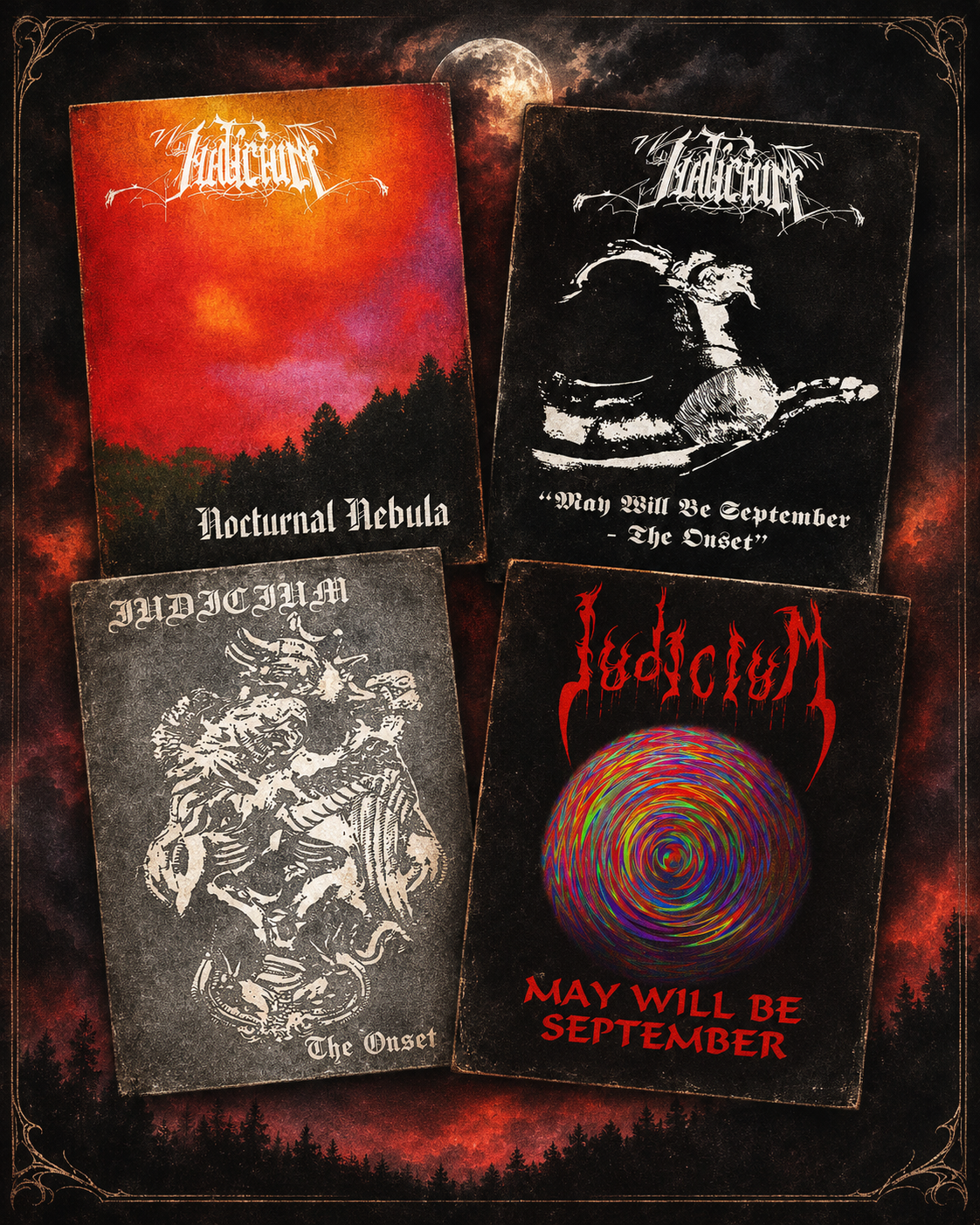
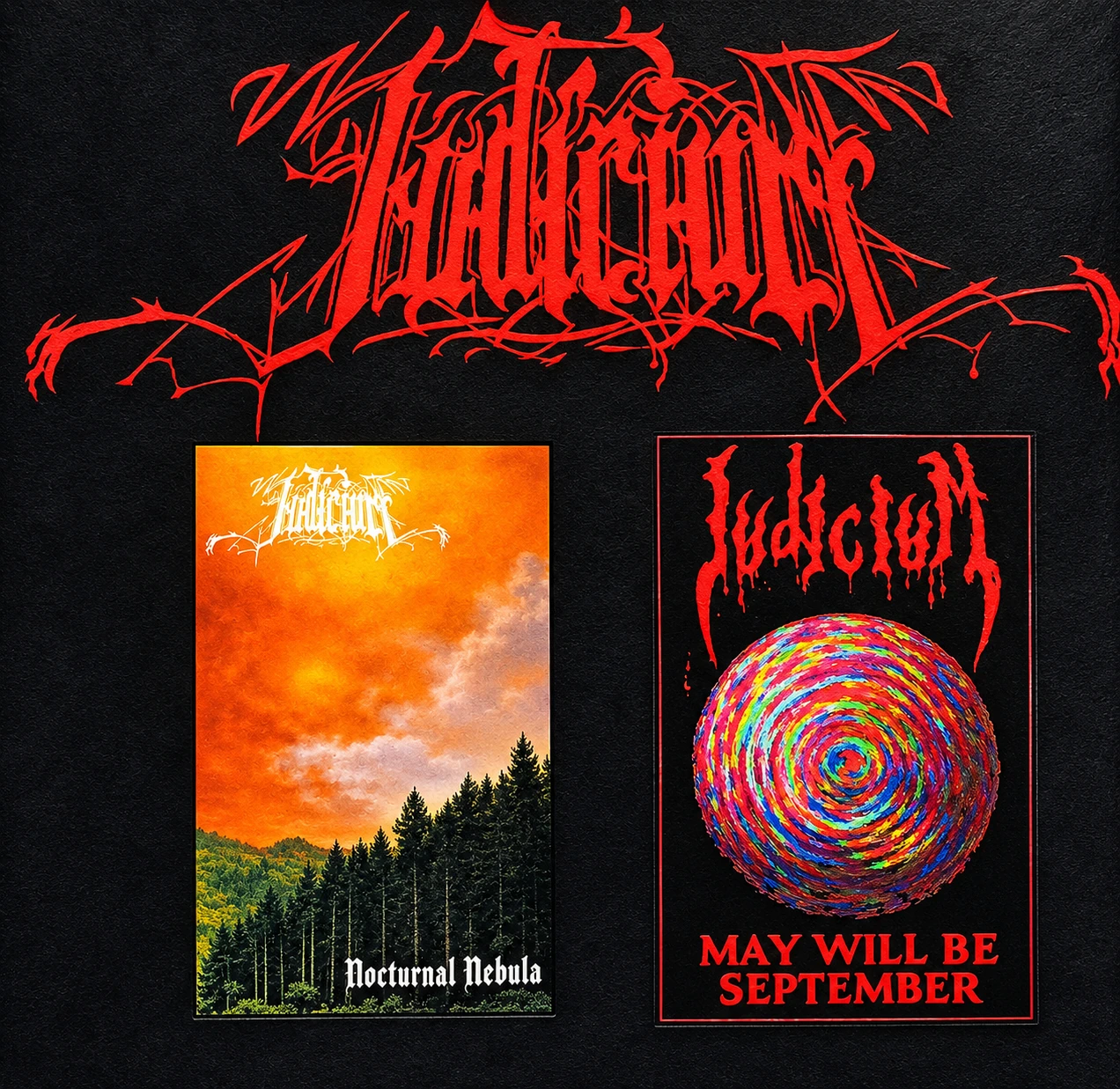
Composite presentation of four original covers. Rights to the underlying cover artworks remain with their respective rights holders.
Releases and band information
Tracklist · May Will Be September (1996)
- 01.Intro Darkness01:06
- 02.Shadow04:59
- 03.Carnival03:38
- 04.Over Halo05:11
- 05.Great Fallen Star01:33
- 06.May Will Be September06:47
- 07.I Come from the Space03:50
- 08.Outro Icons Are Spelling01:28
28:32
Band members · by period
Early period: Count Vassilium (vocals), Lord George (bass and violin), Blagovesta Popova (keyboards); other guitarists and drummers appeared on the earlier recordings. Kiril Petrov played guitar on the final album, Nocturnal Nebula.
Recording and release
May Will Be September was recorded at City Studio, Sofia, in 1995, produced by Momchul Momchilov and Iudicium. According to Kiril Petrov, Nocturnal Nebula was recorded in Dupnitsa. The releases did not share an identical lineup.
Band archive profiles
Release catalogue records
These links provide historical release documentation; they are not listening or purchase links.
1. The City Regains Its Name
A city's name is a story in itself. For a time, Dupnitsa appeared on maps as Stanke Dimitrov, before regaining its older name in January 1992. Following local decisions taken at the end of 1991, the national decree bore the date of January 6 and entered into force on January 23; a later local chronicle instead marked January 14. Between the decision and the name's official return lay one of the concentrated experiences of Bulgaria's transition: the familiar surroundings remained where they were, but names imposed by a political order could be reconsidered. By the time Iudicium's first cassette appeared, the band's hometown was once again Dupnitsa. 1
Set in the northern and northwestern foothills of the Rila Mountains, the city was connected to the wider Balkans by its proximity to the mountains and by roads. Kyustendil, Sofia and the territories opening towards the southwest were not abstract points of the compass, but routes of commerce and travel. Above ancient and medieval layers of settlement, successive authorities, administrative systems and economic opportunities shaped daily life. Mountains and passes proved more enduring than the institutions that replaced one another. The city's past survived in these accumulated layers, rather than as the continuation of a single unchanging order. 2
Under Ottoman rule, Dupnitsa developed within the administrative and economic sphere of Kyustendil. The sanjak structure of the fifteenth and sixteenth centuries supplied the political framework, but local markets were sustained by the everyday connections between agricultural produce, craftsmanship and trade. Religious and communal institutions formed part of that same urban life. The nineteenth-century transformations of modern Bulgarian statehood also redirected education and infrastructure; tobacco processing and transport increasingly joined the older trades. The Bulgarian almanac of 1900 recorded 8,416 inhabitants in the town, describing commerce, industries and its agricultural surroundings alongside one another. 3
Transport and industry
Plans for the Radomir–Dupnitsa railway around 1909 already gave form to the desire for stronger connections between towns. The planning had its own chronology, which the document preserves separately from the later history of construction and traffic. Meanwhile, tobacco-processing facilities and warehouses mentioned from 1902 onwards tied rural produce to an urban pattern of work. Processing and storage had become important by the middle of the twentieth century, while the state reorganisation of 1947 transformed both ownership and administration. The joint-stock-company structure introduced in 1993, followed by further changes around 1997, marked the threshold of another economic era. In the city's industrial history, regime change appeared as an organisational transformation lasting years. 4
Pharmaceutical manufacturing acquired its local industrial foundations in the mid-1950s. The names Galenova, Pharmacia and Pharma designate different stages in the company's subsequent history. Large-scale production required training, technicians and skilled workers; employment was accompanied by residential neighbourhoods and facilities for leisure. Modern Dupnitsa took shape through the relationship between production and communal life beyond the factory. When the political system and economy changed together towards the end of the century, these established urban structures also had to function under new conditions. 5
Music and public memory
The municipal garden had long provided a public home for music. Local authorities supported its development in the late nineteenth century, and regular musical occasions were held there early in the following century. A record from 1904 mentions Sunday concerts by military bands associated with the Seventh Rila Division and Fourteenth Infantry Regiment. Brass music became part of the rhythm of social gatherings; the garden later hosted dances, civic occasions and cultural events as well. Military and school music, dance music and jazz-related performances brought the sounds of different communities into the same urban space. 6
Another gateway to the past was the Kulata height above the right bank of the Dzherman River. An archaeological account of the 1993 excavation described an eleventh- or twelfth-century tower measuring approximately 8 by 7.6 metres; work undertaken in 1995 also revealed traces of a late-antique fortification dating to the fourth to sixth centuries. Several periods of construction were visible at the same strategic site. Archaeological confirmation of local stories of destruction remained uncertain, but the uncovered architectural layers made the passage of centuries tangible. As the city experienced the transformations of the 1990s, older eras were revealing new details on the hill above it. 7
Sofia, Burgas and the wider landscape
Sofia operated on a different scale. The political and educational centre of the modern Bulgarian state also concentrated institutions of transport and culture. Socialist urban planning established residential districts, industrial zones and cultural spaces; after 1989, private businesses, services, new media and entertainment venues reshaped the city's workings. The professional resources required for recording came together in this metropolitan environment. Later Iudicium cassettes preserved the names of two Sofia studios: Graffiti and City. For musicians from the southwest, the capital thus became a place where specific work could be carried out. 8
At the other end of the country, Burgas had been shaped by the sea and trade. The railway and port gave the city new importance in the late nineteenth century: a decision to develop the commercial harbour was taken in 1894, and its ceremonial opening followed in 1903. Warehouses, workplaces and institutions serving the movement of goods were joined by theatres and other cultural spaces. The summer music events of the 1990s took place in this urban setting. Dupnitsa, Sofia and Burgas entered the same decade from different histories; roads, recordings and concerts would later connect them. 9
2. Sounds from Beyond the Border
The means by which sounds travelled changed repeatedly during the twentieth century. After radio and the gramophone, television and the tape recorder gave music a different timing and a different sense of proximity. The cultural institutions of socialist Bulgaria functioned according to their own rules, while young people's curiosity about international music sought personal routes as well. Loaned recordings, copies and networks of acquaintances carried onwards what was already familiar in one town but only spoken of by name in another. Music and knowledge about it did not reach every place at the same time. Waiting became part of the listener's experience. 10
In Kyustendil, the history of Novi Tsvetya reaches back to the late 1970s and early 1980s. Young musicians searched for instruments, arranged places to rehearse and learned from Western recordings that only gradually became available. Home-made recordings, posters and personal invitations were as much a part of the band's activity as the songs themselves. An audience of its own could emerge even far from traditional cultural centres. The region's alternative music scene was already learning how to create its own opportunities with limited resources. 11
Ivan Popov, known as Johnny, later recalled domestic life on a housing estate. Among the radio and television programmes, broadcasts from Yugoslavia brought new musical experiences; sounds arriving from across the border could find a continuation in their own music. At a 1986 performance in Kyustendil's youth centre, they played two original songs. They also wrote a song prompted by Chernobyl that year. Band members were repeatedly summoned by the militia, so the possibility of performing and speaking in their own voice became entangled with the experience of state surveillance. In Johnny's recollection, concert activity grew livelier in the early 1990s, but opportunities for punk performances diminished from the middle of the decade. 12
Bulgarian rock and cassette networks
Bulgarian rock, meanwhile, changed across languages and musical directions. State studios, youth communities, less official events and copies of Western records offered different kinds of encounters. Distorted guitars, punk, hard rock and metal did not reach listeners through a single channel. Access to a guitar, a tape recorder and a copied recording were different means within the same musical life. New bands chose their own language from this diversity; several musical worlds had coexisted within the Bulgarian scene from the beginning. 13
Meanwhile, cassettes travelled farther than news of local gigs. They could carry small-run studio recordings or home-made material, could be copied again, and their inlays might contain a track list, lyrics, thanks or contact details alongside the band's name. The underground's correspondence during the 1980s carried demos, concert photographs and fanzines across borders. An envelope could deliver both the music and news about it. A recipient might later become a sender, and a cassette could initiate further connections. Simple duplication allowed smaller scenes to participate in this circulation. 14
Matt Coe's retrospective account of fanzine work traces his 1980s correspondence around Metal Mania to a network of more than a hundred contacts abroad. He received demos, promotional copies and news, and from this grew the regular presentation of new music in the editorial work he began around 1988. Long-distance contact required postage, working hours and patience. Information was selected, packaged and forwarded by people. Bulgarian musicians' later recollections of cassette exchanges between friends preserve the same personal means of transmission in their own surroundings. 15
In 2026, Kiril Petrov recalled how difficult it had been to obtain instruments, foreign albums and news. Recordings circulated slowly among friends and acquaintances; information about new bands often reached them after considerable delays. Shared interests created personal, mostly informal contacts. For him, listening to and making metal offered a means of self-expression and of creating his own world during an uncertain era. He spoke of this memory as a former participant in Nocturnal Nebula, almost three decades later. The difficult path to discovering music and a feeling of individual freedom remained together in his recollection. 16
International extreme metal and recording studios
In the international extreme metal of the cassette era, particular sounds were increasingly associated with specific studios and the people who worked in them. Around Tampa, Florida, Morrisound and Scott Burns represented one of death metal's defining centres of production; in Stockholm, Sunlight Studio and Tomas Skogsberg developed a grainier, more heavily distorted sound. Skogsberg's later recollections extended from the earliest Nihilist material to Entombed's 1990 recording: the Boss HM-2 pedal, the limitations of multitrack tape work and changes in studio equipment all played their part. Behind these different sounds lay technical circumstances and collaborative human labour. In Florida, around 1993–94, growing visibility among record labels was already accompanied by discussion of market saturation and the search for new directions. 17
Alongside increasingly marked differences in sound, the slower forms of extreme metal also gained ground. Death/doom, followed by gothic/doom, combined heavy guitars with melancholic melodies, longer musical structures and new vocal possibilities. Bands associated with Britain's Peaceville followed different paths, each widening the role of atmosphere. In Norway, keyboard arrangements appeared early alongside fast, raw black metal; Emperor's 1994 recording In the Nightside Eclipse was an important point in that development. Ihsahn and Samoth discussed the synthesiser specifically as a matter of composition. Heaviness could speak at different tempos and in different timbres, rather than through a single instrumental formula. 18
The names Stockholm, Gothenburg, Tampa and Athens consequently acquired musical associations in addition to their geographical meanings, while practices evolving between studios and bands continued to reshape local sounds. By the middle of the 1990s, string textures, keyboards, expansive slow atmospheres and extreme vocals were already parallel possibilities. Cassettes carried all of this to scenes working under very different circumstances: the same physical format could introduce distant music and circulate a band's own recordings. By then, local bands, concerts and recordings had also begun to build their own environment in southwestern Bulgaria. 19
3. The Name of the Beginning
In Bulgaria after 1989, the institutions of the old order and new political and economic possibilities did not exchange places in a single instant. Parties, businesses, newspapers and civic organisations emerged, while workplaces, banks and everyday supplies changed at different speeds. Privatisation and the new relationship between prices and wages demanded different adjustments from each town and family. United Nations sanctions connected with the wars in Yugoslavia also affected Bulgarian trade and regional routes. Internal transformation thus unfolded alongside the economic consequences of wars in neighbouring countries. 20
Official figures give Dupnitsa a population of 41,398 in 1992. Three years later the total was 40,726; it fell to 40,059 in 1996 and 39,940 in 1997. The decline alone cannot tell us how much was due to emigration, natural demographic change or administrative adjustments, but it makes the transformation of the urban community traceable. In the same city stood industrial enterprises operating under new corporate forms, older cultural institutions and young people organising their own scene. Only a few years after the city regained its name, new names were appearing on its musical map too. 21
Malformation and the early scene
The Bulgarian archive dates Malformation's beginnings to 1992. The early activities of Vasil Karakolev, later Count Vassilium, and Georgi Yordanov, known as Lord George, lead back to this group. Surviving titles include Ice Labyrinth and Stench of God. In his contemporary answers to Abyss Ritual, Vassilium dated the recording of the latter to 1993 and described it as a speed/black metal demo. The formation of the band and the making of the demo therefore survive as distinct dates. The story leading to Iudicium began with people and shared musical experience, even before the new name appeared on the first cassette. 22
Scapegoat's historical documentation mentions seventeen participating bands at the 1994 death metal festival in Dupnitsa. The gathering brought musicians, organisers and audiences together on a wider scale than rehearsal-room communities alone. Local names included Crater, Powerdrive, Scapegoat, Malformation and, later, Iudicium. The national archive also listed groups from Sofia and Stara Zagora: the new extreme music was looking for stages in several cities at once. Dupnitsa's concentrated local activity formed one part of this scene with many centres. 23
The name Iudicium and the first line-up
In his contemporary interview, Vassilium named early 1995 as the beginning of Iudicium. He regarded Malformation as his first band, describing the transition by saying that after the others left, he remained and then founded the new group. Later accounts emphasise Vassilium and Lord George as joint founders, while some catalogues give 1994 as the starting year. These memories of the beginning do not entirely agree. The contemporary first-person account illuminates the change of early 1995; the later archive places the musicians' shared careers within a broader frame. By the summer of 1995, the new name had its own cassette. 24
Several divisions of musical labour emerged in a short time. The early credits for The Onset named Vassil on vocals, Rumen on guitar, Georgi on bass, drums and violin, and Blagovesta on keyboards. Strings and keyboards thus joined the instrumental framework of extreme metal on the very first release. The 1996 credits instead named Veso K. on guitar and Velin on drums. The changing line-up reflected real movement within the band's creative life, preserved separately by each cassette. 25
Yet the limits of identification remained, even among familiar first names. Scapegoat's membership list records George I. Hristov and George V. Hristov as two separate individuals. Personnel databases also disagree about when Kiril Petrov joined Iudicium, but his detailed personal recollection clearly places his arrival before Nocturnal Nebula and rules out his participation in the first two recordings. The early cassettes and the later personal account cover different creative periods. 26
Parallel musical connections also existed around Vassilium and Lord George. Membership sources date a separate project called Vassilium to 1995–97, with George participating in 1996. In a small underground scene, one musician could fulfil several roles and work with the same collaborator under another name. Different projects had their own sounds and repertoires. During Iudicium's first recording year, the economic institutions of the cities continued to change; for musicians, however, instruments, personal connections, studios and physical recordings remained the means of turning an idea into reality. 27
4. Four Faces in the Dark
The cassette first presented itself from the outside. Iudicium's four covers from 1995 to 1997 gave the music different surfaces: a dense grey form, a colourful vortex, a glowing sky and a stark black-and-white movement of a horse and rider. Together the images also make changes over the band's brief career visible. The Onset and May Will Be September are two earlier recordings; the combined 1997 release gave them a new shared form, while Nocturnal Nebula documented a different songwriting collaboration. Four covers corresponded to three recording stages and several kinds of physical release. 28
On the pale grey field of The Onset, the drawing almost condenses into matter. The Gothic IUDICIUM lettering above and the title The Onset at the lower right frame interwoven forms. Outlines of skeletal or armoured figures, ribbed details and ornaments converge into a mass that narrows towards the bottom. Lines reaching sideways both spread the form out and hold it together. The composition is more an emblem than an incident taking place in a clearly articulated space: the eye returns to the density at the centre. 29
There is no sharply cut boundary between the grey ground and the lighter drawing. The grainy surface resembles an old print, from whose tones the figures emerge. The name and image carry more weight than the title tucked into the corner. Historical and mythical words from the early track list accompany this archaic appearance, but the figures cannot confidently be identified with particular people or events. The image draws its force from the dense interweaving. Neither the artist's identity nor the precise concept behind the design is known. 30
May Will Be September: the vortex
On the cover of May Will Be September, a coloured circle emerges from a black and brownish background. Green, red, blue and yellowish lines wind into one another; the vortex's centre and outer arcs continually draw the eye back towards themselves. The branches of the red logo above extend downwards, answered by the two lines of MAY WILL BE SEPTEMBER below. Against the dark field, the name, circle and title illuminate one another. The viewer's gaze moves from above to the centre and then to the words at the bottom; an impression of motion arises within a static surface. 31
There is no human figure or recognisable landscape to bind the vortex to a single story. Vassilium's explanation of the title offers a conceptual counterpart to the shape that draws everything in and seems to disintegrate: birth in May turns into decline in September. The circulation of colour can therefore be read alongside the title's symbolism, without treating that visual reading as documented artistic intention. Just as the recording's credits reach beyond guitars to violin and keyboards, the cover chooses a broader palette than a simple opposition of black and white. 32
Nocturnal Nebula: the glowing sky
Nocturnal Nebula depicts a landscape, but it is dominated by the sky. Orange-red and pinkish-purple clouds occupy most of the image. Below, almost featureless silhouettes of trees and conifers close the view; the treetops rise higher on the right, giving the boundary of the sky an uneven slope. A white logo stands at the top and a pale Gothic title at the bottom. No person draws the attention, nor is there a single highlighted source of light: the entire cloudscape glows above the black vegetation. 33
The nocturnal, cosmic title suggests a space larger than the visible landscape. The vast sky and absence of people lend the image an impersonal power; the tension between orange and black is accompanied by religious and martial language in the new track list. The location and creator of the photograph have not been identified, so the reading of the landscape begins with what can be seen. Kiril Petrov, who joined the band in its later period, emphasised occult thought and individual will within his own creative background. The coloured sky and his personal explanation illuminate different aspects of the late material. 34
The combined cassette cover
The cover of May Will Be September – The Onset is once again almost entirely black and white. The white, spiked logo extends across the top; beneath it emerge shapes resembling a horse's head, a moving or rearing horse and a rider. Bright areas stretching sideways and diagonal lines impart a tense movement to the figures. Background and ground can barely be distinguished. The image's drama is compressed into a few severe contrasts and fragments of movement. 35
The two titles appear one beneath the other: the new physical release unites the two earlier recordings even in its name. The ornate lettering and central figure with its historical associations recall the archaic world of The Onset, although the harsh contrast differs from that cover's grey surface. The rider's identity and the particular historical setting of the scene remain uncertain. Juxtaposing the image and the song titles strengthens its historical associations. These four covers are not variations of a single picture: each offers a different route towards the band's name and its own entrance into the music behind the cassette. 36
5. July and November
Later cassette credits preserve the dates of the first recordings in two months: July and November 1995. The Bulgarian archive chronology places the appearance of The Onset in the summer, specifically July. The debut recording took shape as six tracks, their titles still bearing the original, idiosyncratic English spellings. Vassil's vocals, Rumen's guitar, Georgi's bass, drums and violin, and Blagovesta's keyboards made up the early line-up. From the outset, the band combined an extreme sound with a search for instrumental colours beyond the guitars. 37
Of The Onset's six tracks, Tangra – barbaric waft came first: the historical-mythical name immediately established the early repertoire's vocabulary. The opening track of the combined 1997 release retained a shortened title, Intro – Tangra. The second song, The victori in Ongals, appeared on the original inlay with its distinctive English spelling; later track listings and a 2008 review called it The Victory In Ongals. Yet a later listener highlighted a more restrained, slightly Gothic sound alongside this title suggesting battle. Thus, the historical name and the more melancholy musical interpretation continued to accompany the piece together. 38 39
The Ongal-related piece was followed in third place by Last push to the marsh of dreams, a title evoking movement and a dreamlike landscape. It stood immediately before the title track The Onset, which gave its name to the fourth piece and to the recording. Last push to the marsh of dreams no longer appeared under that name on the nine-track compilation of 1997, and precise musical correspondences between the two programmes remained unresolved. The original six-track sequence therefore needs to be understood on its own terms. A later review, written in 2008, emphasised the title track's sombre mood, its affinity with early Rotting Christ and its slowly unfolding atmosphere; in that interpretation, atmosphere became one of the music's central qualities. 40 41
After the title track came Asparuh in fifth place, introducing another historical name. When the earlier material was included in the 1997 compilation, this track was explicitly identified as instrumental and moved to seventh place. The original six-song The Onset instead ended with 681 – Bulgarian land: the year and the country's name returned the listener to the same realm of historical associations that Tangra had opened before the dream image and the title track. The later release ended with Outro – Paganland, a title belonging to the same vocabulary, but the complete musical identity of the two endings remains uncertain. 42
November at City Studio
A few months later, another recording session took place in Sofia. The original credits of May Will Be September named November 1995 and City Studio. Momchil Momchilov shared the producer credit with Iudicium; the band was credited with the music and Count Vassilium with the lyrics. The photographs were attributed to Slavi A. The recording had its own date, and only subsequently became the Wizard Ltd. cassette of 1996, catalogue number WU 100.024. One calendar year passed between the recording and the appearance of the physical object presented to listeners. 43
The capital's studio had previously appeared in the credits of Bulgarian metal recordings. Nightmare, from Vratsa, formed as a thrash metal band in 1989 and recorded two songs at City in 1991, before military service brought a lengthy interruption. The band also appeared among the performers at the 1994 Dupnitsa death metal festival. The professional studio in the capital and the provincial concert gathering thus became two stages of the same career. Graffiti and City Studios were the names preserved for Iudicium's 1995 sessions; the combined release listed B. Boiadjiev and the band itself alongside M. Momchilov in its producer credits. 44
The personnel on the November material already reflected changes. Count Vassilium's vocals were accompanied by Veso K. on guitar, George on bass and violin, Velin on drums, and Blagovesta on keyboards and poetry. The guitarist and drummer differed from those on the early cassette, while the string and keyboard elements continued. The band claimed the compositions in its own name; the cassette preserved changes in the individual instrumental roles. A more personal explanation of the lyrics would later come from the singer's own words. The title brought together two months in a way the calendar never could. 45
Vassilium saw May as the birth of spring and associated September with the death of beauty and spring, with passing away. May Will Be September imagined a transformation of beginnings: the arrival of bloom would one day become a dark September. The interviewer from Abyss Ritual also sought an explanation of the unusual English title, and the singer answered with his own symbolic opposition. This duality also cast the red words surrounding the colourful vortex in a different light. The season of birth and the season of decline were brought together in one name, which would later survive alongside half of another cassette. 46
Darkness, stars and space in the songs
Recorded in November, the eight-track May Will Be September opened a different emotional doorway. The darkness of Intro – Darkness was immediately followed by the shadow of Shadow, rather than the historical invocation of Tangra from the earlier work. The 2008 review called the track The Shadow and, alongside The Victory In Ongals, placed it on the more restrained, Gothic side of the music. The atmosphere generated by violin and keyboards complemented the extreme vocals and measured movement. When the compilation rearranged the recordings, Shadow moved to fourth place; in the original November sequence it had followed the introduction directly. 47 48
Carnival came third, after Shadow. Its name may suggest ritual, celebration or performance, but the meaning of the complete lyrics cannot be reconstructed from the title alone; the nine-track compilation of 1997 no longer included a piece under this name. In the November sequence, Carnival led into Over Halo. Over Halo, however, retained its name on the later release and was moved immediately after the opening track. The later review heard this notably forceful piece as a counterweight to the more atmospheric passages. The middle of the November recording therefore made room for a more intense sound. 49 50
Over Halo was followed in fifth place by Great Fallen Star, joining the images of falling and a star. Its cosmic image led into the seasonal transformation of the sixth piece, May Will Be September. The title track retained sixth place on the later compilation, although there it was framed by The Onset and the instrumental Asparuh. The same symbolic title preserved the opposition of May and September in two different running orders. No exact later equivalent of Great Fallen Star could be identified, however, so it remains a distinct entry in the original eight-track programme. 51
After the image of a star, the seventh track, I Come From The Space, turned towards outer space. The 2008 critical account singled it out, together with Over Halo, as representing the more intense side of the music. On the 1997 compilation it appeared after the instrumental Asparuh, just before the finale. The original eight-track sequence ended with Outro – Icons Are Spelling, preserving the idiosyncratic English of the printed credit. Intro – Darkness and this outro enclosed the six songs between them, but the later recording's Outro – Paganland bore a different name. Their similar positions at the end do not resolve uncertainty about whether they contain the same music. 52 53
Across the first two recordings, historical and mythical names were joined by dreams, darkness, shadows, stars and space. Violin and keyboards appeared in the personnel credits, and later interpretations associated those instruments with the music's symphonic and Gothic shades. At the same time, the two recording stages retained their individual running orders and line-ups. The 1996 release did not erase the work completed in November 1995, and the newer cassette did not make the summer and autumn personnel identical. They would be brought together on one physical release the following year, yet the credits continued to preserve two distinct moments at the beginning. 54 55
6. On the Other Side of the Envelope
By the time May Will Be September appeared, the band's name had travelled beyond local cassette circles. A package sent from Bulgaria reached the Colombian editor of Abyss Ritual. In his introduction, the interviewer recalled initially expecting another black metal band with little originality, but the recording changed that first impression. He praised the original passages and the structures running through the songs, then arranged an interview with Count Vassilium. The magazine's fifth issue captured a moment around the winter of 1996–97: the interviewer appeared under the initials AR, and the name Tshoggua appeared at the end. In this two-page conversation, the singer offered one of the most direct contemporary portraits of the band. 56
He spoke of two demos and said he was satisfied with both. Yet he did not regard originality as an achievement already secured. He saw Iudicium as a young, developing band that needed to progress further in its next work. Musical quality, lyrics and originality together formed his standard; he also stressed harmony in their collaboration. In the same answer he mentioned that the drummer had departed and a new guitarist had arrived. The picture of internal harmony and the line-up change thus appeared in a single statement. The exact date of the change has not survived, but he was already describing the new situation when the interview took place. 57
His attitude to live performance was much harsher. He rejected concerts he considered mere money-making exercises and placed greater value on the musical work demonstrated by a recording. What mattered in his impassioned opinion was his own standard: personal conviction had to come first in the underground. This outlook belonged to the same young band whose drummer had just left and whose new guitarist had arrived. The cassette could be a lasting home for their jointly created music, while Vassilium's personal dissatisfaction coloured his assessment of concerts. 58
Side projects and musical convictions
He worked under several names and did not regard the resulting music as interchangeable. He attributed the sound of Verecundia, a collaboration with guitarist Stanislav, mainly to his partner and described himself more as a supporting contributor. Music made under the name Vassilium, on the other hand, he considered his own expression. He played several instruments there, was the drummer in Verecundia and sang in Iudicium. The interview also referred to his studies, without specifying an institution or a precise course. In these different roles, he was not simply extending a single band: each collaboration opened a different possibility. 59
He did not consider the sound of his earlier recording Halalell good, yet remained deliberately drawn to an old-fashioned sound. He was more satisfied with the new demo The Moonshine of Mother Darkness. He made music primarily for himself and valued his own standards above external expectations within black metal. He was also willing to help other bands, mentioning a planned vocal appearance with Pantocrator. Completed recordings and plans still taking shape occupied the same underground world, but did not guarantee one another's continuation. 60
Vassilium called himself a Satanist and contrasted what he regarded as authentic black metal with empty role-playing. He spoke approvingly of Morbid Angel, Celtic Frost, Mayhem and Master's Hammer. The names revealed both his tastes and the musical affinities he valued. When the interviewer raised darkness, earthly chaos, violence and poverty, Vassilium answered with martial and spiritual imagery. Armageddon, black warriors and struggle lent his words a theatrical force. This was Vassilium's contemporary self-definition; Kiril's later symbolic interpretation of Satan emerged from a different personal path. 61
Cassette trading and international distribution
Alongside these statements he undertook thoroughly practical activities. The interviewer referred to his own distribution operation as Valkodiak, while Vassilium responded with information about foreign cassettes and plans. He offered the Italian band Mortifier's 1995 release Over the Unlight for six dollars, including postage anywhere in the world. He also spoke of the cassette edition of the Polish band Mastiphal's For a Glory of All Evil Spirits, Rise for Victory as a forthcoming release, associating the CD with Poland's Baron Records. The postal underground became concrete here in prices, formats and titles. The musician not only sent out his own recordings but also distributed other people's music. 62
Discussing his demo's reception, he mentioned six hundred cassettes sold and numerous interview requests. The figure represents the scale of his contemporary account, without independently verified record-label sales records. Nevertheless, it reveals how much importance he attached to the cassette: recorded music became an object travelling hand to hand and country to country. The Colombian interviewer's approach marked both the end of such a journey and the beginning of another connection. Listening to the recording could lead to new questions, while the conversation brought further names and releases into view. 63
Behind Vassilium's account of cassettes, several distribution networks operated in Bulgaria. Wizard was documented as a rock and metal distributor from the mid-1990s, and the 1996 Iudicium cassette already carried its own imprint and catalogue number, becoming a more formally organised physical release than independent copies. Radio Tangra began broadcasting in December 1992, while the music magazine Rităm published news and reviews; radio programmes, edited magazines and copies passed between friends delivered music to listeners at different rhythms. Sofia's self-organised alternative clubs created opportunities for concerts and acquaintances, while a later musician interview about Distorted Reality recalled the death metal scene, clubs and festivals of the mid-1990s. Alongside the cassette's original title May Will Be September, later title catalogues also preserved the form May With The September. 64
According to a later band biography, the cassettes' journey also reached Sword Productions in Portugal. The same source mentioned a split with Black Priest and the appearance of Over Halo on Impured Compilation #2; the different collaborations can be distinguished through the specific physical details of each release. Alongside these international postal connections, Vassilium expressed dissatisfaction with the local scene. When Abyss Ritual asked about Bulgarian bands, he did not provide a comprehensive list; he acknowledged that good groups existed but regarded his own circumstances unfavourably. Foreign distribution contacts and impatience with his local environment both characterised his words at the time. 65
By the end of the conversation, a new title was already pointing towards the future: Nocturnal Nebula. Vassilium was planning a recording lasting more than forty minutes, with a somewhat different and more original sound than before. He hoped for a CD release and for interest from record labels. May Will Be September was already available from Bulgaria's Wizard, but the new title still belonged to the realm of plans. The proposed length and that of the eventual recording remained separate pieces of information. The interview caught Iudicium in motion between two completed demos and the next recording. 66
7. Time Divides in Two
The cassette released in 1996 preserved the work done in Sofia in November 1995, but circulated in a country whose financial situation was deteriorating. Contemporary economic reports described strains in the banking system, accelerating inflation and a substantial downturn. An IMF assessment published in the summer of 1997 recorded an eleven per cent decline in real GDP during 1996. The date of recording and the year of physical release thus belonged to two distinct social moments. During the first, studio work was under way; in the second, the completed music reached its listeners under different economic conditions. 67
The Bulgarian radio archives preserve protests and a government crisis from January 1997. In February, according to a later IMF statement, monthly inflation climbed to 243 per cent. That figure describes inflation over a single month, not an annual average: the relationship between prices and savings changed at extraordinary speed. Shop supplies, the purchasing power of wages, the operation of workplaces and family plans all became part of the upheaval. The earlier institutional transition was now compressed into financial and political collapse. 68
Parliamentary elections were held on April 19. International observers preserved documentation of the process and political circumstances, while reports from civil-rights organisations also described the interim administration and the formation of a government in May. The currency-board arrangement associated with stabilisation came into operation on July 1, 1997, fixing the Bulgarian lev at 1,000 lev to one German mark. 104Restoring the currency's value and rebuilding confidence in state institutions formed part of the turning point in 1997. In the country's history, the crisis and the institutions intended to overcome it were compressed into months close together. 69
Decades later, Kiril Petrov brought a different emphasis to the same period. He recalled the uncertainty, but also that he had personally lived well and experienced the changes after 1989 as greater freedom and new opportunities. He had never felt an affinity for the communist system or its ideology. He valued the freedom to choose one's way of life, beliefs and thinking; black metal became a space for that independence. Economic statistics and personal memory thus preserve different experiences of the same years. Freedom did not eliminate hardship, nor did hardship extinguish every personal possibility. 70
The 1997 Shindy cassette
In 1997, the name Iudicium appeared on both older and newer music. The Czech cassette issued by Shindy Productions, Shindy 297C014, brought together the two earlier recording blocks. The physical release bore the year 1997, but its credits named July and November 1995 and the Sofia studios Graffiti and City. In the title May Will Be September – The Onset, the new publication and the earlier creative period were both present. George and Iudicium were credited with the music and Count Vassilium with the lyrics; the producers were named as M. Momchilov, B. Boiadjiev and the band. 71
The compilation's list of personnel also encompassed two periods. Veselin and Rumen were credited on guitars alongside Vassilium's vocals; George on bass, drums and violin; Velin on drums; and Blagovesta on keyboards. The distinct allocations of roles on the earlier cassettes remained behind this combined list. A printed J-card and duplicated cassette together gave the material its form. A copy described at a later date had recording on one side only and Beverina cassette labels, a trace of distribution practices. The physical release was identified by the Shindy name and catalogue number, not by every marking applied to individual copies. 72
The nine-track sequence gave fresh emphasis to the old music. Intro – Tangra was immediately followed by Over Halo, so the historical-mythical opening gave way to a piece from the other recording block that later listeners considered more forceful. The Victory In Ongals and Shadow then stood side by side. The later review singled out precisely these two songs for their more restrained, Gothic character. By alternating between the earlier recordings, the running order gave previously separate material a rhythm of its own within one cassette. 73 74
The Onset came fifth and May Will Be September sixth: the two title tracks met at the centre of the compilation. The instrumental Asparuh shifted the programme in seventh place; I Come From The Space brought greater intensity near the end, and Outro – Paganland closed the sequence. The original six- and eight-track programmes were not simply reproduced in full, unchanged, one after the other. Last push to the marsh of dreams, Carnival and Great Fallen Star did not appear under those names in the nine-track order. Their exact musical correspondences have not been established; the compilation preserved the earlier recordings through an independent act of sequencing. 75 76
Later databases described the Shindy cassette in different ways: some as a full-length album, others as a compilation. Discogs entry 4271047, with an Accepted status and a Needs Vote data-quality rating, identifies a one-cassette Czech compilation; Metal Archives entry 62966 classifies it as Full-length. The release's own credits preserve both recording periods. As the music from two years before acquired a new physical presence in 1997, the new Nocturnal Nebula was also taking shape. Bringing old recordings together and creating fresh compositions offered Iudicium work and a future at the same time. 77
8. Nocturnal Mist
Kiril Petrov met Iudicium's members through their shared interest in extreme music. In his own recollection, he placed his arrival shortly before the recording of Nocturnal Nebula. At first, he was involved in concert activity, but remained for the collaborative work and created the new music and compositions together with Lord George. He did not participate in the recording of the first two releases. His arrival therefore marked a new creative phase: a band that had already issued several cassettes continued with a different songwriting partnership. Count Vassilium's vocals linked the periods together. 78
Kiril associated the 1997 release with Wizard Bulgaria. He located the recording in a Dupnitsa studio whose precise name has not been established. The cassette also preserved two guest contributions: I. Popov on keyboards and Lady Morigan reciting poetry in a female voice, with the printed credit 'fam. verses' for the latter. Following the earlier work in Sofia, recording thus returned to Dupnitsa. The complete allocation of instruments and technical studio roles cannot be reconstructed, but the participant's own account clearly identifies the collaborative composition and the vocalist. 79
Kiril remained dissatisfied with the final sound even decades later. Yet in the same answer he emphasised that, using the equipment and resources available at the time, they had succeeded in creating and releasing their ideas. His judgement of the technical result and appreciation of the creative work belonged on different scales. Nocturnal Nebula remained something he had made together with George and the others; reservations about the sound did not erase the achievement of bringing the music into existence. This distinction became an important feature of his memory of the final recording. 80
Worldview and musical ideas
In Kiril's thinking, Satan was a central symbol of individualism and free will. Occultism, mysticism and dark philosophy represented a search for knowledge beyond customary religious and moral frameworks. Rebellion was linked to self-knowledge and the rejection of imposed boundaries, while black metal became the natural musical language for this search. He expressed this as his personal position in 2026. Vassilium's combative contemporary declaration of authenticity survives from a different voice and a different moment; the musicians' work together did not make their ways of thinking identical. 81
Kiril was particularly emphatic in ruling out Bulgarian history, Balkan tradition, folklore or historical legends as inspirations for the music he created with Iudicium. He thereby distinguished his own creative motives from what the early cassette's historical titles might suggest. He was not yet a member of the band when The Onset was made. In his personal explanation, the new songwriting partnership behind Nocturnal Nebula belonged to an occult and philosophical search, even when the new song titles invoked combat or historical rulers. 82
The songs of Nocturnal Nebula
The nine-track Nocturnal Nebula opened with Battle in the Fog, evoking a battle shrouded in mist; martial imagery later returned in words of revenge and warriors. The second track, Iudicium, followed with the band's own name. Kiril spoke of the compositions created with George as a whole and did not assign individual songwriting passages to particular people. The first two titles moved from battle to self-identification before the religious symbols of the remaining songs came to the fore. 83
The third track, The Flock of the Pagan Goat, invoked both a community and a religious symbol through the image of a pagan goat's flock, deepening the dark, mythical vocabulary. Next came the terse statement Might Is Evil, naming a relationship between power and evil, followed in fifth place by Time to Revenge, announcing the moment for the act of vengeance. Symbol, judgement and revenge thus appeared in succession among the titles. The full narrative of the lyrics cannot be reconstructed from these names alone; Kiril described his personal motives of freedom from religious conventions in his own account. 84
After revenge came the sixth track, Nocturnal Nebula, opening a nocturnal, cosmic expanse among the images of warfare and religion. That spaciousness also took visual form on the cover with its glowing sky. The title first appeared in the contemporary Abyss Ritual interview as the name of a planned new recording, later occupying a place between Time to Revenge and Fallen Christ on the finished track list. On the Summer Chaos concert release, it would also become the only recorded Iudicium contribution. A single title linked the three moments of a plan, a studio recording and an afterlife on stage. 85
The seventh track, Fallen Christ, followed Nocturnal Nebula, suggesting the fall of a Christian figure and adding another religious symbol to the earlier image of the pagan goat. Eighth came The Return of the Kans, combining a movement of return with a term for historical rulers; the spelling 'Kans' is preserved on the original cassette. Kiril expressly rejected Bulgarian history, folklore and Balkan legends as inspirations for his own creative work. His statement and the historically suggestive title offer two different perspectives, both worth preserving: the wording of the printed title and the motives expressed by its creator. 86
The programme ended with The Warriors Comming – Outro, returning the listener to the battle imagery of the opening Battle in the Fog. The cassette's printed spelling 'Comming' was also rendered 'Coming' in later discographies; both forms suggest the arrival or return of warriors. After the fog, the band's self-naming, religious symbols, power, revenge and the expanse of night, the warriors had the final word once again. With its distinctive vocabulary and the joint compositions of George and Kiril, Nocturnal Nebula preserved Iudicium's last independent creative period. 87
For Kiril, perfection of sound did not later become the most important measure of that era. He had been able to work with other musicians, develop his own ideas and contribute to a recording that survived in the history of Bulgarian extreme metal. Music experienced as self-expression in the early 1990s became concrete collaborative work here. He regarded Nocturnal Nebula as an expression of their own search. The album came into being, and the band remained present in public concert life that same year. 88
9. Towards the Sea
Burgas became one of the meeting places of extreme metal in the 1990s. The Satan club associated with Kartzer, Death Fest and Korozy's own history brought musicians to the coastal city by different routes. Memories preserved by participants and archivists connect the earlier festival in Dupnitsa with later Burgas events: following the 1994 gathering, events in Burgas recurred between 1995 and 2000. A festival could turn names known from cassettes into live performers. The coast thus became a shared summer destination for inland regions and the city's own scene. 89
Alongside Death Fest in 1996 and Summer Chaos in 1997, additional clubs and independent fanzines appeared in local retrospectives towards the end of the decade. A more lasting framework of organisation and press developed around these gatherings. Kartzer and Korozy followed their own paths in Burgas, while Iudicium entered the documented history of Summer Chaos in 1997. The coastal stage now joined cassettes from southwestern towns and recordings made in the capital. Connections between places became tangible through bands and events. 90
Summer Chaos and its recorded legacy
An archival concert source dates Summer Chaos in Burgas to August 17, 1997, an event that Kiril Petrov also recalled for OMAL. He described the scene as raw, independent and enthusiastic; personal relationships growing from shared interests were part of such concerts too. Rather than a detailed rehearsal-room or onstage anecdote, what remained most strongly in his memory was the performance and the atmosphere of the scene. The festival archive and a former musician's testimony together preserve Iudicium's participation. 91
The concert subsequently acquired another chronology. Studio mixing in September 1997 belonged to the recorded performance's afterlife, while the cassette release followed in June 1998. The compilation's eleventh track was Nocturnal Nebula. The August event, the autumn work and the physical release the following summer formed three successive stages. None of this establishes an exact recording date for the studio album. The live recording nevertheless gave the title track of the final period another form of survival: one piece of the band's work became part of a collective memory embracing several groups. 92
After Iudicium: the ORK years
Iudicium disbanded after Nocturnal Nebula appeared, according to Kiril's account of the boundaries of his own involvement. He did not wish to speculate about the reasons or speak on behalf of the others. His dissatisfaction with the final sound remained part of his memory, but he did not present it as the sole explanation for the breakup. For him, the end of the collaboration closed one creative period. The recordings, concert memories and new musical plans continued nonetheless and acquired new connections under another name. 93
Two versions survive of the chronology of ORK's beginnings. Kiril remembered founding it together with Vassilium after Iudicium, whereas the Bulgarian archive emphasised Vassilium's independent start in 1997 and Kiril's involvement from 1998. Both accounts preserve personal continuity, but differ on the precise chronology of the foundation. Kiril considered ORK a new period with a sound and identity of its own, carrying forward experience from their previous collaboration. The end of the earlier band therefore did not mean the end of his musical career. 94
Fanzines preserved another late trace. In its Underground Metal Press column, the first issue of Nihilistic Holocaust, published in 1998, covered the second issue of the Polish JHVA ELOHIM MET'H'ZINE. It described a photocopied publication of forty-eight A5 pages and included VASSILIUM among the interviewees. The contents of the Polish interview are unknown, but the review preserved evidence of a contemporary press connection. Alongside the Colombian interview, the singer's name also survived in Europe's fanzine world. The old recordings were already living on through different objects and different forms of memory. 95
10. The Long Life of the Tape
The story of the cassettes did not end with the band's dissolution. Alongside data entering the order of library catalogues, distributors' descriptions and later listeners' assessments also shaped Iudicium's image. A code666 catalogue entry from around 2000 mentioned keyboards and cello, whereas the early cassette credited Georgi with violin. The difference between those descriptions cannot be resolved by assuming that there was an additional cellist. A commercial phrase describing a timbre and a contemporary credit naming a musician and instrument preserve different kinds of memory of the same music. 96 97
Later critical assessments
Another listener's perspective joined the cassettes' later reception on July 3, 2008. A review awarding the combined May Will Be September – The Onset a score of 72 per cent heard a Greek kind of darkness in the music, comparing the atmosphere of The Onset with early Rotting Christ. The reviewer saw the geographical proximity of Bulgaria and Greece as a possible explanation for that resemblance. In this way, music recorded more than a decade earlier was heard anew through other national musical traditions: the Greek comparison became a central element of the reviewer's interpretation. 98
For the critic, one distinctive quality of Iudicium's music was the patient unfolding of its compositions: the pieces generally developed at length, allowing space for atmosphere rather than constant headlong speed. Vassilium's voice shifted between deep roars and black-metal shrieks, while keyboards and violin lent symphonic colouring to the sound. The more restrained, Gothic shades of The Victory In Ongals and The Shadow were answered by the forceful side of I Come From The Space and Over Halo. The review heard these contrasting songs as different proportions within one musical world; their gradual disclosure demanded a different kind of time from the listener too. 99
The critic's reservations also grew from this slower-unfolding sound. In the reviewer's view, the material might not convince on first hearing, but repeated listens could bring it closer. That route seemed less certain for audiences accustomed to modern, particularly Scandinavian, black metal. The score of 72 per cent therefore expressed both appreciation and doubts about the patience required to appreciate the music. It recorded a particular critical listening experience, not a judgement binding on every later listener. 100
Kiril’s memories and the surviving recordings
Another layer of personal memory came from Kiril Petrov's answers of November 3, 2026. The participant delineated his own period: his arrival, composition with George, the recording in Dupnitsa and their subsequent separation. Iudicium mattered to him because he could work with musicians, turn his thoughts into music and preserve the searching of those years on a recording. Despite his reservations about the technical result, he continued to value that creative experience. Vassilium's contemporary interview, from near the band's beginnings, and Kiril's later answers, looking back across its long afterlife, illuminate the same brief career from different directions. 101
Kiril was unable to arrange a historical conversation with Vassilium. To his knowledge, his former bandmate did not participate in such initiatives or give retrospective interviews. This remains Kiril's information as of 2026, while the singer's earlier words can still be read in Abyss Ritual. The nearly three decades separating the two voices cannot be erased: one spoke of plans and a self-image at the time, the other of the personal meaning of work already completed. Each preserves its own moment and its own participant. 102
The four cassettes, meanwhile, carried different times within them. The Onset retained the beginnings of 1995; May Will Be September, the work of November and the release of 1996; the 1997 Shindy compilation, a new common order for the older recordings; and Nocturnal Nebula, the final songwriting partnership. Studios and a coastal stage, questions from Colombia and a trace in a Polish fanzine, a Czech cassette and memories from Dupnitsa formed a wide network around a brief career. Cities, personal decisions and shared work ultimately became music that endured. The time of the tape proved longer than the few years in which the band created it. 103
▧ Photographs and archival artwork
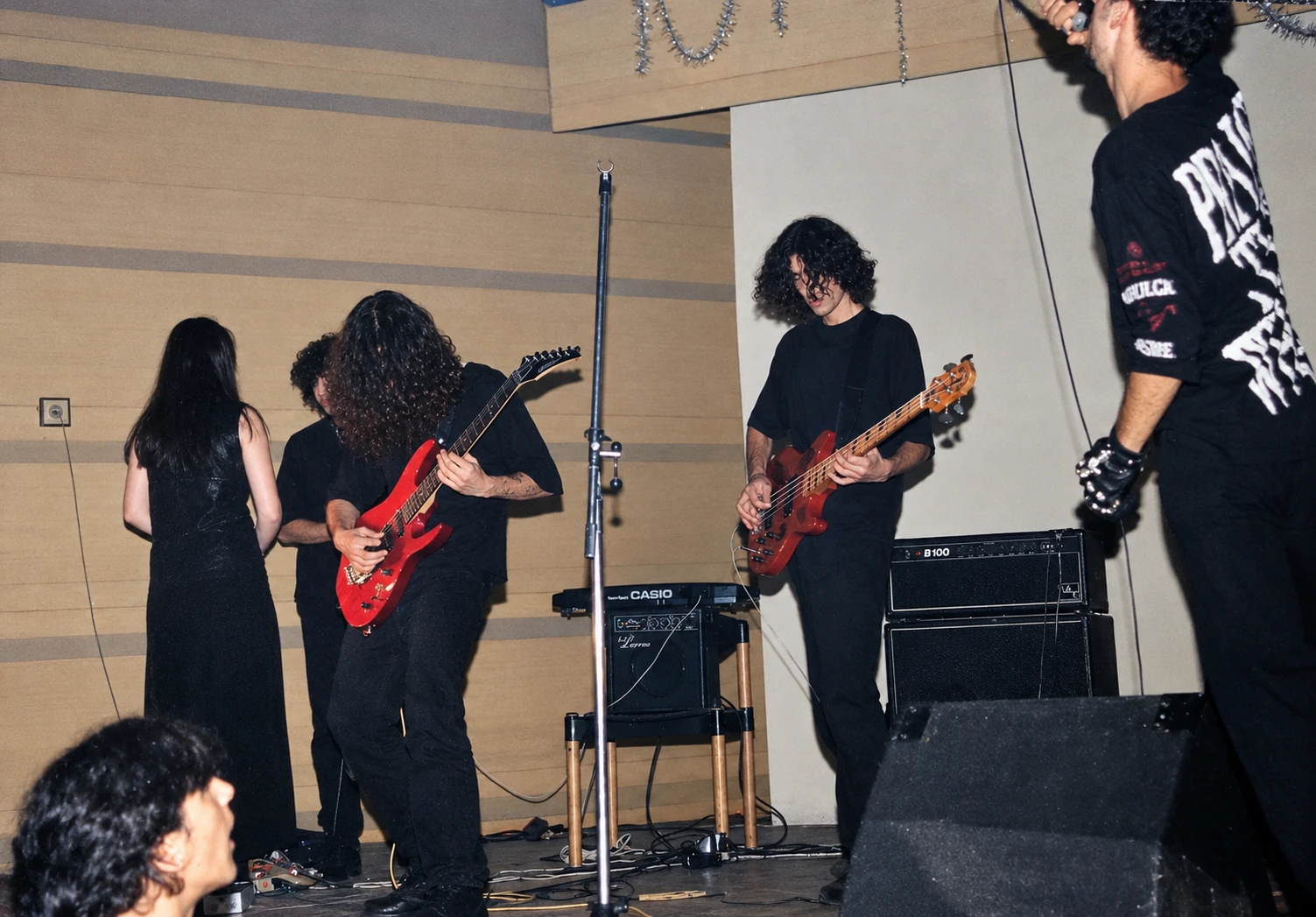
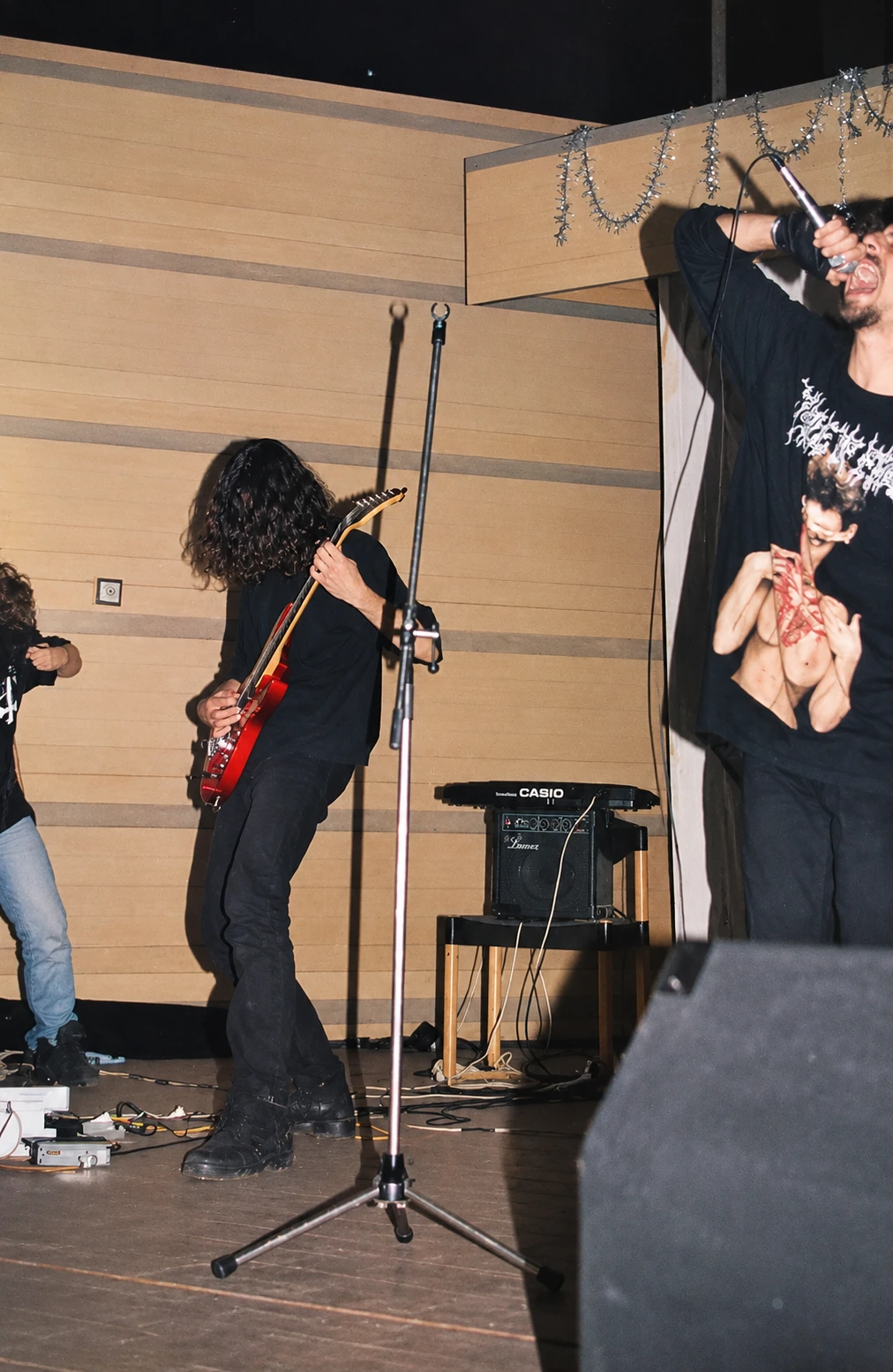
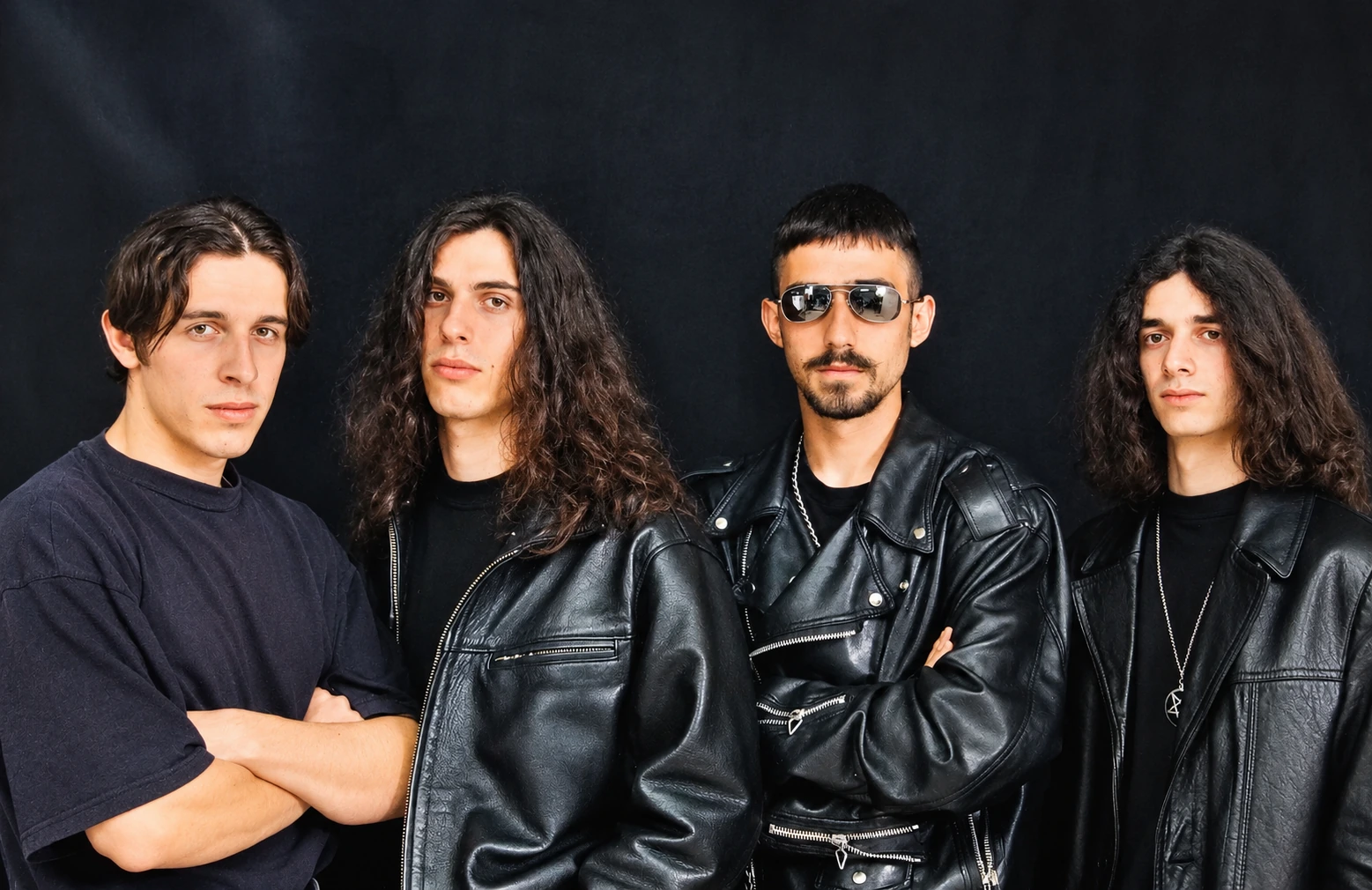
Kiril Petrov provided these three photographs and one artwork and approved their publication on 4 November 2026. The photos’ exact dates, identities of the people pictured and photographers are not documented.
▣ Sources and references 104
All 104 full source notes and all 104 in-text citations from the completed English EPUB, preserved in context.