MOPEN METAL
ALBUM LIBRARYFREE READING ARCHIVE
← Back to the archive
Newsletter updatesSubscribe to the newsletter
RSS
HUENDERUUK

CHAPTERS · 16

001The River and the Coal002Towers Above the City003Sounds After the Shift004Tom’s Path to the Surface005Borders Open, Routes Change006The Missing Guitarist007The New Kid in the Rehearsal Room008Three Different Musical Memories009The Drummer’s Story010Eight Weeks with the Tape Rolling011Blue Steel and Hand-Applied Paint012Eleven Songs, Eleven Doors013The Release and the Different Ears014The Stage and the Short-Lived Trio015Listening Back to the Tape016The Noise That Remains Above the City

Sodom — Tapping the Vein

HUENDERUUK
🎙Exclusive Interviews for Open Metal Album LibraryExplore our exclusive interviews with musicians and album creatorsBrowse interviews ↗
SODOM · 1992 · THRASH / DEATH METAL

Tapping the Vein

Released: August 1992

The sources differ on the exact day (1 / 3 August).

Available languages:
HUENDERUUK
Start reading ↓

The Sound That Remains Below · Album history · 16 chapters

Sodom — Tapping the Vein (1992)

Artwork · copyright · permission

Cover artwork: Dieter Braun · Jürgen Huber·Original label: Steamhammer / SPV (1992)

© Rights holder: Not independently verified.

Permission to use artwork: Not independently verified.

Exclusive interviewTom Angelripper↗Exclusive contributionEroc – Personal statement↗

Album details

Tracklist · 11

  1. 01.Body Parts3:02
  2. 02.Skinned Alive2:27
  3. 03.One Step over the Line5:06
  4. 04.Deadline3:51
  5. 05.Bullet in the Head3:01
  6. 06.The Crippler4:09
  7. 07.Wachturm3:46
  8. 08.Tapping the Vein5:11
  9. 09.Back to War3:14
  10. 10.Hunting Season4:27
  11. 11.Reincarnation7:48

Total duration: 46:02 · 1992 CD

Line-up and contributors

Tom Angelripper
Vocals / bass
Andy Brings
Guitar
Chris Witchhunter
Drums
Harris Johns
Producer / engineer
David Nash · Jan Wichers
Recording assistants

Recording and release

Recording
1992-05-16 – 1992-07-12 · Dierks Studios III · Musiclab
Label / catalogue
Steamhammer / SPV · SPV 084-76542 · CD
Release
1992-08

Listen to the album

Spotify · 1992↗Apple Music · 1992↗Apple Music · 2024 Super Deluxe↗Qobuz · 1992↗Qobuz · 2024 Super Deluxe↗Audiomack · 1992 · region-dependent↗Amazon Music · 1992↗Deezer · 1992↗Deezer · 2024 Super Deluxe↗Spotify · 2024 Super Deluxe↗

Buy the digital album

Qobuz · 1992↗Qobuz · 2024 Super Deluxe↗iTunes Store · 2024 · region dependent↗
◉

Physical editions · reissues

Stock and regional availability may change.

◉2024 · 3CDSodom ShopSold out on the checked page↗◉2024 · 3CDEMPIn stock when checked · 2026-11-24↗◉2024 · 3LP / 2CDEMPProduct page · stock may vary↗◉2024 · 2LPEMPProduct page · stock may vary↗◉2024 · 3CDjpcProduct page · stock may vary↗◉2024 · 2MCEMPProduct page · stock may vary↗◉2024 · 2MCHHVProduct page · stock may vary↗◉2024 · MCTodestriebProduct page · stock may vary↗◉2024 · 2MCMiami Metal MerchantProduct page · stock may vary↗◉1992 · MCVinyl CommandProduct page · stock may vary↗◉2024 · 3LP / 2CDSodom ShopSold out on the checked page↗◉2024 · 2LPSodom ShopSold out on the checked page↗◉2024 · 3CDNapalm RecordsAvailable on checked page · 2026-11-24↗◉2024 · 3CDHammer Online ShopAvailable on checked page · 2026-11-24↗◉2024 · 2LPHammer Online ShopProduct page · stock unconfirmed↗◉2024 · 2LPRecordsaleProduct page · stock unconfirmed↗◉2024 · 3CDHHVAvailable on checked page · 2026-11-24↗◉2024 · 2LPHHVProduct page · stock unconfirmed↗◉2024 · 2LP / 3CD / 3LP+2CDRough TradeProduct page · stock unconfirmed↗◉2024 · 3CDRukaHoreOn order · 2026-11-24↗◉2024 · 2LPRukaHoreIn stock on the checked page · 2026-11-24↗◉CD · SPV 084-76542Rockers RecordsOut of stock on the checked page↗
Catalogue / edition records (17)
◉2024 · collectionSodom ShopCatalogue / record↗◉2024 · Noise/BMGBMGCatalogue / record↗◉1992Metal ArchivesCatalogue / record↗◉2024 · 3LP / 2CD (blood-filled vinyl)Metal ArchivesCatalogue / record↗◉2024 · 2LPMetal ArchivesCatalogue / record↗◉2024 · 2MCMetal ArchivesCatalogue / record↗◉2002 · CDMetal ArchivesCatalogue / record↗◉2015 · CDMetal ArchivesCatalogue / record↗◉2024 · Super DeluxeMusicBrainzCatalogue / record↗◉1992 · versionsRecord ClubCatalogue / record↗◉1992–2024 · 9 editionsMusicBrainzCatalogue / database↗◉1992–2024 · versionsMusik-SammlerCatalogue / database↗◉2024 · 3CDMetal ArchivesCatalogue / database↗◉2024 · 3LP / 2CDMetal ArchivesCatalogue / database↗◉1992 · MC (MG Records)Metal ArchivesCatalogue / database↗◉2024 · official editionsSodomCatalogue / database↗◉2024 · CDUniversal Music ItaliaCatalogue / database↗

Band channels

Official / social channels

SodomYouTubeBandcampFacebookInstagramBandcamp (Steamhammer/SPV)Continental Concerts

Artist streaming profiles

Apple MusicQobuzTIDALAmazon MusicSpotifyDeezerAudiomackAnghami

Databases

Last.fmMusik-SammlerMetal.deMusicBrainzWikidataMetal Music ArchivesAllMusicMAMetal ArchivesSo Many Bands
Share this article
FacebookXWhatsAppTelegramRedditEmail
01 / 16

1. The River and the Coal

The historical Ruhr

The Ruhr is not a single city, nor is it an ancient name beneath which the same landscape has lain for centuries. The river had its name before the industrial region did; along the Ruhr valley, villages, estates, fields, watermills and church communities succeeded one another while the places that would become industrial towns still existed as separate settlements. In the early nineteenth century, the area around Gelsenkirchen was a sparsely populated landscape of agriculture and crafts. Where today's urban streets would later run, church villages, farmsteads and country lanes set the rhythm of everyday life. Essen had a different beginning: around the women's abbey community established around 850 and associated with the names of Gerswida and Altfrid, a market, trades and urban life took shape. Centuries later, the story of the Krupp works, which began to unfold in 1811, built upon that medieval inheritance. Over the centuries, medieval and early modern settlements developed into the later urban landscape of smoke, steel and mine headframes. It was on the ground of these older communities that the Ruhr world in which Sodom's first members grew up also took shape. 1 2

The history of Horst Castle preserves another of the older layers of the Gelsenkirchen area. During the Middle Ages, estates and villages formed above the marshy grazing lands beside the Emscher; after the fire of 1554, the Renaissance building undertaken by Rutger von der Horst left another era's mark on the landscape. The later industrial city did not erase this past, although for a long time it nearly displaced it from everyday awareness. The castle and the industrial city that followed preserve two overlapping layers of time in the same landscape. The old Gelsenkirchen of estates and waterlogged ground gradually gave way to a dense web of mines, railway lines and working-class districts. 3

Coal, migration and industrial conflict

Reaching deeper seams of coal transformed the scale of the region. Mining moved northwards; investment called for new technology, and extraction demanded ever more workers. The railway carried far more than coal: it brought jobs, families, industrial components, money and news. After the Cologne–Minden railway opened on 15 May 1847, the network offered new opportunities to mines and steelworks. The Dahlbusch and Hibernia collieries began production one after another, and small settlements grew faster than their old institutions could keep pace with. By the end of the century, Essen's population had risen above one hundred thousand; in Gelsenkirchen, coal and steel reshaped the streets, working schedules and the city's image of itself. The name 'City of Fire' was not born of poetic exaggeration: it preserved the industrial glow of furnaces and chimneys. 4 5 6 7

The mining district drew people from many directions. Migrants from the Rhineland and Westphalia, Dutch newcomers, families from Hesse and later workers from Prussia's eastern provinces made the new industrial towns multilingual. The term 'Ruhrpolen' was used to group Polish, Masurian and Kashubian communities together, although their origins and identities were by no means uniform. Associations, churches, sports clubs and schools helped those who came for work to make new homes. The miners' settlements provided housing while keeping their residents close to the works: home and workplace were not two separate geographical worlds. This dense social fabric later shaped Ruhr culture as well, from pubs and choirs to local music clubs. 8 9 10

Industrial power did not bring tranquillity. The miners' strike of 1889, the Ruhr uprising of 1920 and the two world wars repeatedly set labour against political and economic authority. During the Second World War, the region's cities suffered severe destruction. Reconstruction depended on coal and steel, but from the late 1950s changes in energy supply, international competition and industrial technology were already weakening the security that mining had once offered. The creation of Ruhrkohle in 1969 did not stop the process; the crises in coal and steel reshaped family lives over decades. Closures unfolded through successive reorganisations, the uncertainty of people seeking work, the need to learn new trades and the dissolution of old workplace communities. Campaigns to defend jobs in Hattingen and Rheinhausen showed that working-class cities did not intend to vanish silently from the economic map. 11 12 13 14

02 / 16

2. Towers Above the City

Life around the mines

Before mining employment began to decline, a colliery was far more than an economic institution. Shift patterns, family incomes, local ways of speaking, sport and singing all revolved around it. The voices of miners' choirs remained part of community life even as coal production lost its importance. The histories of the Hugo and Nordstern collieries, workers' sports, local celebrations and club life preserved different strands of memory within the same industrial region. Meanwhile, the towns continued to ask what would remain of them after the restructuring of factories and jobs. Essen's arts institutions and industrial heritage gave the region a different character from Gelsenkirchen's mining-town streets; the areas around Stommeln and Cologne, and later Berlin, brought entirely different histories into the story of the album. 15 16 17 18

Tom’s choice and industrial change

Tom Angelripper's family envisaged a more secure future for him in mining. Further training and supervisory work promised a conventional path of professional advancement: a more dependable position in the same underground world where Tom already worked. He chose the band instead. He later recalled that this decision saved him from spending decades doing arduous work in the mine. His choice was not triggered by any single political turning point. From the outset, his identity as an independent musician ran against the expectations of family, school and workplace. Tom Angelripper later recalled his defiance at the time in these words: 'Well, then I'll do it anyway!' 19 20 21

Speaking to the Open Metal Album Library about his decision in 1989, Tom also explained that leaving the hard work underground behind at last had fulfilled his dream: he could earn his living from music. His parents, however, wanted him to stay at the mine and pursue further training as a mine foreman. He wanted to devote all his time to the band. He recalled that many miners were already afraid of losing their jobs by then; looking back, he felt he had got off the 'sinking ship' in time. 369

The transformation of industry was already visible in the late 1980s and early 1990s. In Tom's recollection, coal mining increasingly appeared to depend on government subsidies, while workers feared losing their jobs. After the fall of the Wall, he noticed no sudden, dramatic change in everyday life in the Ruhr; he welcomed reunification, especially for families with relatives or friends in the East. He also viewed the political upheaval in terms of new music markets and the performance opportunities that would later expand. This was a personal perspective expressed in retrospect: for him, the region's economic restructuring became a memory not in the form of statistical tables, but as the choice between the security of a miner's life and playing music. 22 23 24

03 / 16

3. Sounds After the Shift

Musical traditions and punk

The Ruhr's musical history did not begin with guitar amplifiers, either. Church and classical-music institutions, municipal orchestras, miners' choirs, workers' songs, dance bands, jazz, beat and rock built upon one another. In the 1960s and 1970s, clubs, dance halls and festivals joined the older institutional layers of local culture. The various strands of krautrock did not form a single uniform style; experimental recording studios and local bands each had their own relationship with British and American rock. Essen's large concert venues, including the Grugahalle, brought international music within reach of local audiences that might still rarely have heard it in record shops or on the radio. Rock did not emerge from nowhere in the Ruhr: it found a place within the dense network of clubs and leisure activities of an industrial region. 25 26

By the late 1970s, punk and hardcore offered a new answer to the questions of who could play music, with what equipment and by which means of distribution. The short song, the inexpensive recording, the self-released record and the fanzine became more than aesthetic forms; they represented an alternative way of working. At the clubs, a band could encounter hard rock, punk, heavy metal or the newly accelerating thrash scene over the same weekend. Musical boundaries shifted not according to an official catalogue of genres, but through gig posters, cassettes and records passed from one person to another. In the early underground, connections were often kept alive by a postal address printed on the back page of a fanzine and a copied tape passed from hand to hand. These small exchange networks also accompanied Sodom's path, far beyond the world of major labels and professional studios. 27 28 29 30 31 32

Metal and the influence of Venom

Metal itself learned speed from several sources. Alongside the forceful riffs of hard rock and heavy metal, punk's brevity, the rush of speed metal, the raw sound of Britain's Motörhead and Venom's extreme stage world entered the European underground in differing proportions. The later label 'Teutonic thrash' cannot describe every German band in a single stroke: Kreator, Destruction, Sodom and the scene forming around them did not all pursue the same sound or approach to songwriting. Record-label distribution and shared tours nevertheless carried their records ever farther. Long before social media, cassettes, club gigs and fanzines bridged the distance between the local rehearsal room and the international fan. 33 34 35 36

In a later interview, Tom singled out the purchase of a Venom record as a powerful early influence. He played drums himself for a time, then learned other people's recordings by ear while singing and playing bass. The musicians did not simply have their equipment ready and waiting: they often modified, repaired or built amplifiers and speaker cabinets with their own hands. Tom's ideal sound included the loud, instantly recognisable voices of Lemmy and Cronos. The mine and music were not yet two neatly separated chapters of his life; mining work and ever-growing musical ambition divided the days of the same man for a long time. 37 38 39

In an instrument-focused interview in 2013, Tom dated his first formative experience of Venom more precisely to around 1981–82: a record obtained as an import showed him that volume, rawness and unmistakable character did not require a sophisticated musical establishment. For a while he also experimented with the drum kit himself; later, he pieced together bass and vocal parts from other people's recordings by ear. That world of homemade speaker cabinets and amplifiers was therefore more than a badge of poverty: it was an everyday workshop for the search for a sound. Behind the machine-like speed one can hear on Tapping the Vein lay this initially intensely personal knowledge, acquired with hands and ears. 383

04 / 16

4. Tom’s Path to the Surface

Fanzines and the early years

Three particularly revealing fanzine documents survive from the late 1980s: the report on pages 14–15 of issue three of To the Death, the telephone interview on page 35 of the first Metal Overdose, and the conversation with Frank Blackfire in issue thirteen of The Wild RAG! Together, they show that independent print publications were already following the band's line-up, musical decisions and international underground connections long before the later retrospectives appeared. 40 41 42 43

Even before the German underground began devoting pages of fanzines to Sodom, the story of how Tom Angelripper and Chris Witchhunter met existed in several versions. A later account published in the Slayer fanzine placed the beginning of their association at around 1980 and recalled an early rehearsal band operating under the name Venom. Memories of the precise beginnings are not identical in every source. What is clear, however, is that the shared musical language of two longstanding members of the 1992 line-up took shape not during rehearsals for Tapping, but long before the professional studios. 384

Sodom emerged from the German extreme-metal scene of the first half of the 1980s. Behind the early demos, rudimentary equipment and changing line-up lay a way of working in which rehearsal rooms, gigs and tape trading reinforced one another. Karl-Ulrich Walterbach's name also came up in the story of a demo sent to Noise, but no contract ultimately resulted there. On the Steamhammer and SPV side, the support of Manfred Schütz proved decisive. For the young musicians, the commercial terms of a contract were less transparent than the opportunity itself: to enter a studio and make a record. In the German underground, labels, clubs, fanzines and small-run releases together shaped the band's path; semi-professional organisation did not give way to professional production at any sharp dividing line. 44 45 46 47

Studio, stage and audience

After the first demos, the studio did not immediately provide a ready-made working method either. In later accounts, Tom and Chris set the difficulties of their early work with Horst Müller against the change they perceived in recordings made with Harris Johns. The distinction between the two periods cannot be measured only in equipment: the young band gradually learned how to capture the noise of a rehearsal room without sacrificing its speed and angularity. This is why the choice of producer and studio in 1992 had a history behind it, rather than being merely a technical entry in the album credits. 385

In the years leading to the contract, the stage was as uncertain a school as the recording studio. In a 1987 interview with the Norwegian Slayer fanzine, the musicians discussed an early Frankfurt show where Sodom appeared before an audience alongside Tankard and Destruction. They also mentioned video footage preserved from a 1986 concert at Essen's Zeche Carl. Cameras and camcorders were not merely decorations added after the fact: they were among the few means by which the band and its fans could convey what that early, seemingly chaotic live sound had been like. 386

The young Sodom did not view its audience as a single homogeneous crowd either. In the same contemporary interview, the musicians perceived differences between German and American underground listeners and discussed what staying true to a scene meant when they were no longer playing only local clubs. The provocative imagery of their lyrics, including influences associated with Aleister Crowley's name, and loosening ties with former bandmates also belonged to this early self-image. Seen in light of the larger record sales that followed, this was not a romantic slogan invented in hindsight but a documented statement of identity from 1987. 387

Guitarist changes and early records

Chris Witchhunter's importance in the story of the first major changes of guitarist extended well beyond his place behind the drum kit. According to Frank Blackfire's later recollection in a fanzine, Chris himself helped bring Frank into Sodom's orbit. Their work together on Persecution Mania and Agent Orange was therefore not the automatic result of replacing an anonymous guitarist: personal relationships within the band opened the door for the newcomer. That the successful line-up had once arisen from such direct, personal initiatives also deepens the pain associated with its later breakup. 408

The earliest records did not reveal a style that was fully formed from the outset. In the Sign of Evil and Obsessed by Cruelty later became cult releases precisely for their rawness, flaws and extreme sound. By Persecution Mania, their playing and songwriting had grown more disciplined; Agent Orange then became one of the band's greatest international achievements in 1989. Yet success did not freeze either the line-up or the sound. Frank Blackfire's guitar playing and role as a songwriter were crucial in the years leading up to and surrounding Agent Orange; after leaving in 1989, he joined Kreator. His later memories also gave a special place to Chris Witchhunter's instinctive, flexible sense of tempo. New guitarists and new relationships within the band would eventually take their places alongside the memory of the old trio, so that behind the continuity of the name, the people working together changed again and again. 48 49 50 51 52 53 54

The 1988 fanzine recollections

When the third issue of To the Death covered Sodom's 1988 appearance with Whiplash, it published more than a concert review: it also asked Tom about the band's plans. At that point he was deliberately committed to a three-piece, one-guitar line-up. He weighed keeping older songs in the live set against the audience's attachment to them, while judging that the band had already progressed technically beyond its earliest recordings. Knowing the later changes of line-up gives this moment particular weight: the trio was not merely a temporary necessity, but a form they had chosen. 388

In the 1988 fanzine interview, Tom also offered his view of the Berlin studio work they had come to associate with Harris Johns. Their collaboration was no longer just a name printed once on a record sleeve, but a point of reference: the experience of previous recordings informed what sound and working conditions they could expect from the next material. That accumulated studio memory later acquired special importance when, for Tapping in 1992, Chris's request brought the more prestigious Dierks complex into consideration, even as the band remained committed to working with Harris Johns. 409

In the same 1988 conversation, Tom also considered the band's next live and visual documents: he mentioned a televised concert recording, a music video and even the possibility of making a live album in Bochum. These remarks alone do not establish that every plan came to fruition. The plans themselves show just how fluid the band's position remained: Sodom was already thinking in terms of expansion through record shops and concert halls, yet the form and financing of its next release were still open questions. 389

America remained a particularly powerful promise towards the end of the decade. In To the Death, Tom saw the prospect of touring overseas as inseparable from financial obstacles; in a contemporary telephone mini-interview for the Greek Metal Overdose, he was again asked about American plans alongside the band's new studio work. A telephone interview with brief, edited answers cannot establish a precise touring itinerary. They do preserve the fact that hopes of international success were already bound up with the everyday, sometimes unresolved costs of making it happen. 390

Agent Orange and Blackfire’s departure

In Frank Blackfire's own account, the making of Agent Orange in 1989 was not a retrospective stylistic label but a concrete songwriting calendar. In issue thirteen of the American fanzine The Wild RAG!, during a telephone conversation that had been difficult to arrange, he said that the germ of the title track had already emerged in September 1988, while 'Remember the Fallen' took shape the following February. The months between those two songs make clear that not every idea sprang fully formed from a single rehearsal after Persecution Mania. This already established, intermittent songwriting routine also forms part of the background to Tapping, which was likewise made under tight time constraints in 1992. 391

A contemporary fanzine already recorded the breakdown of the Blackfire era. The writer for The Wild RAG! spent days trying to reach the guitarist, and during their conversation Frank talked about moving to Kreator. In several later recollections he also spoke separately about the American tour with Whiplash and his memories of Tony Portaro. These accounts do not automatically clarify what was said in every discussion within the band. They do show, however, that the change of guitarist involved not merely musical tastes but also a new personal career opportunity. 392

In a later, seventeenth issue of the Slayer fanzine, Frank also told his story through the industrial working environment of Essen, his time at WIDIA and his commitment to playing guitar. He claimed to have made a substantial contribution to writing Sodom's songs, and mentioned a financial dispute involving SPV, speaking of a sum in the region of forty thousand marks. These statements cannot be presented as an account accepted by every member of the band: they are Frank's personal claims, made retrospectively. The disagreement nevertheless belongs in the story, because those who created a shared musical success may have experienced it very differently. 393

In a much later interview, Tom illuminated the split after Agent Orange from another angle. He recalled that the relationship between Frank and Chris had already deteriorated during the album's mixing, and that Frank had proposed replacing the drummer. Tom, invoking their long shared past, still stood by Chris at the time; Frank's path ultimately diverged from Sodom's. This account alone cannot tell us whether Frank would describe every exchange in the same way. The decision gains its retrospective weight from the fact that, only a few years later, after the Tapping tour, the question of whether Chris himself could remain became Tom's hardest dilemma. 394

Meanwhile, the international success of Agent Orange also changed Tom's personal life. Looking back, he said that around 1989 he was finally able to leave his metalworking duties at the mine behind, although his family had previously hoped he would pursue the safer route of advancement in mining. Music did not become a profession overnight: for years, a working shift and a rehearsal had belonged to the same week. When the band faced decisions in 1992 involving an expensive studio, a new guitarist and plans for a European tour, those choices were also consequences of an earlier turning point in his life. 395

Better Off Dead and international touring

After Agent Orange, Michael Hoffmann took over on guitar. Better Off Dead brought different emphases in 1990, and years later people were still debating whether it was a more rock-oriented record or simply heavy in a different way. Tom did not regard it as a failure: he felt that many listeners had undervalued it. The label wanted a continuation of the earlier success, while the band members did not imagine the material in quite the same way. Alongside hard metal, Chris also liked more melodic music; the idea of Bryan Adams's 'The Kids Wanna Rock' surprised Tom. The thought of playing 'Summer of ’69' was already pressing against the limits of Tom's own taste. Cover-version ideas involving Tank and Thin Lizzy also arose; the decisions cannot be attributed exclusively to the will of a single musician. Differences of taste within the line-up were not exceptional disturbances, but part of the material from which they made their work together. 55 56 57 58

An apparently incidental yet revealing feature of the Better Off Dead period was the band's growing ambition for a larger stage production. Former participants in the documentary recall a large drape, a backdrop echoing the gravestone imagery of the cover, and ideas involving pyrotechnics. Not every plan made it to the stage; choices repeatedly had to be made between the production they wanted and the concert they could actually afford. That tension stayed with them as they organised the tour for the new album in 1992. 396

Everyday stories from this period moved between stage and studio. They obtained a real chainsaw to record the saw sound for 'The Saw Is the Law'; in the enclosed studio, the smell of petrol and machinery lingered. The proposed video seemed too expensive, while a larger touring production created organisational tasks for the band and its management. Trips to Japan brought the experience of exact daily schedules, local audiences and distances unfamiliar to the musicians. A tour was more than the few minutes visible on stage: technicians, travel, equipment, accommodation and management formed the work behind the scenes. By then, the band had become part of an international system that no one could have foreseen during the early demo years. 59

In one recollection, the first trip to Japan, before Andy joined, appeared almost like a military itinerary: breakfast, a meeting at a fixed time in the hotel lobby, bus departure, the next city, another soundcheck. They also remembered a small group of fans who turned up repeatedly at different stops and became part of everyday life between the hotel and the venue. The Far East meant not only a new market, but a degree of organisation quite unlike the earliest clubs of the Ruhr. 397

A documentary about Sodom’s history also preserves the memory of a stop in Bangkok. The musicians had originally wanted to rest, but in a rock pub they began playing spontaneously on the instruments available there. This was not a prearranged concert, but an unexpected, informal moment during the tour. The story shows that even amid international travel and tightly organised tour schedules, Sodom had not lost the instinctive, direct way of making music that had shaped the band in the clubs of the Ruhr. 398

Their memories of the performance in Sofia likewise say far more about their growing international presence than a tour poster could. In the film they recalled a mass welcome from fans, unusual security arrangements and an enormous concert audience. The alleged attendance figures and descriptions such as 'the first Western metal band' are not verified statistics; the scale of the musicians' experience is vivid nonetheless. By the time Andy joined in late 1991, the group that had once been tied to local rehearsal rooms already had to find its feet in such widely different worlds. 399

Tom later said of the early years that they had initially expected neither a major record contract nor the possibility of making a profession out of the band. Venom's rawness and the pleasure of playing music together came before any idea of a secure livelihood. The contract, the studio and leaving the mine only slowly transformed a hobby into a way of life. A recollection shared in 2012 placed an early discussion with a record label at the end of 1983. Meanwhile, surviving contemporary documents relating to concerts in 1984 testify, with their own dates, to events of the following year; later memory and paper evidence from the time preserve two separate perspectives. 60 61 62

The path traced by early and later fanzines makes another distinction visible. In the 1980s Tom and his bandmates discussed keeping old songs in the live set, the strength of the three-piece format, the financial feasibility of touring abroad and recording costs; by 1992, the stakes of those same questions had become a suddenly vacant guitarist's position and an album about to be made. Continuity therefore lay not in the same people always playing together, but in the band's repeated efforts to reconcile its own ideas with the opportunities actually within reach. 400

05 / 16

5. Borders Open, Routes Change

The opening of the borders

In the second half of the 1980s, Sodom was playing ever larger venues, while the changes taking place in Germany around it could be seen in more than the evening news. Workers fighting for jobs in the iron and steel industries, closures and retraining were part of everyday life in the Ruhr. Meanwhile, the band's recordings and live performances were reaching audiences beyond Germany. Fanzines, small labels and rock programmes on radio and television all helped spread the sound of German thrash. Agent Orange was not born out of a single social event: it reached a wider audience as part of a musical network in which record shops, mail orders and tour buses connected a local band with listeners around the world. 63 64 65 66

On 9 November 1989, the Berlin border crossings opened. Almost eleven months passed between the opening of the Berlin Wall and German state unity: the monetary and economic systems were linked on 1 July 1990, and reunification took place on 3 October 1990. Images of open borders and the new possibility of travel quickly entered everyday experience; economic integration, the fate of factories and changes in the labour market took much longer to settle. Political celebrations were followed by the privatisation of former East German industry and rising unemployment. Borders vanished from the map faster than the conditions on which people's livelihoods depended could change. 67 68 69 70

Tom later recalled that everyday life in Gelsenkirchen did not change overnight after the Wall came down. He welcomed reunification and felt particular relief for families who had relatives or friends in the East. For the band, the opening of the borders led towards new audiences and future opportunities to perform, but Tom did not recall conducting much personal correspondence with fans in the East: postal contacts were mostly handled by the label or management. He thus viewed the changes of the period at once through family life, music and organisation. Political upheaval did not become a stage legend in retrospect for him; it remained a gradual opening of new markets and everyday connections. 71

Cold War memories and a changing Europe

Tom's personal memories of the Cold War went back further. While serving in the Bundeswehr in 1983, he experienced the fears of the period at close quarters. After the fall of the Wall, he interpreted improving Soviet–German relations as a sign of change in public life, while the music market in the new federal states offered the band new ways of reaching listeners. In later memories of concerts in Russia, his bond with the audience became intertwined with a different and much later historical loss; he looked back on those journeys in light of the experience of a subsequent war. His account preserves the events of 1992 and recollections from many years afterwards as separate layers of time. 72 73 74 75

In his reply to Open Metal Album Library, Tom particularly emphasised that he saw the opening of the Iron Curtain as a gradual process. Previously, it had been difficult for East German fans and others in the East even to contact a band or exchange cassettes and other recordings. He did not handle the fan mail reaching Sodom, however, so he could not recall any specific correspondence of his own from those years, and the band had very little contact with Eastern European groups. The fall of the Wall, followed much later by the European Union's eastward enlargement, brought more concert invitations; Tom said it was possible to feel how long the fans had been yearning to see Western bands perform. Looking back from the present, he regretted the end of the band's annual concerts in Russia and spoke of encountering the sense of loss felt by Russian and Ukrainian fans on social media. These were retrospective memories spanning different decades, not a single sequence of events in 1992. 370

In the early 1990s, Europe was moving in two directions. The Maastricht Treaty was signed on 7 February 1992 but did not enter into force until 1 November 1993; the new institutions of cooperation were therefore not yet in place when Sodom was writing its new songs. Farther south, the breakup of the former Yugoslavia brought the conflicts over Slovenian and Croatian independence in 1991, followed by the outbreak of war in Bosnia in 1992. The siege of Sarajevo made a new European war visible after the Cold War had ended. Sodom's songs about war and violence reached listeners in a European present in which, after the end of the Cold War, war was once again being fought on the continent. 76 77 78

06 / 16

6. The Missing Guitarist

Hoffmann’s departure

After Michael Hoffmann's departure, Sodom did not move forward with a ready-made, carefully planned new line-up for the next album. During the period following Better Off Dead, the band also visited Brazil, where Hoffmann encountered a personal opportunity and the prospect of studio work. Both Hoffmann's own later account and Tom's 1992 video interview preserve the fact that Brazil represented a genuine alternative, although the two perspectives emphasise different aspects of the decision. Tom wanted to stay with the familiar German studios and the production environment associated with Harris Johns; he felt the band could not make its next album dependent on one member moving to Brazil for an extended period. Hoffmann's plans in Brazil and Sodom's studio work in Germany parted ways during the same period of mounting tension. 79 80 81 82

A Metal Hammer report from around 1992 detailed, through Tom's and Chris's recollections, the narrow timeframe within which the songwriting had to be replanned. According to Tom, they had roughly three songs prepared when Hoffmann left; of the tracks eventually released on the album, he said that only one remained which had taken shape with Michael's involvement. The guitarist returned after an absence of about seven weeks, but by that time the band no longer wanted to keep the forthcoming production waiting. The possibility of a two-guitar line-up was also raised, but never realised. The details of the absence and the decision come from the two musicians' recollections; the interview does not stand in for Hoffmann's own account of his contractual position. The pressure of time is clear, however: work on the new record had to continue even though the band members did not see the situation from the same perspective. 83 84

Chris on the band’s sound

Chris also specifically rejected the simplistic explanation that Hoffmann alone had been responsible for the sound of Better Off Dead. Several people had taken part in the band's collective decisions; Tom did not claim that the guitarist had been incapable of working in the studio either. They did not describe the personal relationship as one of severe hostility stretching back over time. The departure and the search for someone new arose instead at the intersection of a prolonged absence, diverging plans and the approaching album deadline. What was truly at stake was the vacant guitarist's position and the working schedule of the record being made. 85

07 / 16

7. The New Kid in the Rehearsal Room

Andy’s early musical path

According to Andy Brings's recollection in 2024, he was twenty years old when he joined Sodom in late November or early December 1991. In another, later interview, Tom estimated his age at eighteen or nineteen. The two memories cannot be combined into a newly established date of birth: Andy stated his own age, while Tom gave an approximation. For Andy, his last year of school coincided with joining a professional band. With his long hair, biker jacket and obsession with extreme metal, he had felt like an outsider in class; the band's invitation seemed not like a gradual step forward in a career but like a sudden change in what his life might become. 86 87 88

Andy Brings entered Sodom's story as a guitarist, but he later recalled starting out on drums as a child: he had used his grandmother's knitting needles to hit objects, and drums remained his favourite instrument for a long time. On stage, however, he wanted to stand at the front. He described early experiences of Kiss, the Ramones and later Skid Row, in concert and on record, as no less important than metal bands; he did not separate his punk sense of rhythm and attraction to melody from heavy riffs. This varied musical past helps explain why he approached Sodom from a different tradition than Tom and Chris when the songs for Tapping were still taking shape. 401

Joining Sodom

The connection formed around a video rental shop in Essen. Through Chris Witchhunter's contacts, the band heard about a young guitarist who learned quickly and brought ideas. The intermediary's name remained uncertain in later recollections. Chris invited Andy to rehearse, and the band then consulted manager Boggi Kopec as well. They were not trying to lure an established star away from another metal band. They wanted someone who could quickly find his place in the older songs and the new material still being written. The fact that Chris had been the one to bring Andy into the band later acquired a special resonance: the drummer had been central to the formation of this line-up, even though their relationship would enter a crisis years later. 89 90

Andy did not know the whole Sodom catalogue equally well. Better Off Dead was close to his tastes, while he learned the songs from Persecution Mania and Agent Orange gradually. The early, rawer period appealed to him less, although he enjoyed playing 'Sodomy & Lust' live. For the audition, he had to learn three older songs: 'An Eye for an Eye', 'Shellfire Defence' and 'Ausgebombt'. He did not own every album, so he borrowed CDs from the video shop, practised the riffs at home and kept the end of his school year in mind. Chris joked that playing rock music would make him rich. Andy later recalled with a smile that the prediction did not come true. Andy remembered that he was the only person they actually auditioned; it is his later perspective that preserves this moment in the rehearsal room. 91 92 93 94

Years later, Andy also corrected the oversimplification that he had rejected Sodom's entire previous career before joining. Better Off Dead had in fact been one of his favourite records; the earliest, much rawer period spoke to him less, but he also valued a number of songs from Persecution Mania and Agent Orange, and liked performing 'Sodomy & Lust' live. The distinction matters: the newcomer was not a fan who intended to reproduce every old approach unchanged, but a young musician with selective influences and an independent taste who wanted to write new songs. 402

The rehearsal room and influences

The rehearsal room was far from a sterile workplace. According to Andy, they had to repair the room and make it usable while rehearsing the old live repertoire and beginning to write new songs. He placed the most intense period of writing and rehearsing between January and April 1992; by May they had entered the studio. In a later overview, Tom perceived the entire album process as lasting about half a year. Andy was speaking of active composition, Tom of the complete journey; the two memories measure different spans of time. Meanwhile, the printed booklet specifies the period of the subsequent studio recordings. 95 96 97 98

Andy did not have to search long for a new direction for the band's sound. His early listening included Anthrax, Agent Steel, Nasty Savage and D.R.I., but also Skid Row, Ugly Kid Joe and Faith No More; he singled out Death's Scream Bloody Gore as one especially important death-metal album. Tom approached metal through Motörhead, Venom and Tank, while Chris also enjoyed Iron Maiden, Helloween and Bryan Adams alongside harder metal. These differences were not three isolated tastes but three sides of the space in which they composed. In the rehearsal room, the new guitarist's more aggressive, densely packed riff ideas met the recognisable Sodom language Tom and Chris had already developed. 99 100 101 102 103

Andy later remembered another day at the rehearsal room. Through a door left slightly ajar, he heard Tom and Chris arguing fiercely about money and other matters. The young guitarist did not go straight in; he waited in the corridor. The quarrel reminded him of childhood, when his parents had argued loudly before their divorce. Once the argument subsided, Andy entered as if he had only just arrived. Later he called the management, who told him that the relationship between the two longstanding members was no longer as close as before. That was all Andy heard and all he retained while waiting in the corridor; his account does not reveal the financial details of the dispute. Decades later, he still found it remarkable that the three men went on to record the album together and set off on tour. 104

08 / 16

8. Three Different Musical Memories

Three approaches to songwriting

By the end of 1991, 'the Sodom sound' did not mean the same thing in the shared history of all the band members. Tom's early bass and vocal sound sought raw, direct weight; Chris's drumming brought flexible, forceful and unpredictable movement to the songs rather than following a metronome at every moment; Andy, as the new guitarist, brought faster, denser riffs and greater extremity. The label would have welcomed the band adapting to broader tastes, but Tom considered preserving their own character more important. He did not regard the fashion for grunge as a direction for the band. Alongside rivalry with their peers, he also felt a sense of comradeship within the scene, but trends did not determine what they played at rehearsal. 105 106 107 108

Even many years later, Andy emphasised that for him songs first come to life in the rehearsal room, not in digital recording software. He described himself primarily as a musician rooted in rock 'n' roll and punk who also listened to metal, valuing direct energy and a good song more highly than sheer technical complexity. This does not mean Tapping was a simple album; rather, it helps explain its duality of fast, brutal passages and memorable structures. The band did not resolve the differences between their personal styles through theoretical debate: they tried out which riff could become a real song. 403

Tom did not trace the origin of his uncompromising attitude to the changes of 1991–92. He said that the defiance had already formed in him in 1982, when parents, teachers and vocational instructors did not understand what they were doing. It became a 'now I'll do it just to spite you' attitude: he listened to his heart and instincts rather than advice intended for his own good. He saw anger and determination as sources of the passion needed to keep going; in his view, they helped the band remain authentic to its fans and survive the 1990s. 372

Scene, tape trading and touring

In his interview given directly to Open Metal Album Library, Tom recalled that friendly, comradely relationships had endured alongside competition among German thrash bands. He still respects his peers who have held their ground in the music industry for so long. This did not mean they planned their music together, however: he said they did not watch which way other groups were turning, because they wanted to preserve Sodom's recognisable stylistic identity despite the label's more commercial expectations. He expressly rejected grunge as a musical direction appropriate for Sodom. They barely met Kreator in 1991–92; Tom associated a revival of their personal connection more with the 1993 tour alongside Motörhead. He believed Mille Petrozza was attempting to counter declining record sales by moving in a somewhat more commercial direction, but maintained that they had not discussed this together or agreed in advance on the musical direction of their next albums. The good atmosphere when they met did not alter the fact that each followed the path of his own band. 371

Sodom's scene at the time was nothing like the later musical world organised through online sharing. Tape trading required postal addresses; material for fanzines was typed or printed and sent by hand; information travelled between record shops, gigs and acquaintances. Obtaining foreign albums could be slow and sometimes expensive. This network shaped what musicians and fans alike heard, and when. In the early 1990s, several strands of global metal were accelerating at once: death metal developed its own sound world, alternative rock and grunge moved towards the wider market, while hardcore and thrash carried forward a legacy of speed and rawness. Sodom's new album took shape amid these sounds, not in a vacuum. In February, Pantera's Vulgar Display of Power demonstrated a new emphasis on tight, groove-driven metal; in June, Napalm Death's Utopia Banished marked a different path of development in British extreme music. In Germany, the still-young Wacken Open Air was also part of the developing concert scene; live shows and record releases together expanded the range of extreme metal available in 1992. 109 110

The 1991 trip to Brazil and the Japanese tour showed another side of the band's international life. The opening of borders also created more opportunities to reach audiences in the East, but arrangements for releases and concerts still passed through management and labels. Tom did not claim that the band members had corresponded extensively with fans in Eastern Europe. He did, however, remember performances in Russia, and later historical changes gave those concerts a more personal significance for him. Between 1990 and 1992, both access to new audiences and the expansion of professional tour organisation helped shape the band's path. 111 112 113

09 / 16

9. The Drummer’s Story

The title track and Wachturm

The story of the album's title track opens in several directions, but none is merely an idea for a sleeve. According to Andy Brings's recollection, Chris Witchhunter suggested the title 'Tapping the Vein' and the basic concept for the cover; Andy identified himself as the writer of the title track's lyrics. The image of the military figure and the blood was therefore not the complete work of one person: Chris's idea, Andy's lyrics, the graphic work of Dieter Braun and Jürgen Huber, and the listeners' later interpretations survive as distinct layers. Years later, Andy jokingly reimagined the figure as a strange creature collecting blood or as an image of cloning, but he did not attribute that reading to Chris's documented intentions in 1992. 114 115 116 117

Chris's personal story emerges most directly around 'Wachturm'. In the 1992 video interview, he said that his partner had become involved with the Jehovah's Witnesses community while rejecting Sodom's music and life in the band. Records and posters disappeared or were smashed, and Chris attended the meetings while feeling that he was gradually losing his partner. The German-language song grew out of that relationship and the anger it caused. Chris made serious allegations about the religious community from the perspective of his own pain; in the story of the song, these remain his words, not independently established judgements about the institution. The account does not name his partner. 118

Chris in the studio

Tom's later memories preserve another side of the studio work. Chris's concentration occasionally broke down, and alcohol became an increasingly serious problem during the recordings. According to Tom, Harris Johns did more than handle the technical work: he helped Chris calm down when he froze at the moment the tape began rolling, and helped him find his way back into the work. In his own account from 1992, Chris emphasised the loss of a relationship and control over his life; Tom's story from decades later concerns working together, offering help and the burden of friendship. Coming from different times and different personal circumstances, the two accounts preserve the weight of the same story. Tom also said in 2024 that he himself had not always been moderate in his drinking; he was later able to make a change, whereas Chris's situation grew worse. He spoke self-critically about his earlier responsibilities and regretted that the personal relationship was never repaired. 119 120 121

Behind the angry, satirical tone of 'Wachturm', then, lies no abstract metal cliché. For Chris, the song condensed a conflict involving a personal relationship, a religious milieu and the right to determine his own life. Although the album's imagery of war, bodies and religion comes from different historical and lyrical situations, it does not merge into one simplistic fantasy of violence. In the band's history, the song's human origin matters precisely because it shows how a very specific life experience can become a track that listeners later understand within entirely different emotional or political frames. 122 123 124

10 / 16

10. Eight Weeks with the Tape Rolling

Recording and studio selection

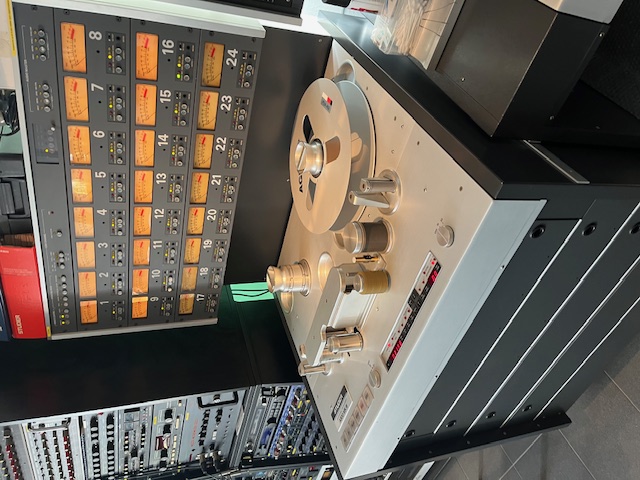
Recording began on 16 May 1992 and continued until 12 July. The album credits name Dierks Studios III in Cologne and Musiclab in Berlin; mixing was done at Dierks. Harris Johns is credited as producer, recording engineer and sound engineer, with David Nash and Jan Wichers as recording assistants. The precise division of recording work between the two studios cannot be assigned to a single room: the named credits and the participants' memories together establish the locations. Chris had long dreamed of working in a large, prestigious studio one day. From a workshop set up in the family house, Dierks had developed into an international recording centre from the 1970s onwards; for Sodom, this meant both prestige and an expensive, demanding work schedule. 125 126 127 128 129 130

Tom later recalled that, at rehearsal, they did not begin with a finished set of lyrics and then search for music to accompany them. Andy would often bring in a heavy, drawn-out or dizzyingly fast riff, and they would build the structure together; only then would Tom fit the words to it. The weight of 'Reincarnation' and the headlong rush of 'Skinned Alive' illustrate two different directions in the ideas brought by the young guitarist. They could have an outline for a complete song by the end of a rehearsal, while the studio time in which the album would be recorded still lay ahead. Tapping was thus not simply a rapid reaction to a change in the line-up, but the outcome of an exceptionally concentrated period of collaborative songwriting. 404

For the musicians, the choice between the two studios was more than a matter of audio technology. One statement in the documentary Lords of Depravity, recalling the making of Tapping the Vein, says that Chris Witchhunter specifically insisted on recording all his drum parts at Dierks. The film recalls this wish alongside the production's high cost. At the time, the place was considered one of Germany's finest recording studios, so the drummer's determination to use the room concerned both the musical working conditions and an opportunity that a heavily touring metal band did not receive every day. The surviving account explains where the drums were recorded; on its own, it cannot establish the exact division of all the other tracks between the two studios. 379

Stommeln, Berlin and studio life

Stommeln's history is entirely different from that of the Ruhr's coalfields. The region preserves traces of Roman settlement, Frankish and medieval villages, agricultural estates and later Prussian administrative modernisation. The name 'Stumbele' appears in a document from 962, and Pulheim is recorded as 'Polhem' in 1067. Dieter Dierks began building his recording workshop in the family home, which had become a professional studio by the 1970s. The credits nevertheless identify Dierks Studios III as being in Cologne; the studio's historical roots and the place named in the actual recording credits are separate facts. For Sodom's members, the rural studio surroundings represented a new workplace, not an extension of the mining towns. 131 132 133

Berlin provided a different historical horizon for the other location. Musiclab had been operating during the period of the two German states, and after the Wall fell, the city's transport and cultural landscape suddenly changed. The destruction of the war, the four-power occupation and urban life divided by a wall had placed Berlin at the centre of the Cold War map. After 1989, new clubs and subcultures sprang up in abandoned industrial buildings. The album's studio credits record specific work carried out in Berlin, while the city's new clubs belonged to the cultural reorganisation that followed the Wall. 134 135 136 137 138 139 140 141

Tom later remembered small details of everyday life at Dierks: lunches were prepared, there was beer in the refrigerator, they sometimes had barbecues, and Dieter Dierks himself would appear at the studio. The more hospitable surroundings came at a price. As Tom recalled it, the long and expensive studio time was ultimately charged against the band's royalty advance. No verified invoice survives for the daily rate suggested by the interviewer; what mattered in his experience was that the costly studio brought status and comfort, but also left a financial obligation behind. The commercial arrangement governing advances and deductions only became fully clear to the young musicians later. 142 143

Harris Johns and recording techniques

Harris Johns's experience did not begin with Sodom. Earlier, he had experimented with tape recorders, worked as a studio assistant and in other audio roles, and gained experience by acquiring equipment and building studios of his own. As a producer, he intervened in bands' recordings to varying degrees: first he had to establish what the group wanted, then adjust his work accordingly. Music Lab, Sodom's earlier records and productions associated with Kreator form part of the wider history of German metal recording, but the original release is what establishes the recording credits for Tapping. In the studio, the producer's advice also became decisive for the vocals. Tom had experimented with an earlier, higher-pitched, shouted take of 'Reincarnation'; Harris suggested a deeper, more growled voice. Andy later discovered that same alternative version when listening through the tapes again. The final vocal was not the result of technically perfecting the pitch; it was a deliberate performance choice. 144 145 146 147 148 149

Chris's drum recordings were not played to a click track. In Tom's account, Andy played live guide guitar while the drums were recorded and loudly called out the changes in 'The Crippler' for Chris. Tom sometimes helped by singing to guide the dynamics. The drummer would occasionally freeze when the recording began; Harris would calm him down. Years later, Andy discovered small sounds on the multitracks that had been less audible in the mix of the time: a piccolo snare, bells, a triangle, extra strikes and snare rolls that moved beyond regular bar lines. These were not flaws of timing to be corrected after the fact, but part of Chris's own playing. The record's rhythm feels alive precisely because not every strike lands with mechanical accuracy in exactly the same place. 150 151 152

Andy also preserved a separate memory of the long reverberation in Dierks's acoustic space. The echo could blur individual notes on some of the faster songs, yet added to the character of 'One Step Over the Line' and 'Reincarnation'. The dark, corridor-like reverberation of the original album sound later became part of the period's atmosphere in Andy's mind. For the 2024 Redux mix, he sought more of the trio's immediate presence: the drums should come forward and have more space, Tom's voice should sound close, and the guitar should not disappear behind effects. He used more bass DI signal and more room microphones for the guitar, but added no new guitar parts, did not overwrite drum hits with modern samples, and did not quantise the human playing onto a grid. Neither mix should be treated as correcting a flawed original or as the definitive version; each brings different aspects of the same recording to the fore. 153 154 155

The archive also preserved another alternative guitar solo for 'Wachturm', and a previously recorded intro solo for the title track that had been omitted from the album came to light. An early take of 'Reincarnation' with higher vocals also survived. While remixing, Andy also heard anew the force of Chris's cymbal: the 'China' cymbal was so loud that it regularly startled the guitarist as he walked past the drums, and Chris jokingly called it the 'Andy-fürchte-Becken'—the cymbal that scares Andy. Three decades later, Andy also heard human imperfections differently from when he was a young guitarist and found them rather irritating. The unpredictability of the rehearsal room and the unevenness of the drumming gave the recording precisely the spontaneous power he later refused to retouch into regularity. 156 157

11 / 16

11. Blue Steel and Hand-Applied Paint

Knarrenheinz and the artwork

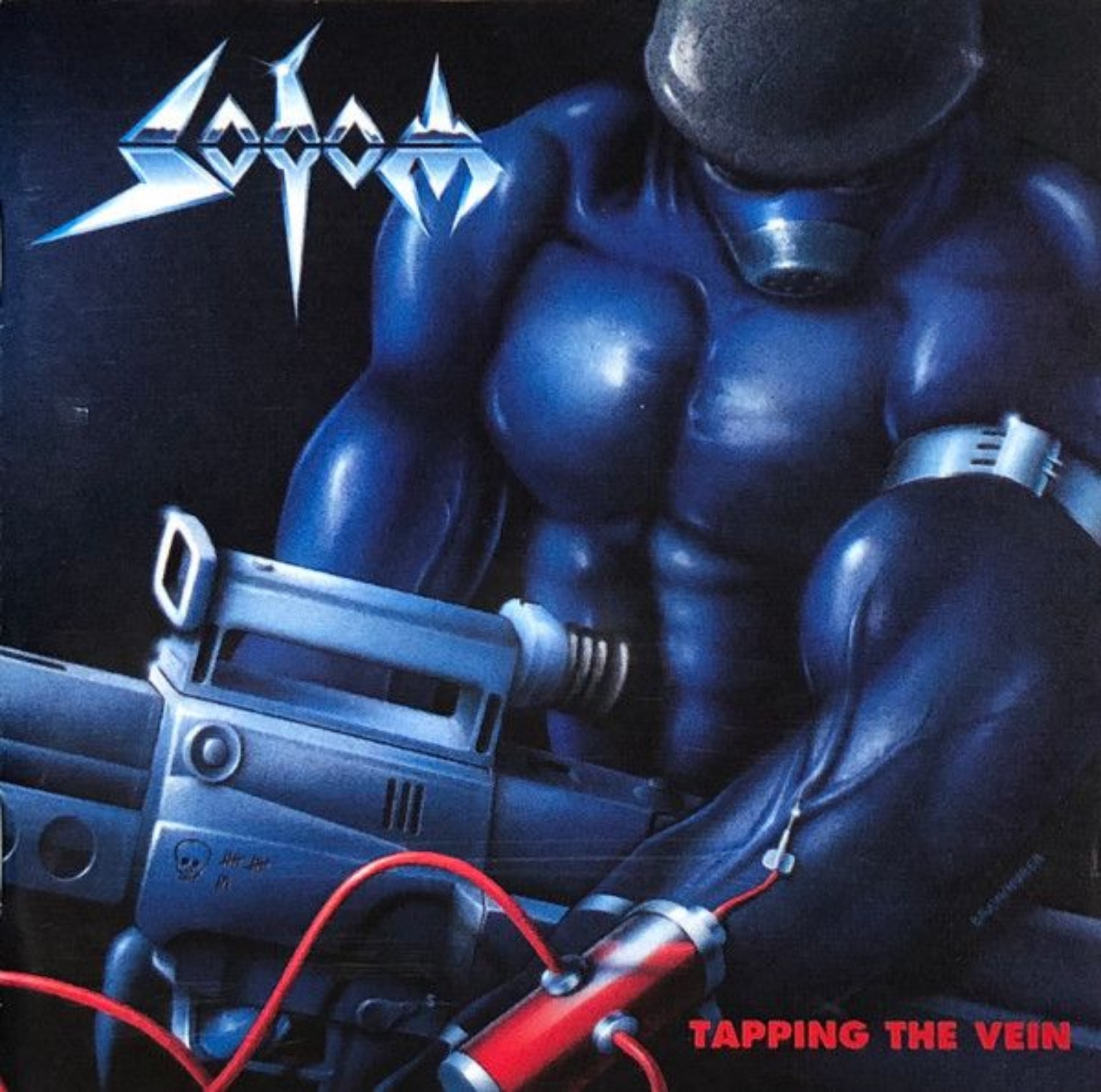
Sodom's longstanding mascot, Knarrenheinz, appeared again on the cover, this time in shades of blue and black, wearing a gas mask and carrying a heavy weapon amid red cables. The figure was part of the military imagery the band had already established, while the title also opened onto a different threat through its bodily metaphor of drawing blood. The original release credits the graphic work to Dieter Braun and Jürgen Huber, and names Babse Thoben for the photographs. The record's themes include war, bodily vulnerability and violence; the cover concentrates these motifs around a single, distinctive figure. 158 159 160

Dieter Braun and Jürgen Huber did not meet the band in the faceless graphics department of a major record company. They reached Sodom through Essen's alternative art scene and the personal network surrounding a venue called Panoptikum. Chris Witchhunter knew Panoptikum and suggested the possibility of designing the cover. Braun studied communication design at the Folkwang art school and worked together with Huber. The design required hand drawing, airbrushing and painting: they transferred the original sketch to board, built up the light and surfaces with an airbrush and then finished them with brushes. They also studied catalogues from local gun shops to depict the weapon. Two artists who described themselves as pacifists were working with metal's comic-book military iconography. 161 162 163

Recollections and archival images

The cover later took on a curious, intensely personal afterlife in the participants' memories. When Andy Brings and Dieter Braun sat down in 2024 to discuss the picture, Andy said they had not seen each other for thirty-two years: the last time had been when the completed original painting was presented to the band. Braun was responsible for the drawing, while Jürgen Huber undertook a major share of the airbrush work. The original full-size design drawing had remained in the corridor of Andy's flat; according to him, it already contained essentially the entire composition of what became the cover. That surviving sketch, and the memory of the original presentation, connect the handwork of 1992 with the physical traces of the album's creation that the musicians preserved decades later. 380

Braun did not later assign a single fixed mystical meaning to the cover's blue colour scheme. In fan interpretations, its sombre tones and distinctive character could acquire many different meanings, but those belong to another layer than the ideas consciously articulated by the artists while painting it. Years later, Andy recalled that Babse Thoben had worked at Panoptikum and took photographs for the album and promotional material. The workshop work behind the pictures, together with the original credits, clarifies the contributors' roles: Dieter Braun and Jürgen Huber created the artwork; Babse Thoben was the photographer. The redesign of Sodom's logo also became part of the visual identity. 164 165 166 167

The images from 1992 include band portraits, promotional photographs and physical items accompanying the record. The booklet, LP and CD formats together preserve photos, order forms, touring and promotional prints, and record labels. In a later interview about instruments, Andy spoke of using two Kramer Baretta guitars; one, decorated with a picture of Marilyn Monroe, is still in his possession. The black Ibanez seen in early photographs, however, was a borrowed guitar, because he did not yet own a black instrument. The guitar visible in a photograph is not necessarily the same one heard on a recording. 168 169 170

12 / 16

12. Eleven Songs, Eleven Doors

The eleven songs

The track sequence does not tell a single continuous story. Instead, it opens eleven doors into the same dark building: different rooms of bodily vulnerability, the spectacle of violence, war, religious conflict and self-destruction follow one another. Throughout, the music itself changes how closely the listener confronts these subjects. The opening tracks hurl their riffs at the listener almost immediately; the mid-tempo pieces build masses that move with greater difficulty; and the long closing track gives the sound time to expand and grow heavier. 171 172 173

Body Parts – Skinned Alive

From the first moment, 'Body Parts' presents the body as both an object and a target. The rapid opening leaves no distance between the subject and the listener: guitar and drums arrive as a single block, with Tom's voice adding its own abrasive weight. The song evokes abuses involving medical technology and the commercial exploitation of human organs. It works not as an abstract anti-scientific proposition, but as a concentrated fear of losing control over the living body. Later listeners often remembered the opening riff; some heard the same dense sound as heavy and threatening, others as indistinct in the guitars. The opening of the album also foreshadows the later debate about its production: the sound can be oppressive while concealing small details. 174 175 176 177 178

'Skinned Alive' offers no release from that opening assault. It is a short, fast, brutal continuation: the narrative imagery works with the extremes of horror films, while the drums and guitar do not pause to paint a scene but keep driving forward. Andy later named it among his favourites; Tom also counted it among the album's dark, heavy tracks. The song's power comes from brevity combined with a recognisable riff: even amid the dense movement, a motif remains for the ear to latch onto. The first two tracks therefore form a pair, but not identical repetitions. The second compresses the pressure of the opener into an even tighter and more merciless form. 179 180 181 182 183 184

One Step over the Line – The Crippler

The third track, 'One Step Over the Line', brings a different kind of weight to the album. The tempo eases, yet the riffs remain heavy; the more expansive movement of the chorus allows the music to breathe without lightening it. The lyrics connect the body to prostitution and sexual exploitation. After the first two tracks, it offers not rest but a pressure that works more slowly. Andy associated the large acoustic space at Dierks particularly with this song: the reverberation is not merely a studio effect here, but part of the space around the riffs. Some later critics considered it one of the strongest tracks on the album, while others found it less memorable as a slower diversion. Sustained weight replaces the headlong rush of the first two songs, so the contrasting judgements respond to the same change of tempo. 185 186 187 188 189 190 191

'Deadline' then brings the image of a final moment into focus. The condemned prisoner's wait before execution is more than another violent story: the title contains both the deadline and the irreversible end. Andy remembered it as one of their earliest shared ideas, and the composition also belongs to the beginnings of their work together in the rehearsal room. A brief slowdown in the middle interrupts its tight, direct movement before the restart throws the listener back into the rush. The rhythm thus carries the tension between waiting and acceleration into the music. Some reviews favoured the track, while other later listeners found it less memorable; even so, its trajectory is a key point in the shift between fast and mid-tempo passages. 192 193 194 195 196 197 198

'Bullet in the Head' approaches vulnerability from another angle. Its subject is a drug dealer's manipulation and the user's dependence. Alongside the harsh image of the title, the musical structure stands out for its immediate, punk-driven momentum: the bouncing interplay of bass and guitar is one of the track's most recognisable movements. Some listeners heard that directness as a memorable, audience-facing section, while others placed the song among the album's heavier pieces. The musical energy does not make the story cheerful. Movement and addiction pull in the same direction: other people shape the character's life, while the riffs propel the song forward. Alternative versions on later releases made some of the recording process audible again, but the 1992 album preserves the decisions of its own time. 199 200 201 202 203

'The Crippler' builds one of the densest rhythmic structures on the record. The lyrics evoke bodily violence turned into a spectacle: gladiatorial combat and the grotesque realm of televised violence become intertwined. The history of the track also survived in its recording method. While Chris played drums, Andy guided the sections with live guitar and called out the changes; Tom also helped him follow the dynamics. Thus, the tightly organised structure was captured not by arranging the musicians into a mechanical order around a click track, but through their attention to one another. Several later listeners singled out the rapid riffs, dark atmosphere and Chris's playing. There is a sharp tension between the physical destruction evoked by the title and the very lively, collaborative work of the recording. 204 205 206 207 208 209 210

Wachturm – Tapping the Vein

The German-language 'Wachturm' remains one of the album's most personal songs. In 1992, Chris Witchhunter explained that his partner had turned towards the Jehovah's Witnesses community while rejecting his life in the band. He remembered records and posters disappearing, and said he had attended the meetings himself while experiencing the collapse of the relationship. The song's vulgar, satirical voice arose from that anger. In Chris's words at the time, personal loss and conflict with a religious milieu were intertwined; the partner remains unnamed. Musically, the song is a more punk-like, immediate departure from the album's dense sound. Some welcomed it as an ironic, catchy counterpoint; others felt it broke the record's trajectory. This difference in reception belongs to the track: its personal origin does not prevent listeners from finding very different musical places for it. 211 212 213 214 215 216

The title track, 'Tapping the Vein', draws attention inside the body. The images of drawing blood, needles and veins relocate the bodily vulnerability of the earlier songs: instead of a commercial network or an external spectacle, the narrow inner world of self-destruction and dependence comes to the fore. Bursts of speed after the heavy, marching central section form one of the song's basic rhythmic patterns; stops and restarts serve to build tension. Tom's deeper, hoarse vocals and effected guitar create an oppressive soundscape. Many heard the title track as a continuation of the band's classic Sodom character, while others took it as evidence of a darker turn. The later discovery of an intro solo that had been recorded but ultimately omitted also showed that the finished song had been selected from several possible forms. 217 218 219 220 221 222 223

Back to War – Reincarnation

'Back to War' returns to imagery of open conflict. The viewpoint of a person returning to war and the perpetuation of violence also connect it with earlier Sodom songs. Some listeners likened its shorter, more immediate structure to the momentum of 'Bullet in the Head'; others highlighted the guitar solo, sudden drum outbursts and changes of tempo. Concision again works in two ways: for some it is the essence of the band's strength, for others a less varied form. In the Europe of 1992, war and the new political order were becoming everyday news; the song was heard against that historical background while also belonging to Sodom's already established preoccupation with war. 224 225 226 227 228 229 230

'Hunting Season' blurs the line between hunting and wartime pursuit. The title suggests flight and becoming a target, while the guitar's tremolo passages and Chris's rapid hi-hat work keep the track in motion. The rhythm is not a single uninterrupted onslaught: the riffs open successive points of tension, leading the record towards its finale. Several later listeners ranked it among the album's hidden strengths, while others found it less distinctive in its own right. Reviews praising the drumming often stressed that Chris kept the music moving even when the guitar sound was heavy and compact. 231 232 233 234 235

At nearly eight minutes, 'Reincarnation' opens up a different sense of time at the album's end. After a slow, dark introduction, the song gradually builds a space of its own; the riffs, Chris's drums and the deeper variations of Tom's voice layer over one another before the music turns to faster sections. The lyrics speak of rituals, subjugation, death and rebirth. During recording, Tom also tried a higher, shouted vocal register, but Harris Johns suggested a deeper, growling approach. An earlier take preserved on the archive tapes retains that other possible direction. Some listeners heard an otherworldly quality in the song's airy, synthesiser-like layer, while others found it too experimental; its length was divisive as well. Some heard a sweeping finale, others thought it too long in relation to the album's momentum. The ending does not resolve the record's tension, but stretches it out and leaves it behind as a new question. 236 237 238 239 240 241 242 243

Taken together, the eleven tracks are not variations on a single motif of violence. The opening pair compresses bodily vulnerability and direct attack; the third and fourth tracks turn towards exploitation, judgement and a final deadline. The middle section moves between manipulation, violence presented as spectacle, personal loss and the threat within the body, before images of war widen the scope once again. Finally, 'Reincarnation' extends what might have been a short, furious ending on another record through questions of religion and the afterlife. The musicians' stories, decisions taken during recording and the differing judgements of later listeners illuminate different sides of this journey. 244 245 246 247 248 249 250

13 / 16

13. The Release and the Different Ears

The summer of 1992

By the summer of 1992, the story of Tapping the Vein was already taking shape in news from outside the studio. A contemporary news brief mistakenly called the new guitarist 'Andy Brinks' and referred to the forthcoming album as 'Tapping the Veine'. It presented Sodom as a German trio working at Dierks in Cologne and Musiclab in Berlin with producer Harris Johns, and expected the album in August. The misspelled names and titles show how fragmentary the news circulating about the record still was during the sessions. 251

Release dates and signing session

Even later listings did not agree on the exact release date of the album expected in August. Catalogues for the Steamhammer edition give 1 August, while a surviving entry for Rock Hard's contemporary review gives 3 August. There are two days between these dates; the summer expectation cannot therefore be turned into a single shop-release day proven for every market. 252 253 254

A television report from the time mentioned a German chart position: Tapping reached number 64, compared with number 36 for Agent Orange. Tom later remembered a generally favourable response, but could not recall the details of every month precisely. Management and the label largely handled the organisation of the release; Tom had a personal habit of buying a copy of each new Sodom album himself at his local record shop. The first indications of sales and pre-orders arrived a few days later, and it was after those that they began putting the tour together. 255 256 257 258

In his personal recollections from 2026, Tom clarified that the 1992 release date had of course been communicated to them, but most of the arrangements had taken place behind the scenes. As with every Sodom album, he bought a copy himself at the local record shop: he called it a standing ritual. A few days after release, they also learned whether the record was selling at all or sitting on the shelves 'like lead'. He recalled that management and the label were also pleased with pre-orders, so no new obstacle stood in the way of preparing the tour. 373

One such event took place at a record shop in Dortmund: Tom remembered a signing session at Idiots Records. He recalled no grand premiere or gala celebration. They rehearsed the live set twice a week, and in the days around the release the band was already turning towards its next tasks. Chris was delighted and energised after the recordings; Tom felt that earlier tensions in the studio quickly faded into the background once the work was done. Planning a tour, rehearsing the songs and signing records were not a spectacular band legend, but a working routine. The new album reached the shops, and then the band had to bring it to the stage. 259

Tom did not recall a separate launch celebration; the signing at Idiots Records in Dortmund was what remained in his memory. He joked, however, that he and Chris celebrated every day: the drummer was almost beside himself with happiness after recording, and the studio difficulties were soon forgotten. While they rehearsed the live show twice a week, their minds had already moved into the period of writing the next album. Tom recalled that in earlier years they sometimes released a new record every year; he would hardly consider that pace of work possible today. 374

Contemporary temperatures

Data from the Essen weather station trace the gradual easing of summer heat: the daily high reached 29.3 degrees Celsius on 30 July and 30 degrees on 1 August. The same station recorded 25.3 degrees on 3 August and 22.2 on 4 August. The daily series for 2 and 4 August also indicated small amounts of precipitation, while work organising the new record continued through the hot summer days. This was the weather in the region where Sodom's story had been unfolding for years, as the new album made its way from the studio towards record shops and concert arrangements. 260 261

Reviews and genre debates

Contemporary reviews did not settle on a single verdict. Rock Hard praised the album as a powerful, fresh Sodom record, highlighting its fast opening, the mid-tempo 'One Step Over the Line', the broader arc of 'Reincarnation' and Harris Johns's work. Metal Breath, by contrast, heard a muddy guitar sound, drums that were too dry and too far forward, and felt that speed could not make up for the more interesting experiments of earlier albums. Kerrang! heard heaviness and aggression but considered the mix of guitar and drums confused. Other fanzines praised Chris's drumming and the tightness of the rhythm section. To one listener, the same dense sound conveyed the record's physical weight; to another, it obscured the details. 262 263 264 265

Genre classification remained contested as well. Several contemporary and later reviews heard the album on the boundary between thrash and death metal, pointing to Tom's deeper voice, heavier riffs and songs about bodily brutality. Other interpretations saw the rapid, compact riffs, punk-like directness and recognisable Sodom character as keeping the album firmly within thrash. Both Tom and Andy later said they had not set out to change genres deliberately; they had wanted to make the hardest Sodom record possible. Creative intention and the listener's label are not the same question: the latter also testifies to the new kinds of sound that metal placed side by side in the early 1990s. 266 267 268 269 270 271

In a 2024 interview, Andy Brings added a concrete instrumental detail to the genre label. He recalled that the guitars on Tapping the Vein were recorded in standard tuning, not the low tuning he associated with many death-metal bands. In his view, the album's extreme speed, Tom's occasionally unusually deep vocals and the songs' dark atmosphere could explain why fans heard death-metal influences in it. He nevertheless stressed that they were not consciously trying to create a particular death-metal sound in 1992. The difference between the brutality perceived by listeners and the musicians' intentions at the time is therefore more than a retrospective dispute over genre: it can also be traced in the actual guitar tuning and the chosen depth of the vocals. 381

In his fifth answer to the Open Metal Album Library, Tom could no longer identify a specific meeting with a fan after the release or repeat an exact remark word for word. He nevertheless remembered the early reception as encouraging: he recalled the reviews as positive overall and described reactions to the songs as very good. Many listeners praised the influence of death metal, which was fashionable at the time, but he emphasised that the heavier, more elaborate production and the successful first album made with Andy Brings had not resulted from a deliberate change of genre. To them, it still counted as a typical Sodom record. Tom's personal overall impression, expressed decades later, does not erase the different opinions that also survive in the press of the time. 375

The changing industrial environment of the Ruhr formed part of a world in transition. In June, the United Nations Conference on Environment and Development met in Rio de Janeiro, where sustainable development, poverty, population, energy and natural resources stood at the centre of international negotiations. Meanwhile, the Ruhr saw the start of the long programme to transform the Emscher, linking earlier industrial uses of water with the environmental restoration of the region. In August, racist attacks took place in Rostock-Lichtenhagen against accommodation for asylum seekers and then the home of Vietnamese residents; the arson and failures of the state response exposed social tensions in reunified Germany. 272 273 274 275 276

A day in German history

After German reunification, the fate of the former East German leadership also returned to the front pages. On 29 July, Erich Honecker, the former leader of East Germany, returned to Berlin from Moscow, beginning a new phase of the process of holding the old leadership to account after reunification. By the summer of 1992, everyday German life included the political disputes of a unified country, while the older life of the Ruhr's industrial settlements was also slowly changing. 277 278 279

European summer and sport

Elsewhere on the continent, the first days of August brought together different kinds of historical moment. In Barcelona on 1 August, Britain's Linford Christie won the Olympic men's 100 metres in 9.96 seconds. On 2 August, presidential and parliamentary elections were held in Croatia amid the Yugoslav wars. The continent was simultaneously experiencing the celebratory moments of sport and the uneasy everyday reality of political upheaval. 280 281 282

Later critical reception

As the decades passed, Tapping's sound, rhythm and genre continued to provoke debate among listeners. Among the 2008 Metal Archives reviews, one praised the rough vocals and tremolo riffs but found the mid-tempo sections less imaginative; another heard a heavy yet sufficiently clear sound, singling out Chris's drums and Tom's deep voice. A third listener regarded it as a record from a period leaning towards death metal and named 'Wachturm' as a favourite, while 'Deadline' and 'One Step Over the Line' made less of an impression. In 2010, one reviewer appreciated the return of rawness after Agent Orange but found 'One Step Over the Line' boring and 'Wachturm' less well integrated into the album's flow. 283 284 285 286

By 2011, a far more divided voice had joined the earlier praise: one review admired the production and Tom's vocals, but found half the tracks routine, although 'Reincarnation' still worked for that listener as an expansive finale. A 2012 review praised the heavy production and fast songs while objecting to the structures of 'Wachturm' and the closing track. In 2013, other listeners emphasised the thrash–death boundary: after the overwhelming opening, the mid-tempo passages and 'Wachturm' provided a contrast. Another review connected Sodom's traditional character with a more extreme instrumental approach, although it found 'Hunting Season' less distinctive and the finale overlong. 287 288 289 290

One of the most critical of the seventeen reviews appeared in 2016: the opening tracks and 'Deadline' convinced that reviewer less, while the title track, the punkier songs and the ending earned praise. In 2017, a review giving the record 95 percent discussed the construction of riffs, transitions and overloading of the drums in detail, while hearing punk-derived and thrash-rooted passages as parts of the same album sound. An entirely positive assessment from 2019 described it as one of the band's strongest and heaviest records, highlighting the individual character of the songs and the tight rhythm section. 291 292 293

Reviews in 2024 returned once more to the old thrash–death debate: one described the record as instinctive thrash rather than death-thrash, while others praised the structure of 'Deadline', the sonic effect of the title track, the thick mix, the opening three songs and the playful, punk-driven 'Wachturm'. In 2025, the focus shifted to the dense, low-frequency sound and Witchhunter's drumming; a review from 2026 praised the chemistry between the new guitarist and the old members, although it found the snare too sharp. The most recent opinion, rooted in a personal history of listening to the album, was entirely positive: it singled out the first riff, the bass, the tension of the title track and the long finale. Ratings ranged from 75 to 100 percent. The record's reception was therefore not simply a reaffirmation of a cult classic: in every period, listeners found new words for what counted as a strength, a flaw or a distinctive balance. 294 295 296 297 298 299

14 / 16

14. The Stage and the Short-Lived Trio

The European tour

The tour brought the line-up formed in the studio onto the stage. Andy's first major European trip, the concert at Berlin's Huxleys and Depressive Age's role as support act introduced a new rhythm of professional concert life: overnight coaches, journeys organised in advance, soundchecks, promotion and encounters with fans. Andy particularly remembered his first double-decker tour bus. The band's Japanese shows from around 1991, before Andy joined, and its return with him in 1992 were two distinct periods of travel. Looking back, Tom recalled the organisation of the Japanese trips in more detail: the daily timetable, meals, beer and places to eat; Andy remembered dressing rooms, soundchecks and moments of friendship instead. They retained different details, but both perspectives show how the new guitarist had to learn the older live songs, the new album and the routines of a travelling band all at once. 300 301 302 303 304

Andy remembered the show at Berlin's Huxleys as more than simply the first stop on a new tour. In the Lords of Depravity film, he recalled an audience of about a thousand that evening, when he had performed on stage with a band only once before in his entire life. Fresh out of school, and faced with his first serious tour bus and professional concert conditions, he felt such intense stage fright that he spent almost the entire afternoon worrying. A fellow musician came over, put an arm around him and reassured him that the show would be fine. Even that brief gesture became part of the young guitarist's memory of the Tapping the Vein era: the album's studio-created sound had to be brought before an audience by someone whose life on major stages was beginning at the same time as its release. 382

According to Tom's recollection, bringing the new songs to the stage depended on more than work in the rehearsal room. As before every tour, time and money had to be invested in organising the performances in advance so that there would be a solid foundation. The favourable reactions to the record gave the band confidence and room to manoeuvre during those preparations. 376

Japan and stage memories

From the Japanese tour dated to around 1991, before Andy joined, the documentary preserved stops in Tokyo, Nagoya and Osaka, along with a tightly scheduled programme. The return with Andy, placed towards the end of 1992, was a different journey: he recalled its dense press schedule, encounters with fans, backstage life and soundchecks. In his 2024 interview, Tom specifically recalled a first Japanese trip in 1991 and a second in 1992; of the latter he described technical preparedness, the concert programme, eating habits, a lack of beer and a search for McDonald's. These memories preserve different details; the surviving accounts do not make it entirely clear whether every episode belonged to the same trip. International touring meant more than Sodom playing distant cities: the musicians had to adapt to new working routines and cultural surroundings. Friendships between local fans and the band endured afterwards. 305 306 307 308

Among Andy's memories of the Japanese tour with the band was a much more unsettling, very small hotel-room scene. In the documentary, Andy said that one night he shared a room with Tom and that his sleeping bandmate muttered sentences in which the possibility of sending Chris away came up. The young guitarist later saw it as one sign of the weakening internal ties that already existed within the band. This is not a decision recorded in 1992 or a statement of intent consciously made by Tom while awake: it is Andy's later memory of a strange moment whose meaning he only fully understood after subsequent events. 405

The WDR recording also became part of the band's stage history. Tom later remembered painfully that Chris's condition made precise ensemble playing difficult. They preserved the recording not as proof of a flawless evening, but as a document of how the band functioned at the time. At any one show, cohesion, power and fatigue might all be present; later listeners hear not only the songs on the recording, but also the condition of the line-up performing them. The three-piece Sodom of 1992 existed only briefly, but in that short span wrote and recorded a complete album and toured with it. 309 310 311 312

Tom also recalled for Rock Hard another evening at a venue left unnamed. In his memory, the concert intro had already started, but Chris was still in his bunk on the tour bus, and the others had to delay the performance because of him. This was not the same venue as the Cologne concert documented by WDR; the two incidents cannot be collapsed into one dramatic story. For Tom, both represented the fragility of the band's functioning in 1992, while the audience still expected the album's overwhelming songs on stage. 406

The end of the trio

The first argument in the rehearsal room was not the only crack. Andy remembered that rehearsals and tours together also often included enjoyable days, but Tom and Chris were no longer as close as before. In conversations from 2024, Tom recalled the drummer's personal crisis, difficulties concentrating and the growing role of alcohol. Chris's own words from 1992 preserve the loss of his relationship and the religious conflict; in the later documentary, he said that he had not left the band voluntarily. Tom saw the decision as painful but necessary to keep Sodom functioning. The two versions cannot be merged into a peaceful decision made jointly. 313 314 315 316

For Tom and Andy, dismissing Chris became necessary because they felt that work within the band could not carry on unchanged. Chris, meanwhile, remembered it as Tom and Andy making the decision that he would leave. Later studio recordings and concert videos do not make this discrepancy any less real. In 2024, Tom also spoke about the difficulty of closing their shared past and repairing their personal relationship; he regretted that they did not remain in touch even as private individuals. Chris's drumming lived on in the album, while Andy, listening again to the Redux tapes, rediscovered the instinctive power that had sometimes caused difficulties during their work together. Friendship, responsibility to the band and creative achievement remained distinct layers of the same story. 317 318 319

Decades later, Andy also re-examined his own youthful judgement. In a conversation in 2024, he admitted that at the time, amid the tensions and difficulties of keeping the band functioning, he had regarded Chris's dismissal as the right decision. Looking back now, however, he called that same decision one of Sodom's gravest mistakes. He did not try to deny that he assessed the events differently at two separate stages of his life. Thus, the story of Chris's final studio album with Sodom preserves both the choice made by young musicians at the time and the remorse that followed over several decades. 407

After 1993, Sodom continued with a different line-up. Get What You Deserve, with a new drummer and a shorter, punkier, dirtier sound, opened a new chapter; Andy later recalled that the band consciously moved away from the longer, darker and more complex pieces on Tapping. Changes in the record market and musical fashions during the 1990s brought new difficulties in earning a living, while personnel changes rearranged relationships within the band. Tom stressed Sodom's continuity and his own musical character; Andy carried forward the importance of his period in the group and then his separate career as a musician. Later reunions do not erase the earlier tensions, just as conflict does not erase what they recorded together in 1992. 320 321 322 323 324 325 326

15 / 16

15. Listening Back to the Tape

Archives and the 2024 reissue

In the album's later life, the archive became one of the main characters in its story. While making the Lords of Depravity film in 2005, Tom found new photographs and videos; the editors gathered more material than planned, which delayed the film's completion and presentation. Tom also worked on the multi-hour account of the band's history and on editing its soundtracks. In the film, different memories from band members, old acquaintances and people who had worked around the group appeared side by side, so the trio of 1992 was not preserved in a form fixed by a single narrator. 327 328 329

Andy kept many objects from that period. He still has the copy of the original Tapping LP left to him by his late father. A backstage pass from Düsseldorf in 1992 resurfaced, along with photographs, tickets, newspaper clippings and the guitar he used to write and record the songs. Andy said he had also kept a shirt he wore in an album photo. When he and Tom opened old boxes together, family possessions did not turn into official band relics; instead, they brought two sets of memories together. Tom said he had forgotten many small details, and Andy's carefully preserved material helped him recall the old days. 330 331 332

According to Andy, the multitrack recordings had already been digitised in 2011 in the hope of an anniversary reissue in 2012; in other interviews, he dates the transfer of the tapes to 2012. The two dates come from different later recollections. They agree that an early digital copy of the original tracks remained on Andy's computer for a long time, while the anniversary edition failed to materialise. New discussions began in 2021 about the catalogue that had passed to BMG, followed by another prolonged silence. In January 2024, Andy and Tom approached the label's decision-makers directly. Andy later felt that once the British team became involved, the project finally began to move forward more decisively. 333 334 335

The label's announcement of 18 September 2024 promised an expanded reissue for 15 November. The set brought together live recordings, alternative studio versions, documentation, photographs and objects associated with the band at the time. Andy made his own Redux mix from the old material; Eroc remastered the original stereo master for digital and vinyl release. The two jobs started from different sound sources. Andy rearranged the balance of the multitrack recordings, while Eroc prepared the finished stereo sound for other formats. In the Redux, Andy wanted the drums to have more space, Tom's voice to sound closer and the guitar to be heard more directly; he did not overwrite anything with newly played instruments. In Eroc's separate statement, digital loudness, excessive limiting and the physical constraints of cutting vinyl came to the fore. 336 337 338 339 340

Eroc’s personal statement

Portrait of Eroc (Joachim Heinz Ehrig).
Portrait of Eroc (Joachim Heinz Ehrig).Source: photograph supplied by Eroc to the Open Metal Album Library.Enlarge ↗

Joachim Heinz Ehrig, known by his stage name Eroc, is a founding member and former drummer of the legendary German progressive-rock band Grobschnitt, as well as an experienced audio engineer and mastering specialist. In a personal statement sent to the Open Metal Album Library on 1 November 2026 about his work on later Sodom releases, he wrote the following: 377

Eroc with an award at his workplace.
Eroc with an award at his workplace.Source: photograph supplied by Eroc to the Open Metal Album Library.Enlarge ↗

Andy Brings has been a good friend of mine for more than thirty years, and I do the post-production on all his projects. I also know Tom well, ever since I mixed the album 'Sodom' at Haan Hartmann's studio back then. We often met at the Rockhard festivals, and he even came to our home for chicken once. Properly cooked, not raw… ;o)

Eroc’s workstation with audio-processing equipment.
Eroc’s workstation with audio-processing equipment.Source: photograph supplied by Eroc to the Open Metal Album Library.Enlarge ↗

I recently worked on two box sets for BMG: 'Tapping the Vein' and 'Get What You Deserve'. These required remastering to bring the sound up to today's standards. They need to sound loud, but they must not be subjected to harsh 'brickwall' limiting, as they were back in the 1990s. Digital distributors have now become very important, and they uniformly demand a precisely specified loudness of −14 dB LUFS.

If we exceed this during mastering, the volume is automatically and ruthlessly turned down, and the recording then sounds rather flat on streaming platforms compared with other material. It is therefore a delicate balancing act: Sodom has to sound loud and dirty, but we also have to keep the limits in mind.

The workspace in Eroc’s studio.
The workspace in Eroc’s studio.Source: photograph supplied by Eroc to the Open Metal Album Library.Enlarge ↗

Incidentally, all of this applies only to digital distribution, such as streaming and CD distribution. Vinyl records are a very different matter. There, the loudness of the final record is determined exclusively by the cutting studio where the music is cut into the lacquer master. Different parameters apply. The music must not contain troublesome subsonic frequencies, great attention must be paid to compatibility, and a record side must not exceed twenty minutes if it is to sound loud. But that always depends on the quality of the mixes too.

The Studer A-800 tape machine pictured in the photograph Eroc refers to in his account of digitising the live tapes.
The Studer A-800 tape machine pictured in the photograph Eroc refers to in his account of digitising the live tapes.Source: photograph supplied by Eroc to the Open Metal Album Library.Enlarge ↗

I now have the next Sodom box set for BMG ahead of me, which also includes professional live recordings. It is called 'Marooned', and it means an enormous amount of work again. The live recordings are on two-inch, 24-track AMPEX tapes, which I first had to 'bake' in an oven; otherwise they would no longer have been playable. This is an established procedure developed by AMPEX itself to deal with 'sticky shed syndrome'. Afterwards we were able to digitise the tapes (photo of the Studer machine attached). Andy Brings is currently remixing the live recordings in his studio, and I will then work on them.

Greetings from Germany!

– Eroc

378

Remix and archival material

The remix brought out elements of the old tracks that had been harder to hear in the 1992 mix: Chris's small percussion instruments, count-ins, the sound of the tape starting, alternative guitar solos and an early vocal register for 'Reincarnation'. The alternative solo in 'Wachturm' and the omitted introduction to the title track emerged as new sonic documents. While remixing, Andy did not want to hide the real time of the studio, the stops or the small natural imperfections of the performances. The 2024 version allowed listeners to hear the 1992 sessions more closely, bringing the trio's instruments nearer as if part of the recording space had become audible again. 341 342 343 344

The modern reissue was more than a recycling of technical material. For Andy, the release was worthwhile if the recordings, historical photographs, concert material and members' memories offered genuine historical substance; objects carrying nothing but a logo interested him less. Tom connected the delay in release with legal and business negotiations inherited from the contractual situation in 1988, while Andy recalled years of stalled communication. These are the participants' own recollections of the long release process, not the complete legal documentation of the contracts. Nevertheless, the archive made it possible to listen again to details of the recording period in 1992 and compare them with one another's memories. 345 346 347 348 349 350

16 / 16

16. The Noise That Remains Above the City

The changing Ruhr

The history of the Ruhr continued to change after the release of Tapping the Vein in 1992. Mines closed, cities searched for new jobs and new cultural identities, and the transformation of the Emscher altered the relationship between the river and the settlements for decades. The resurgence of German metal in the 2000s and later records by Kreator, Destruction and Sodom gave new generations different points of contact. Tapping the Vein did not bring the story of the Ruhr or of the band to an end; it captured a recording made together by a brief and distinctive line-up at a time when the industrial past, Europe after the Cold War and the musical language of extreme metal were all shifting at once. 351 352 353 354 355

By then, Tom had already left behind his mining work, which had lasted until 1989; for him, Tapping the Vein became another stage of a decision made earlier, this time experienced as a professional musician. For Andy, it was his first complete Sodom album: the guitar associated with the record, the family LP, the pass and the objects later organised into a digital archive all connect different periods of his life. For Chris, Tapping remained the last studio album he made with the band; the individual weight of his drumming and the personal story of 'Wachturm' continue to live in its songs. Harris Johns left his mark through the suggestion of deeper vocals for 'Reincarnation'; Dieter Braun and Jürgen Huber through the hand-painted cover; and Babse Thoben through the photographs. The record's sound was therefore never the achievement of a single hand or a single year. 356 357 358 359 360 361 362 363

The sound that remains

The old villages of the Ruhr, the miners' settlements and the clubs did not preserve the same sound. Yet the band emerged from the same landscape, learning to make itself heard loudly through underground work, industrial change and independence in the rehearsal room. In 1992, the three-piece Sodom transferred that sound to tape: Tom's deep voice, Andy's fresh riffs and Chris's unruly drumming. The album ends, the last note of the long 'Reincarnation' dies away, yet between the original recording and the later remix we can still hear the three people who briefly shared the same space as a band. The coalfield is one starting point for this story; human choices, urban musical life and decisions made in the studio shaped the record just as much. 364 365 366 367 368

▤Sources and references229 bibliographic entries⌄

Sources and references

References in square brackets identify the sources below. Memories shared in interviews are attributed to each participant’s perspective; critical opinions are identified by where they were published.

Exclusive OMAL sources2
  1. • SOD-216. [HISTORICAL / DOCUMENTARY] Tom Angelripper – written answers to five questions for Open Metal Album Library.; Personal primary source, originally in German; answers dated 18 November 2026; Hungarian translation.

  2. • SOD-217. [HISTORICAL / DOCUMENTARY] Eroc (Joachim Heinz Ehrig) – statement for Open Metal Album Library on mastering the Sodom reissues.; Personal primary-source statement in German, 1 November 2026; the Hungarian translation was approved for publication.

Fanzines and periodicals14
  1. • SOD-004. Slayer (1987).

  2. • SOD-005. To The Death (1988).

  3. • SOD-006. Metal Overdose (exact year unverified).

  4. • SOD-007. The Wild RAG! (publication year unverified).

  5. • SOD-008. Tales of the Macabre (1991).

  6. • SOD-009. Slayer (publication year unverified).

  7. • SOD-010. Slayer (publication year unverified).

  8. • SOD-011. Holocaust (1990).

  9. • SOD-020. Encomium (2025).

  10. • SOD-029. Metal Breath (1992).

  11. • SOD-032. Underground Empire (1994).

  12. • SOD-071. Ox Fanzine (2024).

  13. • SOD-084. [HISTORICAL / DOCUMENTARY] GLOBAL METAL CIRCUIT – Sodom’s forthcoming album and its new guitarist.; Global Metal Circuit, vol. 5, issue 14, printed page 20; 1992; https://www.tshirtslayer.com/tshirt-or-longsleeve/sodom-tapping-vein-original-vinyl-lp-promotional-poster-tour-poster.

  14. • SOD-100. Terroraiser (2003).

Interviews, statements and band history44
  1. • SOD-001. [HISTORICAL / DOCUMENTARY] Sodom Interview 1992 – Enhanced with English Subtitles.; Contemporary promotional video interview, subsequently published on YouTube; Original recording: 1992; date of online upload unverified; https://www.youtube.com/watch?v=2jLWZ9M8ih0.

  2. • SOD-003. [HISTORICAL / DOCUMENTARY] Harris Johns – Interview 1992 (Götz Kühnemund).; Rock Hard video magazine – later uploaded to YouTube; recorded in 1992; original issue number unverified; Harris Johns; Götz Kühnemund; https://www.youtube.com/watch?v=8jqN6WPtTZk.

  3. • SOD-016. [HISTORICAL / DOCUMENTARY] Sodom – Thrash Legenden im Interview (Tom Angelripper and Andy Brings).; metal.de; 2024; Tom Angelripper; Andy Brings; https://www.metal.de/interviews/sodom-tom-angelripper-andy-brings-interview-558385/.

  4. • SOD-017. [HISTORICAL / DOCUMENTARY] Q&A: Tom Angelripper of Sodom on the Tapping The Vein Reissue.; Decibel Magazine; 2024-11-11; Tom Angelripper; https://www.decibelmagazine.com/2024/11/11/qa-tom-angelripper-of-sodom-on-the-tapping-the-vein-reissue/.

  5. • SOD-018. [HISTORICAL / DOCUMENTARY] Entretien avec Andy Brings – Retour sur Tapping The Vein.; La Grosse Radio; 2024; Andy Brings; https://www.lagrosseradio.com/webzine-metal/p184331-entretien-avec-andy-brings-de-sodom-retour-sur-tapping-the-vein-1992-pour-la-re-edition-de-lalbum/.

  6. • SOD-019. [HISTORICAL / DOCUMENTARY] Interview with Sodom (Andy Brings).; TrueMetal.it; 2024; Andy Brings; https://www.truemetal.it/heavy-metal-news/interview-with-sodom-andy-brings-1173162.

  7. • SOD-021. [HISTORICAL / DOCUMENTARY] Zurück in die 90er: Andy Brings über SODOMs Tapping the Vein.; Pressure Magazine; 2024; Andy Brings; https://www.pressure-magazine.de/news/zurueck-in-die-90er-andy-brings-ueber-sodoms-tapping-the-vein-248193/.

  8. • SOD-022. [HISTORICAL / DOCUMENTARY] Sodom: incarnations et réincarnation – Tom Angelripper.; Radio Metal; 2024-12-01; Tom Angelripper; https://www.radiometal.com/article/sodom-incarnations-et-reincarnation%2C483286.

  9. • SOD-023. [HISTORICAL / DOCUMENTARY] Sodom: Mit Tapping the Vein im roten Bereich.; Metal Hammer Deutschland; 2024; https://www.metal-hammer.de/sodom-der-unbekannteste-gitarrist-2295693/.

  10. • SOD-024. [HISTORICAL / DOCUMENTARY] Sodom – interview with Andy Brings (2024, video).; YouTube; interview with Andy Brings; 2024; Andy Brings; https://www.youtube.com/watch?v=F2zVkxz4a64.

  11. • SOD-025. [HISTORICAL / DOCUMENTARY] Sodom’s Tom Angelripper – Tapping the Vein and Bryan Adams.; Zware Metalen; 2024; Tom Angelripper; https://zwaremetalen.com/interviews/sodoms-tom-angelripper-praat-over-de-heruitgave-van-tapping-the-vein-bryan-adams-en-komt-met-een-leuk-nieuwtje.

  12. • SOD-033. [HISTORICAL / DOCUMENTARY] DOUBLE CRUSH SYNDROME – Andy Brings-interview; Sodom / Deadline / Tapping the Vein.; Stormbringer (Austria); April 2017; Andy Brings; https://www.stormbringer-metal.de/interviews/1945/double-crush-syndrome-andy-brings.

  13. • SOD-034. [HISTORICAL / DOCUMENTARY] SODOM – Tom Angelripper 2005 Lords Of Depravity-interview.; Metal Message / Markus Eck; 2005-09-27; Tom Angelripper; https://metalmessage.de/Interview_SODOM_2005.php.

  14. • SOD-035. [HISTORICAL / DOCUMENTARY] Sodom – interview with Tom Angelripper about footage of former members in Lords of Depravity.; Darkside.ru; around 2005–2006; Tom Angelripper; https://www.darkside.ru/interviews/interview.phtml?dlang=en&id=273.

  15. • SOD-036. [HISTORICAL / DOCUMENTARY] Sodom – 2006 interview with Tom Angelripper about former members.; metal.de; 2006; Tom Angelripper; https://www.metal.de/interviews/sodom-36351/.

  16. • SOD-037. [HISTORICAL / DOCUMENTARY] Sodom: Lords of Depravity – Part I (1982–1995 documentary on the history of the band).; Sodom / SPV – original film from 2005; Plex film-listing reference; 2005; Tom Angelripper; Chris Witchhunter; Frank Blackfire and other former members (according to the film listing); https://watch.plex.tv/en-GB/movie/sodom-lords-of-depravity-part-i.

  17. • SOD-038. [HISTORICAL / DOCUMENTARY] Sodom’s Thomas “Angelripper” Such: After 40 Years, I Regret Nothing.; Blabbermouth – interview; 2022; Tom Angelripper; https://blabbermouth.net/features/sodoms-thomas-angelripper-such-after-40-years-i-regret-nothing.

  18. • SOD-039. [HISTORICAL / DOCUMENTARY] Metal-Musikproduzent Harris Johns: „Ich höre anders als andere“.; taz – Jens Uthoff; 2021-02-28; Harris Johns (producer and recording engineer); https://taz.de/Metal-Musikproduzent-Harris-Johns/!5752363/.

  19. • SOD-040. [HISTORICAL / DOCUMENTARY] SODOM: Tapping the Vein, the revenge! (Eng) – Andy Brings.; metal.it; 2024; Andy Brings; https://www.metal.it/interview.aspx/1466/sodom-tapping-the-vein-the-revenge-eng/.

  20. • SOD-041. [HISTORICAL / DOCUMENTARY] Tom Angelripper discusses Tapping the Vein (audio/video conversation).; Sonic Perspectives – Jonathan Smith; 2024-11-12; Tom Angelripper; https://www.sonicperspectives.com/interviews/interview-with-tom-angelripper/.

  21. • SOD-042. [HISTORICAL / DOCUMENTARY] Interview mit Andy von Sodom – 32 Jahre Tapping The Vein.; Bleeding4Metal – Eddieson; 2024-11-12; Andy Brings; https://www.bleeding4metal.de/index.php?id=1229&show=interview.

  22. • SOD-043. [HISTORICAL / DOCUMENTARY] Andy Brings & Dieter Braun (Tapping the Vein cover artist) – interview.; Sodom official YouTube channel; 2024-10-23; Andy Brings; Dieter Braun (cover artist); https://www.youtube.com/watch?v=HogksuNoDIU.

  23. • SOD-044. [HISTORICAL / DOCUMENTARY] Sodom 2024: Tom Angelripper über den Re-Release von Tapping The Vein.; ROCK ANTENNE – exclusive interview page; 2024; Tom Angelripper; https://www.rockantenne.de/rockwissen/interviews/sodom-2024-tom-angelripper-ueber-re-releases.

  24. • SOD-045. [HISTORICAL / DOCUMENTARY] SODOM – Andy Brings, la vena impazzita del thrash metal.; Metalitalia – Andrea Intacchi; 2024-11-08; Andy Brings; https://metalitalia.com/intervista/sodom-andy-brings-la-vena-impazzita-del-thrash-metal/.

  25. • SOD-046. [HISTORICAL / DOCUMENTARY] Intervista – Andy Brings: a tu per tu con Tapping The Vein.; SpazioRock – Giovanni Ausoni; 2024-11-12; Andy Brings; https://www.spaziorock.it/intervista-andy-brings/.

  26. • SOD-047. [HISTORICAL / DOCUMENTARY] [entrevista] Sodom – GoetiaMedia 2024 (Andy Brings).; GoetiaMedia – article and original embedded video; 2024-11-19; Andy Brings; the article also contains an earlier quotation from Tom Angelripper; https://www.goetiamedia.com/entrevista-sodom-les-demostramos-a-todos-quienes-estaban-a-cargo-del-thrash-metal-cuando-pocos-se-mantuvieron-fieles-a-sus-inicios/.

  27. • SOD-048. [HISTORICAL / DOCUMENTARY] SODOM – „Witchhunter war mein bester Freund” (Rock Hard #450).; Rock Hard, issue 450 – online introduction; 2024-11-20; https://www.rockhard.de/stories/sodom-witchhunter-war-mein-bester-freund.

  28. • SOD-049. [HISTORICAL / DOCUMENTARY] Sodom – extended retrospective interview with Tom Angelripper.; Voices From The Darkside; around 2023–2024; Tom Angelripper; https://www.voicesfromthedarkside.de/interview/sodom-2/.

  29. • SOD-050. [HISTORICAL / DOCUMENTARY] Sodom – Everything On This Album Is Handmade (Tom Angelripper).; HeadBanger.ru – original interview page in English; 2025; Tom Angelripper; https://headbanger.ru/interviews/776?lng=en.

  30. • SOD-051. [HISTORICAL / DOCUMENTARY] Andy Brings: „Ich wäre heute kein Metal-Fan mehr”.; Mia Lada-Klein / miasraum; 2025-10-01; Andy Brings; https://mia-lada-klein.com/2025/10/01/andy-brings-ich-waere-heute-kein-metal-fan-mehr/.

  31. • SOD-052. [HISTORICAL / DOCUMENTARY] Illustrator Dieter Braun: „Ikonische Plattencover erkennt man auch mit wenigen Linien”.; Der Standard – Markus Böhm; 2026-09-25; Dieter Braun (one of the artists of the original cover); https://www.derstandard.at/story/3000000340647/illustrator-dieter-braun-ikonische-cover-erkennt-man-auch-mit-wenigen-linien.

  32. • SOD-053. [HISTORICAL / DOCUMENTARY] SODOM – Andy Brings to RockOverdose: Get What You Deserve Is the Soul of Sodom.; RockOverdose (Greece); 2026-02-20; Andy Brings; https://rockoverdose.gr/interview/andy-brings-interview-eng/.

  33. • SOD-054. [HISTORICAL / DOCUMENTARY] Interview mit Andy von Sodom – Get What You Deserve / Tapping the Vein.; Bleeding4Metal – Eddieson; 2026-01-29; Andy Brings; https://www.bleeding4metal.de/index.php?id=1265&show=interview.

  34. • SOD-055. [HISTORICAL / DOCUMENTARY] Interview mit Andy Brings (Double Crush Syndrome, Ex-Sodom).; Neckbreaker.de; 2026; Andy Brings; https://www.neckbreaker.de/de/interviews/28085-interview-mit-andy-brings-double-crush-syndome-ex-sodom.

  35. • SOD-057. [HISTORICAL / DOCUMENTARY] Sodom’s Tom Angelripper Talks Decision Day – later recollection of the vocal style on Tapping the Vein.; Loudwire; 2016-08-25; Tom Angelripper; https://loudwire.com/sodom-tom-angelripper-decision-day-album-terrorism-religion-more/.

  36. • SOD-085. [HISTORICAL / DOCUMENTARY] SODOM – Twins of Evil (original interview with Tom Angelripper and Chris Witchhunter).; Metal Forces, issue 23; 1987; Tom Angelripper; Chris Witchhunter; Mike Exley; https://www.metalforcesmagazine.com/site/feature-sodom-mf23/.

  37. • SOD-087. [HISTORICAL / DOCUMENTARY] Tom Angelripper (Sodom) interviewed – the 30th anniversary and Witchhunter.; Decibel Magazine; 2012-10-22; Tom Angelripper; https://www.decibelmagazine.com/2012/10/22/tom-angelripper-sodom-interviewed/.

  38. • SOD-089. [HISTORICAL / DOCUMENTARY] Frank Gosdzik / Blackfire – retrospective interview about his years in Sodom.; Voices from the Darkside; around 2000; Frank Blackfire; https://www.voicesfromthedarkside.de/interview/frank-gosdzik/.

  39. • SOD-090. [HISTORICAL / DOCUMENTARY] Assassin – Original Sound Is In Our Blood (Michael Hoffmann-interview).; HeadBanger.ru; around 2011; Michael Hoffmann; https://headbanger.ru/interviews/238?lng=en.

  40. • SOD-093. [HISTORICAL / DOCUMENTARY] Interview: Tom Angelripper von Sodom.; Bonedo; Ralf Schluenzen; 2013-06-25; Tom Angelripper; https://www.bonedo.de/artikel/interview-tom-angelripper-sodom/.

  41. • SOD-237. [HISTORICAL / DOCUMENTARY] Oliver Recker / Martin Groß – “Lizenz zum Dröhnen”; contemporary interview with Tom and Chris.; Metal Hammer, original German print edition, pages 34–37; Contemporary coverage around the album’s release; exact issue number and date not visible; Oliver Recker; interviewees Tom Angelripper and Chris Witchhunter; edited by Martin Groß.

  42. • SOD-091. [HISTORICAL / DOCUMENTARY] Assassin – official band biography (Michael Hoffmann, 1989–1991). Assassin band, official website; band biography edited around 2011; the original publication date is uncertain; Assassin; Michael Hoffmann; https://assassin-band.de/wp-content/uploads/2019/12/assassin_bio_en.pdf.

  43. • SOD-095. [HISTORICAL / DOCUMENTARY] Sodom Interview – Frank Blackfire and earlier studio work. Heavy Music HQ; Darren Cowan; around 2020–2021 (exact day not verified on the page); Frank Blackfire; https://heavymusichq.com/sodom-interview-2/.

  44. • SOD-108. [HISTORICAL / DOCUMENTARY] Wywiad: Sodom – Frank Blackfire Gosdzik. rockmetal.pl; around 2025 (exact date on the editorial page not recorded); Frank Blackfire; https://www.rockmetal.pl/wywiady/sodom-frank.blackfire.gosdzik.25.html?strona=2.

Reviews and critical reception48
  1. • SOD-028. [CRITICAL / REVIEW] SODOM – Tapping The Vein (contemporary Rock Hard album review).; Rock Hard, issue 64 (Germany); 1992-07-31; reviewer’s name not given on the available page; https://www.rockhard.de/reviews/sodom-tapping-the-vein?review_id=14253.

  2. • SOD-030. [CRITICAL / REVIEW] SODOM – Tapping the Vein (Klaudiusz Bobowski album review).; Głos Pomorza – Magazyn Środa (Poland); 1993-04-07; Klaudiusz Bobowski.

  3. • SOD-031. [CRITICAL / REVIEW] Sodom – Tapping the Vein (A&A issue 27, 31 January 1993).; A&A – A&A Archives (English-language periodical review column); 1993-01-31; A&A writer/editor (author of this entry not credited by name); https://www.aidabet.com/archives/archS2.html.

  4. • SOD-059. [CRITICAL / REVIEW] Sodom – Tapping The Vein (review).; The Metal Crypt; 2004-06-20; 4th Horseman; https://www.metalcrypt.com/reviews/1289/sodom-tapping-the-vein-review.

  5. • SOD-060. [CRITICAL / REVIEW] Sodom – Tapping The Vein (album review).; Sputnikmusic; 2006-12-01; Dethtrasher; https://www.sputnikmusic.com/review/10161/Sodom-Tapping-The-Vein/.

  6. • SOD-061. [CRITICAL / REVIEW] Sodom – Tapping The Vein: Thrash Metal Brutale del 1992.; DeBaser; 2007-11-29; mementomori; https://www.debaser.it/sodom/tapping-the-vein/recensione.

  7. • SOD-062. [CRITICAL / REVIEW] Sodom – Tapping The Vein.; TrueMetal.it; 2011-03-05; Vittorio Cafiero; https://www.truemetal.it/recensioni/tapping-the-vein.

  8. • SOD-063. [CRITICAL / REVIEW] Withstanding the March of Time: 1992.; Chronicles of Chaos; 2013; https://www.chroniclesofchaos.com/articles.aspx?id=6-1168.

  9. • SOD-064. [CRITICAL / REVIEW] SODOM – Tapping The Vein.; CrazyDiamond.cz; 2018-07-23; Stray; https://www.crazydiamond.cz/sodom_tapping_the_vein_recenze/1465.

  10. • SOD-065. [CRITICAL / REVIEW] Tapping the Vein – Critique.; SensCritique; 2020-05-14; Sadisticwave; https://www.senscritique.com/album/tapping_the_vein/6155204.

  11. • SOD-066. [CRITICAL / REVIEW] Angry Metal Primer: Sodom.; Angry Metal Guy; 2020; https://www.angrymetalguy.com/angry-metal-primer-sodom/.

  12. • SOD-067. [CRITICAL / REVIEW] Sodom – Tapping The Vein (2024 assessment).; metal.de; 2024-11-12; Philipp Methling; https://www.metal.de/reviews/sodom-tapping-the-vein-re-release-558496/.

  13. • SOD-068. [CRITICAL / REVIEW] SODOM – Tapping The Vein.; SaitenKult; 2024-11-14; Marcus Köhler; https://www.saitenkult.de/2024/11/14/sodom-tapping-the-vein/.

  14. • SOD-069. [CRITICAL / REVIEW] Sodom – Tapping The Vein (Deluxe Expanded Edition).; Bleeding4Metal; 2024-11-14; Eddieson; https://www.bleeding4metal.de/index.php?id=15439&show=review_de.

  15. • SOD-070. [CRITICAL / REVIEW] Review: Sodom – Tapping The Vein Re-Issue.; Festivalstalker; 2024-11-16; Dennis S; https://www.festivalstalker.de/sodom-tapping-the-vein-re-issue/.

  16. • SOD-072. [CRITICAL / REVIEW] SODOM – Tapping The Vein (Deluxe Expanded Edition).; Blabbermouth.net; 2024; Dom Lawson; https://blabbermouth.net/reviews/tapping-the-vein-deluxe-expanded-edition.

  17. • SOD-073. [CRITICAL / REVIEW] Recensione: Tapping The Vein [Reissue 2024].; TrueMetal.it; 2024-11-15; Mickey E.vil; https://www.truemetal.it/recensioni/tapping-the-vein-2.

  18. • SOD-074. [CRITICAL / REVIEW] Recenzja: Sodom – „Tapping the Vein” (Super Deluxe Edition).; MetalNews.pl; 2024-11-23; Adrian Kardasz; https://www.metalnews.pl/recenzje/sodom-tapping-the-vein-deluxe-edition/.

  19. • SOD-075. [CRITICAL / REVIEW] SODOM – Tapping The Vein (Deluxe Expanded Edition).; Metalitalia.com; 2024-11-13; Andrea Intacchi; https://metalitalia.com/album/sodom-tapping-the-vein-deluxe-expanded-edition/.

  20. • SOD-076. [CRITICAL / REVIEW] SODOM – Tapping The Vein.; Heavy Metal Webzine – Occhio Al Metallo; 2024-11-20/21; Ivan Gaudenzi; https://www.heavymetalwebzine.it/2024/11/21/sodom-tapping-the-vein/.

  21. • SOD-077. [CRITICAL / REVIEW] Sodom – Tapping the Vein (Reissue).; Vinyl-Keks; 2024-12-19; felix frantic; https://vinyl-keks.eu/sodom-tapping-the-vein-reissue/.

  22. • SOD-078. [CRITICAL / REVIEW] Sodom – Tapping The Vein (reissue).; Zware Metalen; 2024-11-16; Clemens Schaap; https://zwaremetalen.com/albumrecensies/sodom-tapping-the-vein-reissue.

  23. • SOD-079. [CRITICAL / REVIEW] Sodom – Tapping the Vein – chronique.; COREandCO; 2024-12-22; Cglaume (Cyril Glaume); https://www.coreandco.fr/chroniques/sodom-tapping-the-vein-10089.html.

  24. • SOD-080. [CRITICAL / REVIEW] Sodom – Tapping the Vein (user review).; Album of The Year; 2024-10-03; Batz; https://www.albumoftheyear.org/user/batz/album/24378-tapping-the-vein/.

  25. • SOD-081. [CRITICAL / REVIEW] Sodom – Tapping the Vein (user review).; Album of The Year; 2024-07-13; Gyeig; https://www.albumoftheyear.org/user/gyeig/album/24378-tapping-the-vein/.

  26. • SOD-082. [CRITICAL / REVIEW] Sodom – Tapping The Vein • Review.; Metal1.info; 2025-12-11; Markus Frey; https://www.metal1.info/metal-reviews/sodom-tapping-the-vein/.

  27. • SOD-083. [CRITICAL / REVIEW] Review: Sodom 'Tapping the Vein-Super Deluxe Edition' (thrash metal).; YouTube – the author/channel cannot be identified conclusively from search results; 2025-02-04; Pete Pardo, Sea of Tranquility – What’s Hot; https://www.youtube.com/watch?v=Y7hSGi-tWh8.

  28. • SOD-229. [CRITICAL / REVIEW] 17 Metal Archives reviews and a brief encyclopaedic summary, 2008–2026. The complete list below gives each title, author, date and rating.

  29. • SOD-229/01. [CRITICAL / REVIEW] JekitySnekity, “Manic Riffage,” 30 March 2026, 100%.

  30. • SOD-229/02. [CRITICAL / REVIEW] Andromeda Swarm, “Knarrenheinz Goes To The Gym,” 17 February 2026, 98%.

  31. • SOD-229/03. [CRITICAL / REVIEW] DanielG06, “Sledgehammer Theory,” 23 January 2025, 90%.

  32. • SOD-229/04. [CRITICAL / REVIEW] CodeRedOfficial, “A high note for thrash on the eve of a curtain call,” 12 November 2024, 97%.

  33. • SOD-229/05. [CRITICAL / REVIEW] TrooperEd, “Mother of god.....death metal Sodom!,” 26 February 2024, 89%.

  34. • SOD-229/06. [CRITICAL / REVIEW] VictimOfScience, “Back to F'CKIN' WAR!!!,” 10 January 2024, 90%.

  35. • SOD-229/07. [CRITICAL / REVIEW] deathmetal69_, “Truly Sodom's best,” 11 April 2019, 100%.

  36. • SOD-229/08. [CRITICAL / REVIEW] ThrashIsCertain92, “That is One Jacked Smurf,” 23 September 2017, 95%.

  37. • SOD-229/09. [CRITICAL / REVIEW] Felix 1666, “Down-to-earth,” 26 November 2016, 75%.

  38. • SOD-229/10. [CRITICAL / REVIEW] slayrrr666, “Vein of stellar thrash tapped,” 5 September 2013, 94%.

  39. • SOD-229/11. [CRITICAL / REVIEW] hells_unicorn, “Seeping blood from a big gun.,” 23 July 2013, 89%.

  40. • SOD-229/12. [CRITICAL / REVIEW] lonerider, “Uncle Tom Wants You,” 5 October 2012, 88%.

  41. • SOD-229/13. [CRITICAL / REVIEW] autothrall, “It hurts to sit down after this violation,” 9 February 2011, 77%.

  42. • SOD-229/14. [CRITICAL / REVIEW] morbert, “Sodom facefucks the groovy nineties. Thrash on,” 28 April 2010, 85%.

  43. • SOD-229/15. [CRITICAL / REVIEW] SwampSlimer, “Sodom do death metal?,” 15 September 2008, 90%.

  44. • SOD-229/16. [CRITICAL / REVIEW] CHRISTI_NS_ANITY8, “Incredibly Violent!,” 1 September 2008, 90%.

  45. • SOD-229/17. [CRITICAL / REVIEW] Noktorn, “Good thrash that's more death than thrash at times,” 6 February 2008, 90%.

  46. • SOD-234. [CRITICAL / REVIEW] Don Kaye – Sodom: Tapping the Vein; separate contemporary review.; Contemporary print review; publication and issue number unknown; exact date not shown on the clipping; Don Kaye.

  47. • SOD-235. [CRITICAL / REVIEW] Jason Arnopp – Sodom: Tapping the Vein; Kerrang! KKK.; Kerrang! – original British print record review; issue number illegible; exact date not shown on the clipping; Jason Arnopp.

  48. • SOD-236. [CRITICAL / REVIEW] Sodom – Tapping the Vein; unsigned “9 Skulls” record review.; Original print record review; magazine/author unidentified; 1993 shown in the ALBUM data row, not a verified review date; Unknown author.

Labels, distribution and studios9
  1. • SOD-026. [HISTORICAL / DOCUMENTARY] Tapping the Vein – historical statement by the label.; BMG/Noise; 2024-09-18; announcement of the expanded reissue; https://www.bmg.com/news/Sodom-announce-rerelease-of-their-iconic-album-Tapping-The-Vein.

  2. • SOD-190. [HISTORICAL / DOCUMENTARY] The Recording Industry as the Enemy? – the early West German metal industry.; International Journal of the Sociology of Leisure / Springer; The exact date of the original publication is not verified in every instance; International Journal of the Sociology of Leisure / Springer; https://link.springer.com/article/10.1007/s41978-021-00098-z.

  3. • SOD-191. [HISTORICAL / DOCUMENTARY] SPV – Manfred Schütz’s early history in publishing and distribution.; MIG Music – official company profile; The exact date of the original publication is not verified in every instance; Manfred Schütz; https://www.mig-music.de/en/company/.

  4. • SOD-192. [HISTORICAL / DOCUMENTARY] SPV / Steamhammer – early signings of Sodom and Destruction.; MetalScans – SPV/Steamhammer interview from 2018; 2018; MetalScans – SPV/Steamhammer interview from 2018; .

  5. • SOD-193. [HISTORICAL / DOCUMENTARY] SPV Steamhammer – labelportrait.; eclipsed Rock Magazin; The exact date of the original publication is not verified in every instance; eclipsed Rock Magazin; https://www.eclipsed.de/de/aktuell/spv-steamhammer-labelportrait.

  6. • SOD-194. [HISTORICAL / DOCUMENTARY] Noise Records – Karl-Ulrich Walterbach, from punk to thrash.; Neckbreaker.de – original interview with Walterbach; The exact date of the original publication is not verified in every instance; Karl-Ulrich Walterbach; https://neckbreaker.de/de/interviews/9026-interview-mit-karl-ulrich-walterbach.

  7. • SOD-195. [HISTORICAL / DOCUMENTARY] Noise Records – Walterbach interview on distribution and record-label operations.; metal.de; The exact date of the original publication is not verified in every instance; Karl-Ulrich Walterbach; https://www.metal.de/interviews/noise-records-interview-mit-karl-ulrich-walterbach-64435/.

  8. • SOD-196. [HISTORICAL / DOCUMENTARY] MUSIC LAB BERLIN – the history of Harris Johns’s studio.; MUSIC LAB BERLIN – official studio website; The exact date of the original publication is not verified in every instance; Harris Johns; https://www.mixingdesk.eu/MLB/HISTORY/history.html.

  9. • SOD-197. [HISTORICAL / DOCUMENTARY] Dieter Dierks – Studio Magazin interview about the studio in Stommeln. Studio Magazin; 2024-05; Dieter Dierks; https://www.studio-magazin.de/index/ausgabe-05-2024/interview-dieter-dierks.html.

Editions, booklets, artwork and photographs13
  1. • SOD-218. [HISTORICAL / DOCUMENTARY] Tapping the Vein, 1992 Steamhammer CD, SPV 084-76542 — original cover, booklet, credits and photographs.

  2. • SOD-219. [HISTORICAL / DOCUMENTARY] Tapping the Vein, 1992 Century Media CD, 7739-2 — original cover, booklet, credits and photographs.

  3. • SOD-220. [HISTORICAL / DOCUMENTARY] Tapping the Vein, 1992 Steamhammer CD, 087-76542-L — original cover, booklet, credits and photographs.

  4. • SOD-221. [HISTORICAL / DOCUMENTARY] Tapping the Vein, 1992 Steamhammer LP, SPV 008-76541 — original cover, inserts, photographs and merchandise details.

  5. • SOD-222. [HISTORICAL / DOCUMENTARY] Tapping the Vein, Drakkar CD, 2002 edition — cover and booklet information.

  6. • SOD-223. [HISTORICAL / DOCUMENTARY] Tapping the Vein, Noise Records, NOISE119DLP, 2024 — cover and release photographs.

  7. • SOD-224. [HISTORICAL / DOCUMENTARY] Tapping the Vein, Noise Records, NOISE119TCD, 2024 — release photographs and booklet information.

  8. • SOD-225. [HISTORICAL / DOCUMENTARY] Tapping the Vein, Noise Records, NOISE119TLP, 2024 — vinyl edition and booklet information.

  9. • SOD-226. [HISTORICAL / DOCUMENTARY] Tapping the Vein, Noise Records, NOISE119TLP series, 2024 — record sleeves, inserts and archival materials.

  10. • SOD-227. [HISTORICAL / DOCUMENTARY] Tapping the Vein, Rock Brigade Records, RBR7330, 2024 — release photographs and booklet information.

  11. • SOD-228. [HISTORICAL / DOCUMENTARY] Tapping the Vein — release catalogue and album details, Open Metal Album Library archive.

  12. • SOD-232. [HISTORICAL / DOCUMENTARY] Sodom — Tom Angelripper, Chris Witchhunter and Andy Brings photograph; credited to Babse Thoben in the original release.

  13. • SOD-233. [HISTORICAL / DOCUMENTARY] Sodom — Tapping the Vein, original front cover of the album.

Regional, social and political history43
  1. • SOD-112. [HISTORICAL / DOCUMENTARY] Vor dem Industriezeitalter – Gelsenkirchen and Buer from the Middle Ages to 1843. Stadt Gelsenkirchen / Institut für Stadtgeschichte; The exact date of the original publication is not verified on the website; Stadt Gelsenkirchen / Institut für Stadtgeschichte; https://www.gelsenkirchen.de/de/stadtprofil/stadtgeschichten/stadtgeschichte/Vor_dem_Industriezeitalter.aspx.

  2. • SOD-113. [HISTORICAL / DOCUMENTARY] Stadtgeschichte – the development and industrialisation of Gelsenkirchen. Stadt Gelsenkirchen / Institut für Stadtgeschichte; The exact date of the original publication is not verified on the website; Stadt Gelsenkirchen / Institut für Stadtgeschichte; https://www.gelsenkirchen.de/de/stadtprofil/stadtgeschichten/stadtgeschichte/index.aspx.

  3. • SOD-114. [HISTORICAL / DOCUMENTARY] Zur Geschichte der Bergbauunternehmen. Stadt Gelsenkirchen / Institut für Stadtgeschichte; The exact date of the original publication is not verified on the website; Stadt Gelsenkirchen / Institut für Stadtgeschichte; https://www.gelsenkirchen.de/de/Stadtprofil/Stadtgeschichten/Stadtgeschichte/Zur_Geschichte_der_Bergbauunternehmen.aspx.

  4. • SOD-115. [HISTORICAL / DOCUMENTARY] Die Gelsenkirchener Zuwanderergesellschaft. Stadt Gelsenkirchen / Institut für Stadtgeschichte; The exact date of the original publication is not verified on the website; Stadt Gelsenkirchen / Institut für Stadtgeschichte; https://www.gelsenkirchen.de/de/stadtprofil/stadtgeschichten/zuwanderung/_Die_Gelsenkirchener_Zuwanderergesellschaft.aspx.

  5. • SOD-116. [HISTORICAL / DOCUMENTARY] Die Ruhr-Polen – migration, communities and social conflict. Stadt Gelsenkirchen / Institut für Stadtgeschichte; The exact date of the original publication is not verified on the website; Stadt Gelsenkirchen / Institut für Stadtgeschichte; https://www.gelsenkirchen.de/de/stadtprofil/stadtgeschichten/zuwanderung/_die_ruhr-polen.aspx.

  6. • SOD-117. [HISTORICAL / DOCUMENTARY] Werkssiedlungen – workers’ housing estates in Schüngelberg and Gelsenkirchen. Stadt Gelsenkirchen; The exact date of the original publication is not verified on the website; Stadt Gelsenkirchen; https://www.gelsenkirchen.de/de/Freizeit/Ausfluege_und_Sehenswuerdigkeiten/Architektur/Werkssiedlungen/index.aspx.

  7. • SOD-118. [HISTORICAL / DOCUMENTARY] Geschichte des Schlosses Horst. Stadt Gelsenkirchen / Erlebnismuseum Schloss Horst; The exact date of the original publication is not verified on the website; Stadt Gelsenkirchen / Erlebnismuseum Schloss Horst; https://www.gelsenkirchen.de/de/kultur/museen_und_dauerausstellungen/museum_schloss_horst/Geschichte_des_Schlosses_Horst/.

  8. • SOD-119. [HISTORICAL / DOCUMENTARY] Was ist das Ruhrgebiet?. Bundeszentrale für politische Bildung (bpb); The exact date of the original publication is not verified on the website; Bundeszentrale für politische Bildung (bpb); https://www.bpb.de/shop/zeitschriften/apuz/283260/was-ist-das-ruhrgebiet/.

  9. • SOD-120. [HISTORICAL / DOCUMENTARY] Der Ruhrbergbau. Bundeszentrale für politische Bildung (bpb); The exact date of the original publication is not verified on the website; Bundeszentrale für politische Bildung (bpb); https://www.bpb.de/shop/zeitschriften/apuz/283262/der-ruhrbergbau/.

  10. • SOD-121. [HISTORICAL / DOCUMENTARY] Das Ruhrgebiet – economic development and the Ruhr Poles. IHKs im Ruhrgebiet; The exact date of the original publication is not verified on the website; IHKs im Ruhrgebiet; https://www.ihks-im-ruhrgebiet.de/servicemarken/ueber-uns/das-ruhrgebiet-2094170.

  11. • SOD-122. [HISTORICAL / DOCUMENTARY] Stift Essen – from its ninth-century beginnings to secularisation. Stadt Essen / Historisches Portal; The exact date of the original publication is not verified on the website; Stadt Essen / Historisches Portal; https://geschichte.essen.de/startseite_7/stift_essen/stift_essen.de.html.

  12. • SOD-123. [HISTORICAL / DOCUMENTARY] Stadtkern Geschichte – the history of Essen’s city centre. Stadt Essen; The exact date of the original publication is not verified on the website; Stadt Essen; https://www.essen.de/dasistessen/stadtteile/stadtkern_1/stadtkern_geschichte.de.html.

  13. • SOD-124. [HISTORICAL / DOCUMENTARY] Kaiserreich – Essen’s development into a major industrial city. Stadt Essen / Historisches Portal; The exact date of the original publication is not verified on the website; Stadt Essen / Historisches Portal; https://historischesportal.essen.de/startseite_7/ereignisse_1/kaiserreich.de.html.

  14. • SOD-125. [HISTORICAL / DOCUMENTARY] Geschichte der Stadt – the earlier history of present-day Pulheim and Stommeln. Stadt Pulheim; The exact date of the original publication is not verified on the website; Stadt Pulheim; https://www.pulheim.de/willkommen/geschichte-der-stadt.php.

  15. • SOD-126. [HISTORICAL / DOCUMENTARY] Stommeln – Archivale des Monats: local history and the setting of the Dierks studio. Stadtarchiv Pulheim; June 2026 (the date of the historical account must be distinguished from the events it describes); Stadtarchiv Pulheim; https://www.pulheim.de/kultur-freizeit/archiv/archivale-des-monats/juni-2026.php.

  16. • SOD-127. [HISTORICAL / DOCUMENTARY] 200 Jahre Geschichte Stommelns – Josef Wißkirchen, 1997/2001. Stadtarchiv Pulheim – local-history bibliography; 1997/2001 (years of the books listed; the catalogue website dates from June 2026); Stadtarchiv Pulheim – local-history bibliography; https://www.pulheim.de/kultur-freizeit/archiv/archivale-des-monats/juni-2026.php.

  17. • SOD-128. [HISTORICAL / DOCUMENTARY] Berliner Industriegeschichte – the nineteenth century and the transition after 1989. Berliner Zentrum Industriekultur; The exact date of the original publication is not verified on the website; Berliner Zentrum Industriekultur; https://industriekultur.berlin/entdecken/berliner-industriegeschichte/.

  18. • SOD-129. [HISTORICAL / DOCUMENTARY] Berliner Pläne 1862 bis 1994 – historical urban development. Land Berlin / Senatsverwaltung Stadtentwicklung; The exact date of the original publication is not verified on the website; Land Berlin / Senatsverwaltung Stadtentwicklung; https://www.berlin.de/sen/stadtentwicklung/planung/flaechennutzungsplanung/berichte-und-plaene/historische-plaene/.

  19. • SOD-131. [HISTORICAL / DOCUMENTARY] Strukturwandel – the economic and social transformation of Gelsenkirchen. Stadt Gelsenkirchen / Institut für Stadtgeschichte; The exact date of the original publication is not verified on the website; Stadt Gelsenkirchen / Institut für Stadtgeschichte; https://www.gelsenkirchen.de/de/stadtprofil/Stadtgeschichten/Strukturwandel/.

  20. • SOD-132. [HISTORICAL / DOCUMENTARY] Kohlekrise – the decline of coal mining in the Ruhr. Stadt Gelsenkirchen / Institut für Stadtgeschichte; The exact date of the original publication is not verified on the website; Stadt Gelsenkirchen / Institut für Stadtgeschichte; https://www.gelsenkirchen.de/de/stadtprofil/stadtgeschichten/strukturwandel/_kohlekrise.aspx.

  21. • SOD-133. [HISTORICAL / DOCUMENTARY] Gelsenkirchens Zechen – documented operations of the Hugo and Nordstern mines. Stadt Gelsenkirchen / ISG; municipal overview from around 2019 (exact date unverified); Stadt Gelsenkirchen / ISG; https://www.gelsenkirchen.de/de/_meta/aktuelles/artikel/35942-gelsenkirchens-zechen.

  22. • SOD-134. [HISTORICAL / DOCUMENTARY] Neuere Wanderungsbewegungen – labour migration after the Second World War. Stadt Gelsenkirchen / Institut für Stadtgeschichte; The exact date of the original publication is not verified on the website; Stadt Gelsenkirchen / Institut für Stadtgeschichte; https://www.gelsenkirchen.de/de/Stadtprofil/Stadtgeschichten/Zuwanderung/_Neuere_Wanderungsbewegungen.aspx.

  23. • SOD-135. [HISTORICAL / DOCUMENTARY] Die neue Emscher kommt – historical water management and redevelopment in 1992. Emschergenossenschaft / Lippeverband (EGLV); The exact date of the original publication is not verified on the website; Emschergenossenschaft / Lippeverband (EGLV); https://www.eglv.de/emscher/neueemscher/.

  24. • SOD-136. [HISTORICAL / DOCUMENTARY] Wegbereiter für neue Infrastrukturen – Emscher documents from 1988. Emschergenossenschaft / Lippeverband (EGLV); The exact date of the original publication is not verified on the website; Emschergenossenschaft / Lippeverband (EGLV); https://www.eglv.de/medien/wegbereiter-fuer-neue-infrastrukturen/.

  25. • SOD-140. [HISTORICAL / DOCUMENTARY] Das wiedervereinigte Berlin – reunification of the divided city. Land Berlin / Landeszentrale für politische Bildung; The exact date of the original publication is not verified on the website; Land Berlin / Landeszentrale für politische Bildung; https://www.berlin.de/politische-bildung/politikportal/politik-in-berlin/berlin-in-guter-verfassung/das-wiedervereinigte-berlin/.

  26. • SOD-141. [HISTORICAL / DOCUMENTARY] Lost Berlin – subcultural urban spaces in the 1990s. Google Arts & Culture / historical exhibition; The exact date of the original publication is not verified on the website; Google Arts & Culture / historical exhibition; https://artsandculture.google.com/story/lost-berlin/VAVRtyQnqK-xFg?hl=de.

  27. • SOD-143. [HISTORICAL / DOCUMENTARY] 1. Oktober 1982 – Kanzlerwechsel Helmut Schmidt / Helmut Kohl. Bundeszentrale für politische Bildung – Deutschland-Chronik; The exact date of the original publication is not verified on the website; Bundeszentrale für politische Bildung – Deutschland-Chronik; https://www.bpb.de/themen/zeit-kulturgeschichte/deutschland-chronik/132035/1-oktober-1982/.

  28. • SOD-148. [HISTORICAL / DOCUMENTARY] Der Beitrag der Bürger auf dem Weg zur Einheit. Bundeszentrale für politische Bildung; The exact date of the original publication is not verified on the website; Bundeszentrale für politische Bildung; https://www.bpb.de/themen/deutsche-einheit/lange-wege-der-deutschen-einheit/47066/der-beitrag-der-buerger-auf-dem-weg-zur-einheit/.

  29. • SOD-149. [HISTORICAL / DOCUMENTARY] Zwischen Euphorie und Ernüchterung – reunified Germany in the early 1990s. Bundeszentrale für politische Bildung; The exact date of the original publication is not verified on the website; Bundeszentrale für politische Bildung; https://www.bpb.de/shop/zeitschriften/izpb/548477/zwischen-euphorie-und-ernuechterung-das-vereinte-deutschland-anfang-der-1990er-jahre/.

  30. • SOD-150. [HISTORICAL / DOCUMENTARY] Vor 30 Jahren: Rostock-Lichtenhagen. Bundeszentrale für politische Bildung; The exact date of the original publication is not verified on the website; Bundeszentrale für politische Bildung; https://www.bpb.de/kurz-knapp/hintergrund-aktuell/254347/vor-30-jahren-die-rassistisch-motivierten-ausschreitungen-von-rostock-lichtenhagen/.

  31. • SOD-151. [HISTORICAL / DOCUMENTARY] Die Währungs-, Wirtschafts- und Sozialunion. Deutsche Bundesbank; The exact date of the original publication is not verified on the website; Deutsche Bundesbank; https://www.bundesbank.de/de/presse/reden/der-vertrag-ueber-die-waehrungs-wirtschafts-und-sozialunion-die-vorstufe-zur-deutschen-einheit-710860.

  32. • SOD-152. [HISTORICAL / DOCUMENTARY] Kalter Krieg – the end of the East–West order. Bundeszentrale für politische Bildung; The exact date of the original publication is not verified on the website; Bundeszentrale für politische Bildung; https://www.bpb.de/themen/deutsche-einheit/lange-wege-der-deutschen-einheit/501186/kalter-krieg/.

  33. • SOD-153. [HISTORICAL / DOCUMENTARY] Jugoslawienkrieg – dissolution and wars in 1991–1992. Bundeszentrale für politische Bildung; The exact date of the original publication is not verified on the website; Bundeszentrale für politische Bildung; https://www.bpb.de/kurz-knapp/lexika/das-europalexikon/177071/jugoslawienkrieg/.

  34. • SOD-154. [HISTORICAL / DOCUMENTARY] Vor 30 Jahren: Beginn des Bosnienkriegs. Bundeszentrale für politische Bildung; The exact date of the original publication is not verified on the website; Bundeszentrale für politische Bildung; https://www.bpb.de/kurz-knapp/hintergrund-aktuell/506976/vor-30-jahren-beginn-des-bosnienkriegs/.

  35. • SOD-155. [HISTORICAL / DOCUMENTARY] Treaty on European Union – Maastricht Treaty, signed 7 February 1992. European Union – official founding agreements; The exact date of the original publication is not verified on the website; European Union – official founding agreements; https://european-union.europa.eu/principles-countries-history/principles-and-values/founding-agreements_en.

  36. • SOD-156. [HISTORICAL / DOCUMENTARY] 1992 – Erdgipfel von Rio and sustainable development. Umweltbundesamt (UBA) – Umweltgeschichte; The exact date of the original publication is not verified on the website; Umweltbundesamt (UBA) – Umweltgeschichte; https://www.umweltbundesamt.de/geschichte-umweltschutz/1992.

  37. • SOD-157. [HISTORICAL / DOCUMENTARY] UN Earth Summit – Agenda 21, press summary of final text (1992). United Nations Digital Library; The exact date of the original publication is not verified on the website; United Nations Digital Library; https://digitallibrary.un.org/record/170820.

  38. • SOD-158. [HISTORICAL / DOCUMENTARY] Die Reaktorkatastrophe von Tschernobyl – 26. April 1986. Bundesarchiv; The exact date of the original publication is not verified on the website; Bundesarchiv; https://www.bundesarchiv.de/die-reaktorkatastrophe-von-tschernobyl/.

  39. • SOD-159. [HISTORICAL / DOCUMENTARY] Der 9. November 1989 – the opening of the Berlin Wall. Bundeszentrale für politische Bildung; The exact date of the original publication is not verified on the website; Bundeszentrale für politische Bildung; https://www.bpb.de/themen/deutsche-einheit/deutsche-teilung-deutsche-einheit/43731/der-9-november-1989/.

  40. • SOD-160. [HISTORICAL / DOCUMENTARY] Warum wird der 3. Oktober gefeiert? – Deutsche Einheit 1990. Bundeszentrale für politische Bildung; The exact date of the original publication is not verified on the website; Bundeszentrale für politische Bildung; https://www.bpb.de/themen/deutschlandarchiv/340959/warum-wird-der-3-oktober-gefeiert/.

  41. • SOD-161. [HISTORICAL / DOCUMENTARY] 3.–14. Juni 1992 – UNCED / Rio. Bundeszentrale für politische Bildung – Deutschland-Chronik; The exact date of the original publication is not verified on the website; Bundeszentrale für politische Bildung – Deutschland-Chronik; https://www.bpb.de/themen/zeit-kulturgeschichte/deutschland-chronik/132624/3-14-juni-1992/.

  42. • SOD-162. [HISTORICAL / DOCUMENTARY] 22.–25. August 1992 – Rostock-Lichtenhagen. Bundeszentrale für politische Bildung – Deutschland-Chronik; The exact date of the original publication is not verified on the website; Bundeszentrale für politische Bildung – Deutschland-Chronik; https://www.bpb.de/themen/zeit-kulturgeschichte/deutschland-chronik/132454/22-25-august-1992/.

  43. • SOD-163. [HISTORICAL / DOCUMENTARY] Emscher-Umbau: the start in 1992 and the earlier industrial river. Emschergenossenschaft / Lippeverband (EGLV); The exact date of the original publication is not verified on the website; Emschergenossenschaft / Lippeverband (EGLV); https://www.eglv.de/medien/reich-bebilderte-zeitreise-entlang-der-emscher/.

Regional music and cultural history26
  1. • SOD-164. [HISTORICAL / DOCUMENTARY] Musiktheater im Revier – history and its opening in 1959. Stadt Gelsenkirchen; The exact date of the original publication is not verified in every instance; Stadt Gelsenkirchen; https://www.gelsenkirchen.de/de/Kultur/Theater_und_Musik/Musiktheater_im_Revier_MiR/.

  2. • SOD-165. [HISTORICAL / DOCUMENTARY] Folkwang – history since its founding in Essen in 1927. Folkwang Universität der Künste; The exact date of the original publication is not verified in every instance; Folkwang Universität der Künste; https://www.folkwang-uni.de/home/hochschule/ueber-folkwang/geschichte/.

  3. • SOD-166. [HISTORICAL / DOCUMENTARY] 40 Jahre Städtische Musikschule – Gelsenkirchen, 1978. Stadt Gelsenkirchen; The exact date of the original publication is not verified in every instance; Stadt Gelsenkirchen; https://www.gelsenkirchen.de/de/_funktionsnavigation/presse/pressemeldungen/32354-40-jahre-staedtische-musikschule.

  4. • SOD-167. [HISTORICAL / DOCUMENTARY] Zum Tod von Karl-Heinz Obernier – founding the municipal music school. Stadt Gelsenkirchen; The exact date of the original publication is not verified in every instance; Stadt Gelsenkirchen; https://www.gelsenkirchen.de/de/_meta/aktuelles/artikel/48187-zum-tod-von-karl-heinz-obernier.

  5. • SOD-168. [HISTORICAL / DOCUMENTARY] Orgelmusik – the St. Urbanus organ of 1972 in Buer. Stadt Gelsenkirchen; The exact date of the original publication is not verified in every instance; Stadt Gelsenkirchen; https://www.gelsenkirchen.de/de/kultur/theater_und_musik/Orgelmusik/.

  6. • SOD-169. [HISTORICAL / DOCUMENTARY] Findmittel – archival finding aid for the Buersches Kammerorchester. Stadtarchiv Gelsenkirchen; The exact date of the original publication is not verified in every instance; Stadtarchiv Gelsenkirchen; https://www.gelsenkirchen.de/de/rathaus/buergerservice/stadtarchiv/findmittel.aspx.

  7. • SOD-170. [HISTORICAL / DOCUMENTARY] Buers Musikleben von 1928 – bibliographical source reference. Verein für Orts- und Heimatkunde Gelsenkirchen-Buer; The exact date of the original publication is not verified in every instance; Verein für Orts- und Heimatkunde Gelsenkirchen-Buer; https://heimatverein-buer.de/unserbuer/.

  8. • SOD-171. [HISTORICAL / DOCUMENTARY] Bergmännische Gesangsvereine – miners’ choirs in the Ruhr. Deutsches Bergbau-Museum Bochum / montan.dok; 2022-08-01; Deutsches Bergbau-Museum Bochum / montan.dok; https://bergbau-sammlungen.de/de/aktuelles/wie-franz-schubert-seinen-weg-in-den-bergbau-fand.

  9. • SOD-172. [HISTORICAL / DOCUMENTARY] 125 Jahre Essener Philharmoniker – the orchestra’s history since 1899. Stadt Essen; The exact date of the original publication is not verified in every instance; Stadt Essen; https://essen.de/meldungen/pressemeldung_1526802.de.html.

  10. • SOD-173. [HISTORICAL / DOCUMENTARY] Grugahalle – founded in 1958, and its rock concerts. Stadt Essen; The exact date of the original publication is not verified in every instance; Stadt Essen; https://www.essen.de/meldungen/pressemeldung_1260530.de.html.

  11. • SOD-174. [HISTORICAL / DOCUMENTARY] Krautrock im Ruhrgebiet – catalogue of the early rock scene. Archiv für populäre Musik im Ruhrgebiet e.V.; The exact date of the original publication is not verified in every instance; Archiv für populäre Musik im Ruhrgebiet e.V.; https://miz-ruhr.de/krautrock-im-ruhrgebiet/.

  12. • SOD-175. [HISTORICAL / DOCUMENTARY] Bröselmaschine – first-hand account of the band’s 1968 beginnings in Duisburg. Bröselmaschine – official band website; The exact date of the original publication is not verified in every instance; Bröselmaschine – official band website; https://www.broeselmaschine.de/band/.

  13. • SOD-176. [HISTORICAL / DOCUMENTARY] Vom Bergbau – Früher war mehr Musik. NRWision / Friedhelm Wessel; 2024-02-13; NRWision / Friedhelm Wessel; https://www.nrwision.de/mediathek/oppa-erzaehl-mal-was-vom-bergbau-frueher-war-mehr-musik-240213/.

  14. • SOD-177. [HISTORICAL / DOCUMENTARY] Do it yourself! – early German punk and distribution culture. Bundeszentrale für politische Bildung; The exact date of the original publication is not verified in every instance; Bundeszentrale für politische Bildung; https://www.bpb.de/themen/zeit-kulturgeschichte/jugendkulturen-in-deutschland/36217/do-it-yourself/.

  15. • SOD-178. [HISTORICAL / DOCUMENTARY] Musikszene der 80er-Jahre – Punk aus Hagen und Düsseldorf. Deutschlandfunk; The exact date of the original publication is not verified in every instance; Deutschlandfunk; https://www.deutschlandfunk.de/musikszene-der-80er-jahre-punk-made-in-hagen-und-duesseldorf-100.html.

  16. • SOD-179. [HISTORICAL / DOCUMENTARY] Ratinger Hof – Düsseldorf punk and new-wave club. LVR / ClickRhein; The exact date of the original publication is not verified in every instance; LVR / ClickRhein; https://click-rhein.lvr.de/detail/spot/67458?discoveryId=172.

  17. • SOD-180. [HISTORICAL / DOCUMENTARY] Rockpalast – early WDR television programme since 1976. Westdeutscher Rundfunk (WDR); The exact date of the original publication is not verified in every instance; Westdeutscher Rundfunk (WDR); https://www1.wdr.de/unternehmen/der-wdr/profil/chronik/entwicklung-fernsehen-100.html.

  18. • SOD-181. [HISTORICAL / DOCUMENTARY] Rockpalast – first Rocknacht in Essen, 23–24 July 1977. Westdeutscher Rundfunk (WDR) / Presselounge; The exact date of the original publication is not verified in every instance; Westdeutscher Rundfunk (WDR) / Presselounge; https://presse.wdr.de/plounge/tv/wdr_fernsehen/2017/07/20170710_rockpalast.html.

  19. • SOD-182. [HISTORICAL / DOCUMENTARY] Mille Petrozza – the Ruhr youth music scene and Zeche Carl. taz – original interview with Kreator’s founder; The exact date of the original publication is not verified in every instance; Mille Petrozza; https://taz.de/Kreator-Saenger-Petrozza-im-Gespraech/!6108946/.

  20. • SOD-183. [HISTORICAL / DOCUMENTARY] Kreator – Mille Petrozza’s recollections of the rock scene at Grugahalle. Kerrang! – interview; The exact date of the original publication is not verified in every instance; Mille Petrozza; https://www.kerrang.com/kreators-mille-petrozza-metal-was-always-about-human-rights-and-common-sense-of-not-tolerating-stupidity-and-government-bullsht.

  21. • SOD-184. [HISTORICAL / DOCUMENTARY] Deathrow – Markus Hahn on Ruhr clubs and thrash connections. The Metal Crypt – Markus Hahn interview; The exact date of the original publication is not verified in every instance; Markus Hahn; https://www.metalcrypt.com/interviews/771/deathrow-interview-drummer-markus-hahn.

  22. • SOD-185. [HISTORICAL / DOCUMENTARY] Glocal Heavy Metal: Regional and National Belonging in the Ruhrpott. Academic study – listing on Academia.edu; The exact date of the original publication is not verified in every instance; Academic study – listing on Academia.edu; https://www.academia.edu/3492989/Glocal_Heavy_Metal_Regional_and_National_Belonging_in_the_Ruhrpott.

  23. • SOD-186. [HISTORICAL / DOCUMENTARY] Total Thrash – The Teutonic Story / Kapitel 3. Total Thrash – documentary-film project; The exact date of the original publication is not verified in every instance; Total Thrash – documentary-film project; https://www.totalthrash.de/the-teutonic-story/kapitel-3-die-revolution-des-thrash-metals/.

  24. • SOD-187. [HISTORICAL / DOCUMENTARY] Der Pott bebt – the Ruhr musical environment of the 1980s. Westdeutscher Rundfunk (WDR); The exact date of the original publication is not verified in every instance; Westdeutscher Rundfunk (WDR); https://www1.wdr.de/fernsehen/doku-am-freitag/unser-land/achtziger-jahre-der-pott-bebt-100.html.

  25. • SOD-188. [HISTORICAL / DOCUMENTARY] Neue Deutsche Welle wissenschaftlich – the music network of Hagen. FernUniversität in Hagen; The exact date of the original publication is not verified in every instance; FernUniversität in Hagen; https://www.fernuni-hagen.de/archiv/news/2018/www.fernuni-hagen.de/universitaet/aktuelles/2018/08/neue-deutsche-welle-wissenschaftlich.html.

  26. • SOD-189. [HISTORICAL / DOCUMENTARY] Die Krupps – Düsseldorf’s industrial/electronic music history. Westdeutscher Rundfunk / Rockpalast; The exact date of the original publication is not verified in every instance; Westdeutscher Rundfunk / Rockpalast; https://www1.wdr.de/fernsehen/rockpalast/bands/ueber-die-krupps-100.html.

Metal, punk and the international music scene14
  1. • SOD-202. [HISTORICAL / DOCUMENTARY] Jason Netherton – Extremity Retained; memories of underground tape trading. Horns Up – Jason Netherton-interview; The exact date of the original publication is not verified in every instance; Jason Netherton; https://hornsup.fr/interviews/jason-netherton-extremity-retained.

  2. • SOD-203. [HISTORICAL / DOCUMENTARY] Metallica – historical source on the band, 1981/1983. Metallica – official band history; The exact date of the original publication is not verified in every instance; Metallica – official band history; https://www.metallica.com/history.

  3. • SOD-204. [HISTORICAL / DOCUMENTARY] 1986 and the albums that defined thrash. The Recording Academy / GRAMMY.com; The exact date of the original publication is not verified in every instance; The Recording Academy / GRAMMY.com; https://iq.grammy.com/news/metallica-megadeth-slayer-anthrax-1986-new-metal-sound-albums-that-defined-thrash-interview.

  4. • SOD-205. [HISTORICAL / DOCUMENTARY] Slayer – Reign in Blood oral history. Louder / Metal Hammer – oral history told by participants; The exact date of the original publication is not verified in every instance; Louder / Metal Hammer – oral history told by participants; https://www.loudersound.com/features/slayer-reign-in-blood-album-thrash-history.

  5. • SOD-206. [HISTORICAL / DOCUMENTARY] Discharge – the history of Hear Nothing See Nothing Say Nothing. Louder / Metal Hammer; The exact date of the original publication is not verified in every instance; Louder / Metal Hammer; https://www.loudersound.com/features/discharge-hear-nothing-see-nothing-say-nothing-album-story.

  6. • SOD-207. [HISTORICAL / DOCUMENTARY] Venom and the early history of the term black metal. Kerrang!; The exact date of the original publication is not verified in every instance; Kerrang!; https://www.kerrang.com/the-story-of-black-metal-in-14-songs.

  7. • SOD-208. [HISTORICAL / DOCUMENTARY] Death – Scream Bloody Gore (1987), the emergence of death metal. AllMusic – historical album review record; The exact date of the original publication is not verified in every instance; AllMusic – historical album review record; https://www.allmusic.com/album/r5284.

  8. • SOD-209. [HISTORICAL / DOCUMENTARY] The 90s and the changing environment of extreme metal. Louder / Metal Hammer; The exact date of the original publication is not verified in every instance; Louder / Metal Hammer; https://www.loudersound.com/features/how-the-90s-nearly-saw-the-end-of-extreme-metal.

  9. • SOD-210. [HISTORICAL / DOCUMENTARY] Tresor – Berlin’s electronic-music scene in 1991. Tresor Foundation; The exact date of the original publication is not verified in every instance; Tresor Foundation; https://tresor.foundation/en/geschichte/.

  10. • SOD-211. [HISTORICAL / DOCUMENTARY] Berlin club culture in 1991 – Tresor and reunification. Orte der Einheit / German public-institution historical portal; The exact date of the original publication is not verified in every instance; Orte der Einheit / German public-institution historical portal; https://www.orte-der-einheit.de/en/tresor/.

  11. • SOD-212. [HISTORICAL / DOCUMENTARY] The connection between punk and metal – the international DIY underground. Death Metal Underground – retrospective on tape trading; The exact date of the original publication is not verified in every instance; Death Metal Underground – retrospective on tape trading; https://www.deathmetal.org/article/tape-trading-the-secret-of-the-underground/.

  12. • SOD-213. [HISTORICAL / DOCUMENTARY] Pantera – Vulgar Display of Power, 25 February 1992. Pantera – official band album page; The exact date of the original publication is not verified in every instance; Pantera – official band album page; https://pantera.com/vulgardisplayofpower/.

  13. • SOD-214. [HISTORICAL / DOCUMENTARY] Napalm Death – Utopia Banished, 23 June 1992. Napalm Death – official Bandcamp page; The exact date of the original publication is not verified in every instance; Napalm Death – official Bandcamp page; https://napalmdeath.bandcamp.com/album/utopia-banished.

  14. • SOD-215. [HISTORICAL / DOCUMENTARY] Wacken Open Air 1992 – an early German metal festival. Norddeutscher Rundfunk (NDR); The exact date of the original publication is not verified in every instance; Norddeutscher Rundfunk (NDR); https://www.ndr.de/geschichte/chronologie/wacken-open-air-ein-kleines-dorf-ist-seit-1990-metal-mekka,wackenopenair100.html.

Consolidated study and album references6
  1. • SOD-230. [HISTORICAL / DOCUMENTARY] Tapping the Vein — album information and line-up, Open Metal Album Library archive.

  2. • SOD-231. [HISTORICAL / DOCUMENTARY] Tapping the Vein — thematic overview of the eleven tracks, Open Metal Album Library archive.

  3. • TK-01–13. Tapping the Vein – historical context. The Ruhr’s industrial and social history; local cultural and musical life; post-reunification Germany and the European setting of 1992.

  4. • ZK-01–16. Tapping the Vein – musical context. Punk and DIY; local German thrash scenes; labels, distribution and studios; directions in extreme metal in 1992.

  5. • ZT-01–15. Tapping the Vein – band history. Sodom’s career, line-ups, creative decisions and events leading up to the album.

  6. • SOD-231. [HISTORICAL / DOCUMENTARY] A thematic examination of the eleven tracks on Tapping the Vein.

Microhistorical sources from the release period10
  1. • MIK-001. [HISTORICAL / DOCUMENTARY] Rock Hard, Sodom – Tapping the Vein, Rock Hard Vol. 64, surviving review archive; the record shows “VÖ: 03.08.1992” (release date) and a metadata date of 31 July 1992. The indicated release date does not establish a retail premiere in every country. https://www.rockhard.de/reviews/sodom-tapping-the-vein?review_id=14253 · Back to the referenced statement

  2. • MIK-002. [HISTORICAL / DOCUMENTARY] Encyclopaedia Metallum: Sodom – Tapping the Vein, Steamhammer, SPV 008-76541, LP catalogue entry dated 1 August 1992; retrospective discographical catalogue information, not in itself a contemporary retail receipt. https://www.metal-archives.com/albums/Sodom/Tapping_the_Vein/3093 · Back to the referenced statement

  3. • MIK-003. [HISTORICAL / DOCUMENTARY] Austriancharts.at, Sodom release catalogue, Steamhammer CD 084-76542, dated 1 August 1992; subject to the limitations of secondary cataloguing. https://austriancharts.at/interpret/sodom-15777 · Back to the referenced statement

  4. • MIK-004. [HISTORICAL / DOCUMENTARY] Haus der Geschichte / LeMO, annual chronicle for 1992. German and European historical entries dated 29 July, 2 August and 4 August 1992. https://www.hdg.de/lemo/jahreschronik/1992.html · Back to the referenced statement

  5. • MIK-005. [HISTORICAL / DOCUMENTARY] Bundeszentrale für politische Bildung: Deutschland-Chronik – 29. Juli 1992. Erich Honecker’s return to Germany. https://www.bpb.de/themen/zeit-kulturgeschichte/deutschland-chronik/132409/29-juli-1992/ · Back to the referenced statement

  6. • MIK-006. [HISTORICAL / DOCUMENTARY] United Press International, 29 July 1992: “Former East German leader Erich Honecker left his refuge.” Contemporary news-agency report. https://www.upi.com/Archives/1992/07/29/Former-East-German-leader-Erich-Honecker-left-his-refuge/8136712382400/ · Back to the referenced statement

  7. • MIK-007. [HISTORICAL / DOCUMENTARY] Olympedia: Athletics at the 1992 Summer Olympics, Men’s 100 metres. Barcelona, 1 August 1992; Linford Christie, 9.96 seconds. https://www.olympedia.org/results/63953 · Back to the referenced statement

  8. • MIK-008. [HISTORICAL / DOCUMENTARY] Tutiempo, Historical Climate: Essen, July 1992; NOAA-based measurement series, station 104100 / EDZE, 51.4 N, 6.96 E, elevation 152 m. 30 July 1992: maximum temperature 29.3 °C. Daily measurement summary; the observation time zone/interval has not been fully verified. It does not establish conditions throughout an entire city or the personal experience of any particular musician. https://en.tutiempo.net/climate/07-1992/ws-104100.html · Back to the referenced statement

  9. • MIK-009. [HISTORICAL / DOCUMENTARY] Tutiempo, Historical Climate: Essen, August 1992; NOAA-based measurement series, station 104100 / EDZE, 51.4 N, 6.96 E, elevation 152 m. 1 August: maximum temperature 30.0 °C; 2 August: precipitation 0.25 mm; 3 August: maximum temperature 25.3 °C; 4 August: maximum temperature 22.2 °C and precipitation 0.25 mm. The RA/TS flag appears for 1 August despite PP=0, so the absence of precipitation that day cannot be stated with certainty. These are daily aggregates, not local hourly readings; no reconstruction from official primary meteorological records was performed. https://en.tutiempo.net/climate/08-1992/ws-104100.html · Back to the referenced statement

  10. • MIK-017. [HISTORICAL / DOCUMENTARY] Olympedia, Games of the XXV Olympiad, Barcelona, 25 July–9 August 1992. https://www.olympedia.org/editions/23 · Back to the referenced statement

Detailed source notes · 409
1. SOD-112. Stadt Gelsenkirchen / Institut für Stadtgeschichte; Vor dem Industriezeitalter – Gelsenkirchen and Buer from the Middle Ages to 1843; Stadt Gelsenkirchen / Institut für Stadtgeschichte; the exact original pub

1. SOD-112. Stadt Gelsenkirchen / Institut für Stadtgeschichte; Vor dem Industriezeitalter – Gelsenkirchen and Buer from the Middle Ages to 1843; Stadt Gelsenkirchen / Institut für Stadtgeschichte; the exact original publication date has not been verified on the website.

In the section entitled “Vor dem Industriezeitalter” published by the Institut für Stadtgeschichte, the area of present-day Gelsenkirchen/Buer is described as sparsely populated and predominantly agricultural in the early nineteenth century. The account gives a figure of approximately 6,000 inhabitants for the area of modern Gelsenkirchen, with craftsmen and two church-village centres. This is an important counterpoint to the retrospective cliché that the place was always a major industrial coal town. For the medieval period, the local history account mentions a place called “Puira” in 1003 whose identification is disputed: the source is a partly falsified copy, and the interpretation of the name is contested. It therefore cannot be treated as the first indisputable mention of Buer. The papal record of 1147, “in Buron ecclesiam”, is treated as the first documented reference to Buer’s church.

Reference: Open the original publication

Back to the relevant sentence in the main text

2. SOD-124. Stadt Essen / Historisches Portal; Kaiserreich – Essen’s development into a major industrial city; Stadt Essen / Historisches Portal; the exact original publication date has not been verified on the website.

2. SOD-124. Stadt Essen / Historisches Portal; Kaiserreich – Essen’s development into a major industrial city; Stadt Essen / Historisches Portal; the exact original publication date has not been verified on the website.

Place of publication: Historisches Portal der Stadt Essen, “Kaiserreich”, industrialisation and administration. Preserved original link: https://historischesportal.essen.de/startseite_7/ereignisse_1/kaiserreich.de.html Source content and limits of evidence: In the second half of the nineteenth century, Essen’s population grew rapidly because of local employment opportunities in steelmaking and coal mining, especially at Krupp and the collieries. The population exceeded 50,000 in 1871; on 3 February 1873 Essen became an independent urban district; by 1896 it had grown into a city of 100,000. During Mayor Erich Zweigert’s period in office, from 1886 to 1906, the city became an economic and administrative centre of the Ruhr, with important organisations from the coal industry, railways and electricity supply moving there. Modern utilities, schools and cultural institutions developed alongside industrial urbanisation. This context helps explain Essen's wider regional setting, but it does not replace evidence for specific band locations in 1992. After the Second World War, the industrial urban fabric of the Ruhr developed through the gradual merging of several settlements.

This source supports Essen’s industrialisation, population growth and urban development, not a specific figure for Gelsenkirchen’s population at the time. SOD-112 is the source for the latter. This reference does not provide complete evidence for parts of the sentence that are not directly connected to the source.

Reference: Open the original publication

Back to the relevant sentence in the main text

3. SOD-118. Stadt Gelsenkirchen / Erlebnismuseum Schloss Horst; Geschichte des Schlosses Horst; Stadt Gelsenkirchen / Erlebnismuseum Schloss Horst; the exact original publication date has not been verified on the website

3. SOD-118. Stadt Gelsenkirchen / Erlebnismuseum Schloss Horst; Geschichte des Schlosses Horst; Stadt Gelsenkirchen / Erlebnismuseum Schloss Horst; the exact original publication date has not been verified on the website.

Place of publication: Stadt Gelsenkirchen, “Geschichte des Schlosses Horst”, sections on the history of the castle and the locality. Preserved original link: https://www.gelsenkirchen.de/de/kultur/museen_und_dauerausstellungen/museum_schloss_horst/Geschichte_des_Schlosses_Horst/ Source content and limits of evidence: According to the city museum’s summary, a fortified manor already stood at Horst in the Middle Ages; archaeological investigations discuss earlier structures dating from the twelfth century. The description of what used to be marshland and pasture beside the Emscher still mentions wild horses up to 1834, illustrating just how different the natural landscape was before later industrial development. After the fire of 1554, Rutger von der Horst embarked on representative building works in Renaissance style. All of this belongs to the deeper local history of the Gelsenkirchen area. The source establishes no connection with Sodom’s sound in 1992, its work or its individual members, so it can only be used as brief geographical and historical background.

Reference: Open the original publication

Back to the relevant sentence in the main text

4. SOD-114. Stadt Gelsenkirchen / Institut für Stadtgeschichte; Zur Geschichte der Bergbauunternehmen; Stadt Gelsenkirchen / Institut für Stadtgeschichte; the exact original publication date has not been verified on the

4. SOD-114. Stadt Gelsenkirchen / Institut für Stadtgeschichte; Zur Geschichte der Bergbauunternehmen; Stadt Gelsenkirchen / Institut für Stadtgeschichte; the exact original publication date has not been verified on the website.

Place of publication: Stadt Gelsenkirchen, “Zur Geschichte der Bergbauunternehmen”, sections on the first exploratory drilling and mine openings. Preserved original link: https://www.gelsenkirchen.de/de/Stadtprofil/Stadtgeschichten/Stadtgeschichte/Zur_Geschichte_der_Bergbauunternehmen.aspx Source content and limits of evidence: The municipal historical overview highlights coal prospecting in the 1840s, mining ventures around Buer in approximately 1846, and the opening of the Cologne–Minden railway connection on 15 May 1847. Shaft sinking at Dahlbusch began in 1853, but actual production did not start until 1860; Hibernia began extracting coal in June 1858. Rail transport, capital, new industrial enterprises and labour recruitment transformed Gelsenkirchen together. According to the source, the local coal industry employed 30,112 miners by 1897 and accounted for a substantial share of Prussian coal production. The centre of mining subsequently shifted northwards from the southern line towards Buer and the Lippe. The history of local mining companies provides economic-historical context; the publication makes no claim of a direct connection to Sodom’s members.

Reference: Open the original publication

Back to the relevant sentence in the main text

5. SOD-120. Bundeszentrale für politische Bildung (bpb); Der Ruhrbergbau; Bundeszentrale für politische Bildung (bpb); the exact original publication date has not been verified on the website.

5. SOD-120. Bundeszentrale für politische Bildung (bpb); Der Ruhrbergbau; Bundeszentrale für politische Bildung (bpb); the exact original publication date has not been verified on the website.

Juliane Czierpka wrote this scholarly historical overview, published in Aus Politik und Zeitgeschichte on 4 January 2019. The article distinguishes the unsubstantiated shepherd legend about the discovery of coal in the Ruhr from documented early mining. It reports annual production of approximately 55,000 tonnes around 1760 and the first use of a steam engine in mining in 1799. A major turning point in the nineteenth century came in 1830: penetrating the water-bearing marl layer made deeper coal seams to the north accessible. Mining expanded from the southern Ruhr zone towards the Hellweg, the Emscher and then the Lippe. The route of the 1847 Cologne–Minden railway through the less developed northern districts helped create new industrial zones; coking coal, iron and steel production, and coal mining reinforced one another.

Reference: Open the original publication

Back to the relevant sentence in the main text

6. SOD-113. Stadt Gelsenkirchen / Institut für Stadtgeschichte; Stadtgeschichte – Gelsenkirchen’s formation and industrialisation; Stadt Gelsenkirchen / Institut für Stadtgeschichte; the exact original publication date h

6. SOD-113. Stadt Gelsenkirchen / Institut für Stadtgeschichte; Stadtgeschichte – Gelsenkirchen’s formation and industrialisation; Stadt Gelsenkirchen / Institut für Stadtgeschichte; the exact original publication date has not been verified on the website.

Place of publication: Stadt Gelsenkirchen / Institut für Stadtgeschichte, “Stadtgeschichte”, an overview of urban history in the nineteenth and twentieth centuries. Preserved original link: https://www.gelsenkirchen.de/de/stadtprofil/stadtgeschichten/stadtgeschichte/index.aspx Source content and limits of evidence: During the first half of the nineteenth century, Gelsenkirchen and the districts that now make up the city still largely consisted of rural settlements along the Emscher. From the 1840s, coal exploration and the railway, followed by the expansion of mining along the Ruhr and Emscher, triggered rapid population growth. Gelsenkirchen was granted town status on 29 November 1875, when it had approximately 11,000 inhabitants. Its industrial heyday is associated with the slogan “Stadt der tausend Feuer” (“city of a thousand fires”) and a population approaching 400,000 by the mid-twentieth century; the figure given for 1958 is 386,874. From the 1950s, the contraction of the coal and steel industries brought structural change that profoundly affected workers and the city. This provides an urban and social-historical setting for Sodom, later associated with Gelsenkirchen, but it does not automatically establish any individual member’s occupation, family circumstances or songwriting inspiration. The present-day municipal retrospective is not personal testimony from 1992.

Reference: Open the original publication

Back to the relevant sentence in the main text

7. SOD-124. Stadt Essen / Historisches Portal; Kaiserreich – Essen’s development into a major industrial city; Stadt Essen / Historisches Portal; the exact original publication date has not been verified on the website.

7. SOD-124. Stadt Essen / Historisches Portal; Kaiserreich – Essen’s development into a major industrial city; Stadt Essen / Historisches Portal; the exact original publication date has not been verified on the website.

Place of publication: Historisches Portal der Stadt Essen, “Kaiserreich”, on industrialisation and municipal administration. Preserved original link: https://historischesportal.essen.de/startseite_7/ereignisse_1/kaiserreich.de.html Source content and limits of evidence: In the second half of the nineteenth century, Essen’s population grew rapidly because of jobs in steelmaking and coal mining, particularly at Krupp and the local collieries. It passed 50,000 inhabitants in 1871, became an independent urban district on 3 February 1873 and reached 100,000 inhabitants in 1896. During Mayor Erich Zweigert’s tenure, from 1886 to 1906, it became an economic and administrative centre of the Ruhr, attracting major organisations involved in coal mining, railways and electricity supply. Modern utilities, schools and cultural institutions developed alongside industrial urbanisation. This background helps explain the area around Essen, but cannot substitute for evidence about specific band locations in 1992.

Reference: Open the original publication

Back to the relevant sentence in the main text

8. SOD-115. Stadt Gelsenkirchen / Institut für Stadtgeschichte; Die Gelsenkirchener Zuwanderergesellschaft; Stadt Gelsenkirchen / Institut für Stadtgeschichte; the exact original publication date has not been verified on

8. SOD-115. Stadt Gelsenkirchen / Institut für Stadtgeschichte; Die Gelsenkirchener Zuwanderergesellschaft; Stadt Gelsenkirchen / Institut für Stadtgeschichte; the exact original publication date has not been verified on the website.

Place of publication: Stadt Gelsenkirchen, “Die Gelsenkirchener Zuwanderergesellschaft”, sections on the demographics of migration. Preserved original link: https://www.gelsenkirchen.de/de/stadtprofil/stadtgeschichten/zuwanderung/_Die_Gelsenkirchener_Zuwanderergesellschaft.aspx Source content and limits of evidence: The nineteenth-century demand for industrial labour in the Ruhr initially drew migrants chiefly from the Rhineland and Westphalia; the source puts their share at 79% for the period 1865–1871. The city later attracted people from Hesse, the Netherlands and Prussia’s eastern provinces, amid emerging class tensions and difficulties of integration. In 1880, those born locally made up 32.21% of the population, while people born in Westphalia accounted for 32.56%, according to the municipal breakdown. By 1905 the source reports a 26.3% share of residents from the eastern provinces; for 1907 it gives a population breakdown by place of birth (154,585 residents, of whom 59,612 were born locally). These turn-of-the-century figures illuminate the Ruhr’s later mix of family traditions, but the publication provides no information about the ethnic origins of individual Sodom members. It is an edited municipal source, not first-hand testimony from the band.

Reference: Open the original publication

Back to the relevant sentence in the main text

9. SOD-117. Stadt Gelsenkirchen; Werkssiedlungen – Schüngelberg and Gelsenkirchen’s workers’ housing estates; Stadt Gelsenkirchen; the exact original publication date has not been verified on the website.

9. SOD-117. Stadt Gelsenkirchen; Werkssiedlungen – Schüngelberg and Gelsenkirchen’s workers’ housing estates; Stadt Gelsenkirchen; the exact original publication date has not been verified on the website.

Place of publication: Stadt Gelsenkirchen, “Werkssiedlungen”, sections on Schüngelberg, Schievenfeld and Bergmannsglück. Preserved original link: https://www.gelsenkirchen.de/de/Freizeit/Ausfluege_und_Sehenswuerdigkeiten/Architektur/Werkssiedlungen/index.aspx Source content and limits of evidence: From the 1860s until the First World War, mining and industrial companies established roughly sixty workers’ housing estates in Gelsenkirchen, a residential manifestation of urban growth driven by industrial employment. Schüngelberg was built between the Hugo mine shafts; Wilhelm Johow’s plans included a circular arrangement of workers’ homes, but the original building programme halted in 1919. Schievenfeld (1912–1914) and Bergmannsglück (around 1903) are other examples from the early period. The publication also discusses 217 new flats associated with Rolf Keller and the IBA in 1993: this happened AFTER 1992 and cannot be treated as part of the circumstances at the time Tapping the Vein was released. These architectural facts illuminate the local social and physical environment; they do not document the specific homes of any band members.

Reference: Open the original publication

Back to the relevant sentence in the main text

10. SOD-121. IHKs im Ruhrgebiet; Das Ruhrgebiet – economic development and the Ruhr Poles; IHKs im Ruhrgebiet; the exact original publication date has not been verified on the website.

10. SOD-121. IHKs im Ruhrgebiet; Das Ruhrgebiet – economic development and the Ruhr Poles; IHKs im Ruhrgebiet; the exact original publication date has not been verified on the website.

Place of publication: the joint website of the Ruhr chambers of commerce and industry, “Das Ruhrgebiet”, including “Die industrielle Gesellschaft”, “Urbanisierung und Binnenwanderung” and “Kohle, Eisen und Stahl in der Krise”. Preserved original link: https://www.ihks-im-ruhrgebiet.de/servicemarken/ueber-uns/das-ruhrgebiet-2094170 Source content and limits of evidence: The Ruhr region is presented not as a single ancient political territory but as an economic-geographical region shaped by nineteenth-century heavy industry. Alongside the former smaller settlements of the Hellweg, industrial towns grew around the Emscher and Lippe, including Gelsenkirchen. The centre of mining shifted from south to north, while industrial production attracted ever more workers from the east and from abroad. The source links the coal–iron–steel structure that dominated until the middle of the twentieth century to the 1957 coal crisis, the shock of factory closures and technological change from the 1960s, and the growth of the service sector. By way of example it gives 123 million tonnes of coal and 397,000 miners for 1957, compared with 10 million tonnes and 21,000 workers in 2010; the latter figures must not be confused with conditions in 1992. This is regional economic history, not an album review; some institutional names in the text reflect the period when the account was published.

Reference: Open the original publication

Back to the relevant sentence in the main text

11. SOD-119. Bundeszentrale für politische Bildung (bpb); Was ist das Ruhrgebiet?; Bundeszentrale für politische Bildung (bpb); the exact original publication date has not been verified on the website.

11. SOD-119. Bundeszentrale für politische Bildung (bpb); Was ist das Ruhrgebiet?; Bundeszentrale für politische Bildung (bpb); the exact original publication date has not been verified on the website.

Place of publication: Stefan Berger, “Was ist das Ruhrgebiet? Eine historische Standortbestimmung”, Aus Politik und Zeitgeschichte, 4 January 2019; regional identity, industrial conflict and structural transformation. Preserved original link: https://www.bpb.de/shop/zeitschriften/apuz/283260/was-ist-das-ruhrgebiet/ Source content and limits of evidence: According to Berger’s 2019 historical analysis, the Ruhr’s regional identity was not an eternal geographical given but took shape through nineteenth-century coal, iron and steel production, urban growth and social conflicts. The turning points he discusses include the major miners’ strike of 1889, labour struggles in the early twentieth century, the Ruhr uprising of 1920 and the establishment of regional planning institutions in the same year. After the Second World War, coal production faced the crisis that developed around 1957–58, followed by the creation of Ruhrkohle AG in 1969 and the downturn in steelmaking in the 1970s and 1980s. Protests defending plants and jobs in Hattingen in 1986–87 and Rheinhausen in 1987 exemplify the region’s loss of jobs and identity, but the account is not first-hand testimony to the creative origins of Sodom’s music. The Ruhr's industrial past was followed by contested remembrance and new ways of understanding the region's cultural identity. This is a retrospective scholarly study, not a chronicle of concerts in 1992; the CC BY-NC-ND conditions indicated on the bpb website must be respected.

Reference: Open the original publication

Back to the relevant sentence in the main text

12. SOD-120. Bundeszentrale für politische Bildung (bpb); Der Ruhrbergbau; Bundeszentrale für politische Bildung (bpb); the exact original publication date has not been verified on the website.

12. SOD-120. Bundeszentrale für politische Bildung (bpb); Der Ruhrbergbau; Bundeszentrale für politische Bildung (bpb); the exact original publication date has not been verified on the website.

Juliane Czierpka wrote this scholarly historical overview, published in Aus Politik und Zeitgeschichte on 4 January 2019. The article distinguishes the unsubstantiated shepherd legend about the discovery of coal in the Ruhr from documented early mining. It reports annual production of approximately 55,000 tonnes around 1760 and the first use of a steam engine in mining in 1799. A major turning point in the nineteenth century came in 1830: penetrating the water-bearing marl layer made deeper coal seams to the north accessible. Mining expanded from the southern Ruhr zone towards the Hellweg, the Emscher and then the Lippe. The route of the 1847 Cologne–Minden railway through the less developed northern districts helped create new industrial zones; coking coal, iron and steel production, and coal mining reinforced one another.

Reference: Open the original publication

Back to the relevant sentence in the main text

13. SOD-131. Stadt Gelsenkirchen / Institut für Stadtgeschichte; Strukturwandel – Gelsenkirchen’s economic and social transformation; Stadt Gelsenkirchen / Institut für Stadtgeschichte; the exact original publication dat

13. SOD-131. Stadt Gelsenkirchen / Institut für Stadtgeschichte; Strukturwandel – Gelsenkirchen’s economic and social transformation; Stadt Gelsenkirchen / Institut für Stadtgeschichte; the exact original publication date has not been verified on the website.

Place of publication: Stadt Gelsenkirchen / Institut für Stadtgeschichte, “Strukturwandel”, sections on mine closures and alternative employment. Preserved original link: https://www.gelsenkirchen.de/de/stadtprofil/Stadtgeschichten/Strukturwandel/ Source content and limits of evidence: According to the municipal overview, Gelsenkirchen had become a major mining and heavy-industrial centre by the first half of the twentieth century. Initial attempts to adapt industrial structures in the 1920s were substantially interrupted by National Socialist rearmament and the post-war rebuilding of the coal and iron industries. In 1955, the account records more than 50,000 miners and around 30,000 steelworkers and workers in related industries. The Ruhr coal crisis coincided with difficulties in steelmaking in the 1970s. Major mine closures at Graf Bismarck and Dahlbusch in 1966–67 shook the city. Gelsenkirchen sought to move towards jobs in services, education, light industry and other fields, but the transition was long and uneven. This may be relevant social context for the years 1980–1992, but it does not mean that every musician born in Gelsenkirchen experienced the same personal working-class circumstances.

Reference: Open the original publication

Back to the relevant sentence in the main text

14. SOD-132. Stadt Gelsenkirchen / Institut für Stadtgeschichte; Kohlekrise – the decline of Ruhr coal mining; Stadt Gelsenkirchen / Institut für Stadtgeschichte; the exact original publication date has not been verified

14. SOD-132. Stadt Gelsenkirchen / Institut für Stadtgeschichte; Kohlekrise – the decline of Ruhr coal mining; Stadt Gelsenkirchen / Institut für Stadtgeschichte; the exact original publication date has not been verified on the website.

ORIGINAL PUBLICATION, GENRE AND LOCATION: Stadt Gelsenkirchen, “Kohlekrise”, “Wandel im Energiesektor”, “Zechensterben und Arbeitslosigkeit”. URL: https://www.gelsenkirchen.de/de/stadtprofil/stadtgeschichten/strukturwandel/_kohlekrise.aspx SOURCE CONTENT: The municipal historical overview details the sudden sales crisis affecting Ruhr coal in 1958. The rise of petroleum, natural gas and cheaper imported coal, more efficient industrial fuel use, and the replacement of steam by diesel and electric traction on the railways reduced demand for the previously dominant local coal. On 22 February 1958, 16,000 Ruhr miners had to take their first compulsory break in work because of reduced production. Archive photographs of protests against the closure of Graf Bismarck in 1966 illustrate the resulting social tensions. Between 1957 and 1969, the share of fully mechanised extraction rose from 16.36% to 89.97%, as employment contracted. Production ceased at Bergmannsglück in 1960, Scholven in 1963 and Graf Bismarck in 1966. Sodom’s urban surroundings in the 1980s were therefore shaped by a mining crisis that had already occurred but whose consequences endured. This account does not establish unemployment among individual band members or specific causes of their songwriting.

Reference: Open the original publication

Back to the relevant sentence in the main text

15. SOD-133. Stadt Gelsenkirchen / ISG; Gelsenkirchens Zechen – documented operating histories of the Hugo and Nordstern mines; Stadt Gelsenkirchen / ISG; municipal overview from around 2019 (exact calendar date not veri

15. SOD-133. Stadt Gelsenkirchen / ISG; Gelsenkirchens Zechen – documented operating histories of the Hugo and Nordstern mines; Stadt Gelsenkirchen / ISG; municipal overview from around 2019 (exact calendar date not verified).

ORIGINAL PUBLICATION, GENRE AND LOCATION: Stadt Gelsenkirchen, “Gelsenkirchens Zechen. Eine Rundreise in historischen Bildern”, 17 December 2018; the original ISG image list. URL: https://www.gelsenkirchen.de/de/_meta/aktuelles/artikel/35942-gelsenkirchens-zechen SOURCE CONTENT: The original municipal historical captions document the fourteen mines and approximately seventy shafts that once operated in Gelsenkirchen, with dates and preserved photograph credits. The periods given include Hibernia 1858–1925, Hugo 1877–2000, Consolidation 1865–1993, Nordstern 1868–1993, Dahlbusch 1860–1966, Graf Bismarck 1873–1966, Bergmannsglück 1907–1961 and Westerholt 1910–2008. The photographs carry the image-owner credit of the municipal Institut für Stadtgeschichte: viewing the website does NOT constitute permission to republish the photographs or include them in an album book. The closure dates of 1993, 2000 and 2008 were still in the future at the time of Tapping the Vein; they provide retrospective industrial-historical context. A link confirms the existence of a separate mining brochure, but it is not identified here as a booklet read in full.

Reference: Open the original publication

Back to the relevant sentence in the main text

16. SOD-171. Deutsches Bergbau-Museum Bochum / montan.dok; Bergmännische Gesangsvereine – miners’ choirs in the Ruhr; Deutsches Bergbau-Museum Bochum / montan.dok; 1 August 2022.

16. SOD-171. Deutsches Bergbau-Museum Bochum / montan.dok; Bergmännische Gesangsvereine – miners’ choirs in the Ruhr; Deutsches Bergbau-Museum Bochum / montan.dok; 1 August 2022.

Source: Deutsches Bergbau-Museum / montan.dok, “Sind wir von der Arbeit müde, ist noch Kraft zu einem Liede”, museum collection description. URL: https://bergbau-sammlungen.de/de/aktuelles/wie-franz-schubert-seinen-weg-in-den-bergbau-fand SOURCE CONTENT: A silver-plated relief bearing Schubert’s likeness, preserved in the museum collection, recalls the culture of miners’ choirs in the Ruhr. Bearing an inscription and 54 signatures, the object was presented in January 1966 to Ludwig Gerstein by an ensemble associated with the Adolf von Hansemann colliery. The choir was founded in 1923 as Quartettverein Mengede and adopted the mine’s name in 1935; it received an award at the German singers’ festival in Vienna in 1928. The museum object securely establishes the ensemble’s existence in the 1960s, while the publication itself acknowledges limited knowledge of its later history and records its dissolution in 2019. It documents the connection between working-class culture and organised choral singing, not the origins of Sodom’s melodic writing or the band members’ musical upbringing.

Reference: Open the original publication

Back to the relevant sentence in the main text

17. SOD-164. Stadt Gelsenkirchen; Musiktheater im Revier – history and its opening in 1959; Stadt Gelsenkirchen.

17. SOD-164. Stadt Gelsenkirchen; Musiktheater im Revier – history and its opening in 1959; Stadt Gelsenkirchen.

Source: Stadt Gelsenkirchen, “Musiktheater im Revier (MiR Gelsenkirchen)”, main text. URL: https://www.gelsenkirchen.de/de/Kultur/Theater_und_Musik/Musiktheater_im_Revier_MiR/ SOURCE CONTENT: On 15 December 1959, the institution opened its large and small theatres, designed by Werner Ruhnau, Harald Deilmann, Ortwin Rave and Max von Hausen. The city had already accumulated funds for construction between 1911 and 1914. After the First World War and inflation, the project was revived in 1950, and the foundation stone was laid in 1956. The theatre houses Yves Klein’s characteristic blue artworks, alongside works by Norbert Kricke and Robert Adams. It has borne the name Musiktheater im Revier since 1967; from then on, opera, operetta, musicals, dance and symphonic concerts took precedence over a repertory drama company. Its protected-monument status dates from 1997 and is not part of its situation in 1992. This is the history of a municipal classical-music institution, not a rock or metal club; the publication establishes neither a specific Sodom concert nor an artistic influence on the band.

Reference: Open the original publication

Back to the relevant sentence in the main text

18. SOD-172. Stadt Essen; 125 Jahre Essener Philharmoniker – orchestral history since 1899; Stadt Essen.

18. SOD-172. Stadt Essen; 125 Jahre Essener Philharmoniker – orchestral history since 1899; Stadt Essen.

Source: Stadt Essen, “125-jähriges Jubiläum der Essener Philharmoniker”, 23 April 2024. URL: https://essen.de/meldungen/pressemeldung_1526802.de.html SOURCE CONTENT: The Essener Philharmoniker is a municipal orchestra founded in 1899. The celebrations of its 125th anniversary on 21 April 2024 included a performance of Richard Wagner’s opera Tristan und Isolde at the Aalto-Theater. According to the municipal anniversary announcement, the orchestra gives more than thirty concerts during the current season and organises chamber-music series and programmes for young people. The programme description from 2024 cannot be treated as the orchestra’s concert schedule in 1992; its foundation in 1899 does, however, document the much longer history of classical music in Essen. The source identifies no direct artistic or concert connection with Sodom.

Reference: Open the original publication

Back to the relevant sentence in the main text

19. SOD-216. Tom Angelripper – German-language written interview given to Open Metal Album Library, 18 November 2026; the Hungarian text is a translation.

19. SOD-216. Tom Angelripper – German-language written interview given to Open Metal Album Library, 18 November 2026; the Hungarian text is a translation.

Answer 1, 1989 and 1990–1992: After the fall of the Berlin Wall, Tom did not feel that everyday life in the Ruhr changed dramatically. He welcomed reunification, particularly for families with relatives or friends in the east. In retrospect, he considered leaving the mining industry a good decision, because it allowed him to devote his life to the band and make a living from music rather than difficult work underground. His parents would have preferred him to stay in mining and undertake further training as a mining supervisor. According to Tom, the decline of a coal industry dependent on state subsidies was already apparent, and workers feared losing their jobs. He recalled his Bundeswehr service in 1983 as a direct personal memory of Cold War anxieties. After the Wall fell, he saw signs of an improvement in Soviet–German relations; the new federal states also offered a music market, although Sodom had already been known in the east. This historical interpretation is Tom’s own retrospective understanding, not independent historical verification.

Tom sent his answers to Open Metal Album Library on 18 November 2026. The statements represent his personal recollections in retrospect; they are not independent verification of every historical circumstance mentioned.

Back to the relevant sentence in the main text

20. SOD-036. Tom Angelripper; Sodom – Tom Angelripper’s 2006 interview about former band members; metal.de; 2006 (exact date not verified).

20. SOD-036. Tom Angelripper; Sodom – Tom Angelripper’s 2006 interview about former band members; metal.de; 2006 (exact date not verified).

Tom Angelripper’s interview conducted by nightstalker and published on metal.de on 19 April 2006 looks back on Sodom’s former members and the band’s 2006 film Lords of Depravity. It supplies context for relationships within the band over the decades and for Tom’s assessment at the time. It does not, however, establish what his parents wanted for his mining career: that is directly recorded in Tom’s Open Metal Album Library interview and the 2013 Bonedo conversation.

The speaker’s retrospective recollection and the date of the original historical event are different. A questioner’s suggestion does not, in itself, establish the intentions of the speaker or other people involved.

Reference: Open the original publication

Back to the relevant sentence in the main text

21. SOD-038. Tom Angelripper; Sodom’s Thomas “Angelripper” Such: After 40 Years, I Regret Nothing; Blabbermouth – interview; 2022 (exact date not recorded).

21. SOD-038. Tom Angelripper; Sodom’s Thomas “Angelripper” Such: After 40 Years, I Regret Nothing; Blabbermouth – interview; 2022 (exact date not recorded).

In the Blabbermouth interview with David E. Gehlke published on 17 November 2022, Tom also associated his transition from mining to making a living from music with early record-label support. He said the band signed contracts almost without thinking when they were young, which was why they later involved a lawyer. This provides financial and career context for the first records, but is not a direct statement about his parents’ plans; those are documented in the adjacent original interview marked SOD-216.

The speaker’s retrospective recollection and the date of the original historical event are different. A questioner’s suggestion does not, in itself, establish the intentions of the speaker or other people involved.

Reference: Open the original publication

Back to the relevant sentence in the main text

22. SOD-216. Tom Angelripper – German-language written interview given to Open Metal Album Library, 18 November 2026; the Hungarian text is a translation.

22. SOD-216. Tom Angelripper – German-language written interview given to Open Metal Album Library, 18 November 2026; the Hungarian text is a translation.

Answer 1, 1989 and 1990–1992: After the fall of the Berlin Wall, Tom did not feel that everyday life in the Ruhr changed dramatically. He welcomed reunification, particularly for families with relatives or friends in the east. In retrospect, he considered leaving the mining industry a good decision, because it allowed him to devote his life to the band and make a living from music rather than difficult work underground. His parents would have preferred him to stay in mining and undertake further training as a mining supervisor. According to Tom, the decline of a coal industry dependent on state subsidies was already apparent, and workers feared losing their jobs. He recalled his Bundeswehr service in 1983 as a direct personal memory of Cold War anxieties. After the Wall fell, he saw signs of an improvement in Soviet–German relations; the new federal states also offered a music market, although Sodom had already been known in the east. This historical interpretation is Tom’s own retrospective understanding, not independent historical verification. Answer 3/B, the origins of defiance: Tom does not trace that attitude to the political changes of 1991–1992. It had already developed at the band’s beginnings in 1982, when parents, teachers and instructors opposed or failed to understand the music. In his view, choosing one’s own path and setting aside advice became a guarantee of inner authenticity, passion and fan loyalty, helping the band through difficult phases of the 1990s. Tom recalled his own earlier attitude with the expression “Well then, all the more reason to do it!”

Tom sent his answers to Open Metal Album Library on 18 November 2026. The statements represent his personal recollections in retrospect; they are not independent verification of every historical circumstance mentioned.

Back to the relevant sentence in the main text

23. SOD-148. Bundeszentrale für politische Bildung; Der Beitrag der Bürger auf dem Weg zur Einheit; Bundeszentrale für politische Bildung; the exact original publication date has not been verified on the website.

23. SOD-148. Bundeszentrale für politische Bildung; Der Beitrag der Bürger auf dem Weg zur Einheit; Bundeszentrale für politische Bildung; the exact original publication date has not been verified on the website.

ORIGINAL PUBLICATION, GENRE AND LOCATION: Rebecca Plassa, bpb, “Der Beitrag der Bürger auf dem Weg zur Einheit”, 27 November 2019. URL: https://www.bpb.de/themen/deutsche-einheit/lange-wege-der-deutschen-einheit/47066/der-beitrag-der-buerger-auf-dem-weg-zur-einheit/ SOURCE CONTENT: The article describes the GDR’s rejection of reforms in the late 1980s and growing public tensions as precursors to the mass movements of 1989. Opposition networks initially emerged from small peace and environmental groups, often with church connections. Refugee movements via Prague and Budapest, protests over fraud in the May municipal elections and the formation of Neues Forum contributed to the collapse of the East German regime in 1989. This provides the background to reunification and the band’s press visibility in 1992, but does not establish any specific Sodom tours or individual activities in East Germany.

Reference: Open the original publication

Back to the relevant sentence in the main text

24. SOD-160. Bundeszentrale für politische Bildung; Warum wird der 3. Oktober gefeiert? – German reunification in 1990; Bundeszentrale für politische Bildung; the exact original publication date has not been verified on

24. SOD-160. Bundeszentrale für politische Bildung; Warum wird der 3. Oktober gefeiert? – German reunification in 1990; Bundeszentrale für politische Bildung; the exact original publication date has not been verified on the website.

ORIGINAL PUBLICATION, GENRE AND LOCATION: bpb Deutschland Archiv, “Warum wird der 3. Oktober gefeiert?”, historical explanation. URL: https://www.bpb.de/themen/deutschlandarchiv/340959/warum-wird-der-3-oktober-gefeiert/ SOURCE CONTENT: On 3 October 1990, the constituent states of the German Democratic Republic acceded to the Federal Republic of Germany, marking German state reunification; the day subsequently became the official national holiday. It must be distinguished from the opening of the Berlin Wall on 9 November 1989 and the monetary, economic and social union of 1 July 1990. By 1992 these were already events in the country’s political history, but the chronology alone does not establish the band’s political views or the international distribution of its album.

Reference: Open the original publication

Back to the relevant sentence in the main text

25. SOD-164. Stadt Gelsenkirchen; Musiktheater im Revier – history and its opening in 1959; Stadt Gelsenkirchen.

25. SOD-164. Stadt Gelsenkirchen; Musiktheater im Revier – history and its opening in 1959; Stadt Gelsenkirchen.

Source: Stadt Gelsenkirchen, “Musiktheater im Revier (MiR Gelsenkirchen)”, main text. URL: https://www.gelsenkirchen.de/de/Kultur/Theater_und_Musik/Musiktheater_im_Revier_MiR/ SOURCE CONTENT: On 15 December 1959, the institution opened its large and small theatres, designed by Werner Ruhnau, Harald Deilmann, Ortwin Rave and Max von Hausen. The city had already accumulated funds for construction between 1911 and 1914. After the First World War and inflation, the project was revived in 1950, and the foundation stone was laid in 1956. The theatre houses Yves Klein’s characteristic blue artworks, alongside works by Norbert Kricke and Robert Adams. It has borne the name Musiktheater im Revier since 1967; from then on, opera, operetta, musicals, dance and symphonic concerts took precedence over a repertory drama company. Its protected-monument status dates from 1997 and is not part of its situation in 1992. This is the history of a municipal classical-music institution, not a rock or metal club; the publication establishes neither a specific Sodom concert nor an artistic influence on the band.

Reference: Open the original publication

Back to the relevant sentence in the main text

26. SOD-181. Westdeutscher Rundfunk (WDR) / Presselounge; Rockpalast – first Rocknacht in Essen, 23–24 July 1977; Westdeutscher Rundfunk (WDR) / Presselounge.

26. SOD-181. Westdeutscher Rundfunk (WDR) / Presselounge; Rockpalast – first Rocknacht in Essen, 23–24 July 1977; Westdeutscher Rundfunk (WDR) / Presselounge.

Source: WDR Presselounge, “40 Jahre Rocknächte im WDR Rockpalast”, 10 July 2017. URL: https://presse.wdr.de/plounge/tv/wdr_fernsehen/2017/07/20170710_rockpalast.html RELEVANT CONTENT: The first prominent Rockpalast night broadcast internationally from Essen took place at the Grugahalle on the night of 23–24 July 1977, with Rory Gallagher, Little Feat and Roger McGuinn’s Thunderbyrd. Several early WDR experiments date back to 1974; Peter Rüchel and Christian Wagner created what became Rockpalast. Concerts were broadcast over a European network; many viewers recorded the television or radio broadcasts onto cassettes, bringing mass communication and personal copying together. Peter Sommer took over as the programme’s editor in 2003; the 2017 anniversary programmes rebroadcast entire concerts from earlier years. These recorded performances and live transmissions document a strong West German rock-music culture; they provide no evidence of Sodom taking part in the 1977 event discussed here.

Reference: Open the original publication

Back to the relevant sentence in the main text

27. SOD-173. Stadt Essen; Grugahalle – opening in 1958 and rock concerts; Stadt Essen.

27. SOD-173. Stadt Essen; Grugahalle – opening in 1958 and rock concerts; Stadt Essen.

Source: Stadt Essen, “Grugahalle feiert 60. Geburtstag und Architektur-Auszeichnung”, 29 October 2018. URL: https://www.essen.de/meldungen/pressemeldung_1260530.de.html SOURCE CONTENT: The Grugahalle opened in Essen on 25 October 1958. Its distinctive butterfly-wing-like roof was designed by Ernst Friedrich Brockmann and Gerd Lichtenhahn. The 2018 municipal retrospective mentions performances by Ella Fitzgerald, the Rolling Stones with Brian Jones and the Beatles, as well as sporting events and a wide range of public gatherings. The venue thus hosted international pop and rock concerts long before the Ruhr’s thrash-metal wave. The article does not prove that Sodom played the Grugahalle in 1992; such a claim would require specific evidence such as a concert poster or tour schedule.

Reference: Open the original publication

Back to the relevant sentence in the main text

28. SOD-181. Westdeutscher Rundfunk (WDR) / Presselounge; Rockpalast – first Rocknacht in Essen, 23–24 July 1977; Westdeutscher Rundfunk (WDR) / Presselounge.

28. SOD-181. Westdeutscher Rundfunk (WDR) / Presselounge; Rockpalast – first Rocknacht in Essen, 23–24 July 1977; Westdeutscher Rundfunk (WDR) / Presselounge.

Source: WDR Presselounge, “40 Jahre Rocknächte im WDR Rockpalast”, 10 July 2017. URL: https://presse.wdr.de/plounge/tv/wdr_fernsehen/2017/07/20170710_rockpalast.html RELEVANT CONTENT: The first prominent Rockpalast night broadcast internationally from Essen took place at the Grugahalle on the night of 23–24 July 1977, with Rory Gallagher, Little Feat and Roger McGuinn’s Thunderbyrd. Several early WDR experiments date back to 1974; Peter Rüchel and Christian Wagner created what became Rockpalast. Concerts were broadcast over a European network; many viewers recorded the television or radio broadcasts onto cassettes, bringing mass communication and personal copying together. Peter Sommer took over as the programme’s editor in 2003; the 2017 anniversary programmes rebroadcast entire concerts from earlier years. These recorded performances and live transmissions document a strong West German rock-music culture; they provide no evidence of Sodom taking part in the 1977 event discussed here.

Reference: Open the original publication

Back to the relevant sentence in the main text

29. SOD-191. Manfred Schütz; SPV – Manfred Schütz’s history in record labels and distribution; MIG Music – official company profile.

29. SOD-191. Manfred Schütz; SPV – Manfred Schütz’s history in record labels and distribution; MIG Music – official company profile.

The institutional “Company” page of MiG Music includes a separate biographical section on its founder Manfred Schütz (1950–2025). According to this account, he lived in Hanover from his youth and opened his own small record shop in 1974 after commercial training. His Boots Plattenladen chain later expanded beyond Hanover to Braunschweig, Hildesheim, Hameln and Marburg. From 1979 he developed a record-distribution network alongside the stores, then gradually shifted his emphasis from retailing to production and distribution in 1983. The founding of SPV is dated here to 1 January 1984. The company handled products from outside labels such as Roadrunner, Nuclear Blast, Century Media and Noise, as well as its own Steamhammer imprint. The MiG page describes the later scale of the business and its many-label catalogue in retrospective corporate-biographical terms; it is not an official, dated appendix to any Sodom recording contract.

Reference: Open the original publication

Back to the relevant sentence in the main text

30. SOD-196. Harris Johns; MUSIC LAB BERLIN – the history of Harris Johns’s studio; MUSIC LAB BERLIN – official studio website.

30. SOD-196. Harris Johns; MUSIC LAB BERLIN – the history of Harris Johns’s studio; MUSIC LAB BERLIN – official studio website.

The studio names Sodom among the best-known metal acts to have worked at Music Lab. According to the publication, Harris Johns was responsible for approximately 80% of its productions; other important collaborators included Frank Osterland and Angelo Plate, while Jan Wichers was among those who later began their careers there. The purchase of a new building near Berlin in 1992 formed part of the studio’s plans for further development. LIMITS OF THE SOURCE: Its institutional chronology and equipment list provide studio-historical context, but do not independently establish the precise control room or the number of tracks used for individual songs or recordings on Tapping the Vein in 1992. The album’s original booklet credits and interviews with participants carry more weight for the specific division of recording responsibilities.

Reference: Open the original publication

Back to the relevant sentence in the main text

31. SOD-202. Jason Netherton; Jason Netherton – Extremity Retained; memories of underground cassette trading; Horns Up – interview with Jason Netherton.

31. SOD-202. Jason Netherton; Jason Netherton – Extremity Retained; memories of underground cassette trading; Horns Up – interview with Jason Netherton.

13. Mention of underrated and newer bands: Blood Incantation, Svart Crown, the Finnish acts Corpsessed, God Disease, Cult of Endtime and Galvanizer; this is a subjective list of bands to watch. 14. On death metal’s future: both the raw riffing of the 1990s and contemporary dissonant experimentation remain viable, and new musicians continue to emerge. 15. On the importance of occultism and Satanism: Netherton considers sound, rather than subject matter, the chief distinction between death metal and thrash/speed metal. Horror themes matter but are not every band’s defining characteristic; he mentions Deicide as an exception. 16. Certain rap-derived rhythms in Dying Fetus were not a deliberately planned crossover strategy; the musicians’ listening to Geto Boys and N.W.A. in the 1990s, and the Washington, D.C. go-go scene, found their way into their musical thinking. INTERPRETATION: This question-and-answer interview is a later first-hand recollection of the fanzine- and cassette-trading death-metal counterculture of 1991–92, but is NOT testimony about the production of Sodom’s Tapping the Vein.

The speaker’s retrospective recollection and the date of the original historical event are different. A questioner’s suggestion does not, in itself, establish the intentions of the speaker or other people involved.

Reference: Open the original publication

Back to the relevant sentence in the main text

32. SOD-205. Louder / Metal Hammer – oral history told by participants; Slayer – Reign in Blood oral history; Louder / Metal Hammer – oral history told by participants.

32. SOD-205. Louder / Metal Hammer – oral history told by participants; Slayer – Reign in Blood oral history; Louder / Metal Hammer – oral history told by participants.

Source location: Metal Hammer / Louder, Dave Everley, “Slayer’s Reign In Blood: the epic oral history of thrash’s greatest album”, 7 October 2021; original page text with separate contributions from participants; Hit City West, June 1986. URL: https://www.loudersound.com/features/slayer-reign-in-blood-album-thrash-history THE PARTICIPANTS’ DISTINCT ACCOUNTS IN THE ORAL HISTORY: Kerry King speaks about becoming better known in 1985–86, growing competitive ambition after Hell Awaits and the fact that the band did not yet recognise the later historical importance of Reign in Blood while making it. He considers the fast, tightly played material and a dry guitar sound without reverb fundamental elements of the record. Tom Araya says they wanted faster songs after the longer, more complex compositions on Hell Awaits. The band prepared its own equipment for the Reign in Blood sessions, with help from John Araya; the lyrics to “Raining Blood” were still being completed during recording.

Reference: Open the original publication

Back to the relevant sentence in the main text

33. SOD-182. Mille Petrozza; Mille Petrozza – the Ruhr youth scene and Zeche Carl; taz – original interview with Kreator’s founder.

33. SOD-182. Mille Petrozza; Mille Petrozza – the Ruhr youth scene and Zeche Carl; taz – original interview with Kreator’s founder.

Source: https://taz.de/Kreator-Saenger-Petrozza-im-Gespraech/!6108946/ Relevant sections: questions and answers about his family’s mining history; “Anfang der Achtziger”, punk/metal and Zeche Carl; the question about the band’s founding in 1982; and answers concerning concerts in youth centres at the time. In Petrozza’s view, the Ruhr’s spirit of solidarity and mutual aid is also linked to the communal traditions of mining. His father worked at the Nordstern colliery as an Italian migrant worker. Petrozza explicitly states that he cannot speak for his father about what discrimination or personal suffering his father experienced. Mining was difficult work but could also offer advantages, such as housing and benefits. He says directly that his father stopped working comparatively early, while in his fifties.

The speaker’s retrospective recollection and the date of the original historical event are different. A questioner’s suggestion does not, in itself, establish the intentions of the speaker or other people involved.

Reference: Open the original publication

Back to the relevant sentence in the main text

34. SOD-196. Harris Johns; MUSIC LAB BERLIN – the history of Harris Johns’s studio; MUSIC LAB BERLIN – official studio website.

34. SOD-196. Harris Johns; MUSIC LAB BERLIN – the history of Harris Johns’s studio; MUSIC LAB BERLIN – official studio website.

Source: https://www.mixingdesk.eu/MLB/HISTORY/history.html Source location: “HISTORY”, the complete available three-paragraph account of the studio’s history; neither the author nor the publication date is clearly indicated. It is a primary institutional source, but NOT a verified verbatim statement by Harris Johns. SOURCE CONTENT: According to the studio’s own retrospective, Harris Johns founded Music Lab in 1978, initially using eight-track equipment in a converted paper shop. After early work with punk and experimental bands, it moved two years later to an attic space in Kreuzberg near Charlottenstraße, where it gradually recorded increasing amounts of metal music. Its next move in 1987 was to premises covering 320 square metres, with two studios and accommodation for musicians. The account mentions 24-track analogue and subsequently digital recording, as well as an automated 38-channel mixing console.

Reference: Open the original publication

Back to the relevant sentence in the main text

35. SOD-202. Jason Netherton; Jason Netherton – Extremity Retained; memories of underground cassette trading; Horns Up – interview with Jason Netherton.

35. SOD-202. Jason Netherton; Jason Netherton – Extremity Retained; memories of underground cassette trading; Horns Up – interview with Jason Netherton.

9. Drummers of the Pete Sandoval–Donald Tardy–Steve Asheim generation pushed their physical limits to develop fast double-bass-drumming and blast-beat sounds, sometimes without suitable teaching materials or modern equipment. Their innovation cannot be measured by BPM alone. 10. Rather than a subsequent contest for ever greater speed, the more important creative challenges were memorable riffs, composition and a tightly integrated band. 11. Death metal did not originate at a single moment with a single band: it arose from parallel local scenes that communicated through fanzines and cassette trading, making the label “first album” an oversimplification. 12. Matt “Putrid” Carr created the cover for the Extremity Retained book. Netherton wanted to evoke the atmosphere of his youthful bedroom, filled with fanzines, posters and record sleeves; he lists several personal favourites among early album covers.

The speaker’s retrospective recollection and the date of the original historical event are different. A questioner’s suggestion does not, in itself, establish the intentions of the speaker or other people involved.

Reference: Open the original publication

Back to the relevant sentence in the main text

36. SOD-205. Louder / Metal Hammer – oral history told by participants; Slayer – Reign in Blood oral history; Louder / Metal Hammer – oral history told by participants.

36. SOD-205. Louder / Metal Hammer – oral history told by participants; Slayer – Reign in Blood oral history; Louder / Metal Hammer – oral history told by participants.

Source location: Metal Hammer / Louder, Dave Everley, “Slayer’s Reign In Blood: the epic oral history of thrash’s greatest album”, 7 October 2021; original page text with separate contributions from participants; Hit City West, June 1986. URL: https://www.loudersound.com/features/slayer-reign-in-blood-album-thrash-history THE PARTICIPANTS’ DISTINCT ACCOUNTS IN THE ORAL HISTORY: Kerry King speaks about becoming better known in 1985–86, growing competitive ambition after Hell Awaits and the fact that the band did not yet recognise the later historical importance of Reign in Blood while making it. He considers the fast, tightly played material and a dry guitar sound without reverb fundamental elements of the record. Tom Araya says they wanted faster songs after the longer, more complex compositions on Hell Awaits. The band prepared its own equipment for the Reign in Blood sessions, with help from John Araya; the lyrics to “Raining Blood” were still being completed during recording.

Reference: Open the original publication

Back to the relevant sentence in the main text

37. SOD-093. Tom Angelripper; Interview: Tom Angelripper von Sodom; Bonedo; Ralf Schluenzen; 25 June 2013.

37. SOD-093. Tom Angelripper; Interview: Tom Angelripper von Sodom; Bonedo; Ralf Schluenzen; 25 June 2013.

[1] Tom gives a detailed account of how his interest in making music was sparked by an imported Venom album he obtained in 1981/82. He learned his first songs by ear from other people’s recordings. He tried to sing and play bass at the same time, but also played drums for a period; Chris joined the band later. Frank Testegen shared the early vocal duties with him until the other founding member departed. [2] According to Tom, he worked at a mine in the Ruhr until 1989, by which time a musical career had become a more secure prospect and the record label offered regular payments in the form of advances. He was trained as a metalworker, and his family favoured the stability of mining and further professional advancement. These details are recorded as the economic context of the band’s early period, not as a budget for the Tapping sessions in 1992. [3] The band improvised its first amplified sound using old guitar speaker cabinets and amplifiers.

The speaker’s retrospective recollection and the date of the original historical event are different. A questioner’s suggestion does not, in itself, establish the intentions of the speaker or other people involved.

Reference: Open the original publication

Back to the relevant sentence in the main text

38. SOD-036. Tom Angelripper; Sodom – Tom Angelripper’s 2006 interview about former band members; metal.de; 2006 (exact date not verified).

38. SOD-036. Tom Angelripper; Sodom – Tom Angelripper’s 2006 interview about former band members; metal.de; 2006 (exact date not verified).

The interview conducted by nightstalker and published on metal.de on 19 April 2006 discusses the making of the Lords of Depravity documentary, the consultations with former band members, and Andy Brings’s much later professional contribution in 2006. Tom says the documentary took longer to assemble than expected, some recordings had to be omitted for lack of permission, and its release was postponed several times. According to him, it had become easier by 2006 to communicate even with former bandmates with whom relations had previously been poor. The interview does not provide direct evidence about Tom first obtaining a Venom record or learning to play music as a young man; those details appear in the separate personal recollection identified as SOD-093.

The speaker’s retrospective recollection and the date of the original historical event are different. A questioner’s suggestion does not, in itself, establish the intentions of the speaker or other people involved.

Reference: Open the original publication

Back to the relevant sentence in the main text

39. SOD-038. Tom Angelripper; Sodom’s Thomas “Angelripper” Such: After 40 Years, I Regret Nothing; Blabbermouth – interview; 2022 (exact date not recorded).

39. SOD-038. Tom Angelripper; Sodom’s Thomas “Angelripper” Such: After 40 Years, I Regret Nothing; Blabbermouth – interview; 2022 (exact date not recorded).

Kreator, Destruction, Tankard and Sodom’s later relationships belong to the historical context of German thrash, but the festival and joint-tour plans mentioned in the 2022 interview are not documented events from the release period of Tapping the Vein. The American visa problems of 2022 and the speaker’s contemporary views on the war in Ukraine are later developments, to be treated separately from the 1992 release.

The speaker’s retrospective recollection and the date of the original historical event are different. A questioner’s suggestion does not, in itself, establish the intentions of the speaker or other people involved.

Reference: Open the original publication

Back to the relevant sentence in the main text

40. SOD-005. To The Death (1988).

40. SOD-005. To The Death (1988).

ORIGINAL TWO-PAGE SODOM / TOM ANGELRIPPER CONCERT INTERVIEW. Printed pages 14–15 of To The Death #3 (1988) contain an actual SODOM question-and-answer interview. The article is in English; its author cannot be identified from the two pages in question. The interviewer describes a joint live appearance by Sodom and Whiplash, then talks with Tom Angelripper. On the two printed pages, the SODOM interview ends in the upper and middle columns of page 15. A separate piece on another band, OtaKt, begins at the bottom of that page. The printed page numbers are 14–15. The speakers and publication date belong to 1988 and are NOT documentation of the 1992 recording sessions for Tapping the Vein. Distinguishing the interview source and its speakers: – Original: To The Death #3, 1988, a 30-page fanzine, printed pages 14–15. The beginning on page 14 and end of the interview on page 15 are clearly visible. – All Tom’s answers above are evidence only of his own statements; the praise of the live concert and the interviewer’s suggestions about a killer are the interviewer’s material. – A new interview at the bottom of page 15 is NOT about Sodom, making the precise delimitation of the source necessary. – This is an independent interview from 1988, not a copy of the SOD-004 Slayer #5 interview or the SOD-085 Metal Forces #23 interview. The 1988 interview discusses the one-guitar line-up, Tom’s creative ideas at the time, audiences and work with Harris Johns.

The publication was originally issued in 1988. This contemporary account is not a retrospective statement by the band.

Back to the relevant sentence in the main text

41. SOD-006. Metal Overdose (1988).

41. SOD-006. Metal Overdose (1988).

Metal Overdose #1 (Greek fanzine), short telephone interview with Sodom / Tom “Angelripper”; on original publication page 35, at the bottom of the two columns, continuing in the right-hand column; printed page number 35. A single-page original interview, not from 1992. COMPLETE RELEVANT QUESTION-AND-ANSWER SEQUENCE OF THE ONE-PAGE TELEPHONE INTERVIEW: The editor of the Greek fanzine writes that he tried to reach the singer after Sodom’s concert the previous day. The English-language conversation was difficult, however, and he believes some questions were misunderstood. The fanzine account is a journalist’s report with personal observations, not a verbatim record of the interview. Three particularly revealing fanzine documents survive from the late 1980s: the report on pages 14–15 of To The Death #3, the telephone interview on page 35 of Metal Overdose #1, and The Wild RAG!

The publication was originally issued in 1988. This contemporary account is not a retrospective statement by the band.

Back to the relevant sentence in the main text

42. SOD-007. The Wild RAG! (1990).

42. SOD-007. The Wild RAG! (1990).

The Wild RAG! #13, an American fanzine edited by Richard C. (Montebello, California); Andrew Veneris’s telephone interview with Frank “Blackfire” Gosdzik, on printed pages 16–17. This original two-page telephone interview took place after the recording of Agent Orange and on the day the move to Kreator was announced. Frank’s statements and the editor’s comments reflect distinct perspectives. The Greek journalist Andrew Veneris relates how a phone call arranged for a Sodom interview was cut off the first time, and that he was only able to call Frank again eight days later. He recorded the conversation at the extraordinary moment of the Sodom–Kreator line-up change and, he says, was among the first to hear Frank announce that he was no longer in Sodom.

The publication was originally issued in 1990. This contemporary account is not a retrospective statement by the band.

Back to the relevant sentence in the main text

43. ZT-02. Musical and historical background; no independent primary source is identified.

43. ZT-02. Musical and historical background; no independent primary source is identified.

No independent primary document substantiating this particular claim is identified; further specific historical details cannot be established.

This summary is not itself a primary source and does not substantiate every related historical claim.

Back to the relevant sentence in the main text

44. SOD-038. Tom Angelripper; Sodom’s Thomas “Angelripper” Such: After 40 Years, I Regret Nothing; Blabbermouth – interview; 2022 (exact date not recorded).

44. SOD-038. Tom Angelripper; Sodom’s Thomas “Angelripper” Such: After 40 Years, I Regret Nothing; Blabbermouth – interview; 2022 (exact date not recorded).

Kreator, Destruction, Tankard and Sodom’s later relationships belong to the historical context of German thrash, but the festival and joint-tour plans mentioned in the 2022 interview are not documented events from the release period of Tapping the Vein. The American visa problems of 2022 and the speaker’s contemporary views on the war in Ukraine are later developments, to be treated separately from the 1992 release.

The speaker’s retrospective recollection and the date of the original historical event are different. A questioner’s suggestion does not, in itself, establish the intentions of the speaker or other people involved.

Reference: Open the original publication

Back to the relevant sentence in the main text

45. SOD-190. International Journal of the Sociology of Leisure / Springer; The Recording Industry as the Enemy? – early West German metal industry; International Journal of the Sociology of Leisure / Springer.

45. SOD-190. International Journal of the Sociology of Leisure / Springer; The Recording Industry as the Enemy? – early West German metal industry; International Journal of the Sociology of Leisure / Springer.

Source location: Jan-Peter Herbst, “The Recording Industry as the Enemy? A Case Study of Early West German Metal Music”, International Journal of the Sociology of Leisure 5 (2022), pp. 229–254, full open-access article; published online 22 September 2021; DOI: 10.1007/s41978-021-00098-z. URL: https://link.springer.com/article/10.1007/s41978-021-00098-z This open-access study depicts the social and commercial workings of the West German metal industry through empirical research using period magazines, interviews, discographies and historical bibliographies. Its sample of 115 albums released no later than 1989 is NOT the entire German record catalogue of the 1980s, nor is it a database of the 1992 album. In this sample Noise accounts for 25% and Steamhammer for 15% among the main labels; SPV distribution accounts for 53%, the majors’ own distribution for 42%, and direct distribution by small independent labels for 5%.

Reference: Open the original publication

Back to the relevant sentence in the main text

46. SOD-196. Harris Johns; MUSIC LAB BERLIN – the history of Harris Johns’s studio; MUSIC LAB BERLIN – official studio website.

46. SOD-196. Harris Johns; MUSIC LAB BERLIN – the history of Harris Johns’s studio; MUSIC LAB BERLIN – official studio website.

Source: https://www.mixingdesk.eu/MLB/HISTORY/history.html Source location: “HISTORY”, the complete available three-paragraph account of the studio’s history; neither the author nor the publication date is clearly indicated. It is a primary institutional source, but NOT a verified verbatim statement by Harris Johns. SOURCE CONTENT: According to the studio’s own retrospective, Harris Johns founded Music Lab in 1978, initially using eight-track equipment in a converted paper shop. After early work with punk and experimental bands, it moved two years later to an attic space in Kreuzberg near Charlottenstraße, where it gradually recorded increasing amounts of metal music. Its next move in 1987 was to premises covering 320 square metres, with two studios and accommodation for musicians. The account mentions 24-track analogue and subsequently digital recording, as well as an automated 38-channel mixing console.

Reference: Open the original publication

Back to the relevant sentence in the main text

47. SOD-004. Slayer (1987).

47. SOD-004. Slayer (1987).

Asked about the differing popularity of extreme thrash in Germany and the United States, the band members contrast American audiences who enjoy fast, heavy, brutal music with what they then perceived as a comparatively smaller but fanatically committed core of the German underground. They are not offering general statistical data, but their own experience of concert culture around 1987.

The publication was originally issued in 1987. This contemporary account is not a retrospective statement by the band.

Back to the relevant sentence in the main text

48. SOD-085. Tom Angelripper; Chris Witchhunter; Mike Exley; SODOM – Twins of Evil (original Tom Angelripper / Chris Witchhunter interview); Metal Forces, issue 23; 1987.

48. SOD-085. Tom Angelripper; Chris Witchhunter; Mike Exley; SODOM – Twins of Evil (original Tom Angelripper / Chris Witchhunter interview); Metal Forces, issue 23; 1987.

Tom attributes the sound of Obsessed By Cruelty to producer Horst Müller’s lack of understanding of their style at the time, whereas he explains the next EP’s clearer and more powerful sound in terms of Harris Johns’s sympathetic approach. He specifically compares the fast and technical “Conqueror” and “Sodomy & Lust” with the slower, more complex “My Atonement”. For the history leading up to 1992, this is earlier direct participant evidence of the Harris Johns–Sodom working relationship; it does not claim that the same studio techniques were used in 1992.

The speaker’s retrospective recollection and the date of the original historical event are different. A questioner’s suggestion does not, in itself, establish the intentions of the speaker or other people involved.

Reference: Open the original publication

Back to the relevant sentence in the main text

49. SOD-004. Slayer (1987).

49. SOD-004. Slayer (1987).

Slayer (1987), p. 44; one complete, multi-column question-and-answer interview in English, with photographs. The page header bears the original Sodom logo. The cover of the original complete fanzine, issue #5, reads “vol. 5 / 1987”, establishing the year of publication. According to the editorial introduction, the interviewees are Angel Ripper (vocals, bass) and Witch Hunter (drums), but their answers are generally not individually signed: Responses in the plural are collective statements by the two participants; they cannot be attributed exclusively to Tom. The interviewer is not conclusively named on page 44. Metalion is known as the fanzine’s editor, but that does not establish who personally asked each question.

The publication was originally issued in 1987. This contemporary account is not a retrospective statement by the band.

Back to the relevant sentence in the main text

50. SOD-009. Slayer (1990).

50. SOD-009. Slayer (1990).

3. THE DIRECT HISTORY OF TAPPING THE VEIN (1992) – lower right column of page 18 and first column of page 19. Tom relates that Andy Brings joined after Hoffmann’s departure, and that the trio made Tapping the Vein with Harris Johns at Dierks Studio. The article gives May 1992 as the beginning of recording and presents the album as a decisive new sound despite years of turmoil in the line-up. The musicians’ first experiences of finding their feet with the new guitarist, the exceptionally low, harsh sound, “Reincarnation” and the record’s other dark songs are central to the account. The editor describes a figure cutting its own veins as the cover’s visual motif; this must be distinguished from first-hand evidence about the artist’s specific intentions. According to Tom’s later detailed first-hand explanation, “Wachturm” deals with a conflict involving the Jehovah’s Witnesses arising from one of Chris Witchhunter’s relationships, not the border guards at the Berlin Wall.

The publication was originally issued in 1990. This contemporary account is not a retrospective statement by the band.

Back to the relevant sentence in the main text

51. SOD-010. Slayer (1991).

51. SOD-010. Slayer (1991).

5. THRASH IDENTITY AND PERSONAL RECKONING – page 27. Frank rejects the idea that thrash could have survived only within a single narrow style. He sees the genre’s survival in its combination with various death, progressive and industrial directions and in new creative methods, while also criticising completely inconsistent shifts in musical direction. He separates the ideal of the “rock star” lifestyle from his own identity as a musician: he would rather play as an ordinary guitarist. In response to the interviewer’s suggestions, he speaks personally about how much talent, friendship and unfairness in the lives of underground musicians is left out of later memories. The interview’s main historical importance lies not in Kreator’s subsequent discography, but in FRANK’S DETAILED ALTERNATIVE ACCOUNT OF THE REASONS FOR HIS BREAK WITH SODOM AFTER 1987–89.

The publication was originally issued in 1991. This contemporary account is not a retrospective statement by the band.

Back to the relevant sentence in the main text

52. SOD-095. Frank Blackfire; Sodom Interview – Frank Blackfire and earlier studio work; Heavy Music HQ; Darren Cowan; around 2020–2021 (exact day not verified on the site).

52. SOD-095. Frank Blackfire; Sodom Interview – Frank Blackfire and earlier studio work; Heavy Music HQ; Darren Cowan; around 2020–2021 (exact day not verified on the site).

[1] Frank dates his return to the band to 2018: he recalls that Tom contacted him and invited him back following a reorganisation of the line-up. This represents a new time frame, distinct from his departure in 1989. [2] He links the 1989 recording of Agent Orange in Berlin with Harris Johns’s studio and approximately three continuous weeks of studio work. Early studio sessions had to be completed quickly under pressure of time and cost, whereas much of Genesis XIX in 2020 was recorded at home. This is important background on work with Harris Johns before 1992, but is NOT evidence of the specific recording dates for Tapping in 1992. [3] He emphasises direct, simple but aggressive playing in the early riffs. He expects a fuller sound from the later two-guitar line-up and sees more arrangement possibilities than the old trio afforded. He believes Tom had long considered adding a second guitarist, but that is Frank’s interpretation, not an independent band document. The three-piece arrangements on Tapping in 1992 must be distinguished from the later four-piece line-up. [4] Siggi Bemm’s modern mix, the arrival of the new drummer Toni Merkel, the re-recording of older songs and the subjects of the Genesis XIX tracks belong to events around 2020, not the 1992 album. They are treated as later examples of a conscious return to Sodom’s earlier sound. SOURCE LIMITS: Frank’s membership in 1987–89, Andy’s in 1991–94 and the new line-up from 2018 onwards must not be confused.

Reference: Open the original publication

Back to the relevant sentence in the main text

53. SOD-089. Frank Blackfire; Frank Gosdzik / Blackfire – retrospective interview about his years with Sodom; Voices from the Darkside; around 2000 (exact original date not securely identified on the page).

53. SOD-089. Frank Blackfire; Frank Gosdzik / Blackfire – retrospective interview about his years with Sodom; Voices from the Darkside; around 2000 (exact original date not securely identified on the page).

Frank says that he was free to write thrash riffs in his own style with Sodom, whereas in Kreator he and Mille shared ideas. Towards the end of his time in Sodom, he was also looking for musicians to form a new band of his own, but for a long time he did not feel the need to do so in Kreator. At the time of the interview, he was not in contact with his former Sodom bandmates. This describes relations at the time of publication, not in every subsequent year.

Reference: Open the original publication

Back to the relevant sentence in the main text

54. SOD-108. Frank Blackfire; Wywiad: Sodom – Frank Blackfire Gosdzik; rockmetal.pl; around 2025 (exact day not recorded on the editorial page).

54. SOD-108. Frank Blackfire; Wywiad: Sodom – Frank Blackfire Gosdzik; rockmetal.pl; around 2025 (exact day not recorded on the editorial page).

He describes the good relations of today as the situation in 2025, not as the more peaceful state of relations during the split in 1989. [2] Frank remembers Chris Witchhunter’s early drumming as raw and distinctive, though occasionally unsteady in its timing. Comparing him with Toni Merkel, he says the newer drummer plays the old parts more precisely. This is FRANK’S PERSONAL ASSESSMENT, not a substitute for a general technical judgement of Chris’s musical achievements at the time. Frank recalls that his first band Widia, which played heavy-metal covers, rehearsed in the same building as Sodom. Chris would come over and jam with them, and his drumming skills impressed Frank even then. [3] He traces his own path back to his father’s rock-and-roll records, AC/DC concerts and a black Stratocaster copy with a white pickguard that he asked his mother for at Christmas.

The speaker’s retrospective recollection and the date of the original historical event are different. A questioner’s suggestion does not, in itself, establish the intentions of the speaker or other people involved.

Reference: Open the original publication

Back to the relevant sentence in the main text

55. SOD-037. Tom Angelripper; Chris Witchhunter; Frank Blackfire and other former members (according to the catalogue entry); Sodom: Lords of Depravity – Part I (documentary about the band’s history, 1982–1995); Sodom /

55. SOD-037. Tom Angelripper; Chris Witchhunter; Frank Blackfire and other former members (according to the catalogue entry); Sodom: Lords of Depravity – Part I (documentary about the band’s history, 1982–1995); Sodom / SPV – original 2005 film; Plex catalogue reference; 2005.

1:36:02–1:39:35 | MICHAEL HOFFMANN JOINS AND THE SHOW IN MEXICO. After the tour on which Baltrusch had filled in, the band needed a permanent guitarist. Tom knew Michael Hoffmann’s past with Assassin and the earlier concert circuit they shared. An intermediary introduced them; Hoffmann also describes calling the band himself. They found him suitable after roughly two rehearsals. The group also wanted the new material to sound different from Agent Orange. The musicians describe their Mexico City appearance as an extraordinary experience: according to the account, the venue was a disused swimming facility without a pool, with thousands of fans waiting in orderly lines. The figure of 3,500 is a participant’s recollection, not independently verified admission data. After the show, when the musicians went to photograph nearby pyramids, teenage fans unexpectedly recognised them and asked for autographs. The band were astonished to discover that they were known even in a distant country and such an unexpected location. Source timestamps: 1:36:02, 1:37:51 and 1:38:17. 2:05:28–2:08:45: Personal accounts from several perspectives of Michael Hoffmann’s departure for Brazil. After touring, Hoffmann received an opportunity to work in a studio as an engineer and guitarist in Brazil. In his account, the offer also involved his family and personal life, a local relationship and pleasant living conditions; it was not simply about seeking conflict with Tom. He told the band by telephone that they could work in the local studio free of charge or at a reduced rate for an extended period, perhaps several months, in a seaside setting. Tom was unwilling to take the risk of several months of studio work in Brazil and wanted to retain his established collaboration with Harris Johns. The separation was relatively peaceful. Tom later regretted Hoffmann’s departure, believing their musical relationship had finally matured after two years. The film includes several participants’ accounts; not every statement can be attributed to a specific person with certainty. These personal narratives offer different perspectives on the same event.

The speaker’s retrospective recollection and the date of the original historical event are different. A questioner’s suggestion does not, in itself, establish the intentions of the speaker or other people involved.

Reference: Open the original publication

Back to the relevant sentence in the main text

56. SOD-044. Tom Angelripper; Sodom 2024: Tom Angelripper über den Re-Release von Tapping The Vein; ROCK ANTENNE – exclusive interview page; 2024.

56. SOD-044. Tom Angelripper; Sodom 2024: Tom Angelripper über den Re-Release von Tapping The Vein; ROCK ANTENNE – exclusive interview page; 2024.

20:30–23:35: After the success of Agent Orange, the label wanted a follow-up in the same vein. Tom says this was impossible to repeat because Frank Blackfire had left, Michael Hoffmann played guitar differently and Better Off Dead moved in a more rock-oriented direction. He still considers Better Off Dead a good but underrated album. He remembers the label’s bafflement over the Bryan Adams cover; for a time, Chris had more romantic and melodic musical tastes. On Tapping, by contrast, the band deliberately took a heavier approach. According to Tom, the label expected a more commercial direction, which the group refused to follow. This complements the explanation of “defiance” he gave directly to Open Metal Album Library: a long-standing personal attitude and specific pressure from the record label are not mutually exclusive accounts.

The speaker’s retrospective recollection and the date of the original historical event are different. A questioner’s suggestion does not, in itself, establish the intentions of the speaker or other people involved.

Reference: Open the original publication

Back to the relevant sentence in the main text

57. SOD-048. Tom Angelripper and Andy Brings – the speakers in the full magazine feature have not all been verified; SODOM – “Witchhunter war mein bester Freund” (Rock Hard #450); Rock Hard, issue 450 – online introducti

57. SOD-048. Tom Angelripper and Andy Brings – the speakers in the full magazine feature have not all been verified; SODOM – “Witchhunter war mein bester Freund” (Rock Hard #450); Rock Hard, issue 450 – online introduction; 20 November 2024.

In the section attributed to Tom Angelripper’s recollections, the interviewer assumes that Michael Hoffmann received a studio offer in Brazil. TOM’S ANSWER DOES NOT INDEPENDENTLY PROVE the specific Brazilian location, but it does provide the personal story of how Andy was chosen as Hoffmann’s replacement. Chris was a regular at a video rental shop and a passionate film fan. An acquaintance who worked there, whose name Tom uncertainly recalls as “Kaja”, recommended Andy. The band consciously did not want to lure a musician away from an already established metal group: they believed an unknown new guitarist could preserve their cult status and bring freshness. Chris arranged an audition, and Andy was selected after the try-outs. Since the storyteller himself is unsure of the intermediary’s name, “Kaja” can only be presented as an uncertain recollection. In another section corresponding to Tom’s recollections, the record was Chris Witchhunter’s last studio album with the band and stands for both a musical turning point and a personal tragedy. Tom calls Chris his “best friend”, while remembering that working together in the band had by then become unsustainable. The label wanted the success of Agent Orange repeated. Frank Blackfire’s departure and Michael Hoffmann’s different playing had brought a new direction on Better Off Dead; Andy then completely changed Tapping’s dynamic. According to Tom, the label found Tapping too heavy, but the band deliberately chose to become heavier, unwilling to follow what they saw as other bands’ changes of style at the expense of their original identities.

The speaker’s retrospective recollection and the date of the original historical event are different. A questioner’s suggestion does not, in itself, establish the intentions of the speaker or other people involved.

Reference: Open the original publication

Back to the relevant sentence in the main text

58. SOD-090. Michael Hoffmann; Assassin – Original Sound Is In Our Blood (interview with Michael Hoffmann); HeadBanger.ru; around 2011 (exact day not verified).

58. SOD-090. Michael Hoffmann; Assassin – Original Sound Is In Our Blood (interview with Michael Hoffmann); HeadBanger.ru; around 2011 (exact day not verified).

Hoffmann describes his departure as the result of his own decision-making process, opening a path towards studio work, not as a guitarist change definitively dated to 1992. Hoffmann belonged to the period after Agent Orange, associated with Better Off Dead, before Tapping; Andy Brings was in the 1992 line-up. Documentary SOD-037 offers a separate account of the same event. Source: https://headbanger.ru/interviews/238?lng=en TITLE: “Original Sound Is In Our Blood”, an interview about Assassin’s album Breaking the Silence. Much of the article concerns Assassin; all separate statements relevant to Sodom, the years 1989–1991 and the background to the line-up change before 1992 have been retained. INTERVIEWER: editorial staff of HeadBanger.ru (the interviewer’s name is uncertain). Respondent: Michael Hoffmann (also written “Michael Hoffman” in the source). Published 18 June 2011 / retrospective account.

Reference: Open the original publication

Back to the relevant sentence in the main text

59. SOD-037. Tom Angelripper; Chris Witchhunter; Frank Blackfire and other former members (according to the catalogue entry); Sodom: Lords of Depravity – Part I (documentary about the band’s history, 1982–1995); Sodom /

59. SOD-037. Tom Angelripper; Chris Witchhunter; Frank Blackfire and other former members (according to the catalogue entry); Sodom: Lords of Depravity – Part I (documentary about the band’s history, 1982–1995); Sodom / SPV – original 2005 film; Plex catalogue reference; 2005.

00:38–04:11 | GELSENKIRCHEN AS A PLACE OF ORIGIN: NARRATOR’S CONTEXT, NOT SEPARATE HISTORICAL PROOF. Tom grew up in the Ruhr’s coal-mining and iron-and-steel region, among workers’ housing estates, mines, pubs and football stadiums. The documentary contrasts popular songs from the German New Wave with NWOBHM, a scene whose roots also included Britain’s working class (Iron Maiden, Saxon, Judas Priest). According to the film, the latter’s harsh and loud soundscape evoked the local industrial world for young people. In the early years, access to concerts and records was limited; copying demo cassettes, lending records, fan clubs, private parties and frequently hostile public perceptions defined everyday life in the scene. The narrator’s description of metal as a “lower-class” subculture is a period interpretation and a viewpoint, not a documented survey of every resident’s attitudes. The personal focus is the life of a young mineworker, moving between a daily shift and listening to records at home. Source timestamps: 00:38, 01:26, 02:41 and 03:20.

The speaker’s retrospective recollection and the date of the original historical event are different. A questioner’s suggestion does not, in itself, establish the intentions of the speaker or other people involved.

Reference: Open the original publication

Back to the relevant sentence in the main text

60. SOD-087. Tom Angelripper; Tom Angelripper (Sodom) interviewed – 30th anniversary and Witchhunter; Decibel Magazine; 22 October 2012.

60. SOD-087. Tom Angelripper; Tom Angelripper (Sodom) interviewed – 30th anniversary and Witchhunter; Decibel Magazine; 22 October 2012.

[1] When Sodom formed in 1982, Tom did not imagine becoming a professional musician. He says that at first the young musicians were motivated by the pleasure of playing and the influence of Venom; their later record contract opened the way for him to leave mining. In the interview’s retrospective account from 2012, this early contract is dated to the end of 1983. That is a distinct source statement and does not automatically supersede the 1984 date tied to the band’s appearance in other accounts. [2] Tom says the 1990s were difficult for many metal bands: the music industry moved in a more commercial direction, while some groups changed style or split up. In retrospect, he believes Sodom instead recorded increasingly heavy songs and albums. This is his personal appraisal of the Tapping the Vein era, not verified economic history deduced from sales figures.

The speaker’s retrospective recollection and the date of the original historical event are different. A questioner’s suggestion does not, in itself, establish the intentions of the speaker or other people involved.

Reference: Open the original publication

Back to the relevant sentence in the main text

61. SOD-085. Tom Angelripper; Chris Witchhunter; Mike Exley; SODOM – Twins of Evil (original Tom Angelripper / Chris Witchhunter interview); Metal Forces, issue 23; 1987.

61. SOD-085. Tom Angelripper; Chris Witchhunter; Mike Exley; SODOM – Twins of Evil (original Tom Angelripper / Chris Witchhunter interview); Metal Forces, issue 23; 1987.

According to Tom, Frank was playing in a shared rehearsal building, and Chris initiated contact with him. Similar musical tastes, a shared love of Slayer, the impending record deal and the prospect of joint promotional opportunities all played a part in the audition. Tom values Frank’s contribution to the technical realisation of earlier musical ideas as well as his fresh guitar ideas. At the time, he hoped this would be the permanent line-up; that was a hope expressed in 1987, not a factual claim about the years after 1989. Both musicians felt that the press had underrated their instrumental abilities, dismissing their early music as mere noise. Chris openly acknowledges their initial lack of sophistication but believes they had improved greatly by 1987. Tom mentions negative clichés that magazines used to build their own standing, while stressing that they write for the fans. He hopes the new EP will change the band’s undeserved reputation as the “worst band in the world”. This is the band’s self-assessment at the time, not evidence of the motives behind every external criticism.

The speaker’s retrospective recollection and the date of the original historical event are different. A questioner’s suggestion does not, in itself, establish the intentions of the speaker or other people involved.

Reference: Open the original publication

Back to the relevant sentence in the main text

62. SOD-004. Slayer (1987).

62. SOD-004. Slayer (1987).

Asked about their relations with former band members, the interviewees say that they no longer have contact with them. The former Grave Violator supposedly formed a new band, although the speaker himself does not know exactly which one; the person concerned cannot be securely identified by name from the statement. They cite signing their record contract as the funniest moment of their career up to that point. Replies about favourite drinks and “ideal” celebrities are partly deliberate jokes in a horrific or vulgar vein. References to “virgins’ blood”, shouting about violent plans for the future and the like are not literal factual statements or confessions of crimes. The speakers also respond with brief irony to questions about their nicknames (“Angel Ripper”, “Witch Hunter”, “Blackfire”).

The publication was originally issued in 1987. This contemporary account is not a retrospective statement by the band.

Back to the relevant sentence in the main text

63. SOD-085. Tom Angelripper; Chris Witchhunter; Mike Exley; SODOM – Twins of Evil (original Tom Angelripper / Chris Witchhunter interview); Metal Forces, issue 23; 1987.

63. SOD-085. Tom Angelripper; Chris Witchhunter; Mike Exley; SODOM – Twins of Evil (original Tom Angelripper / Chris Witchhunter interview); Metal Forces, issue 23; 1987.

Both musicians felt that the press had underrated their instrumental abilities, dismissing their early music as mere noise. Chris openly acknowledges their initial lack of sophistication but believes they had improved greatly by 1987. Tom mentions negative clichés that magazines used to build their own standing, while stressing that they write for the fans. He hopes the new EP will change the band’s undeserved reputation as the “worst band in the world”. This is the band’s self-assessment at the time, not evidence of the motives behind every external criticism.

The speaker’s retrospective recollection and the date of the original historical event are different. A questioner’s suggestion does not, in itself, establish the intentions of the speaker or other people involved.

Reference: Open the original publication

Back to the relevant sentence in the main text

64. SOD-089. Frank Blackfire; Frank Gosdzik / Blackfire – retrospective interview about his years with Sodom; Voices from the Darkside; around 2000 (exact original date not securely identified on the page).

64. SOD-089. Frank Blackfire; Frank Gosdzik / Blackfire – retrospective interview about his years with Sodom; Voices from the Darkside; around 2000 (exact original date not securely identified on the page).

Frank recalls seeing AC/DC in concert in 1980, Angus Young’s influence and asking his mother for his first guitar before Christmas. His move from hard rock towards faster riffs came around the time of Slayer’s Hell Awaits. He describes his previous band WIDIA as a hard-rock/metal group that mainly covered Judas Priest and Saxon, and says they never played a single concert in two years. The interviewer’s text uses VIDEA, but Frank himself corrects this to WIDIA: the two spellings do not identify two separate bands.

Reference: Open the original publication

Back to the relevant sentence in the main text

65. SOD-119. Bundeszentrale für politische Bildung (bpb); Was ist das Ruhrgebiet?; Bundeszentrale für politische Bildung (bpb); the exact original publication date has not been verified on the website.

65. SOD-119. Bundeszentrale für politische Bildung (bpb); Was ist das Ruhrgebiet?; Bundeszentrale für politische Bildung (bpb); the exact original publication date has not been verified on the website.

Place of publication: Stefan Berger, “Was ist das Ruhrgebiet? Eine historische Standortbestimmung”, Aus Politik und Zeitgeschichte, 4 January 2019; regional identity, industrial conflict and structural transformation. Preserved original link: https://www.bpb.de/shop/zeitschriften/apuz/283260/was-ist-das-ruhrgebiet/ Source content and limits of evidence: According to Berger’s 2019 historical analysis, the Ruhr’s regional identity was not an eternal geographical given but took shape through nineteenth-century coal, iron and steel production, urban growth and social conflicts. The turning points he discusses include the major miners’ strike of 1889, labour struggles in the early twentieth century, the Ruhr uprising of 1920 and the establishment of regional planning institutions in the same year. After the Second World War, coal production faced the crisis that developed around 1957–58, followed by the creation of Ruhrkohle AG in 1969 and the downturn in steelmaking in the 1970s and 1980s. Protests defending plants and jobs in Hattingen in 1986–87 and Rheinhausen in 1987 exemplify the region’s loss of jobs and identity, but the account is not first-hand testimony to the creative origins of Sodom’s music. The Ruhr's industrial past was followed by contested remembrance and new ways of understanding the region's cultural identity. This is a retrospective scholarly study, not a chronicle of concerts in 1992; the CC BY-NC-ND conditions indicated on the bpb website must be respected.

Reference: Open the original publication

Back to the relevant sentence in the main text

66. SOD-190. International Journal of the Sociology of Leisure / Springer; The Recording Industry as the Enemy? – early West German metal industry; International Journal of the Sociology of Leisure / Springer.

66. SOD-190. International Journal of the Sociology of Leisure / Springer; The Recording Industry as the Enemy? – early West German metal industry; International Journal of the Sociology of Leisure / Springer.

Among producers, Harris Johns accounts for 11%, Dieter Dierks for 8%, Kalle Trapp, Michael Wagener and Tommy Hansen for 6% each, and Dirk Steffens and Horst Müller for 5% each. These figures describe proportions within a research sample, NOT the personnel on a particular Sodom recording session or comprehensive statistical coverage of the whole of Germany. The study analyses independent entrepreneurs as cultural intermediaries who built scenes, while also having to ensure their businesses survived economically; it does not support a picture of wholly altruistic independence. Relevance: the earlier technical and record-industry infrastructure behind Tapping the Vein. Without separate sources, it establishes no specific record-label decision in 1992.

Reference: Open the original publication

Back to the relevant sentence in the main text

67. SOD-148. Bundeszentrale für politische Bildung; Der Beitrag der Bürger auf dem Weg zur Einheit; Bundeszentrale für politische Bildung; the exact original publication date has not been verified on the website.

67. SOD-148. Bundeszentrale für politische Bildung; Der Beitrag der Bürger auf dem Weg zur Einheit; Bundeszentrale für politische Bildung; the exact original publication date has not been verified on the website.

ORIGINAL PUBLICATION, GENRE AND LOCATION: Rebecca Plassa, bpb, “Der Beitrag der Bürger auf dem Weg zur Einheit”, 27 November 2019. URL: https://www.bpb.de/themen/deutsche-einheit/lange-wege-der-deutschen-einheit/47066/der-beitrag-der-buerger-auf-dem-weg-zur-einheit/ SOURCE CONTENT: The article describes the GDR’s rejection of reforms in the late 1980s and growing public tensions as precursors to the mass movements of 1989. Opposition networks initially emerged from small peace and environmental groups, often with church connections. Refugee movements via Prague and Budapest, protests over fraud in the May municipal elections and the formation of Neues Forum contributed to the collapse of the East German regime in 1989. This provides the background to reunification and the band’s press visibility in 1992, but does not establish any specific Sodom tours or individual activities in East Germany.

Reference: Open the original publication

Back to the relevant sentence in the main text

68. SOD-151. Deutsche Bundesbank; Die Währungs-, Wirtschafts- und Sozialunion; Deutsche Bundesbank; the exact original publication date has not been verified on the website.

68. SOD-151. Deutsche Bundesbank; Die Währungs-, Wirtschafts- und Sozialunion; Deutsche Bundesbank; the exact original publication date has not been verified on the website.

Source: Deutsche Bundesbank, ceremonial address in Leipzig on 1 July 2015, “Der Vertrag über die Währungs-, Wirtschafts- und Sozialunion – Die Vorstufe zur Deutschen Einheit”; https://www.bundesbank.de/de/presse/reden/der-vertrag-ueber-die-waehrungs-wirtschafts-und-sozialunion-die-vorstufe-zur-deutschen-einheit-710860 ORIGINALLY RECORDED URL: https://www.bundesbank.de/de/presse/reden/der-vertrag-ueber-die-waehrungs-wirtschafts-und-sozialunion-die-vorstufe-zur-deutschen-einheit-710860 FULL RELEVANT CONTENT: This is a retrospective address on economic and political history delivered in 2015, not an original statute from 1990 or a statement by anyone involved in Sodom. The speech recalls political uncertainty surrounding German reunification from September 1989 onwards and concerns about the GDR’s solvency, debt and industrial performance. It addresses financial challenges, funding economic transformation, political implementation, elements of monetary union and the economic balance sheet of the 1990s. The hopes raised by the introduction of the Deutsche Mark in 1990 and the new financial structure, along with the costs of transformation, are both part of the history of reunification. The publication also contains the named speaker’s interpretation twenty-five years later. It supplies social context for the making of the album, not direct evidence about its production or studio work.

Reference: Open the original publication

Back to the relevant sentence in the main text

69. SOD-159. Bundeszentrale für politische Bildung; Der 9. November 1989 – the opening of the Berlin Wall; Bundeszentrale für politische Bildung; the exact original publication date has not been verified on the website.

69. SOD-159. Bundeszentrale für politische Bildung; Der 9. November 1989 – the opening of the Berlin Wall; Bundeszentrale für politische Bildung; the exact original publication date has not been verified on the website.

ORIGINAL PUBLICATION, GENRE AND LOCATION: Nicholas Brautlecht, bpb, “Der 9. November 1989”, 6 November 2018. URL: https://www.bpb.de/themen/deutsche-einheit/deutsche-teilung-deutsche-einheit/43731/der-9-november-1989/ SOURCE CONTENT: The opening of the Berlin Wall to crossings on 9 November 1989 resulted from pressure from East German citizens, mass demonstrations, a crisis of emigration and confusing communications by the political leadership. The historical account highlights the consequences of that evening’s press conference and the opening of the Bornholmer Straße crossing and other Berlin border checkpoints. The opening of the border in November 1989 and full state reunification on 3 October 1990 were two separate events. This provides context for changes in the underground cultural landscape of Berlin and West Germany by 1992; it does not demonstrate that individual band members were personally present at these locations.

Reference: Open the original publication

Back to the relevant sentence in the main text

70. SOD-160. Bundeszentrale für politische Bildung; Warum wird der 3. Oktober gefeiert? – German reunification in 1990; Bundeszentrale für politische Bildung; the exact original publication date has not been verified on

70. SOD-160. Bundeszentrale für politische Bildung; Warum wird der 3. Oktober gefeiert? – German reunification in 1990; Bundeszentrale für politische Bildung; the exact original publication date has not been verified on the website.

ORIGINAL PUBLICATION, GENRE AND LOCATION: bpb Deutschland Archiv, “Warum wird der 3. Oktober gefeiert?”, historical explanation. URL: https://www.bpb.de/themen/deutschlandarchiv/340959/warum-wird-der-3-oktober-gefeiert/ SOURCE CONTENT: On 3 October 1990, the constituent states of the German Democratic Republic acceded to the Federal Republic of Germany, marking German state reunification; the day subsequently became the official national holiday. It must be distinguished from the opening of the Berlin Wall on 9 November 1989 and the monetary, economic and social union of 1 July 1990. By 1992 these were already events in the country’s political history, but the chronology alone does not establish the band’s political views or the international distribution of its album.

Reference: Open the original publication

Back to the relevant sentence in the main text

71. SOD-216. Tom Angelripper – German-language written interview given to Open Metal Album Library, 18 November 2026; the Hungarian text is a translation.

71. SOD-216. Tom Angelripper – German-language written interview given to Open Metal Album Library, 18 November 2026; the Hungarian text is a translation.

Answer 1, 1989 and 1990–1992: After the fall of the Berlin Wall, Tom did not feel that everyday life in the Ruhr changed dramatically. He welcomed reunification, particularly for families with relatives or friends in the east. In retrospect, he considered leaving the mining industry a good decision, because it allowed him to devote his life to the band and make a living from music rather than difficult work underground. His parents would have preferred him to stay in mining and undertake further training as a mining supervisor. According to Tom, the decline of a coal industry dependent on state subsidies was already apparent, and workers feared losing their jobs. He recalled his Bundeswehr service in 1983 as a direct personal memory of Cold War anxieties. After the Wall fell, he saw signs of an improvement in Soviet–German relations; the new federal states also offered a music market, although Sodom had already been known in the east. This historical interpretation is Tom’s own retrospective understanding, not independent historical verification. Answer 4/B, everyday life and Chris Witchhunter: As Tom remembers it, they held an autograph session at Idiots Records in Dortmund; he did not recall any major separate event. They rehearsed the live set twice a week. Chris was joyful, excited and happy after recording was complete, which Tom contrasts with how quickly they forgot the preceding difficulties of studio work. Tom jokingly remarks that he and Chris were celebrating something every day. By the time the album appeared, their thoughts were already turning to the next release; producing a new album every year was then also part of their working routine.

Tom sent his answers to Open Metal Album Library on 18 November 2026. The statements represent his personal recollections in retrospect; they are not independent verification of every historical circumstance mentioned.

Back to the relevant sentence in the main text

72. SOD-143. Bundeszentrale für politische Bildung – Deutschland-Chronik; 1. Oktober 1982 – change of chancellor from Helmut Schmidt to Helmut Kohl; Bundeszentrale für politische Bildung – Deutschland-Chronik; the exact

72. SOD-143. Bundeszentrale für politische Bildung – Deutschland-Chronik; 1. Oktober 1982 – change of chancellor from Helmut Schmidt to Helmut Kohl; Bundeszentrale für politische Bildung – Deutschland-Chronik; the exact original publication date has not been verified on the website.

ORIGINAL PUBLICATION, GENRE AND LOCATION: bpb, “Deutschland-Chronik bis 2000: 1. Oktober 1982”, change of federal government. URL: https://www.bpb.de/themen/zeit-kulturgeschichte/deutschland-chronik/132035/1-oktober-1982/ SOURCE CONTENT: On 1 October 1982, the Bundestag removed Chancellor Helmut Schmidt through a constructive vote of no confidence and elected Helmut Kohl. The source reports 256 votes in favour, 235 against and four abstentions. It describes the change as the political dividing line that ended the Social Democratic–Liberal coalition government of 1969–1982. This establishes a chronology for the West German economic and cultural policy environment of the later 1980s, but says nothing about Sodom’s musicians’ party preferences or creative decisions.

Reference: Open the original publication

Back to the relevant sentence in the main text

73. SOD-152. Bundeszentrale für politische Bildung; Kalter Krieg – the end of the East–West order; Bundeszentrale für politische Bildung; the exact original publication date has not been verified on the website.

73. SOD-152. Bundeszentrale für politische Bildung; Kalter Krieg – the end of the East–West order; Bundeszentrale für politische Bildung; the exact original publication date has not been verified on the website.

ORIGINAL PUBLICATION, GENRE AND LOCATION: bpb, “Kalter Krieg”, historical glossary “Glossar der Transformation”. URL: https://www.bpb.de/themen/deutsche-einheit/lange-wege-der-deutschen-einheit/501186/kalter-krieg/ SOURCE CONTENT: The Cold War is described as the systemic conflict after 1945 between the US-led Western countries and the Soviet-led Eastern bloc, without a direct war between the great powers. Its ideology rested on simplified friend–enemy distinctions, an arms race, economic restrictions and symbolic rivalry. Soviet glasnost and the dissolution of the Eastern bloc in 1990–91 marked its historical endpoint. This is political context for the turning point represented by Tapping the Vein in 1992; it does not automatically mean that any particular song is actually about that process.

Reference: Open the original publication

Back to the relevant sentence in the main text

74. SOD-216. Tom Angelripper – German-language written interview given to Open Metal Album Library, 18 November 2026; the Hungarian text is a translation.

74. SOD-216. Tom Angelripper – German-language written interview given to Open Metal Album Library, 18 November 2026; the Hungarian text is a translation.

Answer 1, 1989 and 1990–1992: After the fall of the Berlin Wall, Tom did not feel that everyday life in the Ruhr changed dramatically. He welcomed reunification, particularly for families with relatives or friends in the east. In retrospect, he considered leaving the mining industry a good decision, because it allowed him to devote his life to the band and make a living from music rather than difficult work underground. His parents would have preferred him to stay in mining and undertake further training as a mining supervisor. According to Tom, the decline of a coal industry dependent on state subsidies was already apparent, and workers feared losing their jobs. He recalled his Bundeswehr service in 1983 as a direct personal memory of Cold War anxieties. After the Wall fell, he saw signs of an improvement in Soviet–German relations; the new federal states also offered a music market, although Sodom had already been known in the east. This historical interpretation is Tom’s own retrospective understanding, not independent historical verification. Answer 2, contacts with the Eastern European underground: Tom explicitly rejected the possibility suggested in the question that Sodom’s members had been engaged in extensive direct correspondence with eastern fans. The label and management handled the letters, which limited his own personal experience of this. He knew about the political and technical barriers that restricted the circulation of records and cassettes and concert contacts in the GDR and farther east. After the Wall opened and later European integration advanced, they received more opportunities to perform and felt audiences’ strong desire to meet them. He recalls concert contacts in Russia and comments, from a present-day perspective, on the loss of fans caused by the subsequent war. According to his own account, they had few links with other Eastern European bands. NO separate cassette, person or correspondence anecdote is documented; no additional story of that kind is established.

Tom sent his answers to Open Metal Album Library on 18 November 2026. The statements represent his personal recollections in retrospect; they are not independent verification of every historical circumstance mentioned.

Back to the relevant sentence in the main text

75. SOD-100. Terroraiser (2003).

75. SOD-100. Terroraiser (2003).

[War-related themes] The account distinguishes the writer’s anti-war intentions in the lyrics from contemporary political questions raised by the interviewer. According to him, the band’s war songs are not endorsements of any particular political party. The period of M-16, with its songs about Vietnam, must not be conflated with the lyrical world of the 1992 album.

The publication was originally issued in 2003. This contemporary account is not a retrospective statement by the band.

Back to the relevant sentence in the main text

76. SOD-153. Bundeszentrale für politische Bildung; Jugoslawienkrieg – the breakup of Yugoslavia and the wars of 1991–1992; Bundeszentrale für politische Bildung; the exact original publication date has not been verified

76. SOD-153. Bundeszentrale für politische Bildung; Jugoslawienkrieg – the breakup of Yugoslavia and the wars of 1991–1992; Bundeszentrale für politische Bildung; the exact original publication date has not been verified on the website.

ORIGINAL PUBLICATION, GENRE AND LOCATION: M. Bauer, bpb Europalexikon, “Jugoslawienkrieg”, overview covering 1991–2000. URL: https://www.bpb.de/kurz-knapp/lexika/das-europalexikon/177071/jugoslawienkrieg/ SOURCE CONTENT: According to the lexicon’s brief chronology, Slovenia and Croatia left the Yugoslav state framework in 1991, followed by Bosnia and Herzegovina and Macedonia around 1992. The Bosnian war brought an outbreak of armed ethnic, political and territorial conflict in 1992. The later Dayton Agreement of 1995, the events in Kosovo in 1998–99 and international intervention MUST BE KEPT SEPARATE BY YEAR: these were not yet known outcomes in 1992. This provides context for contemporary European news about war, but cannot be assumed to be the direct inspiration for a particular album lyric without primary evidence tied to that song and a participant’s statement.

Reference: Open the original publication

Back to the relevant sentence in the main text

77. SOD-155. European Union – official founding agreements; Treaty on European Union – Maastricht Treaty, signed 7 February 1992; European Union – official founding agreements; the exact original publication date has not

77. SOD-155. European Union – official founding agreements; Treaty on European Union – Maastricht Treaty, signed 7 February 1992; European Union – official founding agreements; the exact original publication date has not been verified on the website.

ORIGINAL PUBLICATION, GENRE AND LOCATION: Official European Union website, “Founding agreements”, “Treaty on European Union – Maastricht Treaty”. URL: https://european-union.europa.eu/principles-countries-history/principles-and-values/founding-agreements_en SOURCE CONTENT: According to the EU’s official treaty chronology, the Maastricht Treaty was signed on 7 February 1992, but did not enter into force until 1 November 1993. The treaty laid the groundwork for European monetary union, elements of political union, EU citizenship and an expanded role for the European Parliament. This distinguishes the signing in 1992 from subsequent legal implementation: at the time of Sodom’s 1992 album, the EU cannot be described as though the post-Maastricht institutions were already in effect. The treaty’s chronology provides a continental political backdrop, not proof of the band’s permission to play concerts in Europe.

Reference: Open the original publication

Back to the relevant sentence in the main text

78. SOD-231. Sodom – Tapping the Vein (1992), online version of the song lyrics; the exact original place and date of publication are not specified.

78. SOD-231. Sodom – Tapping the Vein (1992), online version of the song lyrics; the exact original place and date of publication are not specified.

On the basis of the documented lyrics, “Back to War” and “Hunting Season” on Sodom’s 1992 album use perspectives of war and violence, while “Bullet in the Head” portrays manipulation by a drug dealer and human vulnerability. This source supports an account of the songs’ lyrical themes, not the signing of the Maastricht Treaty or the chronology of the wars in Yugoslavia. The historical sources SOD-153–155, rather than the lyrics collection, provide the social context. War, vulnerability and exploitation are recurring themes in the lyrics.

This lyrics source does not, by itself, establish the historical chronology of the Balkan wars or the Maastricht Treaty. That historical background can be supported by the separate documents SOD-153–155 and does not record the band’s political position.

Back to the relevant sentence in the main text

79. SOD-001. Sodom; Tom Angelripper, Chris Witchhunter, Andy Brings (the complete list of speakers in the video cannot be established with certainty); Sodom Interview 1992 – Enhanced with English Subtitles; contemporary

79. SOD-001. Sodom; Tom Angelripper, Chris Witchhunter, Andy Brings (the complete list of speakers in the video cannot be established with certainty); Sodom Interview 1992 – Enhanced with English Subtitles; contemporary promotional video interview, later posted on YouTube; original recording: 1992; date of online upload not verified.

01:53–03:13: The conversation takes place outside Dierks Studio in Pulheim near Cologne, while Sodom are mixing their new album. The two musicians present are Tom Angelripper and Chris Witchhunter. The interviewer asks why Andy Brings joined and Michael Hoffmann left. Tom emphatically explains that the change was not the result of a personal quarrel. In his account, Hoffmann worked in a studio for a colleague living in Brazil, met a woman there and stayed in the country. The departing guitarist suggested that Sodom record the album there, but Tom chose the familiar setting in Germany. They did not want to move the band’s recording location simply because a guitarist had relocated. These details come from Tom’s contemporary account, not from a statement by Hoffmann himself.

The speaker’s retrospective recollection and the date of the original historical event are different. A questioner’s suggestion does not, in itself, establish the intentions of the speaker or other people involved.

Reference: Open the original publication

Back to the relevant sentence in the main text

80. SOD-037. Tom Angelripper; Chris Witchhunter; Frank Blackfire and other former members (according to the catalogue entry); Sodom: Lords of Depravity – Part I (documentary about the band’s history, 1982–1995); Sodom /

80. SOD-037. Tom Angelripper; Chris Witchhunter; Frank Blackfire and other former members (according to the catalogue entry); Sodom: Lords of Depravity – Part I (documentary about the band’s history, 1982–1995); Sodom / SPV – original 2005 film; Plex catalogue reference; 2005.

2:05:28–2:08:45: Personal accounts from several perspectives of Michael Hoffmann’s departure for Brazil. After touring, Hoffmann received an opportunity to work in a studio as an engineer and guitarist in Brazil. In his account, the offer also involved his family and personal life, a local relationship and pleasant living conditions; it was not simply about seeking conflict with Tom. He told the band by telephone that they could work in the local studio free of charge or at a reduced rate for an extended period, perhaps several months, in a seaside setting. Tom was unwilling to take the risk of several months of studio work in Brazil and wanted to retain his established collaboration with Harris Johns. The separation was relatively peaceful. Tom later regretted Hoffmann’s departure, believing their musical relationship had finally matured after two years. The film includes several participants’ accounts; not every statement can be attributed to a specific person with certainty. These personal narratives offer different perspectives on the same event. 1:36:02–1:39:35 | MICHAEL HOFFMANN JOINS AND THE SHOW IN MEXICO. After the tour on which Baltrusch had filled in, the band needed a permanent guitarist. Tom knew Michael Hoffmann’s past with Assassin and the earlier concert circuit they shared. An intermediary introduced them; Hoffmann also describes calling the band himself. They found him suitable after roughly two rehearsals. The group also wanted the new material to sound different from Agent Orange. The musicians describe their Mexico City appearance as an extraordinary experience: according to the account, the venue was a disused swimming facility without a pool, with thousands of fans waiting in orderly lines. The figure of 3,500 is a participant’s recollection, not independently verified admission data. After the show, when the musicians went to photograph nearby pyramids, teenage fans unexpectedly recognised them and asked for autographs. The band were astonished to discover that they were known even in a distant country and such an unexpected location. Source timestamps: 1:36:02, 1:37:51 and 1:38:17.

The speaker’s retrospective recollection and the date of the original historical event are different. A questioner’s suggestion does not, in itself, establish the intentions of the speaker or other people involved.

Reference: Open the original publication

Back to the relevant sentence in the main text

81. SOD-090. Michael Hoffmann; Assassin – Original Sound Is In Our Blood (interview with Michael Hoffmann); HeadBanger.ru; around 2011 (exact day not verified).

81. SOD-090. Michael Hoffmann; Assassin – Original Sound Is In Our Blood (interview with Michael Hoffmann); HeadBanger.ru; around 2011 (exact day not verified).

Source: https://headbanger.ru/interviews/238?lng=en TITLE: “Original Sound Is In Our Blood”, an interview about Assassin’s Breaking the Silence album. Much of the article concerns Assassin; all separate statements relevant to Sodom, the years 1989–1991 and the background to the line-up change before 1992 have been retained. INTERVIEWER: editorial staff of HeadBanger.ru (the interviewer’s name is uncertain). Respondent: Michael Hoffmann (also written “Michael Hoffman” in the source). Published 18 June 2011 / retrospective account. After Assassin split up, a friend told Michael that Frank Blackfire had left Sodom. Michael already knew Tom from earlier clubs and concerts, where they had listened to music and drunk together. Tom called to invite him to audition. Michael was initially cautious, but after an improvised session together both sides felt the collaboration could work. Joining was a quick decision, as Michael’s previous band had already ceased to exist.

Reference: Open the original publication

Back to the relevant sentence in the main text

82. SOD-091. Assassin; Michael Hoffmann; Assassin – official band biography (Michael Hoffmann, 1989–1991); Assassin’s own website; band biography edited around 2011; the original publication date is uncertain.

82. SOD-091. Assassin; Michael Hoffmann; Assassin – official band biography (Michael Hoffmann, 1989–1991); Assassin’s own website; band biography edited around 2011; the original publication date is uncertain.

According to the document, musicians from Kreator, Destruction, Sodom and Deathrow also contributed to the secret song “AGD” (page 9). This sentence of the biography does not specify individual names or recording roles. [4] The document describes the departure of Dinko Vekic and other members at the end of 1988, followed by changing rehearsals. The band effectively ceased activity in April 1989 after a break-in at their rehearsal room in which much of their equipment was stolen; lack of insurance, outstanding debts to SPV and low morale weighed on them simultaneously. This account of the shutdown is the band’s collective narrative, not a personal quote from Hoffmann (pp. 10–11). [5] In a separate section headed Michael Hoffmann, the source states directly that he joined Sodom in 1989, recorded Better Off Dead with them and participated in worldwide tours. Complete 20-page biography: https://assassin-band.de/wp-content/uploads/2019/12/assassin_bio_en.pdf Locations: p. 9: Music Lab and Harris Johns in 1988; p. 11: the 1989 shutdown and Michael Hoffmann’s period 1989–1991 and Brazil; pp. 15–16: later connections in 2004/2006. Publication: the text contains expectations about the future expressed in 2011; its original publication date is uncertain. The biography is an edited official statement by the band, NOT a personal interview with Michael Hoffmann. [1] In Assassin’s Satanica beginnings of 1982/83, Michael Hoffmann appears as guitarist alongside early collaborator Markus Ludwig (p. 2). Military service temporarily interrupted his early involvement. The rehearsal-room scene in Düsseldorf brought Assassin, Deathrow, Warrant and other local bands together in a shared musical microclimate (pp. 2–3).

Reference: Open the original publication

Back to the relevant sentence in the main text

83. SOD-237. Oliver Recker; interviewees Tom Angelripper and Chris Witchhunter; edited by Martin Groß; Oliver Recker / Martin Groß – “Lizenz zum Dröhnen”; contemporary interview with Tom and Chris; Metal Hammer, German o

83. SOD-237. Oliver Recker; interviewees Tom Angelripper and Chris Witchhunter; edited by Martin Groß; Oliver Recker / Martin Groß – “Lizenz zum Dröhnen”; contemporary interview with Tom and Chris; Metal Hammer, German original, printed pp. 34–37; contemporary publication from the time of the album, exact issue and date not visible.

Pages 35–36 – Tom recalls the background to Michael Hoffmann’s departure: Micha was also involved with a girlfriend living in Brazil and wanted to make cheaper recordings at a studio there. The band had previously met him during a studio rehearsal. Before he left, they had only about three compositions towards their next album, and the rest of the songs had to be written by the new line-up after Andy joined. According to Tom, only one song developed earlier with Micha remained on the completed Tapping the Vein. Chris adds that the lack of consultation was what really mattered to them: in his view, Michael left the group for a prolonged period without its final agreement while they were under pressure to make a new record. Tom says that when Michael returned after approximately SEVEN WEEKS, they had already chosen a different solution because production could not be held up. They also considered a two-guitar line-up, but it did not materialise. Chris heard about Andy Brings through a mutual acquaintance; the new guitarist was immediately able to start working on the songs. Chris acknowledges that the original transition was complex and unexpected for everyone, and that they did not know everything about the planned return in advance. The participants’ differing personal memories are kept distinct; the interview does not, by itself, establish any legal or contractual settlement of Micha’s departure. Original source location: printed pp. 34–37 of Metal Hammer (SOD-107), a continuous four-page feature and interview in German. The introduction on p. 34 credits OLIVER RECKER; a separate editorial credit, “Bearbeitung: Martin Groß”, appears on the last page. The magazine is Metal Hammer, but the images do not show the exact issue or publication date. “Contemporary, around 1992” describes the character of the source and is not an invented precise date. Tom Angelripper and Chris Witchhunter speak from first-hand experience; the author’s literary introduction and questions are not the same as verified factual statements by the musicians.

Reference: Open the original publication

Back to the relevant sentence in the main text

84. SOD-001. Sodom; Tom Angelripper, Chris Witchhunter, Andy Brings (the complete list of speakers in the video cannot be established with certainty); Sodom Interview 1992 – Enhanced with English Subtitles; contemporary

84. SOD-001. Sodom; Tom Angelripper, Chris Witchhunter, Andy Brings (the complete list of speakers in the video cannot be established with certainty); Sodom Interview 1992 – Enhanced with English Subtitles; contemporary promotional video interview, later posted on YouTube; original recording: 1992; date of online upload not verified.

03:53–06:25: Chris Witchhunter describes the personal origins of the German-language song “Wachturm”. A relationship that had lasted two years eventually entered a crisis. His partner became involved with the Jehovah’s Witnesses, whose members, according to Chris, turned her against him. From his personal perspective, he describes how a man who played music and drank alcohol became, in that religious milieu, a supposed “Satanist” held up as a negative example. He recalls arguments, his partner breaking records and throwing out posters and clothes, his own attendance at religious meetings and the shock he experienced there. He felt he was gradually losing his partner, which caused him great pain. The song arose from a desire to warn others: he wanted to show what he regarded as the dangers of controlling religious groups. His severe characterisations of that religious community may be presented ONLY as Chris’s personal, contestable account of his experience, not as general factual assertions by the editors. The source does not name his partner.

The speaker’s retrospective recollection and the date of the original historical event are different. A questioner’s suggestion does not, in itself, establish the intentions of the speaker or other people involved.

Reference: Open the original publication

Back to the relevant sentence in the main text

85. SOD-237. Oliver Recker; interviewees Tom Angelripper and Chris Witchhunter; edited by Martin Groß; Oliver Recker / Martin Groß – “Lizenz zum Dröhnen”; contemporary interview with Tom and Chris; Metal Hammer, German o

85. SOD-237. Oliver Recker; interviewees Tom Angelripper and Chris Witchhunter; edited by Martin Groß; Oliver Recker / Martin Groß – “Lizenz zum Dröhnen”; contemporary interview with Tom and Chris; Metal Hammer, German original, printed pp. 34–37; contemporary publication from the time of the album, exact issue and date not visible.

Page 36 – Tom distinguishes personal conflict from musical disagreements. He says they had no serious personal clashes with Michael Hoffmann, had previously got along well and enjoyed playing together. Nor, in his view, was Better Off Dead a musical failure, although its guitar tone was somewhat less aggressive and Michael’s ideas did not always coincide with what Tom and Chris wanted. Chris challenges the simplistic interpretation that Michael alone determined the sound of the record, pointing out that several members made decisions together. They also say that Michael was a guitarist of sufficient ability for the job. The reason for letting him go was his lengthy absence without prior approval and the resulting pressure of time, not merely criticism of the music. The participants’ account of the trip to Brazil is not a court ruling, and any differences from Hoffmann’s own version must be preserved separately. Page 37 – Tom also discusses the contemporary music business: rising CD prices, declining demand for metal, changes in the specialist extreme scene and the abundance of demo recordings made it harder, in his view, for genuinely new talent to break through. His comparison between earlier LP sales of what he recalls as 40,000 copies and a contemporary figure in the region of 10,000 MUST BE TREATED AS HIS RECOLLECTION, not independently verified Sodom sales statistics. Tom stresses that changes in popular taste will not make them into a “normal heavy-metal band”; they do not follow every passing fashion to please fans. He considers Tapping the Vein substantially heavier and faster than Better Off Dead. Chris hears in it a blend of elements from Persecution Mania and Agent Orange, but with what he regards as a better sound. Tom rejects the suggestion that the band was forced into a commercially motivated death-metal direction, presenting its increased heaviness as their own creative choice. The writer returns to a hunting motif at the end of the piece, demonstrating its strongly shaped editorial framework. The journalist’s satirical descriptions must be distinguished from the statements made by the two musicians.

Reference: Open the original publication

Back to the relevant sentence in the main text

86. SOD-047. Andy Brings; the article also quotes an earlier statement by Tom Angelripper; [entrevista] Sodom – GoetiaMedia 2024 (Andy Brings); GoetiaMedia – article and original embedded video; 19 November 2024.

86. SOD-047. Andy Brings; the article also quotes an earlier statement by Tom Angelripper; [entrevista] Sodom – GoetiaMedia 2024 (Andy Brings); GoetiaMedia – article and original embedded video; 19 November 2024.

00:30–03:09: Andy says he joined in November 1991. He was twenty, in his final year of secondary school, and met Chris through a mutual acquaintance. He felt like an outsider at school, with long hair, a biker jacket and one overwhelming aim: to play music. He was an unknown beginner and felt he had been given an unusually big opportunity. Tom and Chris wanted to consolidate Sodom’s position at the forefront of German thrash, while Andy wanted to prove that he was capable. All three were united by the goal of making the strongest possible new Sodom album. This opening passage blends strongly autobiographical interpretation with hindsight; the actual events of 1991 must be distinguished from the interpretation of his motives in 2024. 03:09–08:21: He specifies the joining date more precisely as late November or early December and describes renovating their newly acquired rehearsal room. At the same time, he had to learn the songs from the existing live set. In his recollection, they wrote and rehearsed the new Tapping songs from January to April 1992 and entered the studio in May. This meant four intense months of composition, rehearsal and preparation, without distractions from the internet or social media. The division of labour was clear: the label, management, booking and publishing each handled their own responsibilities, while the band concentrated on making music. Andy also recalls a later month-long European tour and a Japanese trip of roughly two weeks in December. The interviewer suggests a September 1992 release, but Andy does NOT authenticate the exact release date in this answer. His thoughts about today’s record-industry model, social networks and merchandise belong to later commentary, not to the facts of 1992.

The speaker’s retrospective recollection and the date of the original historical event are different. A questioner’s suggestion does not, in itself, establish the intentions of the speaker or other people involved.

Reference: Open the original publication

Back to the relevant sentence in the main text

87. SOD-018. Andy Brings; Entretien avec Andy Brings – Retour sur Tapping The Vein; La Grosse Radio; 2024.

87. SOD-018. Andy Brings; Entretien avec Andy Brings – Retour sur Tapping The Vein; La Grosse Radio; 2024.

Andy joined Sodom in 1991 when he was twenty and still at school. He finished his education while the band were writing and recording songs, so his transition from the classroom to professional music coincided in his personal life. He recalls knowing almost nothing about the music industry, but punk and metal were his purpose in life. In 2024, listening to and remixing the old tapes brought back not only the music but the emotions of his younger self. He believes his memories are unusually clear because he drank little and avoided drugs. This is his own self-assessment, not proof of infallible recall. According to Andy, the band were well aware that several thrash groups were moving towards an increasingly commercial sound. Tom and Chris wanted to demonstrate just how heavy Sodom could be, and he joined with the energy of a twenty-year-old. They moved decisively away from the somewhat softer, more polished sound of Better Off Dead towards even faster and more aggressive songs. This was a conscious, shared objective within the band, but does not mean that every major group of the era followed the same course.

The speaker’s retrospective recollection and the date of the original historical event are different. A questioner’s suggestion does not, in itself, establish the intentions of the speaker or other people involved.

Reference: Open the original publication

Back to the relevant sentence in the main text

88. SOD-048. Tom Angelripper and Andy Brings – the full magazine feature’s speakers have not all been verified; SODOM – “Witchhunter war mein bester Freund” (Rock Hard #450); Rock Hard, issue 450 – online introduction; 2

88. SOD-048. Tom Angelripper and Andy Brings – the full magazine feature’s speakers have not all been verified; SODOM – “Witchhunter war mein bester Freund” (Rock Hard #450); Rock Hard, issue 450 – online introduction; 20 November 2024.

In the section attributed to Tom Angelripper’s recollections, Chris’s partner at the time belonged to the Jehovah’s Witnesses. According to Tom, the relationship confronted Chris with a dilemma: join the congregation and leave a band it considered Satanic, or remain in Sodom. Tom identifies this as the inspiration for “Der Wachturm”. Chris struggled with the decision for roughly six months, and the emotional strain carried over into the recording sessions. He found it hard to concentrate, was distracted and struggled with alcohol, at times retreating to his hotel room. As Tom recalls it, Harris Johns was not merely the engineer but repeatedly acted as a source of psychological support for the drummer, calling him back and calming him down. Tom credits Harris’s humanity with probably preventing the sessions from being abandoned. This is Tom’s recollection from 2024, not a record of Chris’s own private thoughts in 1992. Tom speaks from his personal viewpoint about the delays and problems with alcohol, not as a source of clinical verification. In another passage corresponding to Tom’s recollections, he estimates that Andy was around eighteen or nineteen (Andy himself said he was twenty in his 2024 interview, SOD-047; the discrepancy is preserved). Andy shared similar ideals about stage performance, learned quickly and arrived with many ideas. According to Tom, the outline of an entire song often took shape within one rehearsal; Tom wrote the lyrics later. Andy would offer either heavy ideas suited to “Reincarnation” or very fast ones suited to “Skinned Alive”. They also discussed the choice with manager Boggi Kopec at Drakkar. Tom remembered assembling the whole album over six months; this is an overall retrospective estimate, not the same as the actual May–July recording period printed in the booklet.

The speaker’s retrospective recollection and the date of the original historical event are different. A questioner’s suggestion does not, in itself, establish the intentions of the speaker or other people involved.

Reference: Open the original publication

Back to the relevant sentence in the main text

89. SOD-023. Metal Hammer – Simon Ludwig / Tom Angelripper / Andy Brings, interview article recalling the search for a guitarist at the time; November 2024.

89. SOD-023. Metal Hammer – Simon Ludwig / Tom Angelripper / Andy Brings, interview article recalling the search for a guitarist at the time; November 2024.

On Simon Ludwig’s Metal Hammer page, Tom Angelripper recalls the search for a guitarist after Michael Hoffmann. According to the account, Chris Witchhunter heard about a young, relatively unknown guitarist through acquaintances at a video rental shop in Essen. Its owner recommended Andy Brings to them. Tom says they were not looking for an established star musician but someone who could fit into the band quickly. The article describes only how the introduction happened; it does not identify the video shop by its exact name or give the full wording of the conversation.

Reference: Open the original publication

Back to the relevant sentence in the main text

90. SOD-037. Tom Angelripper; Chris Witchhunter; Frank Blackfire and other former members (according to the catalogue entry); Sodom: Lords of Depravity – Part I (documentary about the band’s history, 1982–1995); Sodom /

90. SOD-037. Tom Angelripper; Chris Witchhunter; Frank Blackfire and other former members (according to the catalogue entry); Sodom: Lords of Depravity – Part I (documentary about the band’s history, 1982–1995); Sodom / SPV – original 2005 film; Plex catalogue reference; 2005.

In Lords of Depravity Part I, at 2:08:45–2:11:58, Andy Brings looks back on joining Sodom as a twenty-year-old guitarist who was still at school. He listened to Better Off Dead, then to songs from Agent Orange and Persecution Mania, and was surprised by how much the band had developed. The speakers emphasise the new member’s guitar energy. Andy makes a point of saying that Chris Witchhunter brought him into the band, although he later worked more closely with Tom as a songwriter. Because speakers alternate in the film, not every sentence can be attributed to one musician with certainty.

The speaker’s retrospective recollection and the date of the original historical event are different. A questioner’s suggestion does not, in itself, establish the intentions of the speaker or other people involved.

Reference: Open the original publication

Back to the relevant sentence in the main text

91. SOD-046. Andy Brings; Intervista – Andy Brings: a tu per tu con Tapping The Vein; SpazioRock – Giovanni Ausoni; 12 November 2024.

91. SOD-046. Andy Brings; Intervista – Andy Brings: a tu per tu con Tapping The Vein; SpazioRock – Giovanni Ausoni; 12 November 2024.

Andy says he did not like In The Sign Of Evil or Obsessed By Cruelty, and only realised, when joining the group, that better Sodom albums had followed. The band asked him to prepare three audition songs: “An Eye For An Eye”, “Shellfire Defence” and “Ausgebombt”. As he did not own the albums, he looked for CDs in a video rental shop and learned the songs at home. He describes meeting Tom and Chris for the first time as personally liberating, but said he wanted to finish school first. Chris joked that he would be rich anyway once he became a rock musician. Andy later remarks that he is still waiting to become rich; this must not be turned into an actual promised salary agreement.

The speaker’s retrospective recollection and the date of the original historical event are different. A questioner’s suggestion does not, in itself, establish the intentions of the speaker or other people involved.

Reference: Open the original publication

Back to the relevant sentence in the main text

92. SOD-040. Andy Brings; SODOM: Tapping the Vein, the revenge! (Eng) – Andy Brings; metal.it; 2024 (specific day not visible).

92. SOD-040. Andy Brings; SODOM: Tapping the Vein, the revenge! (Eng) – Andy Brings; metal.it; 2024 (specific day not visible).

Chris Witchhunter and Andy came into contact through a mutual acquaintance. According to Andy’s recollection, he was the only guitarist actually auditioned. Sodom were looking for an unknown musician with little experience in an established band; Andy ironically calls himself a “nobody”. He jokingly compares the succession of line-up changes to a soap opera. His statement about being the “only one auditioned” is his later recollection, not an authenticated attendance register for every audition in 1991.

The speaker’s retrospective recollection and the date of the original historical event are different. A questioner’s suggestion does not, in itself, establish the intentions of the speaker or other people involved.

Reference: Open the original publication

Back to the relevant sentence in the main text

93. SOD-047. Andy Brings; the article also quotes an earlier statement by Tom Angelripper; [entrevista] Sodom – GoetiaMedia 2024 (Andy Brings); GoetiaMedia – article and original embedded video; 19 November 2024.

93. SOD-047. Andy Brings; the article also quotes an earlier statement by Tom Angelripper; [entrevista] Sodom – GoetiaMedia 2024 (Andy Brings); GoetiaMedia – article and original embedded video; 19 November 2024.

27:51–30:02: Andy names Tapping the Vein as his favourite Sodom album because it was his first recording with the band, although in some respects he likes the songs on Get What You Deserve even more. He does not claim equal familiarity with the entire Sodom discography; for example, he discusses later albums he may not even have heard. He identifies uncompromising intensity as the hallmark of his own era.

The speaker’s retrospective recollection and the date of the original historical event are different. A questioner’s suggestion does not, in itself, establish the intentions of the speaker or other people involved.

Reference: Open the original publication

Back to the relevant sentence in the main text

94. SOD-055. Andy Brings; Interview mit Andy Brings (Double Crush Syndrome, Ex-Sodom); Neckbreaker.de; 2026 (exact publication date not established).

94. SOD-055. Andy Brings; Interview mit Andy Brings (Double Crush Syndrome, Ex-Sodom); Neckbreaker.de; 2026 (exact publication date not established).

Sections 30–34: Later in his career, Andy works with digital technology AS A PRODUCER, although as a Sodom musician he had learned the analogue tape-recording system. He nevertheless continues to regard forming songs in the rehearsal room as the essential part of making a record. He remembers drumming on objects with his grandmother’s knitting needles as a child. Drums were always his favourite instrument, but he felt that he belonged at the front of the stage. He regards his experiences of Kiss in 1980, Ramones in 1983 and Skid Row in 1989 as decisive for his musical personality; he also mentions Dschinghis Khan, Mötley Crüe, Slayer, Madonna and Blondie. For him, melody and songwriting are not limited to any single metal genre.

The speaker’s retrospective recollection and the date of the original historical event are different. A questioner’s suggestion does not, in itself, establish the intentions of the speaker or other people involved.

Reference: Open the original publication

Back to the relevant sentence in the main text

95. SOD-047. Andy Brings; the article also quotes an earlier statement by Tom Angelripper; [entrevista] Sodom – GoetiaMedia 2024 (Andy Brings); GoetiaMedia – article and original embedded video; 19 November 2024.

95. SOD-047. Andy Brings; the article also quotes an earlier statement by Tom Angelripper; [entrevista] Sodom – GoetiaMedia 2024 (Andy Brings); GoetiaMedia – article and original embedded video; 19 November 2024.

03:09–08:21: Andy specifies the joining date more precisely as late November or early December and describes renovating their newly acquired rehearsal room. At the same time, he had to learn the songs from the existing live set. In his recollection, they wrote and rehearsed the new Tapping songs from January to April 1992 and entered the studio in May. This meant four intense months of composition, rehearsal and preparation, without distractions from the internet or social media. The division of labour was clear: the label, management, booking and publishing each handled their own responsibilities, while the band concentrated on making music. Andy also recalls a later month-long European tour and a Japanese trip of roughly two weeks in December. The interviewer suggests a September 1992 release, but Andy does NOT authenticate the exact release date in this answer. His thoughts about today’s record-industry model, social networks and merchandise belong to later commentary, not to the facts of 1992. 18:08–24:18: Andy believes that the main difficulty of the 2024 remix was not the creative work but the lengthy business negotiations. Working from multitrack tapes and individual tracks, he spent weeks getting to know his own playing from 1992 again. He emphasises that the song mattered most, not his guitar. The goal was to recreate the sensation of Sodom playing directly in front of the listener in a rehearsal room. He brought out Chris’s loud, spatially expansive drums, the guitar’s character and Tom’s close, almost face-to-face vocal, while reducing reverb. He did not want a modern sampled snare, re-amped guitar or a “corrected” sound. One listener described the result as resembling a “live album without an audience”, which pleased him. Communication with the BMG division that had acquired the rights was stalled for approximately two to two and a half years. Encouraged by Tom, Andy approached the label again. According to him, after discussions involving Berlin and Los Angeles, the London division of BMG took over and the work accelerated, allowing the edition with a book, three vinyl records and two CDs finally to appear. The phrase “this April” in the interview refers to the year of publication, 2024; the exact business chronology is an independently narrated recollection.

The speaker’s retrospective recollection and the date of the original historical event are different. A questioner’s suggestion does not, in itself, establish the intentions of the speaker or other people involved.

Reference: Open the original publication

Back to the relevant sentence in the main text

96. SOD-048. Tom Angelripper and Andy Brings – the full magazine feature’s speakers have not all been verified; SODOM – “Witchhunter war mein bester Freund” (Rock Hard #450); Rock Hard, issue 450 – online introduction; 2

96. SOD-048. Tom Angelripper and Andy Brings – the full magazine feature’s speakers have not all been verified; SODOM – “Witchhunter war mein bester Freund” (Rock Hard #450); Rock Hard, issue 450 – online introduction; 20 November 2024.

ANDY, paragraphs 39–43: In a separate interview titled “Ab in den Keller!”, Andy explains the artistic purpose of the 2024 remix made from the original 24-track tapes. When a listener compared it with a live album without an audience, he responded with the image of opening a rehearsal-room door and experiencing the music directly, raw and explosively close. Not every hit in Chris’s drumming is equally loud. Andy discovered, or wanted to bring out more clearly, a small piccolo snare, a bell, a triangle, extra drum strokes and rolls that did not always quite finish at the strict metrical boundary. With hindsight, he distinguishes Chris’s brilliant power from the difficulties that this sometimes created in ensemble playing. He used more of the direct DI signal from Tom’s bass so that the distortion would remain without constantly masking details. He brought up more room sound from the guitar, which was drier and more immediate in the original mix.

The speaker’s retrospective recollection and the date of the original historical event are different. A questioner’s suggestion does not, in itself, establish the intentions of the speaker or other people involved.

Reference: Open the original publication

Back to the relevant sentence in the main text

97. SOD-218. Original release photographs / complete booklet; the document’s exact publication day is not specified.

97. SOD-218. Original release photographs / complete booklet; the document’s exact publication day is not specified.

The original set of images documents touring, personnel, release and visual credits, as well as related cover and merchandise elements. The resolution of the pictures does not permit a complete, letter-perfect reading of all the small-print lyrics or every name in the acknowledgements; only details actually legible in the images may be used.

As images of an original physical release, these materials establish only data, lettering and visual elements actually printed on the object. They do not establish the band’s motivations or private thoughts, or the social history of the Ruhr.

Back to the relevant sentence in the main text

98. SOD-219. Original release photographs / complete booklet, 1992 Century Media 7739-2; the document’s exact publication day is not specified.

98. SOD-219. Original release photographs / complete booklet, 1992 Century Media 7739-2; the document’s exact publication day is not specified.

The original production credits are clearly legible on the back of item /02: “Recorded at Dierks Studios III, Cologne & Musiclab, Berlin”; “16.05.–12.07.92 Mixed at Dierks Studios III”; “Produced by Harris Johns. Recorded and Engineered by Harris Johns”; “Assistant Engineers: David Nash and Jan Wichers”; “Cover Illustration © 1992 by Dieter Braun und Jürgen Huber, Essen”; “Fotos © 1992 by Babse Thoben, Essen”. These credits are printed in the original booklet. The dates refer to the RECORDING PERIOD printed in the booklet, not the day the album was released in shops. Harris Johns’s 1992 interview about his studio methods documents the producer’s creative background, but his specific work on this album is established by the original printed booklet credits.

As images of an original physical release, these materials establish only data, lettering and visual elements actually printed on the object. They do not establish the band’s motivations or private thoughts, or the social history of the Ruhr.

Back to the relevant sentence in the main text

99. SOD-047. Andy Brings; the article also quotes an earlier statement by Tom Angelripper; [entrevista] Sodom – GoetiaMedia 2024 (Andy Brings); GoetiaMedia – article and original embedded video; 19 November 2024.

99. SOD-047. Andy Brings; the article also quotes an earlier statement by Tom Angelripper; [entrevista] Sodom – GoetiaMedia 2024 (Andy Brings); GoetiaMedia – article and original embedded video; 19 November 2024.

03:09–08:21: Andy specifies the joining date more precisely as late November or early December and describes renovating their newly acquired rehearsal room. At the same time, he had to learn the songs from the existing live set. In his recollection, they wrote and rehearsed the new Tapping songs from January to April 1992 and entered the studio in May. This meant four intense months of composition, rehearsal and preparation, without distractions from the internet or social media. The division of labour was clear: the label, management, booking and publishing each handled their own responsibilities, while the band concentrated on making music. Andy also recalls a later month-long European tour and a Japanese trip of roughly two weeks in December. The interviewer suggests a September 1992 release, but Andy does NOT authenticate the exact release date in this answer. His thoughts about today’s record-industry model, social networks and merchandise belong to later commentary, not to the facts of 1992.

The speaker’s retrospective recollection and the date of the original historical event are different. A questioner’s suggestion does not, in itself, establish the intentions of the speaker or other people involved.

Reference: Open the original publication

Back to the relevant sentence in the main text

100. SOD-048. Tom Angelripper and Andy Brings – the full magazine feature’s speakers have not all been verified; SODOM – “Witchhunter war mein bester Freund” (Rock Hard #450); Rock Hard, issue 450 – online introduction;

100. SOD-048. Tom Angelripper and Andy Brings – the full magazine feature’s speakers have not all been verified; SODOM – “Witchhunter war mein bester Freund” (Rock Hard #450); Rock Hard, issue 450 – online introduction; 20 November 2024.

In the section corresponding to Tom Angelripper’s recollections, this was Chris Witchhunter’s last studio album with the band, a musical turning point as well as a personal tragedy. Tom describes Chris as his “best friend” while recalling that working together in the band had by then become unsustainable. The label wanted the success of Agent Orange repeated; Frank Blackfire’s departure and Michael Hoffmann’s different style on Better Off Dead had brought a new direction, and Andy then completely changed Tapping’s dynamic. According to Tom, the label found Tapping too heavy, but the band deliberately chose to become heavier because they did not want to follow other bands’ changes of style, which they felt betrayed their original identities. ANDY, paragraphs 44–47: In Andy’s view, the dark, corridor-like, long reverbs of the original mix were part of the atmosphere of the period, whereas his remix sought to reveal the band without a curtain of effects. At most, a barely perceptible delay remained on Tom’s vocals. He did not remove the noise of the tape starting, count-ins, stops, occasional imprecise moments or the natural movement of the bass playing. His goal was not to modernise the genre but to bring out the acoustic immediacy of the original performances in a different way.

The speaker’s retrospective recollection and the date of the original historical event are different. A questioner’s suggestion does not, in itself, establish the intentions of the speaker or other people involved.

Reference: Open the original publication

Back to the relevant sentence in the main text

101. SOD-040. Andy Brings; SODOM: Tapping the Vein, the revenge! (Eng) – Andy Brings; metal.it; 2024 (specific day not visible).

101. SOD-040. Andy Brings; SODOM: Tapping the Vein, the revenge! (Eng) – Andy Brings; metal.it; 2024 (specific day not visible).

In his metal.it interview with Seba Dall, Andy Brings looks back on the creative momentum behind Tapping the Vein and its later reassessment from his own retrospective perspective. The original interview discusses the relationship between thrash and death metal, the band’s refusal to compromise and how the new guitarist’s fresh ideas fitted with Tom’s and Chris’s playing. It is not a contemporaneous joint manifesto by the entire group.

The speaker’s retrospective recollection and the date of the original historical event are different. A questioner’s suggestion does not, in itself, establish the intentions of the speaker or other people involved.

Reference: Open the original publication

Back to the relevant sentence in the main text

102. SOD-018. Andy Brings; Entretien avec Andy Brings – Retour sur Tapping The Vein; La Grosse Radio; 2024.

102. SOD-018. Andy Brings; Entretien avec Andy Brings – Retour sur Tapping The Vein; La Grosse Radio; 2024.

Florentine Pautet recorded a video interview with Andy Brings for La Grosse Radio on 22 October 2024; it was published on 14 November 2024. Andy said that he joined in 1991 as a twenty-year-old musician who was still studying; he finished school while recording with Sodom, so music suddenly became his profession. The band were not seeking to embody a new stylistic label: after Better Off Dead they deliberately made faster and more aggressive material. He recalled Tom’s influences from Motörhead, Venom and Tank, Chris’s listening to Iron Maiden, Helloween and Bryan Adams, and his own attachments to Skid Row, Faith No More, Ugly Kid Joe and thrash. These differing tastes are listed in Andy’s retrospective recollection, not documented by a rehearsal-room recording from the period.

The speaker’s retrospective recollection and the date of the original historical event are different. A questioner’s suggestion does not, in itself, establish the intentions of the speaker or other people involved.

Reference: Open the original publication

Back to the relevant sentence in the main text

103. SOD-055. Andy Brings; Interview mit Andy Brings (Double Crush Syndrome, Ex-Sodom); Neckbreaker.de; 2026 (the exact publication date is not established).

103. SOD-055. Andy Brings; Interview mit Andy Brings (Double Crush Syndrome, Ex-Sodom); Neckbreaker.de; 2026 (the exact publication date is not established).

In the Andy Brings interview published by Neckbreaker.de on 6 April 2026, the guitarist corrects the oversimplification that he did not like Sodom at all when he joined. He specifically liked Better Off Dead, and that was one factor in his decision to become a member. He felt less close to Sodom’s earliest period, but highly regarded several songs from Persecution Mania and Agent Orange and enjoyed playing “Sodomy & Lust”. This is a statement of personal musical taste: it does not imply that the other two musicians shared identical musical memories.

The speaker’s retrospective recollection and the date of the original historical event are different. A questioner’s suggestion does not, in itself, establish the intentions of the speaker or other people involved.

Reference: Open the original publication

Back to the relevant sentence in the main text

104. SOD-018. Andy Brings; Entretien avec Andy Brings – Retour sur Tapping The Vein; La Grosse Radio; 2024.

104. SOD-018. Andy Brings; Entretien avec Andy Brings – Retour sur Tapping The Vein; La Grosse Radio; 2024.

In thematic segment 13 of the La Grosse Radio interview published on 14 November 2024, Andy recalls a particular incident in the rehearsal room: through an open door he heard Tom and Chris shouting at each other about money and other matters. He remained in the corridor and only entered after the argument ended, pretending he had heard nothing. The scene brought back experiences from his childhood family life; after rehearsal he spoke to management. This is Andy’s first-hand recollection made 32 years later: we do not know the exact words or motives of the other two participants.

The speaker’s retrospective recollection and the date of the original historical event are different. A questioner’s suggestion does not, in itself, establish the intentions of the speaker or other people involved.

Reference: Open the original publication

Back to the relevant sentence in the main text

105. SOD-216. Tom Angelripper – written interview in German given to the Open Metal Album Library, 18 November 2026; the Hungarian text is a translation.

105. SOD-216. Tom Angelripper – written interview in German given to the Open Metal Album Library, 18 November 2026; the Hungarian text is a translation.

In answer 3/A of his interview for the Open Metal Album Library, Tom says he regarded members of the German thrash scene more as comrades than competitors, but rejected following fashions. In his words, the label would have preferred more commercial solutions, whereas he considered Sodom’s distinctive sound essential and did not want to follow the grunge direction. He also recalled less frequent contact with Kreator in 1991–1992; his remarks about Mille Petrozza’s intentions express only Tom’s own interpretation. The written interview answers were sent on 18 November 2026.

Tom sent the answers to Open Metal Album Library on 18 November 2026. His statements are retrospective personal recollections, not independent verification of every historical circumstance mentioned.

Back to the relevant sentence in the main text

106. SOD-041. Tom Angelripper; Tom Angelripper discusses Tapping the Vein (audio/video conversation); Sonic Perspectives – Jonathan Smith; 12 November 2024.

106. SOD-041. Tom Angelripper; Tom Angelripper discusses Tapping the Vein (audio/video conversation); Sonic Perspectives – Jonathan Smith; 12 November 2024.

In the 11:03–14:35 segment of the 2024 Sonic Perspectives conversation hosted by Jonathan Smith, it is primarily the interviewer who raises Sodom’s influence on early black metal and the more commercial path taken by American thrash bands around 1992. Tom’s reply cannot be treated as a statement of policy on behalf of all such bands. The conversation also addresses the choice of a rawer direction on Tapping the Vein and a production question concerning the vocal track on “Reincarnation”; the interviewer’s interpretation of the scene must be kept separate from Tom’s own recollections.

The speaker’s retrospective recollection and the date of the original historical event are different. A questioner’s suggestion does not, in itself, establish the intentions of the speaker or other people involved.

Reference: Open the original publication

Back to the relevant sentence in the main text

107. SOD-044. Tom Angelripper; Sodom 2024: Tom Angelripper über den Re-Release von Tapping The Vein; ROCK ANTENNE – exclusive interview page; 2024.

107. SOD-044. Tom Angelripper; Sodom 2024: Tom Angelripper über den Re-Release von Tapping The Vein; ROCK ANTENNE – exclusive interview page; 2024.

Between 20:30 and 23:35 in his 2024 ROCK ANTENNE interview connected with the Tapping the Vein reissue, Tom says that the record company wanted to repeat the success of Agent Orange and expected a more commercial follow-up. The band, by contrast, were thinking of a faster, heavier album. This is Tom’s retrospective perspective as a participant, not a substitute for the label’s internal decision-making documents from that time.

The speaker’s retrospective recollection and the date of the original historical event are different. A questioner’s suggestion does not, in itself, establish the intentions of the speaker or other people involved.

Reference: Open the original publication

Back to the relevant sentence in the main text

108. SOD-047. Andy Brings; the article also includes an earlier quotation from Tom Angelripper; [entrevista] Sodom – GoetiaMedia 2024 (Andy Brings); GoetiaMedia – article and original embedded video; 19 November 2024.

108. SOD-047. Andy Brings; the article also includes an earlier quotation from Tom Angelripper; [entrevista] Sodom – GoetiaMedia 2024 (Andy Brings); GoetiaMedia – article and original embedded video; 19 November 2024.

In the GoetiaMedia interview published on 19 November 2024, Andy Brings distinguishes the band’s tasks from business responsibilities. The record label, booking, management and publishing operated separately, while the musicians concentrated on songwriting and rehearsal. In his view, Tom and Chris wanted to demonstrate Sodom’s heaviness once again, while he, as a young guitarist, wanted to prove he was equal to the task. Andy links this to his own feelings at the start of his career; we can claim that the participants shared the same inner motives only to the extent supported by his personal recollection.

The speaker’s retrospective recollection and the date of the original historical event are different. A questioner’s suggestion does not, in itself, establish the intentions of the speaker or other people involved.

Reference: Open the original publication

Back to the relevant sentence in the main text

109. SOD-202. Jason Netherton; Jason Netherton – Extremity Retained; recollections of underground tape trading; Horns Up – interview with Jason Netherton.

109. SOD-202. Jason Netherton; Jason Netherton – Extremity Retained; recollections of underground tape trading; Horns Up – interview with Jason Netherton.

In the Horns Up interview, Jason Netherton recalls underground tape trading in the late 1980s and early 1990s. In Maryland, around 1988–1989, he made contacts through the local Metal Meltdown fanzine; by 1991, international parcels and mail orders linked fans and bands. The examples of Imprecation, Sadistic Intent, Cryptopsy, Necrotic Mutation, Nuclear Death, Thergothon and Pestigore illustrate how that environment functioned. They do not establish that Netherton corresponded directly with Sodom or that the bands mentioned were Tom’s personal contacts.

The speaker’s retrospective recollection and the date of the original historical event are different. A questioner’s suggestion does not, in itself, establish the intentions of the speaker or other people involved.

Reference: Open the original publication

Back to the relevant sentence in the main text

110. SOD-215. Norddeutscher Rundfunk (NDR); Wacken Open Air 1992 – early German metal festival; Norddeutscher Rundfunk (NDR).

110. SOD-215. Norddeutscher Rundfunk (NDR); Wacken Open Air 1992 – early German metal festival; Norddeutscher Rundfunk (NDR).

According to the NDR retrospective on Wacken Open Air’s early history, the event began in 1990 in a small village in northern Germany and was still on a much smaller scale in 1992 than the international festival it later became. The later historical overview illustrates the significance of community gatherings and organised live-music networks in the pre-internet era. It does not confirm a particular Sodom concert, and an institutional retrospective updated in 2026 cannot be treated as an on-the-spot review written in 1992.

Reference: Open the original publication

Back to the relevant sentence in the main text

111. SOD-216. Tom Angelripper – written interview in German given to the Open Metal Album Library, 18 November 2026; the Hungarian text is a translation.

111. SOD-216. Tom Angelripper – written interview in German given to the Open Metal Album Library, 18 November 2026; the Hungarian text is a translation.

In the second answer of his interview for the Open Metal Album Library, Tom Angelripper explicitly denied that the members of Sodom had personally maintained a large volume of fan correspondence with Eastern Europe: incoming messages were handled primarily by management and the record company. He referred to political restrictions and the later expansion of concert connections with the East. This does not substantiate the schedules of the 1991 Brazilian appearances or the 1992 Japanese shows; those must be documented by the touring sources cited alongside them. The written interview answers were sent on 18 November 2026.

Tom sent the answers to Open Metal Album Library on 18 November 2026. His statements are retrospective personal recollections, not independent verification of every historical circumstance mentioned.

Back to the relevant sentence in the main text

112. SOD-037. Tom Angelripper; Chris Witchhunter; Frank Blackfire and other former members (according to the catalogue entry); Sodom: Lords of Depravity – Part I (documentary about the band’s history, 1982–1995); Sodom /

112. SOD-037. Tom Angelripper; Chris Witchhunter; Frank Blackfire and other former members (according to the catalogue entry); Sodom: Lords of Depravity – Part I (documentary about the band’s history, 1982–1995); Sodom / SPV – original 2005 film; Plex catalogue reference; 2005.

2:05:28–2:08:45: a personal, multi-perspective account of Michael Hoffmann’s departure for Brazil. After the tour, Hoffmann received an opportunity in Brazil to work in a studio as a sound engineer and guitarist. In his account, the opportunity involved family and personal life, a local relationship and surroundings he found pleasant; his aim was not simply to pursue a conflict with Tom. He told the band by telephone that they could work in the local studio free of charge or at reduced cost over an extended period, possibly several months, in a coastal setting. Tom was unwilling to take the risk of several months of studio work in Brazil and insisted on continuing his familiar working relationship with Harris Johns. Their separation was relatively amicable; Tom later regretted Hoffmann’s departure because, in his view, their relationship within the band had just matured after two years. The film includes several participants’ accounts; the attribution of individual statements is not always certain. The personal accounts provide differing perspectives on the same event. 1:59:32–2:03:28: a speaker identifies the three stops on the first Japanese tour, around 1991, in the order TOKYO–NAGOYA–OSAKA. The minute-by-minute daily schedule (breakfast, lobby meetings and transfers) was unfamiliar to the musicians from the Ruhr. A group of seven to nine female fans followed them consistently from stop to stop, joining them in hotel and bar activities. During the band’s short rest in Bangkok, they spontaneously performed several songs in a rock pub using local instruments, even though they had originally wanted to relax. This 1991 journey represents an earlier Far Eastern experience that can be compared with the band’s return in 1992 with Andy Brings.

The speaker’s retrospective recollection and the date of the original historical event are different. A questioner’s suggestion does not, in itself, establish the intentions of the speaker or other people involved.

Reference: Open the original publication

Back to the relevant sentence in the main text

113. SOD-100. Terroraiser (2003).

113. SOD-100. Terroraiser (2003).

[Tour and label plans] According to Tom, no firm agreement had been reached for a joint South American tour with Kreator and Destruction; the trip did not take place because of studio work, not because of hostility between the bands. He considered reissues of the early demos unlikely because of what he then regarded as poor sound quality and master tapes thought to have been lost. This is a statement about access as understood in 2003, not a fact established by later archival research.

The publication originally appeared in 2003. This contemporary statement is not a subsequent retrospective confession by the band.

Back to the relevant sentence in the main text

114. SOD-019. Andy Brings; Interview with Sodom (Andy Brings); TrueMetal.it; 2024.

114. SOD-019. Andy Brings; Interview with Sodom (Andy Brings); TrueMetal.it; 2024.

SOURCE CRITICISM: the original English-language question-and-answer interview comprises nine thematic blocks. When interpreting the cover as involving “DNA”, Andy’s own conditional “perhaps” must be retained. Chris’s idea for the title and cover, and Andy’s lyrics for the title track, do not supersede the graphic-art credits verified in the actual booklet. Personal and solo-career anecdotes from 2024 do not constitute evidence about Sodom in 1992. The interviewer asks about the iconic illustration. Andy clearly recalls that the title “Tapping the Vein” and the basic idea for the cover came from Chris Witchhunter, while Andy Brings wrote the lyrics of the TITLE TRACK. Those are therefore distinct creative contributions. Andy imagines the Sodom mascot Knarrenheinz on the cover as having been captured and drained of blood; he speculates that perhaps this is being done to clone a creature with special powers from the mascot’s DNA. “DNA cloning” is Andy’s humorous, conditional interpretation from 2024: it is NOT a proven intention of Chris in 1992 or an authenticated instruction given to the graphic artist. The credit for the visual execution remains separately protected in the earlier booklet record. Andy calls it Sodom’s “blue album” because of its predominant blue colour. The original idea for the title, the song lyrics, the execution of the finished artwork and its later interpretation constitute four separate layers.

The speaker’s retrospective recollection and the date of the original historical event are different. A questioner’s suggestion does not, in itself, establish the intentions of the speaker or other people involved.

Reference: Open the original publication

Back to the relevant sentence in the main text

115. SOD-043. Andy Brings; Dieter Braun (cover artist); Andy Brings & Dieter Braun (Tapping the Vein cover artist) – interview; Sodom’s official YouTube channel; 23 October 2024.

115. SOD-043. Andy Brings; Dieter Braun (cover artist); Andy Brings & Dieter Braun (Tapping the Vein cover artist) – interview; Sodom’s official YouTube channel; 23 October 2024.

Subsequent use: the chapter on the making of the cover; Dieter Braun / Jürgen Huber (Braun/Huber) are to be credited for the original artwork and Babse for the photographs, insofar as these can be identified in the original booklet. The words of Andy’s interview must not be substituted for Dieter’s own recollections. The original cover and the images of the contributors constitute independent visual evidence.

The speaker’s retrospective recollection and the date of the original historical event are different. A questioner’s suggestion does not, in itself, establish the intentions of the speaker or other people involved.

Reference: Open the original publication

Back to the relevant sentence in the main text

116. SOD-218. Images of the original release / Complete Booklet; the document does not specify an exact publication date.

116. SOD-218. Images of the original release / Complete Booklet; the document does not specify an exact publication date.

16 – A contemporary German-language mail-order form: “Hiermit bestelle ich per Nachnahme”, with name and address, product and size fields, prices and cash-on-delivery charges; visual evidence of merchandise sales by postal order during the period, not a new studio credit. 17 – The illustrated side of the same merchandise sheet, with four different T-shirt designs, the Sodom logo, prices in DM and imagery from several releases of the period (Tapping the Vein, The Saw Is the Law, Better Off Dead, Magic Dragon). We use it as material evidence of fan-oriented marketing, not as an album-release date. 18 – A text-free back-side illustration belonging to the blue, red and black mechanical/weapon-themed cover world, with a bright human figure receding into the distance; part of the album’s complete cover design, not a new photograph of the musicians from 1992.

As images of an original physical release, these materials establish only data, lettering and visual elements actually printed on the object. They do not establish the band’s motivations or private thoughts, or the social history of the Ruhr.

Back to the relevant sentence in the main text

117. SOD-221. Images of the original release / Complete Booklet 1992 Steamhammer SPV 008-76541, LP 008-76541; the document does not specify an exact publication date.

117. SOD-221. Images of the original release / Complete Booklet 1992 Steamhammer SPV 008-76541, LP 008-76541; the document does not specify an exact publication date.

Image 01, the front cover of the 1992 Steamhammer SPV 008-76541 / LP 008-76541 edition, shows the original blue Knarrenheinz figure with dark-red cables/components and a metallic weapon. On image 02, the back cover, a human figure recedes into a bright opening, surrounded by the track listing and production logos. Images 03–04 are original Steamhammer record labels for sides A and B; 05–06 show the folded insert containing lyrics and photographs of band members; and 07–08 are a contemporary merchandise order form and postal-address side. The images document different physical components: sleeve, record labels, lyric insert and merchandise printing. A complete, letter-perfect reading of the small printed text on the inner pages has not been verified.

As images of an original physical release, these materials establish only data, lettering and visual elements actually printed on the object. They do not establish the band’s motivations or private thoughts, or the social history of the Ruhr.

Back to the relevant sentence in the main text

118. SOD-001. Sodom; Tom Angelripper, Chris Witchhunter, Andy Brings (the video’s complete list of speakers cannot be identified with certainty); Sodom Interview 1992 – Enhanced with English Subtitles; contemporary promo

118. SOD-001. Sodom; Tom Angelripper, Chris Witchhunter, Andy Brings (the video’s complete list of speakers cannot be identified with certainty); Sodom Interview 1992 – Enhanced with English Subtitles; contemporary promotional video interview, subsequently published on YouTube; original recording: 1992; date of online upload unverified.

03:53–06:25: Chris Witchhunter recounts the personal origins of “Wachturm”, a song with German lyrics. His relationship of two years eventually entered a crisis. His partner became involved with the Jehovah’s Witnesses and, according to Chris’s account, members of that group turned her against him. Speaking strictly from his own personal perspective, Chris describes how he, as a man who played music and drank alcohol, became, in his view, the “Satanist” counterexample within that religious environment. He recalls arguments, his partner breaking records and throwing away posters and clothing, his own attendance at religious meetings, and his shock at what he experienced there. He felt that he was gradually losing his partner, which caused him deep pain. The song grew from his personal wish to warn others: he wanted to show how religious groups that he considered dangerous and controlling operated. The severe characterisations of the religious community reflect Chris’s personal, contestable account of his experience, not independently established general facts. The source does not give the partner’s name.

The speaker’s retrospective recollection and the date of the original historical event are different. A questioner’s suggestion does not, in itself, establish the intentions of the speaker or other people involved.

Reference: Open the original publication

Back to the relevant sentence in the main text

119. SOD-048. Tom Angelripper and Andy Brings – some of the speakers in the full magazine feature have not been verified; SODOM – “Witchhunter war mein bester Freund” (Rock Hard #450); Rock Hard, issue 450 – online intro

119. SOD-048. Tom Angelripper and Andy Brings – some of the speakers in the full magazine feature have not been verified; SODOM – “Witchhunter war mein bester Freund” (Rock Hard #450); Rock Hard, issue 450 – online introduction; 20 November 2024.

In the portion corresponding to Tom Angelripper’s recollections, the band went to Dierks Studios partly because CHRIS EXPRESSLY WANTED TO: he wished to work at least once in the big, expensive studio where so many successful albums had been made. Tom did not believe that a sound like the Scorpions’ Balls to the Wall could be created on a Sodom recording; he sometimes personally preferred the more direct drum sound they had previously achieved with Harris Johns. His memories of Dierks Studios include Mrs Dierks cooking lunch, a refrigerator filled with beer in the control room and Dieter Dierks occasionally dropping by for barbecues. Witchhunter enjoyed those things, while Tom recalls pointing out ironically that the amenities were not free. In his account, the extremely expensive studio time was later deducted from the label’s royalty advance, so the musicians ultimately paid for it themselves; this is his later business experience, not an invoice. The figure of 2,000 German marks per day mentioned by the interviewer is not supported by a verified bill; Tom merely says it might even have been more.

The speaker’s retrospective recollection and the date of the original historical event are different. A questioner’s suggestion does not, in itself, establish the intentions of the speaker or other people involved.

Reference: Open the original publication

Back to the relevant sentence in the main text

120. SOD-044. Tom Angelripper; Sodom 2024: Tom Angelripper über den Re-Release von Tapping The Vein; ROCK ANTENNE – exclusive interview page; 2024.

120. SOD-044. Tom Angelripper; Sodom 2024: Tom Angelripper über den Re-Release von Tapping The Vein; ROCK ANTENNE – exclusive interview page; 2024.

06:46–10:14: Tom says they were able to reconstruct details of the Tapping sessions because Andy had preserved memories and documents with unusual thoroughness; many of Tom’s own recollections had faded. In Tom’s memory, Chris Witchhunter’s relationship and religious difficulties also form an essential part of the personal background of that period. The situation was associated with lapses of concentration in the studio and, according to Tom, already with heavy drinking. In Tom’s account, the period recording for WDR radio in Cologne was Chris’s last official stage appearance; they did not conceal errors in the performance because they considered it a historical document. Tom’s later subjective assessment, Chris’s own account in 1992 and the interview account of the joy felt after the recording represent separate perspectives at different times and in different emotional states. The conflict involving the religious group is presented from the perspectives of the personal narratives.

The speaker’s retrospective recollection and the date of the original historical event are different. A questioner’s suggestion does not, in itself, establish the intentions of the speaker or other people involved.

Reference: Open the original publication

Back to the relevant sentence in the main text

121. SOD-037. Tom Angelripper; Chris Witchhunter; Frank Blackfire and other former members (according to the catalogue entry); Sodom: Lords of Depravity – Part I (documentary about the band’s history, 1982–1995); Sodom /

121. SOD-037. Tom Angelripper; Chris Witchhunter; Frank Blackfire and other former members (according to the catalogue entry); Sodom: Lords of Depravity – Part I (documentary about the band’s history, 1982–1995); Sodom / SPV – original 2005 film; Plex catalogue reference; 2005.

The tour’s commercial and audience success and the band’s personal disappointment are not identical claims: another participant recalls sold-out venues, including the Marquee in London. The shared tour may also have helped Sepultura grow stronger. According to Tom, the two bands and their crews lived together on one bus for eight weeks, and there were minor frictions, but he denies later accusations that Sodom deliberately deprived the other band of sound or lighting equipment. He says they celebrated together on the final night. We retain these differing tour memories as witness accounts, not as verified statements by the other band. Source locations: 1:26:35, 1:28:44, 1:29:28, 1:30:19. 29:24–35:56 | EARLY PROFESSIONAL STUDIO WORK, *IN THE SIGN OF EVIL* AND THE SURPRISING AUDIENCE RESPONSE. At Casablanca Studios in Berlin, with Horst Müller’s help, they encountered multitrack recording technology for the first time. The film separately claims that the first days were spent mainly getting acquainted, drinking and searching for a shared sound; Tom and Chris say that, as beginners, they lacked some of the engineering and timing guidance they needed. This provides an important reference point for the subsequent change in working methods: by 1992, the band had already worked with Harris Johns for years. Following the first release, Sodom’s name appeared in record shops internationally; an American participant recalls a sleeve with a Metal Blade sticker, while Tom remembers his surprise at finding his own record alongside Slayer in metal shops. The self-deprecating stories about the local small car and the circulated cassette illustrate the band’s social and economic beginnings. Source locations: 29:24, 29:54, 31–35.

The speaker’s retrospective recollection and the date of the original historical event are different. A questioner’s suggestion does not, in itself, establish the intentions of the speaker or other people involved.

Reference: Open the original publication

Back to the relevant sentence in the main text

122. SOD-001. Sodom; Tom Angelripper, Chris Witchhunter, Andy Brings (the video’s complete list of speakers cannot be identified with certainty); Sodom Interview 1992 – Enhanced with English Subtitles; contemporary promo

122. SOD-001. Sodom; Tom Angelripper, Chris Witchhunter, Andy Brings (the video’s complete list of speakers cannot be identified with certainty); Sodom Interview 1992 – Enhanced with English Subtitles; contemporary promotional video interview, subsequently published on YouTube; original recording: 1992; date of online upload unverified.

03:53–06:25: Chris Witchhunter recounts the personal origins of “Wachturm”, a song with German lyrics. His relationship of two years eventually entered a crisis. His partner became involved with the Jehovah’s Witnesses and, according to Chris’s account, members of that group turned her against him. Speaking strictly from his own personal perspective, Chris describes how he, as a man who played music and drank alcohol, became, in his view, the “Satanist” counterexample within that religious environment. He recalls arguments, his partner breaking records and throwing away posters and clothing, his own attendance at religious meetings, and his shock at what he experienced there. He felt that he was gradually losing his partner, which caused him deep pain. The song grew from his personal wish to warn others: he wanted to show how religious groups that he considered dangerous and controlling operated. The severe characterisations of the religious community reflect Chris’s personal, contestable account of his experience, not independently established general facts. The source does not give the partner’s name.

The speaker’s retrospective recollection and the date of the original historical event are different. A questioner’s suggestion does not, in itself, establish the intentions of the speaker or other people involved.

Reference: Open the original publication

Back to the relevant sentence in the main text

123. SOD-044. Tom Angelripper; Sodom 2024: Tom Angelripper über den Re-Release von Tapping The Vein; ROCK ANTENNE – exclusive interview page; 2024.

123. SOD-044. Tom Angelripper; Sodom 2024: Tom Angelripper über den Re-Release von Tapping The Vein; ROCK ANTENNE – exclusive interview page; 2024.

10:15–15:36: Tom discusses the competing claims of old favourites and new songs in the concert set list. He considers “Nuclear Winter” a song that deserves a place in the set, but short festival performances limit the available repertoire. In his recollection, “The Crippler” and “Wachturm” are particularly dear to him among the Tapping songs, while he feels distanced from certain other, older tracks because of flaws he now hears in them. He is reluctant to play entire albums straight through, although he has done so in the past; new band members cannot necessarily know the entire enormous catalogue.

The speaker’s retrospective recollection and the date of the original historical event are different. A questioner’s suggestion does not, in itself, establish the intentions of the speaker or other people involved.

Reference: Open the original publication

Back to the relevant sentence in the main text

124. SOD-048. Tom Angelripper and Andy Brings – some of the speakers in the full magazine feature have not been verified; SODOM – “Witchhunter war mein bester Freund” (Rock Hard #450); Rock Hard, issue 450 – online intro

124. SOD-048. Tom Angelripper and Andy Brings – some of the speakers in the full magazine feature have not been verified; SODOM – “Witchhunter war mein bester Freund” (Rock Hard #450); Rock Hard, issue 450 – online introduction; 20 November 2024.

ANDY, paragraphs 48–49: an important studio story also found in Tom’s Sonic Perspectives interview, here supported by ANDY’S OWN, SEPARATE TESTIMONY. On the original “Reincarnation” vocal take, Tom initially sang in a higher register. While re-examining the tapes, Andy discovered this forgotten alternative recording. HARRIS JOHNS suggested that Tom sing lower, which gave the song its essential force. Andy omitted the characteristic synthesiser accompaniment to “Reincarnation” from the remix in order to bring the band’s performance forward; the alternative, high-register vocal could then be used as a separate bonus. Other discoveries on the tapes include an alternative guitar solo on “Der Wachturm” and an introductory solo originally recorded for the title track “Tapping the Vein” but not familiar from the release. These are three distinct historical recording variants, not merely catalogue data from an edition.

The speaker’s retrospective recollection and the date of the original historical event are different. A questioner’s suggestion does not, in itself, establish the intentions of the speaker or other people involved.

Reference: Open the original publication

Back to the relevant sentence in the main text

125. SOD-218. Images of the original release / Complete Booklet; the document does not specify an exact publication date.

125. SOD-218. Images of the original release / Complete Booklet; the document does not specify an exact publication date.

02 – BACK COVER. Against a dark-blue background, the silhouette of a human figure moves away towards a bright doorway; on the right is a red track list of 11 titles with running times: Body Parts 3:02; Skinned Alive 2:27; One Step Over the Line 5:06; Deadline 3:51; Bullet in the Head 3:01; The Crippler 4:09; Wachturm 3:46; Tapping the Vein 5:10; Back to War 3:13; Hunting Season 4:27; Reincarnation 7:49. According to the production lines, recording took place at Dierks Studios III, Cologne, and Musiclab, Berlin, between 16 May and 12 July 1992; mixing took place at Dierks Studios III; Harris Johns was producer, recording engineer and engineer; David Nash and Jan Wichers were assistants; Dieter Braun and Jürgen Huber created the cover illustration in 1992; Babse Thoben took the photographs in 1992; and Steamhammer has the legal credit. The lower-right corner gives CD SPV 084-76542, LP 008-76541 and MC 008-76544, separate catalogue codes for different media. The barcode and production details identify the edition.

As images of an original physical release, these materials establish only data, lettering and visual elements actually printed on the object. They do not establish the band’s motivations or private thoughts, or the social history of the Ruhr.

Back to the relevant sentence in the main text

126. SOD-220. Images of the original release / Complete Booklet 1992 Steamhammer 087-76542-L, SPV 087-76542-L; the document does not specify an exact publication date.

126. SOD-220. Images of the original release / Complete Booklet 1992 Steamhammer 087-76542-L, SPV 087-76542-L; the document does not specify an exact publication date.

The original 1992 Steamhammer 087-76542-L / SPV 087-76542-L LP booklet and related printed material. Page /05 contains a group photograph of the three band members, identified in the accompanying caption as Chris Witchhunter, Tom Angelripper and Andy Brings. At the top, the complete original lyrics of the title song are printed (the full copyrighted lyrics are not reproduced here); the text draws on severe physical and psychological crisis, intravenous drug use and violent imagery. The lower right also gives the production credits and the recording dates 16 May–12 July 1992; the printed assistant credits are David Nash and Jan Wichers. Page /07 contains the three musicians’ personal acknowledgements and lists acquaintances, studio personnel and friends by name. We can establish as fact that those people were thanked, NOT that every person named worked directly on Tapping the Vein. Not every name in the printed list can be read with certainty.

As images of an original physical release, these materials establish only data, lettering and visual elements actually printed on the object. They do not establish the band’s motivations or private thoughts, or the social history of the Ruhr.

Back to the relevant sentence in the main text

127. SOD-048. Tom Angelripper and Andy Brings – some of the speakers in the full magazine feature have not been verified; SODOM – “Witchhunter war mein bester Freund” (Rock Hard #450); Rock Hard, issue 450 – online intro

127. SOD-048. Tom Angelripper and Andy Brings – some of the speakers in the full magazine feature have not been verified; SODOM – “Witchhunter war mein bester Freund” (Rock Hard #450); Rock Hard, issue 450 – online introduction; 20 November 2024.

In the section corresponding to Tom Angelripper’s recollections: Tom recalls Andy as being around eighteen or nineteen (Andy described himself as twenty in his own 2024 interview, SOD-047; the discrepancy between these two figures is preserved). Andy shared similar ideals about stage performance, learned quickly and brought plenty of ideas. Tom says an outline of an entire song often took shape within a single rehearsal, with him writing lyrics later; Andy would offer heavy or very fast ideas suitable for “Reincarnation” or “Skinned Alive”, respectively. They also discussed the decision with manager Boggi Kopec at Drakkar. Tom remembered assembling the whole album in six months; this is a retrospective overall estimate and not equivalent to the actual recording period of May to July printed in the booklet.

The speaker’s retrospective recollection and the date of the original historical event are different. A questioner’s suggestion does not, in itself, establish the intentions of the speaker or other people involved.

Reference: Open the original publication

Back to the relevant sentence in the main text

128. SOD-125. Stadt Pulheim; Geschichte der Stadt – earlier history of present-day Pulheim and Stommeln; Stadt Pulheim; the precise original publication date is unverified on the website.

128. SOD-125. Stadt Pulheim; Geschichte der Stadt – earlier history of present-day Pulheim and Stommeln; Stadt Pulheim; the precise original publication date is unverified on the website.

Publication: Stadt Pulheim, “Die Geschichte”, from prehistory to modern Pulheim. Preserved original link: https://www.pulheim.de/willkommen/geschichte-der-stadt.php Scope and evidential limit of the source: According to the municipal historical overview, the earliest surviving documentary references to Stommeln and several surrounding settlements date from 962, and the first reference to Pulheim, as “Polhem”, from 1067. The area was home to Roman villa estates, traces of Frankish settlements and later agricultural villages administered by ecclesiastical authorities and subsequently by Jülich; in the French period, property relations and municipal units changed significantly. Prussian administration after 1816, the municipal amalgamation of 1975 and the grant of town status in 1981 matter when legally and geographically identifying the location of Dierks Studios: Stommeln is neither central Cologne nor a mining town of the Ruhr. The source does not establish the specific personnel of the 1992 studio sessions; those details must come from interviews with studio participants and original credits.

Reference: Open the original publication

Back to the relevant sentence in the main text

129. SOD-127. Stadtarchiv Pulheim – local-history bibliographic recommendation; 200 Jahre Geschichte Stommelns – Josef Wißkirchen, 1997/2001; Stadtarchiv Pulheim – local-history bibliographic recommendation; 1997/2001 (t

129. SOD-127. Stadtarchiv Pulheim – local-history bibliographic recommendation; 200 Jahre Geschichte Stommelns – Josef Wißkirchen, 1997/2001; Stadtarchiv Pulheim – local-history bibliographic recommendation; 1997/2001 (the stated dates of the book; the listing webpage dates from June 2026).

The bibliographic reference for Josef Wißkirchen’s local history of Stommeln is identified by a 2026 article from the municipality of Pulheim, but the original book is not available. ORIGINAL RECORDED URL: https://www.pulheim.de/kultur-freizeit/archiv/archivale-des-monats/juni-2026.php A June 2026 local-history report from Pulheim’s municipal archive describes the Dierks studio that began in Stommeln, Dieter Dierks’s early experiments at a family property, and his later international studio work. The article supplies a bibliographic lead for Wißkirchen’s 200 Jahre Geschichte Stommelns, but the FULL TEXT OF THE MONOGRAPH HAS NOT BEEN ACCESSED; therefore only facts corroborated by the municipal article and the bibliographic identification of the book may be used. The background history of Stommeln does not establish the dates or budget of Sodom’s specific studio sessions.

Reference: Open the original publication

Back to the relevant sentence in the main text

130. SOD-197. Dieter Dierks; Dieter Dierks – Studio Magazin interview about the studio in Stommeln; Studio Magazin; May 2024.

130. SOD-197. Dieter Dierks; Dieter Dierks – Studio Magazin interview about the studio in Stommeln; Studio Magazin; May 2024.

Source: https://www.studio-magazin.de/index/ausgabe-05-2024/interview-dieter-dierks.html Source location: the “Interview: Dieter Dierks” webpage for issue 05/2024, with accessible introductory paragraphs followed by a subscription invitation. CONTENT OF THE ACCESSIBLE PORTION: The editor, who grew up in Stommeln, writes in a personal introduction about local history that Dieter Dierks established his first studio in 1968 in the house formerly occupied by his mother. The piece recalls its cultural effect on the small locality and his later international work as a producer. The larger rooms of Studio 1 and Studio 3, measuring over 100 square metres, as well as modern video and post-production facilities, appear in the issue’s editorial introduction. LIMIT: The actual QUESTION-AND-ANSWER PORTION explicitly attributable to Dieter Dierks cannot be read in the public view; none of it is attributed to him as a verbatim statement. The article’s preface does not establish a specific studio booking or his personal participation in 1992.

The speaker’s retrospective recollection and the date of the original historical event are different. A questioner’s suggestion does not, in itself, establish the intentions of the speaker or other people involved.

Reference: Open the original publication

Back to the relevant sentence in the main text

131. SOD-125. Stadt Pulheim; Geschichte der Stadt – earlier history of present-day Pulheim and Stommeln; Stadt Pulheim; the precise original publication date is unverified on the website.

131. SOD-125. Stadt Pulheim; Geschichte der Stadt – earlier history of present-day Pulheim and Stommeln; Stadt Pulheim; the precise original publication date is unverified on the website.

Publication: Stadt Pulheim, “Die Geschichte”, from prehistory to modern Pulheim. Preserved original link: https://www.pulheim.de/willkommen/geschichte-der-stadt.php Scope and evidential limit of the source: According to the municipal historical overview, the earliest surviving documentary references to Stommeln and several surrounding settlements date from 962, and the first reference to Pulheim, as “Polhem”, from 1067. The area was home to Roman villa estates, traces of Frankish settlements and later agricultural villages administered by ecclesiastical authorities and subsequently by Jülich; in the French period, property relations and municipal units changed significantly. Prussian administration after 1816, the municipal amalgamation of 1975 and the grant of town status in 1981 matter when legally and geographically identifying the location of Dierks Studios: Stommeln is neither central Cologne nor a mining town of the Ruhr. The source does not establish the specific personnel of the 1992 studio sessions; those details must come from interviews with studio participants and original credits.

Reference: Open the original publication

Back to the relevant sentence in the main text

132. SOD-127. Stadtarchiv Pulheim – local-history bibliographic recommendation; 200 Jahre Geschichte Stommelns – Josef Wißkirchen, 1997/2001; Stadtarchiv Pulheim – local-history bibliographic recommendation; 1997/2001 (t

132. SOD-127. Stadtarchiv Pulheim – local-history bibliographic recommendation; 200 Jahre Geschichte Stommelns – Josef Wißkirchen, 1997/2001; Stadtarchiv Pulheim – local-history bibliographic recommendation; 1997/2001 (the stated dates of the book; the listing webpage dates from June 2026).

The bibliographic reference for Josef Wißkirchen’s local history of Stommeln is identified by a 2026 article from the municipality of Pulheim, but the original book is not available. ORIGINAL RECORDED URL: https://www.pulheim.de/kultur-freizeit/archiv/archivale-des-monats/juni-2026.php A June 2026 local-history report from Pulheim’s municipal archive describes the Dierks studio that began in Stommeln, Dieter Dierks’s early experiments at a family property, and his later international studio work. The article supplies a bibliographic lead for Wißkirchen’s 200 Jahre Geschichte Stommelns, but the FULL TEXT OF THE MONOGRAPH HAS NOT BEEN ACCESSED; therefore only facts corroborated by the municipal article and the bibliographic identification of the book may be used. The background history of Stommeln does not establish the dates or budget of Sodom’s specific studio sessions.

Reference: Open the original publication

Back to the relevant sentence in the main text

133. SOD-218. Images of the original release / Complete Booklet; the document does not specify an exact publication date.

133. SOD-218. Images of the original release / Complete Booklet; the document does not specify an exact publication date.

14–15 – ORIGINAL ACKNOWLEDGEMENTS. The text includes various acknowledgements from the three members to studio personnel, musician friends, relatives, the record company and fans. Tom and Chris’s shared list of greetings includes Michael Hoffmann and Frank Blackfire, as well as Raven, Risk, Running Wild, Sepultura, Roadstar and others. A separate “Sodom special thanks” line mentions Harris Johns and fans around the world. Andy’s own thanks include David Nash, Jan Wichers, the Dierks Studios circle, Pete Hablik and other studio and friend names. Chris’s lengthy “Scroll of Honour” list mentions the so-called Panoptikum Violence Crew, Ralf Wartotsch, Dieter Lenz, Dieter Braun, Jürgen Huber and many others, and towards the end the drum and cymbal brands Remo, Pro Mark, Sonor and Paiste. Every name and individual humorous dedication on images 14–15 can be looked up in the originals. The appearance of a name in the acknowledgements does NOT establish album participation or studio work; verified roles are established by the printed credits on the back cover (02) and sources from the participants. The original community name connected with Panoptikum can be linked to the Andy/Dieter Braun interviews (SOD-043); it does not replace those interviews as original sources.

As images of an original physical release, these materials establish only data, lettering and visual elements actually printed on the object. They do not establish the band’s motivations or private thoughts, or the social history of the Ruhr.

Back to the relevant sentence in the main text

134. SOD-128. Berliner Zentrum Industriekultur; Berliner Industriegeschichte – the nineteenth century and the transition after 1989; Berliner Zentrum Industriekultur; the precise original publication date is unverified o

134. SOD-128. Berliner Zentrum Industriekultur; Berliner Industriegeschichte – the nineteenth century and the transition after 1989; Berliner Zentrum Industriekultur; the precise original publication date is unverified on the website.

Publication: Berliner Zentrum Industriekultur, “Berliner Industriegeschichte”, a public timeline from the nineteenth century through the transformations around 1990. Preserved original link: https://industriekultur.berlin/entdecken/berliner-industriegeschichte/ Scope and evidential limit of the source: The Berlin industrial-history timeline surveys the city from eighteenth-century transport and water infrastructure through nineteenth-century manufacturing to twentieth-century electrical and telecommunications industries. During the war and the division, industries in East and West Berlin followed different paths; after the fall of the Wall in 1989, a rapid transformation began in 1990, particularly in factories in the east. The article cites 378,000 industrial employees in 1989 and fewer than 100,000 in 2007 (the latter is a figure from AFTER 1992 and may be used only to describe the later trend retrospectively). The cultural and club-music reuse of former industrial halls was a longer, gradual process, not a proven organisational background to the 1992 album. This page on the city’s history does not, by itself, establish concrete links to the metal/DIY studios operating in Berlin at the time.

Reference: Open the original publication

Back to the relevant sentence in the main text

135. SOD-129. Land Berlin / Senatsverwaltung Stadtentwicklung; Berliner Pläne 1862 bis 1994 – historical urban development; Land Berlin / Senatsverwaltung Stadtentwicklung; the precise original publication date is unveri

135. SOD-129. Land Berlin / Senatsverwaltung Stadtentwicklung; Berliner Pläne 1862 bis 1994 – historical urban development; Land Berlin / Senatsverwaltung Stadtentwicklung; the precise original publication date is unverified on the website.

Berlin Senate historical plan index and brochure information are accessible. ORIGINAL RECORDED URL: https://www.berlin.de/sen/stadtentwicklung/planung/flaechennutzungsplanung/berichte-und-plaene/historische-plaene/ The Berlin urban-planning authority’s “Historische Pläne” page lists and links the brochure Berliner Pläne 1862 bis 1994, published in 2002. From the Hobrecht Plan (1862) to the 1989 land-use plan, the authority outlines the city’s development, separately portraying the post-1945 differences in planning between its eastern and western sectors and the dilemma of reunification around 1990. The brochure’s full body text and illustrations cannot be claimed to have been substantiated in detail on the basis of this link. These historical urban-planning locations do not establish anything about Sodom’s Berlin tour.

Reference: Open the original publication

Back to the relevant sentence in the main text

136. SOD-140. Land Berlin / Landeszentrale für politische Bildung; Das wiedervereinigte Berlin – reunification of the divided city; Land Berlin / Landeszentrale für politische Bildung; the precise original publication da

136. SOD-140. Land Berlin / Landeszentrale für politische Bildung; Das wiedervereinigte Berlin – reunification of the divided city; Land Berlin / Landeszentrale für politische Bildung; the precise original publication date is unverified on the website.

Source: Berliner Landeszentrale für politische Bildung – Das wiedervereinigte Berlin: https://www.berlin.de/politische-bildung/politikportal/politik-in-berlin/berlin-in-guter-verfassung/das-wiedervereinigte-berlin/ ; main text, lines 183–189. ORIGINAL RECORDED URL: https://www.berlin.de/politische-bildung/politikportal/politik-in-berlin/berlin-in-guter-verfassung/das-wiedervereinigte-berlin/ FULL RELEVANT A: The complete short historical chapter published by Berlin’s state centre for political education. After the Wall fell, East Berlin held its first and only democratic municipal assembly election in May 1990, and the new eastern local government adopted a separate constitution for its eleven districts. In June 1990, the western and eastern city authorities met together for the first time at the Rotes Rathaus.

Reference: Open the original publication

Back to the relevant sentence in the main text

137. SOD-141. Google Arts & Culture / historical exhibition; Lost Berlin – subcultural urban spaces of the 1990s; Google Arts & Culture / historical exhibition; the precise original publication date is unverified on the

137. SOD-141. Google Arts & Culture / historical exhibition; Lost Berlin – subcultural urban spaces of the 1990s; Google Arts & Culture / historical exhibition; the precise original publication date is unverified on the website.

ORIGINAL PUBLICATION, GENRE, LOCATION: Nineties Berlin / Google Arts & Culture, “Lost Berlin”, an exhibition narrative and location names. URL: https://artsandculture.google.com/story/lost-berlin/VAVRtyQnqK-xFg?hl=de SOURCE CONTENT: After the opening of the Wall in November 1989, Berlin’s former border strips, empty buildings and industrial sites provided new cultural spaces. The Nineties Berlin exhibition describes the rapid coming together of eastern and western youth, electronic and alternative scenes through the distinct histories of Tresor, Tacheles, Tekknozid, Frontpage, IM Eimer, Loveparade and the youth radio station DT64. The practices of recording for private radio and distributing tapes illustrate a culture of physical copying, but do not establish tape-trading links with Sodom. “Lost Berlin” is a retrospective exhibition about the 1990s as a whole: a later club or personal story cannot be treated as a proven event from 1992.

Reference: Open the original publication

Back to the relevant sentence in the main text

138. SOD-196. Harris Johns; MUSIC LAB BERLIN – history of Harris Johns’s studio; MUSIC LAB BERLIN – official studio website.

138. SOD-196. Harris Johns; MUSIC LAB BERLIN – history of Harris Johns’s studio; MUSIC LAB BERLIN – official studio website.

The page names Sodom among Music Lab’s best-known metal visitors. According to the account, Harris Johns handled approximately 80% of the productions. Other important collaborators included Frank Osterland and Angelo Plate, and Jan Wichers is named among those who later began their careers there. The purchase of a new building near Berlin in 1992 belonged to plans for the studio’s subsequent development. SOURCE-CRITICAL LIMIT: the institutional chronology and the equipment inventory provide context for the studio’s history; they do not separately establish precisely which control room or number of tracks were used for individual songs or recorded parts of the 1992 Tapping the Vein. The original album booklet and interviews with the participants are more important for determining the precise division of recording work.

Reference: Open the original publication

Back to the relevant sentence in the main text

139. SOD-210. Tresor Foundation; Tresor – Berlin’s electronic-music scene in 1991; Tresor Foundation.

139. SOD-210. Tresor Foundation; Tresor – Berlin’s electronic-music scene in 1991; Tresor Foundation.

Source location: Tresor Foundation, “Our Past / Tresor Club; Tresor Records”, the founding institution’s own chronicle. Exact opening: 13 March 1991, Leipziger Straße 126. URL: https://tresor.foundation/en/geschichte/ According to the institution’s own account, a former vault basement belonging to the Wertheim department store opened in 1991 in Berlin’s former border zone; the Tresor Club opened at midnight on 13 March 1991 at Leipziger Straße 126. The disused property where the Wall once stood became a tangible cultural opportunity created by the political transition of 1989. The club brought Detroit techno into contact with young people in western and eastern Germany and was connected with music by Juan Atkins, Underground Resistance and Drexciya, among others. The Tresor Records label was launched in the same year; its genre and urban connections extended to centres of American electronic music. The mass culture surrounding the 1990 Love Parade and the club’s success reflected another contemporary world of German youth music alongside thrash. The original club closed in 2005 following a property dispute and reopened in 2007 at the former power station on Köpenicker Straße; that later history was NOT the situation in 1992. Tresor’s own site makes no claim of a personal or musical link between the club and Sodom’s 1992 studio recordings.

Reference: Open the original publication

Back to the relevant sentence in the main text

140. SOD-211. Orte der Einheit / German public-institutional historical portal; Berlin club culture in 1991 – Tresor and reunification; Orte der Einheit / German public-institutional historical portal.

140. SOD-211. Orte der Einheit / German public-institutional historical portal; Berlin club culture in 1991 – Tresor and reunification; Orte der Einheit / German public-institutional historical portal.

Source location: Stiftung Haus der Geschichte, “Orte der Einheit: Tresor”, “United party nights”, an institutional historical account of Berlin’s youth venues in 1989–1991. URL: https://www.orte-der-einheit.de/en/tresor/ The site on the history of reunification specifically portrays Tresor as a meeting place for eastern and western dance cultures after the fall of the Wall. The Wertheim department store in Berlin was demolished during the GDR decades, but the basement with its thick walls survived in the border zone; the club that opened there in March 1991 converted this physical historical legacy into a cultural venue. Following the few hundred visitors to Berlin’s first Love Parade in the summer of 1989, attendance grew in the early 1990s. Young people from East and West Berlin listened to techno arriving from Detroit as an expression of a new, unified urban identity; dismantling the Wall, temporarily available properties and unclear ownership created space for unofficial parties and new clubs. The description of tension and creative freedom is an institutional historical interpretation and does not establish concrete studio collaborations with metal bands. The two Tresor texts corroborate the same venue from two institutional perspectives: a founders’/label chronicle (SOD-210) and a national public-memory archive (SOD-211), not two contemporary eyewitness interviews from 1991.

Reference: Open the original publication

Back to the relevant sentence in the main text

141. SOD-218. Images of the original release / Complete Booklet; the document does not specify an exact publication date.

141. SOD-218. Images of the original release / Complete Booklet; the document does not specify an exact publication date.

02 – BACK COVER. Against a dark-blue background, the silhouette of a human figure moves away towards a bright doorway; on the right is a red track list of 11 titles with running times: Body Parts 3:02; Skinned Alive 2:27; One Step Over the Line 5:06; Deadline 3:51; Bullet in the Head 3:01; The Crippler 4:09; Wachturm 3:46; Tapping the Vein 5:10; Back to War 3:13; Hunting Season 4:27; Reincarnation 7:49. According to the production lines, recording took place at Dierks Studios III, Cologne, and Musiclab, Berlin, between 16 May and 12 July 1992; mixing took place at Dierks Studios III; Harris Johns was producer, recording engineer and engineer; David Nash and Jan Wichers were assistants; Dieter Braun and Jürgen Huber created the cover illustration in 1992; Babse Thoben took the photographs in 1992; and Steamhammer has the legal credit. The lower-right corner gives CD SPV 084-76542, LP 008-76541 and MC 008-76544, separate catalogue codes for different media. The barcode and production details identify the edition.

As images of an original physical release, these materials establish only data, lettering and visual elements actually printed on the object. They do not establish the band’s motivations or private thoughts, or the social history of the Ruhr.

Back to the relevant sentence in the main text

142. SOD-048. Tom Angelripper and Andy Brings – some of the speakers in the full magazine feature have not been verified; SODOM – “Witchhunter war mein bester Freund” (Rock Hard #450); Rock Hard, issue 450 – online intro

142. SOD-048. Tom Angelripper and Andy Brings – some of the speakers in the full magazine feature have not been verified; SODOM – “Witchhunter war mein bester Freund” (Rock Hard #450); Rock Hard, issue 450 – online introduction; 20 November 2024.

In the portion corresponding to Tom Angelripper’s recollections, the band went to Dierks Studios partly because CHRIS EXPRESSLY WANTED TO: he wished to work at least once in the big, expensive studio where so many successful albums had been made. Tom did not believe that a sound like the Scorpions’ Balls to the Wall could be created on a Sodom recording; he sometimes personally preferred the more direct drum sound they had previously achieved with Harris Johns. His memories of Dierks Studios include Mrs Dierks cooking lunch, a refrigerator filled with beer in the control room and Dieter Dierks occasionally dropping by for barbecues. Witchhunter enjoyed those things, while Tom recalls pointing out ironically that the amenities were not free. In his account, the extremely expensive studio time was later deducted from the label’s royalty advance, so the musicians ultimately paid for it themselves; this is his later business experience, not an invoice. The figure of 2,000 German marks per day mentioned by the interviewer is not supported by a verified bill; Tom merely says it might even have been more.

The speaker’s retrospective recollection and the date of the original historical event are different. A questioner’s suggestion does not, in itself, establish the intentions of the speaker or other people involved.

Reference: Open the original publication

Back to the relevant sentence in the main text

143. SOD-037. Tom Angelripper; Chris Witchhunter; Frank Blackfire and other former members (according to the catalogue entry); Sodom: Lords of Depravity – Part I (documentary about the band’s history, 1982–1995); Sodom /

143. SOD-037. Tom Angelripper; Chris Witchhunter; Frank Blackfire and other former members (according to the catalogue entry); Sodom: Lords of Depravity – Part I (documentary about the band’s history, 1982–1995); Sodom / SPV – original 2005 film; Plex catalogue reference; 2005.

2:22:11–2:23:57: Tom discusses Chris’s difficulties during the recording sessions at Dierks Studios. In his account, when Chris could not get a drum pattern right, he became increasingly agitated as he repeated it, sometimes getting up and leaving the room; at times the work was agonising. Tom describes the separation as one of the hardest decisions in the band’s career. The narration places the final parting after the 1992 WDR performance in Cologne. In the film Chris himself expressly objects to his departure being described as a straightforward voluntary resignation: he experienced it as a dismissal. The distinct stories, which must not be merged, are independently supported or nuanced with further details in SOD-048 (Rock Hard) and the 2005 SOD-035 interview. 2:08:45–2:11:58: Andy Brings describes himself as a twenty-year-old high-school student suddenly confronted with the chance to play in a top-tier band like Sodom. Before joining, he listened to Better Off Dead and then to tracks from Agent Orange and Persecution Mania, and was surprised at how much a band he had not previously followed closely had developed. They began shaping new songs for Tapping very quickly; participants describe Andy’s arrival as fresh, powerful guitar energy. Andy notes that Chris was the person who brought him into the band, even though he subsequently developed a closer creative relationship with Tom more quickly. According to the recollection, the writing and entry into the studio took place over a few months; all three wanted intensity, but that does not necessarily imply a deliberate death-metal genre programme. 2:11:58–2:12:37: Chris insisted on the expensive, prestigious Dierks studio to record the drums. Based on previous sales, the band felt the budget would cover it, but later came to understand more clearly the nature of the label advance. The original 1992 booklet independently and precisely verifies the Dierks and Musiclab locations.

The speaker’s retrospective recollection and the date of the original historical event are different. A questioner’s suggestion does not, in itself, establish the intentions of the speaker or other people involved.

Reference: Open the original publication

Back to the relevant sentence in the main text

144. SOD-003. Harris Johns; Götz Kühnemund; Harris Johns – Interview 1992 (Götz Kühnemund); Rock Hard video magazine – later YouTube upload; recorded in 1992, original issue unverified.

144. SOD-003. Harris Johns; Götz Kühnemund; Harris Johns – Interview 1992 (Götz Kühnemund); Rock Hard video magazine – later YouTube upload; recorded in 1992, original issue unverified.

Harris traced his interest in studios to playing with tape recorders and making music as a child; he had already taken part in a studio recording with a choir when young. He abandoned business studies, worked as a DJ and studio assistant, and then built his own studio; at the time of the conversation he described his professional career as lasting approximately fourteen years. He stresses that he wants good musicians when selecting bands, but a beginner band can also be interesting if it has an original sound and future potential. Reliable label financing is a practical consideration for him. He mentions a studio price of 500 German marks; his personal daily rate is unintelligible in the source, and he also mentions possible royalties on sales. He discusses a fourteen-hour working day. He does not intervene in every production: sometimes he changes arrangements on three or four of ten songs; on other occasions, none. A key part of his approach is a creative concept that varies from album to album. Among German bands, he would be happy to undertake another Kreator production, for example. This source provides context for his work as a producer; on its own it does not establish that Harris Johns recorded the original Tapping the Vein sessions, for which the actual production credits in the booklet are needed. Timecode: 00:33–04:20. The cited segment does not describe a direct event in the making of Tapping the Vein; only a reference to Sodom as an earlier production is known.

The speaker’s retrospective recollection and the date of the original historical event are different. A questioner’s suggestion does not, in itself, establish the intentions of the speaker or other people involved.

Reference: Open the original publication

Back to the relevant sentence in the main text

145. SOD-039. Harris Johns (producer and recording engineer); Metal-Musikproduzent Harris Johns: „Ich höre anders als andere“; taz – Jens Uthoff; 28 February 2021.

145. SOD-039. Harris Johns (producer and recording engineer); Metal-Musikproduzent Harris Johns: „Ich höre anders als andere“; taz – Jens Uthoff; 28 February 2021.

Recalling Sodom’s first visit to his studio, Johns regarded them as a young and inexperienced band; he saw his main task as bringing out the strengths they already possessed. This is one of the few direct, first-hand statements by Johns about his early studio relationship with Sodom and can be considered alongside the earlier Tom/Chris interviews from around Expurse Of Sodomy. This 2021 interview does not set out his own detailed chronology of the locations and dates of the original Tapping the Vein recording in 1992. Source: https://taz.de/Metal-Musikproduzent-Harris-Johns/!5752363/ Interviewee: Harris Johns, producer of the original Tapping the Vein. Publication: interview by Jens Uthoff, 28 February 2021; PERIODS DISCUSSED: the establishment of a Berlin studio in the 1970s, studio practices in the 1980s and 1990s, and his assessment in 2021.

The speaker’s retrospective recollection and the date of the original historical event are different. A questioner’s suggestion does not, in itself, establish the intentions of the speaker or other people involved.

Reference: Open the original publication

Back to the relevant sentence in the main text

146. SOD-196. Harris Johns; MUSIC LAB BERLIN – history of Harris Johns’s studio; MUSIC LAB BERLIN – official studio website.

146. SOD-196. Harris Johns; MUSIC LAB BERLIN – history of Harris Johns’s studio; MUSIC LAB BERLIN – official studio website.

Source: https://www.mixingdesk.eu/MLB/HISTORY/history.html Source location: “HISTORY”, the complete accessible studio history, three paragraphs; neither the author nor the publication date is clearly stated. This is an institutional primary source, but NOT a verified verbatim statement by Harris Johns. SOURCE CONTENT: According to the studio’s own history, Harris Johns founded Music Lab in 1978, beginning with eight-track equipment in a converted paper shop. After early work with punk and experimental bands, it moved two years later to an attic near Charlottenstraße in Kreuzberg, where progressively more metal recordings were made. Another move in 1987 took it to a 320-square-metre facility with two studios and accommodation for musicians; the account mentions 24-track analogue and later digital recording, and an automated 38-channel mixing console. It names Sodom among Music Lab’s best-known metal visitors. According to the text, Harris Johns made approximately 80% of the productions; other important collaborators were Frank Osterland and Angelo Plate, while Jan Wichers is also named among those who later began their careers there. The purchase of a new building close to Berlin in 1992 was part of plans for further studio development. SOURCE-CRITICAL LIMIT: the institutional chronology and equipment provide context for studio history but do not separately establish precisely which control room or how many tracks were used for particular songs or instrument parts on the 1992 Tapping the Vein. The album’s original booklet credits and interviews with participants are more important for determining the actual division of work in the recording sessions.

Reference: Open the original publication

Back to the relevant sentence in the main text

147. SOD-041. Tom Angelripper; Tom Angelripper discusses Tapping the Vein (audio/video conversation); Sonic Perspectives – Jonathan Smith; 12 November 2024.

147. SOD-041. Tom Angelripper; Tom Angelripper discusses Tapping the Vein (audio/video conversation); Sonic Perspectives – Jonathan Smith; 12 November 2024.

07:31–11:03: Jonathan asks about the interpretation by American fans of Tapping the Vein as death metal, mentioning Obituary and Master. TOM EXPLICITLY REJECTS the idea that the band decided to make a deliberate change of genre to death metal. Andy was young and energetic and played differently from the guitarists on the two preceding albums. After Agent Orange succeeded, the label wanted a second Agent Orange; Tom says that could not and should not be repeated. Michael Hoffmann’s particular style brought a more hard-rock-influenced shade to Better Off Dead; with Andy, Tapping represented something different again. When writing songs, they did not think in terms of thrash/death/black labels but wanted to create the heaviest Sodom album they had ever made. When recording “Reincarnation”, Tom initially tried a more shouted vocal, but in the studio PRODUCER HARRIS JOHNS specifically steered him towards a lower, growling, more death-metal-like delivery. This is an important direct STUDIO STORY, to be preserved separately, and distinct from the mistaken inference that the entire album was conceived as death metal. Tom mentions Kreator and Celtic Frost as examples of stylistic and commercial changes different from his own approach; he says he told the record company they were unwilling to make more commercial music. The specific studio dialogue here consists of exchanges recalled retrospectively in an interview, not a contemporary recording from 1992.

The speaker’s retrospective recollection and the date of the original historical event are different. A questioner’s suggestion does not, in itself, establish the intentions of the speaker or other people involved.

Reference: Open the original publication

Back to the relevant sentence in the main text

148. SOD-047. Andy Brings; the article also includes an earlier quotation from Tom Angelripper; [entrevista] Sodom – GoetiaMedia 2024 (Andy Brings); GoetiaMedia – article and original embedded video; 19 November 2024.

148. SOD-047. Andy Brings; the article also includes an earlier quotation from Tom Angelripper; [entrevista] Sodom – GoetiaMedia 2024 (Andy Brings); GoetiaMedia – article and original embedded video; 19 November 2024.

00:30–03:09: By Andy’s own account, he joined in November 1991 at the age of twenty, in his final year of secondary school, and met Chris through a mutual acquaintance. He felt like an outsider at school, with long hair, a biker jacket and one all-consuming aim: to play music. An unknown beginner, he felt he had been given an unusually big opportunity. Tom and Chris sought to reassert Sodom’s place at the forefront of German thrash; Andy sought to prove himself capable, and a shared ambition to create the most powerful new Sodom album brought all three together. This first segment blends a strongly autobiographical interpretation with hindsight; the events of 1991 must be distinguished from the interpretation of motives offered in 2024.

The speaker’s retrospective recollection and the date of the original historical event are different. A questioner’s suggestion does not, in itself, establish the intentions of the speaker or other people involved.

Reference: Open the original publication

Back to the relevant sentence in the main text

149. SOD-048. Tom Angelripper and Andy Brings – some of the speakers in the full magazine feature have not been verified; SODOM – “Witchhunter war mein bester Freund” (Rock Hard #450); Rock Hard, issue 450 – online intro

149. SOD-048. Tom Angelripper and Andy Brings – some of the speakers in the full magazine feature have not been verified; SODOM – “Witchhunter war mein bester Freund” (Rock Hard #450); Rock Hard, issue 450 – online introduction; 20 November 2024.

In the portion corresponding to Tom Angelripper’s recollections, the band went to Dierks Studios partly because CHRIS EXPRESSLY WANTED TO: he wished to work at least once in the big, expensive studio where so many successful albums had been made. Tom did not believe that a sound like the Scorpions’ Balls to the Wall could be created on a Sodom recording; he sometimes personally preferred the more direct drum sound they had previously achieved with Harris Johns. His memories of Dierks Studios include Mrs Dierks cooking lunch, a refrigerator filled with beer in the control room and Dieter Dierks occasionally dropping by for barbecues. Witchhunter enjoyed those things, while Tom recalls pointing out ironically that the amenities were not free. In his account, the extremely expensive studio time was later deducted from the label’s royalty advance, so the musicians ultimately paid for it themselves; this is his later business experience, not an invoice. The figure of 2,000 German marks per day mentioned by the interviewer is not supported by a verified bill; Tom merely says it might even have been more. In the section corresponding to Tom Angelripper’s recollections, the drummer’s partner at the time belonged to the Jehovah’s Witnesses. According to Tom, the relationship posed a dilemma for Chris: join the congregation and leave a band it considered Satanic, or remain in Sodom. Tom identifies this as the inspiration for “Der Wachturm”. Chris struggled with the decision for roughly six months, and the emotional strain carried over into the studio sessions: distracted and struggling with alcohol, he found it hard to concentrate and sometimes retreated to his hotel room. Tom recalls that Harris Johns was not merely the engineer but repeatedly acted as a source of psychological support for the drummer, calling him back and calming him down; Tom believes Harris’s humanity probably prevented the sessions from being abandoned. We know this story from Tom’s recollections of 2024; it is not the same as Chris’s own documented inner thoughts in 1992. Tom speaks about the specific delays to recording and the alcohol-related problems from his own perspective, not as a source of clinical verification.

The speaker’s retrospective recollection and the date of the original historical event are different. A questioner’s suggestion does not, in itself, establish the intentions of the speaker or other people involved.

Reference: Open the original publication

Back to the relevant sentence in the main text

150. SOD-041. Tom Angelripper; Tom Angelripper discusses Tapping the Vein (audio/video conversation); Sonic Perspectives – Jonathan Smith; 12 November 2024.

150. SOD-041. Tom Angelripper; Tom Angelripper discusses Tapping the Vein (audio/video conversation); Sonic Perspectives – Jonathan Smith; 12 November 2024.

23:45–28:09: For the recording of a new studio album then being prepared, Tom wanted drums recorded to tape, guitars recorded with microphones in a large room, and no homogenisation of drum sounds through samples or plug-ins; he mentions drummer Toni’s rapid playing and single-take performances. He refers to approximately twelve tracks for the album and bonus tracks from fifteen songs recorded, without giving a title. According to his plans at the time, he wanted to tour less the following year to spend more time with family, friends and himself; he felt he had been working constantly since 1982. This is NOT evidence of the analogue recording method used on Tapping in 1992; it illustrates only his later aesthetic views. The anecdote involving Destruction and click tracks comes from the interviewer, not Tom’s own assertion.

The speaker’s retrospective recollection and the date of the original historical event are different. A questioner’s suggestion does not, in itself, establish the intentions of the speaker or other people involved.

Reference: Open the original publication

Back to the relevant sentence in the main text

151. SOD-047. Andy Brings; the article also includes an earlier quotation from Tom Angelripper; [entrevista] Sodom – GoetiaMedia 2024 (Andy Brings); GoetiaMedia – article and original embedded video; 19 November 2024.

151. SOD-047. Andy Brings; the article also includes an earlier quotation from Tom Angelripper; [entrevista] Sodom – GoetiaMedia 2024 (Andy Brings); GoetiaMedia – article and original embedded video; 19 November 2024.

In the 18:08–24:18 section of Andy’s 2024 GoetiaMedia interview, he discusses remixing the original multitrack recordings, particularly emphasising Chris’s individual drum sound, the spatial spread of his hits and the decision not to use modern sampled sound replacement. However, this conversation does not by itself establish the absence of a click track or the changes called out in the studio; those details belong to Tom’s recollections in Sonic Perspectives and Rock Hard. The current source supports characteristics of the instrumental playing heard again later from tape, not every specific studio instruction from 1992.

The speaker’s retrospective recollection and the date of the original historical event are different. A questioner’s suggestion does not, in itself, establish the intentions of the speaker or other people involved.

Reference: Open the original publication

Back to the relevant sentence in the main text

152. SOD-048. Tom Angelripper and Andy Brings – some of the speakers in the full magazine feature have not been verified; SODOM – “Witchhunter war mein bester Freund” (Rock Hard #450); Rock Hard, issue 450 – online intro

152. SOD-048. Tom Angelripper and Andy Brings – some of the speakers in the full magazine feature have not been verified; SODOM – “Witchhunter war mein bester Freund” (Rock Hard #450); Rock Hard, issue 450 – online introduction; 20 November 2024.

In the section corresponding to Tom Angelripper’s recollections, the drummer’s partner at the time belonged to the Jehovah’s Witnesses. According to Tom, the relationship posed a dilemma for Chris: join the congregation and leave a band it considered Satanic, or remain in Sodom. Tom identifies this as the inspiration for “Der Wachturm”. Chris struggled with the decision for roughly six months, and the emotional strain carried over into the studio sessions: distracted and struggling with alcohol, he found it hard to concentrate and sometimes retreated to his hotel room. Tom recalls that Harris Johns was not merely the engineer but repeatedly acted as a source of psychological support for the drummer, calling him back and calming him down; Tom believes Harris’s humanity probably prevented the sessions from being abandoned. We know this story from Tom’s recollections of 2024; it is not the same as Chris’s own documented inner thoughts in 1992. Tom speaks about the specific delays to recording and the alcohol-related problems from his own perspective, not as a source of clinical verification.

The speaker’s retrospective recollection and the date of the original historical event are different. A questioner’s suggestion does not, in itself, establish the intentions of the speaker or other people involved.

Reference: Open the original publication

Back to the relevant sentence in the main text

153. SOD-047. Andy Brings; the article also includes an earlier quotation from Tom Angelripper; [entrevista] Sodom – GoetiaMedia 2024 (Andy Brings); GoetiaMedia – article and original embedded video; 19 November 2024.

153. SOD-047. Andy Brings; the article also includes an earlier quotation from Tom Angelripper; [entrevista] Sodom – GoetiaMedia 2024 (Andy Brings); GoetiaMedia – article and original embedded video; 19 November 2024.

24:18–27:51: Andy shows the single guitar he owned at the time, with which he wrote and recorded the Tapping album; jokingly, he calls its style “not very thrash metal”. He has kept an original sheet of signed photographs, promotional photos, album images and souvenirs from the 1992 concerts. An original LP copy belonged to his father, who kept a backstage pass for a Düsseldorf concert in 1992 inside the record; Andy recalls that performance, which also relates to the live material in the 2024 box set. He has preserved the shirt he wore in one of the photographs in the Tapping release, as well as a handmade T-shirt worn in a later Spider-Man photograph. The €500–700 amount suggested by the interviewer and Andy’s reaction are NOT verified evidence of exchange rates or market history; the relevant material is the story of keepsakes that matter to Andy.

The speaker’s retrospective recollection and the date of the original historical event are different. A questioner’s suggestion does not, in itself, establish the intentions of the speaker or other people involved.

Reference: Open the original publication

Back to the relevant sentence in the main text

154. SOD-048. Tom Angelripper and Andy Brings – some of the speakers in the full magazine feature have not been verified; SODOM – “Witchhunter war mein bester Freund” (Rock Hard #450); Rock Hard, issue 450 – online intro

154. SOD-048. Tom Angelripper and Andy Brings – some of the speakers in the full magazine feature have not been verified; SODOM – “Witchhunter war mein bester Freund” (Rock Hard #450); Rock Hard, issue 450 – online introduction; 20 November 2024.

ANDY, paragraphs 44–47: Andy says the original mix’s corridor-like, sombre and lingering reverberation was part of the atmosphere of the period, but the purpose of his remix was to reveal the band without a curtain of effects. At most, a barely audible delay remained on Tom’s vocals. He did not remove the sound of the tape starting, the count-ins, stops, moments of imperfect precision, or the natural movement of the bass playing. The goal was not to modernise the genre, but to bring forward the acoustic presence of the original performances. In the portion corresponding to Tom Angelripper’s recollections, the band went to Dierks Studios partly because CHRIS EXPRESSLY WANTED TO: he wished to work at least once in the big, expensive studio where so many successful albums had been made. Tom did not believe that a sound like the Scorpions’ Balls to the Wall could be created on a Sodom recording; he sometimes personally preferred the more direct drum sound they had previously achieved with Harris Johns. His memories of Dierks Studios include Mrs Dierks cooking lunch, a refrigerator filled with beer in the control room and Dieter Dierks occasionally dropping by for barbecues. Witchhunter enjoyed those things, while Tom recalls pointing out ironically that the amenities were not free. In his account, the extremely expensive studio time was later deducted from the label’s royalty advance, so the musicians ultimately paid for it themselves; this is his later business experience, not an invoice. The figure of 2,000 German marks per day mentioned by the interviewer is not supported by a verified bill; Tom merely says it might even have been more.

The speaker’s retrospective recollection and the date of the original historical event are different. A questioner’s suggestion does not, in itself, establish the intentions of the speaker or other people involved.

Reference: Open the original publication

Back to the relevant sentence in the main text

155. SOD-021. Andy Brings; Zurück in die 90er: Andy Brings über SODOMs Tapping the Vein; Pressure Magazine; 2024.

155. SOD-021. Andy Brings; Zurück in die 90er: Andy Brings über SODOMs Tapping the Vein; Pressure Magazine; 2024.

According to Andy, Sodom were far from universal critical favourites in 1992 and were often the butt of mocking puns, although their own fans remained fiercely loyal. The album acquired cult status over time; the band could not have planned that in advance. He believes its later reputation was shaped by the constant comparison with the legendary Agent Orange, the scarcity of Tapping the Vein, memories of Chris’s final album, the limited later performances of its songs and the absence of merchandise at the time. He notes that many tracks from that period did not return regularly to concerts, with the exception of “Wachturm”, and that fans later called on the internet for the era to be preserved. This is his broad retrospective assessment from 2024, not comprehensive, verified concert statistics.

The speaker’s retrospective recollection and the date of the original historical event are different. A questioner’s suggestion does not, in itself, establish the intentions of the speaker or other people involved.

Reference: Open the original publication

Back to the relevant sentence in the main text

156. SOD-048. Tom Angelripper and Andy Brings – some of the speakers in the full magazine feature have not been verified; SODOM – “Witchhunter war mein bester Freund” (Rock Hard #450); Rock Hard, issue 450 – online intro

156. SOD-048. Tom Angelripper and Andy Brings – some of the speakers in the full magazine feature have not been verified; SODOM – “Witchhunter war mein bester Freund” (Rock Hard #450); Rock Hard, issue 450 – online introduction; 20 November 2024.

ANDY, paragraphs 48–49: an important studio story also found in Tom’s Sonic Perspectives interview, here supported by ANDY’S OWN, SEPARATE TESTIMONY. On the original “Reincarnation” vocal take, Tom initially sang in a higher register. While re-examining the tapes, Andy discovered this forgotten alternative recording. HARRIS JOHNS suggested that Tom sing lower, which gave the song its essential force. Andy omitted the characteristic synthesiser accompaniment to “Reincarnation” from the remix in order to bring the band’s performance forward; the alternative, high-register vocal could then be used as a separate bonus. Other discoveries on the tapes include an alternative guitar solo on “Der Wachturm” and an introductory solo originally recorded for the title track “Tapping the Vein” but not familiar from the release. These are three distinct historical recording variants, not merely catalogue data from an edition.

The speaker’s retrospective recollection and the date of the original historical event are different. A questioner’s suggestion does not, in itself, establish the intentions of the speaker or other people involved.

Reference: Open the original publication

Back to the relevant sentence in the main text

157. SOD-041. Tom Angelripper; Tom Angelripper discusses Tapping the Vein (audio/video conversation); Sonic Perspectives – Jonathan Smith; 12 November 2024.

157. SOD-041. Tom Angelripper; Tom Angelripper discusses Tapping the Vein (audio/video conversation); Sonic Perspectives – Jonathan Smith; 12 November 2024.

11:03–14:35: Jonathan’s own reading of the scene (Sodom’s influence on early black metal; the commercial direction of many American thrash bands in 1992; the parallel with Demolition Hammer) is the INTERVIEWER’S interpretation, not evidence supplied by Tom. Tom discusses a deliberate search for increasing heaviness between 1991 and 1995, mentioning Get What You Deserve and Masquerade in Blood as Sodom records he considers among their heaviest. The record company wanted music that was more saleable and melodic, a hit; Tom would not accept a compromise that would let down the fans. The label considered the melodic solos and heavy riffs on Agent Orange a good balance, but the guitarist change brought a different approach to arranging. The label’s demand is substantiated by Tom’s personal recollection; the Black Album/grunge as a model comes from the interviewer’s alternative suggestion, and Tom does not identify a specific album that the band was required to imitate.

The speaker’s retrospective recollection and the date of the original historical event are different. A questioner’s suggestion does not, in itself, establish the intentions of the speaker or other people involved.

Reference: Open the original publication

Back to the relevant sentence in the main text

158. SOD-218. Images of the original release / Complete Booklet; the document does not specify an exact publication date.

158. SOD-218. Images of the original release / Complete Booklet; the document does not specify an exact publication date.

01 – The front cover of Tapping the Vein, showing the blue gas-mask-wearing Knarrenheinz character holding a weapon, with red wires, an angular Sodom logo and the album title in red. A further copy of the same cover illustration exists under SOD-233; it is not a different work. 16 – A contemporary German-language mail-order form: “Hiermit bestelle ich per Nachnahme”, with name and address, product and size fields, prices and cash-on-delivery charges; visual evidence of merchandise sales by postal order during the period, not a new studio credit. 17 – The illustrated side of the same merchandise sheet, with four different T-shirt designs, the Sodom logo, prices in DM and imagery from several releases of the period (Tapping the Vein, The Saw Is the Law, Better Off Dead, Magic Dragon). We use it as material evidence of fan-oriented marketing, not as an album-release date. 18 – A text-free back-side illustration belonging to the blue, red and black mechanical/weapon-themed cover world, with a bright human figure receding into the distance; part of the album’s complete cover design, not a new photograph of the musicians from 1992.

As images of an original physical release, these materials establish only data, lettering and visual elements actually printed on the object. They do not establish the band’s motivations or private thoughts, or the social history of the Ruhr.

Back to the relevant sentence in the main text

159. SOD-221. Images of the original release / Complete Booklet 1992 Steamhammer SPV 008-76541, LP 008-76541; the document does not specify an exact publication date.

159. SOD-221. Images of the original release / Complete Booklet 1992 Steamhammer SPV 008-76541, LP 008-76541; the document does not specify an exact publication date.

Image 01, the front cover of the 1992 Steamhammer SPV 008-76541 / LP 008-76541 edition, shows the original blue Knarrenheinz figure with dark-red cables/components and a metallic weapon. On image 02, the back cover, a human figure recedes into a bright opening, surrounded by the track listing and production logos. Images 03–04 are original Steamhammer record labels for sides A and B; 05–06 show the folded insert containing lyrics and photographs of band members; and 07–08 are a contemporary merchandise order form and postal-address side. The images document different physical components: sleeve, record labels, lyric insert and merchandise printing. A complete, letter-perfect reading of the small printed text on the inner pages has not been verified.

As images of an original physical release, these materials establish only data, lettering and visual elements actually printed on the object. They do not establish the band’s motivations or private thoughts, or the social history of the Ruhr.

Back to the relevant sentence in the main text

160. SOD-043. Andy Brings; Dieter Braun (cover artist); Andy Brings & Dieter Braun (Tapping the Vein cover artist) – interview; Sodom’s official YouTube channel; 23 October 2024.

160. SOD-043. Andy Brings; Dieter Braun (cover artist); Andy Brings & Dieter Braun (Tapping the Vein cover artist) – interview; Sodom’s official YouTube channel; 23 October 2024.

01:30–03:21: The artists were not closely embedded in the metal scene. Dieter came more from a hardcore and partly metal background, while Huber was even less familiar with the genre’s iconography. Before the internet, they studied catalogues obtained from a gun shop in Essen to make the weapons look authentic, although both considered themselves pacifists. They added scratches to the weapons in the Knarrenheinz motif as if the character were tallying previous victims; they playfully experimented with exaggerations of comic-book imagery and violent metal iconography. The visual details of the illustration still need to be checked separately against surviving original images of the cover at a later point.

The speaker’s retrospective recollection and the date of the original historical event are different. A questioner’s suggestion does not, in itself, establish the intentions of the speaker or other people involved.

Reference: Open the original publication

Back to the relevant sentence in the main text

161. SOD-043. Andy Brings; Dieter Braun (cover artist); Andy Brings & Dieter Braun (Tapping the Vein cover artist) – interview; Sodom’s official YouTube channel; 23 October 2024.

161. SOD-043. Andy Brings; Dieter Braun (cover artist); Andy Brings & Dieter Braun (Tapping the Vein cover artist) – interview; Sodom’s official YouTube channel; 23 October 2024.

00:00–01:30: Andy and Dieter meet again after 32 years; they had last seen each other when the completed original cover was presented. Andy emphasises the distinctive joint authorship of Braun and Huber. Dieter Braun was the draughtsman/designer, and Jürgen Huber was his collaborator skilled in airbrush technique. The connection arose not through an anonymous competition organised by the label, but through the human circle around the regular Essen haunt, Panoptikum: Chris Witchhunter frequented it, Huber lived nearby, and Braun also met them there. Babse, the band’s photographer in 1992, studied with them. Chris suggested the possibility of creating the cover. Later use: the chapter about making the cover; credit Dieter Braun / Jürgen Huber (Braun/Huber) for the original image and Babse for the photographs, where identifiable from the original booklet. Andy’s interview statements cannot be substituted for Dieter’s own recollections. The original cover and photographs of contributors provide independent visual evidence.

The speaker’s retrospective recollection and the date of the original historical event are different. A questioner’s suggestion does not, in itself, establish the intentions of the speaker or other people involved.

Reference: Open the original publication

Back to the relevant sentence in the main text

162. SOD-052. Dieter Braun (one of the original cover artists); Illustrator Dieter Braun: „Ikonische Plattencover erkennt man auch mit wenigen Linien”; Der Standard – Markus Böhm; 25 September 2026.

162. SOD-052. Dieter Braun (one of the original cover artists); Illustrator Dieter Braun: „Ikonische Plattencover erkennt man auch mit wenigen Linien”; Der Standard – Markus Böhm; 25 September 2026.

[1] In 2026 Braun names the opportunity to design the cover of Sodom’s Tapping the Vein as one of the significant memories of his earlier career. He now regards it as an album that has become legendary in thrash circles. This wording constitutes independent confirmation by the original artist, not speculation by the interviewer. The specific division of graphic work in 1992 is separately evidenced by the Braun/Jürgen Huber credit in the booklet and by the Andy–Braun interview; in this 2026 conversation Braun does not describe the details of the 1992 commission or who originated the idea. [2] He connects the history of album covers with the tangible physical object and the listening habits of the period. When young, he would spend a long time examining a record’s cover, inner sleeve and back cover while listening to the music, and records were windows onto another world for him. Source: https://www.derstandard.at/story/3000000340647/illustrator-dieter-braun-ikonische-cover-erkennt-man-auch-mit-wenigen-linien AUTHOR: Markus Böhm; interviewee: Dieter Braun; published: 25 September 2026. ANCHORS: “Wenn Sie ein ikonisches Albumcover ... neu erfinden könnten” and “Was verrät die Geschichte der Plattencover ...”; also “Balance zwischen Respekt vor dem Original ...” and “Plattencover waren früher ...”.

The speaker’s retrospective recollection and the date of the original historical event are different. A questioner’s suggestion does not, in itself, establish the intentions of the speaker or other people involved.

Reference: Open the original publication

Back to the relevant sentence in the main text

163. SOD-165. Folkwang Universität der Künste; Folkwang – its history from the foundation in Essen in 1927; Folkwang Universität der Künste.

163. SOD-165. Folkwang Universität der Künste; Folkwang – its history from the foundation in Essen in 1927; Folkwang Universität der Künste.

Source: Folkwang Universität der Künste, “Geschichte”, historical entries for the founding period 1925–1932. URL: https://www.folkwang-uni.de/home/hochschule/ueber-folkwang/geschichte/ SOURCE CONTENT: The predecessor of Folkwang, the Westphalian academy of movement, speech and music, was founded in Münster in 1925 by Kurt Jooss and colleagues. The establishment of the “Folkwangschule für Musik, Tanz und Sprechen” in Essen in 1927 is associated with opera director Rudolf Schulz-Dornburg and choreographer Kurt Jooss, supported by mayor Franz Bracht. The name Folkwang derives from the mythologically inspired name chosen for Karl Ernst Osthaus’s museum in Hagen in 1902; from 1927 it embodied an ideal of training across the arts. A separate church-music department and a dance-theatre studio were established in 1928, before the economic crisis led to temporary closure in 1932. The website contains a longer institutional chronology but does not mention any member of Sodom studying at the school. It therefore establishes the context of Essen’s music-education infrastructure, not a personal biographical fact.

Reference: Open the original publication

Back to the relevant sentence in the main text

164. SOD-043. Andy Brings; Dieter Braun (cover artist); Andy Brings & Dieter Braun (Tapping the Vein cover artist) – interview; Sodom’s official YouTube channel; 23 October 2024.

164. SOD-043. Andy Brings; Dieter Braun (cover artist); Andy Brings & Dieter Braun (Tapping the Vein cover artist) – interview; Sodom’s official YouTube channel; 23 October 2024.

03:21–05:13: Dieter explains the blue, restrained, partly monochrome colour palette not as a precisely defined symbolic message, but in terms of the visual concept and Huber’s reduced pictorial style. The character’s shiny skin reminds Braun of a diving suit or a superhero costume; the exaggerated muscles play with clichés. Dieter prepared the original-size sketch, they transferred the drawing onto cardboard, Huber worked in airbrush and Braun finished the delicate details with a brush. It was a genuinely collaborative execution. 01:30–03:21: The graphic artists were not deeply embedded in the metal scene. Dieter came more from hardcore and partly metal, and Huber was even less familiar with the genre’s iconography. Before the internet they studied catalogues acquired from a gun shop in Essen to make the weapons look authentic, although both considered themselves pacifists. They put scratches on the weapons in the Knarrenheinz motif as if tallying earlier victims, playfully experimenting with comic-book exaggeration and violent metal imagery. The visual details of the illustration still require a separate check against surviving original cover images at a later point.

The speaker’s retrospective recollection and the date of the original historical event are different. A questioner’s suggestion does not, in itself, establish the intentions of the speaker or other people involved.

Reference: Open the original publication

Back to the relevant sentence in the main text

165. SOD-218. Images of the original release / Complete Booklet; the document does not specify an exact publication date.

165. SOD-218. Images of the original release / Complete Booklet; the document does not specify an exact publication date.

16 – A contemporary German-language order form: “Hiermit bestelle ich per Nachnahme”, with name/address and product/size fields, prices and cash-on-delivery charges; visual evidence of postal merchandise sales of the period, not a new studio credit. 17 – The illustrated side of the same merchandise sheet, with four different T-shirt designs, the Sodom logo, prices in DM and various contemporary album graphics (Tapping the Vein, The Saw Is the Law, Better Off Dead, Magic Dragon). It is used as material evidence of fan marketing, not as an album-release date. 18 – A text-free back-side illustration belonging to the blue, red and black mechanical/weapon-themed cover design, with a bright human figure receding into the distance; part of the album’s entire cover world, not a new photograph of the musicians from 1992.

As images of an original physical release, these materials establish only data, lettering and visual elements actually printed on the object. They do not establish the band’s motivations or private thoughts, or the social history of the Ruhr.

Back to the relevant sentence in the main text

166. SOD-219. Images of the original release / Complete Booklet 1992 Century Media 7739-2; the document does not specify an exact publication date.

166. SOD-219. Images of the original release / Complete Booklet 1992 Century Media 7739-2; the document does not specify an exact publication date.

The printed credits on the original back cover and portrait page also contain the misspelling “TONY BRINGS”. The front cover shows the blue Knarrenheinz figure. The printed side of the original CD features a Sodom logo, blue artwork, eleven red song titles and record-company marks; the separate unlettered artwork opposite it shows a weapon and a figure moving into the distance. Tiny manufacturing identifiers appear around the centre ring of the silver data-bearing surface of the disc. The two CD sides provide different forms of physical-release evidence; the silver-coloured side contains no new contributor credits. The original CD track listing and production credits are identifiable at source location SOD-219/02. The difficult-to-read manufacturing microprint does not substantiate additional claims about the album’s history.

As images of an original physical release, these materials establish only data, lettering and visual elements actually printed on the object. They do not establish the band’s motivations or private thoughts, or the social history of the Ruhr.

Back to the relevant sentence in the main text

167. SOD-228. Sodom – Tapping the Vein (1992), album information and release catalogue; the stated catalogue and musician details come from the compiled album-data record.

167. SOD-228. Sodom – Tapping the Vein (1992), album information and release catalogue; the stated catalogue and musician details come from the compiled album-data record.

I–II. MAIN ALBUM DATA / METAL ARCHIVES: The Metal Archives catalogue entry associates the band with Gelsenkirchen, Germany, and identifies the work as a full-length album from 1992. The highlighted Steamhammer CD catalogue number is SPV 084-76542, and the highlighted 1992 twelve-inch LP is SPV 008-76541. The CD’s three-member line-up is Tom Angelripper (bass, vocals), Andy Brings (guitar) and Chris Witchhunter (drums). The lyrics-author fields assign tracks 1 and 6 to Chris, 2–5, 7, 9 and 10 to Tom, and 8 and 11 to Andy. This is a claim made by the database’s catalogue data; in every case it is not necessarily the original printed list of songwriting credits separately stated in the contemporary booklet. The catalogue’s studio and graphic credits include Harris Johns (producer/recording/engineering), assistants David Nash and Jan Wichers, Dieter Braun and Jürgen Huber for the cover, and Babse Thoben and, separately, Volker Beushausen for photographs. Babse Thoben appears in the original Century Media image credit; Volker Beushausen is documented in the database, but this does not automatically establish that he took the same contemporary photograph. The Cologne Dierks Studios III and Berlin Musiclab locations, the period 16 May–12 July 1992 and mixing at Dierks are separately listed. The core data agree with the credits on the 1992 sleeve, but the other release details lack independent primary-source confirmation.

Back to the relevant sentence in the main text

168. SOD-020. Encomium (2025).

168. SOD-020. Encomium (2025).

Two Kramer Baretta guitars can be heard on the original recording: Andy still owns one bearing a Marilyn Monroe portrait. The black Ibanez visible in the first photo shoot was only borrowed, because he did not own a black guitar at the time. It was not used for recording the original album. The band retained the original master tapes. Here Andy says they were digitised in 2012, whereas another interview gives 2011; the discrepancy must be preserved and attributed to its sources. The Redux image had previously appeared on a fan-club T-shirt produced in a run of one hundred. The journalist also points out that song lyrics were missing from the 2024 edition; Andy only learned of that afterwards.

The publication originally appeared in 2025. This contemporary statement is not a later retrospective confession by the band.

Back to the relevant sentence in the main text

169. SOD-218. Images of the original release / Complete Booklet; the document does not specify an exact publication date.

169. SOD-218. Images of the original release / Complete Booklet; the document does not specify an exact publication date.

06–13 – PRINTED LYRIC PAGES: a series of images containing the original English and German lyrics of all eleven album songs. Pages 07, 09 and 11 show a black-and-white musician portrait with a printed name alongside: Chris Witchhunter, Andy Brings and Tom Angelripper. The meanings of the songs are examined track by track in source SOD-231; the analysis is presented in English in this edition. Exact letter-for-letter agreement between the printed lyrics of all eleven songs and other versions is not established. The German lyrics of “Wachturm” constitute a source in a different language from the other English texts.

As images of an original physical release, these materials establish only data, lettering and visual elements actually printed on the object. They do not establish the band’s motivations or private thoughts, or the social history of the Ruhr.

Back to the relevant sentence in the main text

170. SOD-227. Images of the original release / Complete Booklet 2024 Rock Brigade Records RBR7330; the document does not specify an exact publication date.

170. SOD-227. Images of the original release / Complete Booklet 2024 Rock Brigade Records RBR7330; the document does not specify an exact publication date.

Ronny Bittner’s 2024 liner notes are a detailed historical source in which statements from Tom Angelripper and Andy Brings can be distinguished. This is text from the 2024 reissue, not an interview given to Open Metal Album Library, and it is not identical to SOD-048. The reprinting of 1992 photographs in 2024 does not, by itself, establish where and on which exact day every photograph was originally taken. Bittner’s text contains recollections about events in 1992 published in 2024. The modern remix and remaster and the archived concerts from Tokyo, Cologne and Düsseldorf are distinct layers of audio and release history, not original bonus tracks on the album as released in 1992. The available reproductions do not establish a letter-for-letter match with the printed lyrics; SOD-231 describes the meaning and themes of all eleven songs.

As images of an original physical release, these materials establish only data, lettering and visual elements actually printed on the object. They do not establish the band’s motivations or private thoughts, or the social history of the Ruhr.

Back to the relevant sentence in the main text

171. SOD-231. Sodom – Tapping the Vein (1992), online version of the song lyrics; the exact source and publication date of the original lyric text are not specified.

171. SOD-231. Sodom – Tapping the Vein (1992), online version of the song lyrics; the exact source and publication date of the original lyric text are not specified.

The ten images of the release provide evidence of the particular edition, matching graphic designs, different distribution markings and original lyric, credit and visual information. Identical original lyrics and credits repeated on different physical formats do not, in themselves, constitute a new statement by the creators. Images of the contemporary CD booklet are historical documents of the original release.

The interpretation of the song draws on the cited lyric text. Exact textual agreement among the different editions has not been independently verified.

Back to the relevant sentence in the main text

172. ZK-12. Musical and historical background; no independent primary source is identified.

172. ZK-12. Musical and historical background; no independent primary source is identified.

No independent primary document substantiating this particular claim is identified; further specific historical details cannot be established.

This summary is not itself a primary source and does not substantiate every related historical claim.

Back to the relevant sentence in the main text

173. ZK-13. Summary historical and musical background item; no separate primary-document identifier is given here.

173. ZK-13. Summary historical and musical background item; no separate primary-document identifier is given here.

No primary document is unambiguously identified here as independently substantiating the particular claim attached to this combined historical/musical background item. No further specific historical detail can be established from this record.

A summary study item; it is not in itself a primary document and does not substantiate all the facts mentioned alongside one another in the study.

Back to the relevant sentence in the main text

174. SOD-229/01. Encyclopaedia Metallum / Metal Archives, individual review: 1 | JekitySnekity – “Manic Riffage”, 30 March 2026, 100%, edition unspecified. The author’s personal listening history provides the starting po

174. SOD-229/01. Encyclopaedia Metallum / Metal Archives, individual review: 1 | JekitySnekity – “Manic Riffage”, 30 March 2026, 100%, edition unspecified. The author’s personal listening history provides the starting point of the analysis: in August 2024,

The author’s personal listening history is the starting point: in August 2024, during a summer daily album-listening challenge, they encountered the record after choosing it for its cover. It was one of their first deathrash experiences and eventually became their most-listened-to album up to that point; it retained pride of place even as their taste shifted towards death metal. The opening riff of “Body Parts” struck them like a shock, while the rhythm of “Skinned Alive” sounds dizzying and apparently continually accelerating. They single out Andy Brings’s thick, fat tone, particularly in the solo on the slower “One Step Over the Line” and the dense atmosphere of “Reincarnation”. In Tom’s vocals, they distinguish a deep deathrash growl from the more traditional thrash delivery on “Deadline” and “Hunting Season”; the punk-like side of “Bullet in the Head” and “Wachturm” fits naturally. In Chris Witchhunter’s drumming, they highlight the building tension of the title track and the demands of “Hunting Season” and “The Crippler”. They connect the particularly prominent low bass with the album’s threatening tone. They value each song for its individual merits; recommendations: “Body Parts”, “Deadline”, “The Crippler”, “Tapping the Vein”, “Hunting Season”. They regret that the next three albums moved in a more punk-like direction away from this ferocity. Source location: REVIEW 1, EN.

The score and judgement of the sound come from one later reviewer, not the average opinion of the press in 1992. The listening description attached to particular songs does not establish authorial intention or an exact studio technique.

Back to the relevant sentence in the main text

175. SOD-229/02. Encyclopaedia Metallum / Metal Archives, individual review: 2 | Andromeda Swarm – “Knarrenheinz Goes To The Gym”, 17 February 2026, 98%, edition unspecified.

175. SOD-229/02. Encyclopaedia Metallum / Metal Archives, individual review: 2 | Andromeda Swarm – “Knarrenheinz Goes To The Gym”, 17 February 2026, 98%, edition unspecified.

98%, edition unspecified. In the author’s eyes, new guitarist Andy Brings was an unusual choice: young, less well known than his predecessors at the time, and arriving with different influences. Yet the chemistry he developed with the older Tom and Chris produced what the reviewer considers the band’s heaviest and most extreme achievement from beginning to end up to that point. The reviewer examines the unbridled riffs and kick-drum work of the opening “Body Parts”–“Skinned Alive” pair, the heavy midtempo passage in “Deadline”, the tremolo turns in “Hunting Season” and the more direct assault of “Back to War” and “Bullet in the Head”. In “The Crippler”, the critic reads a story connected with wrestling; in the title track they emphasise marching and explosive sections, pauses, apocalyptic lyrics and Tom’s guttural voice.

The score and judgement of the sound come from one later reviewer, not the average opinion of the press in 1992. The listening description attached to particular songs does not establish authorial intention or an exact studio technique.

Back to the relevant sentence in the main text

176. SOD-229/09. Encyclopaedia Metallum / Metal Archives, individual review: 9 | Felix 1666 – “Down-to-earth”, 26 November 2016, 75%, edition unspecified.

176. SOD-229/09. Encyclopaedia Metallum / Metal Archives, individual review: 9 | Felix 1666 – “Down-to-earth”, 26 November 2016, 75%, edition unspecified.

One of the more important critical opinions among the seventeen, weighing merits and shortcomings together. The reviewer contrasts Tom’s consistent and raw personality with what they see as other bandleaders’ search for marketability, but those examples are partisan critical commentary, not established facts. They regard the cover as weak, the opening “Body Parts” and “Skinned Alive” as characterless and “Deadline” as empty riffing, in sharp disagreement with several other fans. They praise the punk-leaning fast foundations of “Back to War”, “Bullet in the Head” and “Hunting Season”, the heavy guitar in “One Step Over the Line”, the provocative humour of “Wachturm”, and the title track’s gradually accelerating, dark midtempo sections. “Reincarnation” is described as a slow, partly keyboard-driven, expansive anti-religious finale. They consider the solo in the title track less successful and identify more general problems in occasionally uninspired solos and a mix that is insufficiently developed and a little awkward, even if the sound is not bad overall. The reviewer sees the band neither at its peak nor at a low point. Source location: REVIEW 9, EN.

The score and judgement of the sound come from one later reviewer, not the average opinion of the press in 1992. The listening description attached to particular songs does not establish authorial intention or an exact studio technique.

Back to the relevant sentence in the main text

177. SOD-229/17. Encyclopaedia Metallum / Metal Archives, individual review: 17 | Noktorn – “Good thrash that's more death than thrash at times”, 6 February 2008, 90%, edition unspecified.

177. SOD-229/17. Encyclopaedia Metallum / Metal Archives, individual review: 17 | Noktorn – “Good thrash that's more death than thrash at times”, 6 February 2008, 90%, edition unspecified.

01. BODY PARTS – The narrator places the relationship between the human body and economic power at the centre. Organ trafficking, medical interventions and the conversion of parts of the human body into marketable assets create a picture of abuse driven by unequal wealth, vulnerability and financial gain. The lyrics move between the grotesque and social criticism; they are not the documented record of a particular medical scandal or an individual incident known to have occurred. Published lyrics of “Body Parts”, LRCLIB version. Source: https://www.coreandco.fr/chroniques/sodom-tapping-the-vein-10089.html Source location: the complete review text of “Sodom – Tapping the Vein”, 22 December 2024, displayed author name Cglaume, 9.5/10. The date of 1 August 1992 on the webpage is online album metadata and must NOT be asserted as the original release date without other primary evidence. DETAILED INTERPRETATION: The reviewer’s central thesis is that in 1992 the band chose brutality and the borderlands of death metal rather than following the general softening of thrash. The reviewer distinguishes this record both from the black-metal-like character of Sodom’s earliest extreme-music beginnings and from the war-themed thrash of Agent Orange. “Body Parts” begins ruthlessly, without a chance to draw breath, with a distorted, dense guitar wall and biting vocals; for this author “Skinned Alive” nearly matches the intensity of Dismember’s “Skin Her Alive”.

The score and judgement of the sound come from one later reviewer, not the average opinion of the press in 1992. The listening description attached to particular songs does not establish authorial intention or an exact studio technique.

Back to the relevant sentence in the main text

178. SOD-231. Sodom – Tapping the Vein (1992), online version of the song lyrics; the exact source and publication date of the original lyric text are not specified.

178. SOD-231. Sodom – Tapping the Vein (1992), online version of the song lyrics; the exact source and publication date of the original lyric text are not specified.

01. BODY PARTS – The narrator places the relationship between the human body and economic power at the centre. Organ trafficking, medical interventions and the conversion of parts of the human body into marketable assets create a picture of abuse driven by unequal wealth, vulnerability and financial gain. The lyrics move between the grotesque and social criticism; they are not the documented record of a particular medical scandal or an individual incident known to have occurred. Published lyrics of “Body Parts”, LRCLIB version.

The interpretation of the song draws on the cited lyric text. Exact textual agreement among the different editions has not been independently verified.

Back to the relevant sentence in the main text

179. SOD-016. Tom Angelripper; Andy Brings; Sodom – Thrash Legenden im Interview (Tom Angelripper and Andy Brings); metal.de; 2024.

179. SOD-016. Tom Angelripper; Andy Brings; Sodom – Thrash Legenden im Interview (Tom Angelripper and Andy Brings); metal.de; 2024.

In the conversation Tom recalls that they resumed contact with Andy during the filming of Lords of Depravity, seeking to end an earlier period of silence. Andy immediately clarifies that, in his recollection, they had already communicated about business matters around 2000 and worked together on the Onkel Tom track “Haralds Denkmal” for a Gunther Gabriel tribute album in 2002–2003. The two recollections must not be merged into a false single chronology. Andy believes they preserved the possibility of reconciliation at a human level and that they still sometimes talk at length around Zeche Carl in the Ruhr. According to Tom, he maintains contact with several former Sodom members, although as bandleader he always made the decisions about the line-up himself. This later retrospective account adds nuance to interpretations of the separation in 1994 but does not erase the conflict of that period.

The speaker’s retrospective recollection and the date of the original historical event are different. A questioner’s suggestion does not, in itself, establish the intentions of the speaker or other people involved.

Reference: Open the original publication

Back to the relevant sentence in the main text

180. SOD-047. Andy Brings; the article also includes an earlier quotation from Tom Angelripper; [entrevista] Sodom – GoetiaMedia 2024 (Andy Brings); GoetiaMedia – article and original embedded video; 19 November 2024.

180. SOD-047. Andy Brings; the article also includes an earlier quotation from Tom Angelripper; [entrevista] Sodom – GoetiaMedia 2024 (Andy Brings); GoetiaMedia – article and original embedded video; 19 November 2024.

08:21–11:07: Andy is not certain where the death-metal label originated either. He recalls that Tom listened to Motörhead, Venom and Tank, Chris to Iron Maiden, Helloween and Bryan Adams; Andy himself was also listening to Skid Row, Ugly Kid Joe and Faith No More at the time, while Anthrax, Agent Steel, Nasty Savage and D.R.I. had been important earlier. He names Death’s Scream Bloody Gore as a death-metal exception he enjoyed. The record’s speed, Tom’s lower vocal register and its bleak atmosphere may explain later comparisons with death metal; according to Andy, the guitars used standard tuning, not the low B tuning common in death metal. None of this resulted from a conscious death-metal programme.

The speaker’s retrospective recollection and the date of the original historical event are different. A questioner’s suggestion does not, in itself, establish the intentions of the speaker or other people involved.

Reference: Open the original publication

Back to the relevant sentence in the main text

181. SOD-048. Tom Angelripper and Andy Brings – some of the speakers in the full magazine feature have not been verified; SODOM – “Witchhunter war mein bester Freund” (Rock Hard #450); Rock Hard, issue 450 – online intro

181. SOD-048. Tom Angelripper and Andy Brings – some of the speakers in the full magazine feature have not been verified; SODOM – “Witchhunter war mein bester Freund” (Rock Hard #450); Rock Hard, issue 450 – online introduction; 20 November 2024.

In Tom’s recollection, Andy was around eighteen or nineteen (in Andy’s own 2024 interview, SOD-047, he described himself as twenty; the discrepancy is preserved). Andy had similar ideals concerning stage performance, learned fast and brought plenty of ideas. Tom says that the outline of an entire song often emerged during one rehearsal; he wrote lyrics later. Andy offered heavy or very fast ideas suitable for “Reincarnation” or “Skinned Alive”, respectively. The band also discussed the decision with manager Boggi Kopec at Drakkar. Tom recalled putting the whole album together over six months; this is a retrospective overall estimate, not the same as the actual May–July recording period printed in the booklet.

The speaker’s retrospective recollection and the date of the original historical event are different. A questioner’s suggestion does not, in itself, establish the intentions of the speaker or other people involved.

Reference: Open the original publication

Back to the relevant sentence in the main text

182. SOD-229/01. Encyclopaedia Metallum / Metal Archives, individual review: 1 | JekitySnekity – “Manic Riffage”, 30 March 2026, 100%, edition unspecified. The author’s personal listening history provides the starting po

182. SOD-229/01. Encyclopaedia Metallum / Metal Archives, individual review: 1 | JekitySnekity – “Manic Riffage”, 30 March 2026, 100%, edition unspecified. The author’s personal listening history provides the starting point of the analysis: in August 2024,

The author’s personal listening history is the starting point: in August 2024, during a summer daily album-listening challenge, they encountered the record after choosing it for its cover. It was one of their first deathrash experiences and eventually became their most-listened-to album up to that point; it retained pride of place even as their taste shifted towards death metal. The opening riff of “Body Parts” struck them like a shock, while the rhythm of “Skinned Alive” sounds dizzying and apparently continually accelerating. They single out Andy Brings’s thick, fat tone, particularly in the solo on the slower “One Step Over the Line” and the dense atmosphere of “Reincarnation”. In Tom’s vocals, they distinguish a deep deathrash growl from the more traditional thrash delivery on “Deadline” and “Hunting Season”; the punk-like side of “Bullet in the Head” and “Wachturm” fits naturally. In Chris Witchhunter’s drumming, they highlight the building tension of the title track and the demands of “Hunting Season” and “The Crippler”. They connect the particularly prominent low bass with the album’s threatening tone. They value each song for its individual merits; recommendations: “Body Parts”, “Deadline”, “The Crippler”, “Tapping the Vein”, “Hunting Season”. They regret that the next three albums moved in a more punk-like direction away from this ferocity. Source location: REVIEW 1, EN.

The score and judgement of the sound come from one later reviewer, not the average opinion of the press in 1992. The listening description attached to particular songs does not establish authorial intention or an exact studio technique.

Back to the relevant sentence in the main text

183. SOD-229/10. Encyclopaedia Metallum / Metal Archives, individual review: 10 | slayrrr666 – “Vein of stellar thrash tapped”, 5 September 2013, 94%, edition unspecified.

183. SOD-229/10. Encyclopaedia Metallum / Metal Archives, individual review: 10 | slayrrr666 – “Vein of stellar thrash tapped”, 5 September 2013, 94%, edition unspecified.

94%, edition unspecified. The reviewer views the album as a fusion of traditional Sodom language and new, more extreme arrangements. They see no irreconcilable contradiction between the faster, more technical rhythmic texture, recurring instrumental interludes, occasional riffs approaching death metal and the continuing old punk influences. The two halves of the record are considered separately: traditional thrash is recognisable behind the faster first half, while the punk-like “Wachturm” and the slow, experimental “Reincarnation” add new colours to the second. “Body Parts” is an opener featuring jagged and also extended middle passages; “Skinned Alive” moves from a drum-and-bass introduction into a wild torrent of riffs, a high point of the album. “One Step Over the Line” is more epic and midtempo; “Deadline” is rapid and chaotic with a brief slowdown; “Bullet in the Head” is bouncy and punk-like in its drumming; “The Crippler” approaches a death-metal tone but is held together by thrash drumming.

The score and judgement of the sound come from one later reviewer, not the average opinion of the press in 1992. The listening description attached to particular songs does not establish authorial intention or an exact studio technique.

Back to the relevant sentence in the main text

184. SOD-229/09. Encyclopaedia Metallum / Metal Archives, individual review: 9 | Felix 1666 – “Down-to-earth”, 26 November 2016, 75%, edition unspecified.

184. SOD-229/09. Encyclopaedia Metallum / Metal Archives, individual review: 9 | Felix 1666 – “Down-to-earth”, 26 November 2016, 75%, edition unspecified.

One of the more important critical opinions among the seventeen, weighing merits and shortcomings together. The reviewer contrasts Tom’s consistent and raw personality with what they see as other bandleaders’ search for marketability, but those examples are partisan critical commentary, not established facts. They regard the cover as weak, the opening “Body Parts” and “Skinned Alive” as characterless and “Deadline” as empty riffing, in sharp disagreement with several other fans. They praise the punk-leaning fast foundations of “Back to War”, “Bullet in the Head” and “Hunting Season”, the heavy guitar in “One Step Over the Line”, the provocative humour of “Wachturm”, and the title track’s gradually accelerating, dark midtempo sections. “Reincarnation” is described as a slow, partly keyboard-driven, expansive anti-religious finale. They consider the solo in the title track less successful and identify more general problems in occasionally uninspired solos and a mix that is insufficiently developed and a little awkward, even if the sound is not bad overall. The reviewer sees the band neither at its peak nor at a low point. Source location: REVIEW 9, EN.

The score and judgement of the sound come from one later reviewer, not the average opinion of the press in 1992. The listening description attached to particular songs does not establish authorial intention or an exact studio technique.

Back to the relevant sentence in the main text

185. SOD-047. Andy Brings; the article also includes an earlier quotation from Tom Angelripper; [entrevista] Sodom – GoetiaMedia 2024 (Andy Brings); GoetiaMedia – article and original embedded video; 19 November 2024.

185. SOD-047. Andy Brings; the article also includes an earlier quotation from Tom Angelripper; [entrevista] Sodom – GoetiaMedia 2024 (Andy Brings); GoetiaMedia – article and original embedded video; 19 November 2024.

24:18–27:51: Andy shows the single guitar he owned at the time, with which he wrote and recorded the Tapping album; jokingly, he calls its style “not very thrash metal”. He has kept an original sheet of signed photographs, promotional photos, album images and souvenirs from the 1992 concerts. An original LP copy belonged to his father, who kept a backstage pass for a Düsseldorf concert in 1992 inside the record; Andy recalls that performance, which also relates to the live material in the 2024 box set. He has preserved the shirt he wore in one of the photographs in the Tapping release, as well as a handmade T-shirt worn in a later Spider-Man photograph. The €500–700 amount suggested by the interviewer and Andy’s reaction are NOT verified evidence of exchange rates or market history; the relevant material is the story of keepsakes that matter to Andy.

The speaker’s retrospective recollection and the date of the original historical event are different. A questioner’s suggestion does not, in itself, establish the intentions of the speaker or other people involved.

Reference: Open the original publication

Back to the relevant sentence in the main text

186. SOD-229/01. Encyclopaedia Metallum / Metal Archives, individual review: 1 | JekitySnekity – “Manic Riffage”, 30 March 2026, 100%, edition unspecified. The author’s personal listening history provides the starting po

186. SOD-229/01. Encyclopaedia Metallum / Metal Archives, individual review: 1 | JekitySnekity – “Manic Riffage”, 30 March 2026, 100%, edition unspecified. The author’s personal listening history provides the starting point of the analysis: in August 2024,

The author’s personal listening history is the starting point: in August 2024, during a summer daily album-listening challenge, they encountered the record after choosing it for its cover. It was one of their first deathrash experiences and eventually became their most-listened-to album up to that point; it retained pride of place even as their taste shifted towards death metal. The opening riff of “Body Parts” struck them like a shock, while the rhythm of “Skinned Alive” sounds dizzying and apparently continually accelerating. They single out Andy Brings’s thick, fat tone, particularly in the solo on the slower “One Step Over the Line” and the dense atmosphere of “Reincarnation”. In Tom’s vocals, they distinguish a deep deathrash growl from the more traditional thrash delivery on “Deadline” and “Hunting Season”; the punk-like side of “Bullet in the Head” and “Wachturm” fits naturally. In Chris Witchhunter’s drumming, they highlight the building tension of the title track and the demands of “Hunting Season” and “The Crippler”. They connect the particularly prominent low bass with the album’s threatening tone. They value each song for its individual merits; recommendations: “Body Parts”, “Deadline”, “The Crippler”, “Tapping the Vein”, “Hunting Season”. They regret that the next three albums moved in a more punk-like direction away from this ferocity. Source location: REVIEW 1, EN.

The score and judgement of the sound come from one later reviewer, not the average opinion of the press in 1992. The listening description attached to particular songs does not establish authorial intention or an exact studio technique.

Back to the relevant sentence in the main text

187. SOD-229/12. Encyclopaedia Metallum / Metal Archives, individual review: 12 | lonerider – “Uncle Tom Wants You”, 5 October 2012, 88%, edition unspecified.

187. SOD-229/12. Encyclopaedia Metallum / Metal Archives, individual review: 12 | lonerider – “Uncle Tom Wants You”, 5 October 2012, 88%, edition unspecified.

88%, edition unspecified. The reviewer regards Better Off Dead, which followed Agent Orange and Persecution Mania, as a step backwards, and Tapping the Vein as one of the band’s strongest returns, at times approaching death metal. They highlight Tom’s deeper vocals, Harris Johns’s meaty mix and the ruthlessness of “Skinned Alive”, “The Crippler”, “Hunting Season” and the title track. Their strong counterargument concerns “Wachturm”, which they call an amateurish, empty, gratuitously offensive German-language punk song; they also make sarcastic remarks about Tom’s later Onkel Tom side project. Their other critical observation concerns the almost eight-minute “Reincarnation”: they find it meandering and short on ideas, hearing in it a reworking of the earlier “Resurrection”. They find “Body Parts” energetic, while “One Step Over the Line” ranks among the best-written songs, with careful lyrics. They joke about the logic of the cover’s use of bloody ammunition; this is an identifiable personal opinion, not an explanation from the artwork’s creators. Highlights: “Body Parts”, “One Step Over the Line”, “The Crippler”, the title track and “Hunting Season”. Source location: REVIEW 12, EN.

The score and judgement of the sound come from one later reviewer, not the average opinion of the press in 1992. The listening description attached to particular songs does not establish authorial intention or an exact studio technique.

Back to the relevant sentence in the main text

188. SOD-229/14. Encyclopaedia Metallum / Metal Archives, individual review: 14 | morbert – “Sodom facefucks the groovy nineties. Thrash on”, 28 April 2010, 85%, edition unspecified.

188. SOD-229/14. Encyclopaedia Metallum / Metal Archives, individual review: 14 | morbert – “Sodom facefucks the groovy nineties. Thrash on”, 28 April 2010, 85%, edition unspecified.

28 April 2010, 85%, edition unspecified. The reviewer sets Tapping the Vein against the turn towards groove metal in the 1990s and a possible dilution of thrash. They hear a return to the rawness of the early In the Sign of Evil/Obsessed by Cruelty period, combined with more mature instrumental skill and the impact of new guitarist Andy. They regard it as the strongest and fastest Sodom recording since Persecution Mania. “The Crippler” is darkly frightening; “Body Parts” is recognisably Sodom yet new; the eerie middle section of the title track receives special mention. “Deadline”, “Hunting Season” and “Skinned Alive” are strong, but the reviewer explicitly calls the slower “One Step Over the Line” boring. They are amused by “Wachturm”, a German-language song mocking Jehovah’s Witnesses, but believe it breaks the album’s flow and should have been placed at the end. The doom-like “Reincarnation” provides a reassuring conclusion. Source location: REVIEW 14, EN.

The score and judgement of the sound come from one later reviewer, not the average opinion of the press in 1992. The listening description attached to particular songs does not establish authorial intention or an exact studio technique.

Back to the relevant sentence in the main text

189. SOD-229/15. Encyclopaedia Metallum / Metal Archives, individual review: 15 | SwampSlimer – “Sodom do death metal?”, 15 September 2008, 90%, edition unspecified.

189. SOD-229/15. Encyclopaedia Metallum / Metal Archives, individual review: 15 | SwampSlimer – “Sodom do death metal?”, 15 September 2008, 90%, edition unspecified.

90%, edition unspecified. Against a background of thrash losing ground, the reviewer presents this record as one of Sodom’s closest approaches to death metal. Alongside war, there are themes of gore-like plastic surgery, prostitution and drugs. Tom’s deeper and more confident vocals, Andy’s effective but not conspicuously virtuosic riffs and Chris’s later, more disciplined playing style account for its effect. Instead of the earlier Venom/Motörhead roots, they hear parallels with Florida death metal, but that is the critic’s supposition, not a band statement. They regard “Wachturm” as an excellent, melodic, punk-like exception, with “Body Parts” and “Hunting Season” as other favourites. In contrast, “One Step Over the Line” and “Deadline” are less interesting, and “Reincarnation” is unusual and reminiscent of “Resurrection”. Compared with subsequent Sodom material, they regard the 1992 period as particularly interesting. Source location: REVIEW 15, EN.

The score and judgement of the sound come from one later reviewer, not the average opinion of the press in 1992. The listening description attached to particular songs does not establish authorial intention or an exact studio technique.

Back to the relevant sentence in the main text

190. SOD-229/17. Encyclopaedia Metallum / Metal Archives, individual review: 17 | Noktorn – “Good thrash that's more death than thrash at times”, 6 February 2008, 90%, edition unspecified.

190. SOD-229/17. Encyclopaedia Metallum / Metal Archives, individual review: 17 | Noktorn – “Good thrash that's more death than thrash at times”, 6 February 2008, 90%, edition unspecified.

The author employs extended battlefield comparisons (bombers, machine guns, snipers and tanks) in their own writing. THESE ARE SOLELY THE REVIEWER’S METAPHORS, not historical scenes from the recording sessions of 1992 or from the songs. DIFFERENCES BETWEEN SONGS: They discuss “Back to War” and “Hunting Season” in terms of their war-related lyrics, and the titles “The Crippler” and “Skinned Alive” in terms of violent/horror imagery. To their ears, “One Step Over the Line”, “Wachturm/Erwachet” and “Reincarnation” are relatively slower yet still brutal. Their principal recommendations are “One Step Over the Line”, “Hunting Season”, “Wachturm/Erwachet” and “Back to War”. COUNTERARGUMENT: Despite the high praise, they object to the similarity and formulaic nature of some riffs and to monotony in certain songs. In their view, speed often conceals less inspired guitar writing. MUSICAL ASSESSMENT: The author notes the explosive opening of “Body Parts”, arriving immediately without an intro; the midtempo rhythm of “One Step Over the Line”, suitable for concerts; a further acceleration in “Deadline”; the period video for “Bullet In The Head”; and the especially high quality of the album’s second half. They write ironically about the lyrics of “Wachturm” but offer no new musician interview. THE REISSUE: The formats include a limited blood-filled triple LP, a red-and-black triple LP/CD package, a transparent red double LP and several three-CD versions. The description of the 24-page printed package pertains to the product offering at the time of the reviewer’s publication; the visual documentation of the 2024 editions must be preserved independently. The writer makes an explicit recommendation to buy because of the expanded live material and greater accessibility for collectors.

The score and judgement of the sound come from one later reviewer, not the average opinion of the press in 1992. The listening description attached to particular songs does not establish authorial intention or an exact studio technique.

Back to the relevant sentence in the main text

191. SOD-231. Sodom – Tapping the Vein (1992), online version of the song lyrics; the exact place and date of publication of the original lyrics are not specified.

191. SOD-231. Sodom – Tapping the Vein (1992), online version of the song lyrics; the exact place and date of publication of the original lyrics are not specified.

03. ONE STEP OVER THE LINE – The lyrics address the sexual exploitation of vulnerable people and the social setting of sex tourism/commercial sexuality through intense, angry imagery; vulnerability, material gain, crossing boundaries and violent oppression are intertwined. Statements made by voices within the song cannot automatically be identified with the personal actions of band members. This lyrical world belongs to one of the markedly slower musical counterpoints in the social critique of the fixed 1992 album. Source location: ibid., One Step Over the Line, LRCLIB copy.

The interpretation of the song draws on the cited lyric text. Exact textual agreement among the different editions has not been independently verified.

Back to the relevant sentence in the main text

192. SOD-040. Andy Brings; SODOM: Tapping the Vein, the revenge! (Eng) – Andy Brings; metal.it; 2024 (specific day not visible).

192. SOD-040. Andy Brings; SODOM: Tapping the Vein, the revenge! (Eng) – Andy Brings; metal.it; 2024 (specific day not visible).

Andy describes the sessions as both pleasant and tense, Chris’s drum recording as exceptionally difficult work and Harris Johns’s assistance as important. This was Andy’s first major studio project, but he felt confident. He regarded the recording costs as high, and when discussing the subsequent Get What You Deserve, he cites cost-saving as one reason for choosing a different location. IMPORTANT source criticism: the interviewer incorrectly writes “Dierks Studio in Berlin”; the original 1992 booklet instead identifies Dierks Studios III in the Stommeln/Cologne area and Musiclab in Berlin. Andy does not confirm the interviewer’s incorrect location. The recording venues are identified by the printed credits in the original 1992 booklet.

The speaker’s retrospective recollection and the date of the original historical event are different. A questioner’s suggestion does not, in itself, establish the intentions of the speaker or other people involved.

Reference: Open the original publication

Back to the relevant sentence in the main text

193. SOD-046. Andy Brings; Intervista – Andy Brings: a tu per tu con Tapping The Vein; SpazioRock – Giovanni Ausoni; 12 November 2024.

193. SOD-046. Andy Brings; Intervista – Andy Brings: a tu per tu con Tapping The Vein; SpazioRock – Giovanni Ausoni; 12 November 2024.

Andy opens with a joke about a rainy day in November 1991, then immediately makes clear that he is joking. His actual recollection is that he was then in his final year of secondary school and Chris Witchhunter contacted him through a mutual friend. He recounts only what he personally knew at the time about the Hoffmann–Brazil story; Michael’s permanent settlement there cannot be established from one incidental remark in this interview.

The speaker’s retrospective recollection and the date of the original historical event are different. A questioner’s suggestion does not, in itself, establish the intentions of the speaker or other people involved.

Reference: Open the original publication

Back to the relevant sentence in the main text

194. SOD-229/01. Encyclopaedia Metallum / Metal Archives, individual review: 1 | JekitySnekity – “Manic Riffage”, 30 March 2026, 100%, edition unspecified. The author’s personal listening history provides the starting po

194. SOD-229/01. Encyclopaedia Metallum / Metal Archives, individual review: 1 | JekitySnekity – “Manic Riffage”, 30 March 2026, 100%, edition unspecified. The author’s personal listening history provides the starting point of the analysis: in August 2024,

The author’s personal listening history is the starting point: in August 2024, during a summer daily album-listening challenge, they encountered the record after choosing it for its cover. It was one of their first deathrash experiences and eventually became their most-listened-to album up to that point; it retained pride of place even as their taste shifted towards death metal. The opening riff of “Body Parts” struck them like a shock, while the rhythm of “Skinned Alive” sounds dizzying and apparently continually accelerating. They single out Andy Brings’s thick, fat tone, particularly in the solo on the slower “One Step Over the Line” and the dense atmosphere of “Reincarnation”. In Tom’s vocals, they distinguish a deep deathrash growl from the more traditional thrash delivery on “Deadline” and “Hunting Season”; the punk-like side of “Bullet in the Head” and “Wachturm” fits naturally. In Chris Witchhunter’s drumming, they highlight the building tension of the title track and the demands of “Hunting Season” and “The Crippler”. They connect the particularly prominent low bass with the album’s threatening tone. They value each song for its individual merits; recommendations: “Body Parts”, “Deadline”, “The Crippler”, “Tapping the Vein”, “Hunting Season”. They regret that the next three albums moved in a more punk-like direction away from this ferocity. Source location: REVIEW 1, EN.

The score and judgement of the sound come from one later reviewer, not the average opinion of the press in 1992. The listening description attached to particular songs does not establish authorial intention or an exact studio technique.

Back to the relevant sentence in the main text

195. SOD-229/09. Encyclopaedia Metallum / Metal Archives, individual review: 9 | Felix 1666 – “Down-to-earth”, 26 November 2016, 75%, edition unspecified.

195. SOD-229/09. Encyclopaedia Metallum / Metal Archives, individual review: 9 | Felix 1666 – “Down-to-earth”, 26 November 2016, 75%, edition unspecified.

One of the more important critical opinions among the seventeen, weighing merits and shortcomings together. The reviewer contrasts Tom’s consistent and raw personality with what they see as other bandleaders’ search for marketability, but those examples are partisan critical commentary, not established facts. They regard the cover as weak, the opening “Body Parts” and “Skinned Alive” as characterless and “Deadline” as empty riffing, in sharp disagreement with several other fans. They praise the punk-leaning fast foundations of “Back to War”, “Bullet in the Head” and “Hunting Season”, the heavy guitar in “One Step Over the Line”, the provocative humour of “Wachturm”, and the title track’s gradually accelerating, dark midtempo sections. “Reincarnation” is described as a slow, partly keyboard-driven, expansive anti-religious finale. They consider the solo in the title track less successful and identify more general problems in occasionally uninspired solos and a mix that is insufficiently developed and a little awkward, even if the sound is not bad overall. The reviewer sees the band neither at its peak nor at a low point. Source location: REVIEW 9, EN.

The score and judgement of the sound come from one later reviewer, not the average opinion of the press in 1992. The listening description attached to particular songs does not establish authorial intention or an exact studio technique.

Back to the relevant sentence in the main text

196. SOD-229/15. Encyclopaedia Metallum / Metal Archives, individual review: 15 | SwampSlimer – “Sodom do death metal?”, 15 September 2008, 90%, edition unspecified.

196. SOD-229/15. Encyclopaedia Metallum / Metal Archives, individual review: 15 | SwampSlimer – “Sodom do death metal?”, 15 September 2008, 90%, edition unspecified.

90%, edition unspecified. Against a background of thrash losing ground, the reviewer presents this record as one of Sodom’s closest approaches to death metal. Alongside war, there are themes of gore-like plastic surgery, prostitution and drugs. Tom’s deeper and more confident vocals, Andy’s effective but not conspicuously virtuosic riffs and Chris’s later, more disciplined playing style account for its effect. Instead of the earlier Venom/Motörhead roots, they hear parallels with Florida death metal, but that is the critic’s supposition, not a band statement. They regard “Wachturm” as an excellent, melodic, punk-like exception, with “Body Parts” and “Hunting Season” as other favourites. In contrast, “One Step Over the Line” and “Deadline” are less interesting, and “Reincarnation” is unusual and reminiscent of “Resurrection”. Compared with subsequent Sodom material, they regard the 1992 period as particularly interesting. Source location: REVIEW 15, EN.

The score and judgement of the sound come from one later reviewer, not the average opinion of the press in 1992. The listening description attached to particular songs does not establish authorial intention or an exact studio technique.

Back to the relevant sentence in the main text

197. SOD-229/16. Encyclopaedia Metallum / Metal Archives, individual review: 16 | CHRISTI_NS_ANITY8 – “Incredibly Violent!”, 1 September 2008, 90%, edition unspecified.

197. SOD-229/16. Encyclopaedia Metallum / Metal Archives, individual review: 16 | CHRISTI_NS_ANITY8 – “Incredibly Violent!”, 1 September 2008, 90%, edition unspecified.

1 September 2008, 90%, edition unspecified. In a strongly opinionated comparison with the 1990s sound of Kreator and Destruction, the reviewer regards Sodom as the German thrash band most faithful to its earlier extremity. They praise a strengthening of the old rawness and brutality reminiscent of early death metal, while hearing the mix as clear yet suitably rough. “Body Parts” and “Skinned Alive” are almost manically fast; “One Step Over the Line” provides a midtempo departure. Chris’s inventive, exceptionally powerful playing, a guitar distortion unlike that of earlier releases and Tom’s deep, constricted voice receive separate attention. They single out the tremolo, palm-muted and rapid kick-drum rhythm of “Deadline”, the punk-like experiment of “Bullet in the Head”, the heavy but differently styled assaults of “The Crippler” and “Wachturm”, the title track’s slow-fast structure, the kick drum in “Back to War” and alternating guitar techniques in “Hunting Season”. The keyboards of the slow, apocalyptic “Reincarnation” feel like a deliberate resolution to this listener. Source location: REVIEW 16, EN.

The score and judgement of the sound come from one later reviewer, not the average opinion of the press in 1992. The listening description attached to particular songs does not establish authorial intention or an exact studio technique.

Back to the relevant sentence in the main text

198. SOD-231. Sodom – Tapping the Vein (1992), online version of the song lyrics; the exact place and date of publication of the original lyrics are not specified.

198. SOD-231. Sodom – Tapping the Vein (1992), online version of the song lyrics; the exact place and date of publication of the original lyrics are not specified.

04. DEADLINE – The lyrics bring us to the brink of the execution of a person sentenced to death. The countdown, the question of clemency or a final reprieve, the state machinery of execution and the gaze of the public/press create tension. The death-penalty system and human vulnerability in the final moments are central, not a proven particular execution in 1992. The essence of this separate narrative lies in the duality of the procedure and suffering displayed in public. Source location: ibid., Deadline, Metal Archives copy. 01. BODY PARTS – The narrator places the relationship between the body and economic power at the centre. Organ trafficking, medical interventions and the conversion of parts of the human body into marketable assets form a picture of abuse driven by unequal wealth, vulnerability and material gain. The lyrics move between the grotesque and social criticism; they are not a record of a specific documented medical scandal or real individual case. Online lyric text for “Body Parts”, LRCLIB version.

The interpretation of the song draws on the cited lyric text. Exact textual agreement among the different editions has not been independently verified.

Back to the relevant sentence in the main text

199. SOD-229/07. Encyclopaedia Metallum / Metal Archives, individual review: 7 | deathmetal69_ – “Truly Sodom's best”, 11 April 2019, 100%, edition unspecified. The reviewer unconditionally calls it Sodom’s best and heav

199. SOD-229/07. Encyclopaedia Metallum / Metal Archives, individual review: 7 | deathmetal69_ – “Truly Sodom's best”, 11 April 2019, 100%, edition unspecified. The reviewer unconditionally calls it Sodom’s best and heaviest record: no.

They unconditionally consider it Sodom’s best and heaviest record and see no faults at all. They praise the passage between fast thrash and death-metal aggression, Chris’s markedly tight and compact drums, the drumming on the opening “Body Parts”, the interaction of guitar, bass and drums, and the distinct personality of every track. They notice the especially punk-like bass and guitar parts on “Bullet in the Head”. They describe the lyrics broadly as “war-related”, although this is their own sweeping generalisation and does not replace a separate examination of the words of every song on the album. They rate Witchhunter’s last classic Sodom studio album very highly, placing it above Persecution Mania and Agent Orange. They find no shortcomings; the perspective of this single highly enthusiastic fan is not a general critical consensus. Source location: REVIEW 7, EN.

The score and judgement of the sound come from one later reviewer, not the average opinion of the press in 1992. The listening description attached to particular songs does not establish authorial intention or an exact studio technique.

Back to the relevant sentence in the main text

200. SOD-229/08. Encyclopaedia Metallum / Metal Archives, individual review: 8 | ThrashIsCertain92 – “That is One Jacked Smurf”, 23 September 2017, 95%, edition unspecified.

200. SOD-229/08. Encyclopaedia Metallum / Metal Archives, individual review: 8 | ThrashIsCertain92 – “That is One Jacked Smurf”, 23 September 2017, 95%, edition unspecified.

95%, edition unspecified. This long and detailed article does more than call the material “fast”: it examines hurried, spasmodically broken riff construction, the many guitar ideas condensed into short songs, transitions, abrupt changes of tempo and the extraordinary kick-drum demands of Witchhunter’s playing. With Andy’s arrival, the reviewer hears a darker, less polished version of the older Sodom identity, moving closer to the border of death metal. They continue to stress its direct thrash roots, the patterns derived from Venom/Motörhead and the punk-like departures of “Bullet in the Head” and “Wachturm”. Further distinct topics are the dark, agitated riffs and execution imagery of “The Crippler”, the vocal depth of “Body Parts”, the extreme rhythmic changes of “Skinned Alive”, the machine-gun-like, direct riffing of “Deadline” and “Back to War”, and the longer introductions to “Hunting Season” and the title track.

The score and judgement of the sound come from one later reviewer, not the average opinion of the press in 1992. The listening description attached to particular songs does not establish authorial intention or an exact studio technique.

Back to the relevant sentence in the main text

201. SOD-229/09. Encyclopaedia Metallum / Metal Archives, individual review: 9 | Felix 1666 – “Down-to-earth”, 26 November 2016, 75%, edition unspecified.

201. SOD-229/09. Encyclopaedia Metallum / Metal Archives, individual review: 9 | Felix 1666 – “Down-to-earth”, 26 November 2016, 75%, edition unspecified.

One of the more important critical opinions among the seventeen, weighing merits and shortcomings together. The reviewer contrasts Tom’s consistent and raw personality with what they see as other bandleaders’ search for marketability, but those examples are partisan critical commentary, not established facts. They regard the cover as weak, the opening “Body Parts” and “Skinned Alive” as characterless and “Deadline” as empty riffing, in sharp disagreement with several other fans. They praise the punk-leaning fast foundations of “Back to War”, “Bullet in the Head” and “Hunting Season”, the heavy guitar in “One Step Over the Line”, the provocative humour of “Wachturm”, and the title track’s gradually accelerating, dark midtempo sections. “Reincarnation” is described as a slow, partly keyboard-driven, expansive anti-religious finale. They consider the solo in the title track less successful and identify more general problems in occasionally uninspired solos and a mix that is insufficiently developed and a little awkward, even if the sound is not bad overall. The reviewer sees the band neither at its peak nor at a low point. Source location: REVIEW 9, EN.

The score and judgement of the sound come from one later reviewer, not the average opinion of the press in 1992. The listening description attached to particular songs does not establish authorial intention or an exact studio technique.

Back to the relevant sentence in the main text

202. SOD-229/17. Encyclopaedia Metallum / Metal Archives, individual review: 17 | Noktorn – “Good thrash that's more death than thrash at times”, 6 February 2008, 90%, edition unspecified.

202. SOD-229/17. Encyclopaedia Metallum / Metal Archives, individual review: 17 | Noktorn – “Good thrash that's more death than thrash at times”, 6 February 2008, 90%, edition unspecified.

05. BULLET IN THE HEAD – The manipulation practised by a drug distribution network and the buyer's gradual descent into dependency are depicted: the initial lure and deceptive offer lead to grave personal and social consequences. The pursuit of money, the erosion of personality and helpless dependence make up the story told in the lyrics. The abbreviation “H.” must not be expanded into a supposedly established chemical name on the basis of this source. Source location: ibid., Bullet in the Head, Metal Archives copy. 03. ONE STEP OVER THE LINE – The lyrics address the sexual exploitation of vulnerable people and the social setting of sex tourism and commercial sexuality through harsh, angry imagery. Vulnerability, financial interest, crossing boundaries and violent oppression are interconnected. The voices in the song's lyrics cannot automatically be equated with the personal actions of the band members. This lyrical world belongs to one of the markedly slower musical counterpoints within the social criticism of the album as fixed in 1992. Source location: ibid., One Step Over the Line, LRCLIB copy.

The score and judgement of the sound come from one later reviewer, not the average opinion of the press in 1992. The listening description attached to particular songs does not establish authorial intention or an exact studio technique.

Back to the relevant sentence in the main text

203. SOD-231. Sodom – Tapping the Vein (1992), online version of the song lyrics; the exact place and date of publication of the original lyrics are not specified.

203. SOD-231. Sodom – Tapping the Vein (1992), online version of the song lyrics; the exact place and date of publication of the original lyrics are not specified.

05. BULLET IN THE HEAD – The manipulation practised by a drug distribution network and the buyer's gradual descent into dependency are depicted: the initial lure and deceptive offer lead to grave personal and social consequences. The pursuit of money, the erosion of personality and helpless dependence make up the story told in the lyrics. The abbreviation “H.” must not be expanded into a supposedly established chemical name on the basis of this source. Source location: ibid., Bullet in the Head, Metal Archives copy. The cited lyric source covers all eleven numbered songs. The principal themes of the first three are: Body Parts – medical technology and abuses of organ trafficking; Skinned Alive – brutal narrative images of violent acts; One Step Over the Line – the social and human context of exploitation and prostitution. Deadline centres on capital punishment and execution; Bullet in the Head concerns manipulation and vulnerability in drug dealing. The Crippler unfolds within a grotesque world of public violence turned into mass entertainment. The German-language Wachturm presents a satirical, vulgar scene involving religious proselytising and the speaker's resistance; a separate 1992 interview with Chris explains the song's background as an actual personal experience. Tapping the Vein creates an oppressive picture out of images of a needle, mortal danger, confinement and hopelessness. Back to War and Hunting Season adopt further perspectives on war and violence; Reincarnation criticises religious rituals, subjugation and questions of the afterlife. These are perspectives appearing in the lyrics, not descriptions of independently verified actions by the musicians.

The interpretation of the song draws on the cited lyric text. Exact textual agreement among the different editions has not been independently verified.

Back to the relevant sentence in the main text

204. SOD-041. Tom Angelripper; Tom Angelripper discusses Tapping the Vein (audio/video conversation); Sonic Perspectives – Jonathan Smith; 12 November 2024.

204. SOD-041. Tom Angelripper; Tom Angelripper discusses Tapping the Vein (audio/video conversation); Sonic Perspectives – Jonathan Smith; 12 November 2024.

In his 2024 Sonic Perspectives interview with Jonathan Smith, Tom Angelripper discusses the original multitrack recordings of Tapping the Vein, their remastering and Andy Brings's separate remix. He treats the surviving tapes as original documents of their time and distinguishes them from recordings of Chris's last live appearances. The present source contains no verifiable, specific account of alleged shouted change cues during the recording of the drums for The Crippler in 1992; those are described in Sebastian Schilling's Rock Hard interview, source SOD-048. The Sonic Perspectives interview illuminates the historical status of the original recording material; by itself, it does not establish the song's detailed rhythmic structure.

The speaker’s retrospective recollection and the date of the original historical event are different. A questioner’s suggestion does not, in itself, establish the intentions of the speaker or other people involved.

Reference: Open the original publication

Back to the relevant sentence in the main text

205. SOD-047. Andy Brings; the article also includes an earlier quotation from Tom Angelripper; [entrevista] Sodom – GoetiaMedia 2024 (Andy Brings); GoetiaMedia – article and original embedded video; 19 November 2024.

205. SOD-047. Andy Brings; the article also includes an earlier quotation from Tom Angelripper; [entrevista] Sodom – GoetiaMedia 2024 (Andy Brings); GoetiaMedia – article and original embedded video; 19 November 2024.

24:18–27:51: Andy shows the single guitar he owned at the time, with which he wrote and recorded the Tapping album; jokingly, he calls its style “not very thrash metal”. He has kept an original sheet of signed photographs, promotional photos, album images and souvenirs from the 1992 concerts. An original LP copy belonged to his father, who kept a backstage pass for a Düsseldorf concert in 1992 inside the record; Andy recalls that performance, which also relates to the live material in the 2024 box set. He has preserved the shirt he wore in one of the photographs in the Tapping release, as well as a handmade T-shirt worn in a later Spider-Man photograph. The €500–700 amount suggested by the interviewer and Andy’s reaction are NOT verified evidence of exchange rates or market history; the relevant material is the story of keepsakes that matter to Andy.

The speaker’s retrospective recollection and the date of the original historical event are different. A questioner’s suggestion does not, in itself, establish the intentions of the speaker or other people involved.

Reference: Open the original publication

Back to the relevant sentence in the main text

206. SOD-048. Tom Angelripper and Andy Brings – some of the speakers in the full magazine feature have not been verified; SODOM – “Witchhunter war mein bester Freund” (Rock Hard #450); Rock Hard, issue 450 – online intro

206. SOD-048. Tom Angelripper and Andy Brings – some of the speakers in the full magazine feature have not been verified; SODOM – “Witchhunter war mein bester Freund” (Rock Hard #450); Rock Hard, issue 450 – online introduction; 20 November 2024.

In the relevant part of Tom Angelripper's recollections, he remembers the overall reception in 1992 as positive and says that he even scanned old reviews. This does NOT mean that every review was favourable: the separate SOD-029 Metal Breath review, giving 4/7 and a mixed-to-negative verdict, survives. Tom also recalls cover versions that contributed to the more rock-oriented character of the preceding Better Off Dead: he wanted a Tank song, Hoffmann wanted a choice of his own, and Chris suggested Bryan Adams's “The Kids Wanna Rock”, to Tom's initial astonishment. Chris liked both Slayer and Bryan Adams; Tom says that “Summer of '69” was a particular favourite, though Tom refused to sing it. Thin Lizzy's “Cold Sweat” also comes up. In Tom's view, Tapping was once again heavier, darker, fuller and richer in effects than the more naturally sounding Better Off Dead. That musical judgement belongs to the speaker and is not an objective acoustic measurement.

The speaker’s retrospective recollection and the date of the original historical event are different. A questioner’s suggestion does not, in itself, establish the intentions of the speaker or other people involved.

Reference: Open the original publication

Back to the relevant sentence in the main text

207. SOD-229/01. Encyclopaedia Metallum / Metal Archives, individual review: 1 | JekitySnekity – “Manic Riffage”, 30 March 2026, 100%, edition unspecified. The author’s personal listening history provides the starting po

207. SOD-229/01. Encyclopaedia Metallum / Metal Archives, individual review: 1 | JekitySnekity – “Manic Riffage”, 30 March 2026, 100%, edition unspecified. The author’s personal listening history provides the starting point of the analysis: in August 2024,

The author’s personal listening history is the starting point: in August 2024, during a summer daily album-listening challenge, they encountered the record after choosing it for its cover. It was one of their first deathrash experiences and eventually became their most-listened-to album up to that point; it retained pride of place even as their taste shifted towards death metal. The opening riff of “Body Parts” struck them like a shock, while the rhythm of “Skinned Alive” sounds dizzying and apparently continually accelerating. They single out Andy Brings’s thick, fat tone, particularly in the solo on the slower “One Step Over the Line” and the dense atmosphere of “Reincarnation”. In Tom’s vocals, they distinguish a deep deathrash growl from the more traditional thrash delivery on “Deadline” and “Hunting Season”; the punk-like side of “Bullet in the Head” and “Wachturm” fits naturally. In Chris Witchhunter’s drumming, they highlight the building tension of the title track and the demands of “Hunting Season” and “The Crippler”. They connect the particularly prominent low bass with the album’s threatening tone. They value each song for its individual merits; recommendations: “Body Parts”, “Deadline”, “The Crippler”, “Tapping the Vein”, “Hunting Season”. They regret that the next three albums moved in a more punk-like direction away from this ferocity. Source location: REVIEW 1, EN.

The score and judgement of the sound come from one later reviewer, not the average opinion of the press in 1992. The listening description attached to particular songs does not establish authorial intention or an exact studio technique.

Back to the relevant sentence in the main text

208. SOD-229/08. Encyclopaedia Metallum / Metal Archives, individual review: 8 | ThrashIsCertain92 – “That is One Jacked Smurf”, 23 September 2017, 95%, edition unspecified.

208. SOD-229/08. Encyclopaedia Metallum / Metal Archives, individual review: 8 | ThrashIsCertain92 – “That is One Jacked Smurf”, 23 September 2017, 95%, edition unspecified.

95%, edition unspecified. This long and detailed article does more than call the material “fast”: it examines hurried, spasmodically broken riff construction, the many guitar ideas condensed into short songs, transitions, abrupt changes of tempo and the extraordinary kick-drum demands of Witchhunter’s playing. With Andy’s arrival, the reviewer hears a darker, less polished version of the older Sodom identity, moving closer to the border of death metal. They continue to stress its direct thrash roots, the patterns derived from Venom/Motörhead and the punk-like departures of “Bullet in the Head” and “Wachturm”. Further distinct topics are the dark, agitated riffs and execution imagery of “The Crippler”, the vocal depth of “Body Parts”, the extreme rhythmic changes of “Skinned Alive”, the machine-gun-like, direct riffing of “Deadline” and “Back to War”, and the longer introductions to “Hunting Season” and the title track.

The score and judgement of the sound come from one later reviewer, not the average opinion of the press in 1992. The listening description attached to particular songs does not establish authorial intention or an exact studio technique.

Back to the relevant sentence in the main text

209. SOD-229/11. Encyclopaedia Metallum / Metal Archives, individual review: 11 | hells_unicorn – „Seeping blood from a big gun.”, 2013-07-23, 89%, edition not specified.

209. SOD-229/11. Encyclopaedia Metallum / Metal Archives, individual review: 11 | hells_unicorn – „Seeping blood from a big gun.”, 2013-07-23, 89%, edition not specified.

2013-07-23, 89%, edition not specified. The reviewer interprets the album as an example of the blurring boundaries between death and thrash in the 1990s. He compares Tom's vocals with the characteristic darkness of Schuldiner and Nocturno Culto; he places the guitars' brutal tremolo playing, the more metal-oriented slowdowns and the increasingly sombre production alongside genre reference points such as Nocturnus, Death, Messiah, Sepultura, Possessed and Demolition Hammer. The keyboard atmosphere of “Reincarnation” is one point of comparison. He finds the “Body Parts”–“Skinned Alive” opening overwhelming and considers “Deadline”, “The Crippler” and “Back to War” crushingly heavy despite their lack of blast beats. He links the mid-tempo drive of “One Step Over the Line” to a Metallica-like groove and the cleaner, punkier, more restrained rhythm of “Wachturm” to the band's older side. Compared with the Frank Blackfire era, he hears some less memorable riffs, but feels that the relentless, devastating sound makes up for it. For him, the record is an example of survival that contradicts simplistic accounts of thrash's decline in 1992. Source location: REVIEW 11, EN.

The score and judgement of the sound come from one later reviewer, not the average opinion of the press in 1992. The listening description attached to particular songs does not establish authorial intention or an exact studio technique.

Back to the relevant sentence in the main text

210. SOD-231. Sodom – Tapping the Vein (1992), online version of the song lyrics; the exact place and date of publication of the original lyrics are not specified.

210. SOD-231. Sodom – Tapping the Vein (1992), online version of the song lyrics; the exact place and date of publication of the original lyrics are not specified.

06. THE CRIPPLER – Violence as a performance before an audience comes to the fore: the maiming of bodies, the humiliation of the defeated opponent, the spectators' unrestrained attention and physical destruction transformed into entertainment. The lyrics turn brutality into a grotesque, exaggerated spectacle. The parallels with sport, show business or news coverage are interpretations of the text, not identification of any verified real person or particular wrestler. What sets the song apart from the album's other violent tracks is its emphasis on a staged public spectacle. Source location: ibid., The Crippler, Metal Archives copy.

The interpretation of the song draws on the cited lyric text. Exact textual agreement among the different editions has not been independently verified.

Back to the relevant sentence in the main text

211. SOD-001. Sodom; Tom Angelripper, Chris Witchhunter, Andy Brings (the video’s complete list of speakers cannot be identified with certainty); Sodom Interview 1992 – Enhanced with English Subtitles; contemporary promo

211. SOD-001. Sodom; Tom Angelripper, Chris Witchhunter, Andy Brings (the video’s complete list of speakers cannot be identified with certainty); Sodom Interview 1992 – Enhanced with English Subtitles; contemporary promotional video interview, subsequently published on YouTube; original recording: 1992; date of online upload unverified.

03:53–06:25: Chris Witchhunter describes the personal origins of the song “Wachturm”, which has German lyrics. A relationship that had lasted two years eventually entered a crisis. His partner became involved with Jehovah's Witnesses and, according to Chris, members of that community turned her against him. He describes the situation from his personal point of view: he felt that a man who played music and drank alcohol had become the “Satanist” counterexample within that religious environment. He recalls arguments, his partner smashing records and throwing away posters and clothing, his own attendance at religious meetings and the shock he experienced there. He felt that he was gradually losing his partner, something he found painful. The song grew out of his wish to issue a personal warning: he wanted to show how religious groups that he considered dangerous and controlling operated. The serious accusations he makes about the religious community must be presented solely as Chris's personal, disputable account of his experience, not as general factual claims by the editors. The source does not name his partner. 01:53–03:13: The conversation takes place outside Dierks Studio in Cologne-Pulheim as Sodom is mixing the new album. The two musicians present are Tom Angelripper and Chris Witchhunter; the interviewer asks why Andy Brings has arrived and Michael Hoffmann has left. Tom explicitly rejects personal conflict as the explanation. According to his account, Hoffmann had done studio work with a colleague living in Brazil, then met a woman there and stayed in Brazil. The departing guitarist offered to have Sodom record its album there, but Tom chose the familiar German environment: they did not want to change the band's recording location to accommodate one guitarist's move. These details come from Tom's contemporary account, not from Hoffmann's own statement.

The speaker’s retrospective recollection and the date of the original historical event are different. A questioner’s suggestion does not, in itself, establish the intentions of the speaker or other people involved.

Reference: Open the original publication

Back to the relevant sentence in the main text

212. SOD-229/05. Encyclopaedia Metallum / Metal Archives, individual review: 5 | TrooperEd – “Mother of god.....death metal Sodom!”, 2024-02-26, 89%, 1992 Century Media CD.

212. SOD-229/05. Encyclopaedia Metallum / Metal Archives, individual review: 5 | TrooperEd – “Mother of god.....death metal Sodom!”, 2024-02-26, 89%, 1992 Century Media CD.

89%, 1992 Century Media CD. The reviewer regards Tapping the Vein as the band's most brutal and possibly best album, disputing the notion that no classic Sodom record is worth seeking beyond Agent Orange. He considers it competitive even with death metal and other extreme styles in 1992; Demolition Hammer's Epidemic of Violence serves as a counterexample, while the sound of Pantera's Vulgar Display of Power provides a contrast. Tom's almost growled vocals, the low guitar tone and the weighty yet clear aggression are among the strengths he identifies. He sometimes calls what he hears death metal, while explicitly noting the absence of blast beats and certain typical death-metal devices. He especially highlights the title track, the opening trio “Body Parts”–“Skinned Alive”–“One Step Over the Line”, and the simultaneously playful and punk-influenced “Wachturm”. The stylistic comparisons are the reviewer's impressions, not verified influences acknowledged by the band. Source location: REVIEW 5, EN.

The score and judgement of the sound come from one later reviewer, not the average opinion of the press in 1992. The listening description attached to particular songs does not establish authorial intention or an exact studio technique.

Back to the relevant sentence in the main text

213. SOD-229/12. Encyclopaedia Metallum / Metal Archives, individual review: 12 | lonerider – “Uncle Tom Wants You”, 5 October 2012, 88%, edition unspecified.

213. SOD-229/12. Encyclopaedia Metallum / Metal Archives, individual review: 12 | lonerider – “Uncle Tom Wants You”, 5 October 2012, 88%, edition unspecified.

88%, edition unspecified. The reviewer regards Better Off Dead, which followed Agent Orange and Persecution Mania, as a step backwards, and Tapping the Vein as one of the band’s strongest returns, at times approaching death metal. They highlight Tom’s deeper vocals, Harris Johns’s meaty mix and the ruthlessness of “Skinned Alive”, “The Crippler”, “Hunting Season” and the title track. Their strong counterargument concerns “Wachturm”, which they call an amateurish, empty, gratuitously offensive German-language punk song; they also make sarcastic remarks about Tom’s later Onkel Tom side project. Their other critical observation concerns the almost eight-minute “Reincarnation”: they find it meandering and short on ideas, hearing in it a reworking of the earlier “Resurrection”. They find “Body Parts” energetic, while “One Step Over the Line” ranks among the best-written songs, with careful lyrics. They joke about the logic of the cover’s use of bloody ammunition; this is an identifiable personal opinion, not an explanation from the artwork’s creators. Highlights: “Body Parts”, “One Step Over the Line”, “The Crippler”, the title track and “Hunting Season”. Source location: REVIEW 12, EN.

The score and judgement of the sound come from one later reviewer, not the average opinion of the press in 1992. The listening description attached to particular songs does not establish authorial intention or an exact studio technique.

Back to the relevant sentence in the main text

214. SOD-229/14. Encyclopaedia Metallum / Metal Archives, individual review: 14 | morbert – “Sodom facefucks the groovy nineties. Thrash on”, 28 April 2010, 85%, edition unspecified.

214. SOD-229/14. Encyclopaedia Metallum / Metal Archives, individual review: 14 | morbert – “Sodom facefucks the groovy nineties. Thrash on”, 28 April 2010, 85%, edition unspecified.

28 April 2010, 85%, edition unspecified. The reviewer sets Tapping the Vein against the turn towards groove metal in the 1990s and a possible dilution of thrash. They hear a return to the rawness of the early In the Sign of Evil/Obsessed by Cruelty period, combined with more mature instrumental skill and the impact of new guitarist Andy. They regard it as the strongest and fastest Sodom recording since Persecution Mania. “The Crippler” is darkly frightening; “Body Parts” is recognisably Sodom yet new; the eerie middle section of the title track receives special mention. “Deadline”, “Hunting Season” and “Skinned Alive” are strong, but the reviewer explicitly calls the slower “One Step Over the Line” boring. They are amused by “Wachturm”, a German-language song mocking Jehovah’s Witnesses, but believe it breaks the album’s flow and should have been placed at the end. The doom-like “Reincarnation” provides a reassuring conclusion. Source location: REVIEW 14, EN.

The score and judgement of the sound come from one later reviewer, not the average opinion of the press in 1992. The listening description attached to particular songs does not establish authorial intention or an exact studio technique.

Back to the relevant sentence in the main text

215. SOD-229/15. Encyclopaedia Metallum / Metal Archives, individual review: 15 | SwampSlimer – “Sodom do death metal?”, 15 September 2008, 90%, edition unspecified.

215. SOD-229/15. Encyclopaedia Metallum / Metal Archives, individual review: 15 | SwampSlimer – “Sodom do death metal?”, 15 September 2008, 90%, edition unspecified.

90%, edition unspecified. Against a background of thrash losing ground, the reviewer presents this record as one of Sodom’s closest approaches to death metal. Alongside war, there are themes of gore-like plastic surgery, prostitution and drugs. Tom’s deeper and more confident vocals, Andy’s effective but not conspicuously virtuosic riffs and Chris’s later, more disciplined playing style account for its effect. Instead of the earlier Venom/Motörhead roots, they hear parallels with Florida death metal, but that is the critic’s supposition, not a band statement. They regard “Wachturm” as an excellent, melodic, punk-like exception, with “Body Parts” and “Hunting Season” as other favourites. In contrast, “One Step Over the Line” and “Deadline” are less interesting, and “Reincarnation” is unusual and reminiscent of “Resurrection”. Compared with subsequent Sodom material, they regard the 1992 period as particularly interesting. Source location: REVIEW 15, EN.

The score and judgement of the sound come from one later reviewer, not the average opinion of the press in 1992. The listening description attached to particular songs does not establish authorial intention or an exact studio technique.

Back to the relevant sentence in the main text

216. SOD-229/17. Encyclopaedia Metallum / Metal Archives, individual review: 17 | Noktorn – “Good thrash that's more death than thrash at times”, 6 February 2008, 90%, edition unspecified.

216. SOD-229/17. Encyclopaedia Metallum / Metal Archives, individual review: 17 | Noktorn – “Good thrash that's more death than thrash at times”, 6 February 2008, 90%, edition unspecified.

06–13 – PRINTED LYRIC PAGES: a sequence of images containing the original English and German lyrics to all eleven tracks on the album. On pages 07, 09 and 11, a black-and-white musician portrait is accompanied by the printed name Chris Witchhunter, Andy Brings or Tom Angelripper, respectively. The meanings of the songs are examined track by track in source SOD-231; the analysis is presented in English in this edition. Exact letter-for-letter agreement between the printed lyrics of all eleven songs and other versions is not established. The German lyrics of Wachturm constitute a source passage in a different language from the other English texts. The final guest was Andy Brings, who personally greeted Bochum and mentioned that his mother was also there; this contemporary family detail adds to the personal significance of the celebratory evening. [3] The account claims that the ORIGINAL stage backdrop used at Sodom's last 1992 concert with Chris Witchhunter was employed that evening. This is a 2017 press witness's statement, not an object-level verification of the original cloth or photograph and its provenance. During the performance of “Wachturm”, Chris was briefly remembered and, according to the reporter, there was also a performance gesture associated with Jehovah's Witnesses. This does not replace Tom's direct statement about the two creative antecedents of the song. [4] The titles on which Andy played guitar, apart from any vocal appearance, were “Wachturm”, “Sodomized”, “Die stumme Ursel” and, during the encore, “Ausgebombt”; at the finale, the three former guitarists appeared together.

The score and judgement of the sound come from one later reviewer, not the average opinion of the press in 1992. The listening description attached to particular songs does not establish authorial intention or an exact studio technique.

Back to the relevant sentence in the main text

217. SOD-047. Andy Brings; the article also includes an earlier quotation from Tom Angelripper; [entrevista] Sodom – GoetiaMedia 2024 (Andy Brings); GoetiaMedia – article and original embedded video; 19 November 2024.

217. SOD-047. Andy Brings; the article also includes an earlier quotation from Tom Angelripper; [entrevista] Sodom – GoetiaMedia 2024 (Andy Brings); GoetiaMedia – article and original embedded video; 19 November 2024.

27:51–30:02: Andy names Tapping the Vein as his favourite Sodom album because it was his first recording with the band, although in some respects he likes the songs on Get What You Deserve even more. He does not claim equal familiarity with the entire Sodom discography; for example, he discusses later albums he may not even have heard. He identifies uncompromising intensity as the hallmark of his own era.

The speaker’s retrospective recollection and the date of the original historical event are different. A questioner’s suggestion does not, in itself, establish the intentions of the speaker or other people involved.

Reference: Open the original publication

Back to the relevant sentence in the main text

218. SOD-048. Tom Angelripper and Andy Brings – some of the speakers in the full magazine feature have not been verified; SODOM – “Witchhunter war mein bester Freund” (Rock Hard #450); Rock Hard, issue 450 – online intro

218. SOD-048. Tom Angelripper and Andy Brings – some of the speakers in the full magazine feature have not been verified; SODOM – “Witchhunter war mein bester Freund” (Rock Hard #450); Rock Hard, issue 450 – online introduction; 20 November 2024.

In Sebastian Schilling's interview published in issue 450 of Rock Hard on 20 November 2024, Andy Brings also discusses alternative takes recovered from the original tapes. An introductory guitar solo that was originally recorded for the title track, Tapping the Vein, but does not appear on the familiar 1992 release, is a particularly important example for him. This recollection establishes the history of two different audio versions; it does not replace an interpretation of the song's sense of bodily anxiety.

The speaker’s retrospective recollection and the date of the original historical event are different. A questioner’s suggestion does not, in itself, establish the intentions of the speaker or other people involved.

Reference: Open the original publication

Back to the relevant sentence in the main text

219. SOD-229/02. Encyclopaedia Metallum / Metal Archives, individual review: 2 | Andromeda Swarm – “Knarrenheinz Goes To The Gym”, 17 February 2026, 98%, edition unspecified.

219. SOD-229/02. Encyclopaedia Metallum / Metal Archives, individual review: 2 | Andromeda Swarm – “Knarrenheinz Goes To The Gym”, 17 February 2026, 98%, edition unspecified.

Andromeda Swarm's 98% Metal Archives review, published on 17 February 2026, highlights the alternation of marching and explosive sections, pauses, menacing lyrical imagery and Tom's guttural vocals in the title track, Tapping the Vein. The critic also discusses his wrestling-related interpretation of The Crippler. These are listening observations tied to individual songs, not documents establishing the songwriters' intentions in 1992.

The score and judgement of the sound come from one later reviewer, not the average opinion of the press in 1992. The listening description attached to particular songs does not establish authorial intention or an exact studio technique.

Back to the relevant sentence in the main text

220. SOD-229/06. Encyclopaedia Metallum / Metal Archives, individual review: 6 | VictimOfScience – “Back to F'CKIN' WAR!!!”, 2024-01-10, 90%, 1992 Steamhammer CD.

220. SOD-229/06. Encyclopaedia Metallum / Metal Archives, individual review: 6 | VictimOfScience – “Back to F'CKIN' WAR!!!”, 2024-01-10, 90%, 1992 Steamhammer CD.

VictimOfScience's 90% Metal Archives review, dated 10 January 2024, highlights the changing tempo of the title track and a strange sound effect that reminds the reviewer of breathing through a gas mask, which he feels suits the song. He also singles out the fast opening of Body Parts, free of melodic detours, and the riff around 2:22 in Deadline for praise. The gas-mask comparison describes the critic's listening experience; it is not a verified name for a studio effect or technique.

The score and judgement of the sound come from one later reviewer, not the average opinion of the press in 1992. The listening description attached to particular songs does not establish authorial intention or an exact studio technique.

Back to the relevant sentence in the main text

221. SOD-229/09. Encyclopaedia Metallum / Metal Archives, individual review: 9 | Felix 1666 – “Down-to-earth”, 26 November 2016, 75%, edition unspecified.

221. SOD-229/09. Encyclopaedia Metallum / Metal Archives, individual review: 9 | Felix 1666 – “Down-to-earth”, 26 November 2016, 75%, edition unspecified.

In his 75% Metal Archives review published on 26 November 2016, Felix 1666 highlights the dark structure of the title track, Tapping the Vein, which gradually picks up speed, although he finds the solo after the introduction less successful. He also evaluates the fast, punk-leaning passages of Back to War, Bullet in the Head and Hunting Season, the heavy guitar sound of One Step Over the Line and the provocative humour of Wachturm. The 75% represents the reviewer's own score, not an average of the album's contemporary reception.

The score and judgement of the sound come from one later reviewer, not the average opinion of the press in 1992. The listening description attached to particular songs does not establish authorial intention or an exact studio technique.

Back to the relevant sentence in the main text

222. SOD-229/16. Encyclopaedia Metallum / Metal Archives, individual review: 16 | CHRISTI_NS_ANITY8 – “Incredibly Violent!”, 1 September 2008, 90%, edition unspecified.

222. SOD-229/16. Encyclopaedia Metallum / Metal Archives, individual review: 16 | CHRISTI_NS_ANITY8 – “Incredibly Violent!”, 1 September 2008, 90%, edition unspecified.

The 90% Metal Archives review published under the name CHRISTI_NS_ANITY8 on 1 September 2008 examines the title track's progression from slow to fast. Separate examples include the tremolo playing, palm muting and fast bass drum in Deadline, the punk detours of Bullet in the Head, the heavy assault of Wachturm, the bass-drum work in Back to War and the shifting guitar technique in Hunting Season. This is a detailed later musical interpretation, not a contemporary technical record kept by the musicians.

The score and judgement of the sound come from one later reviewer, not the average opinion of the press in 1992. The listening description attached to particular songs does not establish authorial intention or an exact studio technique.

Back to the relevant sentence in the main text

223. SOD-231. Sodom – Tapping the Vein (1992), online version of the song lyrics; the exact place and date of publication of the original lyrics are not specified.

223. SOD-231. Sodom – Tapping the Vein (1992), online version of the song lyrics; the exact place and date of publication of the original lyrics are not specified.

The lyrics contain images of a needle, mortal danger, confinement and personal despair in the title track, Tapping the Vein. The hopelessness of the voice speaking in the lyrics cannot be treated as the biographical story of any musician. The published lyrics support the thematic interpretation of the songs; exact agreement among the lyric versions printed in different booklets has not been established.

The interpretation of the song draws on the cited lyric text. Exact textual agreement among the different editions has not been independently verified.

Back to the relevant sentence in the main text

224. SOD-229/02. Encyclopaedia Metallum / Metal Archives, individual review: 2 | Andromeda Swarm – “Knarrenheinz Goes To The Gym”, 17 February 2026, 98%, edition unspecified.

224. SOD-229/02. Encyclopaedia Metallum / Metal Archives, individual review: 2 | Andromeda Swarm – “Knarrenheinz Goes To The Gym”, 17 February 2026, 98%, edition unspecified.

In his 98% review dated 17 February 2026, Andromeda Swarm mentions Back to War and Bullet in the Head among Tapping the Vein's direct, aggressively driven tracks. He characterises the opening pair Body Parts–Skinned Alive by the frenzied interplay between guitar and bass drum, Deadline by its heavy mid-tempo passage and Hunting Season by its tremolo-driven movement. These are listeners' musical impressions; the specific war-related lyrical world of Back to War is supported separately by the lyrics source.

The score and judgement of the sound come from one later reviewer, not the average opinion of the press in 1992. The listening description attached to particular songs does not establish authorial intention or an exact studio technique.

Back to the relevant sentence in the main text

225. SOD-229/09. Encyclopaedia Metallum / Metal Archives, individual review: 9 | Felix 1666 – “Down-to-earth”, 26 November 2016, 75%, edition unspecified.

225. SOD-229/09. Encyclopaedia Metallum / Metal Archives, individual review: 9 | Felix 1666 – “Down-to-earth”, 26 November 2016, 75%, edition unspecified.

In his 75% Metal Archives review of 26 November 2016, Felix 1666 highlights the fast foundations of Back to War, Bullet in the Head and Hunting Season, whose energy comes close to punk. He contrasts these with the heavy guitar in One Step Over the Line and the gradual build-up of the title track. This is a later opinion about how the songs sound; the original war-related lyrical theme must be substantiated by consulting the collection of lyrics separately.

The score and judgement of the sound come from one later reviewer, not the average opinion of the press in 1992. The listening description attached to particular songs does not establish authorial intention or an exact studio technique.

Back to the relevant sentence in the main text

226. SOD-229/10. Encyclopaedia Metallum / Metal Archives, individual review: 10 | slayrrr666 – “Vein of stellar thrash tapped”, 5 September 2013, 94%, edition unspecified.

226. SOD-229/10. Encyclopaedia Metallum / Metal Archives, individual review: 10 | slayrrr666 – “Vein of stellar thrash tapped”, 5 September 2013, 94%, edition unspecified.

In his individual Metal Archives review published on 5 September 2013, with a rating of 94%, slayrrr666 examines the near-death-metal tone of The Crippler alongside its driving drums. He calls the rhythm of Bullet in the Head bouncy and punk-influenced and interprets the start of the title track, Tapping the Vein, as a delayed, marching build-up. He also distinguishes passages of different weight and tempo in One Step Over the Line and Deadline. These are the reviewer's later listening impressions; the themes of the lyrics are supported by the separately cited song texts.

The score and judgement of the sound come from one later reviewer, not the average opinion of the press in 1992. The listening description attached to particular songs does not establish authorial intention or an exact studio technique.

Back to the relevant sentence in the main text

227. SOD-229/17. Encyclopaedia Metallum / Metal Archives, individual review: 17 | Noktorn – “Good thrash that's more death than thrash at times”, 6 February 2008, 90%, edition unspecified.

227. SOD-229/17. Encyclopaedia Metallum / Metal Archives, individual review: 17 | Noktorn – “Good thrash that's more death than thrash at times”, 6 February 2008, 90%, edition unspecified.

In his own account the reviewer uses extended battlefield similes (bomber, machine gun, sniper and armoured vehicles): THESE ARE EXCLUSIVELY THE CRITIC'S METAPHORS, not historical scenes from the 1992 recording sessions or the songs. TRACK-BY-TRACK DISTINCTIONS: He mentions “Back to War” and “Hunting Season” in connection with their war-related lyrical worlds, and “The Crippler” and “Skinned Alive” in the context of violence and horror. To his ear “One Step Over the Line”, “Wachturm/Erwachet” and “Reincarnation” are relatively slower, though still brutal songs. His leading recommendations are “One Step Over the Line”, “Hunting Season”, “Wachturm/Erwachet” and “Back to War”. COUNTERARGUMENT: Despite his high praise, he criticises the similarity and formulaic character of some riffs and the monotony of certain songs. In his view, speed often disguises guitar work that is sometimes less inspired. 04:43–05:39 – Of the eleven original tracks, he singles out “Body Parts”, “Deadline”, “Bullet in the Head” and “Back to War” for praise and regards the overall sound of the album as strong from the outset. He considers the 2024 remaster good and distinguishes Andy's Redux by its higher, clearer presentation of the guitars: for him it is an audible but not enormous change, with a slightly more powerful overall sound. This is Pardo's listening observation, not measured audio-engineering data.

The score and judgement of the sound come from one later reviewer, not the average opinion of the press in 1992. The listening description attached to particular songs does not establish authorial intention or an exact studio technique.

Back to the relevant sentence in the main text

228. SOD-153. Bundeszentrale für politische Bildung; Jugoslawienkrieg – the breakup of Yugoslavia and the wars of 1991–1992; Bundeszentrale für politische Bildung; the exact original publication date has not been verifie

228. SOD-153. Bundeszentrale für politische Bildung; Jugoslawienkrieg – the breakup of Yugoslavia and the wars of 1991–1992; Bundeszentrale für politische Bildung; the exact original publication date has not been verified on the website.

ORIGINAL PUBLICATION, GENRE AND LOCATION: M. Bauer, bpb Europalexikon, “Jugoslawienkrieg”, overview covering 1991–2000. URL: https://www.bpb.de/kurz-knapp/lexika/das-europalexikon/177071/jugoslawienkrieg/ SOURCE CONTENT: According to the lexicon’s brief chronology, Slovenia and Croatia left the Yugoslav state framework in 1991, followed by Bosnia and Herzegovina and Macedonia around 1992. The Bosnian war brought an outbreak of armed ethnic, political and territorial conflict in 1992. The later Dayton Agreement of 1995, the events in Kosovo in 1998–99 and international intervention MUST BE KEPT SEPARATE BY YEAR: these were not yet known outcomes in 1992. This provides context for contemporary European news about war, but cannot be assumed to be the direct inspiration for a particular album lyric without primary evidence tied to that song and a participant’s statement.

Reference: Open the original publication

Back to the relevant sentence in the main text

229. SOD-157. United Nations Digital Library; UN Earth Summit – Agenda 21, press summary of final text (1992); United Nations Digital Library; the website does not verify the precise date of original publication.

229. SOD-157. United Nations Digital Library; UN Earth Summit – Agenda 21, press summary of final text (1992); United Nations Digital Library; the website does not verify the precise date of original publication.

Source: United Nations, “United Nations Earth Summit: Press Summary of Agenda 21”, ST/DPI/1298-E (reference printed on the cover), Rio de Janeiro, 3–14 June 1992; the UN's original 44-page document, pages 1–44; https://digitallibrary.un.org/record/170820 ORIGINAL REGISTERED URL: https://digitallibrary.un.org/record/170820 FULL RELEVANT CONTENT: This is the UN's 44-page PRESS SUMMARY produced in June 1992, NOT the complete original multi-volume text of Agenda 21. Following the United Nations General Assembly's call of 22 December 1989, the world conference took place in Rio from 3 to 14 June 1992. The summary outlines Agenda 21 in four major thematic parts: I. social and economic dimensions (international cooperation, poverty, consumption, population dynamics, health and urban development); II. resources and environmental protection (the atmosphere, land use, forests, desertification, biodiversity, water management, chemicals, hazardous waste and radioactive waste); III. involvement of social groups (women, young people, local authorities, professional and community organisations); IV. means of implementation (funding, technology transfer, science, education, institutions, law and data).

Reference: Open the original publication

Back to the relevant sentence in the main text

230. SOD-231. Sodom – Tapping the Vein (1992), online version of the song lyrics; the exact place and date of publication of the original lyrics are not specified.

230. SOD-231. Sodom – Tapping the Vein (1992), online version of the song lyrics; the exact place and date of publication of the original lyrics are not specified.

In the cited lyrics, Back to War adopts the perspective of someone returning to war and of violence perpetuating itself. The recurrence of war and violence is therefore central to the interpretation of the song. Assessments of the guitar solo, drum outbursts and fast punk-influenced rhythms come from individually identified Metal Archives reviewers, not from the lines of the lyrics.

The interpretation of the song draws on the cited lyric text. Exact textual agreement among the different editions has not been independently verified.

Back to the relevant sentence in the main text

231. SOD-229/01. Encyclopaedia Metallum / Metal Archives, individual review: 1 | JekitySnekity – “Manic Riffage”, 30 March 2026, 100%, edition unspecified. The author’s personal listening history provides the starting po

231. SOD-229/01. Encyclopaedia Metallum / Metal Archives, individual review: 1 | JekitySnekity – “Manic Riffage”, 30 March 2026, 100%, edition unspecified. The author’s personal listening history provides the starting point of the analysis: in August 2024,

The author’s personal listening history is the starting point: in August 2024, during a summer daily album-listening challenge, they encountered the record after choosing it for its cover. It was one of their first deathrash experiences and eventually became their most-listened-to album up to that point; it retained pride of place even as their taste shifted towards death metal. The opening riff of “Body Parts” struck them like a shock, while the rhythm of “Skinned Alive” sounds dizzying and apparently continually accelerating. They single out Andy Brings’s thick, fat tone, particularly in the solo on the slower “One Step Over the Line” and the dense atmosphere of “Reincarnation”. In Tom’s vocals, they distinguish a deep deathrash growl from the more traditional thrash delivery on “Deadline” and “Hunting Season”; the punk-like side of “Bullet in the Head” and “Wachturm” fits naturally. In Chris Witchhunter’s drumming, they highlight the building tension of the title track and the demands of “Hunting Season” and “The Crippler”. They connect the particularly prominent low bass with the album’s threatening tone. They value each song for its individual merits; recommendations: “Body Parts”, “Deadline”, “The Crippler”, “Tapping the Vein”, “Hunting Season”. They regret that the next three albums moved in a more punk-like direction away from this ferocity. Source location: REVIEW 1, EN.

The score and judgement of the sound come from one later reviewer, not the average opinion of the press in 1992. The listening description attached to particular songs does not establish authorial intention or an exact studio technique.

Back to the relevant sentence in the main text

232. SOD-229/10. Encyclopaedia Metallum / Metal Archives, individual review: 10 | slayrrr666 – “Vein of stellar thrash tapped”, 5 September 2013, 94%, edition unspecified.

232. SOD-229/10. Encyclopaedia Metallum / Metal Archives, individual review: 10 | slayrrr666 – “Vein of stellar thrash tapped”, 5 September 2013, 94%, edition unspecified.

The title track's delayed, marching introduction gathers speed in its second half and is particularly powerful; “Back to War” features a solo, wild drumming and punk-influenced shifts. “Hunting Season” is almost the only weak point: the reviewer considers it too close to other fast tracks that were already more successful. “Reincarnation” is an experimental, slow-fast epic closing piece, interesting but somewhat too long in his view. Unlike the restraint of the previous album, here he hears the creative fulfilment of the band's best earlier qualities. Source location: REVIEW 10, EN.

The score and judgement of the sound come from one later reviewer, not the average opinion of the press in 1992. The listening description attached to particular songs does not establish authorial intention or an exact studio technique.

Back to the relevant sentence in the main text

233. SOD-229/12. Encyclopaedia Metallum / Metal Archives, individual review: 12 | lonerider – “Uncle Tom Wants You”, 5 October 2012, 88%, edition unspecified.

233. SOD-229/12. Encyclopaedia Metallum / Metal Archives, individual review: 12 | lonerider – “Uncle Tom Wants You”, 5 October 2012, 88%, edition unspecified.

88%, edition unspecified. The reviewer regards Better Off Dead, which followed Agent Orange and Persecution Mania, as a step backwards, and Tapping the Vein as one of the band’s strongest returns, at times approaching death metal. They highlight Tom’s deeper vocals, Harris Johns’s meaty mix and the ruthlessness of “Skinned Alive”, “The Crippler”, “Hunting Season” and the title track. Their strong counterargument concerns “Wachturm”, which they call an amateurish, empty, gratuitously offensive German-language punk song; they also make sarcastic remarks about Tom’s later Onkel Tom side project. Their other critical observation concerns the almost eight-minute “Reincarnation”: they find it meandering and short on ideas, hearing in it a reworking of the earlier “Resurrection”. They find “Body Parts” energetic, while “One Step Over the Line” ranks among the best-written songs, with careful lyrics. They joke about the logic of the cover’s use of bloody ammunition; this is an identifiable personal opinion, not an explanation from the artwork’s creators. Highlights: “Body Parts”, “One Step Over the Line”, “The Crippler”, the title track and “Hunting Season”. Source location: REVIEW 12, EN.

The score and judgement of the sound come from one later reviewer, not the average opinion of the press in 1992. The listening description attached to particular songs does not establish authorial intention or an exact studio technique.

Back to the relevant sentence in the main text

234. SOD-229/15. Encyclopaedia Metallum / Metal Archives, individual review: 15 | SwampSlimer – “Sodom do death metal?”, 15 September 2008, 90%, edition unspecified.

234. SOD-229/15. Encyclopaedia Metallum / Metal Archives, individual review: 15 | SwampSlimer – “Sodom do death metal?”, 15 September 2008, 90%, edition unspecified.

90%, edition unspecified. Against a background of thrash losing ground, the reviewer presents this record as one of Sodom’s closest approaches to death metal. Alongside war, there are themes of gore-like plastic surgery, prostitution and drugs. Tom’s deeper and more confident vocals, Andy’s effective but not conspicuously virtuosic riffs and Chris’s later, more disciplined playing style account for its effect. Instead of the earlier Venom/Motörhead roots, they hear parallels with Florida death metal, but that is the critic’s supposition, not a band statement. They regard “Wachturm” as an excellent, melodic, punk-like exception, with “Body Parts” and “Hunting Season” as other favourites. In contrast, “One Step Over the Line” and “Deadline” are less interesting, and “Reincarnation” is unusual and reminiscent of “Resurrection”. Compared with subsequent Sodom material, they regard the 1992 period as particularly interesting. Source location: REVIEW 15, EN.

The score and judgement of the sound come from one later reviewer, not the average opinion of the press in 1992. The listening description attached to particular songs does not establish authorial intention or an exact studio technique.

Back to the relevant sentence in the main text

235. SOD-231. Sodom – Tapping the Vein (1992), online version of the song lyrics; the exact place and date of publication of the original lyrics are not specified.

235. SOD-231. Sodom – Tapping the Vein (1992), online version of the song lyrics; the exact place and date of publication of the original lyrics are not specified.

10. HUNTING SEASON – A first-person military/combat narrative dominated by abandonment, betrayal, survival and revenge pursued as a hunt for the enemy. The speaker's past, rank and predicament belong to the character in the song, not to Tom Angelripper's verified biography. “Hunting” here is bound up with the metaphorical human drama of combat trauma and revenge. Source location: ibid., Hunting Season, Metal Archives copy. The cited lyric source covers all eleven numbered songs. The principal themes of the first three are: Body Parts – medical technology and abuses of organ trafficking; Skinned Alive – brutal narrative images of violent acts; One Step Over the Line – the social and human context of exploitation and prostitution. Deadline centres on capital punishment and execution; Bullet in the Head concerns manipulation and vulnerability in drug dealing. The Crippler unfolds within a grotesque world of public violence turned into mass entertainment. The German-language Wachturm presents a satirical, vulgar scene involving religious proselytising and the speaker's resistance; a separate 1992 interview with Chris explains the song's background as an actual personal experience. Tapping the Vein creates an oppressive picture out of images of a needle, mortal danger, confinement and hopelessness. Back to War and Hunting Season adopt further perspectives on war and violence; Reincarnation criticises religious rituals, subjugation and questions of the afterlife. These are perspectives appearing in the lyrics, not descriptions of independently verified actions by the musicians.

The interpretation of the song draws on the cited lyric text. Exact textual agreement among the different editions has not been independently verified.

Back to the relevant sentence in the main text

236. SOD-041. Tom Angelripper; Tom Angelripper discusses Tapping the Vein (audio/video conversation); Sonic Perspectives – Jonathan Smith; 12 November 2024.

236. SOD-041. Tom Angelripper; Tom Angelripper discusses Tapping the Vein (audio/video conversation); Sonic Perspectives – Jonathan Smith; 12 November 2024.

Album-history details from the interview: the producer's direct advice about the vocals on “Reincarnation”; the creative impact of Andy's arrival; the record label's demand for “Agent Orange II” or a hit and the band's resistance; Tom's first experience of Dieter Braun's cover concept drawn in pencil, together with Braun's working method; Chris's last radio recording; Japan in 1992 and the differences between Tom's and Andy's recollections; the relationship between the original 24-track tapes and the 2024 remix; and Andy's private collection of photographs and tapes. The interview provides more detail than the later reissue press report. 07:31–11:03 – Jonathan asks about American fans' interpretation of Tapping the Vein as death metal, mentioning Obituary and Master as well. TOM EXPLICITLY REJECTS the idea that the band had made a deliberate genre switch to death metal. Andy was young and energetic, and played differently from the guitarists on the two previous records. After the success of Agent Orange, the label wanted a second Agent Orange; Tom says it was neither possible nor necessary to repeat it. Michael Hoffmann's distinct style had given Better Off Dead a more hard-rock-oriented shade; with Andy, Tapping represented something different again. When writing songs they did not think in labels such as thrash, death or black metal: they wanted to make the heaviest Sodom album yet. On the recording of “Reincarnation”, Tom originally tried a more shouted vocal, but in the studio PRODUCER HARRIS JOHNS explicitly guided him towards a deeper, more growling, more death-metal-like delivery. This is a significant direct STUDIO HISTORY DETAIL that must be preserved separately. It is distinct from the erroneous inference that the whole album was conceived as death metal. Tom mentions Kreator and Celtic Frost as examples of genre or commercial turns unlike his own stance; he says he told the label that they were unwilling to make more commercial music. The specific studio dialogue quoted here is conversation recalled retrospectively in an interview, not a contemporary recording from 1992.

The speaker’s retrospective recollection and the date of the original historical event are different. A questioner’s suggestion does not, in itself, establish the intentions of the speaker or other people involved.

Reference: Open the original publication

Back to the relevant sentence in the main text

237. SOD-047. Andy Brings; the article also includes an earlier quotation from Tom Angelripper; [entrevista] Sodom – GoetiaMedia 2024 (Andy Brings); GoetiaMedia – article and original embedded video; 19 November 2024.

237. SOD-047. Andy Brings; the article also includes an earlier quotation from Tom Angelripper; [entrevista] Sodom – GoetiaMedia 2024 (Andy Brings); GoetiaMedia – article and original embedded video; 19 November 2024.

14:15–18:08: Instead of programmes comprising eight metal bands all playing the same style, he sees creative vitality in today's festivals that mix genres. His own listening habits combine everything from pop to thrash. He remembers the genre camps of the 1980s, in his day, as more closed off. This is not a direct account of the 1992 studio recordings, but later context relevant to the original scene's self-image.

The speaker’s retrospective recollection and the date of the original historical event are different. A questioner’s suggestion does not, in itself, establish the intentions of the speaker or other people involved.

Reference: Open the original publication

Back to the relevant sentence in the main text

238. SOD-048. Tom Angelripper and Andy Brings – some of the speakers in the full magazine feature have not been verified; SODOM – “Witchhunter war mein bester Freund” (Rock Hard #450); Rock Hard, issue 450 – online intro

238. SOD-048. Tom Angelripper and Andy Brings – some of the speakers in the full magazine feature have not been verified; SODOM – “Witchhunter war mein bester Freund” (Rock Hard #450); Rock Hard, issue 450 – online introduction; 20 November 2024.

ANDY, paragraphs 48–49: an important studio story also recounted in Tom's Sonic Perspectives interview, but here supported by ANDY'S OWN, SEPARATE EVIDENCE. When Reincarnation was first recorded, Tom initially sang in a higher register. On re-examining the tapes, Andy discovered this forgotten alternative take. HARRIS JOHNS suggested that Tom sing lower, bringing out the essential power of the song. Andy omitted Reincarnation's characteristic synthesizer accompaniment from the remix to put the band's playing further forward; the alternative high-register vocal could then be used as a separate extra. Further discoveries on the tapes include an alternative guitar solo on “Der Wachturm” and an intro solo originally recorded for the title track “Tapping the Vein” that did not become known through the release. These are three distinct historical recording variants, not merely entries in a release catalogue. In the relevant part of Tom Angelripper's recollections, Andy was about eighteen or nineteen according to Tom's memory (Andy described himself as twenty in his own 2024 interview, SOD-047; the difference between the two ages is retained). Andy shared Tom's ideas about stage performance, learned quickly and arrived with many ideas. According to Tom, the outline of an entire song would often take shape in a single rehearsal, and he would write the lyrics later. Andy would bring either heavy ideas suited to “Reincarnation” or extremely fast ideas suitable for “Skinned Alive”. They also discussed the decision with manager Boggi Kopec at Drakkar. Tom recalled putting the whole album together within six months; this is a retrospective overall estimate, not the same as the actual May–July recording period printed in the booklet.

The speaker’s retrospective recollection and the date of the original historical event are different. A questioner’s suggestion does not, in itself, establish the intentions of the speaker or other people involved.

Reference: Open the original publication

Back to the relevant sentence in the main text

239. SOD-229/02. Encyclopaedia Metallum / Metal Archives, individual review: 2 | Andromeda Swarm – “Knarrenheinz Goes To The Gym”, 17 February 2026, 98%, edition unspecified.

239. SOD-229/02. Encyclopaedia Metallum / Metal Archives, individual review: 2 | Andromeda Swarm – “Knarrenheinz Goes To The Gym”, 17 February 2026, 98%, edition unspecified.

“One Step Over the Line”: slow to mid-tempo, almost doom-like and, in the reviewer's view, concerned with sex tourism; “Reincarnation”: an afterlife/esoteric concept, experimental rhythm and airy synthesiser; “Wachturm”: a less pointed, ironic punk-influenced detour. He emphasises the recording clarity of Dierks Studio, the thick guitar sound and forceful drums, but finds the snare sound too sharp. He connects Tom's deeper vocals to Harris Johns's suggestion and explicitly rejects the explanation that the band was merely following a trend. He mentions parallels with Demolition Hammer, Turbo and Holy Moses; he calls the theory that the record was an “answer” to Metallica/Painkiller a fan fantasy, not a fact. Source location: REVIEW 2, EN.

The score and judgement of the sound come from one later reviewer, not the average opinion of the press in 1992. The listening description attached to particular songs does not establish authorial intention or an exact studio technique.

Back to the relevant sentence in the main text

240. SOD-229/04. Encyclopaedia Metallum / Metal Archives, individual review: 4 | CodeRedOfficial – “A high note for thrash on the eve of a curtain call”, 2024-11-12, 97%, specifically the 2024 Noise Records deluxe editio

240. SOD-229/04. Encyclopaedia Metallum / Metal Archives, individual review: 4 | CodeRedOfficial – “A high note for thrash on the eve of a curtain call”, 2024-11-12, 97%, specifically the 2024 Noise Records deluxe edition with 3 LPs, 2 CDs and a book.

2024-11-12, 97%, specifically the 2024 Noise Records deluxe edition with three LPs, two CDs and a book. Against the backdrop of the grunge, groove and death-metal scene of the 1990s, the author assesses the band's refusal to compromise; Tapping the Vein contradicted expectations that Sodom might mellow after some softer moments on Better Off Dead. He distinguishes the fans' “death metal album” label from his own stricter classification of “raw thrash”. He finds a recognisable melodic character alongside the initially similar aggression of “Body Parts”, “Skinned Alive”, “The Crippler” and “Hunting Season”. He sees “One Step Over the Line” as a slower anthem in the vein of “Remember the Fallen” and “The Saw Is the Law”, while interpreting “Wachturm” in the context of the German-language punk tradition of “Ausgebombt” and “Stalinorgel”. The slow, lengthy “Reincarnation” stands markedly apart yet provides a fitting ending. He praises young Andy's solos, the guitar work in “One Step...”, Tom's unusually deep vocals and Chris's frantic hi-hat and drum work in “Hunting Season”. As a later recollection he mentions Witchhunter's departure not long afterwards; this must be presented as the writer's evaluation rather than as independent internal evidence. He discusses the sparse concert activity after 1992 and his pleasure in the 2024 vinyl reissue from a personal fan's perspective; neither the “32 years” claim nor the set-list statement automatically becomes a verified, up-to-date fact. Source location: REVIEW 4, EN.

The score and judgement of the sound come from one later reviewer, not the average opinion of the press in 1992. The listening description attached to particular songs does not establish authorial intention or an exact studio technique.

Back to the relevant sentence in the main text

241. SOD-229/12. Encyclopaedia Metallum / Metal Archives, individual review: 12 | lonerider – “Uncle Tom Wants You”, 5 October 2012, 88%, edition unspecified.

241. SOD-229/12. Encyclopaedia Metallum / Metal Archives, individual review: 12 | lonerider – “Uncle Tom Wants You”, 5 October 2012, 88%, edition unspecified.

88%, edition unspecified. The reviewer regards Better Off Dead, which followed Agent Orange and Persecution Mania, as a step backwards, and Tapping the Vein as one of the band’s strongest returns, at times approaching death metal. They highlight Tom’s deeper vocals, Harris Johns’s meaty mix and the ruthlessness of “Skinned Alive”, “The Crippler”, “Hunting Season” and the title track. Their strong counterargument concerns “Wachturm”, which they call an amateurish, empty, gratuitously offensive German-language punk song; they also make sarcastic remarks about Tom’s later Onkel Tom side project. Their other critical observation concerns the almost eight-minute “Reincarnation”: they find it meandering and short on ideas, hearing in it a reworking of the earlier “Resurrection”. They find “Body Parts” energetic, while “One Step Over the Line” ranks among the best-written songs, with careful lyrics. They joke about the logic of the cover’s use of bloody ammunition; this is an identifiable personal opinion, not an explanation from the artwork’s creators. Highlights: “Body Parts”, “One Step Over the Line”, “The Crippler”, the title track and “Hunting Season”. Source location: REVIEW 12, EN.

The score and judgement of the sound come from one later reviewer, not the average opinion of the press in 1992. The listening description attached to particular songs does not establish authorial intention or an exact studio technique.

Back to the relevant sentence in the main text

242. SOD-229/17. Encyclopaedia Metallum / Metal Archives, individual review: 17 | Noktorn – “Good thrash that's more death than thrash at times”, 6 February 2008, 90%, edition unspecified.

242. SOD-229/17. Encyclopaedia Metallum / Metal Archives, individual review: 17 | Noktorn – “Good thrash that's more death than thrash at times”, 6 February 2008, 90%, edition unspecified.

“Deadline” accelerates; in the critic's view, Chris sometimes struggles to keep up with the most extreme increases in speed. “Bullet in the Head” retains punk traditions and has a solo worth mentioning. “The Crippler” is another brutal, deep-voiced song with a death-metal character. “Wachturm” comes across as an ironic criticism linked to Jehovah's Witnesses and their publication The Watchtower. The reviewer sees the title track as closer to the classic Sodom formula; “Back to War” and “Hunting Season” are not outstanding, but neither are they without merit. The almost eight-minute closing song “Reincarnation” is slower, bleak, critical of religion and a distinctive finale. CRITICAL ASSESSMENT: The 80/100 rating recognises the album's great weight and quality but presents it as an extreme thrash record worth rediscovering rather than as the absolute cornerstone of the discography. Source: https://www.albumoftheyear.org/user/gyeig/album/24378-tapping-the-vein/ Source location: Gyeig's complete standalone user review, 2024-07-13, with “88” displayed as a rating on the site's 100-point scale; this is an INDIVIDUAL USER'S opinion, not an editorial or 1992 review. DETAILED INTERPRETATION: The writer hears the record as a strong advance on the immediately preceding Sodom album. Together with Tom's rasping voice, he regards the deeper thrash sound approaching death metal as exceptionally brutal. He claims that the strengths of “Agent Orange” – fast, intense, headbanging thrash, slower themes and melodic details – are all present here. For him, “One Step Over the Line” and “Reincarnation” demonstrate slow-to-mid-tempo variety. As a reservation, he considers Tom's attempts at cleaner singing not yet very successful, though he hears progress; nor does he regard the entire track list as equally strong, finding some pieces somewhat filler-like when comparing “The Crippler” and “Hunting Season”. Nevertheless, he regards the approximately 45-minute album's proportions and cohesion as excellent, with the music's force largely outweighing these reservations. The source contains no testimony from the 1992 studio sessions; all of this reflects the reviewer's own assessment as a listener.

The score and judgement of the sound come from one later reviewer, not the average opinion of the press in 1992. The listening description attached to particular songs does not establish authorial intention or an exact studio technique.

Back to the relevant sentence in the main text

243. SOD-231. Sodom – Tapping the Vein (1992), online version of the song lyrics; the exact place and date of publication of the original lyrics are not specified.

243. SOD-231. Sodom – Tapping the Vein (1992), online version of the song lyrics; the exact place and date of publication of the original lyrics are not specified.

11. REINCARNATION – The long closing song questions religious institutions, rituals, faith and subjugation. Its parodic, critical voice confronts Christian motifs, promises of the afterlife and institutional influence with images of suffering and uncertainty. The thematic interpretation and individual reviewers' observations about doom-like or experimental music and synthesizers are separate layers of claims; they cannot be merged into a single instruction expressing the band's creative intent. Source location: ibid., Reincarnation, Metal Archives copy.

The interpretation of the song draws on the cited lyric text. Exact textual agreement among the different editions has not been independently verified.

Back to the relevant sentence in the main text

244. SOD-001. Sodom; Tom Angelripper, Chris Witchhunter, Andy Brings (the video’s complete list of speakers cannot be identified with certainty); Sodom Interview 1992 – Enhanced with English Subtitles; contemporary promo

244. SOD-001. Sodom; Tom Angelripper, Chris Witchhunter, Andy Brings (the video’s complete list of speakers cannot be identified with certainty); Sodom Interview 1992 – Enhanced with English Subtitles; contemporary promotional video interview, subsequently published on YouTube; original recording: 1992; date of online upload unverified.

01:53–03:13: The conversation takes place outside Dierks Studio in Pulheim near Cologne, while Sodom are mixing their new album. The two musicians present are Tom Angelripper and Chris Witchhunter. The interviewer asks why Andy Brings joined and Michael Hoffmann left. Tom emphatically explains that the change was not the result of a personal quarrel. In his account, Hoffmann worked in a studio for a colleague living in Brazil, met a woman there and stayed in the country. The departing guitarist suggested that Sodom record the album there, but Tom chose the familiar setting in Germany. They did not want to move the band’s recording location simply because a guitarist had relocated. These details come from Tom’s contemporary account, not from a statement by Hoffmann himself.

The speaker’s retrospective recollection and the date of the original historical event are different. A questioner’s suggestion does not, in itself, establish the intentions of the speaker or other people involved.

Reference: Open the original publication

Back to the relevant sentence in the main text

245. SOD-041. Tom Angelripper; Tom Angelripper discusses Tapping the Vein (audio/video conversation); Sonic Perspectives – Jonathan Smith; 12 November 2024.

245. SOD-041. Tom Angelripper; Tom Angelripper discusses Tapping the Vein (audio/video conversation); Sonic Perspectives – Jonathan Smith; 12 November 2024.

28:09–31:03 – Tom discusses a further reissue of Get What You Deserve and the prospect of clarifying the two different recorded versions of Obsessed by Cruelty. He also specifically mentions the inclusion of the song “After the Deluge” in the booklet of the early album. Problems surrounding American visas and his desire to return there in future conclude the conversation. The interviewer anticipates a November reissue, but the interview does not establish an exact release date.

The speaker’s retrospective recollection and the date of the original historical event are different. A questioner’s suggestion does not, in itself, establish the intentions of the speaker or other people involved.

Reference: Open the original publication

Back to the relevant sentence in the main text

246. SOD-047. Andy Brings; the article also includes an earlier quotation from Tom Angelripper; [entrevista] Sodom – GoetiaMedia 2024 (Andy Brings); GoetiaMedia – article and original embedded video; 19 November 2024.

246. SOD-047. Andy Brings; the article also includes an earlier quotation from Tom Angelripper; [entrevista] Sodom – GoetiaMedia 2024 (Andy Brings); GoetiaMedia – article and original embedded video; 19 November 2024.

00:30–03:09: By Andy’s own account, he joined in November 1991 at the age of twenty, in his final year of secondary school, and met Chris through a mutual acquaintance. He felt like an outsider at school, with long hair, a biker jacket and one all-consuming aim: to play music. An unknown beginner, he felt he had been given an unusually big opportunity. Tom and Chris sought to reassert Sodom’s place at the forefront of German thrash; Andy sought to prove himself capable, and a shared ambition to create the most powerful new Sodom album brought all three together. This first segment blends a strongly autobiographical interpretation with hindsight; the events of 1991 must be distinguished from the interpretation of motives offered in 2024.

The speaker’s retrospective recollection and the date of the original historical event are different. A questioner’s suggestion does not, in itself, establish the intentions of the speaker or other people involved.

Reference: Open the original publication

Back to the relevant sentence in the main text

247. SOD-048. Tom Angelripper and Andy Brings – some of the speakers in the full magazine feature have not been verified; SODOM – “Witchhunter war mein bester Freund” (Rock Hard #450); Rock Hard, issue 450 – online intro

247. SOD-048. Tom Angelripper and Andy Brings – some of the speakers in the full magazine feature have not been verified; SODOM – “Witchhunter war mein bester Freund” (Rock Hard #450); Rock Hard, issue 450 – online introduction; 20 November 2024.

ANDY, paragraphs 52–53: Extensive concert, video, photographic and tape archives have also survived from the Get What You Deserve era. Andy would like to present the short but rich period of the Tom–Brings–Atomic Steif line-up in the 1990s in a forthcoming series of releases or a large box set. He discusses preserving Aber bitte mit Sahne EP, Get What You Deserve, Marooned Live and Live in der Zeche Carl together, but the interview does not establish that any specific release subsequently materialised.

The speaker’s retrospective recollection and the date of the original historical event are different. A questioner’s suggestion does not, in itself, establish the intentions of the speaker or other people involved.

Reference: Open the original publication

Back to the relevant sentence in the main text

248. SOD-231. Sodom – Tapping the Vein (1992), online version of the song lyrics; the exact place and date of publication of the original lyrics are not specified.

248. SOD-231. Sodom – Tapping the Vein (1992), online version of the song lyrics; the exact place and date of publication of the original lyrics are not specified.

08. TAPPING THE VEIN – The title track unfolds in a confined space and from a first-person bodily and psychological crisis. Images of a needle, vein, blood, poison, fluid and deteriorating consciousness intensify the suggestions of addiction, physical harm and hopelessness. The text does not necessarily identify any particular substance established through source-critical evidence; there is insufficient source material for further clinical details about addiction. The original 1992 Steamhammer booklet also preserves a published version of the lyrics, but a letter-for-letter match with the separately cited online lyric text has not been verified. Source location: ibid., Tapping the Vein, Metal Archives copy; SOD-220, the original Steamhammer booklet. Source limitation of the original printing: exact agreement between the lyrics in the original 1992 LP fold-out booklet and other versions is not established. A faithful thematic interpretation covers all eleven tracks, but complete letter-for-letter agreement between the online lyric version and the original printed edition remains unknown. This is a source-critical limitation on comparing the textual variants. The original edition's published lyrics remain a separate source.

The interpretation of the song draws on the cited lyric text. Exact textual agreement among the different editions has not been independently verified.

Back to the relevant sentence in the main text

249. SOD-234. Don Kaye; Don Kaye – Sodom: Tapping the Vein; independent contemporary review; original printed review, publication and issue number unknown; no exact date visible on the clipping.

249. SOD-234. Don Kaye; Don Kaye – Sodom: Tapping the Vein; independent contemporary review; original printed review, publication and issue number unknown; no exact date visible on the clipping.

The author introduces the group as an enduring German thrash trio that has reached its fifth studio album. He regards the early In the Sign of Evil and Obsessed by Cruelty period as raw and clumsy; from Persecution Mania (1987) onward, however, he sees Sodom as having developed into a competent death/thrash act that has remained within that narrow musical territory. He does not present the album as a revolutionary new development, judging it to differ little from the previous two or three releases. In contrast with the more technical music of fellow German band Destruction, Sodom aims for a direct, elemental onslaught of riffs. This is complemented by new guitarist Andy Brings's playing, Chris Witchhunter's intense drumming and Tom Angelripper's distinctive hoarse, growling voice. To the critic, “Body Parts”, “Skinned Alive” and “The Crippler” are especially well-directed, high-speed efforts; by comparison, “One Step Over the Line” and “Reincarnation” offer slower, more conventional tempos and what he sees as an almost melody-free approach to melody. His conclusion has two sides: the band follows its tried-and-tested sonic formula and is thus unlikely to lose fans, while potentially appealing to listeners who enjoy mid-1980s thrash/death. These statements are the critic's musical judgements, not documented intentions of those who took part in the 1992 studio work.

Reference: Open the original publication

Back to the relevant sentence in the main text

250. SOD-237. Oliver Recker; interviewees Tom Angelripper and Chris Witchhunter; edited by Martin Groß; Oliver Recker / Martin Groß – “Lizenz zum Dröhnen”; contemporary interview with Tom and Chris; Metal Hammer, German

250. SOD-237. Oliver Recker; interviewees Tom Angelripper and Chris Witchhunter; edited by Martin Groß; Oliver Recker / Martin Groß – “Lizenz zum Dröhnen”; contemporary interview with Tom and Chris; Metal Hammer, German original, printed pp. 34–37; contemporary publication from the time of the album, exact issue and date not visible.

Page 37 – Tom also discusses the state of the music industry at the time: in his view, rising CD prices, weakening demand for metal, changes in the specialist extreme-metal scene and the abundance of demo recordings make it harder for genuinely new talents to break through. His comparison between earlier LP sales of what he says were 40,000 copies and the roughly 10,000-copy scale of the period MUST BE TREATED AS HIS RECOLLECTION, not as independently verified Sodom sales data. Tom emphasises that changes in popular taste do not mean they want to become a “normal heavy-metal band”; they do not follow every passing fashion to please fans. He considers Tapping the Vein substantially harder and faster than Better Off Dead. Chris hears in it a mixture connected with elements of Persecution Mania and Agent Orange but, in his view, with a better sound. Tom rejects the idea of an enforced, commercially motivated move towards death metal, describing the increased heaviness as the band's own creative choice. At the end, the reporter returns to the motif of hunting, once again showing how strongly shaped the editorial framing is. The journalist's satirical descriptions must be distinguished from the two musicians' statements.

Reference: Open the original publication

Back to the relevant sentence in the main text

251. SOD-084. John Strednansky; Sodom; Andy Brings (incorrectly printed as “Andy Brinks”); GLOBAL METAL CIRCUIT – Sodom's forthcoming album and new guitarist (1992 industry news); Foundations, Volume 5, Issue 14, Germany

251. SOD-084. John Strednansky; Sodom; Andy Brings (incorrectly printed as “Andy Brinks”); GLOBAL METAL CIRCUIT – Sodom's forthcoming album and new guitarist (1992 industry news); Foundations, Volume 5, Issue 14, Germany column; author: John Strednansky; 1992-07-13.

Global Metal Circuit – an original contemporary magazine. In the surviving 28-page issue, the brief news item on Sodom appears on page 20, as part of a run of other industry news. The actual content of the original English report is that the German trio's new guitarist was the then-unknown ANDY BRINGS (incorrectly rendered as “Andy Brinks” in the surviving account); the band was working on its new album with producer Harris Johns in two studios, Dierks Studios in Cologne and Musiclab in Berlin; the title was still announced in the TENTATIVE spelling “Tapping the Veine”; and the album was expected in August. This is noteworthy CONTEMPORARY, PRE-RELEASE information. Its substance agrees with the final title “Tapping the Vein” and the recording locations, but the spelling and expected month in the promotional preparatory phase must be preserved separately. It does not prove an exact release date in August 1992. In the 28-page issue, the short Sodom item appears among news about other bands and advertisements, on page 20.

Reference: Open the original publication

Back to the relevant sentence in the main text

252. MIK-001. [HISTORICAL / DOCUMENTARY] Rock Hard, Sodom – Tapping the Vein, Rock Hard Vol. 64, surviving review archive; the entry states “VÖ: 03.08.1992” and has metadata dated 1992-07-31. The listed release date does

252. MIK-001. [HISTORICAL / DOCUMENTARY] Rock Hard, Sodom – Tapping the Vein, Rock Hard Vol. 64, surviving review archive; the entry states “VÖ: 03.08.1992” and has metadata dated 1992-07-31. The listed release date does not prove a retail launch in every country. https://www.rockhard.de/reviews/sodom-tapping-the-vein?review_id=14253.

According to the earlier release-history evidence, the original year of release was 1992. The date 1 August 1992 appears in the Steamhammer/SPV database and the austriancharts catalogue [MIK-002; MIK-003], whereas the release-date field (“VÖ”) in the Rock Hard album review gives 3 August 1992 [MIK-001]. Rock Hard's own page also contains a timestamp of 1992-07-31 22:00, but this does not in itself prove a contemporary online publication. The first was a Saturday and the third a Monday. There is NO reliable evidence that the album reached shops on the same day in every original market and format.

Dated microhistorical background; it does not in itself establish that members of the band were aware of the event or drew any creative decision from it.

Back to the relevant sentence in the main text

253. MIK-002. [HISTORICAL / DOCUMENTARY] Encyclopaedia Metallum: Sodom – Tapping the Vein, Steamhammer, SPV 008-76541, LP catalogue entry, 1992-08-01; retrospective discographic catalogue data, not in itself a contempora

253. MIK-002. [HISTORICAL / DOCUMENTARY] Encyclopaedia Metallum: Sodom – Tapping the Vein, Steamhammer, SPV 008-76541, LP catalogue entry, 1992-08-01; retrospective discographic catalogue data, not in itself a contemporary sales receipt. https://www.metal-archives.com/albums/Sodom/Tapping_the_Vein/3093.

According to the earlier release-history evidence, the original year of release was 1992. The date 1 August 1992 appears in the Steamhammer/SPV database and the austriancharts catalogue [MIK-002; MIK-003], whereas the release-date field (“VÖ”) in the Rock Hard album review gives 3 August 1992 [MIK-001]. Rock Hard's own page also contains a timestamp of 1992-07-31 22:00, but this does not in itself prove a contemporary online publication. The first was a Saturday and the third a Monday. There is NO reliable evidence that the album reached shops on the same day in every original market and format.

Dated microhistorical background; it does not in itself establish that members of the band were aware of the event or drew any creative decision from it.

Back to the relevant sentence in the main text

254. MIK-003. [HISTORICAL / DOCUMENTARY] Austriancharts.at, Sodom release catalogue, Steamhammer CD 084-76542, 1992-08-01; subject to the evidentiary limits of secondary cataloguing. https://austriancharts.at/interpret/s

254. MIK-003. [HISTORICAL / DOCUMENTARY] Austriancharts.at, Sodom release catalogue, Steamhammer CD 084-76542, 1992-08-01; subject to the evidentiary limits of secondary cataloguing. https://austriancharts.at/interpret/sodom-15777.

According to the earlier release-history evidence, the original year of release was 1992. The date 1 August 1992 appears in the Steamhammer/SPV database and the austriancharts catalogue [MIK-002; MIK-003], whereas the release-date field (“VÖ”) in the Rock Hard album review gives 3 August 1992 [MIK-001]. Rock Hard's own page also contains a timestamp of 1992-07-31 22:00, but this does not in itself prove a contemporary online publication. The first was a Saturday and the third a Monday. There is NO reliable evidence that the album reached shops on the same day in every original market and format.

Dated microhistorical background; it does not in itself establish that members of the band were aware of the event or drew any creative decision from it.

Back to the relevant sentence in the main text

255. SOD-028. The reviewer's name is not given on the accessible page; SODOM – Tapping The Vein (contemporary Rock Hard album review); Rock Hard, issue 64 (Germany); 1992-07-31.

255. SOD-028. The reviewer's name is not given on the accessible page; SODOM – Tapping The Vein (contemporary Rock Hard album review); Rock Hard, issue 64 (Germany); 1992-07-31.

The online date field for the original review is 1992-08-01 00:00, whereas the “VÖ” release date on the page is 1992-08-03: the two dates are not interchangeable. The author is Buffo Schnädelbach; magazine Rock Hard 64; label Steamhammer/SPV; duration 46:11; rating 8.5. The critic had previously liked Persecution Mania and Agent Orange but regarded Better Off Dead as an excessively rock-oriented departure, which he attributed to Michael Hoffmann's, in his opinion, overly strong Motörhead-influenced playing. He assesses Tapping, following Andy Brings's arrival, as the most individual and inventive Sodom record yet: a “breath of fresh air”, yet fundamentally still memorable, face-on, direct thrash rather than an intentional stylistic shift to death metal.

Reference: Open the original publication

Back to the relevant sentence in the main text

256. SOD-216. Tom Angelripper – written interview in German given to the Open Metal Album Library, 18 November 2026; the Hungarian text is a translation.

256. SOD-216. Tom Angelripper – written interview in German given to the Open Metal Album Library, 18 November 2026; the Hungarian text is a translation.

Answer 1, 1989 and 1990–1992: After the fall of the Berlin Wall, Tom did not feel that everyday life in the Ruhr changed dramatically. He welcomed reunification, particularly for families with relatives or friends in the east. In retrospect, he considered leaving the mining industry a good decision, because it allowed him to devote his life to the band and make a living from music rather than difficult work underground. His parents would have preferred him to stay in mining and undertake further training as a mining supervisor. According to Tom, the decline of a coal industry dependent on state subsidies was already apparent, and workers feared losing their jobs. He recalled his Bundeswehr service in 1983 as a direct personal memory of Cold War anxieties. After the Wall fell, he saw signs of an improvement in Soviet–German relations; the new federal states also offered a music market, although Sodom had already been known in the east. This historical interpretation is Tom’s own retrospective understanding, not independent historical verification.

Tom sent the answers to Open Metal Album Library on 18 November 2026. His statements are retrospective personal recollections, not independent verification of every historical circumstance mentioned.

Back to the relevant sentence in the main text

257. SOD-228. Sodom – Tapping the Vein (1992), album information and release catalogue; the stated catalogue and musician details come from the compiled album-data record.

257. SOD-228. Sodom – Tapping the Vein (1992), album information and release catalogue; the stated catalogue and musician details come from the compiled album-data record.

The biographical section mentions Sodom's formation in 1982, early influences from Venom, Motörhead, Tank and Raven, the periods involving Grave Violator, Michael Wulf, Frank Blackfire and Michael Hoffmann, the two different recordings of Obsessed by Cruelty (1986), the success of Agent Orange and Chris Witchhunter's departure in 1992. Developments from 1993 to 2007 following the album, and later compilations, are relevant only insofar as they form part of the documented historical background. The anonymous/compiled Metal Archives text is a secondary overview and must not be conflated with genuine participant recollections in SOD-037, particularly as accounts differ about the reasons for Chris's departure. Repeated database passages do not constitute additional independent documentary evidence.

Back to the relevant sentence in the main text

258. SOD-237. Oliver Recker; interviewees Tom Angelripper and Chris Witchhunter; edited by Martin Groß; Oliver Recker / Martin Groß – “Lizenz zum Dröhnen”; contemporary interview with Tom and Chris; Metal Hammer, German

258. SOD-237. Oliver Recker; interviewees Tom Angelripper and Chris Witchhunter; edited by Martin Groß; Oliver Recker / Martin Groß – “Lizenz zum Dröhnen”; contemporary interview with Tom and Chris; Metal Hammer, German original, printed pp. 34–37; contemporary publication from the time of the album, exact issue and date not visible.

Page 37 – Tom also discusses the state of the music industry at the time: in his view, rising CD prices, weakening demand for metal, changes in the specialist extreme-metal scene and the abundance of demo recordings make it harder for genuinely new talents to break through. His comparison between earlier LP sales of what he says were 40,000 copies and the roughly 10,000-copy scale of the period MUST BE TREATED AS HIS RECOLLECTION, not as independently verified Sodom sales data. Tom emphasises that changes in popular taste do not mean they want to become a “normal heavy-metal band”; they do not follow every passing fashion to please fans. He considers Tapping the Vein substantially harder and faster than Better Off Dead. Chris hears in it a mixture connected with elements of Persecution Mania and Agent Orange but, in his view, with a better sound. Tom rejects the idea of an enforced, commercially motivated move towards death metal, describing the increased heaviness as the band's own creative choice. At the end, the reporter returns to the motif of hunting, once again showing how strongly shaped the editorial framing is. The journalist's satirical descriptions must be distinguished from the two musicians' statements. Pages 36–37 – Andy was not a widely known star at that time, but a young guitarist who had previously played in his own band, which had recorded unnamed demos. According to Chris, it was initially uncertain whether he would be able to work with the group, but the potential for collaboration soon became clear. Tom specifically wanted a fresh musician who was less well known and not burdened by intense personal tensions within the scene. He recalls Frank Blackfire joining Kreator, which he regards not as personal hostility but as a search for new musical possibilities. Both the MUSICLAB recording studio in Berlin and the DIERKS Studios III mixing location in STOMMELN appear in the report, along with Harris Johns's name. The definitive original 1992 booklet provides the full precise credits for the two locations and their roles in recording; the report's brief studio comment therefore does not supersede the documented information about the two studios.

Reference: Open the original publication

Back to the relevant sentence in the main text

259. SOD-216. Tom Angelripper – written interview in German given to the Open Metal Album Library, 18 November 2026; the Hungarian text is a translation.

259. SOD-216. Tom Angelripper – written interview in German given to the Open Metal Album Library, 18 November 2026; the Hungarian text is a translation.

Answer 4/B, everyday life and Chris Witchhunter: Tom remembers a signing at the Idiots Records shop in Dortmund but cannot recall any large separate event. They rehearsed the live show twice a week. Chris was joyful, energised and happy after the recordings; Tom contrasts this with how quickly the earlier difficulties of the studio work were forgotten. Tom jokes that celebrating was an everyday occurrence for him and Chris. By the time the record was released, their thoughts had already turned to the next material; in those days, making a new album each year was also part of their work routine.

Tom sent the answers to Open Metal Album Library on 18 November 2026. His statements are retrospective personal recollections, not independent verification of every historical circumstance mentioned.

Back to the relevant sentence in the main text

260. MIK-008. [HISTORICAL / DOCUMENTARY] Tutiempo, Historical climate Essen, July 1992; NOAA-based measurement series, station 104100 / EDZE, 51.4 N, 6.96 E, 152 m. 1992-07-30: Tmax 29.3 °C. Daily measurement summary; th

260. MIK-008. [HISTORICAL / DOCUMENTARY] Tutiempo, Historical climate Essen, July 1992; NOAA-based measurement series, station 104100 / EDZE, 51.4 N, 6.96 E, 152 m. 1992-07-30: Tmax 29.3 °C. Daily measurement summary; the time zone and interval are not fully verified, nor does this represent an entire city or the personal experience of a particular musician. https://en.tutiempo.net/climate/07-1992/ws-104100.html.

Press coverage of Honecker's return continued after the events of 29 July; the targeted source material contains no new incident separately verified for the 30th and linked to Gelsenkirchen or the album. The region was experiencing rising summer temperatures, with a maximum of 29.3 °C recorded at the station associated with Essen [MIK-008]. Coincidence in time does not prove that the band experienced it. MIK-008 | Essen – daily weather, July 1992 PUBLICATION/AUTHOR/PUBLISHER: Tutiempo, NOAA-based daily series; station 104100 / EDZE, 51.4 N, 6.96 E, 152 m URL: https://en.tutiempo.net/climate/07-1992/ws-104100.html SOURCE-CRITICAL LIMITATION (daily series, 29–31 July): The station does not represent every point in Gelsenkirchen; the source does not fully define its daily measurement interval; PP and RA are not always unambiguous.

Dated microhistorical background; it does not in itself establish that members of the band were aware of the event or drew any creative decision from it.

Back to the relevant sentence in the main text

261. MIK-009. [HISTORICAL / DOCUMENTARY] Tutiempo, Historical climate Essen, August 1992; NOAA-based measurements, station 104100 / EDZE, 51.4 N, 6.96 E, 152 m. 08-01 Tmax 30.0 °C; 08-02 precipitation 0.25 mm; 08-03 Tmax

261. MIK-009. [HISTORICAL / DOCUMENTARY] Tutiempo, Historical climate Essen, August 1992; NOAA-based measurements, station 104100 / EDZE, 51.4 N, 6.96 E, 152 m. 08-01 Tmax 30.0 °C; 08-02 precipitation 0.25 mm; 08-03 Tmax 25.3 °C; 08-04 Tmax 22.2 °C, precipitation 0.25 mm. On 08-01, PP=0 but RA/TS is flagged, so the absence of precipitation that day cannot be confidently established. Daily summaries, not hourly local data; no official primary meteorological reconstruction was carried out. https://en.tutiempo.net/climate/08-1992/ws-104100.html.

MIK-009 | Essen – daily weather, August 1992 PUBLICATION/AUTHOR/PUBLISHER: Tutiempo, NOAA-based daily data series; station 104100 / EDZE, 51.4 N, 6.96 E, 152 m URL: https://en.tutiempo.net/climate/08-1992/ws-104100.html SOURCE-CRITICAL LIMITATION (1–6 August; T, TM, Tm, PP, wind and RA/TS records): On 1992-08-01, PP=0 mm but both RA and TS are flagged. The amount of rainfall and the observed weather phenomenon cannot be confidently reconciled.

Dated microhistorical background; it does not in itself establish that members of the band were aware of the event or drew any creative decision from it.

Back to the relevant sentence in the main text

262. SOD-028. The reviewer's name is not given on the accessible page; SODOM – Tapping The Vein (contemporary Rock Hard album review); Rock Hard, issue 64 (Germany); 1992-07-31.

262. SOD-028. The reviewer's name is not given on the accessible page; SODOM – Tapping The Vein (contemporary Rock Hard album review); Rock Hard, issue 64 (Germany); 1992-07-31.

The critic specifically praises the high speed of “Body Parts”, “The Crippler”, “Back To War” and “Tapping The Vein”. His personal favourites are the mid-tempo “One Step (Over The Line)”, the fast “Bullet In Your Head”, the roughly nine-minute “Reincarnation”, and the German-language “Wachtturm”; he mentions the subject of Jehovah's Witnesses in connection with the latter. He finds Harris Johns's production excellent and judges the record to be the band's best album musically up to that point. The rating of 8.5 is not a universal consensus: the contemporary reviewer at Metal Breath (SOD-029) gave it 4/7. This is the original critic's position, not a document of the band's own creative intentions.

Reference: Open the original publication

Back to the relevant sentence in the main text

263. SOD-032. Underground Empire (1994).

263. SOD-032. Underground Empire (1994).

In his overview of bands and records from 1992, selecting from several hundred releases, Stefan Glas makes one brief negative comment about Sodom: “Tapping The Vein” did not particularly excite him either. His entire introduction explains that he felt fatigued by death metal at the time and was already summarising many releases only briefly. The short sentence about Sodom is not a detailed album review or musical analysis. The real substance of the source is the musical environment of 1992 and Glas's personal taste; there is no track-by-track assessment.

The publication originally appeared in 1994. This contemporary account is not a retrospective testimony by members of the band.

Back to the relevant sentence in the main text

264. SOD-059. 4th Horseman; Sodom – Tapping The Vein (review); The Metal Crypt; 2004-06-20.

264. SOD-059. 4th Horseman; Sodom – Tapping The Vein (review); The Metal Crypt; 2004-06-20.

The reviewer acknowledges the resemblance to the riffing of the earlier “Persecution Mania” but does NOT regard it as a flaw. He sees the reduction in the “raw savagery of the early records”, along with cleaner production, as a positive rather than a negative change. He does not name a particular song or link the production technique to any single instrument; his enthusiasm as a listener does not establish a specific producer's method. Even without direct quotations, the balance of the review is clear: a high score and raw energy, without faulting the lack of complex arrangements. His humorous exaggeration about aggression while driving is a rhetorical device, not a description of an actual incident. SOURCE CRITICISM: This is a retrospective fan review from 2004, not a witness to the album's reception in 1992. The 4.6/5 is the rating attached to this article, not a general critical consensus.

Reference: Open the original publication

Back to the relevant sentence in the main text

265. SOD-083. Pete Pardo, Sea of Tranquility – What's Hot; Review: Sodom 'Tapping the Vein-Super Deluxe Edition' (thrash metal); YouTube – the author/channel cannot be identified with certainty; 2025-02-04.

265. SOD-083. Pete Pardo, Sea of Tranquility – What's Hot; Review: Sodom 'Tapping the Vein-Super Deluxe Edition' (thrash metal); YouTube – the author/channel cannot be identified with certainty; 2025-02-04.

CONFLICTING RATINGS, SOURCE-FAITHFUL COMPARISON: On 2024-10-03, Batz gave the older ALBUM 90/100; on 2024-11-13, Andrea Intacchi rated the EXPANDED EDITION 7.5/10; Pardo also rated the SUPER DELUXE BOX SET 5/5. These three scores do not concern the same critical object or use the same rating scale, although they meaningfully illustrate the range of reception. The contemporary 1992 ratings of 4/7 (SOD-029) and 8.5/10 (SOD-028) belong to a separate layer of reviews from twenty or thirty years earlier.

Reference: Open the original publication

Back to the relevant sentence in the main text

266. SOD-041. Tom Angelripper; Tom Angelripper discusses Tapping the Vein (audio/video conversation); Sonic Perspectives – Jonathan Smith; 12 November 2024.

266. SOD-041. Tom Angelripper; Tom Angelripper discusses Tapping the Vein (audio/video conversation); Sonic Perspectives – Jonathan Smith; 12 November 2024.

07:31–11:03: Jonathan asks about the interpretation by American fans of Tapping the Vein as death metal, mentioning Obituary and Master. TOM EXPLICITLY REJECTS the idea that the band decided to make a deliberate change of genre to death metal. Andy was young and energetic and played differently from the guitarists on the two preceding albums. After Agent Orange succeeded, the label wanted a second Agent Orange; Tom says that could not and should not be repeated. Michael Hoffmann’s particular style brought a more hard-rock-influenced shade to Better Off Dead; with Andy, Tapping represented something different again. When writing songs, they did not think in terms of thrash/death/black labels but wanted to create the heaviest Sodom album they had ever made. When recording “Reincarnation”, Tom initially tried a more shouted vocal, but in the studio PRODUCER HARRIS JOHNS specifically steered him towards a lower, growling, more death-metal-like delivery. This is an important direct STUDIO STORY, to be preserved separately, and distinct from the mistaken inference that the entire album was conceived as death metal. Tom mentions Kreator and Celtic Frost as examples of stylistic and commercial changes different from his own approach; he says he told the record company they were unwilling to make more commercial music. The specific studio dialogue here consists of exchanges recalled retrospectively in an interview, not a contemporary recording from 1992.

The speaker’s retrospective recollection and the date of the original historical event are different. A questioner’s suggestion does not, in itself, establish the intentions of the speaker or other people involved.

Reference: Open the original publication

Back to the relevant sentence in the main text

267. SOD-044. Tom Angelripper; Sodom 2024: Tom Angelripper über den Re-Release von Tapping The Vein; ROCK ANTENNE – exclusive interview page; 2024.

267. SOD-044. Tom Angelripper; Sodom 2024: Tom Angelripper über den Re-Release von Tapping The Vein; ROCK ANTENNE – exclusive interview page; 2024.

23:36–25:40: Tom rejects categorising the album as death metal. He mentions a lower-pitched, growl-like vocal delivery, a range of vocal colours and an approach to bass rooted in traditional rock and metal. He identifies with a Lemmy-like bass style resembling rhythm guitar. This describes a performer's personal technique, not the tuning of the entire album; for that, Andy's separate statement from 2024 can be used.

The speaker’s retrospective recollection and the date of the original historical event are different. A questioner’s suggestion does not, in itself, establish the intentions of the speaker or other people involved.

Reference: Open the original publication

Back to the relevant sentence in the main text

268. SOD-047. Andy Brings; the article also includes an earlier quotation from Tom Angelripper; [entrevista] Sodom – GoetiaMedia 2024 (Andy Brings); GoetiaMedia – article and original embedded video; 19 November 2024.

268. SOD-047. Andy Brings; the article also includes an earlier quotation from Tom Angelripper; [entrevista] Sodom – GoetiaMedia 2024 (Andy Brings); GoetiaMedia – article and original embedded video; 19 November 2024.

08:21–11:07: Andy is not certain where the death-metal label originated either. He recalls that Tom listened to Motörhead, Venom and Tank, Chris to Iron Maiden, Helloween and Bryan Adams; Andy himself was also listening to Skid Row, Ugly Kid Joe and Faith No More at the time, while Anthrax, Agent Steel, Nasty Savage and D.R.I. had been important earlier. He names Death’s Scream Bloody Gore as a death-metal exception he enjoyed. The record’s speed, Tom’s lower vocal register and its bleak atmosphere may explain later comparisons with death metal; according to Andy, the guitars used standard tuning, not the low B tuning common in death metal. None of this resulted from a conscious death-metal programme.

The speaker’s retrospective recollection and the date of the original historical event are different. A questioner’s suggestion does not, in itself, establish the intentions of the speaker or other people involved.

Reference: Open the original publication

Back to the relevant sentence in the main text

269. SOD-216. Tom Angelripper – written interview in German given to the Open Metal Album Library, 18 November 2026; the Hungarian text is a translation.

269. SOD-216. Tom Angelripper – written interview in German given to the Open Metal Album Library, 18 November 2026; the Hungarian text is a translation.

Source: Tom Angelripper’s interview for Open Metal Album Library, 18 November 2026. The original German-language interview consists of five numbered topics with separate questions and Tom’s individual answers.

Tom sent the answers to Open Metal Album Library on 18 November 2026. His statements are retrospective personal recollections, not independent verification of every historical circumstance mentioned.

Back to the relevant sentence in the main text

270. SOD-028. The reviewer's name is not given on the accessible page; SODOM – Tapping The Vein (contemporary Rock Hard album review); Rock Hard, issue 64 (Germany); 1992-07-31.

270. SOD-028. The reviewer's name is not given on the accessible page; SODOM – Tapping The Vein (contemporary Rock Hard album review); Rock Hard, issue 64 (Germany); 1992-07-31.

The online date field for the original review is 1992-08-01 00:00, whereas the “VÖ” release date on the page is 1992-08-03: the two dates are not interchangeable. The author is Buffo Schnädelbach; magazine Rock Hard 64; label Steamhammer/SPV; duration 46:11; rating 8.5. The critic had previously liked Persecution Mania and Agent Orange but regarded Better Off Dead as an excessively rock-oriented departure, which he attributed to Michael Hoffmann's, in his opinion, overly strong Motörhead-influenced playing. He assesses Tapping, following Andy Brings's arrival, as the most individual and inventive Sodom record yet: a “breath of fresh air”, yet fundamentally still memorable, face-on, direct thrash rather than an intentional stylistic shift to death metal.

Reference: Open the original publication

Back to the relevant sentence in the main text

271. SOD-032. Underground Empire (1994).

271. SOD-032. Underground Empire (1994).

In his overview of bands and records from 1992, selecting from several hundred releases, Stefan Glas makes one brief negative comment about Sodom: “Tapping The Vein” did not particularly excite him either. His entire introduction explains that he felt fatigued by death metal at the time and was already summarising many releases only briefly. The short sentence about Sodom is not a detailed album review or musical analysis. The real substance of the source is the musical environment of 1992 and Glas's personal taste; there is no track-by-track assessment.

The publication originally appeared in 1994. This contemporary account is not a retrospective testimony by members of the band.

Back to the relevant sentence in the main text

272. SOD-150. Bundeszentrale für politische Bildung; Vor 30 Jahren: Rostock-Lichtenhagen; Bundeszentrale für politische Bildung; the website does not verify the exact original date of publication.

272. SOD-150. Bundeszentrale für politische Bildung; Vor 30 Jahren: Rostock-Lichtenhagen; Bundeszentrale für politische Bildung; the website does not verify the exact original date of publication.

Source: bpb – Thomas Prenzel, 2022-08-17, “Vor 30 Jahren: Die rassistisch motivierten Ausschreitungen von Rostock-Lichtenhagen”; https://www.bpb.de/kurz-knapp/hintergrund-aktuell/254347/vor-30-jahren-die-rassistisch-motivierten-ausschreitungen-von-rostock-lichtenhagen/ ORIGINAL REGISTERED URL: https://www.bpb.de/kurz-knapp/hintergrund-aktuell/254347/vor-30-jahren-die-rassistisch-motivierten-ausschreitungen-von-rostock-lichtenhagen/ FULL RELEVANT CONTENT: The historical article describes in detail the chronology of the racist attacks in Rostock-Lichtenhagen in August 1992. The Sunflower House contained a central reception centre for asylum seekers and residential accommodation for Vietnamese contract workers. The reception centre, originally designed for 300 people, was seeing more than 1,500 asylum seekers by June 1992, with many forced to wait outdoors in degrading conditions.

Reference: Open the original publication

Back to the relevant sentence in the main text

273. SOD-156. Umweltbundesamt (UBA) – environmental history; 1992 – Rio Earth Summit and sustainable development; Umweltbundesamt (UBA) – environmental history; the website does not verify the exact original date of publ

273. SOD-156. Umweltbundesamt (UBA) – environmental history; 1992 – Rio Earth Summit and sustainable development; Umweltbundesamt (UBA) – environmental history; the website does not verify the exact original date of publication.

ORIGINAL PUBLICATION, GENRE AND LOCATION: Umweltbundesamt, “Geschichte des Umweltschutzes: 1992”, most recently updated on 21 September 2020. URL: https://www.umweltbundesamt.de/geschichte-umweltschutz/1992 SOURCE CONTENT: The German Federal Environment Agency's timeline for 1992 highlights the Earth Summit in Rio de Janeiro, the internationalisation of sustainable development as a political concept, the introduction of the European “Euro-Blume” ecolabel and changes in German environmental institutions. The decision to relocate the Umweltbundesamt to a new site in eastern Germany also belongs to that year. This provides a time-specific context for the Ruhr, a region shaped by industrial heritage and environmental change. It cannot be claimed that members of the band personally attended the Rio summit or that the album constituted a direct statement on environmental policy.

Reference: Open the original publication

Back to the relevant sentence in the main text

274. SOD-157. United Nations Digital Library; UN Earth Summit – Agenda 21, press summary of final text (1992); United Nations Digital Library; the website does not verify the precise date of original publication.

274. SOD-157. United Nations Digital Library; UN Earth Summit – Agenda 21, press summary of final text (1992); United Nations Digital Library; the website does not verify the precise date of original publication.

Source: United Nations, “United Nations Earth Summit: Press Summary of Agenda 21”, ST/DPI/1298-E (reference printed on the cover), Rio de Janeiro, 3–14 June 1992; the UN's original 44-page document, pages 1–44; https://digitallibrary.un.org/record/170820 ORIGINAL REGISTERED URL: https://digitallibrary.un.org/record/170820 FULL RELEVANT CONTENT: This is the UN's 44-page PRESS SUMMARY produced in June 1992, NOT the complete original multi-volume text of Agenda 21. Following the United Nations General Assembly's call of 22 December 1989, the world conference took place in Rio from 3 to 14 June 1992. The summary outlines Agenda 21 in four major thematic parts: I. social and economic dimensions (international cooperation, poverty, consumption, population dynamics, health and urban development); II. resources and environmental protection (the atmosphere, land use, forests, desertification, biodiversity, water management, chemicals, hazardous waste and radioactive waste); III. involvement of social groups (women, young people, local authorities, professional and community organisations); IV. means of implementation (funding, technology transfer, science, education, institutions, law and data).

Reference: Open the original publication

Back to the relevant sentence in the main text

275. SOD-161. Bundeszentrale für politische Bildung – Deutschland-Chronik; 3.–14. Juni 1992 – UNCED / Rio; Bundeszentrale für politische Bildung – Deutschland-Chronik; the website does not verify the exact original date

275. SOD-161. Bundeszentrale für politische Bildung – Deutschland-Chronik; 3.–14. Juni 1992 – UNCED / Rio; Bundeszentrale für politische Bildung – Deutschland-Chronik; the website does not verify the exact original date of publication.

ORIGINAL PUBLICATION, GENRE AND LOCATION: bpb Deutschland-Chronik bis 2000, “3.–14. Juni 1992”, the UN Conference on Environment and Development. URL: https://www.bpb.de/themen/zeit-kulturgeschichte/deutschland-chronik/132624/3-14-juni-1992/ SOURCE CONTENT: According to the source, 178 participating states met at the UN conference in Rio from 3 to 14 June. The Rio Declaration, the protection of biological diversity and the United Nations Framework Convention on Climate Change formed part of the long-term political framework for sustainable development. The conventions entered into force in Germany only in 1993; in June 1992, adoption and signature are the appropriate chronological layer. The event belongs to the contemporary international political context of the Sodom album, but does not prove the band's participation in the conference or a reference to it in any lyrics.

Reference: Open the original publication

Back to the relevant sentence in the main text

276. SOD-163. Emschergenossenschaft / Lippeverband (EGLV); Emscher restoration: the 1992 start and the former industrial river; Emschergenossenschaft / Lippeverband (EGLV); the website does not verify the exact original

276. SOD-163. Emschergenossenschaft / Lippeverband (EGLV); Emscher restoration: the 1992 start and the former industrial river; Emschergenossenschaft / Lippeverband (EGLV); the website does not verify the exact original date of publication.

ORIGINAL PUBLICATION, GENRE AND LOCATION: Emschergenossenschaft, “Reich bebilderte Zeitreise entlang der Emscher”, 17 January 2025, a book presentation involving Dietmar Bleidick and Uli Paetzel. URL: https://www.eglv.de/medien/reich-bebilderte-zeitreise-entlang-der-emscher/ SOURCE CONTENT: The presentation of the anniversary book recounts the history of Emschergenossenschaft, founded in 1899, and of the Ruhr's industrial wastewater river. In the early twentieth century, straightening the river and converting it into an open sewer turned the Emscher into an industrial wastewater channel. Following the gradual northward shift of mining and changing subsidence problems, the second major restoration project began in 1992. The announcement also gives figures for the later 436-kilometre sewer network, four major wastewater treatment plants and a retrospective assessment around 2021. The complete 316-page photographic volume published in 2025 is not contained in this announcement: historical statements may draw on only those details made public in the book presentation. The start in 1992 must be distinguished from infrastructure completed later.

Reference: Open the original publication

Back to the relevant sentence in the main text

277. MIK-004. [HISTORICAL / DOCUMENTARY] Haus der Geschichte / LeMO, Jahreschronik 1992. Dated German and European historical entries for 1992-07-29, 08-02 and 08-04. https://www.hdg.de/lemo/jahreschronik/1992.html.

277. MIK-004. [HISTORICAL / DOCUMENTARY] Haus der Geschichte / LeMO, Jahreschronik 1992. Dated German and European historical entries for 1992-07-29, 08-02 and 08-04. https://www.hdg.de/lemo/jahreschronik/1992.html.

National German news: Erich Honecker returned from Moscow to Berlin and was placed in pre-trial detention. The contemporary UPI report, bpb and LeMO all date the event to the same day [MIK-004–006]. The relationship between the former GDR and the reunified state provides the most immediate political context. No Sodom activity has been verified locally for that particular day. Barcelona was already hosting the Olympics, which had begun on 25 July [MIK-017].

Dated microhistorical background; it does not in itself establish that members of the band were aware of the event or drew any creative decision from it.

Back to the relevant sentence in the main text

278. MIK-005. [HISTORICAL / DOCUMENTARY] Bundeszentrale für politische Bildung: Deutschland-Chronik – 29. Juli 1992. Erich Honecker's return to Germany. https://www.bpb.de/themen/zeit-kulturgeschichte/deutschland-chronik

278. MIK-005. [HISTORICAL / DOCUMENTARY] Bundeszentrale für politische Bildung: Deutschland-Chronik – 29. Juli 1992. Erich Honecker's return to Germany. https://www.bpb.de/themen/zeit-kulturgeschichte/deutschland-chronik/132409/29-juli-1992/.

MIK-005 | Erich Honecker's return, 1992-07-29 PUBLICATION/AUTHOR/PUBLISHER: Bundeszentrale für politische Bildung – Deutschland-Chronik URL: https://www.bpb.de/themen/zeit-kulturgeschichte/deutschland-chronik/132409/29-juli-1992/ SOURCE-CRITICAL LIMITATION: National German historical context; not an event in the band's life story.

Dated microhistorical background; it does not in itself establish that members of the band were aware of the event or drew any creative decision from it.

Back to the relevant sentence in the main text

279. MIK-006. [HISTORICAL / DOCUMENTARY] United Press International, 1992-07-29: Former East German leader Erich Honecker left his refuge. Contemporary news agency dispatch. https://www.upi.com/Archives/1992/07/29/Former

279. MIK-006. [HISTORICAL / DOCUMENTARY] United Press International, 1992-07-29: Former East German leader Erich Honecker left his refuge. Contemporary news agency dispatch. https://www.upi.com/Archives/1992/07/29/Former-East-German-leader-Erich-Honecker-left-his-refuge/8136712382400/.

MIK-006 | Erich Honecker's return, contemporary news agency report PUBLICATION/AUTHOR/PUBLISHER: UPI 1992-07-29, Berlin, Moabit URL: https://www.upi.com/Archives/1992/07/29/Former-East-German-leader-Erich-Honecker-left-his-refuge/8136712382400/ SOURCE-CRITICAL LIMITATION: A direct 1992 press source; later uses of it are separate interpretations.

Dated microhistorical background; it does not in itself establish that members of the band were aware of the event or drew any creative decision from it.

Back to the relevant sentence in the main text

280. MIK-004. [HISTORICAL / DOCUMENTARY] Haus der Geschichte / LeMO, Jahreschronik 1992. Dated German and European historical entries for 1992-07-29, 08-02 and 08-04. https://www.hdg.de/lemo/jahreschronik/1992.html.

280. MIK-004. [HISTORICAL / DOCUMENTARY] Haus der Geschichte / LeMO, Jahreschronik 1992. Dated German and European historical entries for 1992-07-29, 08-02 and 08-04. https://www.hdg.de/lemo/jahreschronik/1992.html.

MIK-004 | German historical year chronicle for 1992 PUBLICATION/AUTHOR/PUBLISHER: Haus der Geschichte / LeMO, entries for 1992-07-29, 08-02, 08-03 and 08-04 URL: https://www.hdg.de/lemo/jahreschronik/1992.html SOURCE-CRITICAL LIMITATION: Later institutional treatment of contemporary events; these cannot automatically be linked to the musicians.

Dated microhistorical background; it does not in itself establish that members of the band were aware of the event or drew any creative decision from it.

Back to the relevant sentence in the main text

281. MIK-007. [HISTORICAL / DOCUMENTARY] Olympedia: Athletics at the 1992 Summer Olympics, Men's 100 metres. Barcelona, 1992-08-01; Linford Christie, 9.96 s. https://www.olympedia.org/results/63953.

281. MIK-007. [HISTORICAL / DOCUMENTARY] Olympedia: Athletics at the 1992 Summer Olympics, Men's 100 metres. Barcelona, 1992-08-01; Linford Christie, 9.96 s. https://www.olympedia.org/results/63953.

Several catalogues list 1 August 1992 as the album's earliest possible release date [MIK-002–003], but the day it actually reached stores has not been conclusively established. At the Essen 104100/EDZE station, Tmax was 30.0 °C, Tmin 16.3 °C and PP 0 mm; however, RA=yes and TS=yes are also recorded, so it is not possible to assert either that “it did not rain” or that “there was definitely a thunderstorm in the city” [MIK-009]. In Barcelona, Linford Christie won the men's Olympic 100 m final in 9.96 seconds [MIK-007].

Dated microhistorical background; it does not in itself establish that members of the band were aware of the event or drew any creative decision from it.

Back to the relevant sentence in the main text

282. MIK-017. [HISTORICAL / DOCUMENTARY] Olympedia, Games of the XXV Olympiad, Barcelona, 1992-07-25 to 08-09. https://www.olympedia.org/editions/23.

282. MIK-017. [HISTORICAL / DOCUMENTARY] Olympedia, Games of the XXV Olympiad, Barcelona, 1992-07-25 to 08-09. https://www.olympedia.org/editions/23.

National German news: Erich Honecker returned from Moscow to Berlin and was placed in pre-trial detention. The contemporary UPI report, bpb and LeMO all date the event to the same day [MIK-004–006]. The relationship between the former GDR and the reunified state provides the most immediate political context. No Sodom activity has been verified locally for that particular day. Barcelona was already hosting the Olympics, which had begun on 25 July [MIK-017].

Dated microhistorical background; it does not in itself establish that members of the band were aware of the event or drew any creative decision from it.

Back to the relevant sentence in the main text

283. SOD-229/15. Encyclopaedia Metallum / Metal Archives, individual review: 15 | SwampSlimer – “Sodom do death metal?”, 15 September 2008, 90%, edition unspecified.

283. SOD-229/15. Encyclopaedia Metallum / Metal Archives, individual review: 15 | SwampSlimer – “Sodom do death metal?”, 15 September 2008, 90%, edition unspecified.

90%, edition unspecified. Against a background of thrash losing ground, the reviewer presents this record as one of Sodom’s closest approaches to death metal. Alongside war, there are themes of gore-like plastic surgery, prostitution and drugs. Tom’s deeper and more confident vocals, Andy’s effective but not conspicuously virtuosic riffs and Chris’s later, more disciplined playing style account for its effect. Instead of the earlier Venom/Motörhead roots, they hear parallels with Florida death metal, but that is the critic’s supposition, not a band statement. They regard “Wachturm” as an excellent, melodic, punk-like exception, with “Body Parts” and “Hunting Season” as other favourites. In contrast, “One Step Over the Line” and “Deadline” are less interesting, and “Reincarnation” is unusual and reminiscent of “Resurrection”. Compared with subsequent Sodom material, they regard the 1992 period as particularly interesting. Source location: REVIEW 15, EN.

The score and judgement of the sound come from one later reviewer, not the average opinion of the press in 1992. The listening description attached to particular songs does not establish authorial intention or an exact studio technique.

Back to the relevant sentence in the main text

284. SOD-229/16. Encyclopaedia Metallum / Metal Archives, individual review: 16 | CHRISTI_NS_ANITY8 – “Incredibly Violent!”, 1 September 2008, 90%, edition unspecified.

284. SOD-229/16. Encyclopaedia Metallum / Metal Archives, individual review: 16 | CHRISTI_NS_ANITY8 – “Incredibly Violent!”, 1 September 2008, 90%, edition unspecified.

1 September 2008, 90%, edition unspecified. In a strongly opinionated comparison with the 1990s sound of Kreator and Destruction, the reviewer regards Sodom as the German thrash band most faithful to its earlier extremity. They praise a strengthening of the old rawness and brutality reminiscent of early death metal, while hearing the mix as clear yet suitably rough. “Body Parts” and “Skinned Alive” are almost manically fast; “One Step Over the Line” provides a midtempo departure. Chris’s inventive, exceptionally powerful playing, a guitar distortion unlike that of earlier releases and Tom’s deep, constricted voice receive separate attention. They single out the tremolo, palm-muted and rapid kick-drum rhythm of “Deadline”, the punk-like experiment of “Bullet in the Head”, the heavy but differently styled assaults of “The Crippler” and “Wachturm”, the title track’s slow-fast structure, the kick drum in “Back to War” and alternating guitar techniques in “Hunting Season”. The keyboards of the slow, apocalyptic “Reincarnation” feel like a deliberate resolution to this listener. Source location: REVIEW 16, EN.

The score and judgement of the sound come from one later reviewer, not the average opinion of the press in 1992. The listening description attached to particular songs does not establish authorial intention or an exact studio technique.

Back to the relevant sentence in the main text

285. SOD-229/17. Encyclopaedia Metallum / Metal Archives, individual review: 17 | Noktorn – “Good thrash that's more death than thrash at times”, 6 February 2008, 90%, edition unspecified.

285. SOD-229/17. Encyclopaedia Metallum / Metal Archives, individual review: 17 | Noktorn – “Good thrash that's more death than thrash at times”, 6 February 2008, 90%, edition unspecified.

In this interpretation, Redux is not a uniformly glossy new sound pursued at all costs, but partly a window into the history of the studio. ALTERNATIVE TRACKS: As personal listening observations, the author mentions differences in vocal takes, bass playing and solos, as well as in the keyboard background to “Reincarnation” and the echo on “The Crippler”. He says that previously unused drum tracks by Chris even preserve small errors. Differences heard and reported in this review are not presented as detailed master-tape documentation approved by the band; further specific confirmation can be sought in the direct statements of the musicians and Eroc. CONCERT CRITICISM: He does not consider the SOUND or the PERFORMANCES on the three archived concerts from 1992 to be of equal quality. He hears insecurity in the playing in many places, fluctuating rhythm from Witchhunter and hard-to-control solos from Andy, while rating Tom's vocals and bass more highly. “Bullet in Your Head” is the wording on the track list used in this edited compilation; the actual song title on the original 1992 album continues to be established by the original booklet. The selection reflects the author's preferences, not a band-approved choice or an objective ranking of the “four most important songs”. The source also discusses the reunion of early members linked to 2007's The Final Sign of Evil as a later critical evaluation, not as a contemporary witness to the creation of Tapping the Vein. The author assigns no numerical rating of his own. Source location: the introductory essay, followed by the “Tapping the Vein, 1992” album list.

The score and judgement of the sound come from one later reviewer, not the average opinion of the press in 1992. The listening description attached to particular songs does not establish authorial intention or an exact studio technique.

Back to the relevant sentence in the main text

286. SOD-229/14. Encyclopaedia Metallum / Metal Archives, individual review: 14 | morbert – “Sodom facefucks the groovy nineties. Thrash on”, 28 April 2010, 85%, edition unspecified.

286. SOD-229/14. Encyclopaedia Metallum / Metal Archives, individual review: 14 | morbert – “Sodom facefucks the groovy nineties. Thrash on”, 28 April 2010, 85%, edition unspecified.

28 April 2010, 85%, edition unspecified. The reviewer sets Tapping the Vein against the turn towards groove metal in the 1990s and a possible dilution of thrash. They hear a return to the rawness of the early In the Sign of Evil/Obsessed by Cruelty period, combined with more mature instrumental skill and the impact of new guitarist Andy. They regard it as the strongest and fastest Sodom recording since Persecution Mania. “The Crippler” is darkly frightening; “Body Parts” is recognisably Sodom yet new; the eerie middle section of the title track receives special mention. “Deadline”, “Hunting Season” and “Skinned Alive” are strong, but the reviewer explicitly calls the slower “One Step Over the Line” boring. They are amused by “Wachturm”, a German-language song mocking Jehovah’s Witnesses, but believe it breaks the album’s flow and should have been placed at the end. The doom-like “Reincarnation” provides a reassuring conclusion. Source location: REVIEW 14, EN.

The score and judgement of the sound come from one later reviewer, not the average opinion of the press in 1992. The listening description attached to particular songs does not establish authorial intention or an exact studio technique.

Back to the relevant sentence in the main text

287. SOD-229/13. Encyclopaedia Metallum / Metal Archives, individual review: 13 | autothrall – „It hurts to sit down after this violation”, 2011-02-09, 77%, edition not specified.

287. SOD-229/13. Encyclopaedia Metallum / Metal Archives, individual review: 13 | autothrall – „It hurts to sit down after this violation”, 2011-02-09, 77%, edition not specified.

2011-02-09, 77%, edition not specified. The reviewer hears an amplification of Sodom's classic basic sound but considers the album short on ideas. He misses big choruses like those of “Nuclear Winter” or “Sodomy and Lust” and feels the record often proceeds by musical “routine”. Even so, he regards the dense bass, steely mix and Tom's especially bloodthirsty, death-metal-leaning vocal performance as among the band's most successful sounds. He sees Andy Brings's guitar as recalling the Blackfire sound. “Body Parts” and “Skinned Alive” make an irresistible opening; “Deadline”, “Hunting Season” and “The Crippler” are strong, but he finds the compositions “Bullet in the Head” and “One Step Over the Line” less memorable. He considers the German punk-influenced “Wachturm/Erwachet” unnecessary, while the almost eight-minute “Reincarnation” is a sweeping, outstanding conclusion. His overall judgement is nuanced: he genuinely likes about half the tracks and would mainly listen to the rest because of the excellent production, and would welcome hearing the 1987–89 material with this sound. Source location: REVIEW 13, EN.

The score and judgement of the sound come from one later reviewer, not the average opinion of the press in 1992. The listening description attached to particular songs does not establish authorial intention or an exact studio technique.

Back to the relevant sentence in the main text

288. SOD-229/12. Encyclopaedia Metallum / Metal Archives, individual review: 12 | lonerider – “Uncle Tom Wants You”, 5 October 2012, 88%, edition unspecified.

288. SOD-229/12. Encyclopaedia Metallum / Metal Archives, individual review: 12 | lonerider – “Uncle Tom Wants You”, 5 October 2012, 88%, edition unspecified.

88%, edition unspecified. The reviewer regards Better Off Dead, which followed Agent Orange and Persecution Mania, as a step backwards, and Tapping the Vein as one of the band’s strongest returns, at times approaching death metal. They highlight Tom’s deeper vocals, Harris Johns’s meaty mix and the ruthlessness of “Skinned Alive”, “The Crippler”, “Hunting Season” and the title track. Their strong counterargument concerns “Wachturm”, which they call an amateurish, empty, gratuitously offensive German-language punk song; they also make sarcastic remarks about Tom’s later Onkel Tom side project. Their other critical observation concerns the almost eight-minute “Reincarnation”: they find it meandering and short on ideas, hearing in it a reworking of the earlier “Resurrection”. They find “Body Parts” energetic, while “One Step Over the Line” ranks among the best-written songs, with careful lyrics. They joke about the logic of the cover’s use of bloody ammunition; this is an identifiable personal opinion, not an explanation from the artwork’s creators. Highlights: “Body Parts”, “One Step Over the Line”, “The Crippler”, the title track and “Hunting Season”. Source location: REVIEW 12, EN. In 2013, other listeners emphasised the thrash/death boundary: after the overwhelming opening, the mid-tempo passages and “Wachturm” provided a contrast; another assessment combined the traditional Sodom character with newer extreme arrangements, although it found “Hunting Season” less distinctive and the finale long…

The score and judgement of the sound come from one later reviewer, not the average opinion of the press in 1992. The listening description attached to particular songs does not establish authorial intention or an exact studio technique.

Back to the relevant sentence in the main text

289. SOD-229/11. Encyclopaedia Metallum / Metal Archives, individual review: 11 | hells_unicorn – „Seeping blood from a big gun.”, 2013-07-23, 89%, edition not specified.

289. SOD-229/11. Encyclopaedia Metallum / Metal Archives, individual review: 11 | hells_unicorn – „Seeping blood from a big gun.”, 2013-07-23, 89%, edition not specified.

2013-07-23, 89%, edition not specified. The reviewer interprets the album as an example of the blurring boundaries between death and thrash in the 1990s. He compares Tom's vocals with the characteristic darkness of Schuldiner and Nocturno Culto; he places the guitars' brutal tremolo playing, the more metal-oriented slowdowns and the increasingly sombre production alongside genre reference points such as Nocturnus, Death, Messiah, Sepultura, Possessed and Demolition Hammer. The keyboard atmosphere of “Reincarnation” is one point of comparison. He finds the “Body Parts”–“Skinned Alive” opening overwhelming and considers “Deadline”, “The Crippler” and “Back to War” crushingly heavy despite their lack of blast beats. He links the mid-tempo drive of “One Step Over the Line” to a Metallica-like groove and the cleaner, punkier, more restrained rhythm of “Wachturm” to the band's older side. Compared with the Frank Blackfire era, he hears some less memorable riffs, but feels that the relentless, devastating sound makes up for it. For him, the record is an example of survival that contradicts simplistic accounts of thrash's decline in 1992. Source location: REVIEW 11, EN. In 2013, other listeners emphasised the thrash/death boundary: after the overwhelming opening, the mid-tempo passages and “Wachturm” provided a contrast; another assessment combined the traditional Sodom character with newer extreme arrangements, although it found “Hunting Season” less distinctive and the finale long…

The score and judgement of the sound come from one later reviewer, not the average opinion of the press in 1992. The listening description attached to particular songs does not establish authorial intention or an exact studio technique.

Back to the relevant sentence in the main text

290. SOD-229/10. Encyclopaedia Metallum / Metal Archives, individual review: 10 | slayrrr666 – “Vein of stellar thrash tapped”, 5 September 2013, 94%, edition unspecified.

290. SOD-229/10. Encyclopaedia Metallum / Metal Archives, individual review: 10 | slayrrr666 – “Vein of stellar thrash tapped”, 5 September 2013, 94%, edition unspecified.

The title track's delayed, marching introduction gathers speed in its second half and is particularly powerful; “Back to War” features a solo, wild drumming and punk-influenced shifts. “Hunting Season” is almost the only weak point: the reviewer considers it too close to other fast tracks that were already more successful. “Reincarnation” is an experimental, slow-fast epic closing piece, interesting but somewhat too long in his view. Unlike the restraint of the previous album, here he hears the creative fulfilment of the band's best earlier qualities. Source location: REVIEW 10, EN.

The score and judgement of the sound come from one later reviewer, not the average opinion of the press in 1992. The listening description attached to particular songs does not establish authorial intention or an exact studio technique.

Back to the relevant sentence in the main text

291. SOD-229/09. Encyclopaedia Metallum / Metal Archives, individual review: 9 | Felix 1666 – “Down-to-earth”, 26 November 2016, 75%, edition unspecified.

291. SOD-229/09. Encyclopaedia Metallum / Metal Archives, individual review: 9 | Felix 1666 – “Down-to-earth”, 26 November 2016, 75%, edition unspecified.

One of the more important critical opinions among the seventeen, weighing merits and shortcomings together. The reviewer contrasts Tom’s consistent and raw personality with what they see as other bandleaders’ search for marketability, but those examples are partisan critical commentary, not established facts. They regard the cover as weak, the opening “Body Parts” and “Skinned Alive” as characterless and “Deadline” as empty riffing, in sharp disagreement with several other fans. They praise the punk-leaning fast foundations of “Back to War”, “Bullet in the Head” and “Hunting Season”, the heavy guitar in “One Step Over the Line”, the provocative humour of “Wachturm”, and the title track’s gradually accelerating, dark midtempo sections. “Reincarnation” is described as a slow, partly keyboard-driven, expansive anti-religious finale. They consider the solo in the title track less successful and identify more general problems in occasionally uninspired solos and a mix that is insufficiently developed and a little awkward, even if the sound is not bad overall. The reviewer sees the band neither at its peak nor at a low point. Source location: REVIEW 9, EN.

The score and judgement of the sound come from one later reviewer, not the average opinion of the press in 1992. The listening description attached to particular songs does not establish authorial intention or an exact studio technique.

Back to the relevant sentence in the main text

292. SOD-229/08. Encyclopaedia Metallum / Metal Archives, individual review: 8 | ThrashIsCertain92 – “That is One Jacked Smurf”, 23 September 2017, 95%, edition unspecified.

292. SOD-229/08. Encyclopaedia Metallum / Metal Archives, individual review: 8 | ThrashIsCertain92 – “That is One Jacked Smurf”, 23 September 2017, 95%, edition unspecified.

95%, edition unspecified. This long and detailed article does more than call the material “fast”: it examines hurried, spasmodically broken riff construction, the many guitar ideas condensed into short songs, transitions, abrupt changes of tempo and the extraordinary kick-drum demands of Witchhunter’s playing. With Andy’s arrival, the reviewer hears a darker, less polished version of the older Sodom identity, moving closer to the border of death metal. They continue to stress its direct thrash roots, the patterns derived from Venom/Motörhead and the punk-like departures of “Bullet in the Head” and “Wachturm”. Further distinct topics are the dark, agitated riffs and execution imagery of “The Crippler”, the vocal depth of “Body Parts”, the extreme rhythmic changes of “Skinned Alive”, the machine-gun-like, direct riffing of “Deadline” and “Back to War”, and the longer introductions to “Hunting Season” and the title track.

The score and judgement of the sound come from one later reviewer, not the average opinion of the press in 1992. The listening description attached to particular songs does not establish authorial intention or an exact studio technique.

Back to the relevant sentence in the main text

293. SOD-229/07. Encyclopaedia Metallum / Metal Archives, individual review: 7 | deathmetal69_ – “Truly Sodom's best”, 11 April 2019, 100%, edition unspecified. The reviewer unconditionally calls it Sodom’s best and heav

293. SOD-229/07. Encyclopaedia Metallum / Metal Archives, individual review: 7 | deathmetal69_ – “Truly Sodom's best”, 11 April 2019, 100%, edition unspecified. The reviewer unconditionally calls it Sodom’s best and heaviest record: no.

They unconditionally consider it Sodom’s best and heaviest record and see no faults at all. They praise the passage between fast thrash and death-metal aggression, Chris’s markedly tight and compact drums, the drumming on the opening “Body Parts”, the interaction of guitar, bass and drums, and the distinct personality of every track. They notice the especially punk-like bass and guitar parts on “Bullet in the Head”. They describe the lyrics broadly as “war-related”, although this is their own sweeping generalisation and does not replace a separate examination of the words of every song on the album. They rate Witchhunter’s last classic Sodom studio album very highly, placing it above Persecution Mania and Agent Orange. They find no shortcomings; the perspective of this single highly enthusiastic fan is not a general critical consensus. Source location: REVIEW 7, EN.

The score and judgement of the sound come from one later reviewer, not the average opinion of the press in 1992. The listening description attached to particular songs does not establish authorial intention or an exact studio technique.

Back to the relevant sentence in the main text

294. SOD-229/06. Encyclopaedia Metallum / Metal Archives, individual review: 6 | VictimOfScience – “Back to F'CKIN' WAR!!!”, 2024-01-10, 90%, 1992 Steamhammer CD.

294. SOD-229/06. Encyclopaedia Metallum / Metal Archives, individual review: 6 | VictimOfScience – “Back to F'CKIN' WAR!!!”, 2024-01-10, 90%, 1992 Steamhammer CD.

1992 Steamhammer CD. The reviewer was personally disappointed by the more controlled, cleaner direction of Better Off Dead and calls Tapping the Vein a powerful return after Agent Orange. He questions the death-thrash label: to him the record is wildly unstructured, instinctive thrash, not an assemblage of death-metal structures. “Body Parts” is a fast attack without melodic detours; “Deadline” a well-built, longer composition, notable for its memorable riff around 2:22; the title track offers a variety of tempos and a strange sound effect resembling gas-mask breathing, which he nevertheless finds appropriate. He highlights the metallically sharp snare, reverberating drums, deep and clearly audible bass and thick distorted guitars. He values the heavy and sharp, if slightly uncontrolled sound more than an immaculately polished production. Although he rates other contemporary thrash records even higher, he places this one among the genre's heaviest and criticises the later Get What You Deserve and Masquerade in Blood period. The critic's verdict on the album does not prove the studio's technical intentions at the time. Source location: REVIEW 6, EN.

The score and judgement of the sound come from one later reviewer, not the average opinion of the press in 1992. The listening description attached to particular songs does not establish authorial intention or an exact studio technique.

Back to the relevant sentence in the main text

295. SOD-229/05. Encyclopaedia Metallum / Metal Archives, individual review: 5 | TrooperEd – “Mother of god.....death metal Sodom!”, 2024-02-26, 89%, 1992 Century Media CD.

295. SOD-229/05. Encyclopaedia Metallum / Metal Archives, individual review: 5 | TrooperEd – “Mother of god.....death metal Sodom!”, 2024-02-26, 89%, 1992 Century Media CD.

89%, 1992 Century Media CD. The reviewer regards Tapping the Vein as the band's most brutal and possibly best album, disputing the notion that no classic Sodom record is worth seeking beyond Agent Orange. He considers it competitive even with death metal and other extreme styles in 1992; Demolition Hammer's Epidemic of Violence serves as a counterexample, while the sound of Pantera's Vulgar Display of Power provides a contrast. Tom's almost growled vocals, the low guitar tone and the weighty yet clear aggression are among the strengths he identifies. He sometimes calls what he hears death metal, while explicitly noting the absence of blast beats and certain typical death-metal devices. He especially highlights the title track, the opening trio “Body Parts”–“Skinned Alive”–“One Step Over the Line”, and the simultaneously playful and punk-influenced “Wachturm”. The stylistic comparisons are the reviewer's impressions, not verified influences acknowledged by the band. Source location: REVIEW 5, EN.

The score and judgement of the sound come from one later reviewer, not the average opinion of the press in 1992. The listening description attached to particular songs does not establish authorial intention or an exact studio technique.

Back to the relevant sentence in the main text

296. SOD-229/04. Encyclopaedia Metallum / Metal Archives, individual review: 4 | CodeRedOfficial – “A high note for thrash on the eve of a curtain call”, 2024-11-12, 97%, specifically the 2024 Noise Records deluxe editio

296. SOD-229/04. Encyclopaedia Metallum / Metal Archives, individual review: 4 | CodeRedOfficial – “A high note for thrash on the eve of a curtain call”, 2024-11-12, 97%, specifically the 2024 Noise Records deluxe edition with 3 LPs, 2 CDs and a book.

2024-11-12, 97%, specifically the 2024 Noise Records deluxe edition with three LPs, two CDs and a book. Against the backdrop of the grunge, groove and death-metal scene of the 1990s, the author assesses the band's refusal to compromise; Tapping the Vein contradicted expectations that Sodom might mellow after some softer moments on Better Off Dead. He distinguishes the fans' “death metal album” label from his own stricter classification of “raw thrash”. He finds a recognisable melodic character alongside the initially similar aggression of “Body Parts”, “Skinned Alive”, “The Crippler” and “Hunting Season”. He sees “One Step Over the Line” as a slower anthem in the vein of “Remember the Fallen” and “The Saw Is the Law”, while interpreting “Wachturm” in the context of the German-language punk tradition of “Ausgebombt” and “Stalinorgel”. The slow, lengthy “Reincarnation” stands markedly apart yet provides a fitting ending. He praises young Andy's solos, the guitar work in “One Step...”, Tom's unusually deep vocals and Chris's frantic hi-hat and drum work in “Hunting Season”. As a later recollection he mentions Witchhunter's departure not long afterwards; this must be presented as the writer's evaluation rather than as independent internal evidence. He discusses the sparse concert activity after 1992 and his pleasure in the 2024 vinyl reissue from a personal fan's perspective; neither the “32 years” claim nor the set-list statement automatically becomes a verified, up-to-date fact. Source location: REVIEW 4, EN.

The score and judgement of the sound come from one later reviewer, not the average opinion of the press in 1992. The listening description attached to particular songs does not establish authorial intention or an exact studio technique.

Back to the relevant sentence in the main text

297. SOD-229/03. Encyclopaedia Metallum / Metal Archives, individual review: 3 | DanielG06 – “Sledgehammer Theory”, 2025-01-23, 90%, edition not specified. The author uses the sound of the original first release as his b

297. SOD-229/03. Encyclopaedia Metallum / Metal Archives, individual review: 3 | DanielG06 – “Sledgehammer Theory”, 2025-01-23, 90%, edition not specified. The author uses the sound of the original first release as his basis for comparison. The album.

The reviewer uses the sound of the original first edition as his point of comparison. For him, the album's distinctive quality in 1992 was its exceptionally heavy, dense sound and its reputation among fans as the last classic Sodom album. He hears guitar distortion reminiscent of an HM-2, but less extreme, and a mix rich in low frequencies while still separating drums from guitars. He calls Witchhunter's last regular studio album his technical peak as a drummer. “Body Parts” makes an anxious opening, the chorus riff of “Skinned Alive” grows ever more constricting, and “One Step Over the Line” is one of the best tracks, a slower piece standing out from the speed. “Wachturm” and “Bullet in the Head” are raw, accessible songs with chromatic guitar twists. From the appearance of the illustrated Knarrenheinz to the bizarre bodily and social themes of the lyrics, he hears an unsettling album. He regards the previous war-related themes as turning towards a more intimate and distorted modern reality, linking the subjects of the first three songs, in his own interpretation, with plastic surgery and prostitution. He acknowledges Andy's performance, though regards him as a different kind of guitarist from Frank Blackfire. The alleged quote attributed to Tom and a closing video-game joke are NOT verified statements from the band, but part of the review itself. Source location: REVIEW 3, EN.

The score and judgement of the sound come from one later reviewer, not the average opinion of the press in 1992. The listening description attached to particular songs does not establish authorial intention or an exact studio technique.

Back to the relevant sentence in the main text

298. SOD-229/02. Encyclopaedia Metallum / Metal Archives, individual review: 2 | Andromeda Swarm – “Knarrenheinz Goes To The Gym”, 17 February 2026, 98%, edition unspecified.

298. SOD-229/02. Encyclopaedia Metallum / Metal Archives, individual review: 2 | Andromeda Swarm – “Knarrenheinz Goes To The Gym”, 17 February 2026, 98%, edition unspecified.

98%, edition not specified. In the reviewer's eyes, the choice of new guitarist Andy Brings was unusual: he was young and less well known at the time than the previous guitarists, and brought other influences. Nevertheless, the chemistry between him and the older Tom and Chris produced the line-up's heaviest, relentlessly extreme performance up to that point. He separately examines the unrestrained riffs and bass-drum playing of the opening “Body Parts”–“Skinned Alive” pair, the heavy mid-tempo section of “Deadline”, the tremolo passages of “Hunting Season”, and the more direct assaults of “Back to War” and “Bullet in the Head”. For “The Crippler”, the critic reads a story connected with wrestling into the song; in the title track he highlights alternating marching and explosive passages, pauses, apocalyptic lyrical imagery and Tom's guttural delivery. “One Step Over the Line” is slow to mid-tempo, almost doom-like and, in his view, concerned with sex tourism; “Reincarnation” has an afterlife/esoteric concept, experimental rhythm and airy synthesiser; “Wachturm” is a less pointed, ironic punk-influenced detour. He emphasises the recording clarity of Dierks Studio, the thick guitar sound and forceful drums, but finds the snare sound too sharp. He connects Tom's deeper vocals to Harris Johns's suggestion and explicitly rejects the explanation that the band was merely following a trend. He mentions parallels with Demolition Hammer, Turbo and Holy Moses; he calls the theory that the record was an “answer” to Metallica/Painkiller a fan fantasy, not a fact. Source location: REVIEW 2, EN.

The score and judgement of the sound come from one later reviewer, not the average opinion of the press in 1992. The listening description attached to particular songs does not establish authorial intention or an exact studio technique.

Back to the relevant sentence in the main text

299. SOD-229/01. Encyclopaedia Metallum / Metal Archives, individual review: 1 | JekitySnekity – “Manic Riffage”, 30 March 2026, 100%, edition unspecified. The author’s personal listening history provides the starting po

299. SOD-229/01. Encyclopaedia Metallum / Metal Archives, individual review: 1 | JekitySnekity – “Manic Riffage”, 30 March 2026, 100%, edition unspecified. The author’s personal listening history provides the starting point of the analysis: in August 2024,

The author’s personal listening history is the starting point: in August 2024, during a summer daily album-listening challenge, they encountered the record after choosing it for its cover. It was one of their first deathrash experiences and eventually became their most-listened-to album up to that point; it retained pride of place even as their taste shifted towards death metal. The opening riff of “Body Parts” struck them like a shock, while the rhythm of “Skinned Alive” sounds dizzying and apparently continually accelerating. They single out Andy Brings’s thick, fat tone, particularly in the solo on the slower “One Step Over the Line” and the dense atmosphere of “Reincarnation”. In Tom’s vocals, they distinguish a deep deathrash growl from the more traditional thrash delivery on “Deadline” and “Hunting Season”; the punk-like side of “Bullet in the Head” and “Wachturm” fits naturally. In Chris Witchhunter’s drumming, they highlight the building tension of the title track and the demands of “Hunting Season” and “The Crippler”. They connect the particularly prominent low bass with the album’s threatening tone. They value each song for its individual merits; recommendations: “Body Parts”, “Deadline”, “The Crippler”, “Tapping the Vein”, “Hunting Season”. They regret that the next three albums moved in a more punk-like direction away from this ferocity. Source location: REVIEW 1, EN.

The score and judgement of the sound come from one later reviewer, not the average opinion of the press in 1992. The listening description attached to particular songs does not establish authorial intention or an exact studio technique.

Back to the relevant sentence in the main text

300. SOD-037. Tom Angelripper; Chris Witchhunter; Frank Blackfire and other former members (according to the catalogue entry); Sodom: Lords of Depravity – Part I (documentary about the band’s history, 1982–1995); Sodom /

300. SOD-037. Tom Angelripper; Chris Witchhunter; Frank Blackfire and other former members (according to the catalogue entry); Sodom: Lords of Depravity – Part I (documentary about the band’s history, 1982–1995); Sodom / SPV – original 2005 film; Plex catalogue reference; 2005.

The section around 2:16:25–2:18:25 in the 2005 documentary Lords of Depravity Part I contains Andy Brings's memories of the first shows on the 1992 Tapping the Vein tour. The then twenty-year-old guitarist travelled in a double-decker nightliner tour bus for the first time. He recalls the stage at Huxleys in Berlin with an audience of about a thousand, and his own appearance as one of the first public band concerts of his life. He spoke about anxiety before going onstage and the encouragement of the older musicians; he also remembered an embrace from Chris Witchhunter. He named Depressive Age as the opening act on the European tour. The film's subsequent section, 2:18:25–2:22:11, is a retrospective account of personal conflicts on the 1992 Japanese trip, not a description of the first Japanese visit in 1991 when Andy was not in the band. The conversation is a recollection from 2005, not a contemporary concert log.

Andy Brings’s account, recorded thirteen years later, supports the process of developing cohesion on stage and identifies Huxleys in Berlin as a particular tour stop. The source does not establish an exact performance date or an independently verified audience size; the history of the 1993 Get What You Deserve recordings belongs to a separate, later period.

Reference: Open the original publication

Back to the relevant sentence in the main text

301. SOD-041. Tom Angelripper; Tom Angelripper discusses Tapping the Vein (audio/video conversation); Sonic Perspectives – Jonathan Smith; 12 November 2024.

301. SOD-041. Tom Angelripper; Tom Angelripper discusses Tapping the Vein (audio/video conversation); Sonic Perspectives – Jonathan Smith; 12 November 2024.

04:47–07:31 – Jonathan calls the edition a large box set, while Tom explicitly corrects him, calling it a mediabook. Technically, it combines a remaster made from the original tapes with a separate remix created by Andy from the original 24-track recordings; the two sound different and serve different purposes. Among the contemporary live recordings, Tom identifies a concert recorded for radio featuring Chris Witchhunter as the last Sodom performance together. He does not necessarily regard it as their best concert, but sees it as an irreplaceable personal and historical document. He says BMG also took care with Motörhead reissues and that cheaper CD/vinyl editions are available alongside the more expensive mediabook. He describes a separate fan-club edition limited to 100 copies containing a blood-like liquid. According to him it sold out within minutes, and somebody bought several copies for resale, which he condemns harshly. The quoted examples of €80–90 and an €800 resale are not verified current price data.

The speaker’s retrospective recollection and the date of the original historical event are different. A questioner’s suggestion does not, in itself, establish the intentions of the speaker or other people involved.

Reference: Open the original publication

Back to the relevant sentence in the main text

302. SOD-047. Andy Brings; the article also quotes an earlier statement by Tom Angelripper; [entrevista] Sodom – GoetiaMedia 2024 (Andy Brings); GoetiaMedia – article and original embedded video; 19 November 2024.

302. SOD-047. Andy Brings; the article also quotes an earlier statement by Tom Angelripper; [entrevista] Sodom – GoetiaMedia 2024 (Andy Brings); GoetiaMedia – article and original embedded video; 19 November 2024.

11:07–14:15: On the subject of his favourite line-up, Andy naturally has a soft spot for his own era, but does not regard it as the only valid one. Using Kiss and the Ramones as examples, he explains that the generation of a band a fan remembers most vividly is often the one they first fell in love with. He is moved by the strong affection fans have for the Angelripper–Witchhunter–Brings line-up, while stressing the legitimacy of other periods in Sodom's history. This is a personal assessment made in 2024.

The speaker’s retrospective recollection and the date of the original historical event are different. A questioner’s suggestion does not, in itself, establish the intentions of the speaker or other people involved.

Reference: Open the original publication

Back to the relevant sentence in the main text

303. SOD-044. Tom Angelripper; Sodom 2024: Tom Angelripper über den Re-Release von Tapping The Vein; ROCK ANTENNE – exclusive interview page; 2024.

303. SOD-044. Tom Angelripper; Sodom 2024: Tom Angelripper über den Re-Release von Tapping The Vein; ROCK ANTENNE – exclusive interview page; 2024.

03:40–06:45: In older studios, 24-track tapes were sometimes erased after mixing and reused, so the original multitracks for several albums were lost. The surviving Tapping multitrack tapes had to undergo heat treatment, known as 'baking', because of their chemical condition, in order to recover the recordings. The exact temperature used to treat the tapes is not known. Tom prefers the original tape to a CD copy, but admits that, because of his hearing loss, he can no longer participate in mastering decisions at a detailed level. He also discusses present-day listening habits and plans for more recent analogue drum recordings; the latter are not part of the studio credits for Tapping in 1992.

The speaker’s retrospective recollection and the date of the original historical event are different. A questioner’s suggestion does not, in itself, establish the intentions of the speaker or other people involved.

Reference: Open the original publication

Back to the relevant sentence in the main text

304. SOD-048. Tom Angelripper and Andy Brings – the speakers in the full magazine feature have not all been verified; SODOM – “Witchhunter war mein bester Freund” (Rock Hard #450); Rock Hard, issue 450 – online introduct

304. SOD-048. Tom Angelripper and Andy Brings – the speakers in the full magazine feature have not all been verified; SODOM – “Witchhunter war mein bester Freund” (Rock Hard #450); Rock Hard, issue 450 – online introduction; 20 November 2024.

ANDY, paragraphs 52–53: Extensive concert, video, photographic and tape archives have also survived from the Get What You Deserve era. Andy would like to present the short but rich period of the Tom–Brings–Atomic Steif line-up in the 1990s in a forthcoming series of releases or a large box set. He discusses preserving Aber bitte mit Sahne EP, Get What You Deserve, Marooned Live and Live in der Zeche Carl together, but the interview does not establish that any specific release subsequently materialised.

The speaker’s retrospective recollection and the date of the original historical event are different. A questioner’s suggestion does not, in itself, establish the intentions of the speaker or other people involved.

Reference: Open the original publication

Back to the relevant sentence in the main text

305. SOD-037. Tom Angelripper; Chris Witchhunter; Frank Blackfire and other former members (according to the catalogue entry); Sodom: Lords of Depravity – Part I (documentary about the band’s history, 1982–1995); Sodom /

305. SOD-037. Tom Angelripper; Chris Witchhunter; Frank Blackfire and other former members (according to the catalogue entry); Sodom: Lords of Depravity – Part I (documentary about the band’s history, 1982–1995); Sodom / SPV – original 2005 film; Plex catalogue reference; 2005.

1:59:32–2:03:28: The speaker names the three stops of the first Japanese tour, around 1991, in the order TOKYO–NAGOYA–OSAKA. The tightly scheduled daily routine—breakfast, meetings in the lobby and transfers timed to the minute—was unusual for musicians from the Ruhr region. A group of seven to nine female fans consistently followed the band between stops, including shared activities at hotels and bars. During a brief break in Bangkok, the band spontaneously played several songs in a rock bar using locally available instruments, although they had originally intended to rest. The 1991 trip is an experience in East Asia predating, and comparable to, the return with Andy Brings in 1992. The film is not merely a series of interviews: it includes contemporary television excerpts, narration and separate accounts by Andy, Tom, Chris, Hoffmann and other participants.

The speaker’s retrospective recollection and the date of the original historical event are different. A questioner’s suggestion does not, in itself, establish the intentions of the speaker or other people involved.

Reference: Open the original publication

Back to the relevant sentence in the main text

306. SOD-041. Tom Angelripper; Tom Angelripper discusses Tapping the Vein (audio/video conversation); Sonic Perspectives – Jonathan Smith; 12 November 2024.

306. SOD-041. Tom Angelripper; Tom Angelripper discusses Tapping the Vein (audio/video conversation); Sonic Perspectives – Jonathan Smith; 12 November 2024.

18:35–21:13 – Tom remembers Japan in 1992 far more vividly than nearby Düsseldorf. In his own uncertain phrasing, Sodom first visited Japan in 1991 and returned with Andy in 1992. He recalls the well-organised local technical arrangements, meticulous preparation, unfamiliar food, lack of beer, an amusing search for McDonald's and memories of roughly two or three shows. He remembers Chris playing drums exceptionally well at the Japanese performances of that period. He can no longer recall details of the Düsseldorf show; according to Tom, Andy has retained much more of the soundchecks and even individual backstage moments. Among the Japanese fans responding after the reissue was announced were people who remembered the Tokyo concert in 1992. Tom's comments on the size and stylistic preferences of Japan's metal scene are his retrospective impressions.

The speaker’s retrospective recollection and the date of the original historical event are different. A questioner’s suggestion does not, in itself, establish the intentions of the speaker or other people involved.

Reference: Open the original publication

Back to the relevant sentence in the main text

307. SOD-047. Andy Brings; the article also quotes an earlier statement by Tom Angelripper; [entrevista] Sodom – GoetiaMedia 2024 (Andy Brings); GoetiaMedia – article and original embedded video; 19 November 2024.

307. SOD-047. Andy Brings; the article also quotes an earlier statement by Tom Angelripper; [entrevista] Sodom – GoetiaMedia 2024 (Andy Brings); GoetiaMedia – article and original embedded video; 19 November 2024.

24:18–27:51: Andy shows the single guitar he owned at the time, with which he wrote and recorded the Tapping album; jokingly, he calls its style “not very thrash metal”. He has kept an original sheet of signed photographs, promotional photos, album images and souvenirs from the 1992 concerts. An original LP copy belonged to his father, who kept a backstage pass for a Düsseldorf concert in 1992 inside the record; Andy recalls that performance, which also relates to the live material in the 2024 box set. He has preserved the shirt he wore in one of the photographs in the Tapping release, as well as a handmade T-shirt worn in a later Spider-Man photograph. The €500–700 amount suggested by the interviewer and Andy’s reaction are NOT verified evidence of exchange rates or market history; the relevant material is the story of keepsakes that matter to Andy.

The speaker’s retrospective recollection and the date of the original historical event are different. A questioner’s suggestion does not, in itself, establish the intentions of the speaker or other people involved.

Reference: Open the original publication

Back to the relevant sentence in the main text

308. SOD-018. Andy Brings; Entretien avec Andy Brings – Retour sur Tapping The Vein; La Grosse Radio; 2024.

308. SOD-018. Andy Brings; Entretien avec Andy Brings – Retour sur Tapping The Vein; La Grosse Radio; 2024.

Andy has kept many original documents from that period, including photographs taken at the time. The only original Tapping the Vein LP he still owns is not his own old copy but one that belonged to his late father, which he found among his father's possessions. His father also kept a backstage pass from an earlier Sodom concert in Düsseldorf, one of the performances documented on the later expanded edition. For Andy these items are personal family-history keepsakes, not merely auction rarities with a monetary value. We do not arbitrarily assign a precise date to the concert. One of Andy's earliest Sodom memories, from 1991–92, involves a disturbing scene. He arrived for rehearsal and found the studio door slightly ajar; he heard Tom and Chris arguing fiercely about money and other matters. Until then he had not realised that the two musicians' personal relationship had deteriorated so badly. He waited in the corridor for the argument to end. The shouting reminded him of his childhood, when his parents argued in a similar fashion before their divorce. Only then did he enter as if he had just arrived, without telling them what he had heard. After rehearsal he telephoned management and described the argument. He was told that Tom and Chris were no longer close friends by that time. This is Andy's FIRST-HAND recollection of what he heard and did. We do not know the exact words used in the dispute or the intentions of the other two men and therefore do not invent dialogue. Alongside the difficult memory, Andy also says that the band ultimately managed to work together and experienced many good periods. Several of the fans he met at concerts in Europe and Japan remained his friends three decades later, a separate positive counterpoint in his recollection.

The speaker’s retrospective recollection and the date of the original historical event are different. A questioner’s suggestion does not, in itself, establish the intentions of the speaker or other people involved.

Reference: Open the original publication

Back to the relevant sentence in the main text

309. SOD-037. Tom Angelripper; Chris Witchhunter; Frank Blackfire and other former members (according to the catalogue entry); Sodom: Lords of Depravity – Part I (documentary about the band’s history, 1982–1995); Sodom /

309. SOD-037. Tom Angelripper; Chris Witchhunter; Frank Blackfire and other former members (according to the catalogue entry); Sodom: Lords of Depravity – Part I (documentary about the band’s history, 1982–1995); Sodom / SPV – original 2005 film; Plex catalogue reference; 2005.

2:22:11–2:23:57: Tom discusses problems involving Chris during the Dierks studio sessions. He says that when a drum pattern did not work, Chris became progressively more agitated with each retake; sometimes he got up in anger and left the room, making the work painful at times. Tom describes the separation as one of the hardest decisions in the band's career. The narration places the final split after the 1992 WDR performance in Cologne. In the film Chris himself explicitly objects to portraying his departure as a straightforward voluntary resignation: he experienced it as being fired. These distinct and irreducible accounts are corroborated or qualified in different ways by the SOD-048 Rock Hard account and the SOD-035 interview from 2005. 2:16:25–2:18:25: Andy recalls travelling on a double-decker tour bus/nightliner for the first time; for a 20-year-old newcomer barely out of school it felt like an entirely new world. He identifies an early Berlin concert at Huxleys before approximately 1,000 people; he says it was only his second public stage appearance with a band. He was extremely nervous and repeatedly needed to leave the room. The older musicians encouraged him, and he remembers a hug from Chris. Once the concert began, he experienced both disorientation caused by the stage lights and the momentum of the music. He names Depressive Age as the support band on the European Tapping tour. On the return to Japan in 1992 he encountered an even more intensive schedule of press appearances and autograph sessions than in 1991.

The speaker’s retrospective recollection and the date of the original historical event are different. A questioner’s suggestion does not, in itself, establish the intentions of the speaker or other people involved.

Reference: Open the original publication

Back to the relevant sentence in the main text

310. SOD-044. Tom Angelripper; Sodom 2024: Tom Angelripper über den Re-Release von Tapping The Vein; ROCK ANTENNE – exclusive interview page; 2024.

310. SOD-044. Tom Angelripper; Sodom 2024: Tom Angelripper über den Re-Release von Tapping The Vein; ROCK ANTENNE – exclusive interview page; 2024.

06:46–10:14: Tom says that Andy's unusually meticulous preservation of memories and documents allowed them to reconstruct details of the Tapping sessions; many such details had faded from his own memory. Chris Witchhunter's relationship and religious difficulties also form an integral part of Tom's recollection of the period. Tom associates the situation with lapses of attention in the studio and, in his account, with already serious alcohol consumption. Tom identifies the contemporary WDR radio recording from Cologne as Chris's last official stage performance. They did not clean up the playing mistakes because they considered it a historical document. Tom's later subjective assessment, Chris's own account from 1992 and the interview recollection of happiness after the recording are distinct perspectives from different dates and emotional states. The conflict involving a religious group is presented from the perspective of personal accounts. 03:40–06:45: In older studios, 24-track tapes were sometimes erased and reused after mixing, which is why several albums' original multitracks have been lost. The surviving multitrack tapes for Tapping required heat treatment, or 'baking', due to their chemical condition, so that the recordings could be recovered. The exact temperature used to treat the tapes is not known. Tom prefers the original tape to a CD copy but says that hearing loss now prevents him from taking part in detailed mastering decisions. He separately discusses present-day listening habits and plans to record more recent drums on analogue equipment; the latter do not belong to the 1992 Tapping studio credits.

The speaker’s retrospective recollection and the date of the original historical event are different. A questioner’s suggestion does not, in itself, establish the intentions of the speaker or other people involved.

Reference: Open the original publication

Back to the relevant sentence in the main text

311. SOD-047. Andy Brings; the article also quotes an earlier statement by Tom Angelripper; [entrevista] Sodom – GoetiaMedia 2024 (Andy Brings); GoetiaMedia – article and original embedded video; 19 November 2024.

311. SOD-047. Andy Brings; the article also quotes an earlier statement by Tom Angelripper; [entrevista] Sodom – GoetiaMedia 2024 (Andy Brings); GoetiaMedia – article and original embedded video; 19 November 2024.

14:15–18:08: Instead of programmes comprising eight metal bands all playing the same style, he sees creative vitality in today's festivals that mix genres. His own listening habits combine everything from pop to thrash. He remembers the genre camps of the 1980s, in his day, as more closed off. This is not a direct account of the 1992 studio recordings, but later context relevant to the original scene's self-image.

The speaker’s retrospective recollection and the date of the original historical event are different. A questioner’s suggestion does not, in itself, establish the intentions of the speaker or other people involved.

Reference: Open the original publication

Back to the relevant sentence in the main text

312. SOD-048. Tom Angelripper and Andy Brings – the speakers in the full magazine feature have not all been verified; SODOM – “Witchhunter war mein bester Freund” (Rock Hard #450); Rock Hard, issue 450 – online introduct

312. SOD-048. Tom Angelripper and Andy Brings – the speakers in the full magazine feature have not all been verified; SODOM – “Witchhunter war mein bester Freund” (Rock Hard #450); Rock Hard, issue 450 – online introduction; 20 November 2024.

In the section corresponding to Tom Angelripper’s recollections: Tom recalls Andy as being around eighteen or nineteen (Andy described himself as twenty in his own 2024 interview, SOD-047; the discrepancy between these two figures is preserved). Andy shared similar ideals about stage performance, learned quickly and brought plenty of ideas. Tom says an outline of an entire song often took shape within a single rehearsal, with him writing lyrics later; Andy would offer heavy or very fast ideas suitable for “Reincarnation” or “Skinned Alive”, respectively. They also discussed the decision with manager Boggi Kopec at Drakkar. Tom remembered assembling the whole album in six months; this is a retrospective overall estimate and not equivalent to the actual recording period of May to July printed in the booklet.

The speaker’s retrospective recollection and the date of the original historical event are different. A questioner’s suggestion does not, in itself, establish the intentions of the speaker or other people involved.

Reference: Open the original publication

Back to the relevant sentence in the main text

313. SOD-001. Sodom; Tom Angelripper, Chris Witchhunter, Andy Brings (the complete list of speakers in the video cannot be established with certainty); Sodom Interview 1992 – Enhanced with English Subtitles; contemporary

313. SOD-001. Sodom; Tom Angelripper, Chris Witchhunter, Andy Brings (the complete list of speakers in the video cannot be established with certainty); Sodom Interview 1992 – Enhanced with English Subtitles; contemporary promotional video interview, later posted on YouTube; original recording: 1992; date of online upload not verified.

01:53–03:13: The conversation takes place outside Dierks Studio in Pulheim near Cologne, while Sodom are mixing their new album. The two musicians present are Tom Angelripper and Chris Witchhunter. The interviewer asks why Andy Brings joined and Michael Hoffmann left. Tom emphatically explains that the change was not the result of a personal quarrel. In his account, Hoffmann worked in a studio for a colleague living in Brazil, met a woman there and stayed in the country. The departing guitarist suggested that Sodom record the album there, but Tom chose the familiar setting in Germany. They did not want to move the band’s recording location simply because a guitarist had relocated. These details come from Tom’s contemporary account, not from a statement by Hoffmann himself.

The speaker’s retrospective recollection and the date of the original historical event are different. A questioner’s suggestion does not, in itself, establish the intentions of the speaker or other people involved.

Reference: Open the original publication

Back to the relevant sentence in the main text

314. SOD-037. Tom Angelripper; Chris Witchhunter; Frank Blackfire and other former members (according to the catalogue entry); Sodom: Lords of Depravity – Part I (documentary about the band’s history, 1982–1995); Sodom /

314. SOD-037. Tom Angelripper; Chris Witchhunter; Frank Blackfire and other former members (according to the catalogue entry); Sodom: Lords of Depravity – Part I (documentary about the band’s history, 1982–1995); Sodom / SPV – original 2005 film; Plex catalogue reference; 2005.

10:16–15:55 | THE FIRST DRUMMERS, CHRIS WITCHHUNTER AND THE BEGINNINGS OF THE CASSETTE UNDERGROUND. Tom and the documentary preserve numerous anecdotes about the temperament and early rehearsals of the first experimental drummer, Rainer Focke ('Bloody Monster'), but those involved did not find the musical standard of the rehearsals satisfactory. When they met at Chris Witchhunter's home to discuss a possible change, all three quickly reached an understanding; according to Tom, Chris brought experience in a covers band and his own drum kit. He even sold a motorcycle to buy amplifiers for the rehearsal room they set up in Altenessen. The young musicians played daily; 'Witching Metal' is mentioned as one of their earliest joint songs. They recorded the first four-track demo through the rehearsal room PA with extremely basic microphone arrangements. They made the cover, track listing and postal-address information themselves, sending out around a hundred cassettes—the exact quantity comes from memory. Personally handing over a demo near a metal shop in Eindhoven, and the subsequent feedback from fanzines, illustrate in separate episodes how an unknown amateur band from the Gelsenkirchen area became a recognised underground name abroad. Source positions: 10:16, 12:00, 12:39, 13:55, 14:32, 15:17. 2:51:57–2:57:10 | Several participants' perspectives on Andy Brings's departure. The narrator places the split after the anniversary concert. Tom recalls that the members' personal cooperation deteriorated during lengthy touring; in hindsight he considers the decision too hasty and painful, but at the time he felt replacing the guitarist was necessary for the band. Andy separately recounts a major argument with Tom while on tour. He considered leaving once but did not resign. After returning from holiday he called the booking office about plans for another studio session and was unexpectedly told that he was out of the band. He remembers losing his livelihood virtually overnight. Young, hurt and bitter, he resented Tom for many years, although by the time of the film he felt the change may ultimately have benefited his later life.

The speaker’s retrospective recollection and the date of the original historical event are different. A questioner’s suggestion does not, in itself, establish the intentions of the speaker or other people involved.

Reference: Open the original publication

Back to the relevant sentence in the main text

315. SOD-048. Tom Angelripper and Andy Brings – the speakers in the full magazine feature have not all been verified; SODOM – “Witchhunter war mein bester Freund” (Rock Hard #450); Rock Hard, issue 450 – online introduct

315. SOD-048. Tom Angelripper and Andy Brings – the speakers in the full magazine feature have not all been verified; SODOM – “Witchhunter war mein bester Freund” (Rock Hard #450); Rock Hard, issue 450 – online introduction; 20 November 2024.

ANDY, paragraphs 39–43: In a separate interview titled “Ab in den Keller!”, Andy explains the artistic purpose of the 2024 remix made from the original 24-track tapes. When a listener compared it with a live album without an audience, he responded with the image of opening a rehearsal-room door and experiencing the music directly, raw and explosively close. Not every hit in Chris’s drumming is equally loud. Andy discovered, or wanted to bring out more clearly, a small piccolo snare, a bell, a triangle, extra drum strokes and rolls that did not always quite finish at the strict metrical boundary. With hindsight, he distinguishes Chris’s brilliant power from the difficulties that this sometimes created in ensemble playing. He used more of the direct DI signal from Tom’s bass so that the distortion would remain without constantly masking details. He brought up more room sound from the guitar, which was drier and more immediate in the original mix.

The speaker’s retrospective recollection and the date of the original historical event are different. A questioner’s suggestion does not, in itself, establish the intentions of the speaker or other people involved.

Reference: Open the original publication

Back to the relevant sentence in the main text

316. SOD-055. Andy Brings; Interview mit Andy Brings (Double Crush Syndrome, Ex-Sodom); Neckbreaker.de; 2026 (exact publication date not established).

316. SOD-055. Andy Brings; Interview mit Andy Brings (Double Crush Syndrome, Ex-Sodom); Neckbreaker.de; 2026 (exact publication date not established).

Sections 30–34: Later in his career, Andy works with digital technology AS A PRODUCER, although as a Sodom musician he had learned the analogue tape-recording system. He nevertheless continues to regard forming songs in the rehearsal room as the essential part of making a record. He remembers drumming on objects with his grandmother’s knitting needles as a child. Drums were always his favourite instrument, but he felt that he belonged at the front of the stage. He regards his experiences of Kiss in 1980, Ramones in 1983 and Skid Row in 1989 as decisive for his musical personality; he also mentions Dschinghis Khan, Mötley Crüe, Slayer, Madonna and Blondie. For him, melody and songwriting are not limited to any single metal genre.

The speaker’s retrospective recollection and the date of the original historical event are different. A questioner’s suggestion does not, in itself, establish the intentions of the speaker or other people involved.

Reference: Open the original publication

Back to the relevant sentence in the main text

317. SOD-037. Tom Angelripper; Chris Witchhunter; Frank Blackfire and other former members (according to the catalogue entry); Sodom: Lords of Depravity – Part I (documentary about the band’s history, 1982–1995); Sodom /

317. SOD-037. Tom Angelripper; Chris Witchhunter; Frank Blackfire and other former members (according to the catalogue entry); Sodom: Lords of Depravity – Part I (documentary about the band’s history, 1982–1995); Sodom / SPV – original 2005 film; Plex catalogue reference; 2005.

2:51:57–2:57:10 | Several participants' perspectives on Andy Brings's departure. The narrator places the split after the anniversary concert. Tom recalls that the members' personal cooperation deteriorated during lengthy touring; looking back, he considers the decision too hasty and painful, but at the time felt the band needed a different guitarist. Andy separately recounts a serious argument with Tom on tour. He considered leaving once but did not resign. After returning from holiday, he called the booking office to discuss the next studio plans and was unexpectedly told that he was no longer in the band. He remembers losing his livelihood overnight. Young, hurt and embittered, he resented Tom for years; by the time the film was made, he could see how the change might also have benefited his subsequent life. 2:18:25–2:22:11: Andy's particularly personal story: he shared a hotel room with Tom during the Japanese tour and recalls Tom speaking in his sleep one night about dismissing Witchhunter. Andy remembers Chris actually being fired a few months later, and recalls communication within the band already breaking down during the Japan trip. This is Andy's retrospective memory of words allegedly spoken by Tom in his sleep, not a verbatim recording of a conversation in 1992. The film also includes CHRIS'S OWN conflicting view: he objects to suggestions that he left voluntarily, saying that Tom and Andy FIRED HIM. In the filmed dispute there are brief images of angry or threatening gestures around the drums or equipment. The documentary's importance for source criticism lies in the fact that, alongside the fact of a joint decision to remove him, the participants differ in their emotional and moral interpretations.

The speaker’s retrospective recollection and the date of the original historical event are different. A questioner’s suggestion does not, in itself, establish the intentions of the speaker or other people involved.

Reference: Open the original publication

Back to the relevant sentence in the main text

318. SOD-048. Tom Angelripper and Andy Brings – the speakers in the full magazine feature have not all been verified; SODOM – “Witchhunter war mein bester Freund” (Rock Hard #450); Rock Hard, issue 450 – online introduct

318. SOD-048. Tom Angelripper and Andy Brings – the speakers in the full magazine feature have not all been verified; SODOM – “Witchhunter war mein bester Freund” (Rock Hard #450); Rock Hard, issue 450 – online introduction; 20 November 2024.

In the relevant section of Tom Angelripper's recollection, the album is Chris Witchhunter's final studio album with Sodom, both a musical turning point and a personal tragedy. He describes Chris as 'my best friend', while recalling that working together in the band had by then become unsustainable. The label wanted to repeat the success of Agent Orange; Frank Blackfire's departure and Michael Hoffmann's different approach on Better Off Dead led in a new direction, and Andy then changed the dynamic of Tapping completely. According to Tom, the label considered Tapping too heavy; the band deliberately decided to become heavier, rather than follow what Tom considered other bands' abandonment of their original identity in contemporary stylistic shifts. In another relevant section of Tom Angelripper's recollection, he can no longer remember the venue. The intro to a show had already begun when Chris was still lying intoxicated in his bunk on the tour bus. They had to stop the intro and fetch him; while being urged to get moving, Chris slowly tied his shoes. Tom recalls this as a crisis of responsibility for the band. Another identifiable event was the WDR concert in Cologne: Tom says he and Andy were already finding it difficult to speak with Chris and considered the performance poor, although the band still had contractual commitments, an audience and other duties. They nevertheless included the audio recording in the reissue because it remains a historical witness even though the performers remember it painfully. The source does not give a date here; it has not been established that the two concert episodes were the same event or occurred on the same day.

The speaker’s retrospective recollection and the date of the original historical event are different. A questioner’s suggestion does not, in itself, establish the intentions of the speaker or other people involved.

Reference: Open the original publication

Back to the relevant sentence in the main text

319. SOD-216. Tom Angelripper – German-language written interview given to Open Metal Album Library, 18 November 2026; the Hungarian text is a translation.

319. SOD-216. Tom Angelripper – German-language written interview given to Open Metal Album Library, 18 November 2026; the Hungarian text is a translation.

Answer 3/B, the origins of defiance: Tom does not trace that attitude to the political transition of 1991–92. It had begun with the band's formation back in 1982, when parents, teachers and instructors opposed or failed to understand their music. In his view, choosing their own path and disregarding advice became a guarantee of inner authenticity, passion and loyalty to fans, helping them through the difficult periods of the 1990s. Tom recalls his earlier attitude with the phrase 'Well, we'll do it anyway!' Answer 1, 1989 and 1990–92: After the fall of the Berlin Wall, Tom did not experience a dramatic change in everyday life in the Ruhr region. He was happy about German reunification, particularly for families with relatives or friends in the East. Looking back, he considers leaving mining a good decision because it allowed him to dedicate his life to the band and earn a living through music rather than hard work underground. His parents would have preferred him to remain a miner and take further training as a mining supervisor. According to Tom, the decline of coal mining, which depended on state subsidies, was already visible, and workers feared for their jobs. He recalled his Bundeswehr service in 1983 as a direct personal memory of Cold War anxieties. After the Wall fell, he saw German–Soviet relations improving; the new eastern federal states also represented a music market, although Sodom were already known in the East. These historical explanations are Tom's personal retrospective interpretation, not independent historical verification.

Tom sent his answers to Open Metal Album Library on 18 November 2026. The statements represent his personal recollections in retrospect; they are not independent verification of every historical circumstance mentioned.

Back to the relevant sentence in the main text

320. SOD-016. Tom Angelripper; Andy Brings; Sodom – Thrash Legenden im Interview (Tom Angelripper and Andy Brings); metal.de; 2024.

320. SOD-016. Tom Angelripper; Andy Brings; Sodom – Thrash Legenden im Interview (Tom Angelripper and Andy Brings); metal.de; 2024.

According to Tom, after the success of Agent Orange the label hoped for a follow-up with the same sound, and was disappointed when Better Off Dead sounded different. He did not want to follow trends towards grunge or commercialisation, but wanted Sodom albums to become heavier and heavier. He recalls that entire songs often emerged from a single Tapping rehearsal and that the label was not allowed to interfere with the compositions. He describes Michael Hoffmann's guitar style as more rock-oriented than Frank Blackfire's; Andy brought another approach through his younger, more aggressive musical vocabulary. For Tom, increasing heaviness is not merely a matter of down-tuning or blast beats: it comes from riffs, tone, rhythm, performance and a conscious band identity. He presents the absence of an 'Agent Orange II' as an artistic decision, not a lack of technical ability.

The speaker’s retrospective recollection and the date of the original historical event are different. A questioner’s suggestion does not, in itself, establish the intentions of the speaker or other people involved.

Reference: Open the original publication

Back to the relevant sentence in the main text

321. SOD-033. Andy Brings; DOUBLE CRUSH SYNDROME – interview with Andy Brings; Sodom / Deadline / Tapping the Vein; Stormbringer (Austria); April 2017.

321. SOD-033. Andy Brings; DOUBLE CRUSH SYNDROME – interview with Andy Brings; Sodom / Deadline / Tapping the Vein; Stormbringer (Austria); April 2017.

Andy says that he wanted to be a musician or entertainer from childhood and took guitar lessons for a year at the age of twelve. Powergod/Traceelords and Double Crush Syndrome, the list of albums in 2017 and his choice of label at the time all belong to his post-Sodom career. Earlier bad experiences with record companies also made him seek independence, but he does not reject every form of label collaboration. These circumstances cannot automatically be projected back onto the SPV contract in 1992. His UK tour in 2017 and his own philosophy of live performance do not form part of the album's 1992 history; they provide, at most, a proportionate glimpse of its aftermath.

The speaker’s retrospective recollection and the date of the original historical event are different. A questioner’s suggestion does not, in itself, establish the intentions of the speaker or other people involved.

Reference: Open the original publication

Back to the relevant sentence in the main text

322. SOD-035. Tom Angelripper; Sodom – interview with Tom Angelripper about recordings of former members for Lords of Depravity; Darkside.ru; around 2005–2006 (exact date unverified).

322. SOD-035. Tom Angelripper; Sodom – interview with Tom Angelripper about recordings of former members for Lords of Depravity; Darkside.ru; around 2005–2006 (exact date unverified).

Lines 16–18: An early plan for the documentary included a concert with former members, but the producer instead suggested INTERVIEWS with the former members for the historical section. Tom personally contacted Chris Witchhunter, Frank Blackfire living in Brazil, Michael Hoffmann and Andy Brings. He considers the participants' individual accounts one of the greatest strengths of the resulting DVD. Andy already possessed a substantial photographic and recording archive from the period. Tom explicitly valued Chris's storytelling as well, stressing that his contribution cannot be erased from Sodom's history. The interviews filmed for the documentary are a separate source, SOD-037, NOT a duplicate of this printed interview. Lines 19–26: In 2005 Tom described the post-1992 split from Chris Witchhunter as extraordinarily difficult but unavoidable owing to problems organising concerts and playing live.

The speaker’s retrospective recollection and the date of the original historical event are different. A questioner’s suggestion does not, in itself, establish the intentions of the speaker or other people involved.

Reference: Open the original publication

Back to the relevant sentence in the main text

323. SOD-038. Tom Angelripper; Sodom’s Thomas “Angelripper” Such: After 40 Years, I Regret Nothing; Blabbermouth – interview; 2022 (exact date not recorded).

323. SOD-038. Tom Angelripper; Sodom’s Thomas “Angelripper” Such: After 40 Years, I Regret Nothing; Blabbermouth – interview; 2022 (exact date not recorded).

In a Blabbermouth interview published by David E. Gehlke on 17 November 2022, Tom Angelripper looks back over Sodom's forty-year history. He says the young musicians signed their early contracts with little legal knowledge, subsequently turning to lawyers for assistance. From his perspective as the band's leader, he evaluates line-up changes as decisions necessary at the time. Discussing the re-recordings made in 2022, he describes Chris Witchhunter's distinctive, occasionally irregular but recognisable drumming, which he did not simply regard as faulty. These are late assessments by a participant: the conflict of 1992–93 and the different memories of the people involved also require separate sources.

The speaker’s retrospective recollection and the date of the original historical event are different. A questioner’s suggestion does not, in itself, establish the intentions of the speaker or other people involved.

Reference: Open the original publication

Back to the relevant sentence in the main text

324. SOD-051. Andy Brings; Andy Brings: 'Ich wäre heute kein Metal-Fan mehr'; Mia Lada-Klein / miasraum; 1 October 2025 (the page also displays the date 11 January 2026).

324. SOD-051. Andy Brings; Andy Brings: 'Ich wäre heute kein Metal-Fan mehr'; Mia Lada-Klein / miasraum; 1 October 2025 (the page also displays the date 11 January 2026).

[1] Andy does not portray the start of his career as an independent singer simply as a break planned in advance. Initially he could not find a suitable vocalist for his post-Sodom project, so he stepped up to the microphone himself. Making the decision was easy, but putting it into practice was difficult: with no formal vocal training, he tried to develop his voice and still regards it as an ongoing process. He locates this singing story in his later independent career, not in the 1992 Tapping recordings. [2] He joined Sodom during his final school year. He recalls that by then the band had already moved past the early stage of putting up its own posters, organising club nights and dealing with daily logistical work. He only gained that experience with his bands after Sodom.

The speaker’s retrospective recollection and the date of the original historical event are different. A questioner’s suggestion does not, in itself, establish the intentions of the speaker or other people involved.

Reference: Open the original publication

Back to the relevant sentence in the main text

325. SOD-054. Andy Brings; Interview mit Andy von Sodom – Get What You Deserve / Tapping the Vein; Bleeding4Metal – Eddieson; 29 January 2026.

325. SOD-054. Andy Brings; Interview mit Andy von Sodom – Get What You Deserve / Tapping the Vein; Bleeding4Metal – Eddieson; 29 January 2026.

We do not project this independent decision, recalled by its creator in 2026, back onto the writing of the songs in 1992. [3] Andy recalls that the Steif–Brings–Angelripper line-up produced several different releases and concert programmes over its brief period of roughly eighteen months to two years, while he was also performing civilian service. He associates the intensity with music taking precedence and the absence of today's online self-promotion. Not every release he mentions came out in 1992. [4] Asked whether they argued over the lyrics for the next album, Andy says there was no such conflict because they wanted to head in the same direction. This reflects the later line-up's own creative perspective; it does not prove that Tom and Chris had no conflict in 1992. [5] His opinions on contemporary metal productions and the primacy of songs, and his praise for Get What You Deserve and Tom's vocal performance, are assessments made in 2026.

The speaker’s retrospective recollection and the date of the original historical event are different. A questioner’s suggestion does not, in itself, establish the intentions of the speaker or other people involved.

Reference: Open the original publication

Back to the relevant sentence in the main text

326. SOD-055. Andy Brings; Interview mit Andy Brings (Double Crush Syndrome, Ex-Sodom); Neckbreaker.de; 2026 (exact publication date not established).

326. SOD-055. Andy Brings; Interview mit Andy Brings (Double Crush Syndrome, Ex-Sodom); Neckbreaker.de; 2026 (exact publication date not established).

Blocks 41–44: Andy explains that for many years he left Sodom out of his official biography because he felt it was more of a professional disadvantage than an advantage. During the four or five years before this interview, he again consciously embraced the Sodom era and his place in its history; in his view, the success of the reissues has reinforced that change. He also played 'Wachturm' at the Infestation show in Essen. He does not attempt to invent an explanation for the strong later appreciation fans have shown Tapping and Get What You Deserve, although he regards the songs, individual sound character and energy as particularly important.

The speaker’s retrospective recollection and the date of the original historical event are different. A questioner’s suggestion does not, in itself, establish the intentions of the speaker or other people involved.

Reference: Open the original publication

Back to the relevant sentence in the main text

327. SOD-034. Tom Angelripper; SODOM – 2005 interview with Tom Angelripper about Lords of Depravity; Metal Message / Markus Eck; 27 September 2005.

327. SOD-034. Tom Angelripper; SODOM – 2005 interview with Tom Angelripper about Lords of Depravity; Metal Message / Markus Eck; 27 September 2005.

Tom mentions two booklets: the historical DVD had a 30-page booklet and the more recent concert release a 20-page booklet. This is publication information given in 2005; it is not the same as the various editions of the 1992 Tapping the Vein CD booklet. Photo credit for the article: Sodom (for the image appearing on that website).

The speaker’s retrospective recollection and the date of the original historical event are different. A questioner’s suggestion does not, in itself, establish the intentions of the speaker or other people involved.

Reference: Open the original publication

Back to the relevant sentence in the main text

328. SOD-036. Tom Angelripper; Sodom – Tom Angelripper’s 2006 interview about former band members; metal.de; 2006 (exact date not verified).

328. SOD-036. Tom Angelripper; Sodom – Tom Angelripper’s 2006 interview about former band members; metal.de; 2006 (exact date not verified).

Tom says that putting together the Sodom documentary and archive DVD took more work than expected and the release had to be postponed three times. Some specific material intended for publication had to be removed because the necessary permissions could not be secured. The process also delayed work on the new studio album in 2006. This is the archival and publication context for the film's scenes from 1992 and earlier: the existence of an archival recording does not mean it can be published without restrictions.

The speaker’s retrospective recollection and the date of the original historical event are different. A questioner’s suggestion does not, in itself, establish the intentions of the speaker or other people involved.

Reference: Open the original publication

Back to the relevant sentence in the main text

329. SOD-038. Tom Angelripper; Sodom’s Thomas “Angelripper” Such: After 40 Years, I Regret Nothing; Blabbermouth – interview; 2022 (exact date not recorded).

329. SOD-038. Tom Angelripper; Sodom’s Thomas “Angelripper” Such: After 40 Years, I Regret Nothing; Blabbermouth – interview; 2022 (exact date not recorded).

Kreator, Destruction, Tankard and Sodom’s later relationships belong to the historical context of German thrash, but the festival and joint-tour plans mentioned in the 2022 interview are not documented events from the release period of Tapping the Vein. The American visa problems of 2022 and the speaker’s contemporary views on the war in Ukraine are later developments, to be treated separately from the 1992 release.

The speaker’s retrospective recollection and the date of the original historical event are different. A questioner’s suggestion does not, in itself, establish the intentions of the speaker or other people involved.

Reference: Open the original publication

Back to the relevant sentence in the main text

330. SOD-018. Andy Brings; Entretien avec Andy Brings – Retour sur Tapping The Vein; La Grosse Radio; 2024.

330. SOD-018. Andy Brings; Entretien avec Andy Brings – Retour sur Tapping The Vein; La Grosse Radio; 2024.

Andy has preserved numerous original documents from the period, including photographs he took at the time. The only original Tapping the Vein LP he still owns is not his old copy but the one that belonged to his late father, found among his father's belongings. His father also kept a backstage pass from a Sodom concert in Düsseldorf, one of the performances documented on the later expanded edition. These objects are personal family-history keepsakes to Andy, rather than merely valuable auction rarities. We do not arbitrarily assign a precise date to the concert.

The speaker’s retrospective recollection and the date of the original historical event are different. A questioner’s suggestion does not, in itself, establish the intentions of the speaker or other people involved.

Reference: Open the original publication

Back to the relevant sentence in the main text

331. SOD-047. Andy Brings; the article also quotes an earlier statement by Tom Angelripper; [entrevista] Sodom – GoetiaMedia 2024 (Andy Brings); GoetiaMedia – article and original embedded video; 19 November 2024.

331. SOD-047. Andy Brings; the article also quotes an earlier statement by Tom Angelripper; [entrevista] Sodom – GoetiaMedia 2024 (Andy Brings); GoetiaMedia – article and original embedded video; 19 November 2024.

24:18–27:51: Andy shows the single guitar he owned at the time, with which he wrote and recorded the Tapping album; jokingly, he calls its style “not very thrash metal”. He has kept an original sheet of signed photographs, promotional photos, album images and souvenirs from the 1992 concerts. An original LP copy belonged to his father, who kept a backstage pass for a Düsseldorf concert in 1992 inside the record; Andy recalls that performance, which also relates to the live material in the 2024 box set. He has preserved the shirt he wore in one of the photographs in the Tapping release, as well as a handmade T-shirt worn in a later Spider-Man photograph. The €500–700 amount suggested by the interviewer and Andy’s reaction are NOT verified evidence of exchange rates or market history; the relevant material is the story of keepsakes that matter to Andy.

The speaker’s retrospective recollection and the date of the original historical event are different. A questioner’s suggestion does not, in itself, establish the intentions of the speaker or other people involved.

Reference: Open the original publication

Back to the relevant sentence in the main text

332. SOD-044. Tom Angelripper; Sodom 2024: Tom Angelripper über den Re-Release von Tapping The Vein; ROCK ANTENNE – exclusive interview page; 2024.

332. SOD-044. Tom Angelripper; Sodom 2024: Tom Angelripper über den Re-Release von Tapping The Vein; ROCK ANTENNE – exclusive interview page; 2024.

00:00–03:39: Tom discusses his current work routine, the possibility of slowing down in later years and constant touring. A reissue initially planned for Tapping's thirtieth anniversary was delayed by the transfer of catalogue rights from SPV to BMG, and ultimately became associated with the album's thirty-second year. Tom keeps an archive that can support concert material and new editions, although they are not being released in chronological order. Andy's remix from 2024 is also included; some of the multitrack tapes had survived. Tom mentions the option of both a more expensive deluxe box and a modestly priced alternative.

The speaker’s retrospective recollection and the date of the original historical event are different. A questioner’s suggestion does not, in itself, establish the intentions of the speaker or other people involved.

Reference: Open the original publication

Back to the relevant sentence in the main text

333. SOD-018. Andy Brings; Entretien avec Andy Brings – Retour sur Tapping The Vein; La Grosse Radio; 2024.

333. SOD-018. Andy Brings; Entretien avec Andy Brings – Retour sur Tapping The Vein; La Grosse Radio; 2024.

According to Andy, the first truly concrete target was the twentieth anniversary in 2012, but the idea was shelved at the time while the working files remained on his computer. After the catalogue was transferred to BMG, negotiations resumed in 2021 as the thirtieth anniversary approached. Legal and contractual problems interrupted communication for over two years, so the box finally appeared in November 2024, on the thirty-second anniversary. We do not know the precise contractual details of the impasse, and Andy does not specify them; we therefore invent neither a scapegoat nor a particular legal dispute. Andy joined Sodom in 1991 as a twenty-year-old who was still at school. He completed his education while the band was writing and recording, so the transition from the classroom to professional music coincided in his life. He recalls knowing almost nothing about how the music industry worked, while punk and metal were his calling. Listening to and remixing the old tapes in 2024 brought back not just the songs but also the feelings of his younger self. He believes his memories are especially clear because he drank little and avoided drugs; this is treated as his own assessment, not proof that his memory is infallible.

The speaker’s retrospective recollection and the date of the original historical event are different. A questioner’s suggestion does not, in itself, establish the intentions of the speaker or other people involved.

Reference: Open the original publication

Back to the relevant sentence in the main text

334. SOD-021. Andy Brings; Zurück in die 90er: Andy Brings über SODOMs Tapping the Vein; Pressure Magazine; 2024.

334. SOD-021. Andy Brings; Zurück in die 90er: Andy Brings über SODOMs Tapping the Vein; Pressure Magazine; 2024.

The interview supplies a particularly important new detail: according to Andy, the original multitrack recordings had ALREADY BEEN DIGITISED IN 2011 when preparations for a twentieth-anniversary reissue in 2012 were considered. The recordings remained on his computer for roughly ten years. This is a specific archival date reported in 2024, not evidence that the physical tapes ceased to be preserved. The ORIGINAL recording made in 1992, the digital transfer in 2011 and the remix in 2024 are three separate operations.

The speaker’s retrospective recollection and the date of the original historical event are different. A questioner’s suggestion does not, in itself, establish the intentions of the speaker or other people involved.

Reference: Open the original publication

Back to the relevant sentence in the main text

335. SOD-020. Encomium (2025).

335. SOD-020. Encomium (2025).

The band preserved the original master tapes; Andy refers here to digitisation in 2012, whereas another interview dates it to 2011. The discrepancy must be retained with its respective sources. The Redux artwork had previously appeared as the design for a fan-club T-shirt limited to 100 copies. The interviewer also lists lyrics missing from the 2024 edition; Andy only learned of the omissions afterwards. According to Andy, putting the reissue together took almost three years. A breakdown in communication with the label caused a delay of nearly two years before he brought the parties back together in 2024. He sees Eroc's remaster as a gentle refresh of the original sound, but his own Redux mix as a deliberately different alternative.

The publication originally appeared in 2025. This contemporary statement is not a later retrospective confession by the band.

Back to the relevant sentence in the main text

336. SOD-026. BMG; quotation from Tom Angelripper; Tapping the Vein – historical statement by the label in 2024; BMG official press website; 2024.

336. SOD-026. BMG; quotation from Tom Angelripper; Tapping the Vein – historical statement by the label in 2024; BMG official press website; 2024.

The press photograph is credited to Babse Thoben; this applies to the particular image on the BMG page, not automatically to a whole set of images. The availability of pre-orders and the announcement of a release date do not independently establish the details of actual retail delivery on 15 November 2024. The 2024 reissue is not a new studio album or a review from 1992. LABEL'S HISTORICAL STATEMENT – COMPLETE RELEVANT CONTENT. Original: https://www.bmg.com/news/Sodom-announce-rerelease-of-their-iconic-album-Tapping-The-Vein. The original announcement was published on 18 September 2024. BMG announced a restored edition of the 1992 Tapping the Vein for 15 November 2024 on Noise/BMG and called the album Sodom's sixth studio record. This numbering by the label and the actual 1992 release materials are distinct layers of evidence.

Reference: Open the original publication

Back to the relevant sentence in the main text

337. SOD-021. Andy Brings; Zurück in die 90er: Andy Brings über SODOMs Tapping the Vein; Pressure Magazine; 2024.

337. SOD-021. Andy Brings; Zurück in die 90er: Andy Brings über SODOMs Tapping the Vein; Pressure Magazine; 2024.

According to Andy, preparations for a thirtieth-anniversary edition in 2022 began in 2021, but two years of silence followed because of contractual and organisational obstacles. He recalls receiving no replies to his messages and believing for a time that the whole project had collapsed. In January 2024 he and Tom decided to make personal phone calls and press the decision-makers, hoping to prevent the release from disappearing for good. Another constraint was to avoid a clash between the archive edition and the campaign for a future new studio album by the still-active Sodom. Andy reports good cooperation and promises kept by the later metal-loving contact on BMG's UK team. In his own view he was an important personal initiator, but he also recognises the contribution of Tom and the label. A personal recollection by itself does not establish a complete written contractual timeline.

The speaker’s retrospective recollection and the date of the original historical event are different. A questioner’s suggestion does not, in itself, establish the intentions of the speaker or other people involved.

Reference: Open the original publication

Back to the relevant sentence in the main text

338. SOD-217. Eroc – direct technical statement to Open Metal Album Library on the relationship between the original recording in 1992 and the 2024 versions; submitted on 1 November 2026; original German-language stateme

338. SOD-217. Eroc – direct technical statement to Open Metal Album Library on the relationship between the original recording in 1992 and the 2024 versions; submitted on 1 November 2026; original German-language statement, translated into Hungarian.

2. Reissue work: Eroc remastered the material for two BMG deluxe boxes, Tapping the Vein and Get What You Deserve. In his own description, the aim was to adapt the loud and dirty Sodom sound to the loudness conditions of contemporary digital distribution while avoiding an over-compressed 'brickwall' character. The -14 LUFS reference and explanation of streaming-platform behaviour are Eroc's professional statements, not an independently verified legal requirement applying to every platform.

Back to the relevant sentence in the main text

339. SOD-223. Original release images / Komplett Booklet, 2024 Noise Records NOISE119DLP; the document gives no exact publication day.

339. SOD-223. Original release images / Komplett Booklet, 2024 Noise Records NOISE119DLP; the document gives no exact publication day.

This is a publisher's advertising claim, not separate evidence establishing the dates of the associated images. The 2024 DLP edition's images and printed credits are documented characteristics of that release; the lyrics dating from 1992 belong to the earlier album and are not new lyrics written in 2024. Not every detail of the small print is legible at the available image resolution.

As images of an original physical release, these materials establish only data, lettering and visual elements actually printed on the object. They do not establish the band’s motivations or private thoughts, or the social history of the Ruhr.

Back to the relevant sentence in the main text

340. SOD-225. Original release images / Komplett Booklet, 2024 Noise Records NOISE119TLP and NOISE118TLP; the document gives no exact publication day.

340. SOD-225. Original release images / Komplett Booklet, 2024 Noise Records NOISE119TLP and NOISE118TLP; the document gives no exact publication day.

This list is the title and track selection of an archival concert as printed on that particular edition, NOT the original track listing of the 1992 Tapping the Vein album and NOT the identical programme of the Japanese concert. Separate songwriting credits for individual tracks also appear at the bottom of the disc, naming writers associated with earlier Sodom albums; these are credits for those earlier songs, not for every track on Tapping the Vein. Items 33–34: the label's marketing sheet for the limited deluxe 3LP+2CD box of 2024, packaging the 1992 release with its 2024 remaster, Redux version and separate archival live recordings, alongside numerous old photographs. A commercial offer must not be confused with eyewitness testimony about an individual event in 1992.

As images of an original physical release, these materials establish only data, lettering and visual elements actually printed on the object. They do not establish the band’s motivations or private thoughts, or the social history of the Ruhr.

Back to the relevant sentence in the main text

341. SOD-041. Tom Angelripper; Tom Angelripper discusses Tapping the Vein (audio/video conversation); Sonic Perspectives – Jonathan Smith; 12 November 2024.

341. SOD-041. Tom Angelripper; Tom Angelripper discusses Tapping the Vein (audio/video conversation); Sonic Perspectives – Jonathan Smith; 12 November 2024.

Album-history details in this interview include: the producer's direct advice about the vocals on 'Reincarnation'; the creative effect of Andy joining; the label's demand for an 'Agent Orange II' or a hit and the band's resistance; Tom's first experience of Dieter Braun's pencil cover sketch and working method; Chris's final radio recording; Japan in 1992 and differences between Tom's and Andy's memories; the relationship between the original 24-track tapes and the 2024 remix; and Andy's private collection of photographs and tapes. The interview provides more detail than later publicity about the reissue. 11:03–14:35 – Jonathan's interpretation of the scene (Sodom's influence on early black metal; the more commercial direction of many American thrash bands in 1992; parallels with Demolition Hammer) is the INTERVIEWER'S view, not evidence supplied by Tom. Tom describes a conscious quest for increasing heaviness between 1991 and 1995; Get What You Deserve and Masquerade in Blood both come up as Sodom records he considers among the heaviest. The record company wanted more sellable, melodic music and a hit; Tom refused a compromise that would betray fans. The label regarded Agent Orange's melodic solos and heavy riffs as a good balance, but the guitarists' change brought a different approach to arrangements. The label's demands are established by Tom's personal recollection; the Black Album or grunge as a model comes from an alternative suggestion by the interviewer, not from Tom identifying a specific album that the label required them to imitate.

The speaker’s retrospective recollection and the date of the original historical event are different. A questioner’s suggestion does not, in itself, establish the intentions of the speaker or other people involved.

Reference: Open the original publication

Back to the relevant sentence in the main text

342. SOD-047. Andy Brings; the article also quotes an earlier statement by Tom Angelripper; [entrevista] Sodom – GoetiaMedia 2024 (Andy Brings); GoetiaMedia – article and original embedded video; 19 November 2024.

342. SOD-047. Andy Brings; the article also quotes an earlier statement by Tom Angelripper; [entrevista] Sodom – GoetiaMedia 2024 (Andy Brings); GoetiaMedia – article and original embedded video; 19 November 2024.

18:08–24:18: Andy sees the difficulties of the 2024 remix not primarily in the creative work but in lengthy business negotiations. Over several weeks he reacquainted himself with his playing in 1992 by listening to the multitrack tapes and individual tracks. He stresses that the song, not his guitar, was the priority. His goal was to recreate the sensation of Sodom playing directly in front of the listener in a rehearsal room: he brought out Chris's loud, spacious drums, the guitar's character and Tom's close, almost face-to-face vocals, while reducing reverb. He wanted neither a modern sampled snare nor re-amped guitar nor a 'correction' of the sound. One listener described the result as feeling like 'a live album without an audience', which pleased him. Communications with the division of BMG that acquired the rights stalled for around two to two-and-a-half years; encouraged by Tom, Andy approached the label again. According to his account, after discussions involving Berlin and Los Angeles, the work accelerated when BMG's London division took over, finally allowing the release containing a book, three vinyl records and two CDs. 'This April' in the interview refers to the year of publication, 2024; the exact business chronology remains a separately reported recollection.

The speaker’s retrospective recollection and the date of the original historical event are different. A questioner’s suggestion does not, in itself, establish the intentions of the speaker or other people involved.

Reference: Open the original publication

Back to the relevant sentence in the main text

343. SOD-048. Tom Angelripper and Andy Brings – the speakers in the full magazine feature have not all been verified; SODOM – “Witchhunter war mein bester Freund” (Rock Hard #450); Rock Hard, issue 450 – online introduct

343. SOD-048. Tom Angelripper and Andy Brings – the speakers in the full magazine feature have not all been verified; SODOM – “Witchhunter war mein bester Freund” (Rock Hard #450); Rock Hard, issue 450 – online introduction; 20 November 2024.

ANDY, paragraphs 48–49: an important studio story also present in Tom's Sonic Perspectives interview, but here supported by ANDY'S OWN, SEPARATE ACCOUNT. In the original recording of the 'Reincarnation' vocals, Tom initially sang in a higher register. Reviewing the tapes, Andy found this forgotten alternative take. HARRIS JOHNS suggested that Tom sing lower, which gave the song its essential force. Andy left the characteristic synthesiser accompaniment out of his remix of 'Reincarnation' to bring the band's playing to the fore, while the alternative higher vocal could be used as a bonus. Other finds on the tapes include an alternative guitar solo for 'Der Wachturm' and an intro solo originally recorded for the title track 'Tapping the Vein' but not made familiar through the released version. These are three separate historical recording variants, not merely catalogue data about different editions. ANDY, paragraphs 44–47: Andy regards the original mix's long, gloomy, corridor-like reverberations as part of the era's atmosphere, but wanted his remix to reveal the band without a curtain of effects. At most a barely audible delay remained on Tom's vocals. He did not erase the sound of the tape starting, count-ins, stops, occasional imperfections or the natural movement in the bass playing. His aim was not to modernise the genre but to put a new emphasis on the acoustic presence of the original performance.

The speaker’s retrospective recollection and the date of the original historical event are different. A questioner’s suggestion does not, in itself, establish the intentions of the speaker or other people involved.

Reference: Open the original publication

Back to the relevant sentence in the main text

344. SOD-021. Andy Brings; Zurück in die 90er: Andy Brings über SODOMs Tapping the Vein; Pressure Magazine; 2024.

344. SOD-021. Andy Brings; Zurück in die 90er: Andy Brings über SODOMs Tapping the Vein; Pressure Magazine; 2024.

Andy distinguishes the remastered version of the old album from the 2024 Redux version he mixed himself. He considers the latter a 'second perspective', an addition to the work. He recovered certain contemporary details that remained on the multitracks although they were left off the original release: Chris's count-ins with drumsticks and hi-hat, the machinery noise as the tape started and real human mistakes. In this interview he calls the 'Reincarnation' vocal track the 'original vocal recording'; in SOD-018 he mentions an alternative vocal recording of the same song. We therefore do not invent a precise take label to resolve whether 'original' means the take issued on the final 1992 album or the original recorded track that was not ultimately chosen: the difference between the two source passages is preserved. Reusing tracks that Andy had already digitised by 2011 does not constitute a new recording in 2024. The interview provides an especially important new detail: according to Andy the original multitrack recordings were ALREADY DIGITISED IN 2011, because a reissue for the 2012 anniversary was being considered. The recordings remained on his computer for roughly ten years. This is a specific archival date reported in 2024, not a claim that the physical 1992 tapes were no longer preserved. The ORIGINAL recording in 1992, the digital transfer in 2011 and the remix in 2024 are three separate operations.

The speaker’s retrospective recollection and the date of the original historical event are different. A questioner’s suggestion does not, in itself, establish the intentions of the speaker or other people involved.

Reference: Open the original publication

Back to the relevant sentence in the main text

345. SOD-041. Tom Angelripper; Tom Angelripper discusses Tapping the Vein (audio/video conversation); Sonic Perspectives – Jonathan Smith; 12 November 2024.

345. SOD-041. Tom Angelripper; Tom Angelripper discusses Tapping the Vein (audio/video conversation); Sonic Perspectives – Jonathan Smith; 12 November 2024.

18:35–21:13 – Tom remembers Japan in 1992 far more vividly than nearby Düsseldorf. In his own uncertain phrasing, Sodom first visited Japan in 1991 and returned with Andy in 1992. He recalls the well-organised local technical arrangements, meticulous preparation, unfamiliar food, lack of beer, an amusing search for McDonald's and memories of roughly two or three shows. He remembers Chris drumming exceptionally well at the Japanese performances of that time. He can no longer recall details of the Düsseldorf show; Andy, according to Tom, has retained much more of the soundchecks and even individual backstage moments. Among the Japanese fans responding after the reissue was announced were people who remembered the 1992 Tokyo concert. Tom's comments on the size and stylistic preferences of Japan's metal scene are retrospective impressions. 28:09–31:03 – Tom discusses a further reissue of Get What You Deserve and a future clarification of the two different recorded versions of Obsessed by Cruelty; he specifically mentions the inclusion of 'After the Deluge' in the early album's booklet. The conversation ends with problems obtaining US visas and his wish to return there in the future. The interviewer anticipates a November reissue, but the interview does not establish its exact release date.

The speaker’s retrospective recollection and the date of the original historical event are different. A questioner’s suggestion does not, in itself, establish the intentions of the speaker or other people involved.

Reference: Open the original publication

Back to the relevant sentence in the main text

346. SOD-044. Tom Angelripper; Sodom 2024: Tom Angelripper über den Re-Release von Tapping The Vein; ROCK ANTENNE – exclusive interview page; 2024.

346. SOD-044. Tom Angelripper; Sodom 2024: Tom Angelripper über den Re-Release von Tapping The Vein; ROCK ANTENNE – exclusive interview page; 2024.

00:00–03:39: Tom discusses his present work schedule, the possibility of slowing down in later years and continual touring. A reissue initially planned for Tapping's thirtieth anniversary was delayed as catalogue rights passed from SPV to BMG, so it eventually became associated with the album's thirty-second year. Tom maintains an archive from which concert material and new editions can be prepared, although they are not proceeding chronologically. Andy's 2024 remix is also included; some multitrack tapes had survived. He mentions the possibility of both a more expensive deluxe box and a modest edition. 23:36–25:40: Tom rejects classifying the album as death metal. He refers to lower-pitched, growl-like vocals, several vocal colours and a bass approach derived from traditional rock and metal, likening his own playing to Lemmy's rhythm-guitar-like bass technique. This describes his personal performance technique, not the tuning of the entire album; Andy's separate statement from 2024 is needed for that.

The speaker’s retrospective recollection and the date of the original historical event are different. A questioner’s suggestion does not, in itself, establish the intentions of the speaker or other people involved.

Reference: Open the original publication

Back to the relevant sentence in the main text

347. SOD-047. Andy Brings; the article also quotes an earlier statement by Tom Angelripper; [entrevista] Sodom – GoetiaMedia 2024 (Andy Brings); GoetiaMedia – article and original embedded video; 19 November 2024.

347. SOD-047. Andy Brings; the article also quotes an earlier statement by Tom Angelripper; [entrevista] Sodom – GoetiaMedia 2024 (Andy Brings); GoetiaMedia – article and original embedded video; 19 November 2024.

18:08–24:18: Andy sees the difficulties of the 2024 remix not primarily in the creative work but in lengthy business negotiations. Over several weeks he reacquainted himself with his playing in 1992 by listening to the multitrack tapes and individual tracks. He stresses that the song, not his guitar, was the priority. His goal was to recreate the sensation of Sodom playing directly in front of the listener in a rehearsal room: he brought out Chris's loud, spacious drums, the guitar's character and Tom's close, almost face-to-face vocals, while reducing reverb. He wanted neither a modern sampled snare nor re-amped guitar nor a 'correction' of the sound. One listener described the result as feeling like 'a live album without an audience', which pleased him. Communications with the division of BMG that acquired the rights stalled for around two to two-and-a-half years; encouraged by Tom, Andy approached the label again. According to his account, after discussions involving Berlin and Los Angeles, the work accelerated when BMG's London division took over, finally allowing the release containing a book, three vinyl records and two CDs. 'This April' in the interview refers to the year of publication, 2024; the exact business chronology remains a separately reported recollection.

The speaker’s retrospective recollection and the date of the original historical event are different. A questioner’s suggestion does not, in itself, establish the intentions of the speaker or other people involved.

Reference: Open the original publication

Back to the relevant sentence in the main text

348. SOD-048. Tom Angelripper and Andy Brings – the speakers in the full magazine feature have not all been verified; SODOM – “Witchhunter war mein bester Freund” (Rock Hard #450); Rock Hard, issue 450 – online introduct

348. SOD-048. Tom Angelripper and Andy Brings – the speakers in the full magazine feature have not all been verified; SODOM – “Witchhunter war mein bester Freund” (Rock Hard #450); Rock Hard, issue 450 – online introduction; 20 November 2024.

In the relevant section of Tom Angelripper's recollection, the edition planned for Tapping's thirtieth anniversary in 2022 was delayed by two years because of a dispute over a new contract. Tom considered the agreement signed in 1988 unsuitable for the present business environment and his lawyer advised caution. According to him, meaningful communication with BMG ceased for around two years at that point. He praised the work on the M-16 reissue but also emphasised the musicians' financial interests. Later he and Andy restarted negotiations; he spoke favourably about BMG promoter Miles Hackett. Andy had preserved all kinds of material from the period, enabling the digitisation of the 24-track tapes and the making of the remix. For Tom, a new edition is worthwhile only if it contains genuine archival recordings and evidential memorabilia rather than marketing trinkets. This is Tom's personal recollection of contractual matters; it does not independently establish the agreement's exact legal terms.

The speaker’s retrospective recollection and the date of the original historical event are different. A questioner’s suggestion does not, in itself, establish the intentions of the speaker or other people involved.

Reference: Open the original publication

Back to the relevant sentence in the main text

349. SOD-018. Andy Brings; Entretien avec Andy Brings – Retour sur Tapping The Vein; La Grosse Radio; 2024.

349. SOD-018. Andy Brings; Entretien avec Andy Brings – Retour sur Tapping The Vein; La Grosse Radio; 2024.

Andy says modern home recording, drum samples and digital guitar profiles can achieve a high technical standard, but many performers end up with the same sterile sound. The distinguishing quality of the old Sodom was precisely its uncontrollable momentum: the interaction of recognisably individual personalities, imperfect in a literal sense rather than in a negative one. He sees that authentic energy, reinforced by the irregularities, reflected in positive responses from younger fans today. He also takes a nuanced view of modern metal: he acknowledges young guitarists' great technical skill and the possibilities of online learning, yet believes excessively regular technique can sometimes push genuine emotion into the background. He recalls a recent conversation about this with Mille Petrozza; we do not turn that account into an independent interview with the other musician. Arch Enemy and Michael Amott are also mentioned as examples from contemporary concert experiences; these are reflective digressions made in 2024, not credits for Sodom in 1992. Andy joined Sodom in 1991 as a twenty-year-old still at school. He finished his studies while the band was writing songs and recording, making the transition from school to professional music simultaneous. He remembers knowing little about the music industry, although punk and metal were his life's purpose. Hearing and remixing the old tapes in 2024 brought back not only the songs but also the feelings of his younger self. He regards his memories as particularly clear because he drank little and avoided drugs; we treat that as his self-assessment rather than proof of infallibility.

The speaker’s retrospective recollection and the date of the original historical event are different. A questioner’s suggestion does not, in itself, establish the intentions of the speaker or other people involved.

Reference: Open the original publication

Back to the relevant sentence in the main text

350. SOD-021. Andy Brings; Zurück in die 90er: Andy Brings über SODOMs Tapping the Vein; Pressure Magazine; 2024.

350. SOD-021. Andy Brings; Zurück in die 90er: Andy Brings über SODOMs Tapping the Vein; Pressure Magazine; 2024.

Andy is not opposed to digital technology in principle: he considers the ability to record a high-quality album in a bedroom an advantage for young musicians, and streaming has made accessible records he could not afford as a teenager. At the same time, he does not consider the platforms' economic model entirely satisfactory and does not want every band using the same snare sample and guitar profile. The atmosphere, physical space and live energy experienced in a real studio may still be valuable. This reflection on the album's later life in 2024 provides context for its sound, not a list of studio equipment used in 1992. Andy says Tapping the Vein was the first album he helped make as a professional musician. At the start of the 2024 work, it took him around two weeks to find his way through the decades-old multitrack material. Hearing the drums, snare, kick, his younger self's guitar or Tom's isolated vocals individually, instead of the finished record, brought back memories of the old studio. He felt as though he were standing in the room with Chris again. At the same time, he consciously tried to listen from a technical, producer's standpoint rather than simply turn up his own solos. This inner creative tension between nostalgia and objectivity is a story in its own right.

The speaker’s retrospective recollection and the date of the original historical event are different. A questioner’s suggestion does not, in itself, establish the intentions of the speaker or other people involved.

Reference: Open the original publication

Back to the relevant sentence in the main text

351. SOD-131. Stadt Gelsenkirchen / Institut für Stadtgeschichte; Strukturwandel – Gelsenkirchen’s economic and social transformation; Stadt Gelsenkirchen / Institut für Stadtgeschichte; the exact original publication da

351. SOD-131. Stadt Gelsenkirchen / Institut für Stadtgeschichte; Strukturwandel – Gelsenkirchen’s economic and social transformation; Stadt Gelsenkirchen / Institut für Stadtgeschichte; the exact original publication date has not been verified on the website.

Place of publication: Stadt Gelsenkirchen / Institut für Stadtgeschichte, “Strukturwandel”, sections on mine closures and alternative employment. Preserved original link: https://www.gelsenkirchen.de/de/stadtprofil/Stadtgeschichten/Strukturwandel/ Source content and limits of evidence: According to the municipal overview, Gelsenkirchen had become a major mining and heavy-industrial centre by the first half of the twentieth century. Initial attempts to adapt industrial structures in the 1920s were substantially interrupted by National Socialist rearmament and the post-war rebuilding of the coal and iron industries. In 1955, the account records more than 50,000 miners and around 30,000 steelworkers and workers in related industries. The Ruhr coal crisis coincided with difficulties in steelmaking in the 1970s. Major mine closures at Graf Bismarck and Dahlbusch in 1966–67 shook the city. Gelsenkirchen sought to move towards jobs in services, education, light industry and other fields, but the transition was long and uneven. This may be relevant social context for the years 1980–1992, but it does not mean that every musician born in Gelsenkirchen experienced the same personal working-class circumstances.

Reference: Open the original publication

Back to the relevant sentence in the main text

352. SOD-136. Emschergenossenschaft / Lippeverband (EGLV); Wegbereiter für neue Infrastrukturen – Emscher documents from 1988; Emschergenossenschaft / Lippeverband (EGLV); exact original publication date unverified on th

352. SOD-136. Emschergenossenschaft / Lippeverband (EGLV); Wegbereiter für neue Infrastrukturen – Emscher documents from 1988; Emschergenossenschaft / Lippeverband (EGLV); exact original publication date unverified on the website.

ORIGINAL PUBLICATION, GENRE AND LOCATION: Emschergenossenschaft, 'Wegbereiter für neue Infrastrukturen', 28 August 2024, mentioning an original contractual text from March 1988. URL: https://www.eglv.de/medien/wegbereiter-fuer-neue-infrastrukturen/ SOURCE CONTENT: The article uses a permit document agreed with Recklinghausen in March 1988 to illustrate a water-management dilemma of the time: the Emschergenossenschaft regarded the river as carrying sewage and considered the use of maintenance roads along it by pedestrians and cyclists dangerous for reasons of hygiene. The retrospective piece marking the 125th anniversary in 2024 contrasts that stance with cycle paths and revitalisation achieved by the 2020s; its later project figures include 436 km of sewerage and four major treatment plants. Historically, the original priority accorded to utility safety ran counter to urban-development ideas in 1988; today's cycle paths do not faithfully describe the environment of 1992. Only the passage quoted in the article documents the contract; the complete original document from 1988 has not been reproduced.

Reference: Open the original publication

Back to the relevant sentence in the main text

353. SOD-182. Mille Petrozza; Mille Petrozza – the Ruhr youth scene and Zeche Carl; taz – original interview with Kreator’s founder.

353. SOD-182. Mille Petrozza; Mille Petrozza – the Ruhr youth scene and Zeche Carl; taz – original interview with Kreator’s founder.

Source: https://taz.de/Kreator-Saenger-Petrozza-im-Gespraech/!6108946/ Relevant sections: questions and answers about his family’s mining history; “Anfang der Achtziger”, punk/metal and Zeche Carl; the question about the band’s founding in 1982; and answers concerning concerts in youth centres at the time. In Petrozza’s view, the Ruhr’s spirit of solidarity and mutual aid is also linked to the communal traditions of mining. His father worked at the Nordstern colliery as an Italian migrant worker. Petrozza explicitly states that he cannot speak for his father about what discrimination or personal suffering his father experienced. Mining was difficult work but could also offer advantages, such as housing and benefits. He says directly that his father stopped working comparatively early, while in his fifties.

The speaker’s retrospective recollection and the date of the original historical event are different. A questioner’s suggestion does not, in itself, establish the intentions of the speaker or other people involved.

Reference: Open the original publication

Back to the relevant sentence in the main text

354. SOD-190. International Journal of the Sociology of Leisure / Springer; The Recording Industry as the Enemy? – early West German metal industry; International Journal of the Sociology of Leisure / Springer.

354. SOD-190. International Journal of the Sociology of Leisure / Springer; The Recording Industry as the Enemy? – early West German metal industry; International Journal of the Sociology of Leisure / Springer.

Source location: Jan-Peter Herbst, “The Recording Industry as the Enemy? A Case Study of Early West German Metal Music”, International Journal of the Sociology of Leisure 5 (2022), pp. 229–254, full open-access article; published online 22 September 2021; DOI: 10.1007/s41978-021-00098-z. URL: https://link.springer.com/article/10.1007/s41978-021-00098-z This open-access study depicts the social and commercial workings of the West German metal industry through empirical research using period magazines, interviews, discographies and historical bibliographies. Its sample of 115 albums released no later than 1989 is NOT the entire German record catalogue of the 1980s, nor is it a database of the 1992 album. In this sample Noise accounts for 25% and Steamhammer for 15% among the main labels; SPV distribution accounts for 53%, the majors’ own distribution for 42%, and direct distribution by small independent labels for 5%.

Reference: Open the original publication

Back to the relevant sentence in the main text

355. SOD-186. Total Thrash – documentary project; Total Thrash – The Teutonic Story / chapter 3; Total Thrash – documentary project.

355. SOD-186. Total Thrash – documentary project; Total Thrash – The Teutonic Story / chapter 3; Total Thrash – documentary project.

Source location: Total Thrash / 'The Teutonic Story', chapter 3, 'Die Revolution des Thrash Metals'; creator's own description at https://www.totalthrash.de/the-teutonic-story/kapitel-3-die-revolution-des-thrash-metals/. The third chapter of the Total Thrash series deals specifically with the thrash revival around 2000 and afterwards, NOT the making of Tapping the Vein in 1992. It associates Schmier's return to Destruction, Sodom writing M-16 and Kreator's album Violent Revolution with the narrative of a renewed German thrash wave. Tom Angelripper, Jürgen 'Ventor' Reil and Andreas 'Gerre' Geremia are listed among participants in the film; the article does not publish their complete film interviews. The 'new generation' framework describes a real later life and cultural legacy, but is not a firsthand source for the 1991–92 album sessions. The referenced description from the filmmakers contains neither the documentary's complete soundtrack nor the participants' full interviews, so it cannot serve as a source for direct interview excerpts.

The speaker’s retrospective recollection and the date of the original historical event are different. A questioner’s suggestion does not, in itself, establish the intentions of the speaker or other people involved.

Reference: Open the original publication

Back to the relevant sentence in the main text

356. SOD-001. Sodom; Tom Angelripper, Chris Witchhunter, Andy Brings (the complete list of speakers in the video cannot be established with certainty); Sodom Interview 1992 – Enhanced with English Subtitles; contemporary

356. SOD-001. Sodom; Tom Angelripper, Chris Witchhunter, Andy Brings (the complete list of speakers in the video cannot be established with certainty); Sodom Interview 1992 – Enhanced with English Subtitles; contemporary promotional video interview, later posted on YouTube; original recording: 1992; date of online upload not verified.

01:53–03:13: The conversation takes place outside Dierks Studio in Pulheim near Cologne, while Sodom are mixing their new album. The two musicians present are Tom Angelripper and Chris Witchhunter. The interviewer asks why Andy Brings joined and Michael Hoffmann left. Tom emphatically explains that the change was not the result of a personal quarrel. In his account, Hoffmann worked in a studio for a colleague living in Brazil, met a woman there and stayed in the country. The departing guitarist suggested that Sodom record the album there, but Tom chose the familiar setting in Germany. They did not want to move the band’s recording location simply because a guitarist had relocated. These details come from Tom’s contemporary account, not from a statement by Hoffmann himself.

The speaker’s retrospective recollection and the date of the original historical event are different. A questioner’s suggestion does not, in itself, establish the intentions of the speaker or other people involved.

Reference: Open the original publication

Back to the relevant sentence in the main text

357. SOD-019. Andy Brings; Interview with Sodom (Andy Brings); TrueMetal.it; 2024.

357. SOD-019. Andy Brings; Interview with Sodom (Andy Brings); TrueMetal.it; 2024.

As a twenty-year-old beginning his professional music career, Andy experienced working at Dierks Studios—where rock-history recordings such as his favourite Scorpions albums had been made—as extraordinary. What he learned about studio work, the atmosphere of the large facility and Tapping the Vein's distinctive character became intertwined in his later self-assessment. The subjective 'classic aura' should be conveyed as his description, not an objective judgement about production history. A surprising personal position is that he now uses streaming almost exclusively, likes having music available everywhere and stopped collecting records years ago. Yet he understands fans' appreciation for a physical copy they have purchased. It does not follow that he has no respect for original analogue records or family mementos: in another interview he describes at length the emotional value of the LP he inherited from his father.

The speaker’s retrospective recollection and the date of the original historical event are different. A questioner’s suggestion does not, in itself, establish the intentions of the speaker or other people involved.

Reference: Open the original publication

Back to the relevant sentence in the main text

358. SOD-043. Andy Brings; Dieter Braun (cover artist); Andy Brings & Dieter Braun (Tapping the Vein cover artist) – interview; Sodom’s official YouTube channel; 23 October 2024.

358. SOD-043. Andy Brings; Dieter Braun (cover artist); Andy Brings & Dieter Braun (Tapping the Vein cover artist) – interview; Sodom’s official YouTube channel; 23 October 2024.

05:13–07:51: The small office they founded together in Essen during their university years worked for various clients. Braun studied communication design at the Folkwang school, recalls graduating around 1996 and subsequently moving to Hamburg. He received no further commissions for metal album covers. A later T-shirt design of his own was completed but, to his knowledge, never produced, and he no longer has the design. Redesigning the Sodom logo was also the pair's task. Andy supposes that version has remained in use ever since; Braun recalls the separate airbrushing process and painstaking repainting of the highlights. The conversation does not independently establish that the logo has been in continuous use.

The speaker’s retrospective recollection and the date of the original historical event are different. A questioner’s suggestion does not, in itself, establish the intentions of the speaker or other people involved.

Reference: Open the original publication

Back to the relevant sentence in the main text

359. SOD-047. Andy Brings; the article also quotes an earlier statement by Tom Angelripper; [entrevista] Sodom – GoetiaMedia 2024 (Andy Brings); GoetiaMedia – article and original embedded video; 19 November 2024.

359. SOD-047. Andy Brings; the article also quotes an earlier statement by Tom Angelripper; [entrevista] Sodom – GoetiaMedia 2024 (Andy Brings); GoetiaMedia – article and original embedded video; 19 November 2024.

27:51–30:02: Andy names Tapping the Vein as his favourite Sodom album because it was his first recording with the band, although in some respects he likes the songs on Get What You Deserve even more. He does not claim equal familiarity with the entire Sodom discography; for example, he discusses later albums he may not even have heard. He identifies uncompromising intensity as the hallmark of his own era.

The speaker’s retrospective recollection and the date of the original historical event are different. A questioner’s suggestion does not, in itself, establish the intentions of the speaker or other people involved.

Reference: Open the original publication

Back to the relevant sentence in the main text

360. SOD-048. Tom Angelripper and Andy Brings – the speakers in the full magazine feature have not all been verified; SODOM – “Witchhunter war mein bester Freund” (Rock Hard #450); Rock Hard, issue 450 – online introduct

360. SOD-048. Tom Angelripper and Andy Brings – the speakers in the full magazine feature have not all been verified; SODOM – “Witchhunter war mein bester Freund” (Rock Hard #450); Rock Hard, issue 450 – online introduction; 20 November 2024.

In the relevant part of Tom Angelripper's recollection, the record is Chris Witchhunter's final Sodom studio album: both a musical turning point and a personal tragedy. Tom speaks of Chris as 'my best friend' while recalling that making music together in the band had already become unsustainable. The label wanted a repeat of Agent Orange's success. Frank Blackfire's departure and Michael Hoffmann's different playing on Better Off Dead brought a new direction, and then Andy completely changed Tapping's dynamic. According to Tom, the label considered Tapping too heavy, whereas the band consciously decided to become heavier because it did not want to follow stylistic changes in which Tom felt other groups were abandoning their original identities. In another relevant section of Tom Angelripper's recollection, the reissue planned for Tapping's thirtieth anniversary in 2022 was delayed for two years owing to a dispute about a new contract. Tom considered the agreement signed in 1988 unsuited to today's business environment and his lawyer warned him to be cautious. According to him, meaningful contact with BMG then broke down for about two years. He acknowledged the work on the M-16 reissue but emphasised the musicians' financial interests. He and Andy later restarted negotiations, and Tom spoke positively of BMG promoter Miles Hackett. Andy had preserved a wide range of original material, allowing the 24-track tapes to be digitised and a remix to be made. For Tom, a new edition has value only if it contains real archival recordings and material evidence, not marketing trinkets. This is Tom's personal recollection concerning contracts; it does not independently prove their precise legal terms.

The speaker’s retrospective recollection and the date of the original historical event are different. A questioner’s suggestion does not, in itself, establish the intentions of the speaker or other people involved.

Reference: Open the original publication

Back to the relevant sentence in the main text

361. SOD-216. Tom Angelripper – German-language written interview given to Open Metal Album Library, 18 November 2026; the Hungarian text is a translation.

361. SOD-216. Tom Angelripper – German-language written interview given to Open Metal Album Library, 18 November 2026; the Hungarian text is a translation.

Answer 1, 1989 and 1990–1992: After the fall of the Berlin Wall, Tom did not feel that everyday life in the Ruhr changed dramatically. He welcomed reunification, particularly for families with relatives or friends in the east. In retrospect, he considered leaving the mining industry a good decision, because it allowed him to devote his life to the band and make a living from music rather than difficult work underground. His parents would have preferred him to stay in mining and undertake further training as a mining supervisor. According to Tom, the decline of a coal industry dependent on state subsidies was already apparent, and workers feared losing their jobs. He recalled his Bundeswehr service in 1983 as a direct personal memory of Cold War anxieties. After the Wall fell, he saw signs of an improvement in Soviet–German relations; the new federal states also offered a music market, although Sodom had already been known in the east. This historical interpretation is Tom’s own retrospective understanding, not independent historical verification.

Tom sent his answers to Open Metal Album Library on 18 November 2026. The statements represent his personal recollections in retrospect; they are not independent verification of every historical circumstance mentioned.

Back to the relevant sentence in the main text

362. SOD-218. Original release photographs / complete booklet; the document’s exact publication day is not specified.

362. SOD-218. Original release photographs / complete booklet; the document’s exact publication day is not specified.

01 – The front cover of Tapping the Vein, showing the blue, gas-masked Knarrenheinz figure holding a weapon, with red wires; an angular Sodom logo and the album title in red. Another copy showing the same cover is preserved separately under SOD-233; it is not a different work of art.

As images of an original physical release, these materials establish only data, lettering and visual elements actually printed on the object. They do not establish the band’s motivations or private thoughts, or the social history of the Ruhr.

Back to the relevant sentence in the main text

363. SOD-221. Images of the original release / Complete Booklet 1992 Steamhammer SPV 008-76541, LP 008-76541; the document does not specify an exact publication date.

363. SOD-221. Images of the original release / Complete Booklet 1992 Steamhammer SPV 008-76541, LP 008-76541; the document does not specify an exact publication date.

The original graphics numbered 01–04 and the A/B record labels belong to this edition. The two inner pages of the original LP booklet comprise two separate fold-out LP inserts printed in grey, together containing the lyrics and three original black-and-white portraits of the musicians. SOD-231 provides a detailed explanation of the vocals, lyrics and original meanings of the songs; exact letter-for-letter agreement between the printed lyrics and other versions is not established. The printed merchandise page is a contemporary direct-mail merchandise sheet, valuable from both Hungarian and German perspectives, headed Sodom 'Offizielles Merchandise' and 'Exklusiv bei E.M.P.', advertising several T-shirts in 1992 with imagery including Tapping the Vein, The Saw Is the Law, Better Off Dead and Magic Dragon. The printed sheet includes price boxes in German marks (DM) and T-shirt sizes M/L/XL. This is evidence of the distribution and fan material culture of 1992, not statistics on record sales. The printed cash-on-delivery order form ('Nachnahme') includes fields for postal details, identifies EMP merchandise and gives the address Postfach 1721, 4450 Lingen. These are commercial contact details from 1992, not record-sales statistics. Each item in the source images can be identified separately by its location.

As images of an original physical release, these materials establish only data, lettering and visual elements actually printed on the object. They do not establish the band’s motivations or private thoughts, or the social history of the Ruhr.

Back to the relevant sentence in the main text

364. SOD-047. Andy Brings; the article also quotes an earlier statement by Tom Angelripper; [entrevista] Sodom – GoetiaMedia 2024 (Andy Brings); GoetiaMedia – article and original embedded video; 19 November 2024.

364. SOD-047. Andy Brings; the article also quotes an earlier statement by Tom Angelripper; [entrevista] Sodom – GoetiaMedia 2024 (Andy Brings); GoetiaMedia – article and original embedded video; 19 November 2024.

18:08–24:18: Andy sees the difficulties of the 2024 remix not primarily in the creative work but in lengthy business negotiations. Over several weeks he reacquainted himself with his playing in 1992 by listening to the multitrack tapes and individual tracks. He stresses that the song, not his guitar, was the priority. His goal was to recreate the sensation of Sodom playing directly in front of the listener in a rehearsal room: he brought out Chris's loud, spacious drums, the guitar's character and Tom's close, almost face-to-face vocals, while reducing reverb. He wanted neither a modern sampled snare nor re-amped guitar nor a 'correction' of the sound. One listener described the result as feeling like 'a live album without an audience', which pleased him. Communications with the division of BMG that acquired the rights stalled for around two to two-and-a-half years; encouraged by Tom, Andy approached the label again. According to his account, after discussions involving Berlin and Los Angeles, the work accelerated when BMG's London division took over, finally allowing the release containing a book, three vinyl records and two CDs. 'This April' in the interview refers to the year of publication, 2024; the exact business chronology remains a separately reported recollection.

The speaker’s retrospective recollection and the date of the original historical event are different. A questioner’s suggestion does not, in itself, establish the intentions of the speaker or other people involved.

Reference: Open the original publication

Back to the relevant sentence in the main text

365. SOD-048. Tom Angelripper and Andy Brings – the speakers in the full magazine feature have not all been verified; SODOM – “Witchhunter war mein bester Freund” (Rock Hard #450); Rock Hard, issue 450 – online introduct

365. SOD-048. Tom Angelripper and Andy Brings – the speakers in the full magazine feature have not all been verified; SODOM – “Witchhunter war mein bester Freund” (Rock Hard #450); Rock Hard, issue 450 – online introduction; 20 November 2024.

In the relevant section of Tom Angelripper's recollection, he can no longer remember the venue. The intro to a show had started, but Chris was still lying intoxicated in his bunk on the tour bus. The intro had to be stopped and someone sent to fetch him; as he was being urged to hurry, Chris slowly tied his shoes. Tom recalls this as a crisis of responsibility for the band. A different identifiable incident is the WDR concert in Cologne: according to Tom, he and Andy were already finding it difficult to speak with Chris and considered the performance poor, although the band had contracts, an audience and ongoing commitments. They nevertheless included its audio recording in the edition because it remains a historical witness even if it is a painful memory for the performers. The source supplies no date here; it has not been verified that the two concert episodes describe the same event or occurred on the same day.

The speaker’s retrospective recollection and the date of the original historical event are different. A questioner’s suggestion does not, in itself, establish the intentions of the speaker or other people involved.

Reference: Open the original publication

Back to the relevant sentence in the main text

366. SOD-216. Tom Angelripper – German-language written interview given to Open Metal Album Library, 18 November 2026; the Hungarian text is a translation.

366. SOD-216. Tom Angelripper – German-language written interview given to Open Metal Album Library, 18 November 2026; the Hungarian text is a translation.

Answer 1, 1989 and 1990–1992: After the fall of the Berlin Wall, Tom did not feel that everyday life in the Ruhr changed dramatically. He welcomed reunification, particularly for families with relatives or friends in the east. In retrospect, he considered leaving the mining industry a good decision, because it allowed him to devote his life to the band and make a living from music rather than difficult work underground. His parents would have preferred him to stay in mining and undertake further training as a mining supervisor. According to Tom, the decline of a coal industry dependent on state subsidies was already apparent, and workers feared losing their jobs. He recalled his Bundeswehr service in 1983 as a direct personal memory of Cold War anxieties. After the Wall fell, he saw signs of an improvement in Soviet–German relations; the new federal states also offered a music market, although Sodom had already been known in the east. This historical interpretation is Tom’s own retrospective understanding, not independent historical verification.

Tom sent his answers to Open Metal Album Library on 18 November 2026. The statements represent his personal recollections in retrospect; they are not independent verification of every historical circumstance mentioned.

Back to the relevant sentence in the main text

367. SOD-218. Original release photographs / complete booklet; the document’s exact publication day is not specified.

367. SOD-218. Original release photographs / complete booklet; the document’s exact publication day is not specified.

06–13 – PRINTED LYRIC PAGES: a sequence of images containing the original English and German lyrics for the album's eleven songs. On sheets 07, 09 and 11, a printed musician's name accompanies a black-and-white portrait: Chris Witchhunter, Andy Brings and Tom Angelripper. The lyrics are examined under SOD-231 through a detailed SONG-BY-SONG THEMATIC DISCUSSION, translated here into English. Exact letter-for-letter agreement between the printed lyrics of all eleven songs and other versions is not established. The German text of 'Wachturm' is a source in a different language from the other English texts.

As images of an original physical release, these materials establish only data, lettering and visual elements actually printed on the object. They do not establish the band’s motivations or private thoughts, or the social history of the Ruhr.

Back to the relevant sentence in the main text

368. SOD-221. Images of the original release / Complete Booklet 1992 Steamhammer SPV 008-76541, LP 008-76541; the document does not specify an exact publication date.

368. SOD-221. Images of the original release / Complete Booklet 1992 Steamhammer SPV 008-76541, LP 008-76541; the document does not specify an exact publication date.

The original graphics numbered 01–04 and the A/B record labels belong to this edition. The two inner pages of the original LP booklet are two separate fold-out inserts printed in grey, together carrying the song lyrics and three original black-and-white musician portraits. SOD-231 explains the vocals, lyrics and original song meanings in detail; exact letter-for-letter agreement between the printed lyrics and other versions is not established. The printed merchandise page is a contemporary direct-mail sheet, valuable from Hungarian and German perspectives, with the headings Sodom 'Offizielles Merchandise' and 'Exklusiv bei E.M.P.', advertising T-shirts in 1992 featuring Tapping the Vein, The Saw Is the Law, Better Off Dead and Magic Dragon. Its price fields are in German marks (DM) and the shirt sizes are M/L/XL: evidence of the distribution and material culture of fans in 1992, not sales statistics. The printed cash-on-delivery ('Nachnahme') order form contains fields for personal postal details, identifies EMP merchandise and gives the address Postfach 1721, 4450 Lingen. These are commercial contact details from 1992, not record-sales statistics. The locations of the source images within the edition are separately identifiable. As a bibliographic and visual object, the 1992 edition preserves traces of its period.

The original booklet and merchandise sheet establish only the physical and visual characteristics of the 1992 edition itself. They do not independently establish the Ruhr region's longer social history or how specific events in the studio or city influenced the band's creative decisions.

Back to the relevant sentence in the main text

369. SOD-216 – Tom Angelripper's personal written interview answering five questions for Open Metal Album Library. He sent his original replies in German on 18 November 2026. First question and answer: leaving coal minin

369. SOD-216 – Tom Angelripper's personal written interview answering five questions for Open Metal Album Library. He sent his original replies in German on 18 November 2026. First question and answer: leaving coal mining, his family's plans for further training, earning a living and the prospects for the mining industry. The account is based on Tom's personal retrospective memories.

Back to the relevant sentence in the main text

370. SOD-216 – Tom Angelripper: written interview for Open Metal Album Library; original German-language interview, 18 November 2026. Second answer: letters from Eastern fans received by the record label and management,

370. SOD-216 – Tom Angelripper: written interview for Open Metal Album Library; original German-language interview, 18 November 2026. Second answer: letters from Eastern fans received by the record label and management, concert connections following the opening of borders and later EU enlargement, performances in Russia and opportunities for concerts that have since disappeared. EU enlargement and the most recent experiences in Eastern Europe did not take place in 1992.

Back to the relevant sentence in the main text

371. SOD-216 – Tom Angelripper's German reply to five written questions for Open Metal Album Library, 18 November 2026. First part of the third question: solidarity among German thrash bands, keeping clear of trends, vie

371. SOD-216 – Tom Angelripper's German reply to five written questions for Open Metal Album Library, 18 November 2026. First part of the third question: solidarity among German thrash bands, keeping clear of trends, views on grunge and the label's wishes; Kreator, Mille Petrozza and the 1993 Motörhead tour. Tom's assessment of Mille's business intentions is his personal interpretation, not Mille's own primary statement.

Back to the relevant sentence in the main text

372. SOD-216 – Tom Angelripper, five-question interview in German sent to Open Metal Album Library, 18 November 2026. Second part of the third answer: Tom traces his defiant attitude back to 1982; parents, teachers, inst

372. SOD-216 – Tom Angelripper, five-question interview in German sent to Open Metal Album Library, 18 November 2026. Second part of the third answer: Tom traces his defiant attitude back to 1982; parents, teachers, instructors, independence, determination and authenticity towards fans.

Back to the relevant sentence in the main text

373. SOD-216 – Tom Angelripper, personal written answer for Open Metal Album Library, 18 November 2026. First answer to the fourth question: announcement of the release date, buying a copy at a local record shop, feedbac

373. SOD-216 – Tom Angelripper, personal written answer for Open Metal Album Library, 18 November 2026. First answer to the fourth question: announcement of the release date, buying a copy at a local record shop, feedback about sales and pre-orders, and the state of preparations for the 1992 tour.

Back to the relevant sentence in the main text

374. SOD-216 – Tom Angelripper, personal written answer for Open Metal Album Library, 18 November 2026. Second answer to the fourth question: a signing at Idiots Records in Dortmund, rehearsals twice a week, Tom and Chri

374. SOD-216 – Tom Angelripper, personal written answer for Open Metal Album Library, 18 November 2026. Second answer to the fourth question: a signing at Idiots Records in Dortmund, rehearsals twice a week, Tom and Chris celebrating every day, the drummer's happiness after the sessions, beginning to write the next album early and the former pace of one album per year.

Back to the relevant sentence in the main text

375. SOD-216 – Tom Angelripper, personal written interview for Open Metal Album Library, 18 November 2026. Fifth answer: positive memories of reactions after the release, listeners' references to death-metal influences,

375. SOD-216 – Tom Angelripper, personal written interview for Open Metal Album Library, 18 November 2026. Fifth answer: positive memories of reactions after the release, listeners' references to death-metal influences, the first album with Andy Brings, a heavier production and no conscious genre change. Tom did not recall any specific conversation with a fan; differing opinions in the contemporary press can be found in separate sources.

Back to the relevant sentence in the main text

376. SOD-216 – Tom Angelripper, written interview in German sent to Open Metal Album Library, 18 November 2026. Fifth answer: the time and money required to prepare a tour and the role of favourable reactions in organisi

376. SOD-216 – Tom Angelripper, written interview in German sent to Open Metal Album Library, 18 November 2026. Fifth answer: the time and money required to prepare a tour and the role of favourable reactions in organising it.

Back to the relevant sentence in the main text

377. Biographical identification of Eroc: Joachim Heinz Ehrig, former drummer and co-founder of Grobschnitt, and an internationally known remastering engineer. Rock Hard: 'Eine Kunst für sich', 27 May 2020, original publ

377. Biographical identification of Eroc: Joachim Heinz Ehrig, former drummer and co-founder of Grobschnitt, and an internationally known remastering engineer. Rock Hard: 'Eine Kunst für sich', 27 May 2020, original publication; connect: 'Interview mit Eroc', 9 June 2008, original publication. His biography must not be confused with the primary source of the statement he sent to Open Metal Album Library.

Back to the relevant sentence in the main text

378. SOD-217 – Eroc (Joachim Heinz Ehrig), personal statement in German for Open Metal Album Library on 1 November 2026, a statement also published in Hungarian translation. The Hungarian translation approved for publica

378. SOD-217 – Eroc (Joachim Heinz Ehrig), personal statement in German for Open Metal Album Library on 1 November 2026, a statement also published in Hungarian translation. The Hungarian translation approved for publication contains Eroc's entire statement, including his farewell. This is Eroc's own professional account of two remastered Sodom releases for BMG, the different constraints of streaming and vinyl, the rescue of the Marooned concert tapes and Andy Brings's work. The technical figures and assertions are Eroc's claims, not universally verified mandatory requirements for every distributor.

Back to the relevant sentence in the main text

379. SOD-037. Sodom / SPV; Sodom: Lords of Depravity – Part I (documentary on the band's history, 1982–1995); 2005; participant's retrospective account / interview; cited section: 02:11:58–02:12:37.

379. SOD-037. Sodom / SPV; Sodom: Lords of Depravity – Part I (documentary on the band's history, 1982–1995); 2005; participant's retrospective account / interview; cited section: 02:11:58–02:12:37.

Around 02:11:58 in the film, the speaker turns to the expensive production of Tapping the Vein and recalls Chris insisting on recording all of his drums at Dierks Studios. The subsequent passage addresses the studio's prestige in Germany at the time and the cost of the production. The source preserves a participant's memory, not a detailed studio-technical record. The cited passage is from 02:11:58–02:12:37 of the documentary.

A participant's later recollection must be interpreted as their own perspective. References to when events took place and the circumstances of the statement do not replace a contemporary written record.

Reference: Open the original publication / source entry; The entry in the EPUB source list

Back to the relevant sentence in the main text

380. SOD-043. Sodom's official YouTube channel; Andy Brings & Dieter Braun (Tapping the Vein cover artist) – interview; 23 October 2024; participant's retrospective account / interview; cited sections: 00:00–00:40 and 03

380. SOD-043. Sodom's official YouTube channel; Andy Brings & Dieter Braun (Tapping the Vein cover artist) – interview; 23 October 2024; participant's retrospective account / interview; cited sections: 00:00–00:40 and 03:21–04:14.

At the start of the conversation, Andy attributes the cover to the Braun–Huber creative partnership. He says they are meeting again after 32 years and links their previous meeting to the presentation of the original painting to the band. After 03:21 he states that Braun's original full-size sketch now hangs in his hallway and already contains the complete composition. The division of work is also supported by the interview's introduction and Braun's subsequent answers.

A participant's later recollection must be interpreted as their own perspective. References to when events took place and the circumstances of the statement do not replace a contemporary written record.

Reference: Open the original publication / source entry; The entry in the EPUB source list

Back to the relevant sentence in the main text

381. SOD-047. GoetiaMedia; [entrevista] Sodom – GoetiaMedia 2024 (Andy Brings); 19 November 2024; participant's retrospective account / interview; cited section: 08:21–11:07, particularly the reply after 08:46.

381. SOD-047. GoetiaMedia; [entrevista] Sodom – GoetiaMedia 2024 (Andy Brings); 19 November 2024; participant's retrospective account / interview; cited section: 08:21–11:07, particularly the reply after 08:46.

The interviewer asks about the reception of Tapping the Vein as something resembling death metal. In his response, Andy describes the album as recorded in standard guitar tuning and cites Tom's lower vocals, the tempo and the dark atmosphere as possible reasons for the genre association; he does not regard a deliberate move into death metal as their creative intention. His generalisation about lower tunings on death-metal guitars is Andy's opinion, not a technical rule applicable to every band.

A participant's later recollection must be interpreted as their own perspective. References to when events took place and the circumstances of the statement do not replace a contemporary written record.

Reference: Open the original publication / source entry; The entry in the EPUB source list

Back to the relevant sentence in the main text

382. SOD-037. Sodom / SPV; Sodom: Lords of Depravity – Part I (documentary on the band's history, 1982–1995); 2005; participant's retrospective account / interview; cited section: 02:16:25–02:17:09.

382. SOD-037. Sodom / SPV; Sodom: Lords of Depravity – Part I (documentary on the band's history, 1982–1995); 2005; participant's retrospective account / interview; cited section: 02:16:25–02:17:09.

In the sequence beginning around 02:16:25, Andy talks about his first major tour, the nightliner bus and his first Berlin performance. According to him, he played for approximately a thousand people at Huxleys; it was only his second stage performance with a band. He recalls his stage fright in detail and remembers an older bandmate putting an arm around him to reassure him. The account does not establish whether the comforting musician was Chris Witchhunter or Tom Angelripper; his identity remains unverified. The audience figure and the numbering of performances come from personal recollection, not independently verified concert statistics. The cited scene in the documentary runs from 02:16:25 to 02:17:09.

A participant's later recollection must be interpreted as their own perspective. References to when events took place and the circumstances of the statement do not replace a contemporary written record.

Reference: Open the original publication / source entry; The entry in the EPUB source list

Back to the relevant sentence in the main text

383. SOD-093 – Ralf Schluenzen: 'Interview: Tom Angelripper von Sodom', Bonedo, 25 June 2013; answers concerning the beginnings and instruments. In the conversation many decades later, Tom Angelripper describes an import

383. SOD-093 – Ralf Schluenzen: 'Interview: Tom Angelripper von Sodom', Bonedo, 25 June 2013; answers concerning the beginnings and instruments.

In the conversation many decades later, Tom Angelripper describes an imported Venom record acquired around 1981–82 as one of his formative musical experiences. He learned to play bass and sing simultaneously largely by ear. Earlier he had also tried playing drums; the later drummer Chris Witchhunter was not yet with him. He regarded the distorted bass sound of Lemmy and Cronos as a personal model. At first the band partly rebuilt speakers and amplifiers themselves using second-hand equipment. Later they bought better Marshall equipment with proceeds from the sale of his motorcycle; Tom recalls that the equipment disappeared from the rehearsal room. This account illuminates the band’s self-taught, financially constrained early years, not a specific equipment list for Tapping the Vein in 1992.

Evidence and limitations: The specific 1981–82 date is the musician's recollection from 2013, not a contemporary purchase record. No police or technical documentation of the equipment or alleged theft is attached.

Original publication: SOD-093 – editorial / original interview page.

Back to the relevant sentence in the main text

384. SOD-009 – Slayer (publication year unverified); Tom Angelripper's retrospective statements about the band. The publication covers Sodom's history through remarks by Tom inserted into a retrospective editorial narrat

384. SOD-009 – Slayer (publication year unverified); Tom Angelripper's retrospective statements about the band.

The publication covers Sodom's history through remarks by Tom inserted into a retrospective editorial narrative. He connects his memories of meeting Christian Dudek, later Chris Witchhunter, around 1980 to an early fan milieu centred on Venom, Tank and Raven. It mentions a rehearsal-band predecessor named Venom, followed by the Sodom name and the path towards the Witching Metal and Victims of Death demos. The source thus illuminates the shared musical past of the two longstanding members behind the 1992 album, beginning long before the professional studio recordings. The 'Pure Cult...' article is not a continuously two-person, question-and-answer interview with Chris and Tom: identifiable quotations from musicians must be distinguished from the editor's narration.

Evidence and limitations: The article also looks back on later Sodom periods, so it cannot be treated as a contemporary publication from 1992. The beginnings around 1980 are remembered dates, not proof of the precise day of foundation. The printed year cannot be verified on the surviving page; conflicting years in research records are therefore not stated as certain.

Back to the relevant sentence in the main text

385. SOD-009 – Slayer (publication year unverified); Tom Angelripper on the early recordings. The career overview contrasts the band's inexperience on its first demos and early studio recordings with the working methods

385. SOD-009 – Slayer (publication year unverified); Tom Angelripper on the early recordings.

The career overview contrasts the band's inexperience on its first demos and early studio recordings with the working methods developed later alongside Harris Johns. Discussing early sessions with Horst Müller, Tom said the band sought a raw, unrestrained sound while the recording side expected a more disciplined and controlled result. By Persecution Mania he remembered Johns's recordings as coming closer to the sound they imagined. This comparison explains the historical importance of again working with Johns in 1992: their relationship with the studio was the product of a longer learning process. The editorial observations in the career overview and Tom's personal quotations represent source statements of different evidential weight.

Evidence and limitations: 'Better sound' is a participant's value judgement, not a technical measurement. The early Horst Müller recording and the Musiclab/Dierks phases of Tapping the Vein in 1992 took place at different locations.

Back to the relevant sentence in the main text

386. SOD-004 – Slayer (1987); contemporary interview with Angel Ripper and Witch Hunter. The two musicians recall a Frankfurt performance alongside Tankard and Destruction as one of their first defining concerts. With gr

386. SOD-004 – Slayer (1987); contemporary interview with Angel Ripper and Witch Hunter.

The two musicians recall a Frankfurt performance alongside Tankard and Destruction as one of their first defining concerts. With grotesque self-deprecation they describe the scene as though a substantial part of the audience had fled once Sodom began playing; they were not giving a verified crowd count. The same page also mentions a colour recording made at Essen's Zeche Carl in 1986, associated with the Day of Wrath concert and featuring several early Sodom songs. This early live and video memory documents an antecedent to the band's increasingly professional stage career by 1992. The fanzine's complete Sodom interview occupies a single printed page.

Evidence and limitations: The answers do not always identify Tom and Chris separately: statements in the plural must not be attributed exclusively to either man. The number said to have fled the audience was self-ironic; the video's present owner and technical inventory have not been verified.

Back to the relevant sentence in the main text

387. SOD-004 – Slayer (1987); the band's contemporary comments on the underground. From their own experience, the musicians distinguished an American scene they perceived as receptive to fast, brutal thrash from a German

387. SOD-004 – Slayer (1987); the band's contemporary comments on the underground.

From their own experience, the musicians distinguished an American scene they perceived as receptive to fast, brutal thrash from a German underground whose core they regarded as smaller but more fanatical. Asked about commercial success, they did not reject record sales as such: they criticised bands which, in their view, turned their backs on earlier fans solely for financial gain. In discussing early lyrics they mentioned an interest in Aleister Crowley and Angel Ripper's imagination, and spoke explicitly about losing contact with former members. This contemporary statement anticipates the band’s later emphasis on independence from stylistic fashions.

Evidence and limitations: The comparison of audiences reflects the band's opinion in 1987, not a demographic or record-market survey. The fanzine's ironic, often exaggerated answers must not be converted into a literal list of verified events.

Back to the relevant sentence in the main text

388. SOD-005 – To the Death (1988); contemporary interview with Tom Angelripper. Tom explained Sodom's three-piece, single-guitar sound as a conscious musical choice, drawing a parallel with Motörhead's direct force. He

388. SOD-005 – To the Death (1988); contemporary interview with Tom Angelripper.

Tom explained Sodom's three-piece, single-guitar sound as a conscious musical choice, drawing a parallel with Motörhead's direct force. He did not want to add a second guitarist; the trio's live character mattered to him. He already found the old songs from In the Sign of Evil and Obsessed by Cruelty simpler, yet audiences still strongly wanted to hear some of them, so he did not intend to abandon them completely. Together these statements explain how the band preserved its own past while striving for newer, faster and better-shaped songs on the road towards 1992.

Evidence and limitations: The reporter's enthusiastic assessment of the Whiplash concert is the interviewer's view, not Tom's own statement. His attachment to a trio in 1988 does not prove in advance the specific decisions made by later line-ups.

Back to the relevant sentence in the main text

389. SOD-005 – To the Death (1988); Tom Angelripper's plans for videos and a live album. At the time of the interview, Tom said a German television crew might record live material of the band, which they could later atte

389. SOD-005 – To the Death (1988); Tom Angelripper's plans for videos and a live album.

At the time of the interview, Tom said a German television crew might record live material of the band, which they could later attempt to use for a band video. A clip for a new song or for 'Nuclear Winter' was considered, as was recording a concert in Bochum that might yield a live album or maxi-single if the audio quality proved adequate. This account shows that ambitions for releases and recorded concerts were already present in the late 1980s, albeit with considerable uncertainty. The proposals appear together in the interviewer's questions and Tom's conditional replies.

Evidence and limitations: The source does not establish that any of the proposed television broadcasts, videos, live albums from Bochum or maxi-singles was actually released. A plan is not equivalent to a finished product.

Back to the relevant sentence in the main text

390. SOD-005 – To the Death (1988); SOD-006 – Metal Overdose (publication year unverified); contemporary interviews with Tom Angelripper. In the 1988 To the Death conversation, Tom considered the possibility of US concer

390. SOD-005 – To the Death (1988); SOD-006 – Metal Overdose (publication year unverified); contemporary interviews with Tom Angelripper.

In the 1988 To the Death conversation, Tom considered the possibility of US concerts and perhaps a tour with Kreator, while stressing the financial and management obstacles. In a later conversation recorded over a poor telephone connection, the Greek magazine Metal Overdose asked about work on the approaching studio album, the wish to reach American audiences and the organisational difficulties of international performances. Tom stressed the importance of a forceful, powerful sound rather than speed alone. Together these two contemporary accounts show the ambitions and limitations of Sodom's gradual international development before 1992.

Evidence and limitations: The Greek interviewer personally reports language problems and misunderstandings over the telephone, so the surviving extract requires caution. Neither interview independently establishes an actual US touring calendar or a completed contract in 1992. Two research inventories assign different publication years to Metal Overdose; the period directly supported by the original page is decisive.

Back to the relevant sentence in the main text

391. SOD-007 – The Wild RAG! (exact year unverified); contemporary statement by Frank Blackfire. Frank described developing the album's musical material as a process taking four or five months. He dated the beginning of

391. SOD-007 – The Wild RAG! (exact year unverified); contemporary statement by Frank Blackfire.

Frank described developing the album's musical material as a process taking four or five months. He dated the beginning of 'Agent Orange' to September 1988 and the development of 'Remember the Fallen' to the following February, saying that he brought in the musical themes while Tom Angelripper wrote the lyrics. He portrayed Harris Johns as a cooperative professional who understood the band's intentions during the recordings. He also mentioned the proposed release placement of a Tank cover and a German version of 'Remember the Fallen'. This creative self-assessment from around 1989 is an important precedent for the later riff-based songwriting of Tapping with Andy.

Evidence and limitations: The months in which the songs were written come from Frank's words at the time, not an independent diary. We do not equate his claims about authorship or release plans with the complete legal credits; the interview does not show whether the planned additional release actually appeared. Surviving records disagree about the fanzine issue's publication year.

Back to the relevant sentence in the main text

392. SOD-007 – The Wild RAG! (exact publication year unverified); SOD-010 – Slayer (publication year unverified); two statements by Frank Blackfire. At a turning point in his telephone interview for The Wild RAG!, Frank

392. SOD-007 – The Wild RAG! (exact publication year unverified); SOD-010 – Slayer (publication year unverified); two statements by Frank Blackfire.

At a turning point in his telephone interview for The Wild RAG!, Frank tells the interviewer that he has already left Sodom and is preparing to join Kreator. The surprised journalist asks a follow-up question about the unexpected news. Frank talks about personal and musical differences that had been developing for some time, and Kreator's urgent touring needs. Years later, in a Slayer interview, he recalled earlier US performances with Whiplash, his connection with Tony Portaro and how he saw joining Kreator as the continuation of his own deliberate choice. These personal explanations, given at different times, illuminate the prehistory of Sodom's change of guitarist.

Evidence and limitations: The two publications are not a verbatim joint interview. Tom's explanation, and the account in Slayer's later career overview, may differ from Frank's own interpretation. They contain no common contemporary record of the decision-making meeting. The precise publication year of the later Slayer interview cannot be read from the original page.

Back to the relevant sentence in the main text

393. SOD-010 – Slayer (publication year unverified); later personal interview with Frank Gosdzik/Blackfire. Frank recalls WIDIA, a band influenced by Judas Priest and Saxon, his early guitar studies and taking the stage

393. SOD-010 – Slayer (publication year unverified); later personal interview with Frank Gosdzik/Blackfire.

Frank recalls WIDIA, a band influenced by Judas Priest and Saxon, his early guitar studies and taking the stage name Blackfire. In describing the auditions that led him to Sodom, he stresses Chris Witchhunter's recommendation and the search for a successor to the previous guitarist. He attributes an exceptionally high share of the songwriting to himself, while offering a more conflict-ridden assessment of rehearsal and studio discipline and relations among the members. He also links the dispute surrounding his departure for Kreator to what he says was a demand from the label for approximately 40,000 German marks. Frank's account illuminates his own career and the roles of the early Sodom guitarists.

Evidence and limitations: The claimed share of songwriting and financial demand are Frank's personally interested assertions. No contract, accounting records or documents authenticated by other participants are available. The original interview pages do not establish a definite publication year.

Back to the relevant sentence in the main text

394. SOD-098 – The Grimmest of All Time, interview with Tom Angelripper, 7 November 2020; comparison: SOD-010 – Slayer (publication year unverified). Looking back across several decades, Tom discusses the end of the Agen

394. SOD-098 – The Grimmest of All Time, interview with Tom Angelripper, 7 November 2020; comparison: SOD-010 – Slayer (publication year unverified).

Looking back across several decades, Tom discusses the end of the Agent Orange period and Frank Blackfire's departure from his own perspective. In his telling, intense album-making, personal and instrumental tensions involving Chris and the opportunity opening up at Kreator formed part of a single crisis in the band's history. Frank gives a different account in the Slayer interview, saying he had decided independently to leave earlier and placed great importance on recognition of his own musical contribution. Together, the accounts reveal different internal perspectives on Sodom's 1989 line-up change, without documenting the members' private discussions.

Evidence and limitations: Tom's recollections from 2020 and Frank's later memories are personal accounts given long after the events. Neither person's version may be declared the exclusive truth on every disputed detail. The precise year of Slayer #17 is not authenticated on the page used.

Original publication: SOD-098 – editorial / original interview page.

Back to the relevant sentence in the main text

395. SOD-093 – Ralf Schluenzen, interview with Tom Angelripper, Bonedo, 25 June 2013; SOD-216 – Tom Angelripper's written reply, originally in German, to Open Metal Album Library questions, 18 November 2026, topic block

395. SOD-093 – Ralf Schluenzen, interview with Tom Angelripper, Bonedo, 25 June 2013; SOD-216 – Tom Angelripper's written reply, originally in German, to Open Metal Album Library questions, 18 November 2026, topic block 1.

Speaking about his former job in coal mining in the Ruhr region, Tom said that a secure job was also important to his family. He worked as a fitter and recalls leaving the mine around 1989, once music offered a more reliable living. He gave a more personal account in his reply to Open Metal Album Library: his family had hoped he would train as a mining supervisor, but he ultimately chose Sodom. The two statements offer different formulations of the same life decision. Both recollections illuminate the financial transition between early rehearsals, touring and professional music; neither proves the specific budget of the 1992 album.

Evidence and limitations: Tom's account of leaving his job around 1989 and his family's wishes are personal recollections. Neither account includes the exact employment contract, resignation notice or a contemporary family document. There is no public link to the personal interview sent to Open Metal Album Library.

Original publication: SOD-093 – editorial / original interview page.

Back to the relevant sentence in the main text

396. SOD-037 – Sodom / SPV: Sodom: Lords of Depravity – Part I, 2005. Section 01:52:46–01:59:32 of the documentary's recollections in German. The retrospective documentary recalls ideas for a larger stage production asso

396. SOD-037 – Sodom / SPV: Sodom: Lords of Depravity – Part I, 2005. Section 01:52:46–01:59:32 of the documentary's recollections in German.

The retrospective documentary recalls ideas for a larger stage production associated with the Better Off Dead era, including drapery, visual effects and consideration of pyrotechnics. According to the participants, the technical and organisational aspects of touring had moved beyond the band's early self-organised underground shows: they worked with more professional collaborators, more complex stage scenery and greater demands on stage. Their accounts suggest that by 1992 Sodom had not only released several albums but had also entered a changing working environment as a live band. This is not a complete technical blueprint for the Tapping tour in 1992.

Evidence and limitations: The film presents recollections from 2005; the identity of some speakers cannot be established with certainty. The implementation of some staging plans is not proven by separate production documents from 1990–91.

Back to the relevant sentence in the main text

397. SOD-037 – Sodom: Lords of Depravity – Part I, Sodom / SPV, 2005; 01:59:32–02:03:28, the passage on the Japanese trip involving the previous line-up. The participants recall the dense, disciplined schedule of the Jap

397. SOD-037 – Sodom: Lords of Depravity – Part I, Sodom / SPV, 2005; 01:59:32–02:03:28, the passage on the Japanese trip involving the previous line-up.

The participants recall the dense, disciplined schedule of the Japan trip: an organisational precision unfamiliar to the musicians and crew, along with fans they encountered again at several venues. Their account reveals the personal side of international touring and the differences between the rhythm of travel and the local fan culture. It provides historical background to Sodom's international reputation before 1992, not evidence about the Japanese tour following the release of Tapping the Vein. The scene conveys a new scale of touring for the band but does not identify individual fans.

Evidence and limitations: These memories were recorded in the 2005 documentary. This section does not verify a complete timetable of the Japanese tour stops or the identities of fans seen repeatedly.

Back to the relevant sentence in the main text

398. SOD-037 – Sodom: Lords of Depravity – Part I, Sodom / SPV, 2005; 01:59:32–02:03:28, the Bangkok interlude during the Japanese trip. According to participants recalling the film, some spontaneous playing took place d

398. SOD-037 – Sodom: Lords of Depravity – Part I, Sodom / SPV, 2005; 01:59:32–02:03:28, the Bangkok interlude during the Japanese trip.

According to participants recalling the film, some spontaneous playing took place during a break in Bangkok on the Far Eastern journey. This was not a Sodom concert announced in advance, but a shared musical situation that arose while travelling. The story illustrates everyday life on tour: the musicians responded to their surroundings even outside official performances, as the long journey and constant changes of location produced unusual situations. This is a recalled episode of international touring before the album, not an event from the studio sessions of 1992.

Evidence and limitations: The documentary does not establish a complete, reliable set list, and some further details of the scene remain uncertain.

Back to the relevant sentence in the main text

399. SOD-037 – Sodom: Lords of Depravity – Part I, Sodom / SPV, 2005; 02:03:28–02:05:28, the scene recalling the Sofia concert. The speakers remember the Sofia concert for the extraordinary audience response and difficul

399. SOD-037 – Sodom: Lords of Depravity – Part I, Sodom / SPV, 2005; 02:03:28–02:05:28, the scene recalling the Sofia concert.

The speakers remember the Sofia concert for the extraordinary audience response and difficulties with security and organisation. The film conveys the connection between what was then perceived as an unusually large crowd and the local cultural situation; the story marks an important point in the band's overseas career before 1992. The participants' statements clearly convey the memory of the event and its perceived atmosphere, but provide neither precise ticket-sales figures nor evidence of historical precedence compared with every other concert.

Evidence and limitations: The figure of approximately 22,000 spectators mentioned in the documentary must be regarded only as an estimate by a participant. Claims that the Sofia show was the 'first' or 'largest' of something cannot be established from this recollection alone.

Back to the relevant sentence in the main text

400. SOD-004 – Slayer (1987); SOD-005 – To the Death (1988); SOD-007 – The Wild RAG! (publication year unverified); SOD-237 – Oliver Recker / Martin Groß: 'Lizenz zum Dröhnen', Metal Hammer, printed pages 34–37, precise

400. SOD-004 – Slayer (1987); SOD-005 – To the Death (1988); SOD-007 – The Wild RAG! (publication year unverified); SOD-237 – Oliver Recker / Martin Groß: 'Lizenz zum Dröhnen', Metal Hammer, printed pages 34–37, precise publication date unverified.

The four different sources document events and recollections from different periods. In Slayer, Tom and Chris stressed loyalty to the underground and their early live experiences; in To the Death, Tom discussed the three-piece line-up, old songs and the difficulties of concerts abroad. The Wild RAG! recorded Frank Blackfire's own role in songwriting, his move to Kreator and the preconditions for more ambitious international plans. In its four-page report from around 1992, Metal Hammer presented Tom's and Chris's accounts of Michael Hoffmann's absence, Andy Brings's rapid recruitment and the urgent making of the new album. These early materials are genuine, documented antecedents to the decisions of 1992, not a joint confession made at a single moment.

Evidence and limitations: The original source location for the Metal Hammer report is printed pages 34–37 (SOD-107). Connecting the different publications is an interpretive observation, not a verbatim quotation from the band.

Back to the relevant sentence in the main text

401. SOD-055 – Matthias, 'Interview mit Andy Brings (Double Crush Syndrome, Ex-Sodom)', Neckbreaker.de, 6 April 2026, question-and-answer blocks 30–40. Andy Brings says that even as a small child he played drums on vario

401. SOD-055 – Matthias, 'Interview mit Andy Brings (Double Crush Syndrome, Ex-Sodom)', Neckbreaker.de, 6 April 2026, question-and-answer blocks 30–40.

Andy Brings says that even as a small child he played drums on various objects with his grandmother's knitting needles; his connection with percussion therefore predates his identity as a guitarist. He recalls musical memories of Kiss around 1980, the Ramones in 1983 and Skid Row in 1989 as part of his punk and hard-rock orientation. In his own creative thinking, direct energy and a memorable song are often more important than instrumental virtuosity alone. This helps explain why the young guitarist came to Sodom not exclusively from a single thrash-metal tradition but from a broad range of personal listening and playing experiences.

Evidence and limitations: The years are Andy's personal memory markers from 2026, not contemporary concert tickets or family documents. The interview also discusses other, later albums; this note uses only those passages concerning musical development before 1992.

Original publication: SOD-055 – editorial / original interview page.

Back to the relevant sentence in the main text

402. SOD-055 – Matthias / Neckbreaker.de, interview with Andy Brings, 6 April 2026, blocks 14–15. Andy specifically rejected the simplification that he had not liked Sodom at all before joining. He found Better Off Dead

402. SOD-055 – Matthias / Neckbreaker.de, interview with Andy Brings, 6 April 2026, blocks 14–15.

Andy specifically rejected the simplification that he had not liked Sodom at all before joining. He found Better Off Dead distinctly appealing, and it helped persuade him to accept the possibility of joining. He also appreciated certain songs from Persecution Mania and Agent Orange, although the earlier, rawer period as a whole was further from his own tastes. He recalled enjoying playing 'Sodomy & Lust' live as well. This account illuminates the human and musical background to his arrival: the guitarist did not want to adopt every earlier musical approach unchanged, but neither did he arrive repudiating Sodom's entire past.

Evidence and limitations: These remarks are recollections of musical taste from 2026; they do not establish the full rehearsal-room repertoire of 1991 and do not represent the opinions of the other members at the time.

Original publication: SOD-055 – editorial / original interview page.

Back to the relevant sentence in the main text

403. SOD-055 – Interview with Andy Brings, Neckbreaker.de, 6 April 2026, blocks 30–40; SOD-048 – Sebastian Schilling, 'Witchhunter war mein bester Freund', Rock Hard, issue 450, 20 November 2024, Tom Angelripper section,

403. SOD-055 – Interview with Andy Brings, Neckbreaker.de, 6 April 2026, blocks 30–40; SOD-048 – Sebastian Schilling, 'Witchhunter war mein bester Freund', Rock Hard, issue 450, 20 November 2024, Tom Angelripper section, paragraphs 21–22.

In 2026 Andy described the rehearsal room and playing together as the fundamental setting for writing songs. He stressed his punk and rock'n'roll roots, the character of the song and preservation of its energy. In a corresponding recollection from 2024, Tom said that the new guitarist brought many fast and slower riff ideas, which often developed into a song with a complete framework during joint rehearsals; lyrics were added later. These memories, given by two participants at different times, illuminate particular moments in the collaborative rehearsal-room writing of Tapping. An overall assessment of the heaviness and melody of the songs is interpretation, not a verbatim joint statement by the two musicians.

Evidence and limitations: Andy's interview from 2026 is not a complete rehearsal diary from 1992, and Tom's estimate from 2024 is not equivalent to a documented daily breakdown of the May–July studio sessions.

Original publication: SOD-055 – editorial / original interview page.

Original publication: SOD-048 – editorial / original interview page.

Back to the relevant sentence in the main text

404. SOD-048 – Sebastian Schilling / Rock Hard 450, 20 November 2024, Tom Angelripper section, paragraphs 21–22; SOD-047 – GoetiaMedia, interview with Andy Brings, November 2024, 03:09–08:21. Tom recalls young Andy Bring

404. SOD-048 – Sebastian Schilling / Rock Hard 450, 20 November 2024, Tom Angelripper section, paragraphs 21–22; SOD-047 – GoetiaMedia, interview with Andy Brings, November 2024, 03:09–08:21.

Tom recalls young Andy Brings bringing riffs suited both to the heavier character of 'Reincarnation' and the faster character of 'Skinned Alive'. Sometimes an entire song structure took shape from those ideas in a single rehearsal, with lyrics added later. In his own account from 2024, Andy emphasises an intensive period of rehearsal-room work and songwriting between January and April 1992. The band's activity at the time should therefore not be imagined as though the whole album sprang into existence only after they entered the studio. The memories of the two participants point to the same creative process but emphasise different details.

Evidence and limitations: The period of songwriting described by Tom and the May–July recording period printed in the contemporary booklet were different phases. No day-by-day rehearsal log survives; the months and relative songwriting contributions are therefore established only to the extent reported by the speakers.

Original publication: SOD-048 – editorial / original interview page.

Original publication: SOD-047 – editorial / original interview page.

Back to the relevant sentence in the main text

405. SOD-037 – Sodom: Lords of Depravity – Part I, Sodom / SPV, 2005; Andy Brings's recollection in the documentary passage 02:18:25–02:22:11. Andy recounts a hotel night on a trip to Japan when, according to him, he sha

405. SOD-037 – Sodom: Lords of Depravity – Part I, Sodom / SPV, 2005; Andy Brings's recollection in the documentary passage 02:18:25–02:22:11.

Andy recounts a hotel night on a trip to Japan when, according to him, he shared a room with Tom. He recalls Tom speaking in his sleep in words suggesting the idea of removing Chris Witchhunter from the band. Andy later saw this memory as a personal indication of tensions already perceptible within the trio. The recollection illustrates tensions within the band’s cooperation in 1992, but does not document a conscious management decision. The source is a single participant's recollection, recounted and interpreted many years later.

Evidence and limitations: Fragments spoken while asleep cannot establish Tom's conscious, official declaration of intent. No hotel bill, audio recording or independent witness statement from 1992 is available for this event.

Back to the relevant sentence in the main text

406. SOD-048 – Sebastian Schilling, 'Witchhunter war mein bester Freund', Rock Hard, issue 450, 20 November 2024, interview with Tom Angelripper, paragraphs 29–30. Tom recalled a concert where the introductory music had

406. SOD-048 – Sebastian Schilling, 'Witchhunter war mein bester Freund', Rock Hard, issue 450, 20 November 2024, interview with Tom Angelripper, paragraphs 29–30.

Tom recalled a concert where the introductory music had already begun, but Chris Witchhunter did not appear on stage in time. According to him, the drummer was still in his bunk on the tour bus. The others had to stop the introduction and find him, so they were only able to perform after a delay. Tom also recalled how difficult it was to balance responsibility towards the band with handling the personal situation. The episode documents the human crisis in how the band functioned during the Tapping period from the musician's perspective, not a detailed audience-facing audio record of the show.

Evidence and limitations: Tom could not remember the venue with certainty. The story cannot automatically be identified as the WDR concert in Cologne, which he discusses separately in the same interview. His description of the drummer's condition is likewise Tom's late recollection, not a medical document.

Original publication: SOD-048 – editorial / original interview page.

Back to the relevant sentence in the main text

407. SOD-018 – Florentine Pautet, 'Entretien avec Andy Brings de SODOM : Retour sur Tapping The Vein (1992) pour la ré-édition de l’album', La Grosse Radio; conversation on 22 October 2024, publication on 14 November 202

407. SOD-018 – Florentine Pautet, 'Entretien avec Andy Brings de SODOM : Retour sur Tapping The Vein (1992) pour la ré-édition de l’album', La Grosse Radio; conversation on 22 October 2024, publication on 14 November 2024; Andy Brings's answers, especially topic blocks 2 and 9.

Looking back at the Tapping period, Andy distinguishes the fact that he once felt, as a young member, that removing Chris Witchhunter was the right decision from how he assesses it more than thirty years later. In his view as expressed in 2024, it was one of the worst decisions in Sodom's history. Elsewhere in the conversation, old photographs, press cuttings and tapes found while preparing the reissue also revived memories of Chris; he regards the album partly as a tribute to the drummer, who died in 2008. The recollection sheds light not just on the outcome of the conflict but also on the later personal reassessment of the decision.

Evidence and limitations: Andy's opinion in 2024 is not a verdict shared by all participants. The article's publication date and the October video-call date are two separate events. This single interview offers no independent proof of Chris's state of mind or the complete course of the decision.

Original publication: SOD-018 – editorial / original interview page.

Back to the relevant sentence in the main text

408. SOD-010 – Slayer (publication year unverified); recollection by Frank Gosdzik/Blackfire. Frank recalls his early experience playing guitar with WIDIA and then the opportunity that arose with Sodom as two separate ep

408. SOD-010 – Slayer (publication year unverified); recollection by Frank Gosdzik/Blackfire.

Frank recalls his early experience playing guitar with WIDIA and then the opportunity that arose with Sodom as two separate episodes. He says that after Obsessed by Cruelty the band's guitarist situation changed, and Chris Witchhunter was particularly open to giving Frank a try. At the time he mainly wanted to play live and work intensively with a band; he remembers his initial cooperation with Tom and Chris favourably on a personal level. Frank's recollection concerns the Sodom period in which the later Agent Orange line-up was formed and whose dissolution became an important precursor to the guitarist change for Tapping the Vein.

Evidence and limitations: The story is Frank's own later account, not a written invitation from Chris or a joint declaration by all three members. The exact year of publication cannot be established clearly from the original interview page, so the date remains uncertain.

Back to the relevant sentence in the main text

409. SOD-005 – To the Death (1988); SOD-048 – Sebastian Schilling, Rock Hard, issue 450, 20 November 2024, Tom section, paragraphs 23–24. In the interview from 1988, Tom praised the clearer, more powerful sound of earlie

409. SOD-005 – To the Death (1988); SOD-048 – Sebastian Schilling, Rock Hard, issue 450, 20 November 2024, Tom section, paragraphs 23–24.

In the interview from 1988, Tom praised the clearer, more powerful sound of earlier recordings made with Harris Johns in Berlin, before Agent Orange. Looking back in 2024, he spoke about Chris Witchhunter's personal wish influencing the choice of studio for Tapping the Vein: Chris wanted to work at least once in the famous and expensive Dierks studio, which had hosted many major productions. Tom added his own, more ironic financial memories: the comfort of the studio, the fridge full of beer and the personal attentions were ultimately charged against the band's advance and royalty account. These comments, made in different periods, show that the earlier collaboration with Johns and the later choice of a prestigious studio represented different considerations.

Evidence and limitations: The statement from 1988 is not a mixing log for Tapping; Tom's recollection in 2024 of the costs is not an expense report supported by invoices. Nor is the rate of 2,000 German marks per day suggested by the interviewer a verified charge.

Original publication: SOD-048 – editorial / original interview page.

Back to the relevant sentence in the main text

Acknowledgements

Thanks to the musicians, artists and producers who shared their stories, and to those who preserved archival material. The contributions of the musicians, artists and producers, together with the surviving archives, have made it possible to tell the album’s history both as personal memory and as a musical document.

Band channels

Official / social channels

SodomYouTubeBandcampFacebookInstagramBandcamp (Steamhammer/SPV)Continental Concerts

Artist streaming profiles

Apple MusicQobuzTIDALAmazon MusicSpotifyDeezerAudiomackAnghami

Databases

Last.fmMusik-SammlerMetal.deMusicBrainzWikidataMetal Music ArchivesAllMusicMAMetal ArchivesSo Many Bands

Related album histories

Massacra — Signs of the DeclineAtrocity — Todessehnsucht
Share this article
FacebookXWhatsAppTelegramRedditEmail
OPEN METAL ALBUM LIBRARY · Newsletter

Never miss a new album feature

Get updates when new album features and music research are published.

Subscribe to the newsletter

Subscription opens on the external Brevo website. Your email address is entered there, not on this website. Privacy notice.

OPEN METAL ALBUM LIBRARY · English book edition · Ad-free
Imprint and copyright · [email protected]
Public use of original album covers requires an independent legal basis. We promptly investigate notices from rights holders.

Search the text