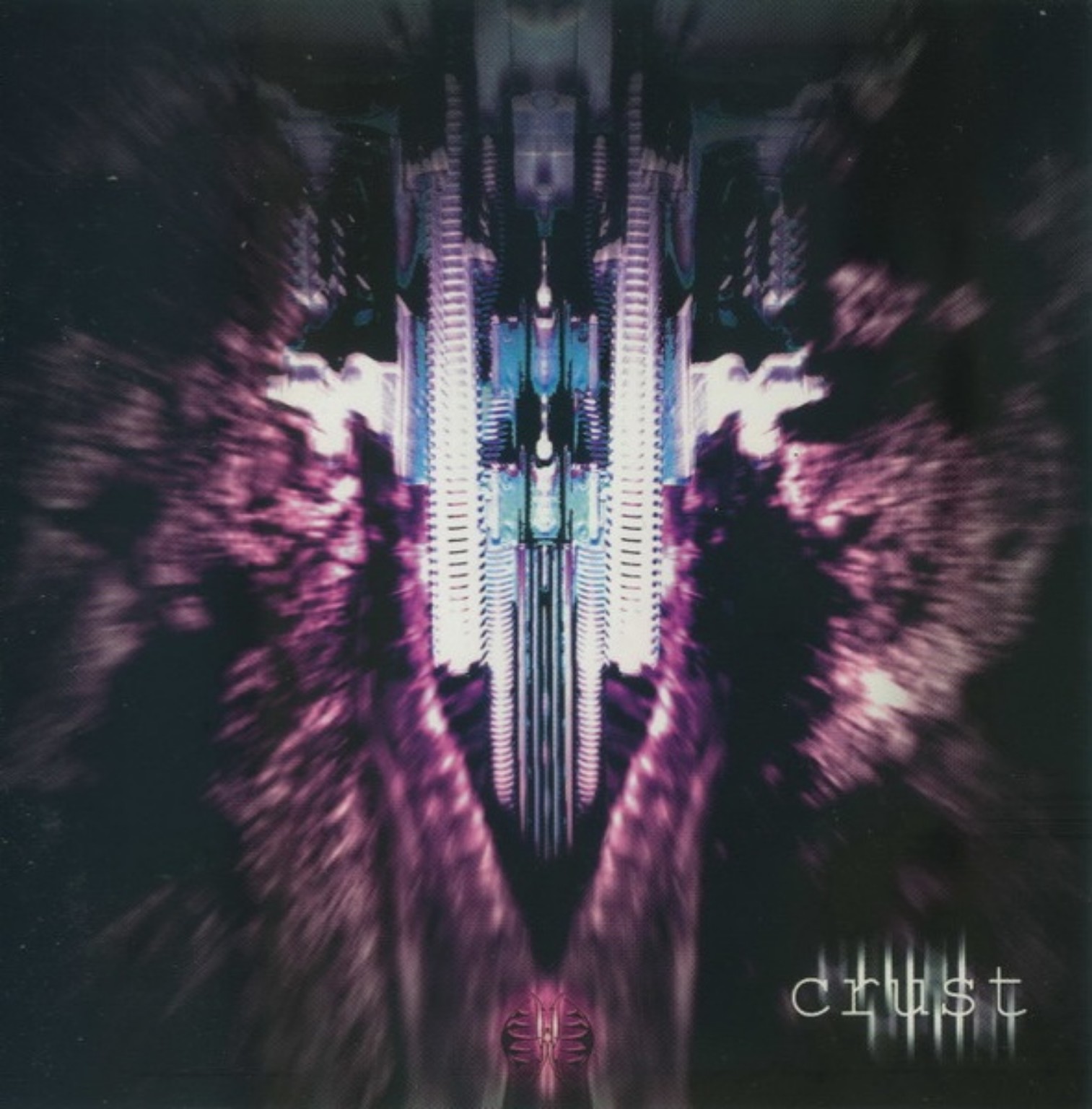
Sadist – Crust (1997)
Sadist – Crust (1997)
Sadist’s 1997 album Crust – nine chapters, eighty detailed source notes and a separate musician interview.
Album details and original contributors
Track listing · original ten-track edition
- Perversion Lust Orgasm
- The Path
- 'Fools' and Dolts
- Holy
- Ovariotomy
- Instinct
- Obsession-Compulsion
- ...Crust
- I Rape You
- Christmas Beat
Band members and contributors
- Tommy TalamancaGuitars · Keyboards
- Trevor NadirVocals
- Andy MarchiniBass
- OinosDrums
Recording and release
- Year1997
- StudioHarrow Productions · Losser, Netherlands
- Sound engineerHarry Wijering
- LabelDispleased Records
- Catalogue numberD-00056
- FormatCD · Digipak
Verified album pages
Only directly verified album destinations are linked.
Digital purchase
Physical editions
Displeased Records · CD (1997), D-00056.
Product listing · availability to be checked
Official band channels and listings
EDITORIAL NOTE · FIRST-HAND SOURCES
Behind the story – first-hand accounts
Tommy Talamanca · Sadist
Tommy Talamanca’s personal recollections are preserved in the stand-alone interview: new creative direction (answer 3), choice of studio (answer 4), Harrow sessions (answer 6), the label’s role (answer 7) and later reflections (answers 11–13).
🎙 In conversation with Tommy Talamanca · 04🎙 In conversation with Tommy Talamanca · 06
Share this feature
The complete story
1. The City Rising Above the Shore
Genoa's history cannot be separated from its narrow coastline. At the edge of the Ligurian Sea, the mountains rise almost immediately inland; the Apennines offered no easy, broad routes into the interior. The city consequently turned towards the water, and the harbour became the meeting place of coastal movement, long-distance trade and the routes crossing the mountains. The dense fabric of medieval Genoa took shape through the interplay of workshops, houses, religious communities, markets and commercial buildings. Roads leading towards the sea repeatedly reshaped the city itself.1
Trade bound the lives of the city's families and associations to distant Mediterranean ports. Behind shipping lay financial institutions, inheritance matters, loans and debts; capital moved alongside the goods leaving the harbour. Surviving archival records therefore preserve more than the great decisions of government. Property, family ties and the smaller contracts of everyday economic life also shaped how the city worked. In 1407 the Casa di San Giorgio was established to help administer the republic's debts, revenues and creditors' interests. Its history shows how closely public finances were interwoven with maritime commerce.2
After Andrea Doria's political transformation of 1528, the republic continued under a new institutional order. The economic power of merchant and banking families became visible in the urban landscape itself. The palaces of the Strade Nuove and the Palazzi dei Rolli system brought residence, prestige and official hospitality together: designated palaces could also accommodate official visitors to the city. Genoa's streets thus served not only as routes through local life but as settings for international connections.6
Genoa’s musical traditions
Long before modern clubs and electric instruments, Genoa's musical history was built from several traditions existing side by side. Alongside the liturgical music, organ and choir of San Lorenzo Cathedral, communal singing in the city preserved forms of its own. Simone Molinaro belongs to the sacred and instrumental culture of the Renaissance and early Baroque; polyphonic works form part of the port city's written musical memory. Folk and sacred practices did not simply succeed one another in a neat sequence of periods: different institutions, occasions and communities sustained them.3
Born in Genoa in 1782, Niccolò Paganini became a defining figure in the European history of violin virtuosity. The soloist's public role, the expansion of instrumental possibilities and new ways of commanding an audience's attention belonged to nineteenth-century concert life. The city later carried this legacy forward not only through commemorative plaques but through musical institutions: the institutional beginnings of music education in 1829–1830 and the library of the conservatory bearing Paganini's name preserved scores and teaching traditions across generations.4
The Napoleonic upheavals brought the old republic to an end in 1797. French rule, followed by the nineteenth-century European settlement and Italian unification, gave the city new political frameworks. Yet the harbour did not lose its economic importance. Manufacturing, shipbuilding and railway connections joined commerce, creating a different kind of urban society from the centuries of patrician trade.7
Opera, industry and the modern city
The opening of the Teatro Carlo Felice in 1828 provided opera with a new public musical space. Severely damaged during the Second World War, the building reopened after reconstruction in 1991, while the Giovine Orchestra Genovese had been organising concerts since 1912. Chamber music and opera were not a preliminary stage of independent popular music; they formed a parallel world with their own audiences and institutional traditions. The male-voice polyphony of trallalero, meanwhile, preserved another kind of knowledge of urban communal singing: parts were fitted together by ear in collective performance. In the twentieth century, Fabrizio De André, Gino Paoli and Luigi Tenco broadened the poetic and social possibilities of Genoese songwriting; the Concerto grosso project by New Trolls and Luis Bacalov made the encounter between a rock band and classical orchestration audible.5
The founding of Ansaldo in 1853 stands as one symbolic date in this transformation. Mechanical engineering, shipbuilding and later the steel and arms industries reshaped both the harbour and the settlements around the city. Workplaces, residential districts and transport routes formed an interconnected, expanding world of labour stretching from the shore to the hillsides.8
The daily life of an industrial city growing around railway and engineering activities was also shaped by skilled working communities tied to its factories. This long history of labour is preserved in Ansaldo's archival holdings covering 1853–2002. The collection was established in 1980 and came under the care of the Fondazione Ansaldo in 2000.9
Greater Genoa and the war years
The administrative creation of Greater Genoa in 1926 brought nineteen settlements within one municipal framework. The harbour, factories, transport and residential areas increasingly operated as an interconnected system, yet the former settlements retained their local identities. Changes of name and boundary therefore did not erase the distinctions created by different ways of life along the shore, on the hillsides and in the industrial districts.10
The Second World War brought severe destruction to Genoa because of its role as a port and industrial centre. Occupation, resistance and the liberation of 23–25 April 1945 became part of the city's collective memory. Reconstruction meant both physical rebuilding and a new social beginning. Fifteen years later, on 30 June 1960, mass protests erupted against a planned far-right congress. Antifascist memory, the working-class environment and a nationwide political conflict converged in the streets that day. The history of Genoese society therefore includes political participation, strikes and collective action alongside its port and factories.11
Beyond the spectacle of great ships and cranes, the harbour economy sustained many smaller occupations. Supplying sailors, trading food and providing services connected with cargo created a distinct working world. The history of the harbour suppliers known as cadrai also reveals local livelihoods bound to international traffic. When the functions of the port were reorganised towards the end of the industrial era, more than companies and buildings changed: old jobs disappeared and different activities emerged.12
2. The City in the Nineties
By the 1990s, Genoa had passed the most dynamic phase of its post-war industrial expansion. The burden of heavy industry, new forms of commerce, urban redevelopment and a growing openness to culture and tourism coexisted. Census figures also record the scale of population decline: between 1981 and 1991 the city lost 84,124 inhabitants, followed by another 68,464 over the next decade.13
During the Columbus anniversary year of 1992, the rehabilitation of the Porto Antico made the city's new direction visible. Renzo Piano's designs linked the old quays to public and cultural uses. What had previously been an industrial part of the harbour became a more accessible space for residents and visitors; the new functions did not erase memories of the older buildings and routes, but added another layer of use. The waterfront now displayed both Genoa's emerging identity and its older industrial memory.14
The establishment of the Porto Antico di Genova company in 1995 gave the management of these new waterfront areas an institutional basis. Yet debate over the city's future did not end with pedestrian routes and the opening of cultural spaces: the fate of the Cornigliano steelworks, employment and environmental protection remained political questions.15
The adoption of Genoa's urban development plan on 16 July 1997 provides a precise date in this transition. Along the Ligurian coast, La Spezia played a different industrial and military role: the planning of its naval arsenal in 1861 and the factories that followed gave it a development path of its own. Parliamentary hearings on the region's economic changes in 1997 examined both Genoa and La Spezia; a site visit took place on 16–17 June, and the committee published its report on 22 July.16
Political upheaval in Italy
The Italy of the 1990s was also shaped by political and financial upheaval. From 1992 onwards, the Mani pulite investigations exposed abuses in party financing; the upheavals of 1992–1993 also undermined the standing of the old party system. In the same decade, the lira crisis and pressure from the European Monetary System tied the country's economy to developments across an increasingly integrated continent. The signing of the Maastricht Treaty in 1992 and its entry into force in 1993, the European Union's enlargement in 1995, the gradual implementation of the Schengen system and the Amsterdam Treaty of 1997 marked stages in a new European order.17
The uncovering of corruption was followed by elections in 1994 and 1996 and by changes in the parties and the press: the political crisis that began with the Mani pulite investigations continued for several years. In 1992, the crisis of the lira and the European exchange-rate system made monetary pressures part of ordinary economic decisions; the Italian currency lost roughly twenty per cent of its value. Austerity measures in 1994 and another currency crisis in 1995 further shaped this uneven course.18
Europe in transition
European treaties created new frameworks according to a different timetable. Maastricht was signed in February 1992 and entered into force in November 1993; the 1995 enlargement brought Austria, Finland and Sweden into the Union. The Amsterdam Treaty was signed on 2 October 1997 and entered into force in 1999.79 Italy's participation in the Schengen system gradually became a practical reality. These dates form the institutional backdrop to a continent increasingly connected by transport and trade.19
European openness neither abolished distance nor made cultural connections uniform. The wars in the former Yugoslavia and the Dayton Agreement, initialled on 21 November 1995 and signed on 14 December, were reminders that peace on the post-Cold-War continent remained fragile. The establishment of the World Trade Organization in 1995 provided a new institutional framework for world trade, while CERN's decision in 1993 opened free access to World Wide Web technology. In underground music, meanwhile, printed fanzines, cassette trading by post and slowly spreading contacts over the internet all continued. Public communication in that era was therefore characterised by the coexistence of paper and digital networks.20
Industrial histories of La Spezia and Losser
On the northern stretch of the Ligurian coast, the history of the La Spezia arsenal also reveals the encounter between engineering design and local society. Domenico Chiodo completed the final plans in spring 1861, and legislation dated 28 July provided the framework for construction. Preparing the site brought disputes over land expropriation and demand for new workers; flooding at the end of 1863 damaged the works already under way. The arsenal was inaugurated on 28 August 1869. Genoa and La Spezia belonged to the same Ligurian coast, but fulfilled different industrial and military roles.21
Everyday life in an industrialising town also unfolded on the arsenal construction site: the project drew new workers and contractors, while disagreements over land expropriation generated local tension. The fate of this vast engineering undertaking thus became intertwined with changes in livelihoods and urban transport.21
The economy of Losser and Overdinkel developed where the Dinkel River, the Dutch–German border and the Twente textile industry met. The Dorpsbleek bleaching ground was operating as early as 1774; by the late nineteenth century, factories around Gronau were drawing workers from both sides of the border. Aleida Leurink's early eighteenth-century diary recorded a daily life in which grain prices, flax work, weaving and weather risks were intertwined: the wet harvest of 1713 and the Dinkel flood of 1729 reveal the vulnerability of the local economy. Overdinkel later grew into a workers' settlement with religious and community institutions of its own. Twente's textile mills provided work for generations, before restructuring in the second half of the twentieth century opened space for new local services.22
3. From the Valleys to the Rehearsal Room
Sadist's story began in several places across Liguria. The accessible chapters of the 2022 band monograph preserve accounts of rehearsal rooms around Genoa, the setting of Murta and the limited equipment available to the young musicians. Trevor Nadir came from Rossiglione, north of Genoa; the roads into the city, encounters around Brignole, cassette exchanges and concerts by smaller metal groups widened his network of contacts. Andy Marchini was drawn to the bass through Steve Harris's playing, while Tommy Talamanca came from classical guitar and rock keyboards. These different musical backgrounds would later meet within the same songs.23
Italy's extreme-metal audience grew up amid the self-organised punk and hardcore of the late 1970s, successive waves of heavy metal and the accelerating thrash of the 1980s. Demo cassettes, small-circulation fanzines, club gigs and correspondence by post connected bands from distant cities. These channels worked differently from the web catalogues that came later: a copy of a recording, a letter and a contact with a local concert organiser often provided the route to the next city.24
In accounts of the band's formation, Peso, having left Necrodeath, wanted to start a new group. Tommy and Andy were seventeen, Peso twenty-six; age and previous experience gave them different, rather than identical, starting points. Andy and Fabio Bocchiddi already knew each other, while Tommy responded to a newspaper advertisement. “Dead City” and “At the Mountains of Madness” emerged in the rehearsal room; the connections surrounding Black Prophecies thus turned into shared work. Tommy brought a melodic sensibility shaped by progressive rock and classical music, Andy was linked to heavier forms of metal, and Peso carried his experience with Necrodeath into the new band.25
First recordings and Black Screams
In the summer of 1991, Sadist's first recordings were connected with Piece of Mind in Genoa and Green Recording in La Spezia. “Black Screams” captured the early songs; Obscure Plasma Records released it on seven-inch vinyl in September 1991. A contemporary fanzine reported sales exceeding 2,500 copies, a figure attributable to the press account of the time. Cassette distribution in the United States in 1992 and an appearance on a German compilation placed the band within an underground network extending across borders.26
A 1993 review in Witchcraft found the early recordings immature and the production cumbersome. In the same issue, the periodical also reported sales of more than 2,500 copies of the seven-inch record; these two observations capture different sides of the same underground public sphere.27
After Fabio Bocchiddi's departure, Andy took over vocals while continuing to play bass. The instrumental and vocal responsibilities were thus concentrated in one member. Witchcraft's 1993 introduction dated the band's beginnings to the first weeks of 1991 and described the recording of “Black Screams” as marked by compositions still taking shape and awkward production. The magazine also reported that the new trio played in France and Portugal in summer 1992; Tommy handled guitar and keyboards without a sequencer. These contemporary lines document a live practice in which keyboards were not a decorative layer but part of the stage arrangement.28
The history of Necrodeath is also part of Sadist's emergence from the Ligurian thrash- and death-metal scene. In later interviews, Peso recalled the relationship between earlier groups, the name Necrosadist and Sadist's formation through the lens of his own career. The similarity of the two names reflects personal and chronological connections rather than merely a resemblance in wording: Peso brought his previous experience into the new group, while Tommy and Andy arrived with different backgrounds. “Black Screams” and Above the Light then gradually connected a local rehearsal-room beginning to international underground networks.29
The direction of Above the Light
With the release of Above the Light in 1993, Sadist sought a language within death metal in which rhythmic thrash, early progressive rock, classical musical thinking and keyboard timbres would no longer occupy separate compartments. Tommy later named Emerson, Lake & Palmer, Yes and Goblin alongside Slayer and Annihilator. The list did not point towards a single genre, but towards the many directions of the band's thinking: brutality and an unexpected turn could inhabit the same compositional space.30
Even then, making a record meant bringing together several locations and studio sessions. Witchcraft placed the recordings between January and March 1993, mentioned two studios and named Alberto Penzi as producer. Later recollections by participants add other details; the contemporary report and the retrospective memory do not merge into a single source. On the debut album, Andy handled both vocals and bass. In several songs, keyboard melodies appeared as structural voices equal to the guitar, rather than merely atmospheric backing. The band became increasingly familiar in the underground, but later critical recognition cannot rewrite the way the album was received on its release.31
Line-up changes and the Tribe period
In the next period, the line-up and the process of composing changed again. Andy left; Chicco and Zanna joined. As Tommy later recalled, a greater share of the songwriting responsibility fell on him during Tribe. Instead of the earlier rehearsal-room improvisations, he built songs from ideas recorded at home on a cassette multitrack recorder, sometimes planning drum and bass parts in advance. Chicco's funk-inflected bass playing and Zanna's different stage presence took the band in a new direction. Tribe became an experimental album, but according to later firsthand memories, progressive death metal audiences and critics did not always follow its unusual solutions. Tensions grew alongside the musical questions.32
Tommy did not later regard the period surrounding Tribe as difficult because he had turned away from his own music. Rather, he felt that many critics of the day failed to understand what he heard as innovation within complex death metal. Meanwhile, the burden of composition rested largely on him. In the 2026 interview, he also recalled unspecified physical difficulties experienced by a drummer, which he believed contributed to a less complicated instrumental direction. He gave no diagnosis, and this recollection cannot be turned into a certain explanation of any fellow musician's motives.33
For Tommy, the musical simplification and a sense of personal liberation occurred at the same time, yet remained distinct experiences. After the home-recorded, layered ideas of the Tribe period, Andy was once again beside him—a musician he described in other interviews as both his creative counterweight and partner. Moving forward did not mean denying the work of earlier bandmates: Tommy also acknowledged the different abilities of the previous members. With Crust, however, they wanted material that the new four-piece could feel was truly its own.34
4. Rupture and a New Creative Order
The change in line-up in 1996 was accompanied by personal disagreements. In March 1997, Metal Shock published separate interviews with Tommy and Chicco; the complete original issue is unavailable, and a later article passed on only excerpts. Chicco spoke about the manner of his departure, financial settlement and shared equipment, while Tommy referred to continuing after Peso's departure, his own legal and band responsibilities, and earlier financial burdens. These differing positions, conveyed only in part, reveal two sides of the dispute; the intermediary article transmits no more than the surviving fragments.35
The conflict reached the band's day-to-day operations as well. In the Metal Shock excerpts republished in 2011, Chicco recalled not only the financial settlement but also questions of shared equipment and the minibus. Tommy countered with the responsibility for carrying on and the financial burdens inherited from earlier days. Their accounts do not add up to a complete legal record and cannot settle who was right. Rather, they suggest that even the band's practical everyday workings had to be reorganised after the rehearsal-room years.35
Tommy's account from 2026 also identified the personal dimension of the tension: he spoke of serious legal matters that weighed most heavily on him and Andy but were eventually resolved in their favour. He did not specify what the proceedings concerned. In the same recollection, he described the anger arising from the conflicts as one of the forces driving the new music and the new world of lyrics.36
A new role for the lyrics
One consequence of that anger was a change in the weight carried by words and vocals. In Tommy's view, Trevor's arrival turned lyrics—which had often receded behind instrumental structures—into an independent, unsettling voice. The legal matters had been a personal burden for Tommy and Andy; Trevor, however, did far more than add vocals to finished music, bringing a commanding stage presence and a distinctive lyrical personality that gave shape to the accumulated rage. The recollection does not make him a participant in the earlier legal disputes or claim that every lyric recounts a particular incident.37
After the earlier line-up change, composition itself had followed a different pattern during the Tribe period: Tommy layered guitar and keyboard ideas on a cassette multitrack recorder at home, sometimes arranging the bass and drum lines in advance. The arrival of Chicco and Zanna brought new emphases, while Andy's departure also changed the previous songwriting partnership. Later personal recollections preserve not only the names of the musicians but the shift in working methods between the two albums.38
Peso's later statements place his departure in 1996, with one conversation specifying December; some overview biographies give a different year. The chronology must therefore not collapse evidence of different kinds into a single date. Andy returned on bass, Trevor Nadir took over vocals, and Oinos arrived from Thy Nature as drummer. The contemporary 1997 booklet credits Oinos as Crust's drummer. Tommy later described this new line-up as one of the most inspiring and productive periods of his career; instead of continuing ideas co-written with former members, he and Andy began writing new songs.39
A fresh start in songwriting
In the new circumstances, Tommy and Andy did not assemble a collection of unfinished ideas from the previous line-up. According to their own account, they deliberately set aside musical passages to which other former members had also contributed as writers. New pieces came together quickly; the decision had both practical and emotional stakes. Tommy thought in melodies, Andy supplied the rhythmic foundations, and Oinos brought together the abrupt breaks and fresh accents without allowing the music to lose momentum. This description of their working arrangement does not alter the songwriting credits printed on the cover.40
Death metal in the early 1990s did not develop along a single line. On Unquestionable Presence (1991), the American band Atheist incorporated jazz-inflected bass movement and intricate drum patterns into death metal; throughout Death's Human (1991), Individual Thought Patterns (1993) and Symbolic (1995) periods, guitar parts and song forms continued to evolve. Cynic's Focus (1993) widened the boundaries of progressive death metal with new harmonic and sonic approaches, while the Dutch band Pestilence demonstrated, in its shift between Testimony of the Ancients and Spheres, how differently complex music could be constructed. These records did not define a single direction: at the same time, different bands placed different weight on rhythm, melody and timbre.41
In the middle years of the decade, progressive metal and heavier music driven by mechanical rhythms opened up distinct creative paths. Fear Factory made a tight, machine-like pulse central to its 1995 album Demanufacture, while Meshuggah's Destroy Erase Improve explored irregular shifts in accents and the perception of metre. The jazzy and progressive layers of Sadist's Tribe period addressed different compositional questions; later critics of Crust drew on both broader descriptions of the era when writing about its rhythms and sound.42
Connections within the local scene
The local scene, meanwhile, extended far beyond the rehearsal room. The new line-up's creative arrangements did not, even after the conflict, dissolve the local framework for live music. Sadist appeared alongside Detestor at the Teatro Albatros on 22 March 1997 as part of the “Italian Assault” programme. In the same season, My Dying Bride and Sentenced played in the city on 11 March, followed by Cradle of Filth on 18 April. These events brought different musical worlds into the same venues during the period when Sadist's new line-up was already working on Crust.43
Alongside the printed programme tied to the city, Tommy retained another, more personal concert memory: decades later, he still counted the tour undertaken with Necromass and Detestor among his favourite experiences to recall. What stood out in his memory was not a list of stops, but the immediate, physical encounter of instruments, stage and listeners. He believed that this human closeness was essential to metal as a live art, something a performance viewed through a screen could never fully replace. He supplied no exact dates or itinerary, so this tour cannot be identified with the Genoa show in March.44
5. The Sound of Crust Taking Shape
Compared with the earlier records, the intended direction for Crust was more compact and aggressive. Tommy later explained that Tribe's complexity was harder to convey live, so the new songs needed a more immediate impact. This did not mean abandoning technical or compositional ambition: rhythmic breaks, keyboard timbres and guitar melodies still functioned as interconnected parts, only now within shorter, denser forms.36
Crust was not a gradual continuation of Above the Light or Tribe. Tommy supplied much of the defining melodic material, while Andy contributed a large proportion of the rhythmic ideas. Oinos's drumming established connections between different movements rather than merely accompanying the guitars. After the line-up change, the sound became harder and tighter, and Trevor Nadir's vocals introduced a lyrical world of their own: the voice did not simply reinforce the weight of the riffs, but also carried the subjects of the songs.36
The songs began in different places. “Perversion Lust Orgasm” grew from Andy's rhythmic ideas; Tommy considered it particularly energetic in concert. “The Path” started with a traditional guitar riff, while “Christmas Beat” and “I Rape You” were organised around keyboard motifs. These four examples alone show that Sadist did not build its compositions around a single instrument. The roles of guitar, bass and keyboards varied from song to song, and the rhythmic foundation did not necessarily follow the melody.36
Instrumentation, atmosphere and lyrics
For Tommy, an instrument was a means of connecting the unsettling atmosphere of the progressive sounds of the 1970s and 1980s with metal's aggression. The structural role of the keyboards is supported by both the original booklet and specific examples from the songs. The keyboard motifs heard in the compositions were therefore not decoration, but one of the principles organising the song forms.45
Asked about his own style decades later, Tommy did not name a particular guitar technique as his ultimate goal. He said that if a song's sense of unease called for a sitar, synthesiser or Eastern percussion instrument, each could be just as valid a tool as an electric guitar. Sitar, synthesiser and Eastern percussion were mentioned as examples of possible instrumentation; Tommy was not listing the instruments actually used on Crust. Behind this flexibility in arrangement lay both the pursuit of atmosphere inherited from progressive music of the 1970s and 1980s and the aggression of metal.36
The lyrics drew upon images of the body, violence, confinement, desire, madness and abuse. Lines in “Fools and Dolts” that evoke a closed institutional environment and the possibility of understanding another person's condition also reveal a different sensitivity within the album. In an interview dated 12 April 2025, Tommy identified Trevor Nadir as central to the album's lyrical concept: according to him, Trevor had been a defining creator of Sadist's lyrical world since the Crust period. This role as lyricist does not imply that he wrote all the guitar and rhythmic ideas.46
6. The Inner Journey of the Ten Songs
Rock Hard approached the opening track's rhythmic and sonic shifts through a comparison with Voivod, while invoking Neurosis in connection with “The Path”. These analogies were associations made by the individual critic as a listener; they were tied to the songs not as incidental names, but as traces of a new compositional language. The differing origins of the two pieces—a rhythmic idea in one case, a guitar riff in the other—point to the album's many-centred method of writing.47
The opening of “Perversion Lust Orgasm” immediately reveals the new rhythmic order. Andy's idea supplied the starting point, while Tommy's melodies do not settle into a conventional, steady metal form. The title's three words suggest bodily and psychological extremes, as the music sustains the tension between control and disintegration. Placed at the start of the album, the song does not wait like an introductory movement: it establishes an energy against which the varied rhythms of the following tracks can be heard.48
“The Path” began with a guitar riff and therefore offers a different point of orientation from the opening track's pulse. The riff does more than hold the song together: it defines the relationship between melody and rhythm. According to firsthand creative recollections, its core was a conventional guitar idea; yet the finished recording does not simply reproduce the earlier progressive layers of Above the Light. Here Crust joins a more direct structure to a more restless sonic world.45
Tension within the songs
A rhythmic detail in “Fools and Dolts” received specific attention in a contemporary review by Chronicles of Chaos: although the critic dismissed the album as a whole, the song's slap bass was among the few elements singled out as noteworthy. That instrumental detail shows that even a negative overall judgement did not mean complete inattention; the reviewer recognised a specific bass technique as a merit.49
In the title and lyrics of “Fools and Dolts”, questions of exclusion, institutional confinement and compassion come to the fore. Understanding another person's condition is placed beside a judgemental point of view; the compact form, lasting just over three minutes, leaves this question unresolved through its choice of words and musical tension.50
The brevity of “Holy ...” provides one of the sharp changes of pace in the album's first half. Its title and religious references in the lyrics offer no straightforward explanation; instead, they juxtapose images of faith, violence and control over the body. Its running time of less than four minutes belongs to the album's tightly packed forms: the track stands in the sequence not as an extended interlude, but as a compact piece with its own character.51
The title “Ovariotomy” evokes a stark image of a medical procedure. The lyrics speak of bodily violence and helplessness, while the music does not resolve the composition's weight into an easily followed chorus. The song represents the side of Crust in which provocative language is inseparable from musical form: title, voice and dense arrangement all belong to the same tension.52
Rhythm and obsession
The 1997 Chronicles of Chaos review also singled out the tribal drumming in “Instinct”, despite awarding the album a low overall score. The drums provide more than speed and weight; the critic identified a recognisable rhythmic character. With a running time of 4:32, that rhythmic distinctiveness became one of the track's defining features.53
At 4:32, “Instinct” gives the instrumental movement more room than many of the album's more compact pieces. Tommy's later recollections of the writing emphasised the diversity of rhythmic ideas; here, the drummer's movement carries the song's tension forward over a longer stretch.54
Even the hyphenated title “Obsession-Compulsion” suggests that the two concepts are enclosed within one another. The recurring lyrical motifs of compulsion and domination combine here with the music's unrelenting pressure, emphasising the interaction between repetition and tension.51
The album’s closing sequence
The album's title itself appears in “...Crust”, but the three dots are not merely a typographical label: they can also signify a turn or rupture within the record's material. At 2:43, it is among the shortest songs. Within the album's brief and more direct construction, this piece serves as a compact, raw link, while its own title concentrates the sound of the entire record into a single word.55
The title and lyrics of “I Rape You” adopt a threatening voice speaking from the perpetrator's point of view. Its 4:20 running time gives more space to the disturbing subject and instrumental tension, which throughout Crust alternate with shorter, highly concentrated forms.52
The keyboard motif underlying the closing track “Christmas Beat” is known from firsthand creative recollections. There is tension between the title and the music's character: the festive word and the album's unsettling tone sharpen rather than resolve their contrast. At 4:48, it is the longest piece in the sequence; after the raw and immediate opening, the record thus ends not with a brief conclusion but with a broader composition built around keyboards. The booklet of the original Japanese edition also lists two additional cover versions—“Take on Me” and “Relax”—but these do not belong to the original ten-track sequence.56
The ten tracks have a combined running time of 37:29. The track list ranges from the 3:19 “Perversion Lust Orgasm” to the 4:48 “Christmas Beat”; the two bonus covers on the Japanese Toy's Factory edition remain separate from the original material. Release listings for the Displeased Records CD, catalogue number D-00056, include standard, limited digipak and promotional versions, all dated 10 April 1997, while two contemporary reviews appeared in November. The Japanese CD followed on 21 December 1997 from Toy's Factory under catalogue number TFCK-87144. In 1998, the source list records the Polish AMP006 cassette, the Romanian Rocris Disc ROC 001-06 cassette, the Bulgarian Wizard WD 200.213 cassette and a Displeased D-00056 CD reissue. The next wave of physical releases includes a Displeased CD reissue dated 28 October 2007 and a promotional edition bearing the same catalogue number; listings also record a digital Displeased reissue in 2008 and a Back on Black digital listing dated 17 February 2025. Because the listing dated 10 April 1997 conflicts with the July advance schedule giving 4 October as the expected release date, the year is certain but the exact day of the album's first release remains disputed.57
Another trace preserved in 1997 makes this uncertainty clearer. On 14 July, an international list tracking metal releases presented Crust as expected on 4 October. The entry documents the spread of news about the forthcoming album, not proof that it actually reached shops that day. The same list also contains an earlier Sadist entry for May–June without an album title: advance schedules were themselves changing even as the record's history was already being followed in public.80
7. Losser and the Sound of the Record
According to Tommy Talamanca's recollections, Displeased Records chose the Dutch studio and provided approximately three weeks for the work. The label covered not only recording costs but also organised the arrangements behind travel, graphic design, promotion and a music video. The musicians, meanwhile, were free to shape the songs; the studio's task was to ensure that the layered arrangements would sound tight on the finished recording.36
For Tommy, approximately three weeks in the studio proved sufficient: by then the musicians worked more efficiently than they had during their first records. Of the label-supported artwork and promotional video, the clip for “Fools and Dolts” resurfaced in a later interview. Tommy insisted that record companies must not interfere with composition, describing this not as a one-off privilege but as a principle he maintained with every label.58
Choosing a studio and later exercising control over recordings are two different questions. In the Crust period, the decision to use the Dutch Harrow studio belonged to the label. Tommy later became increasingly independent as a producer and sound engineer; as Nadir Music Studios developed, control over the band's own master tapes and the organisation of production also moved closer to the musicians. Nadir's earlier beginnings as a project studio around 1996 do not mean that the 1997 album was recorded there. The original recording location remains Harrow in Losser.59
Recording at Harrow Productions
Crust was recorded in April 1997 at Harrow Productions in Losser, the Netherlands. The name Harrow had also appeared in a Dutch band's recollection of a studio session from 1993; for Sadist's 1997 album, Harry Wijering's role is identified by both the original booklet and the participants' testimony.60
In Tommy's later account, Harry Wijering was a creative collaborator in bringing the songs to life. The booklet credits him with recording and mixing engineering and lists Sadist as producer. Alberto Cutolo mastered the material at Elettroformati in Milan; Daniele Barillari was responsible for the cover concept, design and visual direction.61
The musicians knew what kind of oppressive, airless sound they wanted, but, in Tommy's words from 2026, they did not yet possess every technical means to achieve it independently. Harry Wijering's experience was indispensable in that respect. Tommy did more than record his guitar parts: he also followed the mixing and mastering process personally, although the mastering itself remained Alberto Cutolo's work. Later he could hear mistakes in the recording, yet he did not want to separate them from the album's claustrophobic character. The working discipline learned in the studio became part of his subsequent role as a producer.45
A small story preserved from the musicians' side is also attached to the cover image. A 2011 retrospective attributes to Andy the memory that two lamb chops had to be obtained to assemble Daniele Barillari's collage. The image's fleshy and mechanical details are thus tied not only to a symbolic system read into it afterwards, but to the strange material world of handmade visual work. Since the episode survives in a later intermediary article, it cannot be treated as an independent, firsthand statement from the artist in the 1997 booklet; the artwork credit nevertheless remains Barillari's.62
8. Two First Encounters with the Album
By the time Crust appeared, metal no longer spoke with a single voice. The review titled “SADIST – Crust” in issue 128 of Rock Hard awarded the album 8.5/10; the online archive preserves it under the date 17 December 1997. The editorial review heard a significant change in sound compared with the earlier albums and highlighted the coexistence of keyboards, noisy layers and elements of classic death metal. Paul Schwarz's review for Chronicles of Chaos appeared on 17 November 1997 and gave it 2/10: he found the fusion of genres confused and the vocals weak, though he did name a few positive exceptions in the drumming on “Instinct” and the bass on “Fools and Dolts”.63
The Rock Hard article also searched for specific musical parallels within the songs: Voivod appeared in connection with “Perversion Lust Orgasm”, Neurosis with “The Path”, Krupps with “Fools and Dolts” and Sadus with “I Rape You”. The reviewer heard echoes of early Kreator in the vocals. These comparisons map the critic's own listening; the album's compositions do not, however, dissolve into the bands used for comparison.64
The difference between the two pieces cannot be measured by scores alone. Rock Hard heard a shift in sound, the coexistence of different instrumental layers and a willingness to take compositional risks; Chronicles of Chaos objected that the down-tuned riffs associated with Korn and Coal Chamber, darkwave-style keyboards and death metal did not, to its reviewer, form a convincing whole. The same instrumental mixture became a new voice in one review and a disjointed experiment in the other. Their specific claims and different publication dates clearly reveal the contrasting readings.63
Later reviews and reissues
Ten years after release, Andrea Arditi's 74/100 review depicted a Crust seen from a greater distance. In 2011, Stephan revisited the previous album's unusual direction in his review of Lego for Metal.de.65 In 2017, Edoardo Giardina heard tension and freshness precisely in the record's raw sound.66 By contrast, a Polish analysis from 2021 found the mixing of sounds confused and heard the rhythmic turns as coming at the expense of the earlier complexity.67 The debate was not only about the sonic image but also about whether the groovier, more angular riffs gave Sadist new strength or obscured the compositional subtlety previously heard on Tribe.
Some later listeners were no longer reviewing the same ten-track version of the album. A Metalrage reviewer in 2007 praised the drumming, bass, guitar riffs and several instrumental introductions while emphatically rejecting Trevor's vocals and the pop covers heard as bonus tracks. By contrast, in a 2013 Decibel feature, Chris Dick placed Crust first among five notable technical death-metal albums, highlighting its distinctive keyboard and bass sounds and cold atmosphere. These later critical judgements do not refute the division of opinion in 1997; they add nuance to it.68
9. The Album's Afterlife
Sadist's later history did not continue Crust's creative arrangements in a straight line. The band moved forward with new members, studios and compositional emphases, while the album periodically resurfaced in interviews and reviews. In a 2016 interview, Tommy named Crust and the band's 2007 comeback album as his two favourite Sadist records. Andy Marchini's return represented both a turning point in friendship and a creative change for him; Trevor's new vocal style also continued to shape the band's sound. This recollection places the album within the later career and is distinct from the first impressions recorded by critics in 1997.69
In 2010, Trevor Nadir also recalled an unusual television encounter. When the band appeared on Red Ronnie's programme, he remembered the situation as intensely tense; looking back, he also acknowledged his own arrogance at the time. His opinion of the presenter's attitude towards metal was the singer's impression, not an independently verified fact. The anecdote remained important to him because the instinctive, sometimes unmanageable rage of the Crust period did not stop at the lyrics: it permeated the musicians' public appearances too.70
That same unruly and liberating concert life also appears in a memory from Eindhoven associated with a Dutch tour in 1997. In an interview edited and published later, Trevor recalled an episode involving drinking, night-time behaviour and a police warning. He did not generalise it to every concert, and the transmitted story does not justify inventing additional details about individual participants or the exact local sequence of events. This awkward personal moment reveals the human side of an angry era, while remaining entirely separate in time and evidential status from Crust's original 1997 recording credits.71
Trevor also considered the record's impact particularly important at the time. In his own recollection from 2010, Crust helped lead to an appearance at Wacken, and he claimed it had spent four months in the top ten of the German Rock Hard chart. These are the musician's memories, not details now verified against the contemporary festival programme or the complete rankings. Tommy also described the festival appearance as a career turning point in another, later interview; the memories may be considered side by side but do not replace contemporary documents.72
The return and a new audience
The return around 2006–2007 and the interviews that followed came from a different setting. New generations became acquainted with the name Sadist, while older albums became available through reissues and digital catalogues. The 2007 CD reissue, the 2008 digital release and the edition listed on 17 February 2025 belong to different layers of publishing and distribution; none can be conflated with the original 1997 release. The Japanese Toy's Factory edition appeared on 21 December 1997 under catalogue number TFCK-87144 and added two cover versions to the ten original songs.73
Another small trace survives in the memories of people who attended the concerts. In a 2026 article about the history of Sulphur, Denis Bonetti identified the Crust tour as his first experience of Sadist live. The same later article associates a photograph taken with Alessio with October 1997 and their first concert together. The photograph's caption offers a clue about the next period of live performances; neither the concert memory nor the caption changes the fact that, according to the booklet, Oinos was the drummer on the original 1997 recording.74
Behind the band's unusual combination of guitar and keyboard sounds lay Tommy's personal instrumental discoveries. In an earlier interview, he recalled the influence of Stanley Jordan's tapping technique and the piano studies he had begun in his teens. Playing tapping figures on the guitar with his left hand while his right hand played keyboard lines thus gradually became part of Sadist's live vocabulary. In the same later conversation, he cautiously suggested, as a possibility only, that a sampled sound might have been used for the kick drum on Crust; this is not proof of a programmed recording across all drum tracks and does not cast doubt on Oinos's playing.75
In 2025, Tommy Talamanca also spoke about Sadist's new period and Trevor Nadir's creative role; Trevor had become a defining figure in the band's lyrical world from the Crust era onward. What separates the two albums is not simple continuity but creative change: the older record's lyrics drew on bodily and social tensions, whereas the later work received a separate, explicitly named concept of its own.76
Reassessing the original sound
In Tommy's recollections, a beloved album and a recording considered technically perfect are two different things. As early as 2006, he said that he loved the compositions on Crust but was unhappy with how they sounded at the time; he expressed a wish for a future remix, not an announcement that one had already been completed. In the 2026 interview, he held Crust and Sadist's 2007 album in exceptional regard for two different reasons: the latter as a summing-up of their compositional achievements, the former as the raw imprint of the turning point he lived through with Andy and Trevor. When listening to the first two albums he looks for his own mistakes; with Crust he is more inclined to accept the flaws, because the shared anger and liberated energy speak more powerfully.77
For him, Lego, the album that followed, was not merely an intensification of that energy. In later conversations, both Tommy and Trevor described it as a controversial step towards another experiment, this time more electronic and industrial. Tommy subsequently acknowledged certain shortcomings in its sound while still valuing some of its songs; Trevor mentioned the excessive number of tracks recorded and some production choices. These later self-assessments show that Crust did not become an immutable template for every album that followed.78
Towards the thirtieth anniversary
In the direct Open Metal Album Library interview given in November 2026, Tommy spoke of plans to re-record the entire Crust album in 2027—not just seven songs. The thirtieth anniversary represents an especially substantial undertaking for him because the recording has been defining for both the band and its listeners, including many Eastern European fans. The present-day Sadist, featuring two new musicians alongside Tommy and Trevor, who have themselves changed greatly as professionals and as people, would play the material again. The creative intention is to follow the original compositions as faithfully as possible; the most noticeable difference might be a fresher production. Tommy explicitly described the plan as a tribute, not a replacement for the 1997 recording. At the time of the interview, all this remained an idea for the future, not a release already made in 2027.36
The history of the port city opened towards the sea; the rehearsal room brought different musical paths together between valleys and streets; and in Losser the studio provided a framework for building sounds one upon another. Crust became a record out of these distances and encounters: ten songs, 37:29 minutes, hard rhythms and melodies that would not settle into a single metal language. Critics in 1997 did not hear it in the same way. The intervening years have not settled that difference; instead, they return time and again to the question of what a song can hold together when rhythm, melody and tension arrive from different directions.
Sources and references
80 source note
Historical / documentary · 70
001. Historical / documentary
Treccani's overview illuminates the relationship between the narrow Ligurian coastal strip, access to the sea and the city's historical development; the Genoese exhibition on legal history adds nuance to the workings of later urban institutions. The geographical conditions support the novel's setting; they do not establish any detail about a specific Sadist rehearsal room.
SAD-069 — Historical overview of Genoa from antiquity to the modern port city
Treccani's encyclopaedic historical entry on Genoa: port trade, the medieval city-state, the turn of 1815, industry in 1861 and 1945. Treccani 2010: Genoa's ancient port and medieval commune, the constitutional reform of 1528, the upheaval of 1797, the nineteenth-century city and the events preceding 1945; historical overview.
Source page: https://www.treccani.it/enciclopedia/genova_(Dizionario-di-Storia)/
SAD-070 — Seven centuries of law and everyday life in Genoa — exhibition of sources from the 11th–18th centuries
The institutional chronology of Genoa's history; details drawn from the source. Genoa's exhibition of historical statutes: law in everyday life from the eleventh to the eighteenth century, the institutional changes of 1528–29 and social regulation.
Source page: https://www.cittametropolitana.genova.it/it/node/16727
002. Historical / documentary
The financial and legal background of the city's merchants and associations is established by institutional material on Genoa's historical statutes and the State Archives' history of the Casa di San Giorgio. Medieval commercial institutions must not be confused with the structure of later modern banks.
SAD-070 — Seven centuries of law and everyday life in Genoa — exhibition of sources from the 11th–18th centuries
The institutional chronology of Genoa's history; details drawn from the source. Genoa's exhibition of historical statutes: law in everyday life from the eleventh to the eighteenth century, the institutional changes of 1528–29 and social regulation.
Source page: https://www.cittametropolitana.genova.it/it/node/16727
SAD-071 — Archivio di Stato di Genova: archival history and Casa di San Giorgio (1407)
The Genoa State Archives' foundation in 1817, and the return of archives between 1816 and 1867. Archivio di Stato: twelfth-century notarial material, Casa di San Giorgio's financial-administrative legacy from 1407; institutional description.
Source page: https://cultura.gov.it/ente/archivio-di-stato-di-genova-1
003. Historical / documentary
The liturgical sound culture of San Lorenzo Cathedral and Genoa's musical traditions represent related institutional memories from different periods. Early choral and organ practice is a cultural antecedent, not a documented direct influence on Sadist's music.
SAD-106 — Centuries of Genoese musical history: San Lorenzo, early theatres and the 1953 Paganini Prize
Treccani's entry on Genoa: connections between old musical-cultural institutions are relevant only as background. San Lorenzo in Genoa had a late-sixteenth-century chapel with 65 singers and 34 instrumentalists; Falcone 1653, Sant'Agostino 1702, Carlo Felice 1828/1991, the Paganini Prize 1953 and the local singer-songwriter school. The remaining parts of the cited source do not establish a direct influence on Sadist.
Source page: https://www.treccani.it/enciclopedia/genova/?search=Genova%2F
SAD-107 — Simone Molinaro and sacred music in late-Renaissance and early-Baroque Genoa
Treccani's entry on Simone Molinaro: an early-modern Genoese lutenist, student of G. B. della Gostena, and composer of sacred and secular music. Local institutional musical heritage, not a personal influence on the album.
Source page: https://www.treccani.it/enciclopedia/simone-molinaro/
SAD-113 — Trallalero — Genoese male-voice polyphony in the oral tradition
The city of Genoa's 2026 presentation of the trallalero tradition: a local oral culture of polyphonic singing, not a concert from 1997.
Source page: https://www.visitgenoa.it/it/i-canterini-della-valverde
004. Historical / documentary
The surviving biographical and institutional evidence concerning Paganini distinguishes his birth in Genoa in 1782, the international importance of his instrumental virtuosity and the city's later commemorative memory. The cited historical sources do not demonstrate that the members of Sadist learned composition directly from him.
SAD-108 — The origins of the Paganini Conservatory: the 1829 advertisement and 1830 school
Paganini Conservatory: an appeal dated 12 December 1829 and a singing school opened on 2 January 1830, Antonio Costa/Filippo Granara. The conservatory's announcement of 12 December 1829 and the beginnings of music education on 2 January 1830, with Antonio Costa / Filippo Granara.
Source page: https://www.conspaganini.it/la-storia/
SAD-109 — The Paganini Conservatory's historic library and its 19th–20th-century donations
Paganini Conservatory in Genoa: a library institution on 2 January 1830 following Antonio Costa's initiative, concert and score collections, and a donation from Paris in 1833.
Source page: https://www.conspaganini.it/storia-e-patrimonio/
SAD-110 — Niccolò Paganini's birth in Genoa and early public concert
Official Premio Paganini biography: born in Genoa on 27 October 1782, mandolin/violin/guitar, solo performance on 31 May 1794; the relevant local-history section examined.
Source page: https://www.premiopaganini.it/history/niccolo-paganini
SAD-116 — Premio Paganini in the 1990s: Genoa's international violin competition
According to the history of the Premio Paganini, the violin competition began in 1954; it moved to the renovated Carlo Felice theatre in 1992, and Giovanni Angeleri won in 1997. Further details of the full winners' list cannot be established from this overview.
Source page: https://www.premiopaganini.it/history/previous-editions?edition_year=All&role=108&tag2=All
005. Historical / documentary
The opening of the Teatro Carlo Felice in 1828, its reopening in 1991 after wartime damage and the documented activities of the Giovine Orchestra Genovese from 1912 belong to different institutional chronologies. They establish the city's musical environment, not a specific inspiration for Crust's 1997 recording.
SAD-111 — Teatro Carlo Felice: opening in 1828, wartime damage, reopening in 1991
Carlo Felice: opened in 1828, wartime destruction and reopening on 18 October 1991. Opening on 7 April 1828, gas lighting in 1852 and electric lighting in 1892, wartime damage and reopening in 1991; the targeted reopening of the institution's webpage returned 503.
Source page: https://www.carlofelice.it/en/navigare-insieme/the-theatre/
Source-critical limitation: The relevant passages of the cited work are known, but not every detail of the complete text has been verified; further claims cannot be inferred from unknown sections.
SAD-112 — Giovine Orchestra Genovese — chamber music and concert life from 1912
GOG: founded in 1912, Toscanini in 1921, renewed activity in 1945 and chamber music. GOG was established on 5 January 1912; Toscanini in 1921, reorganisation in 1945, and Carlo Felice concert seasons from October 1991.
Source page: https://www.gog.it/gog/storia-della-gog.htm
SAD-113 — Trallalero — Genoese male-voice polyphony in the oral tradition
The city of Genoa's 2026 presentation of the trallalero tradition: a local oral culture of polyphonic singing, not a concert from 1997.
Source page: https://www.visitgenoa.it/it/i-canterini-della-valverde
SAD-114 — The Genoese school of songwriting and the institutionalisation of popular music in Liguria
Marco Santoro in Treccani: Italian regional and national song, radio and institutionalisation. Genoese singer-songwriter school: Paoli, Bindi, Lauzi, De André and the Reverberi brothers; Nanni Ricordi, Tenco, and De André–Mauro Pagani's 1984 Crêuza de mä in the relevant national background.
Source page: https://www.treccani.it/enciclopedia/canzone-nazione-regione_%28L%27Italia-e-le-sue-Regioni%29/
SAD-115 — New Trolls and Luis Bacalov's Concerto grosso — classical music and progressive rock
A later Teatro Carlo Felice concert programme for New Trolls and the Baroque-rock legacy of Concerto grosso; its original date in 1971 is not established by this source. The institutional concert page for New Trolls returned a specific 500 redirect error; the original chronology of Concerto grosso is not verified from it.
Source page: https://operacarlofelicegenova.it/spettacolo/concerto-grosso-per-i-new-trolls/
Source-critical limitation: The relevant passages of the cited work are known, but not every detail of the complete text has been verified; further claims cannot be inferred from unknown sections.
006. Historical / documentary
The political transformation of 1528 and the history of the Strade Nuove palaces can be traced through distinct kinds of evidence concerning republican power and representation. The UNESCO and Genoese institutional descriptions provide a cultural-heritage framework, not a diary-like eyewitness account.
SAD-072 — The institutions of Genoa's aristocratic republic, 1528–1797
The old link to the cited SIAS archival item now leads to a general portal rather than the original holding description. The complete original document is unknown; other related details can be supported only by separately identified sources.
Source page: https://sias-archivi.cultura.gov.it/cgi-bin/pagina.pl?Chiave=84&TipoPag=contesto
Source-critical limitation: The original content of the cited SIAS archival holding is inaccessible; the old link leads only to the general portal.
SAD-073 — The historical urban architecture of Le Strade Nuove and the Palazzi dei Rolli
UNESCO's historical page on Genoa's Palazzi dei Rolli. UNESCO: the Rolli system established in 1576, Strade Nuove and patrician palaces designated for official state hospitality.
Source page: https://whc.unesco.org/en/list/1211/
007. Historical / documentary
The Napoleonic rupture of 1797, the subsequent European settlement and Genoa's entry into the industrial era, as summarised by Treccani, span several historical periods. Together with the archival evidence, they explain the direction of change without detailing every city resident's personal experience.
SAD-069 — Historical overview of Genoa from antiquity to the modern port city
Treccani's encyclopaedic historical entry on Genoa: port trade, the medieval city-state, the turn of 1815, industry in 1861 and 1945. Treccani 2010: Genoa's ancient port and medieval commune, the constitutional reform of 1528, the upheaval of 1797, the nineteenth-century city and the events preceding 1945; historical overview.
Source page: https://www.treccani.it/enciclopedia/genova_(Dizionario-di-Storia)/
SAD-075 — Ansaldo's historical corporate archive — industrialisation after 1853
The SIUSA description of Ansaldo's holdings reports material from 1853–2002, comprising 2,115 archival units and 34 record series. Ansaldo's historical archive was established in 1980; its material transferred to Fondazione Ansaldo in 2000. The holdings document railway and mechanical engineering and, later, shipbuilding, steel and arms manufacture. The entirety of Fondazione Ansaldo's original documents does not form part of the evidence examined here.
Source page: https://archivio.fondazioneansaldo.it/s/1/item-set/7785
Source-critical limitation: The SIUSA description of Ansaldo's historical holdings is identifiable, but the contents of Fondazione Ansaldo's complete original archive are unknown.
008. Historical / documentary
The founding of Ansaldo in 1853, the spatial impact of shipbuilding and mechanical engineering, and demographic changes across the wider city are evidenced by different institutional and statistical sources. These historical sequences must not be collapsed into one precisely measurable account of nineteenth-century working-class life.
SAD-074 — Ottocento Genovese: urban censuses, 1861–1901
An institutional catalogue referring to Genoa's censuses between 1861 and 1901 documents the existence of source volumes but does not itself verify the data contained in all the statistical volumes.
Source page: https://www.comune.genova.it/tutti-gli-argomenti/statistica/ottocento-genovese
Source-critical limitation: The relevant passages of the cited work are known, but not every detail of the complete text has been verified; further claims cannot be inferred from unknown sections.
SAD-075 — Ansaldo's historical corporate archive — industrialisation after 1853
The SIUSA description of Ansaldo's holdings reports material from 1853–2002, comprising 2,115 archival units and 34 record series. Ansaldo's historical archive was established in 1980; its material transferred to Fondazione Ansaldo in 2000. The holdings document railway and mechanical engineering and, later, shipbuilding, steel and arms manufacture. The entirety of Fondazione Ansaldo's original documents does not form part of the evidence examined here.
Source page: https://archivio.fondazioneansaldo.it/s/1/item-set/7785
Source-critical limitation: The SIUSA description of Ansaldo's historical holdings is identifiable, but the contents of Fondazione Ansaldo's complete original archive are unknown.
SAD-076 — Creation of Greater Genoa, 14 January 1926
Historical source on Genoa's administrative transformation in 1926. Greater Genoa was formed on 14 January 1926 through the incorporation of nineteen municipalities; Ansaldo industry and an interconnected labour region.
Source page: https://smart.comune.genova.it/node/32856
SAD-086 — Novecento genovese — Genoa's demographic statistics, 1951–2001
A 381-page publication on Genoa's municipal censuses from 1951–2001 also provides an institutional background for the history of education and women's employment. Aggregate figures on pages 12–14 and 67 show that Genoa lost 84,124 inhabitants (11.03%) in 1981–1991 and 68,464 (10.09%) in 1991–2001; industrial employment fell from 81,715 to 51,052 between 1981 and 2001. These are urban-history figures, not personal testimonies about Sadist's members. Other tables in the volume are not part of the present evidence.
Source page: https://www.comune.genova.it/sites/default/files/2026-03/Novecento_Genovese.pdf
Source-critical limitation: The relevant passages of the cited work are known, but not every detail of the complete text has been verified; further claims cannot be inferred from unknown sections.
009. Historical / documentary
The description of Ansaldo's archival holdings establishes the survival and subject matter of records from 1853–2002. A collection-level description is not equivalent to reading every original personnel or payroll document; working-class culture can therefore be discussed only at the institutional level here.
SAD-075 — Ansaldo's historical corporate archive — industrialisation after 1853
The SIUSA description of Ansaldo's holdings reports material from 1853–2002, comprising 2,115 archival units and 34 record series. Ansaldo's historical archive was established in 1980; its material transferred to Fondazione Ansaldo in 2000. The holdings document railway and mechanical engineering and, later, shipbuilding, steel and arms manufacture. The entirety of Fondazione Ansaldo's original documents does not form part of the evidence examined here.
Source page: https://archivio.fondazioneansaldo.it/s/1/item-set/7785
Source-critical limitation: The SIUSA description of Ansaldo's historical holdings is identifiable, but the contents of Fondazione Ansaldo's complete original archive are unknown.
010. Historical / documentary
Greater Genoa's administrative expansion in 1926 and the broader population figures operate on different scales. The incorporation of nineteen settlements does not mean their earlier local identities or place names immediately disappeared.
SAD-076 — Creation of Greater Genoa, 14 January 1926
Historical source on Genoa's administrative transformation in 1926. Greater Genoa was formed on 14 January 1926 through the incorporation of nineteen municipalities; Ansaldo industry and an interconnected labour region.
Source page: https://smart.comune.genova.it/node/32856
SAD-086 — Novecento genovese — Genoa's demographic statistics, 1951–2001
A 381-page publication on Genoa's municipal censuses from 1951–2001 also provides an institutional background for the history of education and women's employment. Aggregate figures on pages 12–14 and 67 show that Genoa lost 84,124 inhabitants (11.03%) in 1981–1991 and 68,464 (10.09%) in 1991–2001; industrial employment fell from 81,715 to 51,052 between 1981 and 2001. These are urban-history figures, not personal testimonies about Sadist's members. Other tables in the volume are not part of the present evidence.
Source page: https://www.comune.genova.it/sites/default/files/2026-03/Novecento_Genovese.pdf
Source-critical limitation: The relevant passages of the cited work are known, but not every detail of the complete text has been verified; further claims cannot be inferred from unknown sections.
011. Historical / documentary
The destruction of Genoa during the Second World War and the sequence of events surrounding liberation on 23–25 April 1945 can be reconstructed from local-history and commemorative accounts. Institutional sources support an event chronology, not invented family memories.
SAD-077 — The liberation of Genoa — 23–25 April 1945
Local commemorative source on Genoa's liberation in 1945. ANPI: liberation of Liguria on 23–25 April 1945, the role of the CLN, surrender at Villa Migone on the 25th and arrival of Allied forces on the 27th.
Source page: https://www.anpi.it/genova-non-dimentica
SAD-078 — Social protest in Genoa on 30 June 1960
The source discusses Genoa's antifascist and labour protests of 30 June 1960 in connection with the planned MSI congress, strikes and serious clashes with police. Comparison with the city's industrial transformation in the 1970s and 1980s is possible only in a broader social-historical context; no direct connection to Sadist is established.
Source page: https://www.treccani.it/enciclopedia/genova/
012. Historical / documentary
Historical descriptions of work around the harbour show the diversity of provisioning, small-scale trade, sailors and occupations linked to cargo handling. At this point, the narrative presents general urban history, not the employment records of specific band members.
SAD-079 — Everyday life in Genoa's harbour: cadrai, provisioning food and sailors
A strand of Genoese everyday and social history: source on the cadrai. Food-supplying boatmen known as cadrai served Genoa's harbour from the late Middle Ages into the twentieth century; daily labour and commerce.
Source page: https://smart.comune.genova.it/contenuti/cadrai
013. Historical / documentary
The urban structure of late-industrial Genoa and the economic restructuring of the 1990s are supported by several institutional local-history and statistical publications. Industrial decline cannot simply be described as though all districts or occupations changed at the same pace.
SAD-080 — Genoa from industrial decline to cultural transformation; the 1992 Colombiadi
Genoa city webpage: port-industrial and cultural transformation, distinguishing the year 1992 from later periods. City source: the 1992 Columbus Expo and Palazzo Ducale, a cultural turn amid industrial crisis; 2001/2004 are later perspectives only.
SAD-083 — Regional development plan for Liguria's central industrial area, 31 July 1992
Regional spatial-planning source: institutional context for transforming port and industrial areas. Regional Ptc-Ip-Acl decision 95/1992, industrial and port crisis, innovation, urban quality and network planning.
Source page: https://www.regione.liguria.it/homepage-urbanistica-e-territorio/cosa-cerchi/piani-territoriali/ptc-ip-acl.html
SAD-084 — Genoa urban development plan, 1997 — transition from industry to services
Institutional source for Genoa's urban-planning decision of 16 July 1997. Genoa decisions 32/1992, 264/1995 and 74/1997; adoption of the new PRG on 16 July 1997; supplementary volumes not read.
Source page: https://www2.comune.genova.it/content/prg-1997
SAD-086 — Novecento genovese — Genoa's demographic statistics, 1951–2001
A 381-page publication on Genoa's municipal censuses from 1951–2001 also provides an institutional background for the history of education and women's employment. Aggregate figures on pages 12–14 and 67 show that Genoa lost 84,124 inhabitants (11.03%) in 1981–1991 and 68,464 (10.09%) in 1991–2001; industrial employment fell from 81,715 to 51,052 between 1981 and 2001. These are urban-history figures, not personal testimonies about Sadist's members. Other tables in the volume are not part of the present evidence.
Source page: https://www.comune.genova.it/sites/default/files/2026-03/Novecento_Genovese.pdf
Source-critical limitation: The relevant passages of the cited work are known, but not every detail of the complete text has been verified; further claims cannot be inferred from unknown sections.
014. Historical / documentary
The Columbus anniversary of 1992, the transformation of Porto Antico and Renzo Piano's designs are documented urban-development measures. Opening the harbour to public use must be distinguished from the economic, political and local social debates concerning dockside work.
SAD-080 — Genoa from industrial decline to cultural transformation; the 1992 Colombiadi
Genoa city webpage: port-industrial and cultural transformation, distinguishing the year 1992 from later periods. City source: the 1992 Columbus Expo and Palazzo Ducale, a cultural turn amid industrial crisis; 2001/2004 are later perspectives only.
SAD-081 — Porto Antico — Renzo Piano's original urban regeneration project
Renzo Piano's documentation of the 1992 redevelopment of Genoa's harbour. Renzo Piano RPBW project: reconnecting the old harbour and city centre after the nineteenth-century warehouse/customs zone and the elevated road built in 1965.
Source page: https://www.rpbw.com/project/re-development-of-the-genoa-old-harbour
SAD-082 — Establishment of the Porto Antico di Genova company (1995)
Genoa's Porto Antico city overview: Renzo Piano 1992, company founded in 1995, 130,000 m². Porto Antico company 1995, 130,000 m²; Mediterranean Music Festival from 1992; Arena del Mare only from 2000, not in 1997.
Source page: https://www2.comune.genova.it/articoli/ventrsquoanni-di-porto-antico-ventrsquoanni-di-storia-di-genova
SAD-083 — Regional development plan for Liguria's central industrial area, 31 July 1992
Regional spatial-planning source: institutional context for transforming port and industrial areas. Regional Ptc-Ip-Acl decision 95/1992, industrial and port crisis, innovation, urban quality and network planning.
Source page: https://www.regione.liguria.it/homepage-urbanistica-e-territorio/cosa-cerchi/piani-territoriali/ptc-ip-acl.html
SAD-087 — Parliamentary committee's on-site report on the industrial crisis in Genoa and La Spezia
Pages 68–77 of the Italian Parliament's report dated 22 July 1997 record issues in the industrial restructuring of Genoa and La Spezia: planned changes to the hot and cold sections of the Riva/Cornigliano steel plant, unions seeking employment guarantees, Elsag/Bailey automation matters, Ansaldo's situation and the roles of Oto Breda and Termomeccanica in La Spezia. The parliamentary inquiry visited the area on 16–17 June 1997; the report was discussed on 22 July. Statements by parliamentarians and participants do not document Sadist's sound; no further facts can be inferred from other parts of the report.
Source page: https://documenti.camera.it/_dati/leg13/lavori/bollet/199707/0722/pdf/10.pdf
SAD-088 — Historical development of La Spezia's harbour and arsenal
Relevant historical details from Treccani's maritime history of La Spezia. Treccani's 1936 entry on La Spezia: nineteenth-century naval arsenal, incoming workforce and manufacturing; other periods and full sections remain outside the examined material.
Source page: https://www.treccani.it/enciclopedia/la-spezia_(Enciclopedia-Italiana)/
Source-critical limitation: The relevant passages of the cited work are known, but not every detail of the complete text has been verified; further claims cannot be inferred from unknown sections.
015. Historical / documentary
The establishment of Porto Antico di Genova as an institution in 1995 concerns the area's management arrangements; it is not the same as the start of redevelopment in 1992. The dates of urban planning and port-development decisions must likewise remain distinct.
SAD-080 — Genoa from industrial decline to cultural transformation; the 1992 Colombiadi
Genoa city webpage: port-industrial and cultural transformation, distinguishing the year 1992 from later periods. City source: the 1992 Columbus Expo and Palazzo Ducale, a cultural turn amid industrial crisis; 2001/2004 are later perspectives only.
SAD-081 — Porto Antico — Renzo Piano's original urban regeneration project
Renzo Piano's documentation of the 1992 redevelopment of Genoa's harbour. Renzo Piano RPBW project: reconnecting the old harbour and city centre after the nineteenth-century warehouse/customs zone and the elevated road built in 1965.
Source page: https://www.rpbw.com/project/re-development-of-the-genoa-old-harbour
SAD-082 — Establishment of the Porto Antico di Genova company (1995)
Genoa's Porto Antico city overview: Renzo Piano 1992, company founded in 1995, 130,000 m². Porto Antico company 1995, 130,000 m²; Mediterranean Music Festival from 1992; Arena del Mare only from 2000, not in 1997.
Source page: https://www2.comune.genova.it/articoli/ventrsquoanni-di-porto-antico-ventrsquoanni-di-storia-di-genova
SAD-083 — Regional development plan for Liguria's central industrial area, 31 July 1992
Regional spatial-planning source: institutional context for transforming port and industrial areas. Regional Ptc-Ip-Acl decision 95/1992, industrial and port crisis, innovation, urban quality and network planning.
Source page: https://www.regione.liguria.it/homepage-urbanistica-e-territorio/cosa-cerchi/piani-territoriali/ptc-ip-acl.html
016. Historical / documentary
The Genoa planning decision of 16 July 1997 and the nineteenth-century history of La Spezia's naval arsenal are supported by administrative sources of different origins. The comparison illustrates Liguria's varying urban functions; it does not claim a direct connection between that planning decision and the studio work on Crust.
SAD-084 — Genoa urban development plan, 1997 — transition from industry to services
Institutional source for Genoa's urban-planning decision of 16 July 1997. Genoa decisions 32/1992, 264/1995 and 74/1997; adoption of the new PRG on 16 July 1997; supplementary volumes not read.
Source page: https://www2.comune.genova.it/content/prg-1997
SAD-085 — Genoa PRG — city council decision of 16 July 1997
Another official city publication view of the same 1997 planning source: the chronology of municipal PRG decision 74/1997 dated 16 July 1997; the same fact, not an independent decision.
Source page: https://smart.comune.genova.it/contenuti/prg-1997
SAD-087 — Parliamentary committee's on-site report on the industrial crisis in Genoa and La Spezia
Pages 68–77 of the Italian Parliament's report dated 22 July 1997 record issues in the industrial restructuring of Genoa and La Spezia: planned changes to the hot and cold sections of the Riva/Cornigliano steel plant, unions seeking employment guarantees, Elsag/Bailey automation matters, Ansaldo's situation and the roles of Oto Breda and Termomeccanica in La Spezia. The parliamentary inquiry visited the area on 16–17 June 1997; the report was discussed on 22 July. Statements by parliamentarians and participants do not document Sadist's sound; no further facts can be inferred from other parts of the report.
Source page: https://documenti.camera.it/_dati/leg13/lavori/bollet/199707/0722/pdf/10.pdf
SAD-089 — Domenico Chiodo and the beginnings of La Spezia's naval arsenal in 1861
Treccani biography of Domenico Chiodo: Genoa, 1823; La Spezia naval arsenal, the plans and law of 1861, inauguration in 1869, and expansion of workplaces and infrastructure. Genoese and Ligurian industrial history, not a documented influence on Sadist.
Source page: https://www.treccani.it/enciclopedia/domenico-chiodo_(Dizionario-Biografico)/
017. Historical / documentary
The Mani pulite investigations unfolding from 1992, the lira's financial position, changes in Italy's party system and European institutional developments were contemporary but not causally identical events. Original parliamentary and financial evidence must be kept separate from later historical interpretation.
SAD-096 — Mani pulite and the transformation of Italy's political institutions
The complete relevant section on Mani pulite in 1992–1993 in Marco Damilano's Treccani article was read: investigation, political restructuring and the 1993 referendum. Its main 2012 topic is not confused with the album.
Source page: https://www.treccani.it/enciclopedia/il-sacco-di-partitopoli_(Il-Libro-dell%27Anno)/
SAD-097 — Italy, 1990–1997: party system and the election periods of 1994 and 1996
Treccani's 2010 history of the Italian state: the complete relevant passage covering party-system changes in 1990–1997, the 1993 electoral reform, the Berlusconi government of 1994 and Prodi government of 1996 was read.
Source page: https://www.treccani.it/enciclopedia/italia_(Dizionario-di-Storia)/
SAD-098 — The Italian lira crisis of 1992 and the European Exchange Rate Mechanism
The cited EUR-Lex document does not itself establish details of Italy's lira crisis in 1992. The separately identified central-bank analysis discusses an overall decline of roughly 20% in value following the summer EMS and lira crisis, uncertainties concerning Maastricht ratification, monetary divergences, the austerity measures of 1994 and another currency crisis in 1995. It provides no cost figures specific to Sadist.
Source page: https://eur-lex.europa.eu/legal-content/RO/TXT/?uri=CELEX:31993D0258
SAD-099 — Founding treaties of the European Union — Maastricht and Amsterdam
EU institutional chronology for 1990–99: signing of Maastricht in 1992, the market and treaty entry into force in 1993, enlargement in 1995. Maastricht was signed on 7 February 1992 and took effect on 1 November 1993; Amsterdam was signed on 2 October 1997 but did not enter into force until 1 May 1999—an essential distinction.
Source page: https://european-union.europa.eu/principles-countries-history/principles-and-values/founding-agreements_en
SAD-100 — The EU history of Italy's opening of Schengen borders in 1997
The European Commission's historical overview of Schengen describes the 1985 agreement, the first abolition of internal border controls in 1995, the Italian and Austrian stages in 1997 and the system's later integration into the EU. The source does not document Sadist's exact travel route to the Netherlands in 1997.
Source page: https://home-affairs.ec.europa.eu/policies/schengen/schengen-area/history-schengen_en
SAD-105 — 1990–1999 in EU history: the 1995 enlargement and Schengen changes
Official European Union timeline for 1990–99: Maastricht (1992/1993), single market (1993), EEA (1994), EU enlargement and the first Schengen implementation (1995), and the Amsterdam Treaty (1997); entire relevant section examined.
Source page: https://european-union.europa.eu/principles-countries-history/history-eu/1990-99_en
018. Historical / documentary
The 1994 and 1996 elections, the restructuring of parties and the financial environment continued to evolve after Mani pulite. The sources document a political process; they do not reveal how the band members voted.
SAD-096 — Mani pulite and the transformation of Italy's political institutions
The complete relevant section on Mani pulite in 1992–1993 in Marco Damilano's Treccani article was read: investigation, political restructuring and the 1993 referendum. Its main 2012 topic is not confused with the album.
Source page: https://www.treccani.it/enciclopedia/il-sacco-di-partitopoli_(Il-Libro-dell%27Anno)/
SAD-097 — Italy, 1990–1997: party system and the election periods of 1994 and 1996
Treccani's 2010 history of the Italian state: the complete relevant passage covering party-system changes in 1990–1997, the 1993 electoral reform, the Berlusconi government of 1994 and Prodi government of 1996 was read.
Source page: https://www.treccani.it/enciclopedia/italia_(Dizionario-di-Storia)/
SAD-098 — The Italian lira crisis of 1992 and the European Exchange Rate Mechanism
The cited EUR-Lex document does not itself establish details of Italy's lira crisis in 1992. The separately identified central-bank analysis discusses an overall decline of roughly 20% in value following the summer EMS and lira crisis, uncertainties concerning Maastricht ratification, monetary divergences, the austerity measures of 1994 and another currency crisis in 1995. It provides no cost figures specific to Sadist.
Source page: https://eur-lex.europa.eu/legal-content/RO/TXT/?uri=CELEX:31993D0258
019. Historical / documentary
The distinct dates of signing and entry into force of the Maastricht Treaty, the enlargement of 1995 and the stages of Italy's participation in Schengen require a precise institutional chronology. These interstate frameworks did not immediately remove all obstacles to touring across borders.
SAD-099 — Founding treaties of the European Union — Maastricht and Amsterdam
EU institutional chronology for 1990–99: signing of Maastricht in 1992, the market and treaty entry into force in 1993, enlargement in 1995. Maastricht was signed on 7 February 1992 and took effect on 1 November 1993; Amsterdam was signed on 2 October 1997 but did not enter into force until 1 May 1999—an essential distinction.
Source page: https://european-union.europa.eu/principles-countries-history/principles-and-values/founding-agreements_en
SAD-100 — The EU history of Italy's opening of Schengen borders in 1997
The European Commission's historical overview of Schengen describes the 1985 agreement, the first abolition of internal border controls in 1995, the Italian and Austrian stages in 1997 and the system's later integration into the EU. The source does not document Sadist's exact travel route to the Netherlands in 1997.
Source page: https://home-affairs.ec.europa.eu/policies/schengen/schengen-area/history-schengen_en
SAD-105 — 1990–1999 in EU history: the 1995 enlargement and Schengen changes
Official European Union timeline for 1990–99: Maastricht (1992/1993), single market (1993), EEA (1994), EU enlargement and the first Schengen implementation (1995), and the Amsterdam Treaty (1997); entire relevant section examined.
Source page: https://european-union.europa.eu/principles-countries-history/history-eu/1990-99_en
020. Historical / documentary
The wars in the former Yugoslavia, the Dayton peace process and developments in European openness form part of the international background of the 1990s. Initialling the agreement in November 1995 and signing it in December were separate events; the band's personal views on them have not been established.
SAD-101 — United Nations — the end of the Cold War and Europe's transition in the 1990s
The relevant general historical section of the UN Dag Hammarskjöld Library's multilateral chronology for 1986–95. The library's exhibition timeline presents selected agreements; it is no substitute for the original documents covering the complete geopolitical process or the history of Bosnia.
Source page: https://research.un.org/en/UN80/1986-1995
Source-critical limitation: The relevant passages of the cited work are known, but not every detail of the complete text has been verified; further claims cannot be inferred from unknown sections.
SAD-102 — United Nations — the Bosnian peace process and Dayton 1995
UN General Assembly resolution A/RES/52/147 of 1998 refers back to the agreement initialled at Dayton on 21 November 1995 and signed in Paris on 14 December and details later obstacles concerning return and human rights. The document was published in 1998, not 1995 or 1997. Conclusions may be drawn only from relevant sections among its 43 operative paragraphs. The separately cited earlier UN peacekeeping page does not contain the same material as this resolution.
Source page: https://peacekeeping.un.org/sites/default/files/past/unmibh/background.html
Source-critical limitation: Relevant passages of UN General Assembly resolution A/RES/52/147 of 1998 concerning Dayton and its consequences in 1997 may be used; the text of the separately cited old UN peacekeeping page is unknown.
SAD-103 — WTO — the transformation of the world trade system in 1995
WTO institutional chronology: the organisation began operating on 1 January 1995. Marrakesh Agreement of April 1994, foundation of the WTO on 1 January 1995, Singapore in December 1996; the financial agreement of December 1997 is a post-album event.
Source page: https://www.wto.org/english/thewto_e/25y_e/25ytimeline_e.htm
SAD-104 — CERN — the release of the World Wide Web for public use in 1993
The CERN Archives' history of the World Wide Web and the period around 1993, within the decade's changing media landscape. CERN's institutional chronology of free use of the World Wide Web in 1993 and the spread of Mosaic; no documented internet-related influence on Sadist.
Source page: https://archives.web.cern.ch/CERN_archive/guide/IT/isawww/
SAD-133 — Participant memories of underground correspondence, cassette trading and fanzines in the 1990s — historical press source; without a link to a fanzine archive.
The 2010 retrospective by Alan Moses (Butterface) and Brian Pattison (Chainsaw Abortions) recalls photocopied, small-circulation publications, postal contacts, cassette trading, demo inserts and international correspondence networks in the fanzine scene of 1984–1991. Brian also mentions Italian connections. This is participant memory of the underground's earlier environment, not firsthand testimony about Sadist or Crust. The complete text of the separately identified Glorious Times page cannot be established from the available report.
021. Historical / documentary
Domenico Chiodo's plans of 1861, construction of the La Spezia arsenal and disputes over expropriation are related but differently situated source findings. The local-history account supports the history of work and the settlement's transformation, not invented conversations among the people involved.
SAD-087 — Parliamentary committee's on-site report on the industrial crisis in Genoa and La Spezia
Pages 68–77 of the Italian Parliament's report dated 22 July 1997 record issues in the industrial restructuring of Genoa and La Spezia: planned changes to the hot and cold sections of the Riva/Cornigliano steel plant, unions seeking employment guarantees, Elsag/Bailey automation matters, Ansaldo's situation and the roles of Oto Breda and Termomeccanica in La Spezia. The parliamentary inquiry visited the area on 16–17 June 1997; the report was discussed on 22 July. Statements by parliamentarians and participants do not document Sadist's sound; no further facts can be inferred from other parts of the report.
Source page: https://documenti.camera.it/_dati/leg13/lavori/bollet/199707/0722/pdf/10.pdf
SAD-088 — Historical development of La Spezia's harbour and arsenal
Relevant historical details from Treccani's maritime history of La Spezia. Treccani's 1936 entry on La Spezia: nineteenth-century naval arsenal, incoming workforce and manufacturing; other periods and full sections remain outside the examined material.
Source page: https://www.treccani.it/enciclopedia/la-spezia_(Enciclopedia-Italiana)/
Source-critical limitation: The relevant passages of the cited work are known, but not every detail of the complete text has been verified; further claims cannot be inferred from unknown sections.
SAD-089 — Domenico Chiodo and the beginnings of La Spezia's naval arsenal in 1861
Treccani biography of Domenico Chiodo: Genoa, 1823; La Spezia naval arsenal, the plans and law of 1861, inauguration in 1869, and expansion of workplaces and infrastructure. Genoese and Ligurian industrial history, not a documented influence on Sadist.
Source page: https://www.treccani.it/enciclopedia/domenico-chiodo_(Dizionario-Biografico)/
022. Historical / documentary
Losser, Overdinkel, the Dinkel border region and Twente's textile industry are historical locations and contexts. The Dorpsbleek of 1774 and industrialisation on the German side are layers of regional history; they do not prove that Sadist's members visited any particular historical building or former factory.
SAD-090 — Access to Losser's original municipal archives
Source page for Losser's municipal archives. The local government archives contain council records and a photograph collection accessible only on site; they are not studio archives.
Source page: https://www.losser.nl/gemeentearchief
SAD-091 — The Losser–Overdinkel textile route and occupations in the Dinkel region
Local-history presentation of Losser's industrial and textile heritage. Landschap Overijssel: Dorpsbleek 1774, a Gronau factory in 1888, worker migration to Overdinkel in 1890–1900, the textile crisis and border communities.
Source page: https://landschapoverijssel.nl/routes/textielroute-losser-overdinkel-lonnekerberg
SAD-092 — L. van Heek textile factory and the move to Losser in 1987
A mention of Losser's textile heritage associated with van Heek does not itself confirm the cited passage on factory history from 1987; the original text is unknown.
Source page: https://historischekringlosser.nl/wiki1/index.php/Textielfabriek_van_Heek
Source-critical limitation: The relevant passages of the cited work are known, but not every detail of the complete text has been verified; further claims cannot be inferred from unknown sections.
SAD-093 — Decline of the Twente textile industry and industrial sites
The account of Twente/Nijverdal's textile heritage concerns the history of another settlement and must not automatically be treated as the history of Losser. The full original article is unknown.
Source page: https://www.canonvannederland.nl/nl/overijssel/salland/hellendoorn/industrieterrein-
Source-critical limitation: The relevant passages of the cited work are known, but not every detail of the complete text has been verified; further claims cannot be inferred from unknown sections.
SAD-094 — Losser local-history periodical published in 1995 (issue 3)
Pages 3–21 of the Losser local-history periodical Oet Dorp en Marke, issue 1995/3, discuss Aleida Leurink's diary, flax spinning and grain prices, weather and flooding in 1713 and 1729, and Overdinkel's textile origins and religious communities. The publishing and editorial details of Stichting Historische Kring Losser appear on page 2, and the contents on page 3. The material refers, among other things, to Leurink's diary (pp. 5, 10 and 13), letters by Dominee Pos (p. 15) and Overdinkel's religious community (p. 17). Page 4 reports difficulties arranging events for the historical society, while page 5 corrects a workers' movement photograph caption from issue 1995/2. The journal helps explain local memory in Losser, but it is not a report on Sadist's studio sessions and does not document the band's exact movements in the locality.
Source page: https://historischekringlosser.nl/orgaan/teksten/1995-3.pdf
023. Historical / documentary
The accessible parts of the 2022 Sadist monograph preserve participant memories of Murta, early rehearsal locations and the young members' limited equipment. The places may be specified only as far as the surviving text allows; no precise rehearsal-room address may be inferred retrospectively from the later narrative.
SAD-034 — SADIST – La melodia del male (book by Massimo Villa: free preview PDF)
Source page: https://www.tsunamiedizioni.com/wp-content/uploads/2022/07/Sadist.pdf
SAD-068 — Black Screams (1991) — early Sadist line-up and studio data
The Metal Archives entry on Black Screams is not available in full text. Witchcraft's contemporary review and later participant interviews constitute separate layers of evidence; the original release credits cannot be derived from them.
Source page: https://www.metal-archives.com/albums/Sadist/Black_Screams/434889
Source-critical limitation: The full text of the cited Metal Archives entry is unknown; information about early releases can be substantiated only from the separately identified release and interview sources.
SAD-069 — Historical overview of Genoa from antiquity to the modern port city
Treccani's encyclopaedic historical entry on Genoa: port trade, the medieval city-state, the turn of 1815, industry in 1861 and 1945. Treccani 2010: Genoa's ancient port and medieval commune, the constitutional reform of 1528, the upheaval of 1797, the nineteenth-century city and the events preceding 1945; historical overview.
Source page: https://www.treccani.it/enciclopedia/genova_(Dizionario-di-Storia)/
024. Historical / documentary
The Italian networks of punk, hardcore, thrash and death metal can be pieced together from press and release-history evidence from different periods. Demos, fanzines and later web republications are different source types; describing the general scene does not prove personal contact with every musician named.
SAD-124 — Italian hardcore/punk in the 1990s — regional band networks
Andrea Valentini in Rolling Stone, 2021: his own participant testimony about hardcore fanzines, mail order and groups in 1992–1999. Italian hardcore in 1992–99: a firsthand account of postal and telephone networks of fanzines, demos, mail order and DIY concerts; the genre term crust does not establish a direct punk connection for the album.
Source page: https://www.rollingstone.it/musica/pazzi-da-90-lhardcore-italiano-nel-decennio-del-grunge-e-del-teen-pop/556156/
SAD-125 — Italian rock and metal press from fanzine to magazine — historical press source; without a link to a fanzine archive.
A 2011 press-history retrospective on Metallized.it covering Rockerilla, Inferno Rock, HM, Metal Shock, Grindzone and the transition from DIY fanzines to webzines. Retrospective perspective.
Source page: https://www.metallized.it/articolo.php?id=1020
SAD-133 — Participant memories of underground correspondence, cassette trading and fanzines in the 1990s — historical press source; without a link to a fanzine archive.
The 2010 retrospective by Alan Moses (Butterface) and Brian Pattison (Chainsaw Abortions) recalls photocopied, small-circulation publications, postal contacts, cassette trading, demo inserts and international correspondence networks in the fanzine scene of 1984–1991. Brian also mentions Italian connections. This is participant memory of the underground's earlier environment, not firsthand testimony about Sadist or Crust. The complete text of the separately identified Glorious Times page cannot be established from the available report.
025. Historical / documentary
Later participants' accounts and a contemporary 1993 review together outline the differences in age and experience between the young Tommy and Andy and Peso, formerly of Necrodeath. A publisher's recollection from 2024 sheds light on the early single's setting, not the musicians' private thoughts.
SAD-034 — SADIST – La melodia del male (book by Massimo Villa: free preview PDF)
Source page: https://www.tsunamiedizioni.com/wp-content/uploads/2022/07/Sadist.pdf
SAD-004 — Witchcraft (1993)
The contemporary fanzine page contains an original English-language introduction to Sadist, not a present-day interview. The writer dates the beginnings to the first weeks of 1991, after Necrodeath ceased activity, and names Peso as initiator, Tommy on guitar and keyboards, Andy on bass and Fabio on vocals. It reports an agreement for the Obscure Plasma Records “Black Screams” EP in September 1991 and sales of more than 2,500 copies; the sales figure is a claim from the period piece, not independent accounting by the label. The 1992 American cassette reprint by Wild Rags and a song contributed to a German compilation on Old World Records also belong to this contemporary history. The writer connects Fabio's departure in 1992 to personal reasons and Andy's assumption of vocals to the band's continuation, mentioning concerts in France and Portugal and a 1993 deal with Nosferatu. He describes Above the Light's two-studio recording between January and March 1993, Alberto Penzi's involvement and Nadir's instrumental arrangement. Importantly, this 1993 report is not evidence of how Crust was received in 1997, and the evidential limitations of contemporary promotional claims must be preserved.
SAD-130 — Development of the Italian underground label Avantgarde Music, 1991–1996
The original Avantgarde Music label entry cannot be confirmed from the cited page, which bears a different label identifier. In a 2024 interview, founder Roberto Mammarella recalled establishing Obscure Plasma in September 1990 with Valerio Solinas and Stefano Longhi, within the Thanatography fanzine circle. He remembered releasing Sadist's seven-inch single and how early fanzine interviews led to label collaborations. Postal orders in 1993 and professionalisation in 1994 shaped the label. This does not alter the Displeased Records credit for Crust in 1997. The continuation of the interview behind a subscription is unknown.
Source page: https://www.metal-archives.com/labels/Sombre/76
Source-critical limitation: The public part of Roberto Mammarella's 2024 founder interview concerning the years 1990–1994 can be cited; the subscription-only second part is unknown.
026. Historical / documentary
The summer 1991 sessions at Piece of Mind and Green Recording, the “Black Screams” single and its September 1991 release through Obscure Plasma appear in several different retrospective and label sources. The places of recording, distribution of the record and later cassette edition must be treated separately.
SAD-033 — SADIST – Die barocken Nocturnus (Tommy Talamanca)
Author/interviewer: Björn Thorsten Jaschinski; available on the locally archived web page dated 12 October 2018, as a supplement to the printed Rock Hard Vol. 314. Tommy discusses life around the shore at Recco and the meeting through a newspaper advertisement in 1991; Peso was the more experienced musician, while Andy and Tommy were teenagers. He describes the original Wild Rags cassette agreement as deliberate promotion, not a verified sales figure, and recalls receiving complimentary copies. He links the absence of the band's own artwork on the “Black Screams” single to a wish to make the band's name memorable. In his view, Peso left after Tribe not simply because of Tommy but because of personal differences among members. He regarded lyrics as less important in the early years; that attitude changed when Trevor arrived in 1997. He situates the early differences in musical tastes between hard rock, classically inspired progressive rock and extreme metal. Disappointment with the recording and other work on Above the Light in 1993, at Waterbird and elsewhere, due to inexperienced studio routines and tensions of the time, also influenced his later production approach; it must not be confused with the 1997 experience at Harrow. Tommy explicitly mentions that Oinos, the drummer of Thy Nature, was recruited to record Crust after Peso's departure. The 2018 recollection and original 1997 booklet belong to different chronological layers.
Source page: https://www.rockhard.de/stories/sadist-die-barocken-nocturnus
SAD-052 — Sadist — the band's history according to Season of Mist
The 1991–94 period in Season of Mist's official overview of the band. The label's band history covering 1991–2007 places the Oinos–Alessio change in a relative chronology differing from the contemporary Crust credits; critical evaluations and the label's promotional self-presentation must be distinguished.
Source page: https://www.season-of-mist.com/bands/sadist/
SAD-057 — Interview With Necrodeath and Ghostrider — Peso on Sadist's touring years
Source-critical limitation: The complete relevant content of the cited original text is inaccessible and cannot be used as evidence for unchecked historical details.
028. Historical / documentary
The change of vocalist and the line-up developments of 1991–1993 can be followed through a contemporary fanzine and later interviews with participants. Their perspectives differ in hindsight, so the detailed studio chronology and division of roles must not be merged into a single unverified anecdote.
SAD-004 — Witchcraft (1993)
The contemporary fanzine page contains an original English-language introduction to Sadist, not a present-day interview. The writer dates the beginnings to the first weeks of 1991, after Necrodeath ceased activity, and names Peso as initiator, Tommy on guitar and keyboards, Andy on bass and Fabio on vocals. It reports an agreement for the Obscure Plasma Records “Black Screams” EP in September 1991 and sales of more than 2,500 copies; the sales figure is a claim from the period piece, not independent accounting by the label. The 1992 American cassette reprint by Wild Rags and a song contributed to a German compilation on Old World Records also belong to this contemporary history. The writer connects Fabio's departure in 1992 to personal reasons and Andy's assumption of vocals to the band's continuation, mentioning concerts in France and Portugal and a 1993 deal with Nosferatu. He describes Above the Light's two-studio recording between January and March 1993, Alberto Penzi's involvement and Nadir's instrumental arrangement. Importantly, this 1993 report is not evidence of how Crust was received in 1997, and the evidential limitations of contemporary promotional claims must be preserved.
SAD-033 — SADIST – Die barocken Nocturnus (Tommy Talamanca)
Author/interviewer: Björn Thorsten Jaschinski; available on the locally archived web page dated 12 October 2018, as a supplement to the printed Rock Hard Vol. 314. Tommy discusses life around the shore at Recco and the meeting through a newspaper advertisement in 1991; Peso was the more experienced musician, while Andy and Tommy were teenagers. He describes the original Wild Rags cassette agreement as deliberate promotion, not a verified sales figure, and recalls receiving complimentary copies. He links the absence of the band's own artwork on the “Black Screams” single to a wish to make the band's name memorable. In his view, Peso left after Tribe not simply because of Tommy but because of personal differences among members. He regarded lyrics as less important in the early years; that attitude changed when Trevor arrived in 1997. He situates the early differences in musical tastes between hard rock, classically inspired progressive rock and extreme metal. Disappointment with the recording and other work on Above the Light in 1993, at Waterbird and elsewhere, due to inexperienced studio routines and tensions of the time, also influenced his later production approach; it must not be confused with the 1997 experience at Harrow. Tommy explicitly mentions that Oinos, the drummer of Thy Nature, was recruited to record Crust after Peso's departure. The 2018 recollection and original 1997 booklet belong to different chronological layers.
Source page: https://www.rockhard.de/stories/sadist-die-barocken-nocturnus
SAD-039 — Sadist interview from November 2010 — MetalMusicArchives forum trace
On the Metal Music Archives forum on 19 November 2010, UMUR posted a Sadist interview prepared for Prog Archives, citing permission from Torodd. The forum poster cannot automatically be identified as the original interviewer. According to the answers, technical shortcomings on Black Screams and Above the Light were tied to youthful inexperience and recording environments less familiar with metal. During Tribe, earlier joint composition in the rehearsal room gave way to music primarily composed by Tommy. Andy's return in 1996 restored collaborative writing to prominence; Tommy adopted a seven-string guitar and the sound grew heavier. Lego is described in retrospect as a poorly received change of direction, while the restart in 2005 and Sadist in 2007 are presented as a new synthesis of earlier experiments. The band associated a progressive approach with continuous experimentation rather than long songs. Trevor's concert-organising work, Tommy's producing and Federico's management activities reflect the situation around 2010, not the 1997 studio credits for Crust. Some answers use the collective “we”, so they must not be recast as exclusively Tommy's literal personal testimony.
Source page: https://www.metalmusicarchives.com/forum/forum_posts.asp?TID=1134
029. Historical / documentary
Accounts concerning Necrodeath and the name Necrosadist are chiefly Peso's later memories and band-history sources. This separate earlier history must be distinguished from exactly when, with which members and in what label environment Sadist began operating.
SAD-056 — Interview with Necrodeath: Thrash till Death — Peso on the origins of Necrosadist/Sadist
A 2012 interview with Peso about Necrodeath, with targeted consideration of the Sadist period. Peso in 2012: a January 1990 Necrosadist precursor and the formation of Sadist with Tommy; his own history of the first two albums.
Source page: https://metalshockfinland.com/2012/02/04/interview-with-necrodeath-thrash-till-death/
SAD-059 — Necrodeath – Flegias and Peso (2007), departure from Sadist
In the 2007 Metal-Rules interview with Peso and Flegias of Necrodeath, the interviewer raises the question about Sadist; the interviewer's characterisation must not be attributed to the drummer. Peso dates his departure to December 1996, expresses satisfaction with the first two Sadist albums, says later work fell outside his interests, declined to participate in the reactivated band and emphasised his bond with Necrodeath. He does not claim to have played on Crust or provide an independent evaluation of its musical or commercial value. This firsthand date must be kept separate from later accounts of the Chicco–Zanna conflict.
Source page: https://www.metal-rules.com/2007/02/03/necrodeath-flegias-and-peso/
SAD-060 — Necrodeath, 30 anni di metal in Italia — Peso's departure in 1996
In an interview for Metal.it, Peso mentioned Necrodeath's cessation in late 1990, the origins of the name Necrosadist and his own departure from Sadist in December 1996. Necrodeath's later career is not the history of Crust. The rest of the complete interview text is unavailable.
Source page: https://www.metal.it/interview.aspx/1102/necrodeath-30-anni-di-metal-in-italia/
Source-critical limitation: The relevant passages of the cited work are known, but not every detail of the complete text has been verified; further claims cannot be inferred from unknown sections.
SAD-121 — Founders of Necrodeath recall Italian thrash/death metal in the 1980s
Relevant excerpts from a Necrodeath interview for Voices From The Darkside. Firsthand recollections by Necrodeath/Claudio of Genoa's early thrash scene; the comparison with a Sadist riff is opinion, not proof of copying.
Source page: https://www.voicesfromthedarkside.de/interview/necrodeath/
030. Historical / documentary
The early progressive death-metal vocabulary of Above the Light is a shared subject of participants' recollections and contemporary album history. Descriptions of the keyboards, rhythms and interest in classical and progressive music are interpretive, not documented cases of melody-by-melody borrowing.
SAD-033 — SADIST – Die barocken Nocturnus (Tommy Talamanca)
Author/interviewer: Björn Thorsten Jaschinski; available on the locally archived web page dated 12 October 2018, as a supplement to the printed Rock Hard Vol. 314. Tommy discusses life around the shore at Recco and the meeting through a newspaper advertisement in 1991; Peso was the more experienced musician, while Andy and Tommy were teenagers. He describes the original Wild Rags cassette agreement as deliberate promotion, not a verified sales figure, and recalls receiving complimentary copies. He links the absence of the band's own artwork on the “Black Screams” single to a wish to make the band's name memorable. In his view, Peso left after Tribe not simply because of Tommy but because of personal differences among members. He regarded lyrics as less important in the early years; that attitude changed when Trevor arrived in 1997. He situates the early differences in musical tastes between hard rock, classically inspired progressive rock and extreme metal. Disappointment with the recording and other work on Above the Light in 1993, at Waterbird and elsewhere, due to inexperienced studio routines and tensions of the time, also influenced his later production approach; it must not be confused with the 1997 experience at Harrow. Tommy explicitly mentions that Oinos, the drummer of Thy Nature, was recruited to record Crust after Peso's departure. The 2018 recollection and original 1997 booklet belong to different chronological layers.
Source page: https://www.rockhard.de/stories/sadist-die-barocken-nocturnus
SAD-062 — SADIST – Riscoprendo la luce: Tommy's recollections of the early period
Details from Tommy's 2013 recollections of Sadist's early years. Tommy in 2013: changing methods of composition before Above the Light, Tribe and Crust, Andy's role as creative partner and early keyboard playing.
Source page: https://metalitalia.com/intervista/sadist-riscoprendo-la-luce/
SAD-130 — Development of the Italian underground label Avantgarde Music, 1991–1996
The original Avantgarde Music label entry cannot be confirmed from the cited page, which bears a different label identifier. In a 2024 interview, founder Roberto Mammarella recalled establishing Obscure Plasma in September 1990 with Valerio Solinas and Stefano Longhi, within the Thanatography fanzine circle. He remembered releasing Sadist's seven-inch single and how early fanzine interviews led to label collaborations. Postal orders in 1993 and professionalisation in 1994 shaped the label. This does not alter the Displeased Records credit for Crust in 1997. The continuation of the interview behind a subscription is unknown.
Source page: https://www.metal-archives.com/labels/Sombre/76
Source-critical limitation: The public part of Roberto Mammarella's 2024 founder interview concerning the years 1990–1994 can be cited; the subscription-only second part is unknown.
031. Historical / documentary
Witchcraft's contemporary report and later band interviews record the two-studio recording chronology between January and March 1993. Alberto Penzi's role and the personnel of the time belong to the Above the Light period; they are not credits for Crust, recorded at Harrow.
SAD-004 — Witchcraft (1993)
The contemporary fanzine page contains an original English-language introduction to Sadist, not a present-day interview. The writer dates the beginnings to the first weeks of 1991, after Necrodeath ceased activity, and names Peso as initiator, Tommy on guitar and keyboards, Andy on bass and Fabio on vocals. It reports an agreement for the Obscure Plasma Records “Black Screams” EP in September 1991 and sales of more than 2,500 copies; the sales figure is a claim from the period piece, not independent accounting by the label. The 1992 American cassette reprint by Wild Rags and a song contributed to a German compilation on Old World Records also belong to this contemporary history. The writer connects Fabio's departure in 1992 to personal reasons and Andy's assumption of vocals to the band's continuation, mentioning concerts in France and Portugal and a 1993 deal with Nosferatu. He describes Above the Light's two-studio recording between January and March 1993, Alberto Penzi's involvement and Nadir's instrumental arrangement. Importantly, this 1993 report is not evidence of how Crust was received in 1997, and the evidential limitations of contemporary promotional claims must be preserved.
SAD-033 — SADIST – Die barocken Nocturnus (Tommy Talamanca)
Author/interviewer: Björn Thorsten Jaschinski; available on the locally archived web page dated 12 October 2018, as a supplement to the printed Rock Hard Vol. 314. Tommy discusses life around the shore at Recco and the meeting through a newspaper advertisement in 1991; Peso was the more experienced musician, while Andy and Tommy were teenagers. He describes the original Wild Rags cassette agreement as deliberate promotion, not a verified sales figure, and recalls receiving complimentary copies. He links the absence of the band's own artwork on the “Black Screams” single to a wish to make the band's name memorable. In his view, Peso left after Tribe not simply because of Tommy but because of personal differences among members. He regarded lyrics as less important in the early years; that attitude changed when Trevor arrived in 1997. He situates the early differences in musical tastes between hard rock, classically inspired progressive rock and extreme metal. Disappointment with the recording and other work on Above the Light in 1993, at Waterbird and elsewhere, due to inexperienced studio routines and tensions of the time, also influenced his later production approach; it must not be confused with the 1997 experience at Harrow. Tommy explicitly mentions that Oinos, the drummer of Thy Nature, was recruited to record Crust after Peso's departure. The 2018 recollection and original 1997 booklet belong to different chronological layers.
Source page: https://www.rockhard.de/stories/sadist-die-barocken-nocturnus
SAD-039 — Sadist interview from November 2010 — MetalMusicArchives forum trace
On the Metal Music Archives forum on 19 November 2010, UMUR posted a Sadist interview prepared for Prog Archives, citing permission from Torodd. The forum poster cannot automatically be identified as the original interviewer. According to the answers, technical shortcomings on Black Screams and Above the Light were tied to youthful inexperience and recording environments less familiar with metal. During Tribe, earlier joint composition in the rehearsal room gave way to music primarily composed by Tommy. Andy's return in 1996 restored collaborative writing to prominence; Tommy adopted a seven-string guitar and the sound grew heavier. Lego is described in retrospect as a poorly received change of direction, while the restart in 2005 and Sadist in 2007 are presented as a new synthesis of earlier experiments. The band associated a progressive approach with continuous experimentation rather than long songs. Trevor's concert-organising work, Tommy's producing and Federico's management activities reflect the situation around 2010, not the 1997 studio credits for Crust. Some answers use the collective “we”, so they must not be recast as exclusively Tommy's literal personal testimony.
Source page: https://www.metalmusicarchives.com/forum/forum_posts.asp?TID=1134
SAD-052 — Sadist — the band's history according to Season of Mist
The 1991–94 period in Season of Mist's official overview of the band. The label's band history covering 1991–2007 places the Oinos–Alessio change in a relative chronology differing from the contemporary Crust credits; critical evaluations and the label's promotional self-presentation must be distinguished.
Source page: https://www.season-of-mist.com/bands/sadist/
032. Historical / documentary
Memories from different periods are available concerning the composition of Tribe, Andy's departure and Chicco and Zanna's arrival. The complete 1997 Metal Shock interview text is unknown; missing statements cannot be invented from later excerpts.
SAD-001 — Tommy Talamanca — interview on Sadist's transformation (March 1997)
A 2011 Heavy-Metal.it article quotes excerpts from the different positions expressed by Chicco and Tommy in separate 1997 Metal Shock interviews. Neither complete original interview is known; the differing accounts do not in themselves prove any legal finding.
Source page: https://www.heavy-metal.it/speciale-sadist-parte-ii/
Source-critical limitation: The complete original 1997 Metal Shock interviews are unavailable; the 2011 secondary publication preserves only excerpts, which cannot be quoted as though they constituted full interviews.
SAD-002 — Chicco — separate interview on his departure from Sadist (March 1997)
A 2011 Heavy-Metal.it article quotes excerpts from the different positions expressed by Chicco and Tommy in separate 1997 Metal Shock interviews. Neither complete original interview is known; the differing accounts do not in themselves prove any legal finding.
Source page: https://www.heavy-metal.it/speciale-sadist-parte-ii/
Source-critical limitation: The complete original 1997 Metal Shock interviews are unavailable; the 2011 secondary publication preserves only excerpts, which cannot be quoted as though they constituted full interviews.
SAD-014 — Metal Shock (1997) — contemporary printed interviews; known only through excerpts in a 2011 secondary report.
Source-critical limitation: The complete original 1997 Metal Shock interviews are unknown; the later secondary publication contains excerpts only.
SAD-033 — SADIST – Die barocken Nocturnus (Tommy Talamanca)
Author/interviewer: Björn Thorsten Jaschinski; available on the locally archived web page dated 12 October 2018, as a supplement to the printed Rock Hard Vol. 314. Tommy discusses life around the shore at Recco and the meeting through a newspaper advertisement in 1991; Peso was the more experienced musician, while Andy and Tommy were teenagers. He describes the original Wild Rags cassette agreement as deliberate promotion, not a verified sales figure, and recalls receiving complimentary copies. He links the absence of the band's own artwork on the “Black Screams” single to a wish to make the band's name memorable. In his view, Peso left after Tribe not simply because of Tommy but because of personal differences among members. He regarded lyrics as less important in the early years; that attitude changed when Trevor arrived in 1997. He situates the early differences in musical tastes between hard rock, classically inspired progressive rock and extreme metal. Disappointment with the recording and other work on Above the Light in 1993, at Waterbird and elsewhere, due to inexperienced studio routines and tensions of the time, also influenced his later production approach; it must not be confused with the 1997 experience at Harrow. Tommy explicitly mentions that Oinos, the drummer of Thy Nature, was recruited to record Crust after Peso's departure. The 2018 recollection and original 1997 booklet belong to different chronological layers.
Source page: https://www.rockhard.de/stories/sadist-die-barocken-nocturnus
SAD-062 — SADIST – Riscoprendo la luce: Tommy's recollections of the early period
Details from Tommy's 2013 recollections of Sadist's early years. Tommy in 2013: changing methods of composition before Above the Light, Tribe and Crust, Andy's role as creative partner and early keyboard playing.
Source page: https://metalitalia.com/intervista/sadist-riscoprendo-la-luce/
033. Historical / documentary
Tommy's direct account from 2026 separates the original musical intention behind Tribe from critics' failure to understand it on release. His personal experience of a negative reception does not replace a representative survey of every review from the period.
Open Metal Album Library-SAD-001 — Tommy Talamanca: direct Open Metal Album Library interview received on 17 November 2026; thirteen questions answered. Internal original detailed interview source.
Full substantive analysis of thirteen answers: band crisis, Andy's rhythmic ideas, the roles of Oinos and Trevor, Harrow recording, approximately three weeks, costs covered by the label, motives behind individual songs and the re-recording PLANNED for 2027.
Source-critical limitation: The 2027 re-recording remains a plan.
SAD-063 — Sadist – Tribe (1995) raccontato da Tommy Talamanca
Tommy's retrospective on writing Tribe as background to Crust. His account of Tribe: around 1995 writing became centralised through preparation on a home cassette multitrack recorder, while Chicco's and Zanna's musical contributions continued. This does not independently establish authorship of every Crust song.
Source page: https://ilragliodelmulo.com/sadist-tribe-1995-raccontato-da-tommy-talamanca/
034. Historical / documentary
The earlier process of home multitrack composition and Andy's later return are two distinct ways of working recalled by Tommy. The memory of musical liberation is his own perspective; the emotional state cannot be attributed to every member.
Open Metal Album Library-SAD-001 — Tommy Talamanca: direct Open Metal Album Library interview received on 17 November 2026; thirteen questions answered. Internal original detailed interview source.
Full substantive analysis of thirteen answers: band crisis, Andy's rhythmic ideas, the roles of Oinos and Trevor, Harrow recording, approximately three weeks, costs covered by the label, motives behind individual songs and the re-recording PLANNED for 2027.
Source-critical limitation: The 2027 re-recording remains a plan.
SAD-062 — SADIST – Riscoprendo la luce: Tommy's recollections of the early period
Details from Tommy's 2013 recollections of Sadist's early years. Tommy in 2013: changing methods of composition before Above the Light, Tribe and Crust, Andy's role as creative partner and early keyboard playing.
Source page: https://metalitalia.com/intervista/sadist-riscoprendo-la-luce/
SAD-063 — Sadist – Tribe (1995) raccontato da Tommy Talamanca
Tommy's retrospective on writing Tribe as background to Crust. His account of Tribe: around 1995 writing became centralised through preparation on a home cassette multitrack recorder, while Chicco's and Zanna's musical contributions continued. This does not independently establish authorship of every Crust song.
Source page: https://ilragliodelmulo.com/sadist-tribe-1995-raccontato-da-tommy-talamanca/
035. Historical / documentary
The existence and some details of the separate March 1997 Metal Shock interviews with Tommy and Chicco are known indirectly through a 2011 report. Because the complete original 1997 text is missing, the dispute's details, counterarguments and precise context cannot be fully reconstructed.
SAD-001 — Tommy Talamanca — interview on Sadist's transformation (March 1997)
A 2011 Heavy-Metal.it article quotes excerpts from the different positions expressed by Chicco and Tommy in separate 1997 Metal Shock interviews. Neither complete original interview is known; the differing accounts do not in themselves prove any legal finding.
Source page: https://www.heavy-metal.it/speciale-sadist-parte-ii/
Source-critical limitation: The complete original 1997 Metal Shock interviews are unavailable; the 2011 secondary publication preserves only excerpts, which cannot be quoted as though they constituted full interviews.
SAD-002 — Chicco — separate interview on his departure from Sadist (March 1997)
A 2011 Heavy-Metal.it article quotes excerpts from the different positions expressed by Chicco and Tommy in separate 1997 Metal Shock interviews. Neither complete original interview is known; the differing accounts do not in themselves prove any legal finding.
Source page: https://www.heavy-metal.it/speciale-sadist-parte-ii/
Source-critical limitation: The complete original 1997 Metal Shock interviews are unavailable; the 2011 secondary publication preserves only excerpts, which cannot be quoted as though they constituted full interviews.
SAD-014 — Metal Shock (1997) — contemporary printed interviews; known only through excerpts in a 2011 secondary report.
Source-critical limitation: The complete original 1997 Metal Shock interviews are unknown; the later secondary publication contains excerpts only.
036. Historical / documentary
In the direct Open Metal Album Library interview, Tommy described the weight of legal and personal conflict, Andy's involvement and an outcome favourable to them. The case numbers, exact legal classification of the proceedings and the other side's position are absent from Tommy's 2026 account containing thirteen answers and may not be added.
Open Metal Album Library-SAD-001 — Tommy Talamanca: direct Open Metal Album Library interview received on 17 November 2026; thirteen questions answered. Internal original detailed interview source.
Full substantive analysis of thirteen answers: band crisis, Andy's rhythmic ideas, the roles of Oinos and Trevor, Harrow recording, approximately three weeks, costs covered by the label, motives behind individual songs and the re-recording PLANNED for 2027.
Source-critical limitation: The 2027 re-recording remains a plan.
Back to Chapter 4 | Back to Chapter 5 | Back to Chapter 5 | Back to Chapter 5 | Back to Chapter 5 | Back to Chapter 7 | Back to Chapter 9
037. Historical / documentary
Trevor's importance as singer and lyricist is emphasised both by Tommy's wording in 2026 and his recollections in a 2025 interview. Connecting anger and subject matter is the participant's interpretation; it must not be treated as an autobiographical confession by the characters in the lyrics.
Open Metal Album Library-SAD-001 — Tommy Talamanca: direct Open Metal Album Library interview received on 17 November 2026; thirteen questions answered. Internal original detailed interview source.
Full substantive analysis of thirteen answers: band crisis, Andy's rhythmic ideas, the roles of Oinos and Trevor, Harrow recording, approximately three weeks, costs covered by the label, motives behind individual songs and the re-recording PLANNED for 2027.
Source-critical limitation: The 2027 re-recording remains a plan.
SAD-035 — Interview – SADIST: Excellent technical, progressive death metal!
In Tommy's Deadly Storm interview of 12 April 2025, Trevor Nadir is identified as a defining creator of Sadist's lyrics and concepts since Crust (“What about the lyrics?”, units 42–43). Tommy studied classical guitar and music theory from the age of ten; later, Van Halen and Malmsteen, early thrash, classical music and 1970s progressive music shaped his outlook (units 44–48). He recalled firsthand the Italian club scene before the internet (units 49–50). He was generally unhappy with the results of some early collaborations with outside producers, but did not specifically name Crust here (units 36–37). Changes in the line-up in 2018 and plans in 2025 do not alter facts concerning the 1997 album.
Source page: https://www.deadlystormzine.com/2025/04/interview-sadist-excellent-technical.html
038. Historical / documentary
Tommy's cassette-based home multitrack work during Tribe is described in later participant interviews as a specific compositional method. Recording bass and drum parts in advance does not mean later live studio players ceased to contribute.
SAD-001 — Tommy Talamanca — interview on Sadist's transformation (March 1997)
A 2011 Heavy-Metal.it article quotes excerpts from the different positions expressed by Chicco and Tommy in separate 1997 Metal Shock interviews. Neither complete original interview is known; the differing accounts do not in themselves prove any legal finding.
Source page: https://www.heavy-metal.it/speciale-sadist-parte-ii/
Source-critical limitation: The complete original 1997 Metal Shock interviews are unavailable; the 2011 secondary publication preserves only excerpts, which cannot be quoted as though they constituted full interviews.
SAD-002 — Chicco — separate interview on his departure from Sadist (March 1997)
A 2011 Heavy-Metal.it article quotes excerpts from the different positions expressed by Chicco and Tommy in separate 1997 Metal Shock interviews. Neither complete original interview is known; the differing accounts do not in themselves prove any legal finding.
Source page: https://www.heavy-metal.it/speciale-sadist-parte-ii/
Source-critical limitation: The complete original 1997 Metal Shock interviews are unavailable; the 2011 secondary publication preserves only excerpts, which cannot be quoted as though they constituted full interviews.
SAD-062 — SADIST – Riscoprendo la luce: Tommy's recollections of the early period
Details from Tommy's 2013 recollections of Sadist's early years. Tommy in 2013: changing methods of composition before Above the Light, Tribe and Crust, Andy's role as creative partner and early keyboard playing.
Source page: https://metalitalia.com/intervista/sadist-riscoprendo-la-luce/
SAD-063 — Sadist – Tribe (1995) raccontato da Tommy Talamanca
Tommy's retrospective on writing Tribe as background to Crust. His account of Tribe: around 1995 writing became centralised through preparation on a home cassette multitrack recorder, while Chicco's and Zanna's musical contributions continued. This does not independently establish authorship of every Crust song.
Source page: https://ilragliodelmulo.com/sadist-tribe-1995-raccontato-da-tommy-talamanca/
039. Historical / documentary
Peso's later statements place his departure in 1996, one specifically in December; another summary biography gives a different year. Conflicting chronological claims require critical treatment of the sources; an uncertain year cannot be turned into an exact calendar date.
SAD-055 — Crust (1997) — album entry and reproduced original personnel/studio credits
Source page: https://www.darkside.ru/album/653/
Source-critical limitation: The complete relevant content of the cited original text is inaccessible and cannot be used as evidence for unchecked historical details.
SAD-056 — Interview with Necrodeath: Thrash till Death — Peso on the origins of Necrosadist/Sadist
A 2012 interview with Peso about Necrodeath, with targeted consideration of the Sadist period. Peso in 2012: a January 1990 Necrosadist precursor and the formation of Sadist with Tommy; his own history of the first two albums.
Source page: https://metalshockfinland.com/2012/02/04/interview-with-necrodeath-thrash-till-death/
Open Metal Album Library-SAD-001 — Tommy Talamanca: direct Open Metal Album Library interview received on 17 November 2026; thirteen questions answered. Internal original detailed interview source.
Full substantive analysis of thirteen answers: band crisis, Andy's rhythmic ideas, the roles of Oinos and Trevor, Harrow recording, approximately three weeks, costs covered by the label, motives behind individual songs and the re-recording PLANNED for 2027.
Source-critical limitation: The 2027 re-recording remains a plan.
SAD-033 — SADIST – Die barocken Nocturnus (Tommy Talamanca)
Author/interviewer: Björn Thorsten Jaschinski; available on the locally archived web page dated 12 October 2018, as a supplement to the printed Rock Hard Vol. 314. Tommy discusses life around the shore at Recco and the meeting through a newspaper advertisement in 1991; Peso was the more experienced musician, while Andy and Tommy were teenagers. He describes the original Wild Rags cassette agreement as deliberate promotion, not a verified sales figure, and recalls receiving complimentary copies. He links the absence of the band's own artwork on the “Black Screams” single to a wish to make the band's name memorable. In his view, Peso left after Tribe not simply because of Tommy but because of personal differences among members. He regarded lyrics as less important in the early years; that attitude changed when Trevor arrived in 1997. He situates the early differences in musical tastes between hard rock, classically inspired progressive rock and extreme metal. Disappointment with the recording and other work on Above the Light in 1993, at Waterbird and elsewhere, due to inexperienced studio routines and tensions of the time, also influenced his later production approach; it must not be confused with the 1997 experience at Harrow. Tommy explicitly mentions that Oinos, the drummer of Thy Nature, was recruited to record Crust after Peso's departure. The 2018 recollection and original 1997 booklet belong to different chronological layers.
Source page: https://www.rockhard.de/stories/sadist-die-barocken-nocturnus
040. Historical / documentary
According to Tommy's direct answer from 2026, he and Andy deliberately made a fresh start creatively after the line-up change. This firsthand account of setting aside earlier ideas does not prove that every old demo or instrumental sketch was destroyed.
Open Metal Album Library-SAD-001 — Tommy Talamanca: direct Open Metal Album Library interview received on 17 November 2026; thirteen questions answered. Internal original detailed interview source.
Full substantive analysis of thirteen answers: band crisis, Andy's rhythmic ideas, the roles of Oinos and Trevor, Harrow recording, approximately three weeks, costs covered by the label, motives behind individual songs and the re-recording PLANNED for 2027.
Source-critical limitation: The 2027 re-recording remains a plan.
SAD-055 — Crust (1997) — album entry and reproduced original personnel/studio credits
Source page: https://www.darkside.ru/album/653/
Source-critical limitation: The complete relevant content of the cited original text is inaccessible and cannot be used as evidence for unchecked historical details.
041. Historical / documentary
Atheist, Pestilence, Cynic and other examples of technical metal from the period demonstrate the variety of stylistic change. The bands' sources and release dates are relevant in their own right and provide a comparative musical framework, but do not document direct collaboration with Sadist.
SAD-136 — Disposable Underground (1991)
Disposable Underground (1991), Steve Flynn interview about Atheist, republished in 2022; bass/lyrics and genre experimentation. In the 1991 interview, Flynn discusses the complex composition and technical sound of Unquestionable Presence and the need for attentive repeated listening.
SAD-137 — Cynic — Focus, jazz/fusion and progressive death metal in the light of a 1994 interview
A later historical retrospective on Cynic's Focus (1993) and its connections to jazz fusion. A 2019 article on Cynic keeps a 2017 statement by Jason Gobel distinct from a 1994 Inner Source interview excerpt; jazz, fusion, odd metres and the band's own experimentation.
Source page: https://todestrieb.co.uk/blogs/daily-noise/26-years-ago-cynic-release-focus-studio-footage
SAD-138 — The musical development of Death: Human (1991), Individual Thought Patterns (1993), Symbolic (1995)
Context for the musical development of Death's Human and Individual Thought Patterns in 1991–1993, drawn from a later Louder overview. Human (1991), Individual Thought Patterns (1993) and Symbolic (1995): progressive and technical changes and Schuldiner's openness to genres.
Source page: https://www.loudersound.com/features/death-the-story-behind-the-iconic-death-metal-band
SAD-139 — Pestilence, 1991–1993 — Dutch death metal integrating jazz and guitar synthesiser
Pestilence's progressive and jazz-fusion experiments in 1991–93; the introduction to a 2017 interview is secondary editorial material. Patrick Mameli discussed Dutch cassette trading, Mantas/Death and Possessed, the genre experiments on Pestilence's Spheres (1993) and his own disagreement with the label; editorial claims are separate.
Source page: https://mhf-mag.com/pestilence-interview/
042. Historical / documentary
Fear Factory, Sepultura and the heavier rhythmic productions of the 1990s are parallel points of orientation in genre history. Similarities in sound or chronology alone prove neither influence nor a specific listening list for the band.
SAD-140 — Sepultura's Chaos A.D. — groove, hardcore and Brazilian rhythms in 1993
Sepultura's Chaos A.D. (1993) in the context of groove and hardcore; not evidence of an influence on Sadist. Chaos A.D. in 1993: Arise tours, Brazilian social lyrical themes, Andy Wallace's role and recording stages in Phoenix, Rockfield and Chepstow; the independent history of another band.
Source page: https://www.loudersound.com/features/sepultura-story-behind-chaos-ad
SAD-141 — Fear Factory — Demanufacture and the sound of industrial metal in 1995
The complete relevant 1991–95 genre-history section of Dom Lawson's 2015 article on Fear Factory and Demanufacture, including statements by Dino Cazares and Burton C. Bell; not evidence of an influence on Sadist.
Source page: https://www.loudersound.com/features/fear-factory-the-story-of-demanufacture
SAD-142 — Carcass, Death, Edge of Sanity — the melodic death metal turn of 1993
The complete relevant part of a later Louder retrospective on melodic death metal in 1993–95: Carcass, Death, Edge of Sanity, In Flames and the institutional development of the Gothenburg scene.
Source page: https://www.loudersound.com/features/1994-the-albums-that-changed-the-world/2
SAD-143 — Meshuggah's Destroy Erase Improve and technical rhythmic metal in 1995
Metal Hammer's 2020 list of ten essential tech-metal albums: relevant historical observations concerning Death's Human (1991), Meshuggah (1995) and Cryptopsy (1996).
Source page: https://www.loudersound.com/features/10-essential-tech-metal-albums
SAD-063 — Sadist – Tribe (1995) raccontato da Tommy Talamanca
Tommy's retrospective on writing Tribe as background to Crust. His account of Tribe: around 1995 writing became centralised through preparation on a home cassette multitrack recorder, while Chicco's and Zanna's musical contributions continued. This does not independently establish authorship of every Crust song.
Source page: https://ilragliodelmulo.com/sadist-tribe-1995-raccontato-da-tommy-talamanca/
043. Historical / documentary
The Italian Assault programme at Genoa's Teatro Albatros on 22 March 1997 is contemporary programme evidence of a local appearance by Sadist and Detestor. The poster and scene-history report cannot establish every song played, the personal mood or all events at the venue.
SAD-118 — Teatro Albatros official concert archive, 1993–1997 — Sadist / Detestor, 22 March 1997
The complete relevant 1996/97 concert archive of Teatro Albatros records 22 March 1997 as Italian Assault / Sadist and Detestor.
Source page: https://goaboa.it/albatros-concerti-genova/
SAD-119 — Sadist's performance of 22 March 1997 in a secondary concert database
The complete relevant Sadist reference on the Teatro Albatros venue page; secondary, while the promoter's programme is primary evidence.
Source page: https://www.setlist.fm/venue/cinema-teatro-albatros-genoa-italy-5bd50bf4.html
044. Historical / documentary
The tour with Necromass and Detestor is a personal concert memory recalled by Tommy after the event. The local 1997 programme is a separate document; the two sources complement each other but do not replace a complete list of tour stops.
Open Metal Album Library-SAD-001 — Tommy Talamanca: direct Open Metal Album Library interview received on 17 November 2026; thirteen questions answered. Internal original detailed interview source.
Full substantive analysis of thirteen answers: band crisis, Andy's rhythmic ideas, the roles of Oinos and Trevor, Harrow recording, approximately three weeks, costs covered by the label, motives behind individual songs and the re-recording PLANNED for 2027.
Source-critical limitation: The 2027 re-recording remains a plan.
SAD-118 — Teatro Albatros official concert archive, 1993–1997 — Sadist / Detestor, 22 March 1997
The complete relevant 1996/97 concert archive of Teatro Albatros records 22 March 1997 as Italian Assault / Sadist and Detestor.
Source page: https://goaboa.it/albatros-concerti-genova/
045. Historical / documentary
Tommy described the layering of keyboards and guitar, his interest in progressive music and aggressive metal sound as his own creative aims. His recalled tastes must be distinguished from the original recording credits for every instrument on Crust.
Open Metal Album Library-SAD-001 — Tommy Talamanca: direct Open Metal Album Library interview received on 17 November 2026; thirteen questions answered. Internal original detailed interview source.
Full substantive analysis of thirteen answers: band crisis, Andy's rhythmic ideas, the roles of Oinos and Trevor, Harrow recording, approximately three weeks, costs covered by the label, motives behind individual songs and the re-recording PLANNED for 2027.
Source-critical limitation: The 2027 re-recording remains a plan.
SAD-033 — SADIST – Die barocken Nocturnus (Tommy Talamanca)
Author/interviewer: Björn Thorsten Jaschinski; available on the locally archived web page dated 12 October 2018, as a supplement to the printed Rock Hard Vol. 314. Tommy discusses life around the shore at Recco and the meeting through a newspaper advertisement in 1991; Peso was the more experienced musician, while Andy and Tommy were teenagers. He describes the original Wild Rags cassette agreement as deliberate promotion, not a verified sales figure, and recalls receiving complimentary copies. He links the absence of the band's own artwork on the “Black Screams” single to a wish to make the band's name memorable. In his view, Peso left after Tribe not simply because of Tommy but because of personal differences among members. He regarded lyrics as less important in the early years; that attitude changed when Trevor arrived in 1997. He situates the early differences in musical tastes between hard rock, classically inspired progressive rock and extreme metal. Disappointment with the recording and other work on Above the Light in 1993, at Waterbird and elsewhere, due to inexperienced studio routines and tensions of the time, also influenced his later production approach; it must not be confused with the 1997 experience at Harrow. Tommy explicitly mentions that Oinos, the drummer of Thy Nature, was recruited to record Crust after Peso's departure. The 2018 recollection and original 1997 booklet belong to different chronological layers.
Source page: https://www.rockhard.de/stories/sadist-die-barocken-nocturnus
046. Historical / documentary
The violent and vulnerable images in the lyrics of Crust can be characterised through the actual texts and participants' accounts. The theme of institutional confinement in “Fools and Dolts” does not authorise inventing a particular patient's biography or a real crime.
SAD-035 — Interview – SADIST: Excellent technical, progressive death metal!
In Tommy's Deadly Storm interview of 12 April 2025, Trevor Nadir is identified as a defining creator of Sadist's lyrics and concepts since Crust (“What about the lyrics?”, units 42–43). Tommy studied classical guitar and music theory from the age of ten; later, Van Halen and Malmsteen, early thrash, classical music and 1970s progressive music shaped his outlook (units 44–48). He recalled firsthand the Italian club scene before the internet (units 49–50). He was generally unhappy with the results of some early collaborations with outside producers, but did not specifically name Crust here (units 36–37). Changes in the line-up in 2018 and plans in 2025 do not alter facts concerning the 1997 album.
Source page: https://www.deadlystormzine.com/2025/04/interview-sadist-excellent-technical.html
Open Metal Album Library-SAD-001 — Tommy Talamanca: direct Open Metal Album Library interview received on 17 November 2026; thirteen questions answered. Internal original detailed interview source.
Full substantive analysis of thirteen answers: band crisis, Andy's rhythmic ideas, the roles of Oinos and Trevor, Harrow recording, approximately three weeks, costs covered by the label, motives behind individual songs and the re-recording PLANNED for 2027.
Source-critical limitation: The 2027 re-recording remains a plan.
SAD-055 — Crust (1997) — album entry and reproduced original personnel/studio credits
Source page: https://www.darkside.ru/album/653/
Source-critical limitation: The complete relevant content of the cited original text is inaccessible and cannot be used as evidence for unchecked historical details.
048. Historical / documentary
The direct 2026 interview attributes the rhythmic initiative of “Perversion Lust Orgasm” to Andy and its melodic development to Tommy. Later interviews provide broader context for their instrumental thinking; the emotional charge described in the narrative is a creative interpretation.
Open Metal Album Library-SAD-001 — Tommy Talamanca: direct Open Metal Album Library interview received on 17 November 2026; thirteen questions answered. Internal original detailed interview source.
Full substantive analysis of thirteen answers: band crisis, Andy's rhythmic ideas, the roles of Oinos and Trevor, Harrow recording, approximately three weeks, costs covered by the label, motives behind individual songs and the re-recording PLANNED for 2027.
Source-critical limitation: The 2027 re-recording remains a plan.
SAD-035 — Interview – SADIST: Excellent technical, progressive death metal!
In Tommy's Deadly Storm interview of 12 April 2025, Trevor Nadir is identified as a defining creator of Sadist's lyrics and concepts since Crust (“What about the lyrics?”, units 42–43). Tommy studied classical guitar and music theory from the age of ten; later, Van Halen and Malmsteen, early thrash, classical music and 1970s progressive music shaped his outlook (units 44–48). He recalled firsthand the Italian club scene before the internet (units 49–50). He was generally unhappy with the results of some early collaborations with outside producers, but did not specifically name Crust here (units 36–37). Changes in the line-up in 2018 and plans in 2025 do not alter facts concerning the 1997 album.
Source page: https://www.deadlystormzine.com/2025/04/interview-sadist-excellent-technical.html
SAD-055 — Crust (1997) — album entry and reproduced original personnel/studio credits
Source page: https://www.darkside.ru/album/653/
Source-critical limitation: The complete relevant content of the cited original text is inaccessible and cannot be used as evidence for unchecked historical details.
050. Historical / documentary
The documented title and lyrics of “Fools and Dolts”, together with Tommy's later interpretation, help describe the motifs of confinement and empathy. Interpreting the lyric is not historical proof that it recounts an event in a specific institution.
SAD-035 — Interview – SADIST: Excellent technical, progressive death metal!
In Tommy's Deadly Storm interview of 12 April 2025, Trevor Nadir is identified as a defining creator of Sadist's lyrics and concepts since Crust (“What about the lyrics?”, units 42–43). Tommy studied classical guitar and music theory from the age of ten; later, Van Halen and Malmsteen, early thrash, classical music and 1970s progressive music shaped his outlook (units 44–48). He recalled firsthand the Italian club scene before the internet (units 49–50). He was generally unhappy with the results of some early collaborations with outside producers, but did not specifically name Crust here (units 36–37). Changes in the line-up in 2018 and plans in 2025 do not alter facts concerning the 1997 album.
Source page: https://www.deadlystormzine.com/2025/04/interview-sadist-excellent-technical.html
SAD-055 — Crust (1997) — album entry and reproduced original personnel/studio credits
Source page: https://www.darkside.ru/album/653/
Source-critical limitation: The complete relevant content of the cited original text is inaccessible and cannot be used as evidence for unchecked historical details.
SAD-056 — Interview with Necrodeath: Thrash till Death — Peso on the origins of Necrosadist/Sadist
A 2012 interview with Peso about Necrodeath, with targeted consideration of the Sadist period. Peso in 2012: a January 1990 Necrosadist precursor and the formation of Sadist with Tommy; his own history of the first two albums.
Source page: https://metalshockfinland.com/2012/02/04/interview-with-necrodeath-thrash-till-death/
051. Historical / documentary
The ellipsis in the title “Holy ...” is part of the song's original name. Interpretation of its religious and violent imagery draws on the printed lyrics and the album track list, not on an established external event.
SAD-055 — Crust (1997) — album entry and reproduced original personnel/studio credits
Source page: https://www.darkside.ru/album/653/
Source-critical limitation: The complete relevant content of the cited original text is inaccessible and cannot be used as evidence for unchecked historical details.
SAD-056 — Interview with Necrodeath: Thrash till Death — Peso on the origins of Necrosadist/Sadist
A 2012 interview with Peso about Necrodeath, with targeted consideration of the Sadist period. Peso in 2012: a January 1990 Necrosadist precursor and the formation of Sadist with Tommy; his own history of the first two albums.
Source page: https://metalshockfinland.com/2012/02/04/interview-with-necrodeath-thrash-till-death/
052. Historical / documentary
The original lyrics of “Ovariotomy” use the language of vulnerability and bodily violence. The lyrics must be distinguished from later creative interviews: the title is not a medical paper, and the words do not document a patient's case.
SAD-055 — Crust (1997) — album entry and reproduced original personnel/studio credits
Source page: https://www.darkside.ru/album/653/
Source-critical limitation: The complete relevant content of the cited original text is inaccessible and cannot be used as evidence for unchecked historical details.
SAD-056 — Interview with Necrodeath: Thrash till Death — Peso on the origins of Necrosadist/Sadist
A 2012 interview with Peso about Necrodeath, with targeted consideration of the Sadist period. Peso in 2012: a January 1990 Necrosadist precursor and the formation of Sadist with Tommy; his own history of the first two albums.
Source page: https://metalshockfinland.com/2012/02/04/interview-with-necrodeath-thrash-till-death/
SAD-035 — Interview – SADIST: Excellent technical, progressive death metal!
In Tommy's Deadly Storm interview of 12 April 2025, Trevor Nadir is identified as a defining creator of Sadist's lyrics and concepts since Crust (“What about the lyrics?”, units 42–43). Tommy studied classical guitar and music theory from the age of ten; later, Van Halen and Malmsteen, early thrash, classical music and 1970s progressive music shaped his outlook (units 44–48). He recalled firsthand the Italian club scene before the internet (units 49–50). He was generally unhappy with the results of some early collaborations with outside producers, but did not specifically name Crust here (units 36–37). Changes in the line-up in 2018 and plans in 2025 do not alter facts concerning the 1997 album.
Source page: https://www.deadlystormzine.com/2025/04/interview-sadist-excellent-technical.html
054. Historical / documentary
The documented running time of “Instinct” is 4:32; the contemporary review and Tommy's later statements help describe its rhythmic layers. Analysis of musical form does not prove exact authorial attribution for every rhythm in a song.
SAD-016 — Paul Schwarz: “Sadist – Crust”, Chronicles of Chaos, 17 November 1997, 2/10; preserved original online review.
Chronicles of Chaos, Paul Schwarz, “Sadist – Crust” (Displeased, 1997); published 17 November 1997; rating: 2/10. At first the critic finds the record innovative but then judges it unsuccessful; the coexistence of down-tuned riffs in the manner of Korn/Coal Chamber with darkwave/gothic keyboards strikes him as confused. He specifically criticises the vocals. The tribal drumming on “Instinct” and slap bass on “Fools and Dolts” are among his few positive observations. He provides no evidence for any creative intention supposedly lying behind the provocative titles. This is a subjective contemporary review, not testimony about the band's actual intentions.
Source page: https://www.chroniclesofchaos.com/Sitemap.aspx?letter=S
SAD-033 — SADIST – Die barocken Nocturnus (Tommy Talamanca)
Author/interviewer: Björn Thorsten Jaschinski; available on the locally archived web page dated 12 October 2018, as a supplement to the printed Rock Hard Vol. 314. Tommy discusses life around the shore at Recco and the meeting through a newspaper advertisement in 1991; Peso was the more experienced musician, while Andy and Tommy were teenagers. He describes the original Wild Rags cassette agreement as deliberate promotion, not a verified sales figure, and recalls receiving complimentary copies. He links the absence of the band's own artwork on the “Black Screams” single to a wish to make the band's name memorable. In his view, Peso left after Tribe not simply because of Tommy but because of personal differences among members. He regarded lyrics as less important in the early years; that attitude changed when Trevor arrived in 1997. He situates the early differences in musical tastes between hard rock, classically inspired progressive rock and extreme metal. Disappointment with the recording and other work on Above the Light in 1993, at Waterbird and elsewhere, due to inexperienced studio routines and tensions of the time, also influenced his later production approach; it must not be confused with the 1997 experience at Harrow. Tommy explicitly mentions that Oinos, the drummer of Thy Nature, was recruited to record Crust after Peso's departure. The 2018 recollection and original 1997 booklet belong to different chronological layers.
Source page: https://www.rockhard.de/stories/sadist-die-barocken-nocturnus
SAD-055 — Crust (1997) — album entry and reproduced original personnel/studio credits
Source page: https://www.darkside.ru/album/653/
Source-critical limitation: The complete relevant content of the cited original text is inaccessible and cannot be used as evidence for unchecked historical details.
055. Historical / documentary
The title “...Crust” and its running time of 2:43 are identifiable in the printed listing of the original album. The three dots are part of the original song title, not a truncated source note; poetic interpretation of the title is distinct from the release fact.
SAD-055 — Crust (1997) — album entry and reproduced original personnel/studio credits
Source page: https://www.darkside.ru/album/653/
Source-critical limitation: The complete relevant content of the cited original text is inaccessible and cannot be used as evidence for unchecked historical details.
SAD-056 — Interview with Necrodeath: Thrash till Death — Peso on the origins of Necrosadist/Sadist
A 2012 interview with Peso about Necrodeath, with targeted consideration of the Sadist period. Peso in 2012: a January 1990 Necrosadist precursor and the formation of Sadist with Tommy; his own history of the first two albums.
Source page: https://metalshockfinland.com/2012/02/04/interview-with-necrodeath-thrash-till-death/
SAD-033 — SADIST – Die barocken Nocturnus (Tommy Talamanca)
Author/interviewer: Björn Thorsten Jaschinski; available on the locally archived web page dated 12 October 2018, as a supplement to the printed Rock Hard Vol. 314. Tommy discusses life around the shore at Recco and the meeting through a newspaper advertisement in 1991; Peso was the more experienced musician, while Andy and Tommy were teenagers. He describes the original Wild Rags cassette agreement as deliberate promotion, not a verified sales figure, and recalls receiving complimentary copies. He links the absence of the band's own artwork on the “Black Screams” single to a wish to make the band's name memorable. In his view, Peso left after Tribe not simply because of Tommy but because of personal differences among members. He regarded lyrics as less important in the early years; that attitude changed when Trevor arrived in 1997. He situates the early differences in musical tastes between hard rock, classically inspired progressive rock and extreme metal. Disappointment with the recording and other work on Above the Light in 1993, at Waterbird and elsewhere, due to inexperienced studio routines and tensions of the time, also influenced his later production approach; it must not be confused with the 1997 experience at Harrow. Tommy explicitly mentions that Oinos, the drummer of Thy Nature, was recruited to record Crust after Peso's departure. The 2018 recollection and original 1997 booklet belong to different chronological layers.
Source page: https://www.rockhard.de/stories/sadist-die-barocken-nocturnus
056. Historical / documentary
The origin of the keyboard idea for “Christmas Beat” is specifically mentioned in the direct 2026 interview. The original track title and its position as the closer are release facts, while the emotional atmosphere at odds with the festive word is an interpretation of the narrative.
Open Metal Album Library-SAD-001 — Tommy Talamanca: direct Open Metal Album Library interview received on 17 November 2026; thirteen questions answered. Internal original detailed interview source.
Full substantive analysis of thirteen answers: band crisis, Andy's rhythmic ideas, the roles of Oinos and Trevor, Harrow recording, approximately three weeks, costs covered by the label, motives behind individual songs and the re-recording PLANNED for 2027.
Source-critical limitation: The 2027 re-recording remains a plan.
SAD-055 — Crust (1997) — album entry and reproduced original personnel/studio credits
Source page: https://www.darkside.ru/album/653/
Source-critical limitation: The complete relevant content of the cited original text is inaccessible and cannot be used as evidence for unchecked historical details.
SAD-056 — Interview with Necrodeath: Thrash till Death — Peso on the origins of Necrosadist/Sadist
A 2012 interview with Peso about Necrodeath, with targeted consideration of the Sadist period. Peso in 2012: a January 1990 Necrosadist precursor and the formation of Sadist with Tommy; his own history of the first two albums.
Source page: https://metalshockfinland.com/2012/02/04/interview-with-necrodeath-thrash-till-death/
057. Historical / documentary
The ten original songs' total running time of 37:29 and the bonus cover versions on the Japanese Toy's Factory edition represent two different release configurations. The distinction can be verified from the original booklet and release data; the bonus tracks are not new compositions on the original ten-track album.
SAD-033 — SADIST – Die barocken Nocturnus (Tommy Talamanca)
Author/interviewer: Björn Thorsten Jaschinski; available on the locally archived web page dated 12 October 2018, as a supplement to the printed Rock Hard Vol. 314. Tommy discusses life around the shore at Recco and the meeting through a newspaper advertisement in 1991; Peso was the more experienced musician, while Andy and Tommy were teenagers. He describes the original Wild Rags cassette agreement as deliberate promotion, not a verified sales figure, and recalls receiving complimentary copies. He links the absence of the band's own artwork on the “Black Screams” single to a wish to make the band's name memorable. In his view, Peso left after Tribe not simply because of Tommy but because of personal differences among members. He regarded lyrics as less important in the early years; that attitude changed when Trevor arrived in 1997. He situates the early differences in musical tastes between hard rock, classically inspired progressive rock and extreme metal. Disappointment with the recording and other work on Above the Light in 1993, at Waterbird and elsewhere, due to inexperienced studio routines and tensions of the time, also influenced his later production approach; it must not be confused with the 1997 experience at Harrow. Tommy explicitly mentions that Oinos, the drummer of Thy Nature, was recruited to record Crust after Peso's departure. The 2018 recollection and original 1997 booklet belong to different chronological layers.
Source page: https://www.rockhard.de/stories/sadist-die-barocken-nocturnus
Open Metal Album Library-SAD-003 — Sadist / Toy's Factory: album image received directly from the band; internal visual evidence, not an independent date of first release.
Source-critical limitation: This visual source does not by itself establish the date of recording or the first retail release.
058. Historical / documentary
The approximately three weeks spent in a Dutch studio comes from Tommy's direct statement in 2026. His list of travel, cover and video expenses is an account by a participant, not an itemised label ledger made available for inspection.
Open Metal Album Library-SAD-001 — Tommy Talamanca: direct Open Metal Album Library interview received on 17 November 2026; thirteen questions answered. Internal original detailed interview source.
Full substantive analysis of thirteen answers: band crisis, Andy's rhythmic ideas, the roles of Oinos and Trevor, Harrow recording, approximately three weeks, costs covered by the label, motives behind individual songs and the re-recording PLANNED for 2027.
Source-critical limitation: The 2027 re-recording remains a plan.
SAD-010 — Terroraiser (2010)
A period portrait involving Trevor in Terroraiser in 2010: a memory of Eindhoven in 1997, the “Fools and Dolts” video and Wacken; the editor's Oinos/Alessio chronology conflicts with the contemporary booklet. Terroraiser 2010: Trevor's personal recollection of a Dutch performance, the atmosphere in 1997 and a risk of editorial chronological error concerning Oinos and Alessio.
Terroraiser (2010)
059. Historical / documentary
Displeased Records' choice of studio and Tommy's later development as an independent studio professional concern different periods. The 2026 recollection attests to the 1997 decision; his later creative role does not retrospectively rewrite the original booklet's engineering credits.
Open Metal Album Library-SAD-001 — Tommy Talamanca: direct Open Metal Album Library interview received on 17 November 2026; thirteen questions answered. Internal original detailed interview source.
Full substantive analysis of thirteen answers: band crisis, Andy's rhythmic ideas, the roles of Oinos and Trevor, Harrow recording, approximately three weeks, costs covered by the label, motives behind individual songs and the re-recording PLANNED for 2027.
Source-critical limitation: The 2027 re-recording remains a plan.
SAD-024 — SADIST – Jsem Ital, a tak rád dělám věci „špatně“! (Tommy Talamanca interview)
Source page: https://www.marastmusic.com/clanky/sadist-jsem-ital-a-tak-rad-delam-veci-spatne
SAD-033 — SADIST – Die barocken Nocturnus (Tommy Talamanca)
Author/interviewer: Björn Thorsten Jaschinski; available on the locally archived web page dated 12 October 2018, as a supplement to the printed Rock Hard Vol. 314. Tommy discusses life around the shore at Recco and the meeting through a newspaper advertisement in 1991; Peso was the more experienced musician, while Andy and Tommy were teenagers. He describes the original Wild Rags cassette agreement as deliberate promotion, not a verified sales figure, and recalls receiving complimentary copies. He links the absence of the band's own artwork on the “Black Screams” single to a wish to make the band's name memorable. In his view, Peso left after Tribe not simply because of Tommy but because of personal differences among members. He regarded lyrics as less important in the early years; that attitude changed when Trevor arrived in 1997. He situates the early differences in musical tastes between hard rock, classically inspired progressive rock and extreme metal. Disappointment with the recording and other work on Above the Light in 1993, at Waterbird and elsewhere, due to inexperienced studio routines and tensions of the time, also influenced his later production approach; it must not be confused with the 1997 experience at Harrow. Tommy explicitly mentions that Oinos, the drummer of Thy Nature, was recruited to record Crust after Peso's departure. The 2018 recollection and original 1997 booklet belong to different chronological layers.
Source page: https://www.rockhard.de/stories/sadist-die-barocken-nocturnus
060. Historical / documentary
Harrow Productions in Losser was the studio associated with Crust's recording in April 1997. An earlier Dutch studio-history reference independently contextualises the place's existence; it does not prove a joint session with the other band recalled there.
SAD-090 — Access to Losser's original municipal archives
Source page for Losser's municipal archives. The local government archives contain council records and a photograph collection accessible only on site; they are not studio archives.
Source page: https://www.losser.nl/gemeentearchief
SAD-091 — The Losser–Overdinkel textile route and occupations in the Dinkel region
Local-history presentation of Losser's industrial and textile heritage. Landschap Overijssel: Dorpsbleek 1774, a Gronau factory in 1888, worker migration to Overdinkel in 1890–1900, the textile crisis and border communities.
Source page: https://landschapoverijssel.nl/routes/textielroute-losser-overdinkel-lonnekerberg
SAD-095 — Losser and Harrow Productions: later eyewitness account of studio work in 1993
Evidence of a 1993 studio session by Wicked Mystic at Harrow/Losser, not a recollection of Sadist recording there. Wicked Mystic members' original memories from 2019: a demo session in December 1993 at Losser/Harrow with Harry Wijering. Not an original studio record of Sadist's 1997 session.
Source page: https://arrowlordsofmetal.nl/wicked-mystic-mend-or-end-re-released-through-moshover-records/
Open Metal Album Library-SAD-001 — Tommy Talamanca: direct Open Metal Album Library interview received on 17 November 2026; thirteen questions answered. Internal original detailed interview source.
Full substantive analysis of thirteen answers: band crisis, Andy's rhythmic ideas, the roles of Oinos and Trevor, Harrow recording, approximately three weeks, costs covered by the label, motives behind individual songs and the re-recording PLANNED for 2027.
Source-critical limitation: The 2027 re-recording remains a plan.
SAD-033 — SADIST – Die barocken Nocturnus (Tommy Talamanca)
Author/interviewer: Björn Thorsten Jaschinski; available on the locally archived web page dated 12 October 2018, as a supplement to the printed Rock Hard Vol. 314. Tommy discusses life around the shore at Recco and the meeting through a newspaper advertisement in 1991; Peso was the more experienced musician, while Andy and Tommy were teenagers. He describes the original Wild Rags cassette agreement as deliberate promotion, not a verified sales figure, and recalls receiving complimentary copies. He links the absence of the band's own artwork on the “Black Screams” single to a wish to make the band's name memorable. In his view, Peso left after Tribe not simply because of Tommy but because of personal differences among members. He regarded lyrics as less important in the early years; that attitude changed when Trevor arrived in 1997. He situates the early differences in musical tastes between hard rock, classically inspired progressive rock and extreme metal. Disappointment with the recording and other work on Above the Light in 1993, at Waterbird and elsewhere, due to inexperienced studio routines and tensions of the time, also influenced his later production approach; it must not be confused with the 1997 experience at Harrow. Tommy explicitly mentions that Oinos, the drummer of Thy Nature, was recruited to record Crust after Peso's departure. The 2018 recollection and original 1997 booklet belong to different chronological layers.
Source page: https://www.rockhard.de/stories/sadist-die-barocken-nocturnus
061. Historical / documentary
The contemporary booklet credits Harry Wijering with engineering the recording and mix and identifies Sadist as producer. Tommy's 2026 account of creative assistance is supplementary participant interpretation and must not erase the original printed credits.
Open Metal Album Library-SAD-001 — Tommy Talamanca: direct Open Metal Album Library interview received on 17 November 2026; thirteen questions answered. Internal original detailed interview source.
Full substantive analysis of thirteen answers: band crisis, Andy's rhythmic ideas, the roles of Oinos and Trevor, Harrow recording, approximately three weeks, costs covered by the label, motives behind individual songs and the re-recording PLANNED for 2027.
Source-critical limitation: The 2027 re-recording remains a plan.
SAD-033 — SADIST – Die barocken Nocturnus (Tommy Talamanca)
Author/interviewer: Björn Thorsten Jaschinski; available on the locally archived web page dated 12 October 2018, as a supplement to the printed Rock Hard Vol. 314. Tommy discusses life around the shore at Recco and the meeting through a newspaper advertisement in 1991; Peso was the more experienced musician, while Andy and Tommy were teenagers. He describes the original Wild Rags cassette agreement as deliberate promotion, not a verified sales figure, and recalls receiving complimentary copies. He links the absence of the band's own artwork on the “Black Screams” single to a wish to make the band's name memorable. In his view, Peso left after Tribe not simply because of Tommy but because of personal differences among members. He regarded lyrics as less important in the early years; that attitude changed when Trevor arrived in 1997. He situates the early differences in musical tastes between hard rock, classically inspired progressive rock and extreme metal. Disappointment with the recording and other work on Above the Light in 1993, at Waterbird and elsewhere, due to inexperienced studio routines and tensions of the time, also influenced his later production approach; it must not be confused with the 1997 experience at Harrow. Tommy explicitly mentions that Oinos, the drummer of Thy Nature, was recruited to record Crust after Peso's departure. The 2018 recollection and original 1997 booklet belong to different chronological layers.
Source page: https://www.rockhard.de/stories/sadist-die-barocken-nocturnus
Open Metal Album Library-SAD-003 — Sadist / Toy's Factory: album image received directly from the band; internal visual evidence, not an independent date of first release.
Source-critical limitation: This visual source does not by itself establish the date of recording or the first retail release.
SAD-055 — Crust (1997) — album entry and reproduced original personnel/studio credits
Source page: https://www.darkside.ru/album/653/
Source-critical limitation: The complete relevant content of the cited original text is inaccessible and cannot be used as evidence for unchecked historical details.
062. Historical / documentary
The anecdote about lamb chops connected with Daniele Barillari's cover work is an indirect recollection published in 2011. The printed artwork credit and the story attributed to Andy carry different evidential weight; the latter must not be described as a directly verified statement from 1997.
SAD-014 — Metal Shock (1997) — contemporary printed interviews; known only through excerpts in a 2011 secondary report.
Source-critical limitation: The complete original 1997 Metal Shock interviews are unknown; the later secondary publication contains excerpts only.
SAD-033 — SADIST – Die barocken Nocturnus (Tommy Talamanca)
Author/interviewer: Björn Thorsten Jaschinski; available on the locally archived web page dated 12 October 2018, as a supplement to the printed Rock Hard Vol. 314. Tommy discusses life around the shore at Recco and the meeting through a newspaper advertisement in 1991; Peso was the more experienced musician, while Andy and Tommy were teenagers. He describes the original Wild Rags cassette agreement as deliberate promotion, not a verified sales figure, and recalls receiving complimentary copies. He links the absence of the band's own artwork on the “Black Screams” single to a wish to make the band's name memorable. In his view, Peso left after Tribe not simply because of Tommy but because of personal differences among members. He regarded lyrics as less important in the early years; that attitude changed when Trevor arrived in 1997. He situates the early differences in musical tastes between hard rock, classically inspired progressive rock and extreme metal. Disappointment with the recording and other work on Above the Light in 1993, at Waterbird and elsewhere, due to inexperienced studio routines and tensions of the time, also influenced his later production approach; it must not be confused with the 1997 experience at Harrow. Tommy explicitly mentions that Oinos, the drummer of Thy Nature, was recruited to record Crust after Peso's departure. The 2018 recollection and original 1997 booklet belong to different chronological layers.
Source page: https://www.rockhard.de/stories/sadist-die-barocken-nocturnus
069. Historical / documentary
The source on the band's later development is a retrospective career account organising the developments after Crust over a longer period. It does not by itself establish that later re-recording plans were completed or that a project not yet released was successful.
SAD-032 — Sadist – Ongoing Evolution (Tommy Talamanca)
Headbanger interview with Tommy in 2016: the personal significance of Andy's return, Trevor's heavier vocal style and Crust and the 2007 album as his two favourites. Tommy's firsthand interview from 2016: Crust defined by Trevor's arrival and Andy's return; the intention to be heavier, possible sampled kick-drum sound (not established fact), and piano and guitar tapping techniques.
Source page: https://headbanger.ru/interviews/533?lng=en
070. Historical / documentary
The tension of Trevor's appearance on Red Ronnie's television show is known through his own recollection in a 2010 interview. This self-critical memory is important personal testimony, but the exact wording of the conversation cannot be reconstructed without independent examination of the complete broadcast.
SAD-028 — SADIST – Long Cold Winter (Trevor Nadir interview)
In a 2010 Metalitalia interview with Trevor Nadir, Red Ronnie's television show, the later reception of Crust, the Wacken appearance and the alleged four-month Top 10 placement in the German Rock Hard chart all appear as the musician's personal memories, not independently verified chart data. Trevor recalled Harrow as being in Amsterdam, while the original studio credit locates it in Losser. The differing place descriptions cannot be resolved by automatically treating participant memory as historical confirmation.
Source page: https://metalitalia.com/intervista/sadist-long-cold-winter/
071. Historical / documentary
Trevor later spoke about concert circumstances in Eindhoven in 1997 and a police warning. His experience is a participant's memory, not an official police record; details may be recounted only to the extent preserved in the interview.
SAD-010 — Terroraiser (2010)
A period portrait involving Trevor in Terroraiser in 2010: a memory of Eindhoven in 1997, the “Fools and Dolts” video and Wacken; the editor's Oinos/Alessio chronology conflicts with the contemporary booklet. Terroraiser 2010: Trevor's personal recollection of a Dutch performance, the atmosphere in 1997 and a risk of editorial chronological error concerning Oinos and Alessio.
Terroraiser (2010)
072. Historical / documentary
In Trevor's wording from 2010, he linked Crust to the Wacken performance and the Rock Hard chart. This is his own memory of the album's impact; four months of rankings in the German magazine or complete chart data cannot be stated as verified statistics without an independent archive.
SAD-028 — SADIST – Long Cold Winter (Trevor Nadir interview)
In a 2010 Metalitalia interview with Trevor Nadir, Red Ronnie's television show, the later reception of Crust, the Wacken appearance and the alleged four-month Top 10 placement in the German Rock Hard chart all appear as the musician's personal memories, not independently verified chart data. Trevor recalled Harrow as being in Amsterdam, while the original studio credit locates it in Losser. The differing place descriptions cannot be resolved by automatically treating participant memory as historical confirmation.
Source page: https://metalitalia.com/intervista/sadist-long-cold-winter/
SAD-013 — Tommy Talamanca — Sadist interview (MetalCentre, 2021)
Source page: https://www.metalcentre.com/2021/10/sadist-the-interview-with-tommy-salamanca-guitar-keyboards/
073. Historical / documentary
The return of 2006–2007, later editions and subsequent interviews about the band connect several different periods. Retrospective accounts and surviving cover and release data must be distinguished from the still-open question of the exact day of the original 1997 release.
Open Metal Album Library-SAD-003 — Sadist / Toy's Factory: album image received directly from the band; internal visual evidence, not an independent date of first release.
Source-critical limitation: This visual source does not by itself establish the date of recording or the first retail release.
SAD-033 — SADIST – Die barocken Nocturnus (Tommy Talamanca)
Author/interviewer: Björn Thorsten Jaschinski; available on the locally archived web page dated 12 October 2018, as a supplement to the printed Rock Hard Vol. 314. Tommy discusses life around the shore at Recco and the meeting through a newspaper advertisement in 1991; Peso was the more experienced musician, while Andy and Tommy were teenagers. He describes the original Wild Rags cassette agreement as deliberate promotion, not a verified sales figure, and recalls receiving complimentary copies. He links the absence of the band's own artwork on the “Black Screams” single to a wish to make the band's name memorable. In his view, Peso left after Tribe not simply because of Tommy but because of personal differences among members. He regarded lyrics as less important in the early years; that attitude changed when Trevor arrived in 1997. He situates the early differences in musical tastes between hard rock, classically inspired progressive rock and extreme metal. Disappointment with the recording and other work on Above the Light in 1993, at Waterbird and elsewhere, due to inexperienced studio routines and tensions of the time, also influenced his later production approach; it must not be confused with the 1997 experience at Harrow. Tommy explicitly mentions that Oinos, the drummer of Thy Nature, was recruited to record Crust after Peso's departure. The 2018 recollection and original 1997 booklet belong to different chronological layers.
Source page: https://www.rockhard.de/stories/sadist-die-barocken-nocturnus
SAD-034 — SADIST – La melodia del male (book by Massimo Villa: free preview PDF)
Source page: https://www.tsunamiedizioni.com/wp-content/uploads/2022/07/Sadist.pdf
074. Historical / documentary
In his 2026 retrospective on Sulphur, Denis Bonetti identified the Crust tour as his first personal experience of Sadist. One participant's recollection does not establish every tour stop, nor may later connections in the band's history be projected onto everyone involved in 1997.
SAD-050 — Sadist: The Complete History — critical review of the monograph and interview
Source page: https://www.rawandwild.com/sadist-la-monografia-su-sulphur-fanzine/
SAD-033 — SADIST – Die barocken Nocturnus (Tommy Talamanca)
Author/interviewer: Björn Thorsten Jaschinski; available on the locally archived web page dated 12 October 2018, as a supplement to the printed Rock Hard Vol. 314. Tommy discusses life around the shore at Recco and the meeting through a newspaper advertisement in 1991; Peso was the more experienced musician, while Andy and Tommy were teenagers. He describes the original Wild Rags cassette agreement as deliberate promotion, not a verified sales figure, and recalls receiving complimentary copies. He links the absence of the band's own artwork on the “Black Screams” single to a wish to make the band's name memorable. In his view, Peso left after Tribe not simply because of Tommy but because of personal differences among members. He regarded lyrics as less important in the early years; that attitude changed when Trevor arrived in 1997. He situates the early differences in musical tastes between hard rock, classically inspired progressive rock and extreme metal. Disappointment with the recording and other work on Above the Light in 1993, at Waterbird and elsewhere, due to inexperienced studio routines and tensions of the time, also influenced his later production approach; it must not be confused with the 1997 experience at Harrow. Tommy explicitly mentions that Oinos, the drummer of Thy Nature, was recruited to record Crust after Peso's departure. The 2018 recollection and original 1997 booklet belong to different chronological layers.
Source page: https://www.rockhard.de/stories/sadist-die-barocken-nocturnus
075. Historical / documentary
Tommy spoke in later interviews about Stanley Jordan's tapping technique and his early piano studies. These concern his own development as an instrumentalist; no undocumented borrowing or teacher–student relationship needs to be imagined for individual Crust riffs.
SAD-032 — Sadist – Ongoing Evolution (Tommy Talamanca)
Headbanger interview with Tommy in 2016: the personal significance of Andy's return, Trevor's heavier vocal style and Crust and the 2007 album as his two favourites. Tommy's firsthand interview from 2016: Crust defined by Trevor's arrival and Andy's return; the intention to be heavier, possible sampled kick-drum sound (not established fact), and piano and guitar tapping techniques.
Source page: https://headbanger.ru/interviews/533?lng=en
SAD-033 — SADIST – Die barocken Nocturnus (Tommy Talamanca)
Author/interviewer: Björn Thorsten Jaschinski; available on the locally archived web page dated 12 October 2018, as a supplement to the printed Rock Hard Vol. 314. Tommy discusses life around the shore at Recco and the meeting through a newspaper advertisement in 1991; Peso was the more experienced musician, while Andy and Tommy were teenagers. He describes the original Wild Rags cassette agreement as deliberate promotion, not a verified sales figure, and recalls receiving complimentary copies. He links the absence of the band's own artwork on the “Black Screams” single to a wish to make the band's name memorable. In his view, Peso left after Tribe not simply because of Tommy but because of personal differences among members. He regarded lyrics as less important in the early years; that attitude changed when Trevor arrived in 1997. He situates the early differences in musical tastes between hard rock, classically inspired progressive rock and extreme metal. Disappointment with the recording and other work on Above the Light in 1993, at Waterbird and elsewhere, due to inexperienced studio routines and tensions of the time, also influenced his later production approach; it must not be confused with the 1997 experience at Harrow. Tommy explicitly mentions that Oinos, the drummer of Thy Nature, was recruited to record Crust after Peso's departure. The 2018 recollection and original 1997 booklet belong to different chronological layers.
Source page: https://www.rockhard.de/stories/sadist-die-barocken-nocturnus
076. Historical / documentary
Tommy's 2025 interview and his direct account from 2026 indicate the continuity of Trevor's historical role as lyricist. The planned 2027 re-recording must remain an intention for the future, not be presented as an album already released.
SAD-035 — Interview – SADIST: Excellent technical, progressive death metal!
In Tommy's Deadly Storm interview of 12 April 2025, Trevor Nadir is identified as a defining creator of Sadist's lyrics and concepts since Crust (“What about the lyrics?”, units 42–43). Tommy studied classical guitar and music theory from the age of ten; later, Van Halen and Malmsteen, early thrash, classical music and 1970s progressive music shaped his outlook (units 44–48). He recalled firsthand the Italian club scene before the internet (units 49–50). He was generally unhappy with the results of some early collaborations with outside producers, but did not specifically name Crust here (units 36–37). Changes in the line-up in 2018 and plans in 2025 do not alter facts concerning the 1997 album.
Source page: https://www.deadlystormzine.com/2025/04/interview-sadist-excellent-technical.html
Open Metal Album Library-SAD-001 — Tommy Talamanca: direct Open Metal Album Library interview received on 17 November 2026; thirteen questions answered. Internal original detailed interview source.
Full substantive analysis of thirteen answers: band crisis, Andy's rhythmic ideas, the roles of Oinos and Trevor, Harrow recording, approximately three weeks, costs covered by the label, motives behind individual songs and the re-recording PLANNED for 2027.
Source-critical limitation: The 2027 re-recording remains a plan.
077. Historical / documentary
Tommy's self-critical assessment of the studio sound in 2006 and his 2026 recollection both distinguish his love for the compositions from reservations about the quality of the recording. Artistic self-assessment does not erase the original studio credits.
SAD-024 — SADIST – Jsem Ital, a tak rád dělám věci „špatně“! (Tommy Talamanca interview)
Source page: https://www.marastmusic.com/clanky/sadist-jsem-ital-a-tak-rad-delam-veci-spatne
Open Metal Album Library-SAD-001 — Tommy Talamanca: direct Open Metal Album Library interview received on 17 November 2026; thirteen questions answered. Internal original detailed interview source.
Full substantive analysis of thirteen answers: band crisis, Andy's rhythmic ideas, the roles of Oinos and Trevor, Harrow recording, approximately three weeks, costs covered by the label, motives behind individual songs and the re-recording PLANNED for 2027.
Source-critical limitation: The 2027 re-recording remains a plan.
078. Historical / documentary
Later participant interviews and album reviews interpret Lego's shift towards a more electronic and industrial conception. It cannot be presented as a simple, unchanged continuation of Crust's musical aims in 1997.
SAD-024 — SADIST – Jsem Ital, a tak rád dělám věci „špatně“! (Tommy Talamanca interview)
Source page: https://www.marastmusic.com/clanky/sadist-jsem-ital-a-tak-rad-delam-veci-spatne
SAD-025 — SADIST – Oltre ogni limite (Trevor, Tommy and Alessio interview)
Source page: https://metalitalia.com/intervista/sadist-oltre-ogni-limite/
SAD-039 — Sadist interview from November 2010 — MetalMusicArchives forum trace
On the Metal Music Archives forum on 19 November 2010, UMUR posted a Sadist interview prepared for Prog Archives, citing permission from Torodd. The forum poster cannot automatically be identified as the original interviewer. According to the answers, technical shortcomings on Black Screams and Above the Light were tied to youthful inexperience and recording environments less familiar with metal. During Tribe, earlier joint composition in the rehearsal room gave way to music primarily composed by Tommy. Andy's return in 1996 restored collaborative writing to prominence; Tommy adopted a seven-string guitar and the sound grew heavier. Lego is described in retrospect as a poorly received change of direction, while the restart in 2005 and Sadist in 2007 are presented as a new synthesis of earlier experiments. The band associated a progressive approach with continuous experimentation rather than long songs. Trevor's concert-organising work, Tommy's producing and Federico's management activities reflect the situation around 2010, not the 1997 studio credits for Crust. Some answers use the collective “we”, so they must not be recast as exclusively Tommy's literal personal testimony.
Source page: https://www.metalmusicarchives.com/forum/forum_posts.asp?TID=1134
079. Historical / documentary
The European Union's official treaty-history overview places the signing of the Amsterdam Treaty on 2 October 1997 and its entry into force later. This belongs to the European background chronology; it is not evidence that Crust reached shops in early October.
MIK-010 — European Union: Founding agreements — Treaty of Amsterdam
The treaty was signed in the Netherlands on 2 October 1997; it entered into force later.
Source page: https://european-union.europa.eu/principles-countries-history/principles-and-values/founding-agreements_en
080. Historical / documentary
On a metal release list forwarded by Matt Johnsen on 14 July 1997, Sadist's Crust appears as planned for 4 October, alongside an earlier May–June forecast for an untitled Sadist release. This is contemporary scheduling information, not a sales receipt or verified release date.
MIK-001 — Matt Johnsen: Metal Release List 7-14-97 (forwarded release list)
Contemporary planned-release list. Updated on 12 July 1997; 4 Oct: Sadist Crust; May/Jun: Sadist, title unavailable. Does not verify actual release to shops.
Source page: https://groups.google.com/g/alt.rock-n-roll.metal.death/c/j0vX2tDyFOc
Critical / review · 10
027. Critical / review
Witchcraft's contemporary 1993 introduction to Sadist combines a critical assessment of the sound with a sales figure for the seven-inch release. More than 2,500 copies is a contemporary press claim, not an independent publisher's financial statement; the stylistic criticism is the author's opinion.
SAD-004 — Witchcraft (1993)
The contemporary fanzine page contains an original English-language introduction to Sadist, not a present-day interview. The writer dates the beginnings to the first weeks of 1991, after Necrodeath ceased activity, and names Peso as initiator, Tommy on guitar and keyboards, Andy on bass and Fabio on vocals. It reports an agreement for the Obscure Plasma Records “Black Screams” EP in September 1991 and sales of more than 2,500 copies; the sales figure is a claim from the period piece, not independent accounting by the label. The 1992 American cassette reprint by Wild Rags and a song contributed to a German compilation on Old World Records also belong to this contemporary history. The writer connects Fabio's departure in 1992 to personal reasons and Andy's assumption of vocals to the band's continuation, mentioning concerts in France and Portugal and a 1993 deal with Nosferatu. He describes Above the Light's two-studio recording between January and March 1993, Alberto Penzi's involvement and Nadir's instrumental arrangement. Importantly, this 1993 report is not evidence of how Crust was received in 1997, and the evidential limitations of contemporary promotional claims must be preserved.
047. Critical / review
Rock Hard's 1997 review used Voivod and Neurosis as comparisons for specific songs. These are the critic's interpretive associations; Tommy's own statements are a different type of source, and neither proves an official guest musician nor an appropriated composition.
SAD-015 — Rock-Hard-Redaktion: “Sadist – Crust”, Rock Hard issue 128 (1997), 8.5/10; online archive 17 December 1997.
Rock Hard, issue 128, “SADIST – Crust”; online archive date: 17 December 1997; author: Rock-Hard-Redaktion; rating: 8.5/10 (Dynamit). The critic compares the progressive death metal importance of Above the Light to Atheist/Pestilence, objects to Tribe's sound and hears Crust as profoundly transformed following a major line-up change. “Perversion Lust Orgasm” recalls Voivod, “The Path” Neurosis, “Fools and Dolts” Krupps and “I Rape You” Sadus for the reviewer: critical parallels, not proven compositional influences. Orchestral, electronic, noisy and death-metal elements, as well as vocals recalling early Kreator, receive a positive assessment, and the reviewer anticipates reluctance among traditionalist listeners. The printed issue number and the online archive's date are distinct source details; neither may be recast as a supposed first release day.
Source page: https://www.rockhard.de/reviews/sadist-crust
Open Metal Album Library-SAD-001 — Tommy Talamanca: direct Open Metal Album Library interview received on 17 November 2026; thirteen questions answered. Internal original detailed interview source.
Full substantive analysis of thirteen answers: band crisis, Andy's rhythmic ideas, the roles of Oinos and Trevor, Harrow recording, approximately three weeks, costs covered by the label, motives behind individual songs and the re-recording PLANNED for 2027.
Source-critical limitation: The 2027 re-recording remains a plan.
049. Critical / review
Paul Schwarz's Chronicles of Chaos review of 17 November 1997 singled out the slap bass in “Fools and Dolts” as an unusually positive element, while awarding the whole album 2/10. Praise for one passage cannot therefore be read as approval of the album overall.
SAD-016 — Paul Schwarz: “Sadist – Crust”, Chronicles of Chaos, 17 November 1997, 2/10; preserved original online review.
Chronicles of Chaos, Paul Schwarz, “Sadist – Crust” (Displeased, 1997); published 17 November 1997; rating: 2/10. At first the critic finds the record innovative but then judges it unsuccessful; the coexistence of down-tuned riffs in the manner of Korn/Coal Chamber with darkwave/gothic keyboards strikes him as confused. He specifically criticises the vocals. The tribal drumming on “Instinct” and slap bass on “Fools and Dolts” are among his few positive observations. He provides no evidence for any creative intention supposedly lying behind the provocative titles. This is a subjective contemporary review, not testimony about the band's actual intentions.
Source page: https://www.chroniclesofchaos.com/Sitemap.aspx?letter=S
053. Critical / review
The contemporary Chronicles of Chaos reviewer mentioned the tribal character of the drumming in “Instinct” among the few details noted positively on an otherwise rejected album. The overall score of 2/10 and remarks about individual instruments are different critical claims.
SAD-016 — Paul Schwarz: “Sadist – Crust”, Chronicles of Chaos, 17 November 1997, 2/10; preserved original online review.
Chronicles of Chaos, Paul Schwarz, “Sadist – Crust” (Displeased, 1997); published 17 November 1997; rating: 2/10. At first the critic finds the record innovative but then judges it unsuccessful; the coexistence of down-tuned riffs in the manner of Korn/Coal Chamber with darkwave/gothic keyboards strikes him as confused. He specifically criticises the vocals. The tribal drumming on “Instinct” and slap bass on “Fools and Dolts” are among his few positive observations. He provides no evidence for any creative intention supposedly lying behind the provocative titles. This is a subjective contemporary review, not testimony about the band's actual intentions.
Source page: https://www.chroniclesofchaos.com/Sitemap.aspx?letter=S
SAD-055 — Crust (1997) — album entry and reproduced original personnel/studio credits
Source page: https://www.darkside.ru/album/653/
Source-critical limitation: The complete relevant content of the cited original text is inaccessible and cannot be used as evidence for unchecked historical details.
063. Critical / review
Contemporary reviews of the same album by Rock Hard (8.5/10) and Chronicles of Chaos (2/10) both appeared in 1997. Their scores and opinions on instrumentation are the critics' independent perspectives, not objective judgements of genre.
SAD-015 — Rock-Hard-Redaktion: “Sadist – Crust”, Rock Hard issue 128 (1997), 8.5/10; online archive 17 December 1997.
Rock Hard, issue 128, “SADIST – Crust”; online archive date: 17 December 1997; author: Rock-Hard-Redaktion; rating: 8.5/10 (Dynamit). The critic compares the progressive death metal importance of Above the Light to Atheist/Pestilence, objects to Tribe's sound and hears Crust as profoundly transformed following a major line-up change. “Perversion Lust Orgasm” recalls Voivod, “The Path” Neurosis, “Fools and Dolts” Krupps and “I Rape You” Sadus for the reviewer: critical parallels, not proven compositional influences. Orchestral, electronic, noisy and death-metal elements, as well as vocals recalling early Kreator, receive a positive assessment, and the reviewer anticipates reluctance among traditionalist listeners. The printed issue number and the online archive's date are distinct source details; neither may be recast as a supposed first release day.
Source page: https://www.rockhard.de/reviews/sadist-crust
SAD-016 — Paul Schwarz: “Sadist – Crust”, Chronicles of Chaos, 17 November 1997, 2/10; preserved original online review.
Chronicles of Chaos, Paul Schwarz, “Sadist – Crust” (Displeased, 1997); published 17 November 1997; rating: 2/10. At first the critic finds the record innovative but then judges it unsuccessful; the coexistence of down-tuned riffs in the manner of Korn/Coal Chamber with darkwave/gothic keyboards strikes him as confused. He specifically criticises the vocals. The tribal drumming on “Instinct” and slap bass on “Fools and Dolts” are among his few positive observations. He provides no evidence for any creative intention supposedly lying behind the provocative titles. This is a subjective contemporary review, not testimony about the band's actual intentions.
Source page: https://www.chroniclesofchaos.com/Sitemap.aspx?letter=S
064. Critical / review
Rock Hard's song-by-song comparisons with Voivod, Neurosis, Krupps and Sadus show the range of ways listeners understood the sound. Mentioning any of those names does not establish that the group contributed to the recordings.
SAD-015 — Rock-Hard-Redaktion: “Sadist – Crust”, Rock Hard issue 128 (1997), 8.5/10; online archive 17 December 1997.
Rock Hard, issue 128, “SADIST – Crust”; online archive date: 17 December 1997; author: Rock-Hard-Redaktion; rating: 8.5/10 (Dynamit). The critic compares the progressive death metal importance of Above the Light to Atheist/Pestilence, objects to Tribe's sound and hears Crust as profoundly transformed following a major line-up change. “Perversion Lust Orgasm” recalls Voivod, “The Path” Neurosis, “Fools and Dolts” Krupps and “I Rape You” Sadus for the reviewer: critical parallels, not proven compositional influences. Orchestral, electronic, noisy and death-metal elements, as well as vocals recalling early Kreator, receive a positive assessment, and the reviewer anticipates reluctance among traditionalist listeners. The printed issue number and the online archive's date are distinct source details; neither may be recast as a supposed first release day.
Source page: https://www.rockhard.de/reviews/sadist-crust
065. Critical / review
Andrea Arditi's 74/100 review from 2007 and Stephan's 2011 review of Lego are temporally removed from the original release and must be read as retrospective assessments. Later opinion cannot be turned into press reaction from 1997.
SAD-019 — Andrea Arditi: “Sadist – Crust”, TrueMetal, 11 April 2007, 74/100.
Source page: https://www.truemetal.it/index.php/recensioni/crust
SAD-040 — Stephan: “Sadist – Lego”, Metal.de, 2011; later review also discussing Crust.
Source page: https://www.metal.de/reviews/sadist-lego-905/
066. Critical / review
Recording a later reviewer's identity, date and individual score separately helps distinguish personal listening experience from contemporary release facts. The track order on a later reissue must not be confused with the original ten tracks in critical claims.
SAD-048 — Avere vent’anni: aprile 1997 – Sadist: Crust (Edoardo Giardina)
Source page: https://metalskunk.com/2017/04/30/avere-ventanni-aprile-1997/
067. Critical / review
The other later review documents a fresh hearing of Crust as a distinct judgement of taste and sound. The newer critic was not a contemporary witness in 1997, and opinions on recorded songs do not constitute label credits.
SAD-049 — Sadist – Crust (Trochę subiektywizmu...): 5.5/10
Source page: https://subiektywnymetal.blogspot.com/2021/11/sadist-crust-1997.html
068. Critical / review
The 2007 Metalrage review praises certain details of the drums, bass and guitar but rejects Trevor's vocals; a related later source helps distinguish the subsequently available release configuration. Personal taste and the identification of specific bonus tracks are not the same claim.
SAD-020 — Sadist – Crust (Metalrage, 57/100; 2007)
Metalrage, 18 October 2007, 57/100. This later review praises the quality of the drums, bass and riffs but rejects Trevor's vocals and also criticises the two pop covers. The retrospective from 2007 is not contemporary reception from 1997. A complete local copy of the original article is unavailable; detailed verbatim quotation would require separate evidence from the original text.
Source page: https://www.metalrage.com/reviews/1749/sadist-crust.html
SAD-047 — Top 5 Tech Death Metal Bands You May’ve Overlooked – Sadist: Crust (#1)
Decibel's 2013 tech-death list featuring Sadist/Crust; the precise critical praise is unavailable because of a 429 response. Decibel's 2013 critical list praises Crust as an overlooked example of progressive/technical death metal; comparisons with jazz/fusion and an unusually cold sound are critical judgements.
Source page: https://www.decibelmagazine.com/2013/03/18/top-5-tech-death-metal-bands-you-may-ve-overlooked/