


TAINE — Andy Ionescu
Andy Ionescu · 5 questions and answers
Andy Ionescu · 5 questions and answers
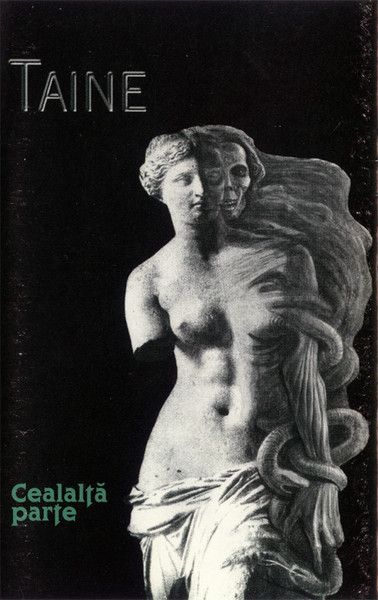
← TAINE — Cealaltă parte (1999) · Exclusive Interviews for Open Metal Album Library01. How did the songs on “Cealaltă parte” come about, and how did you arrive at the point of making your first official album?
Question
Open Metal Album Library: How did the songs on “Cealaltă parte” come about, and how did you arrive at the point of making your first official album?
Andy Ionescu / Answer
Andy Ionescu: Looking back, the story of “Cealaltă parte” actually begins with the band’s very first steps. The songs that ended up on the album came together over quite a long period, from the formation of the band in 1992 until around 1997. Before we ever knocked on the door of a professional recording studio, we had already released two demos.
The years from 1993 to 1998 were an exceptionally fertile period for the Romanian underground scene. It was a vibrant time, during which numerous rock and metal bands were formed. Some of them have stood the test of time and are still playing today. We are among them, although the line-up has changed over the years, and I am the only remaining member of the original TAINE line-up. When we decided to record our first official album, we selected the best and most mature songs from those we had accumulated over the years of musical exploration.
02. Why did you choose the Glas Transilvan studio in Cluj, and under what circumstances did the recording sessions begin?
Question
Open Metal Album Library: Why did you choose the Glas Transilvan studio in Cluj, and under what circumstances did the recording sessions begin?
Andy Ionescu / Answer
Andy Ionescu: We took the big step in 1998, when we decided to go into the studio to record these songs. At the time, we had a contract with Nelu Brândușan’s record label, Promusic. We chose the Glas Transilvan studio in Cluj because, at the time, it was the only studio that was both suitable for us and within our reach. For young people like us, full of enthusiasm but with no financial resources whatsoever, the trip to Cluj was an experience unlike any other. We set off far from home with empty pockets but enormous enthusiasm.
03. What difficulties did you encounter during your time in Cluj recording the album?
Question
Open Metal Album Library: What difficulties did you encounter during your time in Cluj recording the album?
Andy Ionescu / Answer
Andy Ionescu: What was supposed to be a straightforward recording session lasting a few days quickly turned into a real adventure full of unexpected twists and turns. When we arrived in Cluj, we were astonished to discover that the well-known singer Aurel Tămaș had just gone into the studio. Our booking was completely disrupted, and we could not start work on the agreed date. We had to extend our stay in Cluj by two or three weeks, perhaps even longer, waiting day after day for the studio to become available.
Our good fortune and our salvation came in the form of Fotzey. He is a musician who plays in Truda today and was a member of Cash at the time. Fotzey welcomed us into his home, and we essentially lived with him for the entire time we were waiting. As we had no money whatsoever and could afford neither food nor accommodation, there were days when we ate yoghurt with bread or just wafers. The solidarity of the underground scene, friendship and Fotzey’s help turned that difficult period into an unforgettable memory.
04. How did the recording sessions themselves go, and how did the album’s sound take shape?
Question
Open Metal Album Library: How did the recording sessions themselves go, and how did the album’s sound take shape?
Andy Ionescu / Answer
Andy Ionescu: Eventually, the Glas Transilvan studio became available, and we were able to start recording. Working with us behind the mixing desk was sound engineer Oliver Végh. I have to admit that Oliver had his work cut out for him before we managed to capture the sound we were looking for on tape. We had come in with complex musical ideas and rather high expectations, and he put considerable effort into translating those ideas and expectations into the recordings. But all the hard work and patience paid off in full: “Cealaltă parte” became a truly distinctive album.
05. What personal memories do you have of that period and of the Romanian metal scene?
Question
Open Metal Album Library: What personal memories do you have of that period and of the Romanian metal scene?
Andy Ionescu / Answer
Andy Ionescu: Looking back, both in terms of our musical style and my memories of that period, with this album we found ourselves right at the beginnings of progressive metal in Romania. Back then, the term “progressive metal” was not yet established here. Our music was called “techno-thrash” – that was how Gabi Gomboș (R.I.P.) classified us, too. It was an extraordinary time: we travelled extensively around the country and took part in national rock festivals. Wherever we played, we managed to win numerous trophies and awards.
I have fantastic memories of festivals such as TopT, Posada, Dej, Constelații Rock and Piatra Neamț. They were essential events that kept the flame of rock music alive in those years. Although many years have passed and there was certainly no shortage of difficulties, that first recording session at the Glas Transilvan studio has remained the cornerstone of our band and proof that genuine passion stands the test of time.