


Horea Crișovan — Neurotica
20 questions and answers
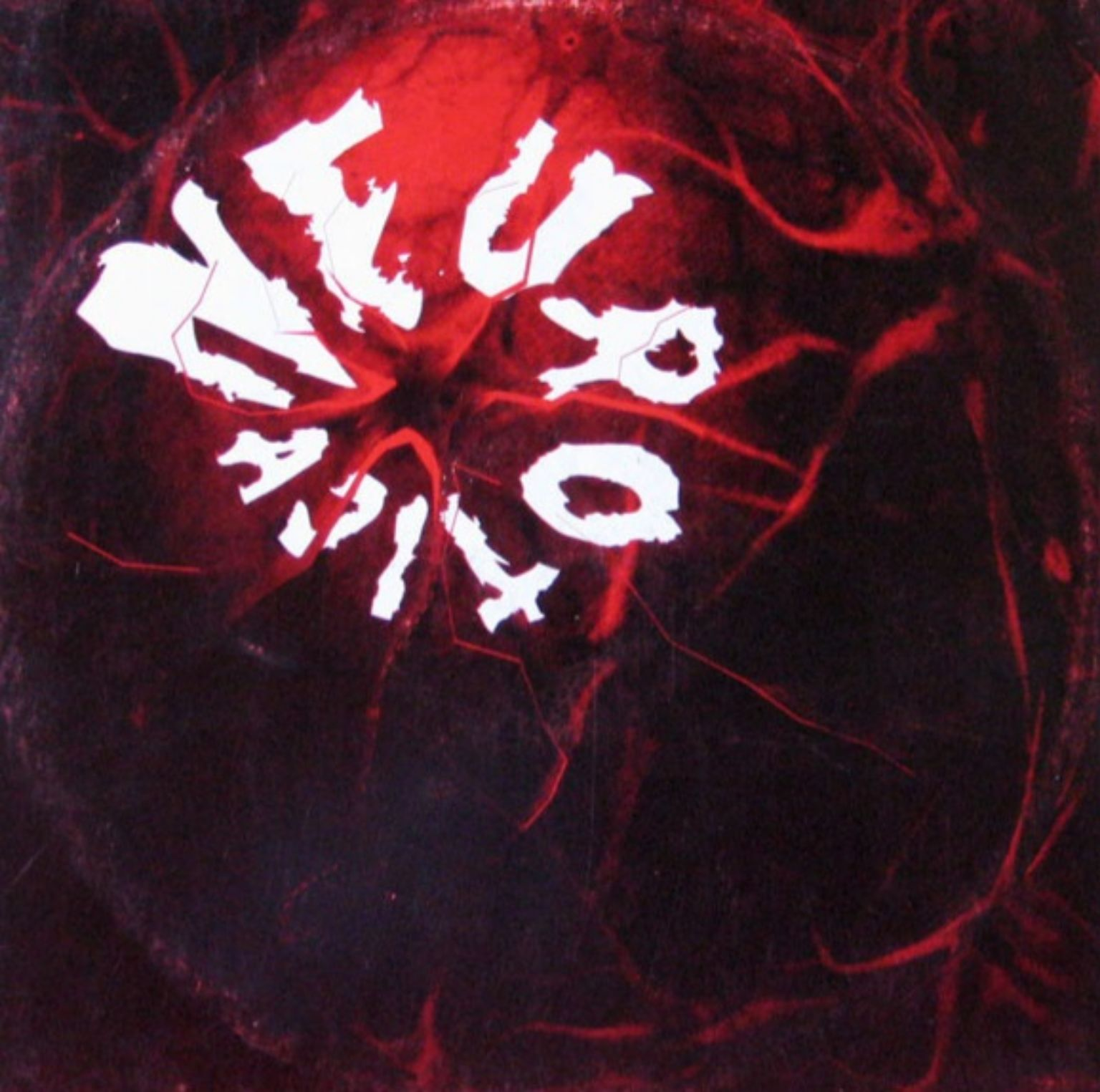
Horea Crișovan · Neurotica · 20 questions and answers
01. Before Neurotica, how did you develop your musical taste and your passion for studying the guitar? How did 1989 change your ambitions and the way you viewed the music scene?
QUESTION
Before Neurotica, how did you develop your musical taste and your passion for studying the guitar? How did 1989 change your ambitions and the way you viewed the music scene?
HOREA CRIȘOVAN / ANSWER
I cannot say that I inherited any particular musical direction from my family, but my love of studying music and my interest in the harmonic architecture of songs stem largely from the thousands of hours I spent listening to music with my mother. She was particularly passionate about rock bands, but also about classical music. Before 1989, I had already formed the band Logaritm at Loga High School and begun studying the music of the world's great guitarists.
The year 1989 was fundamental to my musical development. After the Revolution, I dared to dream that I might become the best guitarist in Romania. Without any formal musical training and without being able to sight-read, it seemed a difficult goal to achieve. Nevertheless, in 1995 and 1996, more than five specialist music magazines named me the best guitarist in Romania. I began to truly believe in that dream, but the enthusiasm did not last very long.
Music was changing, as was the way it was perceived. What we called the “plaster microphone” had come into fashion, and miming to prerecorded music had become so widespread that sometimes people no longer believed you when you told them you were actually performing. It seems to me that we are experiencing something similar today in discussions about artificial intelligence.
02. What happened to you in Timișoara on the night of 16–17 December 1989, and how do you remember the days of the Revolution?
QUESTION
What happened to you in Timișoara on the night of 16–17 December 1989, and how do you remember the days of the Revolution?
HOREA CRIȘOVAN / ANSWER
On the night of 16–17 December, I set out to return a guitar that had been handmade by a friend from Craiova. On the way, I was stopped and searched by a military unit. The soldiers threatened me at gunpoint and told me to open the guitar case slowly, as it apparently looked like a rifle case to them.
The incident left a deep impression on me. I was so frightened that I did not go out to protest again during the days of the Revolution. I stayed at home, and I feel as though I aged two years in just a few days.
03. How did you experience the transition from Cardinal to Neurotica? What changed in your music, your attitude and the message you wanted to convey?
QUESTION
How did you experience the transition from Cardinal to Neurotica? What changed in your music, your attitude and the message you wanted to convey?
HOREA CRIȘOVAN / ANSWER
The difference was enormous. For me, Neurotica marked the beginning of a different era: new music and an entirely different attitude. It was no longer about melodic love songs, but about protest, the vileness of the former regime and our own “Carpathian–Danubian–Pontic” customs, which we had come to view with a critical eye that was almost squared.
Central to this attitude was also the satirising of the modern Romanian who, despite living in a changed society, had yet to understand what freedom meant.
04. What were Neurotica's first rehearsals like? What do you remember about the rehearsal room, the atmosphere and the time when you joined the band?
QUESTION
What were Neurotica's first rehearsals like? What do you remember about the rehearsal room, the atmosphere and the time when you joined the band?
HOREA CRIȘOVAN / ANSWER
We rehearsed in Cardinal's old rehearsal room, a space measuring just three metres by two. The drums and guitar amplifiers all had to fit into that room. We had no hearing protection, and I believe that is where the high-frequency tinnitus I suffer from came from.
Despite that, the atmosphere was very good. For the first two months or so, Cristian Giorgievici was the band's only guitarist. Then I joined and took part in composing Neurotica's first record in 1993. There was no fixed rehearsal schedule. I spent practically the whole day there, practising even when I skipped classes.
05. What was your relationship with Florin Cvașa and Cristian Giorgievici before Neurotica? How did friendship, humour and work come together in the band's everyday life?
QUESTION
What was your relationship with Florin Cvașa and Cristian Giorgievici before Neurotica? How did friendship, humour and work come together in the band's everyday life?
HOREA CRIȘOVAN / ANSWER
I had already played with Florin Cvașa in Cardinal, and I had known Cristian since kindergarten. We were classmates from kindergarten all the way through university, made music together and studied guitar with the same teacher, Gheorghe Kalininic. We were also members of the folk group at General School No. 24. So we share a very long musical history.
In Neurotica, we sometimes laughed in the face of adversity, even making fun of our own stage appearances. Each of us dressed rather flamboyantly, which led to some amusing comparisons with the world's great artists. Still, I would not want to give the impression that we were joking all the time: essentially, it was a working atmosphere, with relatively few jokes.
06. In the band's early days, how different were your musical influences? How did your and Cristian's musical preferences come to coexist with those of Mihai and Florin?
QUESTION
In the band's early days, how different were your musical influences? How did your and Cristian's musical preferences come to coexist with those of Mihai and Florin?
HOREA CRIȘOVAN / ANSWER
At first, the only real difficulty was the vast difference between the kinds of music we listened to and studied. Cristian Giorgievici and I gravitated towards more modern sounds, particularly thrash and speed metal. Mihai and Florin were a few years older than us and remained more attached to the musical eras in which they had developed. In a sense, we belonged to two different generations.
There were no factions as such, although Cristian and I sometimes shared the same frustration: we felt we were stuck in music that was older than that of our own generation. Looking back, it was precisely this difference that worked to our advantage. The result was a fusion of musical influences and an extraordinarily successful collaboration, what I would call a true “match made in heaven”.
07. What hopes did you have when the songs for the first album began to take shape? How did you imagine your own future in music?
QUESTION
What hopes did you have when the songs for the first album began to take shape? How did you imagine your own future in music?
HOREA CRIȘOVAN / ANSWER
In those years, we were full of hope. We wanted to reach the world's great stages, and we were convinced that it was possible. We believed that serious study, teamwork, talent and being a composer rather than simply someone who knew how to play an instrument could open the way to the profession you dreamed of. For me, music had already become that path.
08. Of the social messages conveyed by Neurotica's songs, which do you feel has remained most relevant?
QUESTION
Of the social messages conveyed by Neurotica's songs, which do you feel has remained most relevant?
HOREA CRIȘOVAN / ANSWER
Without a doubt, “Country of Nobody”. Unfortunately, that expression is still relevant today. It is a feeling that continues to weigh on all our shoulders.
09. How did Neurotica's songs come into being: did you start with lyrics, an idea or, more often, the music? How do you view that approach to songwriting today?
QUESTION
How did Neurotica's songs come into being: did you start with lyrics, an idea or, more often, the music? How do you view that approach to songwriting today?
HOREA CRIȘOVAN / ANSWER
I would not say that Neurotica's songs were built around a particularly elaborate intellectual plan. They were, above all, visceral. Usually, the music came first: a guitar riff, a bass theme or a rhythm suggested by Florin. Only then did the lyrics follow.
Back then, we were still rather immature when it came to consciously starting from a particular conviction expressed in lyrics or from a precisely defined state of mind. The music I composed later, after BIO, became both cerebral and visceral. In the Neurotica years, however, instinct was what guided us most often.
10. When you think of “Evil Eyes”, “God Save Me”, “The Risk” and “Obsession”, what do you remember about how they came into being? Is there a song in the repertoire in which you recognise your own contribution most strongly?
QUESTION
When you think of “Evil Eyes”, “God Save Me”, “The Risk” and “Obsession”, what do you remember about how they came into being? Is there a song in the repertoire in which you recognise your own contribution most strongly?
HOREA CRIȘOVAN / ANSWER
I do not have any particularly personal recollections associated with the songs you listed. There were riffs and melodic lines to begin with, and the songs took shape from those. I can say, however, that “Country of Nobody” is about 80 per cent my own composition.
11. What role did improvisation play in the creation of “Samba Thrash” and “Obsession”?
QUESTION
What role did improvisation play in the creation of “Samba Thrash” and “Obsession”?
HOREA CRIȘOVAN / ANSWER
Improvisation played an essential role. “Samba Thrash” grew largely out of improvisation, and much the same was true of “Obsession”.
12. How did you decide on the final form of a song when new ideas or changes to the arrangement arose? How much weight did the band's opinion carry, and how much input did producer Adrian Ordean have?
QUESTION
How did you decide on the final form of a song when new ideas or changes to the arrangement arose? How much weight did the band's opinion carry, and how much input did producer Adrian Ordean have?
HOREA CRIȘOVAN / ANSWER
At that time, rock bands in the early stages of their careers generally operated quite democratically. I assume our songs also went through certain changes before reaching their final form. Decisions were made by the band as a whole, and the album's producer, Adrian Ordean, also took part in that process.
13. What was a typical day of recording like at the Migas Real Compact studio in Bucharest? What were your living and working conditions like, and who helped you with instruments?
QUESTION
What was a typical day of recording like at the Migas Real Compact studio in Bucharest? What were your living and working conditions like, and who helped you with instruments?
HOREA CRIȘOVAN / ANSWER
The day began in the morning at the studio in Bucharest. We were staying in a student dormitory; we had no money, but we had big dreams and put a great deal of heart into what we were doing. Everything unfolded quite instinctively. We recorded with all of us playing at the same time, and certain passages were subsequently corrected thanks to Adrian Ordean's experience and talent in the studio.
We received important help from Sorin Badin and Daniel Pape, two virtuoso former members of Cardinal, who supported us by providing quality instruments. One was in Germany, while the other lived just three streets away from me. If I were to sum up our experience at Migas Real Compact in a few words, I would say: the goal was set and achieved.
14. What personal memory do you retain of working with Adrian Ordean? Did he ever say anything that gave you the confidence to keep going?
QUESTION
What personal memory do you retain of working with Adrian Ordean? Did he ever say anything that gave you the confidence to keep going?
HOREA CRIȘOVAN / ANSWER
Adrian Ordean told me something back then that I have never forgotten: “If I had a thousand Horea Crișovans standing in front of me, I would know which one was the original.” Those words meant an enormous amount to me. They gave me the courage to keep studying and to move forward.
In the studio, we followed Adi's advice. I consider him an exceptional guitarist and a fantastic person.
15. How did you experience the moment when you first held the Neurotica vinyl record in your hands? What happened after the album was released?
QUESTION
How did you experience the moment when you first held the Neurotica vinyl record in your hands? What happened after the album was released?
HOREA CRIȘOVAN / ANSWER
Holding the first Neurotica vinyl record in my hands seemed almost unreal. I was so young that I do not think I could fully grasp what that moment meant. After the record's release, we began promoting it through a series of concerts.
16. How did audiences respond to the album, and how did listeners' impressions reach you at a time when today's social media platforms did not exist?
QUESTION
How did audiences respond to the album, and how did listeners' impressions reach you at a time when today's social media platforms did not exist?
HOREA CRIȘOVAN / ANSWER
The reactions were extraordinary. People would say things like, “You're from the West, you're from another world,” or “This band is something else!” We received a great deal of supportive feedback, and we felt that the audience agreed with our message.
Back then, there were no comments on Facebook, Instagram or TikTok. Information circulated through newspapers, posters, radio and television, and access to the last two often depended on connections we did not have.
17. What was life like for Neurotica between concerts: the journeys, the places you slept, the friendships and your relationship with money? What do you remember most vividly?
QUESTION
What was life like for Neurotica between concerts: the journeys, the places you slept, the friendships and your relationship with money? What do you remember most vividly?
HOREA CRIȘOVAN / ANSWER
The Romanian music industry was not developed enough to take away the time we spent with our friends. We played around 20, 30, sometimes even 40 concerts a year. Train journeys could be dreadful: we froze in winter and endured unbearable heat in summer. We slept at friends' places and had to get up early so as not to miss the train.
Later, in the period following the 1996 album BIO, we began staying in hotels as well. In those years, we did not think much about the value of money, nor did we dream of getting rich from music. We played because we loved what we were doing.
18. When you listen to Neurotica's 1994 album today, what do you rediscover in its sound and energy? Is there a song you later wanted to rework?
QUESTION
When you listen to Neurotica's 1994 album today, what do you rediscover in its sound and energy? Is there a song you later wanted to rework?
HOREA CRIȘOVAN / ANSWER
Listening to the 1994 album, I hear a great deal of courage and an organic sound built around valve amplifiers. I feel the genuine energy of young people brimming with enthusiasm, hope and a love of music.
In a 2006 interview, I said that I would rethink certain songs, and that still holds true. I had “Country of Nobody” particularly in mind. In fact, I also performed it at a concert where I invited Dan Helciug to take care of the vocals.
19. How do you view the Romanian music scene after the Revolution today, and what would you tell young bands about originality, hard work and the challenges posed by artificial intelligence?
QUESTION
How do you view the Romanian music scene after the Revolution today, and what would you tell young bands about originality, hard work and the challenges posed by artificial intelligence?
HOREA CRIȘOVAN / ANSWER
I try to be cautious when giving advice because I do not possess the universal truth. The period after the Revolution was one of experimentation and, in some respects, perhaps even more difficult than the 1970s. Comparisons with bands from abroad had become extremely oppressive: if you did not sound like them, you risked being ignored or even ridiculed. And when you proved that you were very good, nobody was in a hurry to pat you on the back. It seemed as though there was room for everyone under the sun and, at the same time, hardly any room for anyone. The seeds of today's world were already visible back then.
Above all, I would tell young bands to defend their originality. What matters is emotion, the ability to convey something and the way you embrace your own personality, with a small or large ego depending on the style. But more than anything, they need to get down to serious work as soon as possible.
Artificial intelligence is catching up fast, and I fear there will come a time when nobody will believe you any longer when you say you recorded your own album or composed your own songs. I feel that this is the last train before a long period of transition in which live performance will have to reaffirm its human dimension. Perhaps that will be precisely our chance to offer an alternative to the “mother computer” on planet Internet.
20. Do you still have photographs, recordings or other mementos from the Neurotica years? Which of your former bandmates do you think might have lesser-known material?
QUESTION
Do you still have photographs, recordings or other mementos from the Neurotica years? Which of your former bandmates do you think might have lesser-known material?
HOREA CRIȘOVAN / ANSWER
Unfortunately, I have not kept very much from that period. Mihai Breazu is the band's treasurer in that respect. I also believe that, if you have the opportunity to interview Florin Cvașa, he might be able to provide you with some lesser-known material.