Tommy Talamanca
READ ALOUD
SADIST · CRUST (1997) · EXCLUSIVE INTERVIEW
Tommy Talamanca
The making of Crust in Tommy Talamanca’s own words
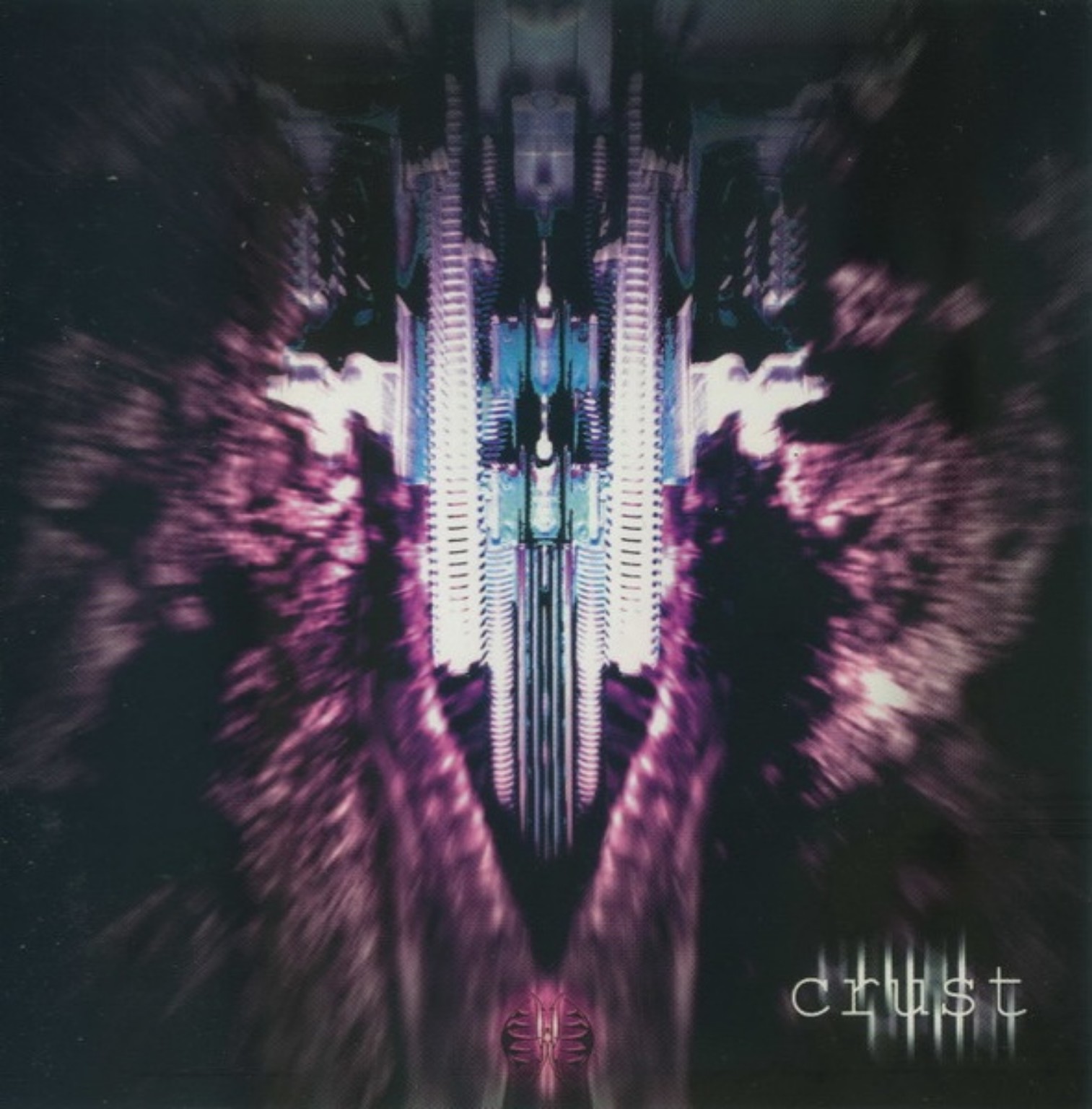
Interview archive


Share this feature
Interview
Reading mode:
01 / 13
Question 1
Looking back on the period between Tribe and Crust, what personal experiences, worries or social issues occupied each of you in everyday life in Genoa? Were there any that you worked through together as a band, perhaps eventually reflecting them in Crust’s themes or musical motifs?
Answer · Tommy Talamanca
Tommy: The period between the release of *Tribe* and that of *Crust* was probably one of the most turbulent in the band’s history. There was a drastic change in the line-up, which certainly brought new energy to the band, but nevertheless entailed changes in the way the band was managed, which were then gradually assimilated over time. As a result, the album *Crust*, which Andy – the bassist on our first album – and I wrote very quickly, turned out to be a very extreme and particularly angry record, probably reflecting the atmosphere of the time quite well.
02 / 13
Question 2
After Tribe was released, had you already begun discussing the next album’s musical direction, lyrics and themes with the 1996 line-up, or did the concept for Crust take shape only after the line-up changed? We would like to understand that transition more clearly: were there any ideas you had developed with the departing members that survived the changes and ultimately found their way onto the finished album?
Answer · Tommy Talamanca
Tommy: By choice, following the line-up change, Andy and I did not want to use any musical ideas that we had not composed ourselves. At the time of *Tribe*, I had effectively become the sole composer of the music, not out of ego, but simply because the new members, whilst excellent musicians, didn’t have a background in metal. The crisis began shortly after the album was released: today, *Tribe* is an album much appreciated not only by fans but also by music critics, but the reality is that at the time of its release, progressive death metal wasn’t popular, and many critics hadn’t understood or appreciated the album. This, combined with the drummer’s physical problems, led us to compose technically simpler material; however, in the meantime, a great deal of frustration was beginning to build up within the band. That’s why *Crust* sounds so violent compared to *Tribe* – it was probably a sort of liberation from an artistically unrewarding period.
03 / 13
Question 3
Once the line-up that recorded Crust had come together, with Trevor and Oinos joining and Andy returning, how did the creative work begin? The original album credits name Tommy Talamanca as the composer of all the music. How did that work in practice? Did Tommy bring in musical foundations, riffs and melodies that you then developed together in the rehearsal room, or did you work in a different way? How much time did you have to develop a rapport as a new line-up and work out the songs before the recording sessions, and how intense did that period feel in retrospect?
Answer · Tommy Talamanca
Tommy: The period associated with Crust was probably one of the band’s most artistically fruitful and rewarding periods; Andy’s return and the arrival of two incredible musicians – Trevor and Oinos – marked a genuine rebirth for the band. Whilst it’s true that I’ve always been the one to write the melodies, on *Crust* almost all the rhythmic ideas came from Andy, and Oinos’s drumming was the element that made it all work perfectly.
04 / 13
Question 4
After recording Tribe at Rhythm Recording Services in England, you chose Harrow Productions in the Netherlands for Crust. How did that decision come about? Were you familiar with albums recorded there, did you receive personal or professional recommendations, or did the label suggest the studio? We are also curious about who took part in the decision and which considerations ultimately carried the most weight.
Answer · Tommy Talamanca
Tommy: When we signed with Displeased, a Dutch record label, the label’s managers themselves chose the studio. In fact, that’s how it always worked back then: the labels covered all the production costs for the records and usually decided which studio the band would record in. Things only changed in the 2000s, when Nadir Music Studios was founded, and since then the band has always preferred to manage the production of their own masters themselves.
05 / 13
Question 5
Tommy, in an earlier interview you recalled that the period following Tribe was an angrier time for the band and that you deliberately wanted Crust’s sound to work in a live setting. What was behind that anger, and which personal experiences, musical influences or events around you shaped the album’s music? Trevor, when writing the lyrics, what stories, personal experiences or events in the world around you did you draw on? Can you recall a particular song in which those influences found an especially strong expression, musically or lyrically?
Answer · Tommy Talamanca
Tommy: Together with the original members, we faced some very serious legal issues, which were eventually resolved in our favour, but it was nonetheless a very tough time on a personal level. These events mainly concerned Andy and me, and fortunately only affected the new members indirectly; nevertheless, everyone’s reaction was to channel this anger into the music and, above all, into the lyrics. Up until *Tribe*, the band’s lyrics had always been a secondary element, particularly on the debut album; but with the arrival of a singer with such a strong personality as Trevor, the lyrics finally began to reflect the band’s true spirit – that is, its more death metal side.
06 / 13
Question 6
Do you remember when you booked Harrow Productions in the Netherlands, and what it was like to arrive there in the spring of 1997 and spend your first days in the studio? What was the atmosphere like, and how much did the songs continue to evolve during the sessions? Was there a particular track that changed dramatically, perhaps even beyond recognition, from the original idea? The original booklet credits Sadist as producer and Harry Wijering as recording engineer. How did that arrangement work in practice: who guided the musical decisions, and how much creative input did Harry have into the recordings and the final sound?
Answer · Tommy Talamanca
Tommy: Harry played a very important role in the making of *Crust*. We had a fairly clear idea of how the album should sound, but we didn’t yet have enough experience to know how to go about things in the studio to bring our ideas to life as effectively as possible. The production on *Crust* isn’t perfect, but it’s very distinctive and effectively conveys the sense of claustrophobia we wanted the album to exude. I personally oversaw every stage of the album’s production, including mixing and mastering, and from that point onwards a dynamic developed within the band – one that continues to this day – whereby I have become not only the producer but also the sound engineer for our albums.
07 / 13
Question 7
During the Dutch recording sessions for Crust, what role did Displeased Records play in organising and financing the studio work? Did the label provide the budget and determine how much time you had, or were those decisions left to the band? Do you remember how many days were available for recording, mixing and the remaining post-production work? To what extent did the label become involved in the process and your artistic decisions, and were you able to concentrate on the music freely, without undue pressure from expectations or deadlines?
Answer · Tommy Talamanca
Tommy: Displeased covered all production and promotion costs, including the costs of producing the artwork and the promotional video clip. The budget covered our time in the studio for about three weeks, which was, in any case, sufficient. We’d become quicker in the studio and, above all, we’d improved a great deal technically. The label gave us complete artistic freedom, but, to be honest, this has always been the case with every label we’ve worked with, because artistic freedom has always been non-negotiable for us.
08 / 13
Question 8
Listening back to Crust almost thirty years later, what do you think was the defining musical influence or creative vision that still makes the album sound so distinctive and fresh? What strikes me in particular is the meeting of relentless aggression, an unsettling atmosphere and the exceptionally prominent use of keyboards, creating music that can both attract and repel the listener. How consciously did you develop this distinctive musical world, and what role did you intend the keyboards to play—not simply supporting the heavy guitar sound, but shaping the album’s character in their own right?
Answer · Tommy Talamanca
Tommy: Our signature style has always been the combination of the aggression of metal and the unease evoked by a certain type of sound – particularly prog, though not exclusively – from the 1970s and 1980s. That’s why we’ve never placed too much importance on the electric guitar as an instrument, but rather on the atmosphere, and how to create it. In short, for us, an instrument is just that: an instrument. If a sitar can help us create a sense of unease, then we’ll use a sitar. Just as we might use a synth or some oriental percussion.
09 / 13
Question 9
The Italian metal scene of the 1990s was remarkably diverse, with bands following often highly individual musical paths. As Crust was taking shape around 1996–1997, how did you experience that scene from within? What personal and professional relationships did you have with other Italian metal bands, both well-known acts and groups from the deeper underground? How important were fanzines, tape trading and smaller shows to you once international label and touring opportunities had begun to open up? Were there particular bands, friendships or shared experiences that shaped what belonging to the Italian metal community meant to you at the time?
Answer · Tommy Talamanca
Tommy: One of my fondest memories from that period is the tour we did with two of the great Italian bands of the time, Necromass and Detestor. Fortunately, Necromass are still playing, and they’re still a brilliant band today. It was a completely different era – very physical, in a way. And it is this element that metal music must not lose: the physicality of the gigs, the human experience of being connected not by a machine or an Ethernet cable, but by emotions, even if these are seemingly aggressive.
10 / 13
Question 10
Tommy, in earlier interviews you have explained that Sadist songs do not always begin with a guitar riff: sometimes a keyboard melody or another musical idea becomes the starting point. Listening to Crust, I feel that the guitars and keyboards play almost equal roles in shaping its strange, unsettling atmosphere; a more restrained use of keyboards might have resulted in a very different album. How common was it for Crust songs to begin with ideas developed on keyboards, and can you recall a particular track whose musical character was decisively shaped by that approach?
Answer · Tommy Talamanca
Tommy: In a way, *Crust* has remained something of an anomaly in our career, because many of the tracks actually stem from Andy’s rhythmic ideas, such as the opening track “Perversion Lust Orgasm”, which is probably one of the most electrifying tracks when we play it live. There are tracks where the keyboard is the driving force, and the whole song revolves around a single melodic theme, such as ‘Christmas Beat’ or ‘I rape you’, and others where it’s the classic guitar riff that drives the song, such as ‘The Path’.
11 / 13
Question 11
I first heard Crust in 1997, very soon after its release, and even in such a diverse metal scene, its sound stood out to me as something exceptional. Extreme metal had already branched out in countless directions, yet this album still felt remarkably new and fresh. Perhaps the next time I experienced a similarly hard-to-explain leap in quality was with Eldritch’s 1998 album El Niño. Tommy, when you first heard the finished Crust from beginning to end, did you also feel that Sadist had reached an entirely new level compared with Tribe while retaining its distinctive musical identity? What do you remember feeling at that moment, and what was the single most important change behind that difference for you?
Answer · Tommy Talamanca
Tommy: Even today, *Crust*, along with *Sadist* from 2007, is one of my favourite albums from our career. *Sadist* is probably our compositional peak, because we managed to bring all our different sides together, whilst Crust remains a sharp break from the two previous albums. Nevertheless, that album is the perfect snapshot of the band at that moment. Its power has remained intact even years on, and for this reason, I consider it a pivotal point in the band’s stylistic development.
12 / 13
Question 12
To me, the original sound of Crust still has a special value thirty years later. Every moment of the record bears the distinctive character of an inspired period that might not be easy to recreate through a new recording. Tommy, back in a 2006 interview you said that although you loved the album itself, you were unhappy with its sound and hoped one day to remix it. Now, for its thirtieth anniversary, you are planning not just a remix but a complete re-recording. What led to that decision? Is the main aim to realise sonic or musical ideas that were beyond your reach in 1997, or to bring the entire album into a new dimension through the experience you have gained since then? What aspects of the original Crust do you feel absolutely must be preserved?
Answer · Tommy Talamanca
Tommy: Re-recording one of our albums – a record that has been hugely significant not only for us but also for the fans who love it, particularly many fans in Eastern Europe – is a massive challenge. That’s why this new edition should be seen as a tribute to a piece of history, rather than a replacement. Our aim is to have today’s Sadists perform an album from thirty years ago; not only are there two new musicians, but Trevor and I have also changed in the meantime, both personally and professionally. It will, however, be a very faithful tribute; we will try to reproduce the album exactly as it was composed, sticking as closely as possible to the original scores. Probably the most obvious difference will be in the production, which will be brought up to the standards of the band’s most recent albums.
13 / 13
Question 13
Tommy, you have previously said that you were not entirely satisfied with Crust’s original sound. Looking back on the personal experiences, changes within the band and creative decisions you made at the time, what do you now consider the album’s greatest and most enduring strength? Was there a decision whose true significance only became clear to you years later, and which you believe helped the album grow into a classic for so many listeners?
Answer · Tommy Talamanca
Tommy: I believe the main strength of the album *Crust* lies in its attitude. Its raw power and anger have remained unchanged even after so many years. When I listen to the first two albums, I often find myself focusing on what, in my opinion, we could have composed or played better, but with *Crust* – which is certainly not perfect – this doesn’t happen, because its energy takes precedence over everything else. That album truly embodies the power of a band and, for me, that’s the only thing that matters.